Image of the seal of UConn Office of Outreach and Engagement

March 2026 Newsletter

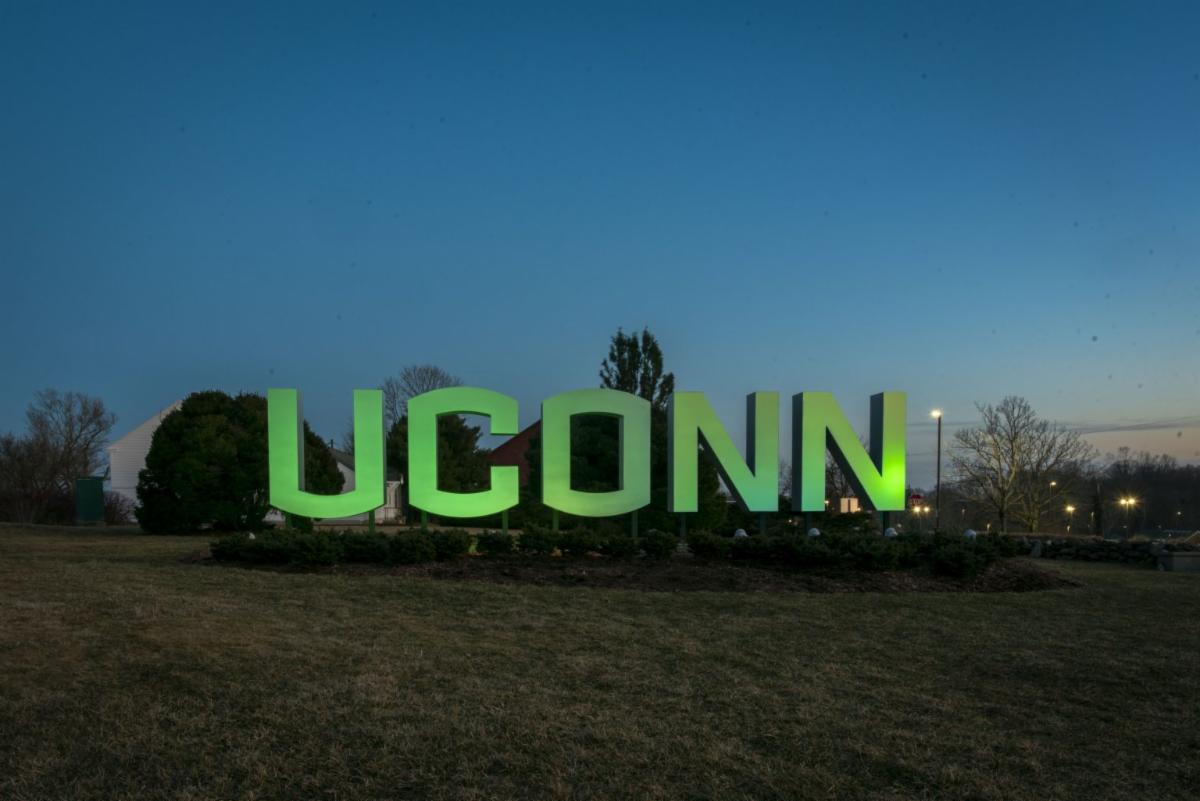
Picture of a UConn sign with green color

(Sean Flynn/UConn Photo)

Chris Ciarcia Selected for IARSLCE Practitioner Scholar Community Cohort

We’re proud to share that our Associate Director, Chris Ciarcia, has been selected for the 2026 Practitioner-Scholar Community Cohort with the International Association for Research on Service-Learning and Community Engagement (IARSLCE).


This program supports professionals in strengthening their practitioner-scholar identity and advancing scholarly projects centered on service-learning and community engagement. Through this opportunity, Chris will deepen his work in community-engaged teaching, learning, and research, collaborate with colleagues from across the field, and bring new insights and energy back to our campus and community partnerships.

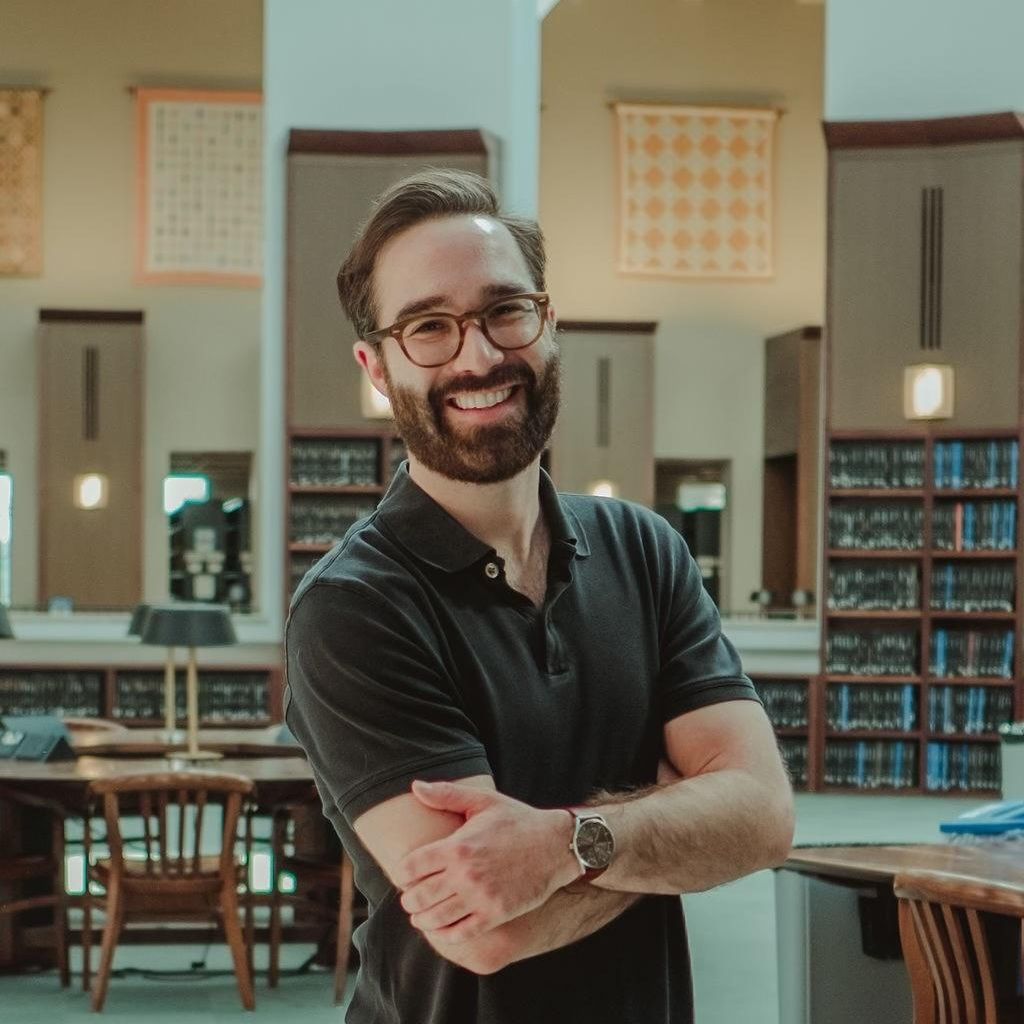
Photo of Christopher Ciarcia with arms crossed at library with a shelf of books behind him.

Upcoming Community Engagement Workshops

Join Dr. Meseret Hailu, Assistant Professor of Higher Education at the Louise McBee Institute of Higher Education at the University of Georgia, and Dr. Kayla Johnson, Associate Professor in the Department of Educational Policy Studies and Evaluation at the University of Kentucky College of Education, for a virtual workshop on culturally responsive international research, with a focus on research design, ethics, challenges, and working with marginalized communities.  


Register

This workshop will provide a broad overview of community-engaged scholarship and how faculty who engage in community-based research and teaching can make the best case for their promotion and tenure. This workshop would include a panel of faculty from different disciplines who have received PTR.   


Register

Webinar Series: '25 Winners of Provost’s Awards for Excellence in Community Engagement

This special webinar series spotlights the 2025 recipients of the Provost’s Awards for Excellence in Community Engaged Scholarship, honoring their collaborative efforts to address pressing societal challenges through research, teaching, and service.


Through inspiring conversations, awardees will share insights into their community partnerships, innovative approaches to engaged scholarship, and the real-world impact of their work. Whether you’re an educator, student, community member, or engagement professional, these sessions offer a unique opportunity to discover how UConn continues to advance its land-grant mission and strengthen its commitment to the public good.


Kamal Gautam: Graduate Student/Professional Student Award

Join us for a special webinar featuring Kamal Gautam. Kamal is an emerging scholar advancing community-centered HIV prevention, harm reduction, and mental health research across the United States and internationally. He is a PhD candidate in the Department of Allied Health Sciences and the Lab Manager for Dr. Roman Shrestha's Lab, where he leads and supports NIH-funded projects in the US, Nepal, and Malaysia. Born and raised in Nepal, he brings firsthand understanding of health challenges in resource-limited settings, along with cross-continental and cross-sectoral perspectives shaped by living and working in Nepal, the United Kingdom, Malaysia, and the United States, and by experience across academia, policy advocacy, and nonprofit settings.


As a Graduate Research Assistant, Kamal plays a leading role in coordinating NIH-funded projects focused on HIV prevention and harm reduction among men who have sex with men, transgender women, and people who inject drugs. His work integrates mHealth innovation, participatory research methods, and mental health equity, with recent focus centered on ecological momentary assessment (EMA) and just-in-time adaptive interventions (JITAI) to prevent suicide and reduce tobacco and substance use.

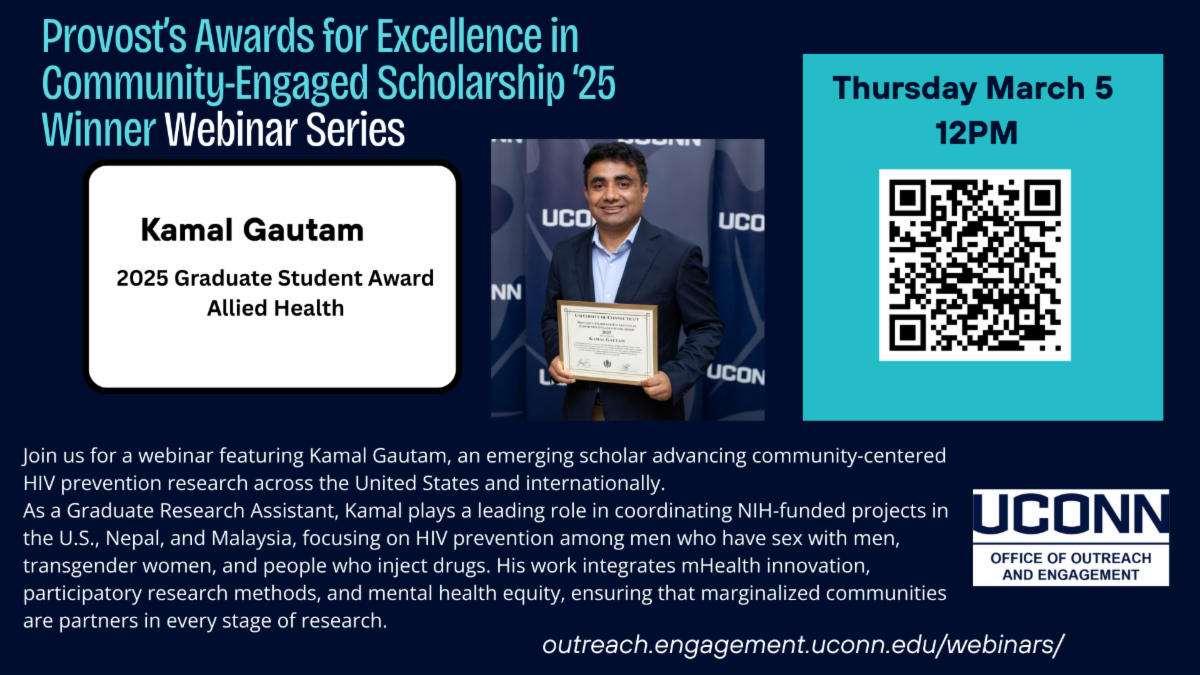
Flyer of Kamal Gautam

Date and Time

Name

Award Category

Registration Link

Thursday, March 6, 2026 at 12PM

Kamal Gautam

Graduate Student/ Professional Student Award

Registration Link

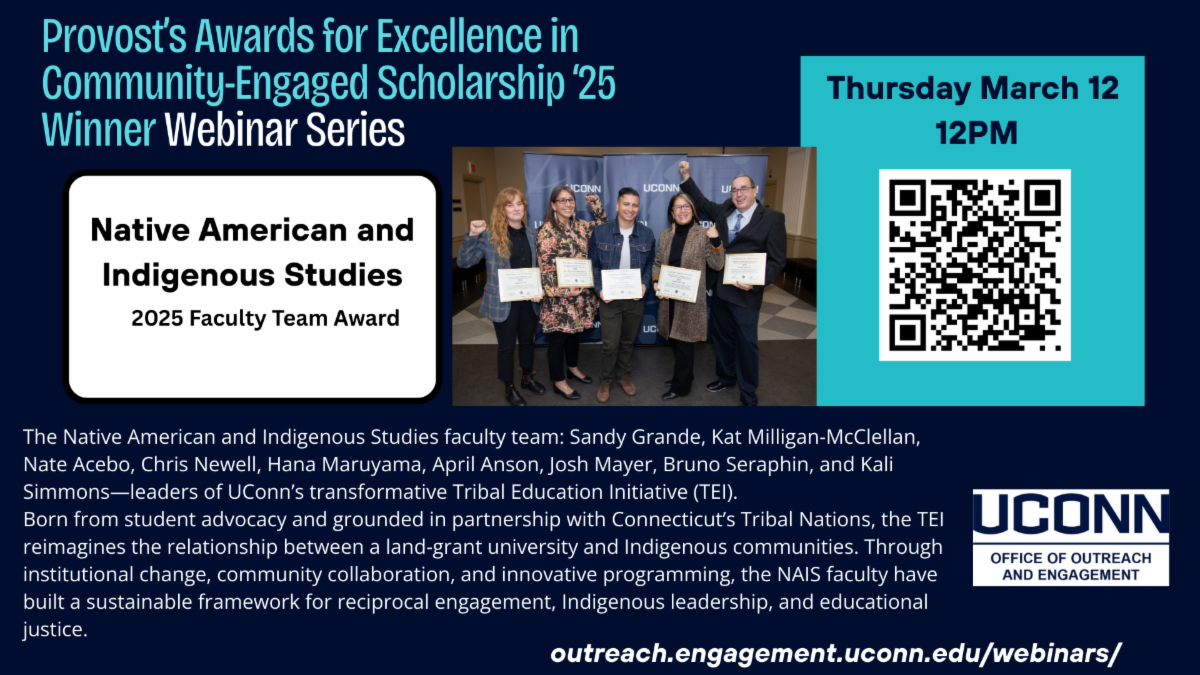
Native American and Indigenous Studies Team: 2025 Faculty Team Award

Join us for a special webinar featuring the Native American and Indigenous Studies faculty team—Sandy Grande, Kat Milligan-McClellan, Nate Acebo, Chris Newell, Hana Maruyama, April Anson, Josh Mayer, Bruno Seraphin, and Kali Simmons—leaders of UConn’s transformative Tribal Education Initiative (TEI).


Born from student advocacy and grounded in partnership with Connecticut’s Tribal Nations, the TEI reimagines the relationship between a land-grant university and Indigenous communities. Through institutional change, community collaboration, and innovative programming, the NAIS faculty have built a sustainable framework for reciprocal engagement, Indigenous leadership, and educational justice.


Their work includes strengthening partnerships with the five Tribal Nations in Connecticut, supporting the growth of the Federally Recognized Tribes Extension Program, advancing Indigenous-centered curriculum, and launching initiatives such as IndigiPalooza!, #IndigiReads, and expanded Native student support programs.

Flyer regarding The Native American and Indigenous Studies faculty team

Date and Time

Name

Award Category

Registration Link

Thursday, March 12, 2026 at 12PM

Native American and Indegenous Studies

Faculty Team

Registration Link

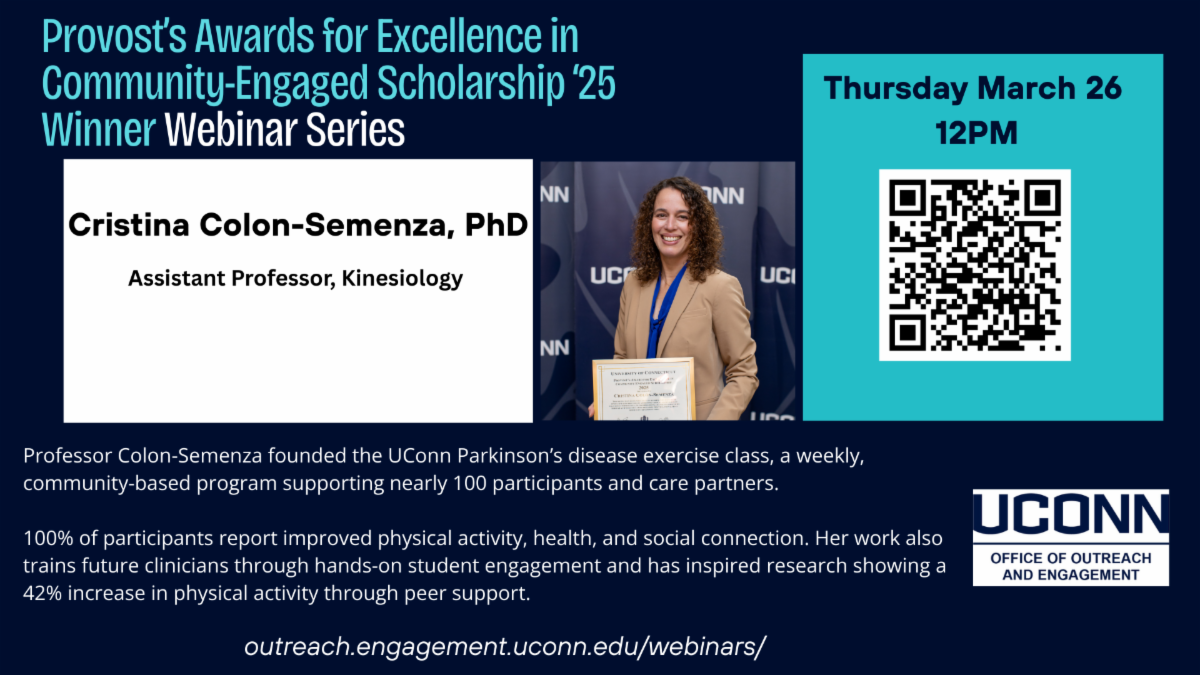
Cristina Colon-Semenza: Emerging Faculty Community Impact Award

Join us for a special webinar featuring Cristina Colón-Semenza. Professor Colón-Semenza is an emerging leader whose work blends research, education, and community engagement to improve the lives of people living with Parkinson’s disease.


Recognizing that exercise can dramatically slow disease progression but is often inaccessible,

Professor Colón-Semenza created the UConn Parkinson’s disease exercise class, a weekly, community-based program that supports long-term physical activity and social connection. What began as a small initiative has grown into a thriving community impacting nearly 100 individuals with Parkinson’s disease and their care partners, with 100% of participants reporting improved physical activity, health, and social connection.


Her program also provides powerful experiential learning for UConn students, training future clinicians through hands-on engagement with people living with Parkinson’s disease. These community partnerships have directly inspired impactful research, including studies showing a 42% increase in high-intensity physical activity through peer support.

Date and Time

Name

Award Category

Registration Link

Thursday, Marc 26, 2026 at 12PM

Cristina Colon-Semenza

Emerging Faculty Community Impact Award

Registration Link

Campus Compact

Nominate an engaged student for the

2026-2027 Newman Civic Fellowship

Campus Compact is now accepting nominations for the 2026-2027 Newman Civic Fellowship, a yearlong program that recognizes and supports outstanding community­-committed students at Campus Compact member institutions.


The fellowship is an in-depth opportunity for undergraduate and graduate students to nurture their passions, engage in collaborative action, and address issues that matter to them. Through the fellowship, Campus Compact provides in-person and virtual learning opportunities to build the skills fellows need to serve as effective agents of change.


Nominations due April 27th, 2026!

Please contact Vincent Moscardelli at vin.moscardelli@uconn.edu for more information

Engagement Scholarship Consortium

Call for Proposals Now Open

The Engagement Scholarship Consortium seeks proposals for its 2026 annual conference, Changing Lives and Improving Society: Data-Driven Engagement and Innovation. The conference will be held October 7-8, 2026, with pre-conference activities on October 5-6, 2026, in Knoxville, Tennessee. 


The 2026 ESC Conference will be a place for us to gather and learn about the different ways that we bring together academic expertise and community wisdom to co-create a brighter future. We invite proposals that explore how engaged scholarship transforms communities, drives innovation, and builds lasting, mutually beneficial partnerships to tackle society's grand challenges through deep, pervasive, and integrated initiatives with local, regional, national, and global communities. 


Who Should Submit a Proposal? 


Individuals, teams, and transdisciplinary collaborators across the educational spectrum, including: 


·   Undergraduate and graduate students involved in community/university engagement and/or studying the impacts of service-learning and community engagement. 

·   Representatives of community, educational, government, and/or corporate organizations working in partnership with colleges and universities. 

·   University and college faculty and staff involved in the study or practice of engaged scholarship, the scholarship of engagement, the implementation of engagement programs, or service-learning.  

·   Higher education administrators, including community engagement professionals and student affairs professionals who foster institutional support for community engagement. 

·   Community members and other critical stakeholders who play key roles in community/university partnerships and their impacts. 


For scheduling and accessibility purposes, please note that the conference committee reserves the right to limit the number of accepted sessions per presenter. 


Presentation Formats 

Proposals may be submitted in any of the following formats: 


Research and Partnership Presentations – 30 minutes 


This multi-presentation format offers a focused opportunity to advance our collective knowledge of community engagement by sharing best practices, lessons learned, and research findings. Each session will consist of two 30-minute presentations, with at least 5 minutes of active discussion with the audience. To the degree possible, the conference program committee will pair individual research and project presentations around a common focus area or closely related topic. 


Interactive Workshop – 60 minutes 

Workshops are designed with an intentional focus on skill and knowledge development. Presenters should plan to share information about a particular body of knowledge, evidence-based practice, engaged teaching or research techniques, assessment or research results, or methodologies. Active discussion between the audience and presenter(s) should be encouraged throughout the session. Workshops will be scheduled for 60 minutes total, comprising 40 minutes of active discussion and 20 minutes of interactive Q&A with the audience. 


Roundtables – 60 minutes 

Roundtables are highly interactive sessions focused on a common theme or area of interest. The presenter(s) should begin the Roundtable session with a brief presentation of the results of a research study, or a rich description of a translational, educational, service-learning, clinical, or other program of engaged scholarship or evidence-based practice. The presenter(s) should then facilitate an engaging conversation with participants to answer questions, share ideas, and discuss best practices or innovative approaches. Roundtables are scheduled for 60 minutes. 


Panels – 60 minutes 

Panels are designed to exchange information about a particular body of knowledge, evidence-based practice, engaged teaching technique, assessment, research instrument, or methodology. Panels typically include three or four panelists and feature active discussions from diverse perspectives on the topic. Panels will be scheduled for 60 minutes, comprising 40 minutes of active panel discussion and 20 minutes of audience Q&A. These proposals should identify all panelists and a moderator for the panel discussion. 


Posters 

Posters are best suited for reporting the results of research studies, assessments, and evaluations, as well as for presenting translational, educational, service-learning, clinical, or other programs of engaged scholarship or evidence-based practice. Posters presented will be displayed continuously during an open viewing period. Also, to encourage networking and discussion of the displayed work, at least one presenter is expected to be present at the poster during the formal session. 


All presenters of accepted proposals will be expected to register for the conference. Preferences for the presentation format may not be feasible; however, the review team may consider an alternative format. In these cases, the review team will contact the presenter to suggest an alternative format for consideration. 


The submission deadline is Tuesday, March 31, 2026.  Click on this link to submit your proposal! 


For any further questions regarding the proposal requirements, contact info@engagementscholarship.org.  


Campus Compact and Engaged Scholarship Consortium Event Calendar

Take advantage of these workshops and events offered exclusively to university members.

Don’t miss this opportunity to learn, connect, and grow.

Date

Event

Registration

March 11, 2026

 2:00-3:00pm

Campus CoGenerate Affinity Network: Sustaining & Scaling

Register

March 16, 2026

Compact 2026 Annual Conference

Register

March 18, 2026


1:00–2:00 p.m.

Community Engagement and Impact, Impact, Impact: a Co-Curricular Model for Co-Creating Change

Register

April 10, 2026


11:00 a.m.–12:00 p.m.

Building Capacity for New Faculty/Graduate Students for Community Engaged Research

Register

UConn Today #Community Impact


Neag School Researchers Seek to Use Innovative Methods and Analysis to Reimagine Special Education Policy


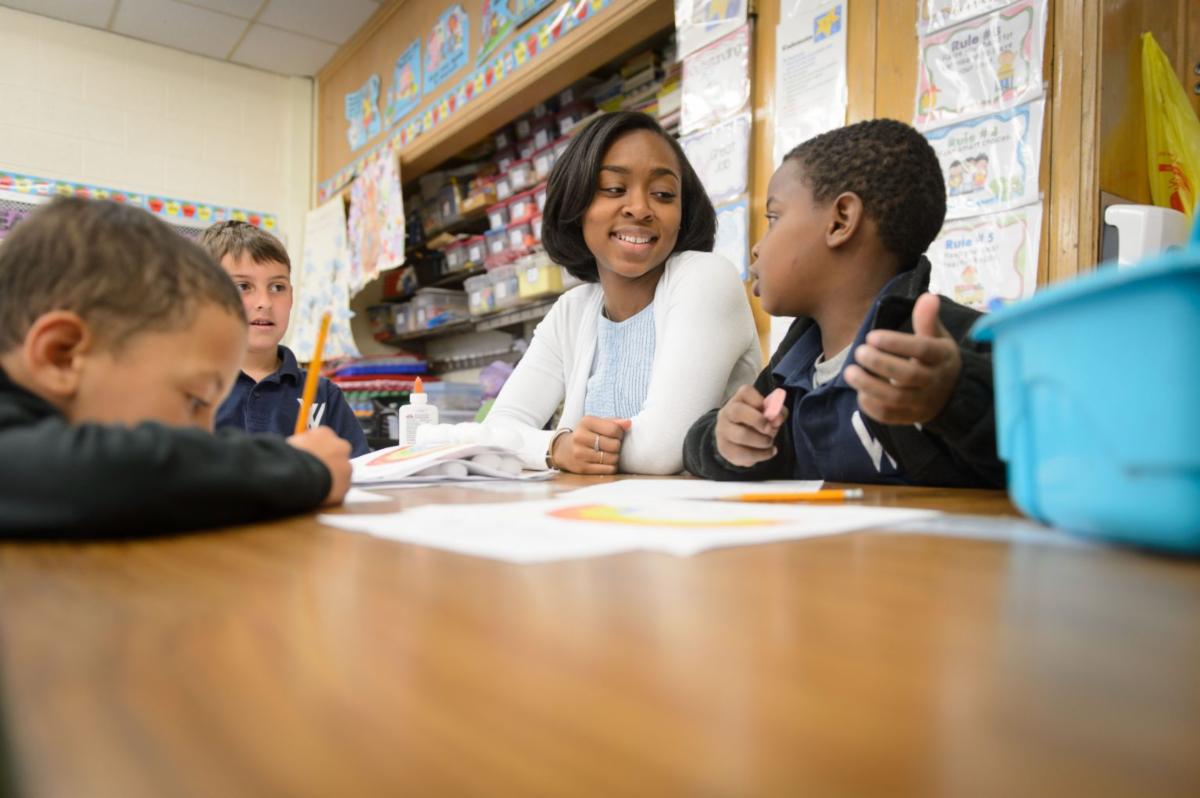
Picture of a teacher looking a her student.  Another student is writing, and another one looking at her.

(UConn Photo)

In December, experts from around the nation gathered at UConn Storrs to take the first steps toward changing special education policy and re-establishing civil rights protections for Students of Color. Led by Neag School of Education faculty Nicholas S. Bell and Zachary Collier, as well as Verónica Vélez from Western Washington University, the event outlined a vision for a new QuantCrit policy center that will prioritize innovative research methods and analysis, along with community collaborations, to advance racial and disability justice.

“We believe that current educational policies and practices, especially in special education, deny Students of Color access to an equitable education, while simultaneously divesting in their educational futures,” says Bell, an assistant professor in the Department of Educational Psychology.


Read more here.