|
This month, we are acknowledging Developmental Disabilities Awareness Month, National Nutrition Month, National Senior Nutrition Month, National Social Work Month, and Women’s History Month.
Please read on to learn about our latest resources and news, as well as other resources and news from around the field.
| | Join Us for Our Upcoming Webinars! | | |
Across the Map, Around the Table: Six FRC Models Lifting Up Kin Caregivers and Grandfamilies
2:00 p.m. – 3:45 p.m. ET
The webinar will be one hour and fifteen minutes, followed immediately by an open Q&A session that will last for half an hour.
Learn how Family Resource Centers (FRCs) are creatively supporting kin across the country. You’ll hear from staff and kin caregivers from six FRCs spanning rural and urban communities in Arizona, Idaho, Kentucky, Louisiana, New Jersey, and Virginia. We are co-hosting this webinar with the National Family Support Network (NFSN), a subject matter expert organization. NFSN Co-Executive Director Brenda McChesney will serve as the facilitator.
| | |
Family Resilience in Black Kinship Care: Perspectives of Children, Caregivers, and Birth Parents
2:00 p.m. – 3:30 p.m. ET
In keeping with our practice, the webinar will be one hour, followed immediately by an open Q&A session that will last for half an hour.
Explore the unique history and use of kinship care in the Black community, one of the community’s enduring family strengths. The presentation will shed light on the vital role of intergenerational family relationships and community in shaping the well-being of Black kinship families. Our presenter is Subject Matter Expert Dr. Tyreasa Washington.
| | | | We’ve given our LinkedIn page a glow up! Visit us to check out our new banner and other new graphics. While you’re there, you’ll see the latest news, data, and replicable practices and tools to support your work with kinship families. Follow our page to keep up with the latest kinship news between monthly issues of this newsletter. | | What's New From the Network? | | Starting a Kin Caregiver Support Service Toolkit | | |
Along with our partners at USAging, the Network held a learning community on starting a kin caregiver support service. We have now published a toolkit that shares information, resources, and lessons learned:
Additionally, two supplemental modules address common challenges:
| | Spotlight on Family Resource Center Innovation | | | | In partnership with our subject matter experts at the National Family Support Network, we’ve created six pieces to spotlight Family Resource Centers from around the country that are offering innovative, tailored supports to kinship/grandfamilies. Each piece includes sections on collaborating for impact, program innovation, results, and ideas for replication. | | A Toolkit to Develop and Enhance Kinship Navigator Programs | | To support the development and enhancement of kinship navigator programs, we have created a toolkit to help you follow an evidence-based model in the Title IV-E Prevention Services Clearinghouse and draw down ongoing, uncapped, federal funding; get ready to apply for an upcoming title IV-B competitive grant opportunity; or build or enhance a navigator program that is not seeking these federal funding opportunities. Along with a background section that lists the existing evidence-based models and the federal requirements for these programs, our 10 tips draw from over 25 years of working with kinship navigator programs across the country. | | | A Snapshot of an Exemplary Practice: Onsite Social Services | | | | |
Kin caregivers often struggle to connect to the programs that offer the resources they need. Case managers and kinship navigators help.
Foster Kinship, a trusted nonprofit in Las Vegas, Nevada, has taken this assistance to the next level. They’ve partnered with the state to embed government workers and create a one-stop, welcoming place for kin caregivers to get services and connect to public benefits. The Network has recognized their innovation as an Exemplary Kinship Practice.
| | |
This two-page snapshot is a preview of a longer profile of this practice that will be available soon, along with profiles of 17 other Exemplary Kinship Practices. The Exemplary Practice profiles will be published in six groups. Each group will feature two to four practices, all with details and tips for replication. The groups are:
- Assessing and Meeting Caregiver Needs
- Connecting Caregivers to Each Other
- Implementing Kin-First Child Welfare Strategies
- Offering Respite to Caregivers
- Providing Legal Services
- Raising Awareness About Kinship Families Statewide
| |
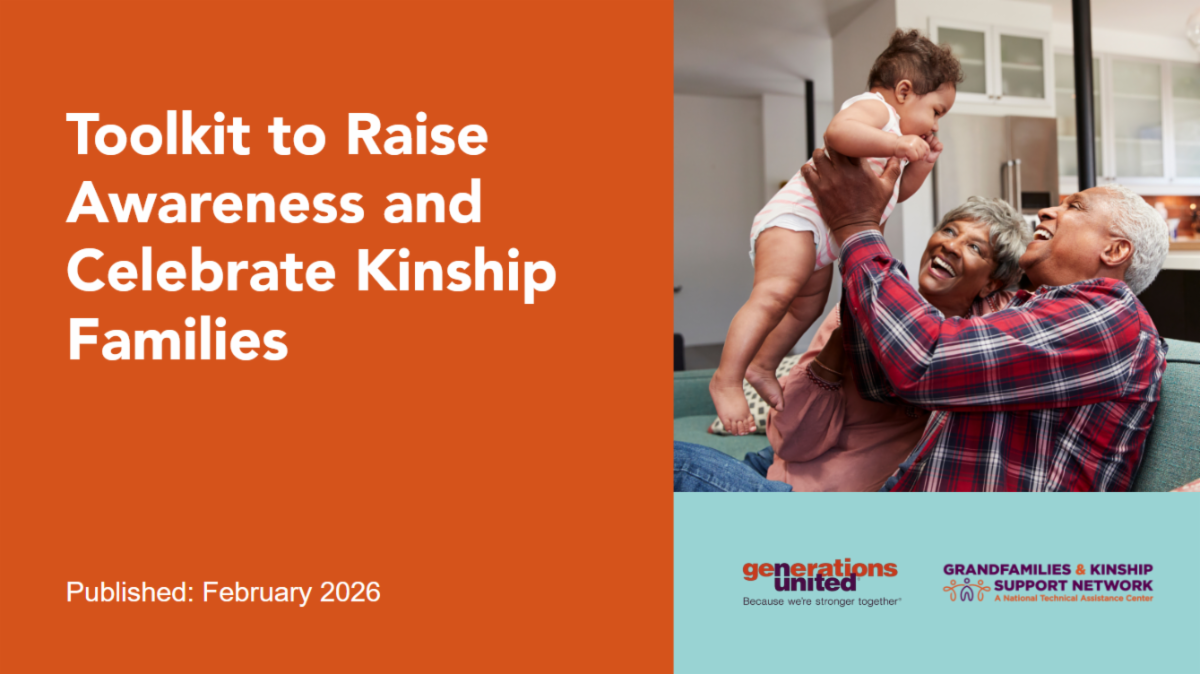
Toolkit to Raise Awareness and Celebrate Kinship Families
This toolkit shares customizable resources that professionals around the country can use to raise awareness about both the strengths and unique needs of kinship families.
| |
|
Announcing the 2026 National Family Resource Center Kinship Peer Learning Cohorts
In collaboration with the National Family Support Network, we are pleased to announce the organizations selected to participate in two national cohorts bringing together Family Resource Centers (FRCs) and partners that are committed to strengthening supports for kin caregivers and grandfamilies. The cohorts will participate in peer learning, applied practice, and shared innovation.
| | |
Cohort 1: School-Based FRCs & Kinship Engagement
- Connect The Dots (GA)
- Family Education and Support Services (WA)
- Middle Tyger Community Center (SC)
- Touched By One Touched By All (WA)
- Urban League of Kansas (KS)
| | |
Cohort 2: Engaging Male Kinship Caregivers through FRCs
- Child Care Resource Center (CA)
- Connections Family Resource Center (GA)
- The Front Porch (GA)
- Grail Family Services (CA)
- Ramsey County Attorney’s Office Child Support Services (MN)
| | |
We extend our sincere thanks to all organizations that applied. The strength and diversity of applications reflect powerful work happening nationwide to support kin caregivers and grandfamilies.
We look forward to sharing tools, insights, and learnings from these cohorts with the broader field.
| |
Additional Resource Updates
We are pleased to have over 180 resources in our resource library, and the vast majority of them are original pieces created for the Network, whether by partners, subject matter experts, or staff. Additionally, more resources are always in the works. As we continue to add to our library, we are aware that some of our existing resources include links that are no longer working, and we are in the process of reviewing them and updating links as necessary. If you come across a resource with a broken link (or any other error), please don’t hesitate to reach out to us. We are also always open to any comments or questions you may have with regard to our resources. Please contact us at info@gksnetwork.org.
| | |
Check out our post on a new brief that elevates kinship care, published by the Office of the Assistant Secretary for Planning and Evaluation in the U.S. Department of Health and Human Services. | | Individual Assistance Spotlight | | | | The Network is responding free of charge to individual technical assistance (TA) requests from professionals who work in systems and organizations that serve kinship/grandfamilies. To request assistance on the array of issues impacting kinship/grandfamilies, please complete our request assistance form. | | |
We answer questions and respond to requests of all sizes. Some questions focus on a very specific topic and/or location, while others are much broader. Below, we share an example TA request and response. As is typical for this spotlight, the request below only required an email response. Many of our requests benefit from more intensive involvement from our TA team. We often host meetings with peers or other subject matter experts; review data and policies; and provide specific guidance to help enhance programs, implement policies, or otherwise improve services for kin.
Request
My goal is to compile a guide for my team around where we, and our kinship navigator program agencies, can elevate kin caregiver voices. What resources do you have that would be helpful?
Response
We have multiple resources that you may be interested in reviewing to contribute to your guide.
Several agencies and organizations have successfully created advisory councils that engage kin caregivers as members, such as The Massachusetts Commission on the Status of Grandparents Raising Grandchildren, the Colorado Department of Human Services Family Voice Council, and the Washington Kinship Care Oversight Committee.
The Network also hosted a webinar yesterday (Wednesday, March 18), Kinship Peer Liaisons: Harnessing Lived Experience to Support Families. The recording and slides are now available, and they may provide you with further insight into how to partner with families to provide services.
To make an individual request, please complete this form and we will get in touch.
| | |
“I expected to receive information like links or resources in an email. Instead, I was assigned a staff member from the Network. I felt like I had a personal concierge for 18 months. Leland (with the Network) asked smart questions and gave guidance specific to Wisconsin’s aging network. He delivered a training, co-designed another training, facilitated connections, and sent pertinent updates.”
– Bryn Ceman, Greater Wisconsin Agency on Aging Resources (GWAAR)
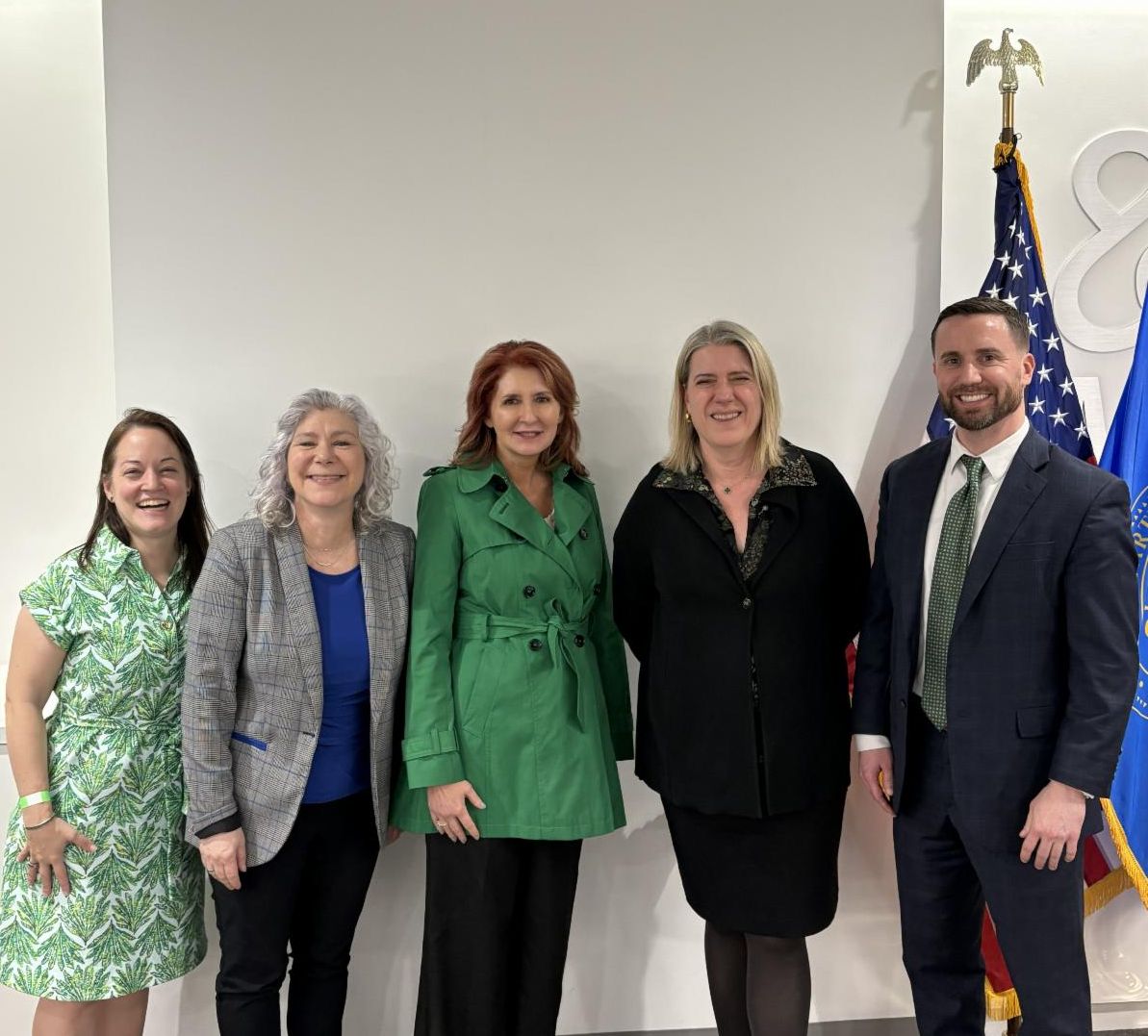
| | Presentations by the Network | | - On Tuesday, March 17, Network Director Ana Beltran and Subject Matter Experts Marina Nitze, Heidi Redlich Epstein, Steven Olender, and Jack Tait were honored to help support a fantastic Kinship Convening at the Administration for Children and Families (ACF) within the U.S. Department of Health and Human Services. They facilitated panels and breakout sessions on kin-specific foster home approval standards, kin finding and engagement, and measuring data to align with a jurisdiction's kin goals, all as part of an action-oriented, interactive afternoon with 35 jurisdictions. ACF Principal Deputy Assistant Secretary Cody Inman hosted the convening and provided opening and closing remarks.
| | Left to right: Marina Nitze, Heidi Redlich Epstein, Treva Johnson, Ana Beltran, and Cody Inman | | |
- Also on March 27, Network Director Ana Beltran will participate in an in-person kin-first gathering of the New England Association of Child Welfare Commissioners & Directors.
- Our partners at the National Indian Child Welfare Association (NICWA) will be holding the 44th Annual Protecting Our Children Conference in Oklahoma City, Oklahoma, from Sunday, March 29 through Wednesday, April 1. During the conference, there will be several workshops about cross-system collaborations for kinship/grandfamilies:
- Representatives from Oneida Nation of Wisconsin will present on their efforts as part of the Network’s Bridging Systems for Kinship Families initiative.
- Tara Reynon from NICWA and Leland Kiang from Network partner USAging will present a workshop that will focus on collaborations between child welfare and Title VI Native American Aging Programs to support kinship/grandfamilies.
- Representatives from the Network’s evaluation partner, Child Trends, will also lead a workshop.
In-person and virtual registration options are both available.
| | What's New Around the Network? | |
Upcoming Webinars and Events
- Webinar – Funding with Confidence: A New Era of Oversight for Funding Programs, presented by the American Public Human Services Association and EY on Monday, March 23 at 11 a.m. ET
- Webinar – Aging Network Innovation Conversation, presented by the National Caregiver Support Collaborative, a project of the U.S. Administration for Community Living, on Tuesday, March 24 at 2 p.m. ET
- Webinar – Tribal Adoption Tax Credit, presented by our partners at the National Indian Child Welfare Association (NICWA), on Tuesday, March 24 at 3 p.m. ET
- Virtual Event – Celebrating the 2026 Senior Nutrition Program: Serving Up Solutions, presented by the U.S. Administration for Community Living, on Thursday, March 26 at 2 p.m. ET
- Webinar – Operating Strong Summer Meals Programs, presented by our subject matter experts at the Food Research & Action Center (FRAC) on Thursday, March 26 at 3 p.m. ET
- Webinar – A Home for Every Child: Aligning Policy, Practice, and Data, presented by the American Public Human Services Association and Northwoods and featuring Network Director Ana Beltran, Rita Soronen of The Dave Thomas Foundation for Adoption, and Mike Leach of Think of Us, on Thursday, April 9 at 1 p.m. ET
- Virtual Symposium – Annual Older Adult Mental Health Awareness Day, presented by the National Council on Aging , the U.S. Administration for Community Living, the Health Resources and Services Administration, and the Substance Abuse and Mental Health Services Administration, on Thursday, May 7, from 10 a.m. to 5 p.m. ET
New Resources
| |
Notable Funding Opportunities
(listed in order of application deadline)
| | |
The Hansen Family Foundation focuses on several areas that relate to kinship families, including disadvantaged children, education, and arts and culture. The Spring 2026 application closes at 5 p.m. ET on Monday, March 23.
The Fiscal Year (FY) 2026 AmeriCorps Seniors RSVP Opportunity is now accepting applications. AmeriCorps Seniors RSVP volunteers have supported kinship families, including by tutoring children, helping prepare simple taxes, assisting victims of natural disasters, providing nutrition/food support, and facilitating opioid and substance use education workshops. Eligible applicants include Tribes, institutions of higher education, local governments, nonprofit organizations, states, and U.S. territories. Applications are due by 5 p.m. ET on Thursday, March 26.
Fiscal Year (FY) 2026 AmeriCorps State and National Competitive Grants are awarded to eligible organizations that engage AmeriCorps members in evidence-based or evidence-informed interventions to strengthen communities. The application deadline is Tuesday, March 31.
The 2026 Health Access Hero Grant program from DentaQuest, a Sun Life company, is now accepting applications. Grants to nonprofit organizations fund programs driving sustainable change for long-term positive health impact. The application deadline is Tuesday, March 31.
The Google.org Impact Challenge: AI for Government Innovation is looking for nonprofits, social enterprises, and academic institutions that are partnering with governments and using generative and agentic AI capabilities to transform how public services function for social good. Beyond funding, selected organizations will receive dedicated pro bono technical support from Google AI experts through a multi-month Google.org Accelerator. The application deadline is Friday, April 3.
Cambia Health Foundation is accepting applications to its 2026 Healthy and Connected Aging Request for Proposals (RFP). The RFP will support strategies that address the health needs of older kinship/grandfamily caregivers (age 55+) within a comprehensive approach that serves the entire kinship family. The grants - anticipated to be up to $50,000 - will cover kinship services provided by 501(c)(3) nonprofit organizations, schools/universities, and government agencies in Idaho, Oregon, Utah, Washington, and the Tribal Nations within these states. The application deadline is Thursday, April 9 at 5 p.m. PT.
Share Our Strength and HealthBegins are launching another cohort of grant funding for the Medicaid Food Security Partners Program. Share Our Strength will be funding four state-based organizations or coalitions to create or implement state Medicaid administrative changes that promote nutrition security policy, with a special focus on strategies that promote SNAP and WIC enrollment among children and families. The application deadline is Friday, April 17 at 11:59 p.m. ET.
The purpose of the U.S. Substance Abuse and Mental Health Services Administration’s Children’s Mental Health Initiative program is to provide comprehensive community mental health services to children, youth, and young adults – from birth through age 21 – with a serious emotional disturbance. The application deadline is Monday, April 20.
| | |
|
In addition to speaking with a variety of Tribes at the upcoming National Indian Child Welfare Association (NICWA) conference, GAO is hoping to meet with other Tribes that receive varying levels of federal funding and have different child welfare service provision structures. To learn more about this opportunity, click on the link above.
People Magazine, March 17, 2026
This article, by Alexandra Rockey Fleming, profiles a kinship family in Ohio and quotes Generations United Deputy Executive Director Jaia Peterson Lent.
Child Trends Blog, March 11, 2026
This blog post, written by our partners at Child Trends, focuses on the benefits and strategies associated with successful partnerships between public and private child welfare agencies. It places a particular emphasis on the ways these collaborative efforts can contribute to the development and maintenance of a kin-first culture while also improving support for kinship families. The Kinship Therapeutic Foster Care pilot program in North Carolina, which Child Trends recently evaluated, serves as an example of collaboration at work.
February 25, 2026
The National Association of Counties (NACo) is launching the Transforming Human Services Initiative, a new effort to help counties modernize benefits administration, integrate service delivery systems, and strengthen county capacity to fulfill their responsibility as the country’s safety net for children and families.
Administration for Children and Families (ACF), U.S. Department of Health and Human Services, February 19, 2026
The Administration for Children and Families (ACF) rescinded 35,781 pages of sub-regulatory guidance, representing 74% of ACF’s total sub-regulatory footprint.
|
| |
Please follow the Grandfamilies & Kinship Support Network on LinkedIn here! |
|  |
All of our previous newsletters are linked on our website, so you can access them anytime. |
| Did you receive this newsletter as a forwarded email? You can sign up to get it in your inbox every month! | | |
The Grandfamilies & Kinship Support Network is the only national technical assistance center for those who serve grandfamilies and kinship families. It was created to help guide lasting, systemic reforms. The Network is a new way to collaborate, to work across jurisdictional and systemic boundaries, to eliminate silos, and to help one another and be helped in return. Thank you for being part of it.
We'd love to hear from you! Please send any feedback on this newsletter to mweiss@gu.org.
| | |
The Network is supported by the Administration for Community Living (ACL), U.S. Department of Health and Human Services (HHS) as part of a financial assistance award totaling $9,950,000 with 95 percentage funded by ACL/HHS and $523,684 and 5 percentage funded by non-government sources. The contents are those of the authors and do not necessarily represent the official views of, nor an endorsement, by ACL/HHS, or the U.S. Government.
|
| | | |