A Roundup of Recent Ulster County Business-Related News, Views, and More
March 25th, 2026
| | |
(Pictured: More than 100 founders, investors, mentors, and community members gathered to celebrate entrepreneurship and watch some of the region’s most promising startups take the stage with $10,000 in prize money up for grabs at Hudson Valley Venture Hub Demo Night on March 5, 2026.)
This month has brought encouraging news in local economic development. First of all, Ulster County has a new Economic Director, Joshua Stratton-Rayner, who has been in an acting role for the last few months. Congratulations! We wish you great success! On the heels of this announcement, the county announced that local diary company, Ronnybrook, has signed a letter of intent to set up a plant at iPark 87. This is very welcome news.
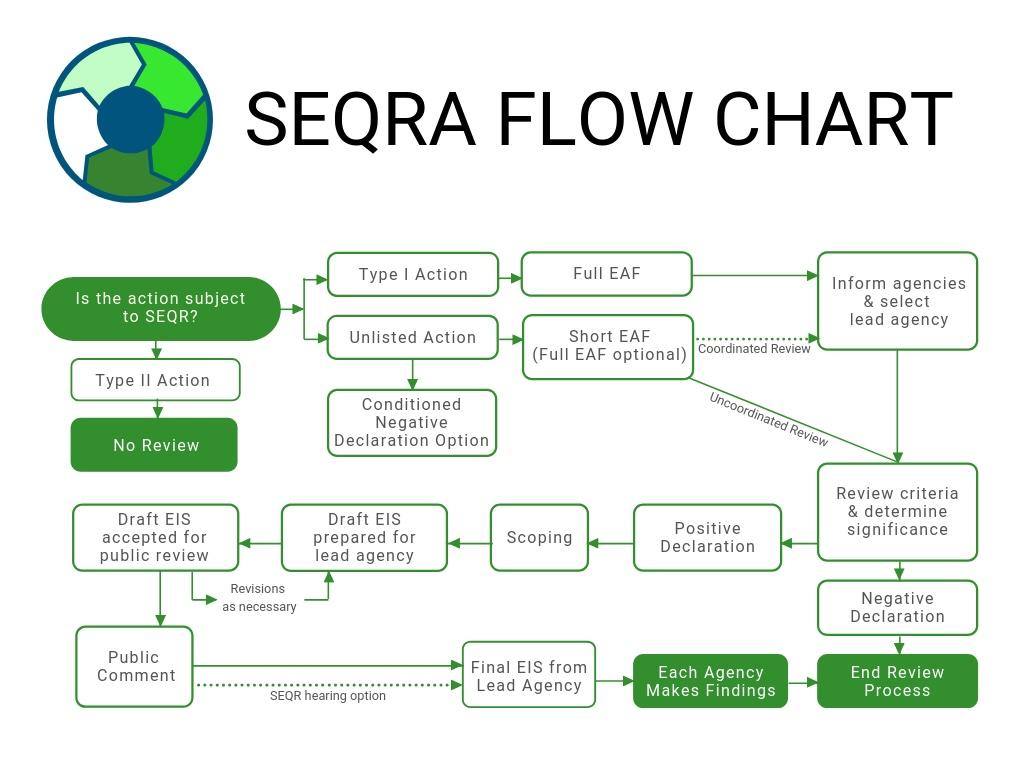
This month's edition of the Ulster Strong Business Bulletin shares news and opinion on the growing controversy over state environmental regulations. There is growing support to finally streamline the SEQRA process, including from Kingston's Mayor Noble, and many Ulster town supervisors. There is also a proposal by the governor to adjust the implementation of the state's progressive climate change laws due to mounting concerns about costs. We will be paying close attention to these discussions.
REMEMBER: you can always find this and other recent Ulster Strong Business Bulletins on our website at ulsterstrong.com
| | |
This newsletter includes the following:
Joshua Stratton-Rayner is confirmed as Ulster County’s economic development director
Kingston mayor, town supervisors call on state to exempt some housing projects from environmental reviews
Nature vs. neighbors:
Environmental review reform is on the table as state and local officials acknowledge process is stifling growth
Ronnybrook dairy setting up shop at iPark
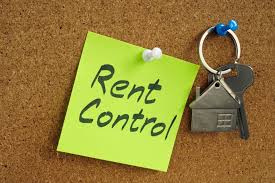
Landlords sue Kingston over vote to continue rent protections
Highland housing developments on track to add hundreds of units
NYSERDA memo exposes the double whammy on energy costs
Delaying climate action is unaffordable
A vital energy project built by local union workers — and built to last
DATA BITES
| |
Joshua Stratton-Rayner is confirmed as Ulster County’s economic development director
(HV1)
| | |
Ulster County’s top economic development post now has a permanent leader.
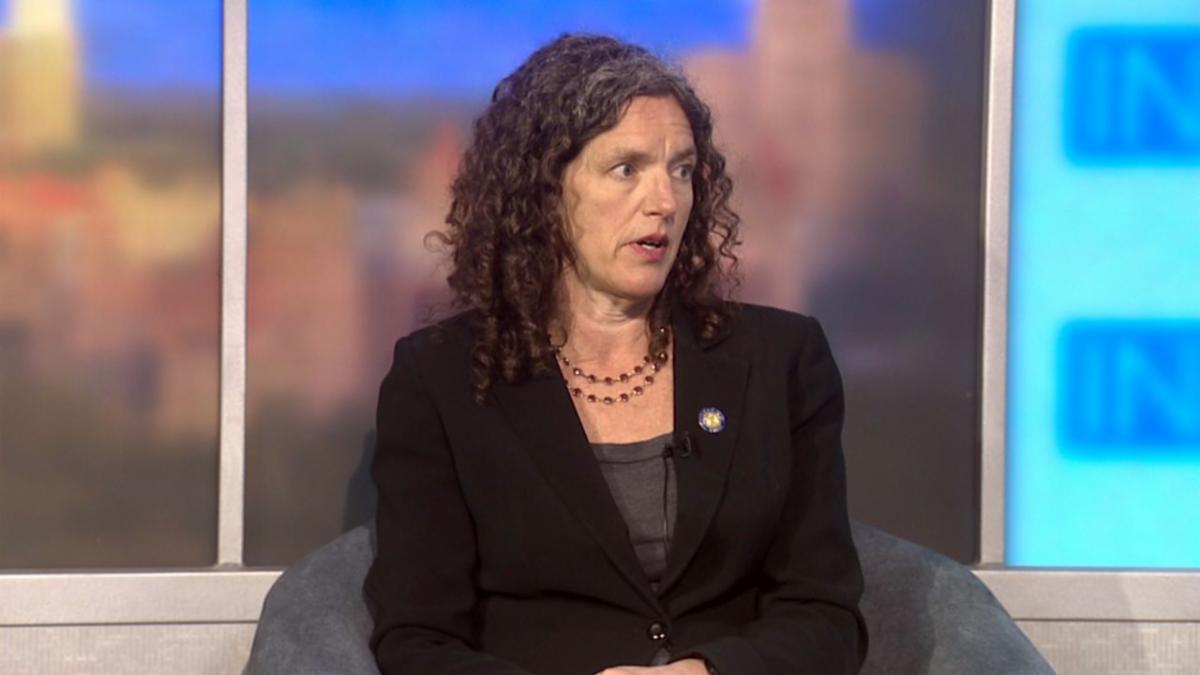
The Ulster County Legislature confirmed county executive Jen Metzger’s appointment of Joshua Stratton-Rayner as director of the county Department of Economic Development at its March 18 meeting. He previously served as deputy director since 2022 and interim director since the start of 2026, following the departure of former director Kevin Lynch.
“I am thrilled to serve the people of this beautiful, special place that has become a true home for my family. We share similar anxieties about local and global economic uncertainty, find support in our community of friends and families, and strive to build a kinder and more equitable society of neighbors — it motivates me to think generationally about the impacts of our initiatives,” said Stratton-Rayner. “As director of economic development, I look forward to helping implement county executive Metzger’s vision of creating the conditions that allow Ulster County’s citizens to pursue stability, prosperity, and resilience.”
Stratton-Rayner helped guide several high-profile initiatives since joining the department four years ago. Those include the county’s first comprehensive arts and culture plan and the forthcoming Main Street Forward program aimed at strengthening downtown districts. In a statement, the county also credited his work on efforts tied to state economic development awards for projects including the Barrel Factory in Kingston, iPark 87 in the Town of Ulster, and the redevelopment of the Wellington Hotel in Shandaken. He also serves on the City of Kingston’s zoning working group.
| | |
Kingston mayor, town supervisors call on state to exempt some housing projects from environmental reviews
(Daily Freeman)
| | |
The weaponization of SEQRA is partially to blame for so little housing being built, resulting in affordability issues plaguing our area and state. It has resulted in excruciatingly long and costly review times, inflating costs for housing projects. The governor has proposed a common-sense reform to SEQRA in order to get more housing built. This doesn't remove the important SEQRA process, but would make sensible changes to streamline the development application process. The mayor and supervisors support of this action is welcome news.
Mayor Steve Noble, along with several local town supervisors, is asking state lawmakers to pass a bill reforming the State Environmental Quality Review Act (SEQRA) to allow for an exemption for certain housing projects on already undisturbed land.
Noble penned the letter to State Assembly Speaker Carl Heastie and State Senate Majority Leader Andrea Stewart-Cousins on Monday, March 16, urging state legislators to pass Gov. Kathy Hochul’s Let Them Build proposal, which he said allows certain “reasonably sized housing projects on previously disturbed land from SEQRA.”
Locally, the letter was co-signed by Saugerties Town Supervisor Fred Costello, Esopus Town Supervisor Roscoe T. Pecora, Marbletown Town Supervisor Rich Parete, Gardiner Town Supervisor Michael Hartner, Olive Town Supervisor Jim Sofranko, and Wawarsing Town Supervisor Joseph P. Stoeckeler, along with other town and city leaders up and down the Hudson River.
| | |
Nature vs. neighbors:
Environmental review reform is on the table as state and local officials acknowledge process is stifling growth
(by Zac Shaw for Ulster Strong)
| | |
Most locals agree that preserving the environment is important, just as most agree with the need to preserve housing availability and economic vitality. Yet the two goals have grown increasingly at odds in New York State and especially in the Hudson Valley. Developers face unprecedented challenges and costs in building much-needed homes, jobs and businesses under environmental scrutiny that can appear to be general opposition to development rather than a serious commitment to balancing nature with human needs.
Roughly fifty years after the state’s first environmental review laws hit the books, it finally looks like the tide might be turning to loosen the stranglehold environmental reviews are having on local economic growth that benefits the community.
The State Environmental Quality Review Act, known as SEQRA, requires state and local agencies to study potential environmental impacts before approving a wide range of public and private projects. With New York facing a severe housing shortage and rising infrastructure costs, a growing chorus of state and local officials are calling for reform.
Gov. Kathy Hochul is pushing the most significant rewrite of SEQRA in decades as part of her “Let Them Build” agenda. The governor has cited studies showing that manufacturing, energy and housing projects can take as much as 56 percent longer to move from concept to groundbreaking in New York versus peer states.
Kingston Mayor Steve Noble joined in harmony, calling for environmental review waivers for much-needed housing development in Ulster County’s only city. In a March 16 letter to Assembly Speaker Carl Heastie and Senate Majority Leader Andrea Stewart-Cousins, Noble urged state leaders to advance Hochul’s SEQRA changes, arguing that “reasonably sized” housing proposals on “previously disturbed land” should be able to move forward without a full SEQRA process.
How SEQRA works, and why it takes so long
SEQRA is a procedural law. It does not ban development outright. Instead, it requires the “lead agency” for a project, often a planning board or municipal board, to identify potential impacts and decide whether those impacts may be significant.
| |
Ronnybrook Dairy Setting Up Shop at Old IBM Site
(Kingston Wire)
| | |
A Columbia County dairy company with deep roots in the Hudson Valley will move into a county-owned space on the former IBM campus in the Town of Ulster. On Monday, the Ulster County Economic Development Alliance announced it had signed a “letter of intent” — a preliminary to a lease agreement with Ancram-based Ronnybrook Farm Dairy.
If the deal is finalized, Ronnybrook Farm would act as an anchor tenant of the proposed Ulster Agribusiness Center, envisioned as a hub of food production and distribution at a site on the east side of the former IBM campus currently owned by UCEDA. The deal does not involve National Resources, a private company that owns the west side of the campus and first proposed bringing Ronnybrook Farm to the site back in 2022.
Plans call for the company to lease two buildings on the east campus. One, a 21,700-square-foot warehouse space, would be used for cultured dairy production. A 20,000-square-foot former powerhouse would be converted into cold storage. Ronnybrook Farm Dairy would use the cold storage for its own products and manage the space on behalf of UCEDA as part of the agribusiness center. The space would be subject to a 10-year lease with two five-year renewal options. The letter of intent sets a six-month time frame for the two parties to sign a formal lease agreement.
| |
Landlords sue Kingston over vote to continue rent protections
(Daily Freeman)
| | |
The suit argues a 2025 vacancy study prepared by the city established that Kingston is no longer eligible for rent stabilization, as the study found a vacancy rate of 7.04% for all surveyed buildings. That said, the landlords did acknowledge in the suit that the study found a much lower 3.73% for buildings with 22 or more units, “which could justify the continuation of ETPA rent stabilization for the limited class of buildings with 22 or more units.”
The landlords argue that the Common Council “repeatedly ignored, avoided, or even purported to reverse findings” in the Office of Housing Initiatives 2025 report, “based on various methodological ‘preferences’ that the Council never communicated to the OHI beforehand.”
“Throughout this Monday morning quarterbacking, the council would simply dispose of inconvenient facts on the ground that OHI could have used a different method for this, that, or the other thing even though the council never prescribed any methods,” the suit argued.
“At best, perhaps the council could have remanded the matter back to OHI to do a city-wide preference if that was their preference, but what the Council clearly could not do was throw its hands up and say that the vacancy rate must be at 5% or less merely because the OHI could have conducted the study in a different way,” the suit argued.
|
READ PRESS RELEASE BY
Housing Providers of New York State, Inc.
Kingston property owners today filed suit in State Supreme Court seeking a court ordered end to rent control in Kingston NY
“Kingston property owners today filed suit in State Supreme Court seeking a court ordered end to rent control in Kingston NY.
As in Newburgh and Poughkeepsie, where courts threw out rent control, we are confident the court will find that the Kingston City Council has illegally sought to invalidate the City’s own carefully conducted vacancy study in order to force through development-limiting regulations.
Kingston’s own vacancy study shows a 7.04% vacancy rate, and as a result, according to State law, rent control must end. Governor Hochul’s “Let Them Build” proposal to reduce regulation will increase housing supply and effectively lower housing costs, whereas the City Council’s oppressive and illegal imposition of rent control regulations has proven to have the opposite effect."
Rich Lanzarone, Executive Director
Housing Providers of New York State, Inc.
| |
Highland housing developments on track to add hundreds of units
(By HV1)
| | |
Highland is making strides toward addressing its critical lack of housing. The hamlet’s development pipeline currently boasts multiple projects totaling over 200 potential units. If they all move forward as planned, it will amount to a roughly 8% increase in total housing supply.
The most advanced project is Silver Gardens, a 57-unit affordable senior development for residents 62 and older, spearheaded by RUPCO. Construction began on the $22 million project in 2024. It’s specifically designed to link residents to services and transit options, while all units can be adapted to be wheelchair-accessible. Affordability is bolstered by free electricity, high-speed internet, community spaces, tenant-paid laundry. According to its website, applications are currently being accepted for residency.
A second major proposal is a mixed-use project at 3555 Route 9W. “Gateway Commons” is described as four three-story buildings totaling 140 apartments and 10,000 square feet of first-floor commercial space. As planned, the project would connect to municipal water and sewer and include a below-market component consistent with town requirements. The Town of Lloyd Planning Board approved the site plan on Aug. 28, 2025, and it’s currently under review by the Ulster County Industrial Development Agency (IDA). Having received public input and assessed the development against strict criteria, the IDA will soon determine if it requires a PILOT agreement (payment-in-lieu-of-taxes). Groundbreaking could reportedly begin as early as April 2026.
Separately, a 37-unit apartment building was proposed in January for Main Street in Highland, with a project schedule showing construction starting later in 2026 and finishing in late 2027. It’s presently in the early review stage.
Adding wind to Highland’s housing sails, the Town of Lloyd (which includes the hamlet) adopted a 2024 law updating its rules for accessory apartments, allowing one secondary unit in a single-family home through a special-use permit under town zoning. This has led to smaller apartment conversions that nonetheless contribute to easing pressure on the housing supply.
| |
NYSERDA memo exposes the double whammy on energy costs
Opinion by Maximillian Kimlin,
President of Kimlin Energy
| |
For the last decade, NYSERDA hammered home the same line in every report, ad, and program: Heat pumps are going to save you money. They'll cut your heating bills compared to oil or propane. Switch now, get grants, and pocket all those savings. Sounds great, right? But now, a recent NYSERDA memo reveals a stark reversal: fully implementing the state's Climate Leadership and Community Protection Act (CLCPA) could hike energy costs by $2,300 to $4,000 per year for average households, with upstate families relying on heating oil facing over $4,100 annually.
NYSERDA's past narratives painted heat pumps as money-savers. A 2018 analysis projected up to $1,900 in annual savings for single-family homes switching from oil furnaces, while programs like NYS Clean Heat emphasized lower operating costs compared to oil or propane. Advertisements and technical reports from the last 10 years consistently highlighted efficiency gains and reduced bills. These promotions relied on optimistic assumptions about energy prices and performance in New York's harsh winters, often downplaying real-world inefficiencies where heat pumps struggle below freezing.
Now, amid political scrutiny under Governor Kathy Hochul, NYSERDA concedes that rapid deployment of heat pumps, EVs, and building upgrades is "infeasible" due to market constraints and skyrocketing costs. Heat pumps were never the cheapest option, installation costs far exceeding traditional furnaces or boilers. State grants offset much of this upfront cost, but you're paying for those grants through inflated delivery fees and surcharges on everyone's electric bills, the very charges New Yorkers are currently complaining about as utility rates soar. What happens when subsidies dry up? Replacement costs could mirror installs, leaving homeowners with hefty bills every 10-15 years.
The real driver of higher costs isn't just upfront switches, it's CLCPA policies making fossil fuels more expensive to force the transition to electricity. The Cap-and-Invest program (delayed but looming) acts like a tax on heating oil, propane, and natural gas, with projected hikes including up to $600+ annually for heating oil users and comparable increases for propane. Pipeline restrictions, denying new natural gas lines on environmental grounds, created bottlenecks, especially in winter. This forces dual-fuel power plants (like those in the Albany area) to switch to fuel oil during shortages, spiking demand and prices up to $1/gallon higher in recent cold snaps.
Northeast heating oil and propane prices already run 18-35% above the national average due to these policy-driven constraints. The government's approach: Can't make electric reliably cheaper? Make natural gas, fuel oil, and propane costlier instead.
Politicians have said "Electrification isn't the cheapest option—it's pay now or pay more later." Turns out it's pay now AND pay more later. NYSERDA memo exposes the double whammy, immediate hits from grants disguised as electric bill surcharges, plus massive future hikes from mandates that make fossil fuels unaffordable. NYSERDA's push, fueled by climate goals, burdens residents who can't afford it. The mantra sounds noble, but it's hitting millions hard. Time to call it what it is, a costly mandate dressed up as progress.
| |
Delaying climate action is unaffordable
Opinion by Ulster County Executive Jen Metzger
| | |
Backtracking on New York’s Climate Act will harm, not help, energy affordability. The high cost of our fossil fuel dependence couldn’t be clearer. The U.S. war in Iran has caused oil and gas prices to skyrocket, hurting our residents at the pump, and hurting our farmers who must pay much more for fuel and inputs.
Because of the downstate region’s over-dependence on fossil fuels for electricity generation (over 93%, according to the New York Independent System Operator’s 2025 Power Trends report), electricity supply prices remain stubbornly high.
The U.S. has one of the most oil-intensive economies in the world. This comes at a cost, and the war further exacerbates the cost to consumers. If this war is prolonged, the impacts will reverberate throughout the economy, increasing prices of food and other goods and services and potentially inducing a global recession.
Shifting to an energy-efficient, clean energy economy is not just a climate solution. It is also an energy independence and energy affordability solution. Investments in energy efficiency in buildings and homes reduce emissions and permanently reduce energy costs. Renewable energy resources remain the lowest-cost energy sources, are locally sourced, and do not suffer the extreme price volatility of oil and gas. The solar array on Ulster County’s capped landfill produces, on average, two million kilowatt-hours a year and nets the county about $175,000 annually — a big savings to our taxpayers.
Ulster County’s investments to electrify the public transit system are also paying taxpayer dividends. Our electric buses are less costly to operate and maintain than the old diesel buses. Last year, our five electric buses saved us over $85,000 in fuel and maintenance costs. At today’s price of $5 per gallon for diesel, taxpayers are seeing even greater savings. More importantly, public transit itself is both a climate and affordability solution, providing a low-cost and low-emissions way for residents to get to work, school, and the grocery store. In recognition of these broad benefits, Ulster County has provided free fares since 2022.
At last week’s NYS Association of Counties Legislative Conference, where I chair the Standing Committee on Climate, Energy, and Environment, the state’s 62 counties unanimously passed resolutions calling for increased state support for residential energy efficiency programs and transportation electrification, among other measures. Local governments, responsible for delivering services to the vast majority of the state’s residents, understand the affordability benefits of climate investment.
When I served in the state Senate during the first Trump administration, we passed the nation-leading 2019 Climate Leadership and Community Protection Act in full recognition that states had to lead at a time when the federal government was taking us backwards. The same is true today. As County Executive, I urge state leaders not to abandon New York’s climate leadership. It would be irresponsible to ignore the costs of delaying action.
| |
A Vital Energy Project Built by Local Union Workers — and Built to Last
Guest Column Submission from Hudson Valley Building & Construction Trades Council
- By Todd Diorio
| | |
As New York State accelerates toward a cleaner, more reliable energy future, communities are right to ask tough questions about safety, local jobs and whether new infrastructure will strengthen — not strain — the power grid.
In the Town of Ulster, the answer to all three is yes.
That is why the Hudson Valley Building & Construction Trades Council and Terra-Gen reached a memorandum of understanding ensuring a proposed battery energy storage system, or BESS, will be built by highly skilled local union labor. The agreement reflects confidence not only in the construction quality the project will deliver, but also in the safety and reliability of modern battery storage technology.
Battery energy storage is no longer experimental. It is a proven tool that strengthens the electric grid by storing power when supply is high and delivering it when demand peaks. Terra-Gen’s proposed 250-megawatt BESS at 430 Hurley Ave. would supply electricity equivalent to the needs of 250,000 homes and businesses for four hours, supporting grid reliability, resiliency and affordability.
Just as important is how the project will be built.
The Hudson Valley Building & Construction Trades Council, representing 29 unions, does not lend its support lightly. Its members have safely constructed some of the region’s most complex projects, including the Gov. Mario M. Cuomo Bridge and Resorts World Catskills. The Council’s decision to build this BESS underscores its confidence in Terra-Gen’s commitment to safety, advanced technology and rigorous construction standards.
Modern BESS facilities differ significantly from outdated predecessors. Today’s systems use fully tested, Underwriters Laboratories-certified modular steel enclosures designed to be weather-tight and to safely manage and contain highly unlikely fire scenarios. These systems include multiple layers of protection, such as continuous monitoring, automated controls and built-in fail-safe features.
New York battery storage projects are governed by some of the nation’s most stringent fire and building codes. The State recently strengthened its Uniform Fire Prevention and Building Code, requiring extensive fire testing and ensuring that credible fire scenarios are designed to be limited to a single battery cabinet. Fire safety leaders, including the FDNY, have said BESS units are safe when installed and operated under these updated standards.
Independent experts agree. The Electric Power Research Institute reports that BESS incidents worldwide declined 97% between 2018 and 2023 as technology and standards improved. The American Clean Power Association said that modern codes and design advancements have significantly reduced risk. The New York State Energy Research and Development Authority said the state’s codes rank among the highest safety standards internationally.
The BESS project will undergo thorough local review. Terra-Gen supports the Town of Ulster’s requirement for a comprehensive environmental review under the State Environmental Quality Review Act to ensure transparency, accountability and public input.
The project reflects what smart progress looks like: clean energy infrastructure built by local union workers, held to high safety standards and reviewed through a robust public process. It promises hundreds of good-paying union jobs today and a stronger, more resilient power grid for the future.
Todd Diorio is president of the Hudson Valley Building & Construction Trades Council. Learn more at builditunion.org.
| | | |
Support local independent journalism - subscribe to a local news outlet today
Supporting local journalism is essential for maintaining transparent local government, fostering community identity, and strengthening democracy. Local outlets hold officials accountable, provide crucial information on schools and businesses, and encourage civic engagement, acting as a vital, verifiable counterweight to polarized national media.
| | | |
DATA BITES
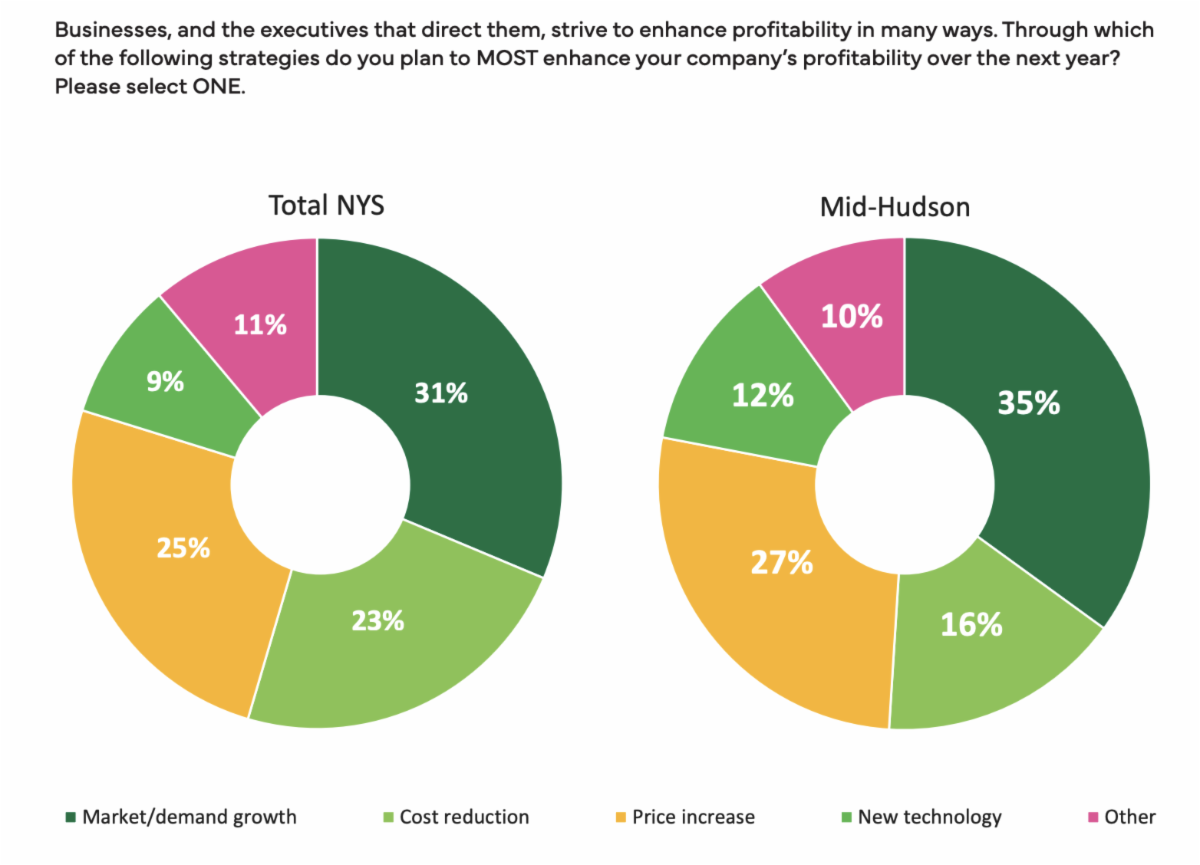
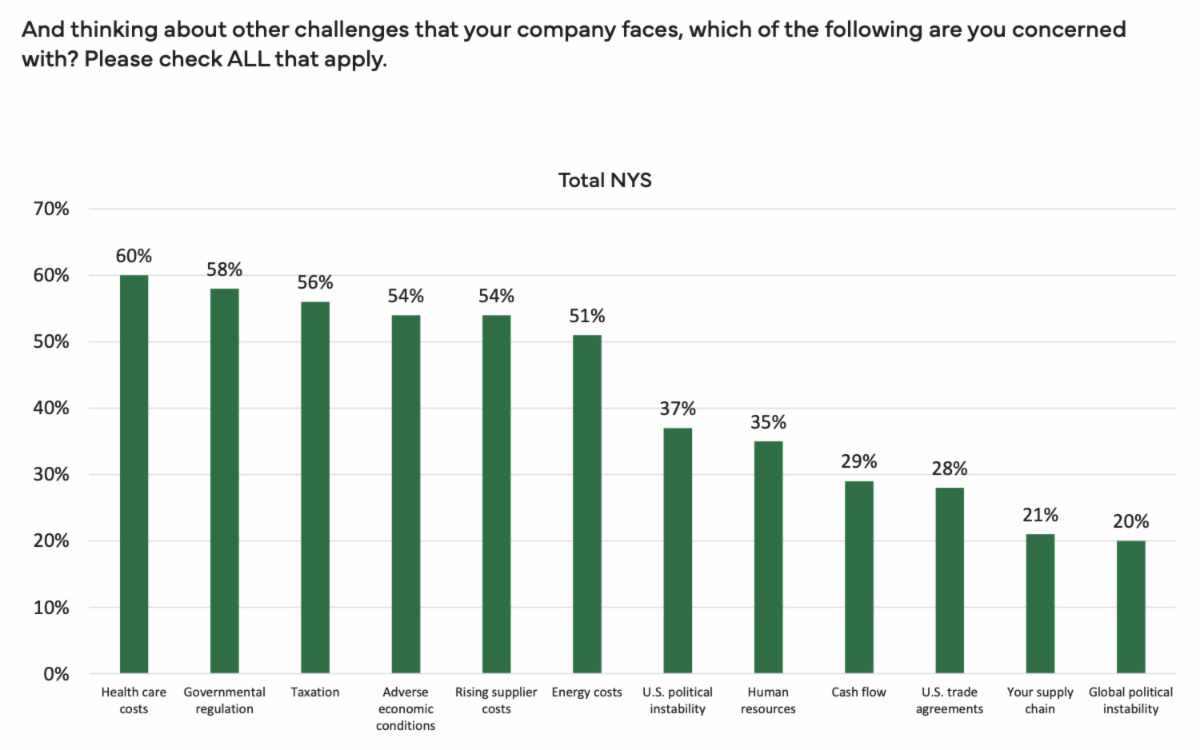
UPSTATE NEW YORK BUSINESS LEADER SURVEY 2026
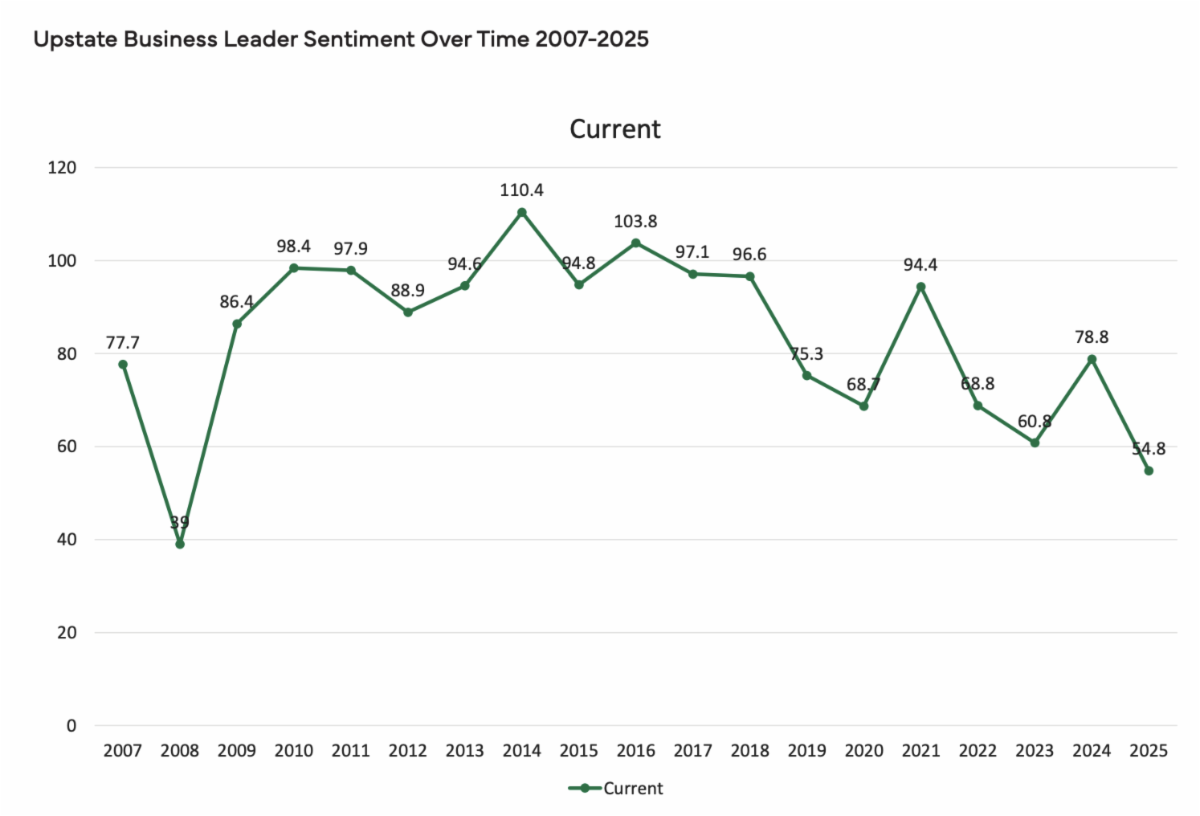
Business sentiments by CEOs in the Hudson Valley and NYS has lowered somewhat this past year - the lowest since 2008 - but panelists remain bullish on the longer range prospects in the HV.
View entire Survey Report
| | |
Ulster Strong is a non-profit advocating a pro-growth agenda that balances good jobs and investment opportunities with the environment and sustainability.
ULSTER STRONG SUPPORTS
Adding good-paying jobs;
Diversifying the local economy so it’s more resilient;
Encouraging new investment;
Balancing the environment with local economic needs;
Growing local tax base to support community services including schools, infrastructure and emergency services;
Updating planning and development procedures to be more
transparent and timely.
MEMBERSHIP INQUIRIES
| | Our Company | Contact Us | FAQs | Privacy Policy |
| | | |