|
Beneath the Sea
Dive Show
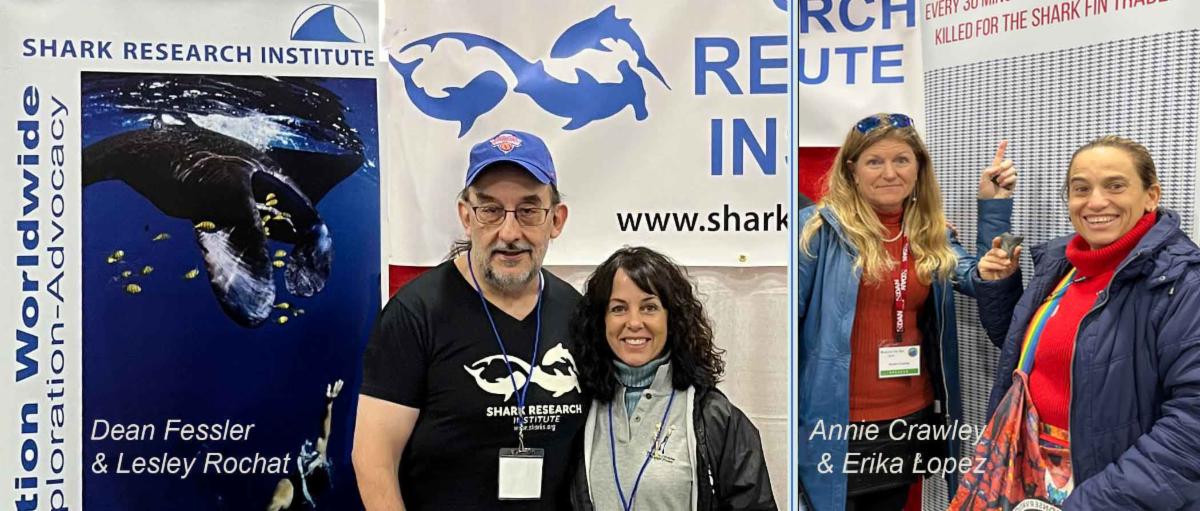
Beneath the Sea Dive Show last weekend at the Meadowlands in Secaucus, NJ, was a huge success due in large part to the SRI team of Dean Fessler, Heather Cifuentes, Terry Lieb and Dave Grant, plus Lesley Rochat who flew in from South Africa. A very special thanks to SRI member Jennifer Arnold who donated dozens of fossil megalodon teeth to SRI to sell at the show. The teeth were hot items at our booth and more checks for meg teeth and donations arrived this week from divers, WHOF members and BTS staffers.
| |
|
Whale Strandings in NY & NJ Due to Ship Strikes, Not to the Proposed Wind Farm
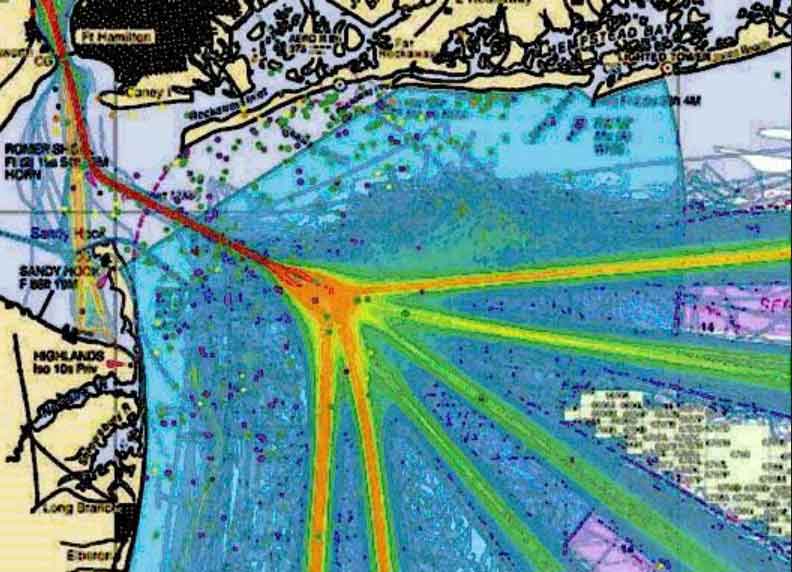
Humpback whales (Megaptera novaeangliae), a primary species involved in ship collisions, are especially vulnerable in coastal areas with high levels of shipping traffic such as NY and NJ. Three major shipping lanes direct vessels into one of two channels; Ambrose Channel leads vessels north into New York Harbor, while the Sandy Hook channel leads vessels west, serving New Jersey and Staten Island, NY. The whales feed inside the NY/NJ Harbor Estuary and in the major shipping channels. In addition to risk of death or serious injury, the very presence of vessels can negatively affect humpback whale behavior, leading to changes in respiration rate, dive time, swim speed, and short-term displacement. The whales are coming to area where there’s a lot of boat traffic,” says Paul Sieswerda, executive director of the New York-based nonprofit Gotham Whale, which studies and advocates for the local whale populations.
The deaths of 13 whales in New York and New Jersey in recent months led a few to speculate that the deaths might be linked to development of a major proposed offshore wind farm in the area. However, “There are no known connections between any of these offshore wind activities and any whale strandings, regardless of species,” said Benjamin Laws, deputy chief for the permits and conservation division with the NOAA Fisheries Office of Protected Resources. In fact, preliminary necropsies on the dead whales, including one conducted by scientists at the Marine Mammal Stranding Center found the whale “suffered blunt trauma injuries consistent with those from a vessel strike”.
Ocean Wind, the offshore wind project planned for the New Jersey coast , which has not even started, will consist of surveys that do not involve sounds or actions that will disturb whales or any ocean mammals, according to Erica Staaterman, a bioacoustician with the Bureau of Ocean Energy Management’s Center for Marine Acoustics.
| |
|
Whale Shark Poaching off India
Whale sharks have been a protected species in India since 1972, but off Gujarat they are being hunted again for their fins, which command a big price in the international market. See the 2004 Whale shark project India. The sharks are plentiful off the Gujarat coast; the poachers from south India and Maharashtra good returns for poachers, enough for them to take the risk and sail such long distances.
Read more
| |
|
Dolphins Used as Bait to Catch Sharks
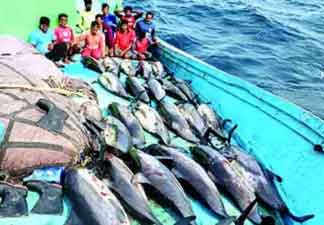
Last week, authorities in Porbandar, Gujarat, India, seized 22 dolphin carcasses and four bull shark carcasses, illuminating an illegal shark fin trade operation for nearby countries where shark fins are highly valued. Ten fishermen were arrested by the local forest department with the assistance of the Indian Coast Guard. They confessed to using the dolphin carcasses as bait to catch, whose fins were subsequently extracted and exported. India's Wildlife Protection Act banned the export of shark fins for international trade in 2015. Authorities are now monitoring the entire Gujarat coast.
Read more
| |
|
Mexico Slapped with
Rare Sanctions for
Failure to Protect Vaquita
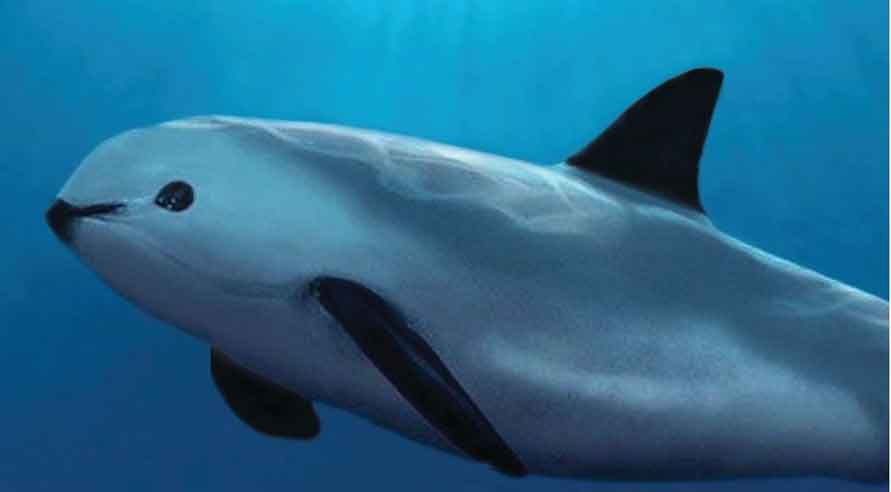
Mexico has been sanctioned by (CITES), the Convention on International Trade in Endangered Species for not protecting the Vaquita porpoise, world’s most endangered marine mammal.
It is estimated there may be as few as eight vaquitas remaining in the Gulf of California, the only place they exist and where they often become entangled in illegal gill nets and drown. The nets are set to catch totoaba, a fish whose swim bladders are a delicacy in China worth thousands of dollars per pound. The sanction comes after the CITES secretariat had repeatedly warned Mexico about the need to better protect the vaquita and totoaba. Mexico submitted a revised protection plan to CITES, after the body rejected an earlier version. Mexico's plan lists establishing “alternative fishing techniques” to gillnet fishing as one its top priorities. But in reality, the government’s protection efforts have been uneven, at best, and face often violent opposition from local fishermen.
The CITES trade database shows that Mexico is a major exporter of wild animals for exotic pets—especially to the United States—including live lizards and tarantulas, as well as wildlife products such as reptile skins and bird feathers. The sanction means that as of March 27, 2023, the 183 member nations of CITES will not consider Mexico’s documentation for any and all wildlife exports as valid.
| |
|
Warming Oceans and Marine Parasites
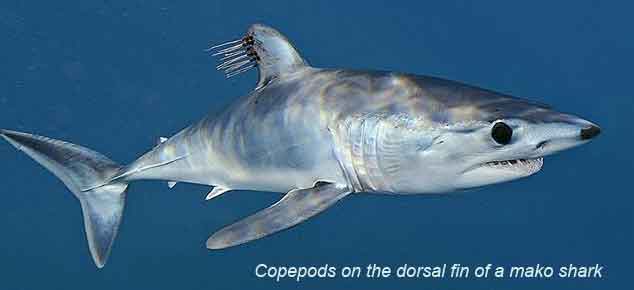
Parasites depend on hosts and are influential players in ecosystems, both for their positive effects on ecosystem function and for their negative effects on host species. Parasites, include worms, isopods, and copepods, all of which regulate their host populations from growing out of control. They affect food webs, competition, biodiversity and ecosystem structure. High parasite diversity is an indicator of a healthy ecosystem.
It was hypothesized that a warming of the ocean temperature would increase marine parasite transmission and severity. A rising temperature increases the metabolism of parasites, causing them to eat and replicate quicker, causing more damage to hosts. However, a study by the University of Washington to assess long-term trends in parasite populations found 17,259 parasites, comprising 85 types taken from 699 fish specimens, showed that parasites with one or two host species stayed pretty steady, while parasites with three or more hosts crashed. This decline is concerning for marine ecosystems.
| |
|
The Minds of Octopuses
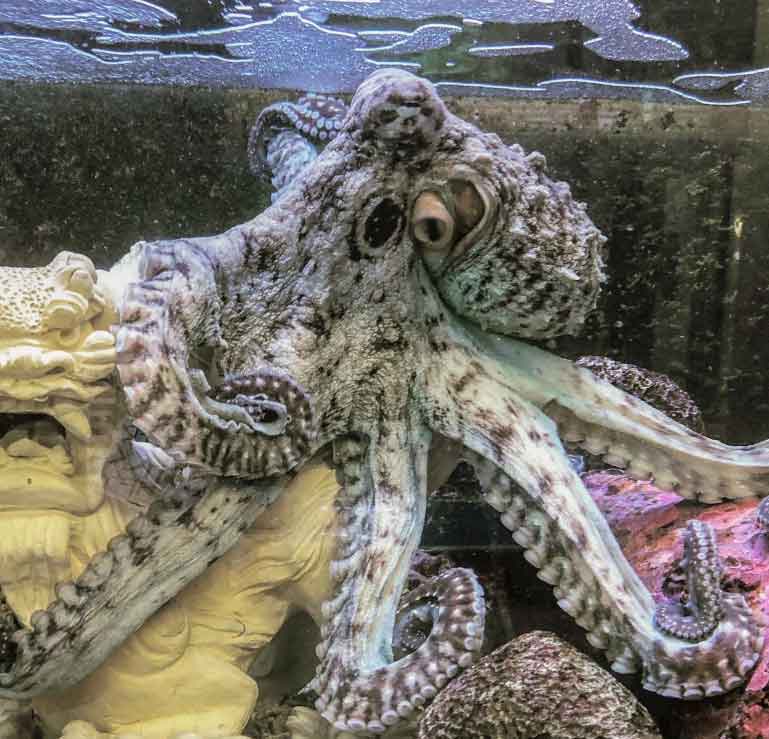
Octopuses are among the most intelligent, highly evolved invertebrates. "They have a large brain, a unique body, and advanced cognitive abilities that have developed completely differently from those of vertebrates,” says Dr. Tamar Gutnick of the Okinawa Institute of Science and Technology. In a scientific first, the scientists recorded brain waves from living freely moving octopuses. The researchers implanted data loggers into the region of brain of each animal believed to be important for visual learning and memory. Several distinct patterns of brain activity were identified, some of which are consistent in all animals, while others have not been described before. What precisely the recordings mean has yet to be decoded, but the research is a step in understanding the complicated minds of these animals, though the researchers say it's too early to know how octopus brains control the animals' behaviors.
Read more
| |
|
Customs Seize Over 300 Kilos of Dried Fish Maw and Shark Fin at Hong Kong Airport
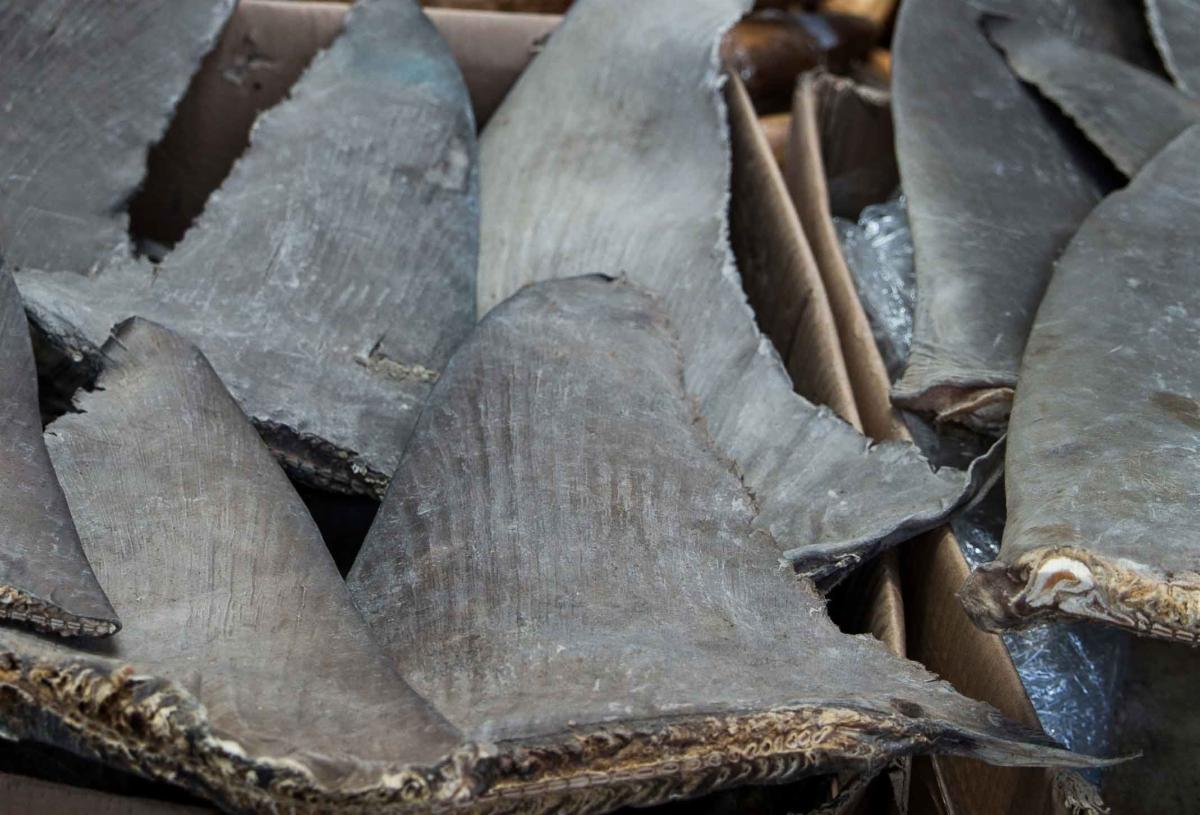
Hong Kong Customs officials seized illegal shipments of restricted dried fish maw and shark fins from Bangladesh The 52 kilograms of shark fins, valued at HK$30,000, were underneath the fish maw. The total value of the two shipments was HK $300,000. Authorities arrested two men in Sheung Shui and Sheung Wan, one of whom was a 33-year-old seafood shop owner as he was signing to receive the goods. Under Hong Kong's Protection of Endangered Species of Animals and Plants Ordinance, any person found guilty of importing or exporting an endangered species without a licence is liable to a maximum fine of HK$10 million and imprisonment for 10 years.
| |
|
China is Cracking Down on its Wildlife Trade. Is it Enough?
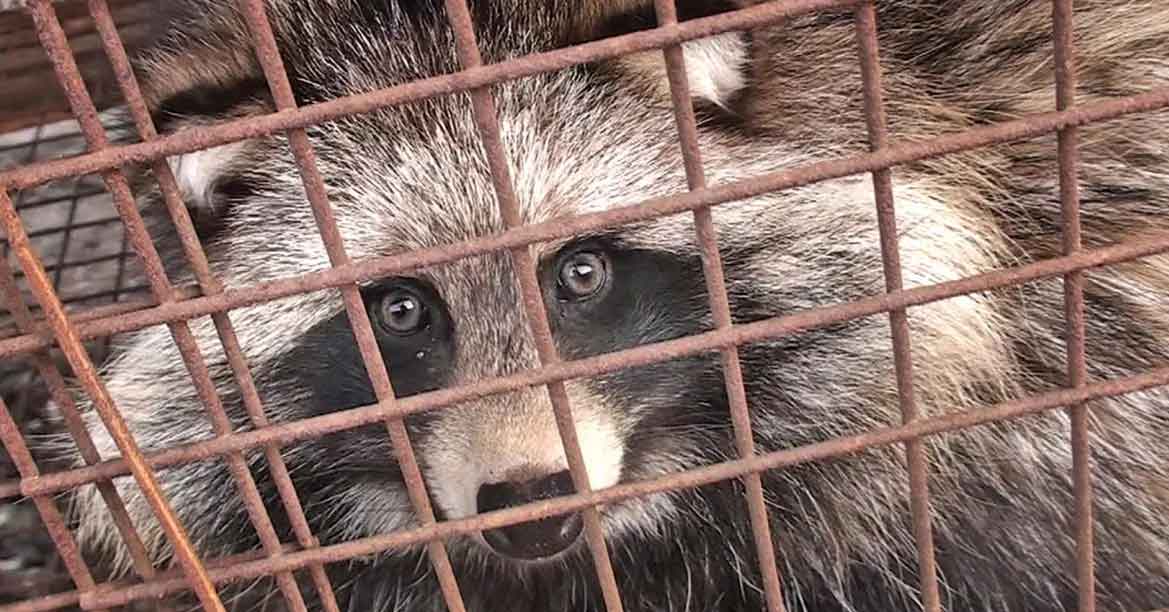
Scientists and conservationists have urged China’s government to crack down on a thriving trade in wild animals that threatens the nation’s rich biodiversity and increases the risk that a dangerous disease will jump from wildlife to humans. Last month researchers released an analysis of genetic material collected at the Huanan Seafood Wholesale Market in Wuhan, China, that suggests raccoon dogs and other wildlife being sold illegally at the market were carrying SARS-CoV-2.
Read more
| |
|
Dolphins Harassed
by Swimmers
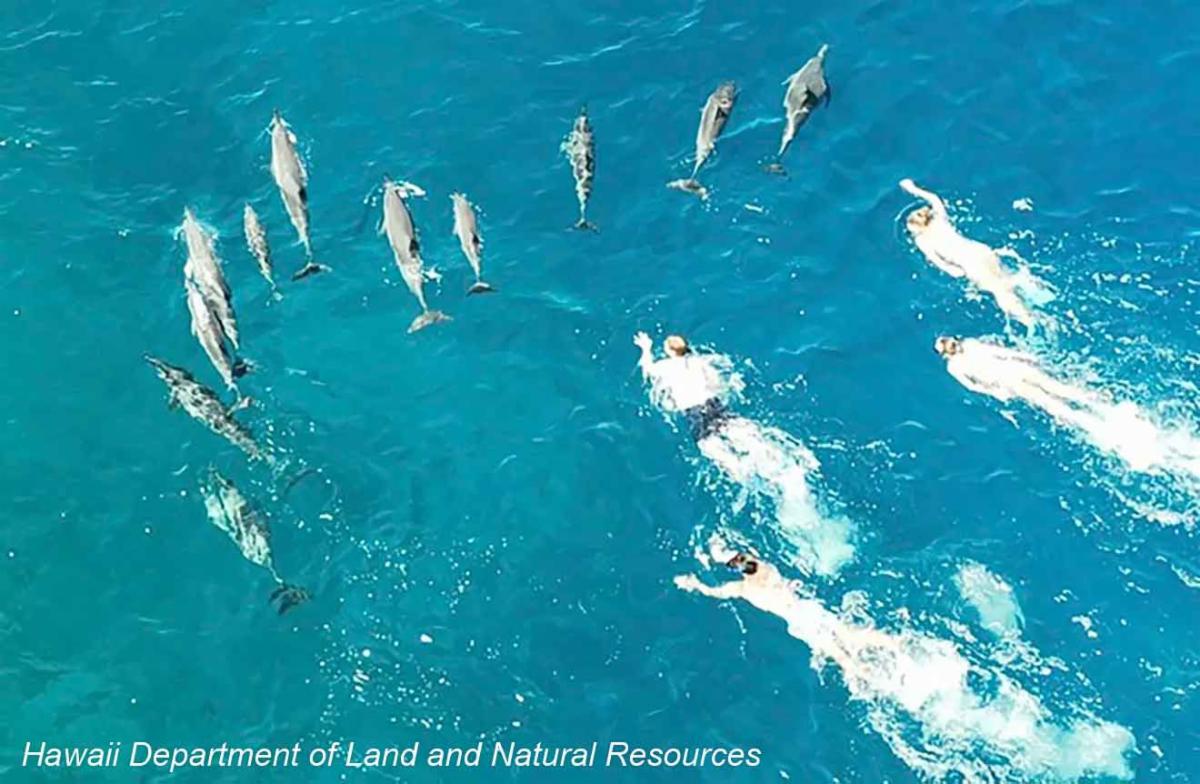
Thirty-three swimmers were spotted by a drone "aggressively pursuing" and harassing a pod of dolphins in Hōnaunau Bay, Hawaii. It is a violation of federal law to swim within 50 yards of spinner dolphins in Hawaii’s nearshore waters. The prohibition took effect in 2021 amid concerns that so many tourists were swimming with dolphins that the nocturnal animals weren’t getting the rest they need during the day to be able to forage for food at night. Division of Conservation and Resources Enforcement officials waited onshore for the swimmers when they returned and initiated cases against the swimmers. According to NOAA, people prosecuted in violation of the Marine Mammal Protection Act could face civil penalties of up to $11,000 and up to a year in prison.
| |
|
Watch Ultrasound of a Tiger Shark Embryo
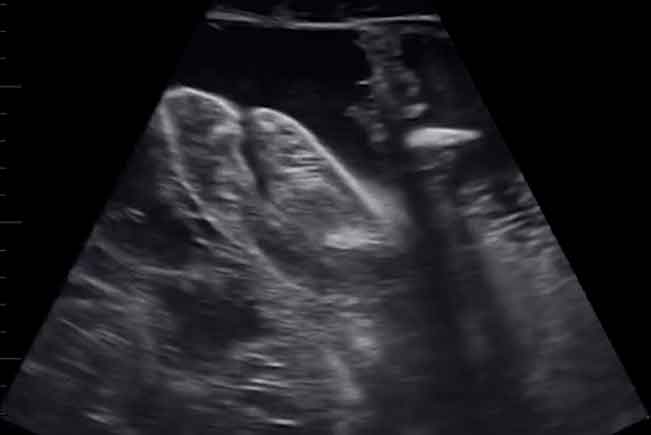
In December 2019, Dr Neil Hammerschlag and Dr James Sulikowski, Professor caught five tiger sharks at Tiger Beach in the Bahamas to carry out “pregnancy check-ups”. It is hoped studying pregnant sharks will improve conservation efforts, especially for endangered species.
Learn more
| |
|
Whale Sinks Sailboat in the Pacific Ocean
Most collisions between sailing ships and whales have been accidents. Exceptions include 20 ships sunk by the legendary white sperm whale, Mocha Dick, and the sperm whale that sank the whaleship Essex in 1820 which became the inspiration for Herman Melville's book, Moby Dick.
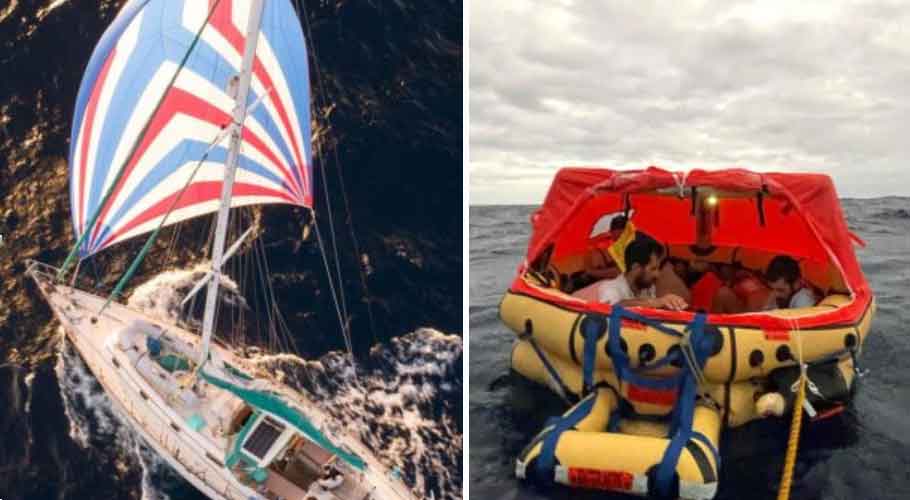
The whale that recently sank the sailboat Raindancer was an accidental collision. Rick Rodriguez and his friends were on a three-week sailing trip crossing the Pacific Ocean to Polynesia on the Raindancer. Thirteen hours into the trip a Brydes whale collided with the boat which sank within 15 minutes and forced the crew onto life rafts. Moments before the sinking Rodrigues sent out a mayday call on the VHF radio and set off the ship's Emergency Position Indicating Radio Beacon (EPIRB). The distress signal was picked up by officials in Peru, who alerted U.S. Coast Guard District 11 in Alameda, California. The group floated on the water for 10 hours before being rescued by the 45-foot catamaran, Rolling Stones.
| |
|
Stan Waterman's 100th Birthday
On April 5, 2023, we celebrate the 100th Birthday of Stan Waterman, a beloved friend, neighbor and President of SRI for 17 years from 1993 to 2010. In addition to decades of shark conservation he was named as Legend of the Sea in 2007. Throughout the years Stan led many expeditions, and won three Emmy Awards for his underwater films. Stan also authored hundreds of magazine articles and two books: Sea Salt: Memories and Essays, with forewords by Howard Hall and Stan's best friend, Peter Benchley, followed by Sea Salt II. If you'd like to send a Birthday Card or gift to Stan, simply mail it to SRI Headquarters (70 Heather Lane, Princeton, NJ 08540) and we will hand-deliver it to Stan.
| |
|
The 20th Annual International Ocean Film Festival
DATES: April 13-16, 2023
LOCATION: Cowell Theater in Fort Mason Center for Arts & Culture in Fort Mason, San Francisco.
Schedule of Films
| |
|
Notes
Free to Library or School: National Geographic Magazines. We have Hundreds of issues of NGM from the 1920’s to present, including many bound volumes. Must pick up at SRI Headquarters.
Amazon.com is offering an opportunity to generate donations to the Shark Research Institute at no extra cost to you. Simply start your shopping at smile.amazon.com/ch/22-3110087, confirm "Shark Research Institute, Inc." as your charity of choice, and Amazon will make a donation to our organization.
Consider a tax-deductible year-end gift to the Shark Research Institute. Just mail a check to SRI at 70 Heather Lane, Princeton, NJ 08540, USA, or go to the link on our website.
You may join or renew your membership in the Shark Research Institute, or make a donation of any size at https://www.sharks.org/donate
Note: All donations are tax-deductible from U.S. federal income taxes as
charitable donations and help fund our field research, advocacy and education programs.
| |
Please share this free weekly newsletter with your friends and family to help grow our audience. All they need to do to receive the newsletter is simply sign up on our website’s home page (https:www.sharks.org)
We all have a lot of work ahead to protect sharks and the ocean,
and combat climate change while there is still time.
| | | | |