Health News Digest, March 2026 | | We're Speaking Out For You | |
Are student loan cuts threatening your access to healthcare?
The Department of Education is proposing new borrowing limits for medical students and graduate students that are well below the cost of the education required. That would have a direct impact on health care because loan limits for graduate students in nursing, clinical psychology and other mental health fields, and physical therapy and other types of therapy would be approximately half the cost of the graduate programs they would need. If they can't get loans for the entire cost of tuition, books, etc, many will be unable to complete those degrees. The loan limits for physicians (and theologians) would be twice as high, and therefore more likely to be adequate for their degree requirements.
The Department of Education asked the public to express their views on this proposed policy. In our public comment, we warned that these loan cuts will create a disaster for patient care. The U.S. is already facing a severe shortage of nurses, mental health providers, and physical therapists and other therapists. The problem is nationwide, and especially difficult in rural areas where these health professionals may also make up for a shortage of doctors. If graduate students cannot afford to finish their degrees, millions of Americans will lose access to life-saving healthcare, rehabilitation, and mental health care. We strongly urged the Department of Education to increase the loan limits for vital healthcare professionals.
Read our written comment here.
|
Will the FDA let medical AI skip safety testing?
The FDA is considering letting artificial intelligence (AI) and computer-assisted radiology tools skip the standard product safety review process before they go to market. These AI tools are intended to help doctors read x-rays and spot serious diseases like cancer. Unfortunately, recent studies show that current medical AI have problems in the real world.
In response to the FDA's request for comments from the public, we warned the FDA that exempting these tools from testing to ensure accuracy and safety puts patients at a very high risk of thinking they are healthy when they aren't, or thinking they have a medical problem that they do not have. The agency is ignoring laws intended to protect patients, and instead is focusing on helping companies get new products on the market more quickly. We urged the agency to put your safety first and require strict testing before these devices are allowed to be sold.
Read our written comment here.
| | Speaking Out For You in The News: |
Keeping Toxic Artificial Turf Away from Nantucket, MA
We were asked by residents of Nantucket, MA to warn their Board of Health about the risks of artificial turf, which is especially dangerous for an island dependent on its limited water supply. As is often the case, Nantucket coaches want artificial turf, and parents of athletes are told that turf will provide more time for practice and games. We want to make sure they understand that artificial turf results in more injuries (some quite serious, such as ACL tears) as well as potential damage to lungs, hearts, testicles, and livers from microplastics in the air. While playing on the plastic grass, PFAS and other hormone-disrupting chemicals can be released from the plastic grass, the infill, solvents, and other materials used.
As requested, we sent letters to each of the Board of Health members, and to make sure our letter got the attention of parents, we reached out to the 2 main Nantucket newspapers. The Inquirer and Mirror published our entire letter, and the Nantucket Current published a shortened version that we wrote as a Letter to the Editor.
To read our published letter to the Board of Health click here and to read our shorter version with footnotes click here.
| | |
Why is industry pressure forcing out strict FDA regulators?
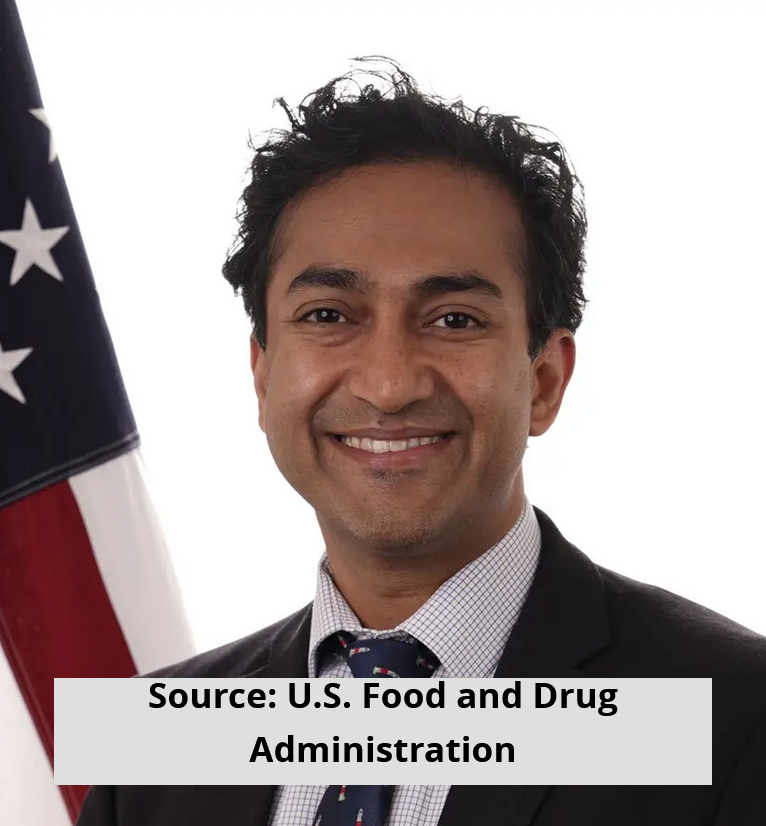
The FDA is facing pressure from the pharmaceutical industry to lower its standards, and it appears to be working. Dr. Vinay Prasad, the FDA's chief science and medical officer who oversaw vaccines, drugs, and gene therapies, recently announced his resignation. During his tenure, Dr. Prasad often angered biotech companies by demanding strict proof that their new medical products actually worked safely before allowing them on the market. His departure is a major loss for patients and for evidence-based medicine.
Our president, Dr. Diana Zuckerman, recently spoke with The New York Times about this decision. She warned that the FDA is increasingly relying on "flexible" standards to approve unproven products, which is driving up costs for health insurance and Medicare. When the government caves to industry pressure and approves ineffective therapies—some costing more than $1 million per patient—it creates an unsustainable healthcare system where we all pay the price. Patients deserve treatments that are proven to have benefits that outweigh the risks.
Read more in the New York Times
| |
Why is the FDA making drug decisions in secret?
For years, the FDA relied on public advisory committee meetings to openly discuss the safety and effectiveness of new drugs whenever the evidence was controversial. These meetings allowed doctors, patients, and independent experts to share their views before a medical product was approved. Although only advisory, these meetings provided important information that helped the FDA make decisions. However, over the past year, the FDA has held very few public advisory committee meetings, choosing instead to make controversial medical decisions behind closed doors. In a recent STAT News article, health experts raised the alarm about this dangerous shift away from public transparency.
Dr. Zuckerman told STAT News that the FDA has apparently been avoiding public meetings that include experts who disagree with what the agency has already decided to do. When government officials rely on "fake panels" made up of people who only share their views, it limits access to accurate information that patients and physicians need to make important medical decisions. We agree with the many experts who urge the FDA to reverse course by again scheduling public meetings with experts that have a diversity of scientific opinions.
Read more in STAT News.
|
Cancer patients deserve unbiased science, not FDA favors
For the first time in nine months, the FDA will hold a cancer Advisory Committee meeting this April to review two new drugs: one for breast cancer and one for prostate cancer. As noted in the story above, we have been deeply concerned about the lack of these public meetings in the last year.
A recent article in BioSpace included examples of FDA officials relying on their friends' opinions rather than science. Dr. Zuckerman told reporters that this upcoming cancer panel must include a true diversity of opinion and solid scientific facts, unlike the biased "expert panels" that the FDA has relied on recently. Cancer patients and their families are making life-or-death decisions. They deserve rigorous, transparent reviews based on solid evidence.
Read more in BioSpace.
| |
Natural Sleep Solutions For Insomnia?
One-third of American adults don't get enough sleep on a regular basis, which can increase the likelihood of fatigue, mood swings, obesity, heart disease, and type 2 diabetes. If you've struggled with insomnia, you've probably tried sleeping pills, but they often have limited benefits and can leave you feeling groggy the next morning. Fortunately, a combination of dietary choices, behavioral changes, and sleep environment tweaks can help you get the rest you need without medication.
Here are some simple tips:
- Keep your bedroom cool, dark, and quiet,
- Wear lightweight cotton socks to bed to help regulate your body temperature.
-
Avoid the blue light from phones and TVs before bedtime, as it suppresses melatonin, the hormone that makes you sleepy.
-
If stress and a racing mind are keeping you awake, very simple breathing exercises can be highly effective in breaking the cycle of sleep anxiety.
If these simple tips aren't enough, consider how what you eat and when you eat can affect your sleep cycle, or consider Cognitive Behavioral Therapy, which is much more effective than sleeping pills.
Learn more in our article here.
|
The dangerous rise of AI medical advice
A recent Gallup survey found that 16% of Americans say they rely on AI chatbots for medical advice. While most people still turn to their regular doctors and trusted medical websites as well, the use of AI for health information now matches social media and ranks higher than television news programs. As tech companies continue to develop new AI models specifically for healthcare, experts expect even more Americans to rely on these programs in the near future.
This growing reliance on AI is dangerous because chatbots can give inappropriate advice and even completely make up medical information. Despite these known risks, nobody in the government is currently regulating chatbots that provide health advice to the public. Patients need to be warned about the dangers of trusting these systems, and we need strong federal safeguards to protect people from unsafe and unverified medical information.
Learn more in Becker's Hospital Review.
|
Is Big Pharma buying our public health policies?
Big pharmaceutical companies are spending more money than ever to influence politicians and health policies in Washington. Last year, the drug industry's main lobbying group, PhRMA, spent a record $38 million to sway the government, while individual drugmakers nearly doubled their own lobbying budgets. This massive surge in spending is a direct response to the current chaos at federal health agencies. The industry is pouring money into Washington to protect its massive profits while dealing with unpredictable White House interference over vaccines, drug approvals, and drug pricing.
This money isn't just going to lobby Congress—Big Pharma is aggressively lobbying the FDA, HHS, and the White House. Despite promises from HHS Secretary Robert F. Kennedy Jr. that HHS would not act as a "puppet" for industry, this record-breaking lobbying is paying off. When drug companies are allowed to spend tens of millions of dollars to control public health decisions, they ensure their profits benefit more than the safety and wallets of patients.
Read more in Politico.
| | |
Check us out!
Did you know that artificial turf, rubber playground surfaces, and rubber mulch contain chemicals that can cause attention problems, obesity, early puberty, asthma, and cancer? Are your children or grandchildren getting exposed when they play? Follow us @safe.to.play
| |
| Our main Instagram account and Threads provide free information about new medical research, programs, and policies to help health experts, patients, and the public improve the health of individuals and communities. Follow us @healthresearch4u | | | Connect With Us on Our Other Social Media! | | Your Contribution Can Make a Difference! | | We do not accept any funding from drug companies, device companies, chemical companies, or other sources that could influence our work and compromise our integrity. That's why so many people turn to us when they need help. Donations are tax-deductible! Please consider giving to the National Center for Health Research online or by mail to the address below. You can also contribute to our Cancer Prevention and Treatment Fund online, by mail, or through the Combined Federal Campaign using CFC# 11967. | |
To sign up for these monthly updates, click here.
| | | | |