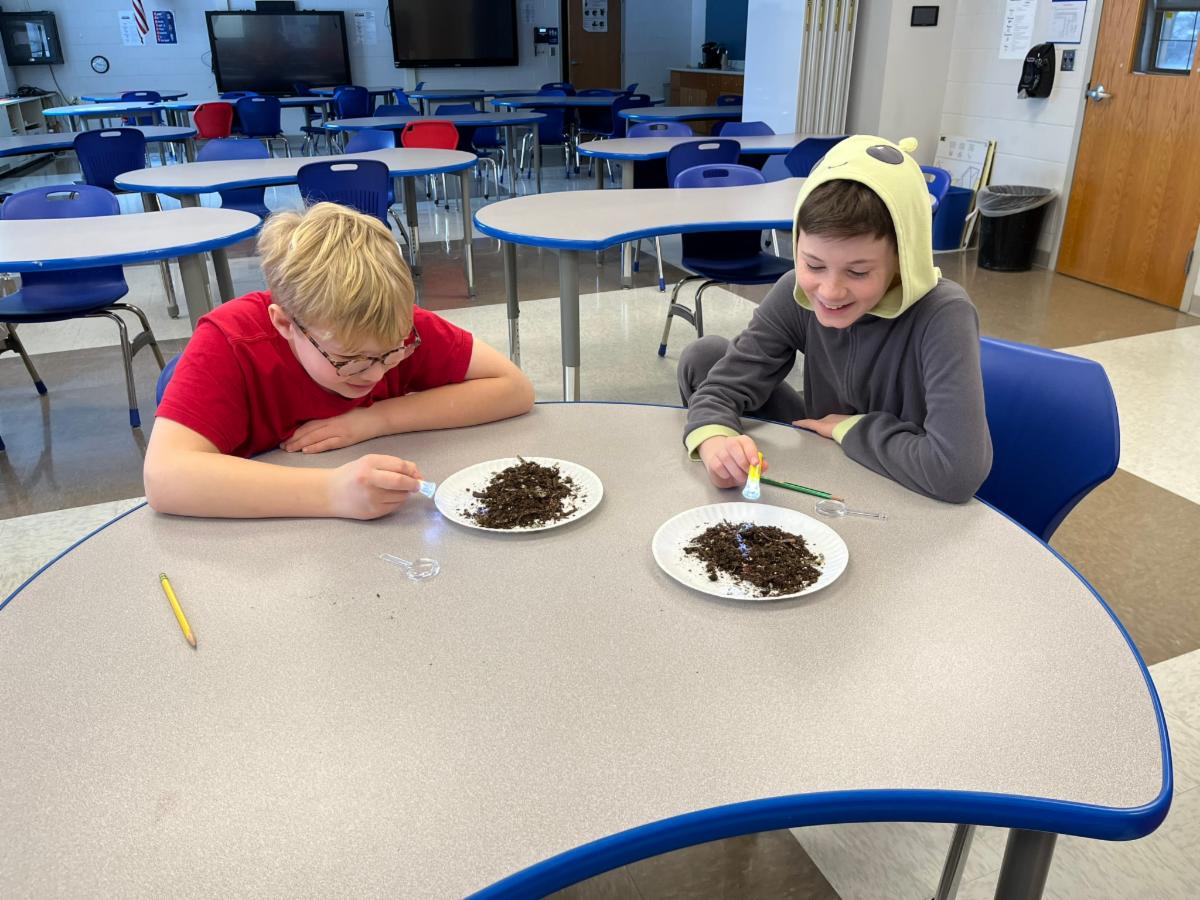
March 2026 | Vol. 18 Issue 3 | | Students from Campbell-Savona CSD Elementary School learn about worms as part of an Agriculture in the Classroom lesson on composting. | | |
Volunteers, please join us for a celebration during National Volunteer Week as we celebrate you and recognize all your hard work! Join us Thursday, April 23rd from 6 - 8 pm in the Steuben County Annex Building for snacks, door prizes, and a complementary gift for each volunteer who RSVPs. Please RSVP by Friday, April 3rd here
Email Jen Hill with questions at jh3238@cornell.edu
| |
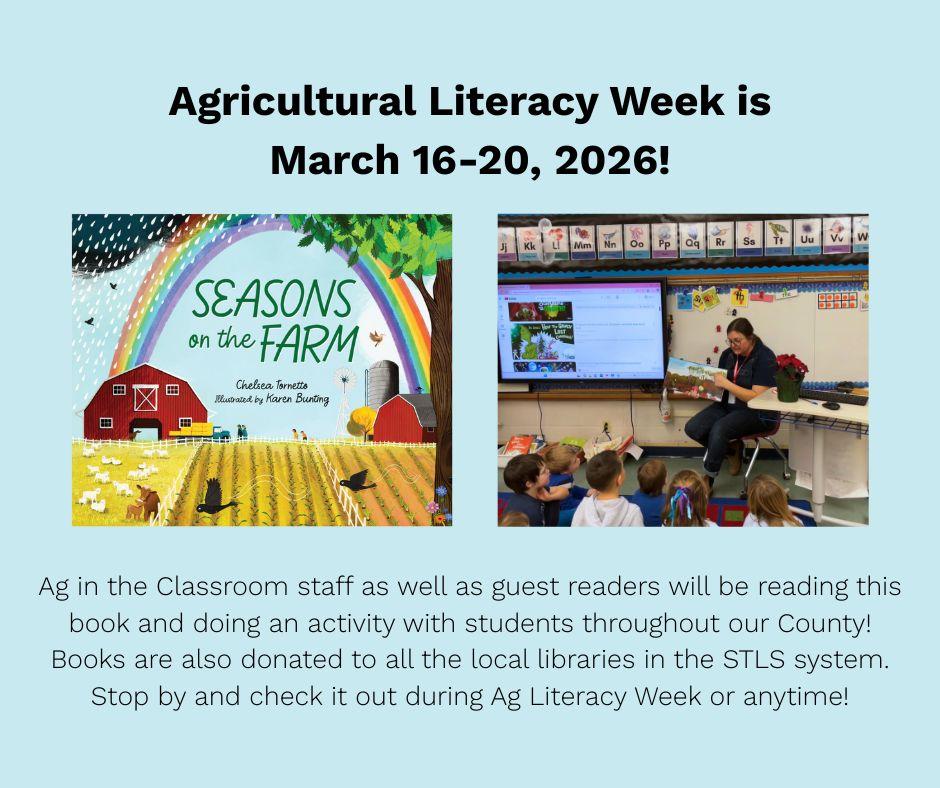
About This Year's Book
Seasons on the Farm by Chelsea Tornetto, illustrated by Karen Bunting
Throughout the year, life on a farm is filled with growth and joy, patience and renewal.
On a farm, each season arrives with new jobs to do—crops to plant, animals to tend to, and fields to harvest. Readers get an insider’s look at what spring, summer, fall, and winter look like on a family farm, from adorable baby animals to rumbling tractors and pumpkins to pies. This sweet, rhyming story is perfect for young readers, whether their home is on a farm or not!
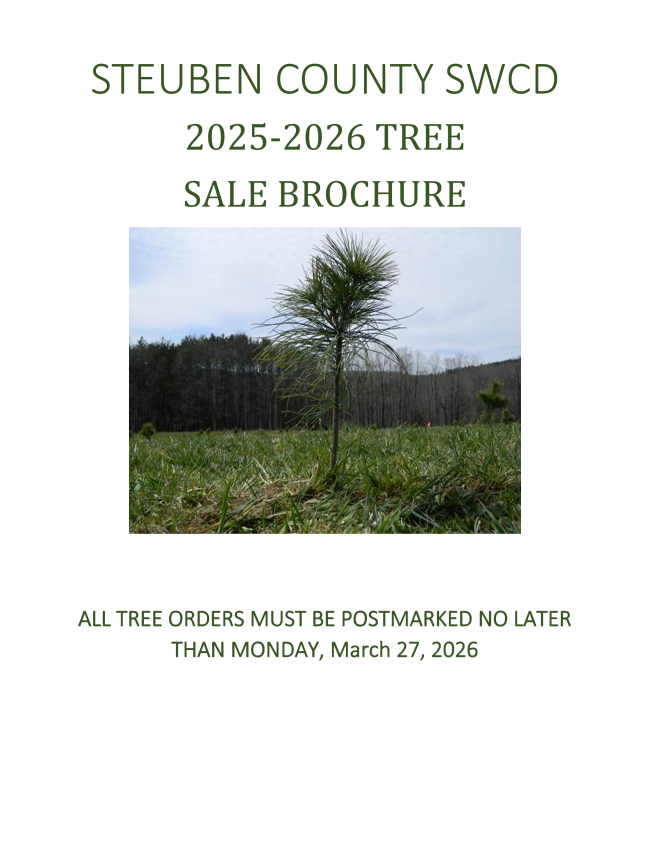
| | Order trees using this form! | |
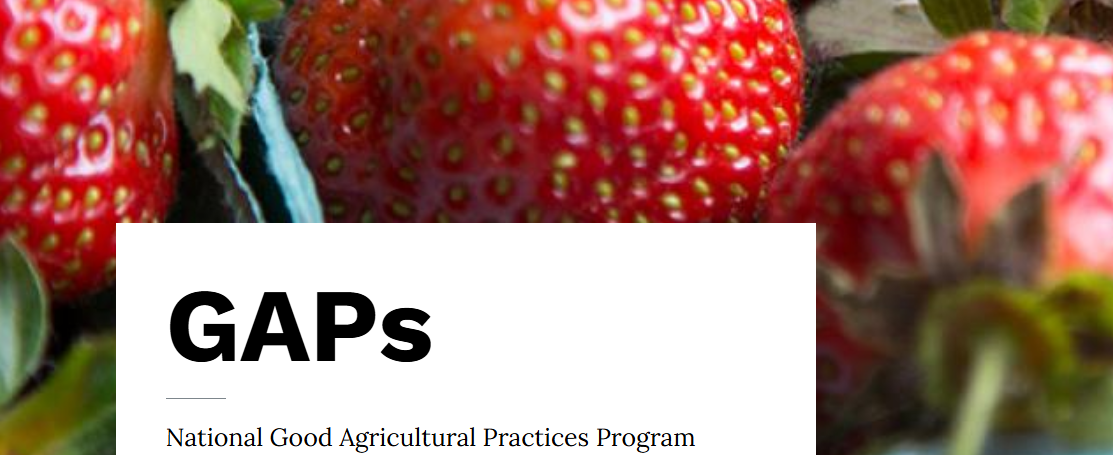
Good Agricultural Practices (GAPs)
Food Safety Training
March 10, 2026
Time: 9:00 am - 4:00 pm
Location:
CCE Wayne County auditorium
1581 NY-88
Newark, NY 14513
Cost: Registration per person: $75.00
(additional attendee $75.00 ea.)
Includes lunch and resources. List any special accommodations in the 'Note to Us'
Host:
Cornell Veg Program, Lake Ontario Fruit Team, CCE Wayne, and NYS Dept of Ag & Markets
Learn about food safety on the farm! This event hosted by the Cornell Vegetable Program, Cornell Lake Ontario Fruit Team, CCE Wayne County, and the NYS Department of Agriculture, will cover good agricultural practices (GAPs) to help reduce the risk of microbial contamination on the farm, keeping food and consumers safe.
Goals of this workshop:
- Learn about food safety on the farm
- Learn about farm good agricultural practices that help to reduce the risk of microbial contamination keeping food safe and consumers from getting sick
- Understand how GAPs (Good Agricultural Practices) impact produce safety
- How to integrate GAPs into your production practices
- If you are looking for new markets or if your buyer requires it, learn what is needed to have a USDA GAP audit
- If applying for a NY Farm Viability Institute grant, several of their programs require GAPs certification
- Learn about what is needed to begin writing a farm food safety plan. A food safety plan is helpful in implementing practices and should be written in a way to comply with a USDA GAP audit for certification.
Register using the button below.
For more information, contact Robert Hadad, Cornell Vegetable Program, at 585-739-4065, rgh26@cornell.edu.
| | |
Prattsburgh Students Learn All About Potato Farming with Mark Squires
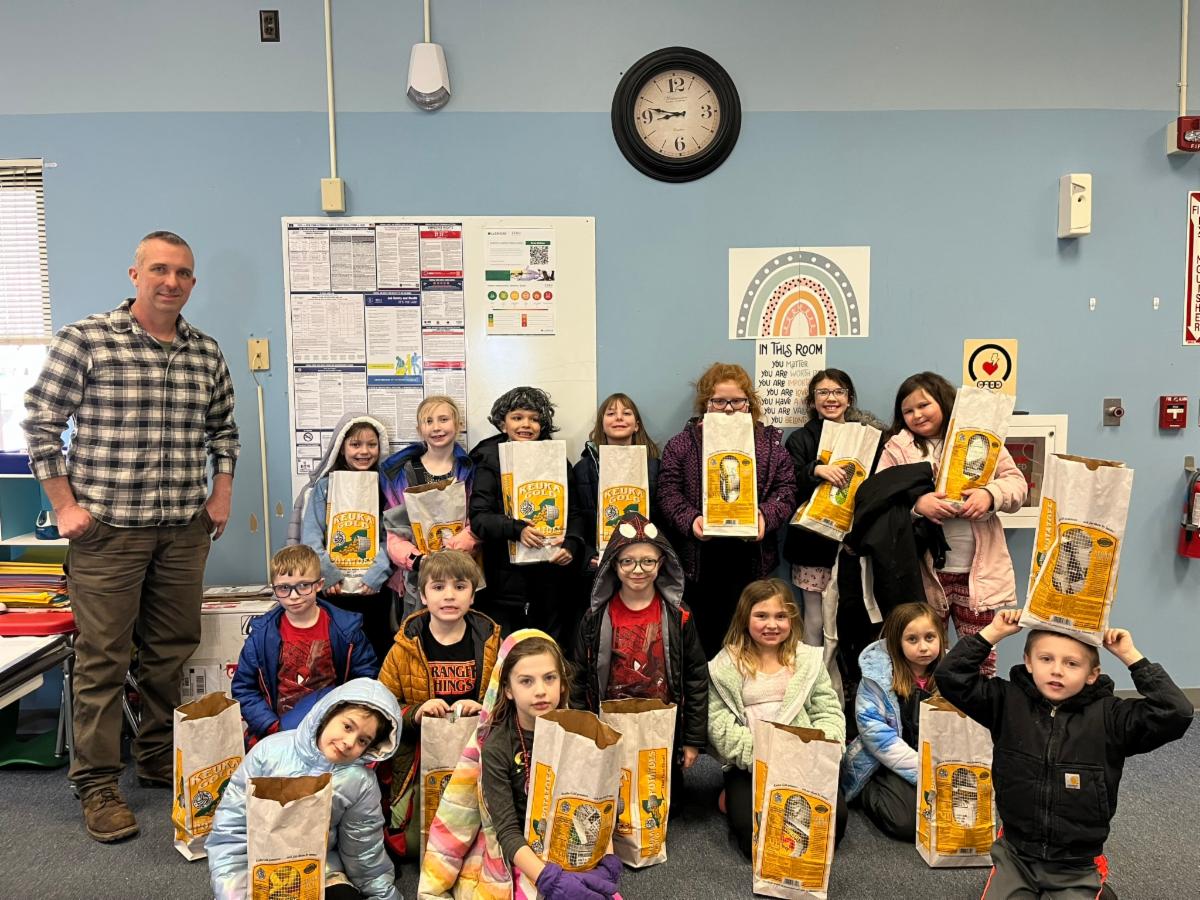
On Friday, February 27th Steuben County Agriculture in the Classroom students at Prattsburgh Central School were visited by Mark Squires from Squires Produce. Mark walked students through the whole potato planting and growing process including harvesting and washing the potatoes for distribution. Each student was given a bag with a few starter potatoes and plenty of Middeswarth Potato Chips made from potatoes grown locally at Squires Produce. Thank you, Mark, for sharing videos and stories from your farm with the Agriculture in the Classroom students in Prattsburgh!
| |
County Enrollment, Subscription, and Support | |
The Southwest New York Dairy, Livestock and Field Crops Program with Cornell Cooperative Extension offers educational programming and research based information to agricultural producers, growers, and agribusinesses in the five-county region of Southwestern New York.
Our specialists work with Cornell Faculty and Extension Educators statewide to address the issues that impact the agricultural industry and provide services to farms of all sizes and production techniques. The educational programming and support that we offer ranges from workshops to on-farm events, and includes one-on-one consultations. Our program is designed to meet the rapidly changing needs of our region's diverse agricultural community.
For more information, contact any of the specialists.
Please support CCE Steuben by signing up for their enrollment programs.
Reach out to CCE-Steuben at 607-664-2300 and ask about enrollment.
The enrollment form can be found online, here.
| | | |
|
The Cornell Vegetable Program works with Cornell faculty and Extension educators to address the issues that impact the New York vegetable industry. The team offers educational programs and information to growers, processors, and agribusiness professionals in pest management, variety evaluation, cultural practices, market development, and farm food safety.
Cornell Vegetable Program Specialists expertise includes processing vegetables, fresh market vegetables, weed science, soil health, food safety, organic, marketing, greenhouses and high tunnels.
Learn more about the specialists HERE.
To enroll click here.
| | | | |
The Finger Lakes Grape Program (FLGP) is a regional extension program of Cornell Cooperative Extension serving the grape and wine industry of the Finger Lakes.
The staff of the Finger Lakes Grape Program is committed to providing grape growers in the Finger Lakes and beyond with cutting edge, research-based information to help them improve the productivity and sustainability of their vineyards and the quality of the fruit that they produce. We work with researchers and extension staff from Cornell and other institutions to create informative extension materials and programs that help to keep grape growing a viable and profitable industry that enhances the communities of the Finger Lakes and upstate New York.
Learn more about the specialists HERE.
To enroll click here.
| | | Thank you to our advertising sponsors | | Your feedback matters to us! | | | |
We use your feedback to improve our services. We will not ask for your name or personal information.
| |
Cornell Cooperative Extension puts knowledge to work in pursuit of economic vitality,
ecological sustainability and social well-being. We bring local experience and
research based solutions together, helping New York State families and
communities thrive in our rapidly changing world.
Cornell University Cooperative Extension provides equal program and employment opportunities.
CCE does not endorse or recommend any specific product or service.
This newsletter is solely intended to educate consumers about their choices.
| | | | |