Each month the Cambridge
in Motion team sends a flyer with fun facts and a family newsletter to celebrate the Mass Farm to School partnership. We hope your family enjoys the fun and learning opportunities within!

This month we are learning about dairy! Enjoy the fun resources, recipes, lessons and activities that keep your family exploring and thriving!

Follow us on twitter

Fun Dairy Facts!
_____________________________________________
Cows have a great sense of smell. They can smell up to 6 miles away!

Plant-based dairy-free milks and cheeses are available for those who cannot tolerate cow's milk dairy products. They have different amounts of nutrients so it is important to read the labels!

It takes 10 gallons of milk to make
1 pound of cheese!

In 1856, French scientist Louis Pasteur discovered that heating liquids to high temperatures kills bacteria. This process is called pasteurization, and it protects the purity and flavors of milk!

Cows drink about 35 gallons of water a day, about the same amount as a bathtub full of water!

Cheddar is the most popular
natural cheese in the U.S
(what's your favorite cheese?).

Cows cannot sweat, they lose heat
through their breath!

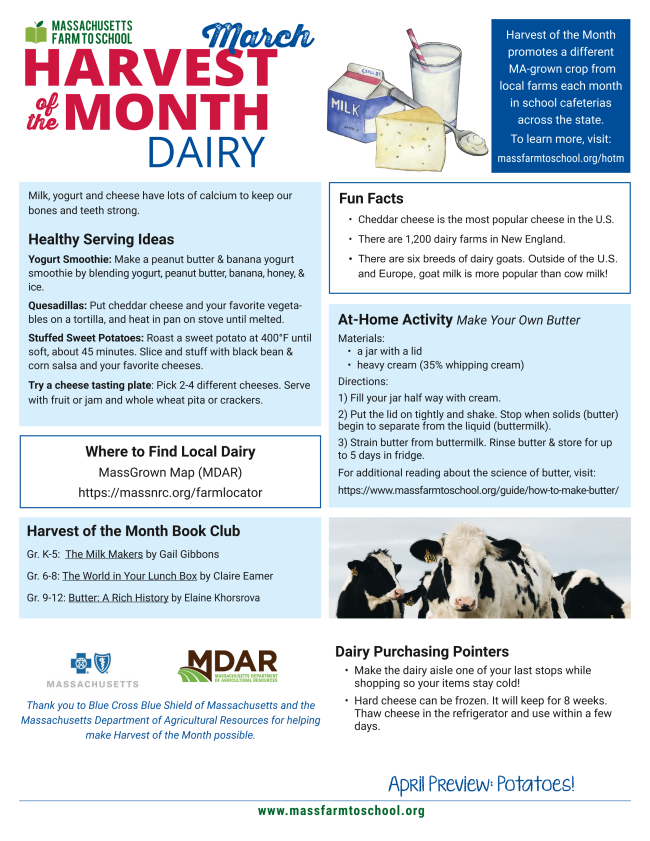
March Harvest of the Month Video!
Watch our Cambridge in Motion monthly video series featuring the Harvest of the Month (foods that are grown locally to New England)! You'll watch our public health nutritionist bring to life the fun facts, make a quick snack, and give a nutrition or food preparation tip!

Joke of the Month

Q: Why did the cow cross the road?

A: To get to the udder side!
Family Learning!
(1) How to Make Butter: This activity is great for preschool through early elementary grades! Kids will learn the science behind how butter is made by actually making some themselves!

(2) How to Make Kefir: Easy to follow step-by-step instructions on how to make kefir, a milk drink filled with vitamins, minerals and probiotics!
How Dairy Helps Keep You Healthy!
Each 8 oz glass of milk contains 9 essential nutrients that our bodies need! These 9 nutrients are calcium, phosphorus, protein, Vitamin A, Vitamin D, and the B vitamins riboflavin, pantothenic acid, B-12 and niacin! Vitamin D is added to milk in a process called fortification. This vitamin helps our bodies absorb calcium, meaning we can get more of the bone-health benefits! Vitamin D is also a nutrient that many of us don't get enough of, so drinking milk (or fortified dairy alternatives) can help us get what we need to keep our bodies in tip-top shape.
Food Waste Tip of the Month

Before you go food shopping, see what is already in the refrigerator to prevent purchasing duplicates. Take a few moments to plan meals and write out a list of items needed. Stick to the list while in the store. These strategies help us save time and money while preventing food waste.
Delicious Recipes!
The kids can help make this creamy Yogurt-Based Ranch Dressing!

Try this Garlic Parmesan Pasta Bake for a lasanga-style chicken dinner!

Try this amazing Green Egg Bake and have breakfast (or an easy snack) prepped!

This Cheesy Chickpea & Broccoli Bake is easy to make & vegetarian!

This Green Smoothie has a fruity flavor and a happy shade of green!

Try these Double Corn Quesadillas as an after school snack or serve with some chicken or black beans for dinner!
Children's Book Spotlight

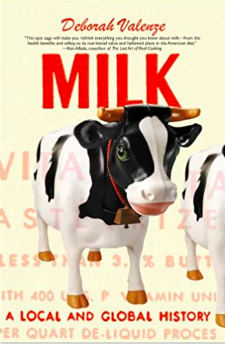
Milk: A Local and Global History

Written by Deborah Valenze

"For older students, Milk: A Local and Global History by local historian Deborah Valenze is a cultural history of milk that traces the rituals and beliefs that have governed milk production and consumption since its use in the earliest societies. Ultimately, milk's surprising history teaches us how to think about our relationship to food in the present, as well as in the past. It reveals that although milk is a product of nature, it has always been an artifact of culture.

Links to download the Mass Farm to School Harvest of the Month Newsletter:
Cambridge Public Health Department

Follow us on Twitter
@CambMotion