|
From the Editor
One of the things I preach to my students is “Avoid passive voice.” With passive voice, we don’t know who is doing the action in the sentence. The verb just kind of happens on its own—but of course, verbs can’t “just happen.” They need someone to do them.
As an example: “Mistakes were made.” Who made those mistakes? The mistakes sure didn’t make themselves, but the passive voice hides the person who made them. Conveniently, no one has to take the blame—or the responsibility.
Here’s another: “I have always regretted that the last assault at Cold Harbor was ever made.” This sentence starts in active voice—basically, I have regretted—but it quietly slips into passive voice by the end, assault was made.
Who made the assault? Grant? Meade? The soldiers themselves? What does Grant mean here? Is he taking responsibility with his expression of regret, or is he deflecting blame to some other nameless person? Is he protecting someone? Is he hiding someone? Is he criticizing without naming names?
At the Central Virginia Battlefield Trust’s spring seminar earlier this month, Dr. Jennifer Murray and NPS Historian Mike Gorman both addressed the passive voice in Grant’s famous passage about Cold Harbor, which appears in his memoirs. I’ve written a fair amount about this particular passage myself, including here and here on the blog, but never have I honed in on its passive voice.
For clarity’s sake, Grant could have written, “I have always regretted that I made that last assault at Cold Harbor.” That would have been a clear admission of responsibility. So why didn’t he say that?
And how about that verb, “made,” anyway? How would the sentence's meaning change if Grant had swapped it out for “ordered” or “directed” or “executed” or something else?
Before anyone starts jumping on Grant’s case, though, it’s important to remind ourselves that Grant was an effective writer but not necessarily an artful one. That is, he's guided by clarity, not creativity. We don’t know if he was even making a conscious choice here or whether he was just pushing through as best as he could because he was up against a literal deadline, dying of throat cancer.
Either way, this has raised new questions for me to consider. I appreciate Jen and Mike for giving me something new to ponder.
I hope you, too, have the chance to see something familiar in a new way in this upcoming battlefield season. Isn’t that what spring is all about?
— Chris Mackowski, Ph.D.
Emerging Civil War
| | |
12th Annual Emerging Civil War Symposium at Stevenson Ridge
We’re pleased to announce our full line-up of speakers for our 12th Annual Emerging Civil War Symposium at Stevenson Ridge. Our event will be held August 7–9, 2025. Tickets are available for $325 each. Our theme will be “Partnerships and Rivalries.”
We’re pleased to feature TWO keynote speakers this year:
-
Harold Holzer—Presidents in Print: The Dueling Images of Abraham Lincoln and Jefferson Davis
-
Craig Symonds—Admirals in Blue and Gray: Farragut and Buchanan
Plus, we have a line-up of eight other speakers:
-
Kris White—“Heavens, How They Hate Him”: Braxton Bragg and the Army of Tennessee’s High Command
-
Dr. Angela Zombeck—Partners in Escape: POW Escape Attempts and Plots, Successful and Stymied
-
Joseph Ricci—“Not with a Pen but a Sword”: George H. Thomas and John M. Schofield
-
Pat Kelly-Fischer—Duel in the Desert: Canby and Sibley’s Fight for the West
-
Neil Chatelain—The Mississippi River vs. Everyone: How Grant, Foote, Pope, Farragut, Porter, Butler, Lovell, Johnston, Beauregard, and Hollins had to fight the “Father of Waters” before fighting each other
-
Ryan Quint—“With Friends Like These…”: Ambrose Burnside and Joseph Hooker, Late 1862
-
Tim Smith (of the East)—Friction in Command: Personal and Professional Conflicts Between the Union Commanders During the Gettysburg Campaign
-
Evan Portman—Frenemies: The Partnership and Rivalry of Joshua Chamberlain and Ellis Spear
Our popular Friday evening panel also returns, and we'll have a Sunday morning tour—so we have lots going on!
For information or to order tickets, visit our Symposium page.
| | | |
Used Book Sale!
We will be hosting a used book sale at the Symposium! If any person or organization is interested in donating used Civil War books to the sale, please reach out to emergingcivilwar@gmail.com.
The proceeds will benefit ECW's mission by helping to offset our annual preservation initiatives and support us as we provide free Civil War content on the blog, podcast, and YouTube channel.
| | |
Nominations Now Open for ECW's Round Table of the Year Award
Emerging Civil War is seeking nominations for our 2026 Civil War Round Table of the Year Award, which will be publicly announced at the 2026 Emerging Civil War Symposium. This award seeks to recognize Civil War Round Tables for their efforts in the previous calendar year in engaging with both the Civil War community and the public at large. We invite self-nominations from all Civil War Round Tables.
The award seeks to recognize organizations for everything they do. Overall membership size does not matter. Small Round Tables can do amazing things and large Round Tables can be duds, or vice versa. Rather, help us understand the quality of experience people have with your Round Table. For a full list of criteria, click here.
Please submit a completed package to emergingcivilwar@gmail.com by May 1, 2026.
| | |
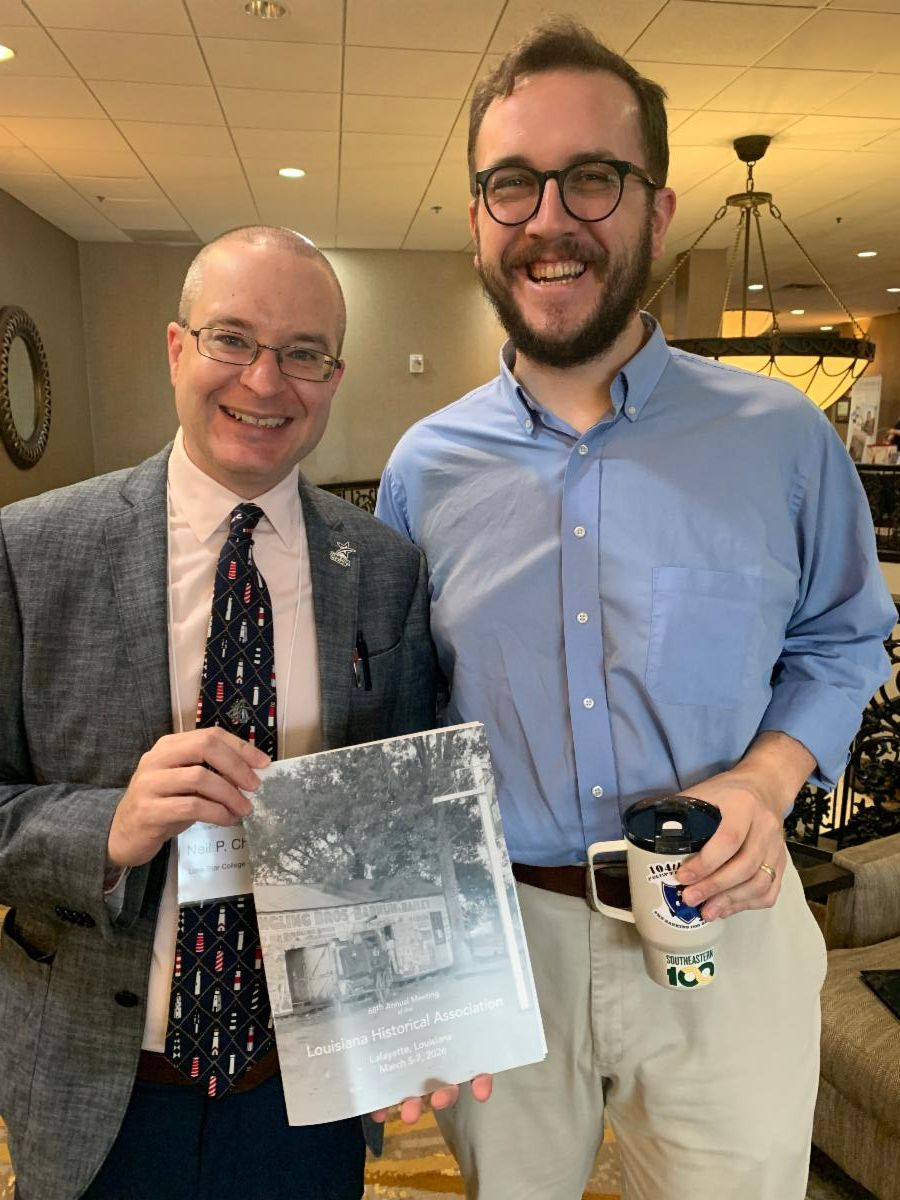
March was a busy month for Neil Chatelain. He spoke for the Civil War Round Table Congress, at the Lone Star College-North Harris Economics Conference, and at the Louisiana Historical Association conference, where he got to hang out with fellow ECW member Joseph Ricci. His ECW Series book This Great Contest Afloat: The Civil War on the Seas, Coastline, Rivers, and Oceans is now off to the printer and should be released in April! Besides all this, Neil spent time in March researching Confederate naval surface fire support activity.
| |
This March Doug Crenshaw is leading several tours of the Richmond battlefields, including Williamsburg about Cold Harbor.
Bert Dunkerly assisted with the Moores Creek National Battlefield 250 event, which drew more than17,000 visitors over three days. He has also been giving tours with Battlefield Tours of Virginia.
| | |
M. A. Kleen is sending out a call to see if anyone is interested in contributing to his project, Spirit61.info. It's a digital encyclopedia of early war Virginia that covers the period from January to July 21, 1861 (up to the Battle of Bull Run). This is an exciting period filled with drama and high stakes events, but often gets overlooked. They publish nonfiction articles of any length, but under 2,000 words is preferred. Some general topics include:
- Mobilization
- Virginia's Secession Convention
- The early blockade
- McClellan's campaign in western Virginia
- Fort Monroe/the Peninsula
- The invasion of northeastern Virginia up to Bull Run
- Virginia unionists
- Virginia's economy in 1860-1861
Citation requirements are not as strict as ECW, and footnotes are welcome but contributions usually include a list of sources (Chicago Style bibliography) at the end. It is a facts-first website, so sources should be listed for anything that's not an opinion. You can send article ideas to dispatches@spirit61.info
| | |
Chris Kolakowski's latest publication, Case Studies of Pacific War Island Battles, was published by Air University Press as Kenney Paper #13. Chris co-authored with a couple of stellar officers, Grant Willis and Brendan Donnelly, and a noted defense analyst, Jose Custodio. Check it out here!
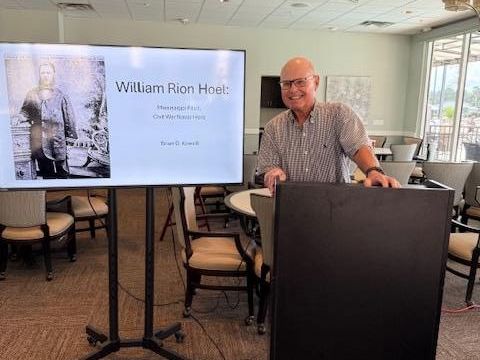
Brian Kowell (below) gave a talk this month to the North Fort Myers Civil War Round Table about the life of William Rion Hoel, Mississippi Pilot and Civil War Hero.
| | |
Chris Mackowski appeared on the American History Hit Podcast on March 19. He spoke about the December 1862 battle of Fredericksburg. Listen here.
On March 21, Chris spoke at the Central Virginia Battlefields Trust’s Spring Seminar. His talk “Strike Them a Blow: Missed Opportunities Along the North Anna River” focused on an overlooked part of the Civil War’s 1864 Overland Campaign.
And rewinding a century, Chris recently assisted the Adams Memorial Foundation on a project highlighting the contributions of John Adams and his family for a traveling exhibition. The Adams Memorial Foundation is the Congressionally designated entity charged with planning and creating a memorial for the Adams family in Washington, D.C. Chris’s most recent book is titled Atlas of Independence: John Adams and the American Revolution. Chris recently gave talks about the book at the Adams County Historical Society in Gettysburg, PA; the Holland Land Office Museum in Batavia, NY; and at St. Bonaventure, where he teaches. He also did a book talk about Atlas for the Adams Memorial Foundation (listen here).
| | |
A trifecta of ECW Podcast guests have converged on one Civil War Round Table. Father Bob Miller, Derek Maxfield, and Kevin C. Donovan each have been Chris’s guest on an ECW Podcast. Each also has, or shortly will be, the guest of the Roanoke (VA) Civil War Round Table. This month, Fr. Miller, author of Faith of the Fathers: The Comprehensive History of Catholic Chaplains in the Civil War gave a captivating talk on the history of military chaplains. He followed Kevin’s February talk on the war time diplomatic relations of the Vatican with the U.S. and CSA. Derek will soon follow (in May) to discuss his latest book: Man of Fire: William Tecumseh Sherman in the Civil War. They join past podcast alumni Jonathan Noyalas and Mike Hardy.
This month, Evan Portman spoke to the Mason Dixon Civil War Roundtable, Morganton, WV on Joshua Chamberlain and the Phil Kearny Civil War Round Table on the New York City Draft Riots. Next month, he'll be attending the annual Civil War Symposium at the Andrew Carnegie Free Library & Music Hall to see a great line-up of ECW speakers!
| | |
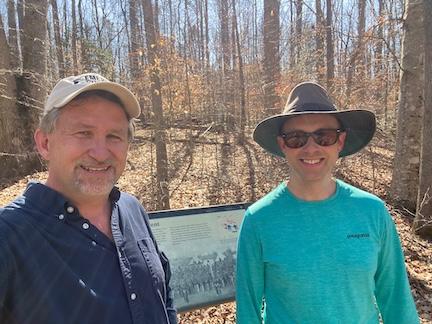
Devan Sommerville (right) enjoyed unseasonably summer-like weather on a four-day swing through eight Virginia battlefields, including a (somehow) first-ever visit to Richmond. This barnstorming visit included connecting with fellow ECW members Chris Mackowski and Bert Dunkerly for some on-field battlefield hospitality and exploration. Many new perspectives and insights were gained, including a memorable bushwhack to the well-hidden Heth's Salient at Spotsylvania. The return of snow ushered him home to fresh inspiration and the genesis of several new blog posts and a trip report.
| | |
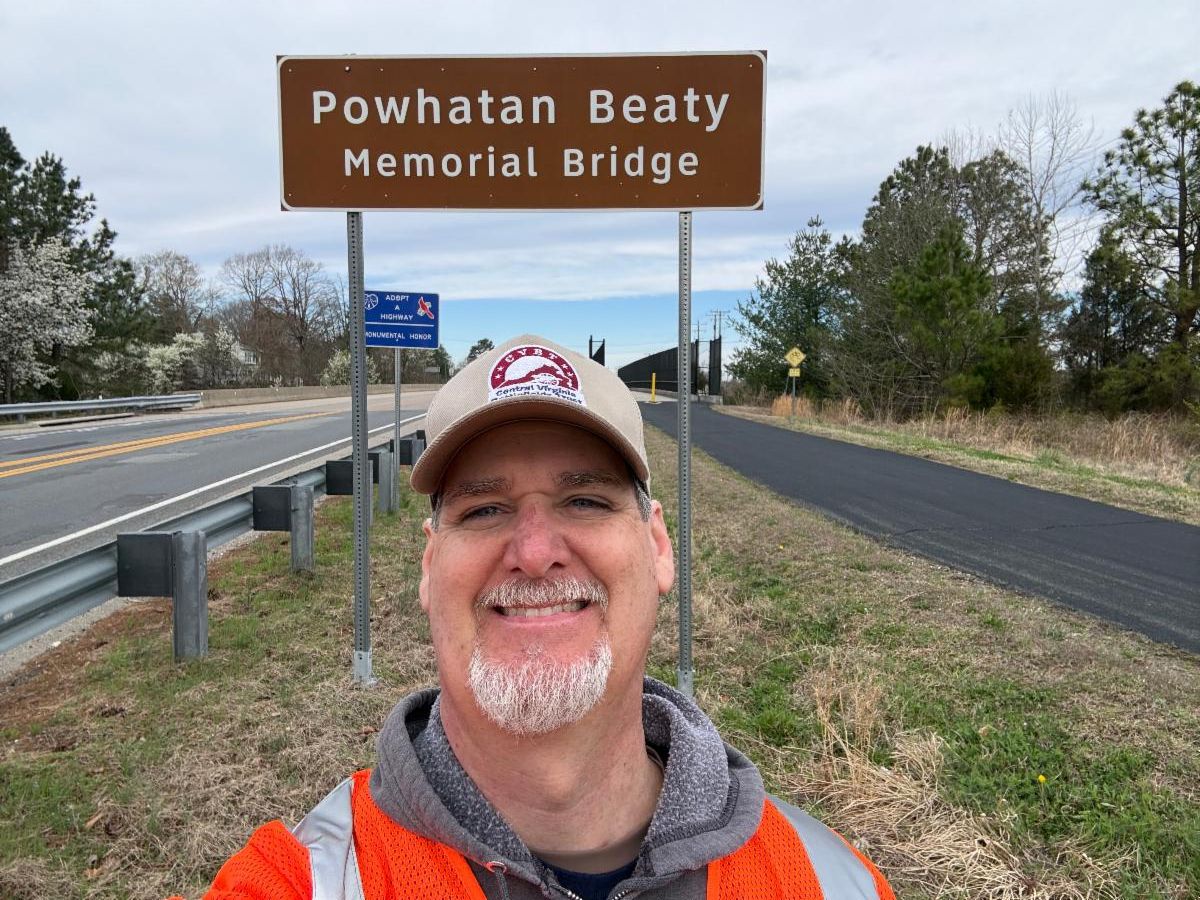
Tim Talbott enjoyed sharing about the Battle of New Market Heights to a group of Junior ROTC students from Richmond's John Marshall High School, as well as supporters of the Monumental Honor project on Saturday, March 14. Monumental Honor is seeking to place a monument in Richmond to the Medal of Honor receipients from the area across all American conflicts. One of those recepits was 1st Sgt. Powhatan Beaty, 5th USCI, who received his Medal of Honor for his courage at New Market Heights. The groups then spent a couple of hours picking up litter along Route 5 as a community service project. Tim also organized the Central Virginia Battlefields Trust's Spring Seminar, themed "No Backward Steps: From North Annat to Petersburg" that was held on March 21. Over 150 attendees heard five talks from four excellent historians.
| | |
The American Battlefield Trust is bringing back its popular summer series of hikes and virtual lectures! The Trust is offering a wide selection of tours at battlefields like Brandy Station, Gettysburg, Spotsylvania, and Great Bridge, as well as a full slate of virtual lectures on topics throughout the Revolutionary War and Civil War. As part of the line-up, you'll see a lot of familiar ECW faces. For more information and how to register, visit their website here.
| |
8 Questions with. . .
Melissa Winn
This month we’re highlighting one of ECW’s newest members, Melissa Winn! Researcher, writer, photographer, editor, collector, and so much more, Melissa is a talented historian with tons of passion for the Civil War. She is the Director of Marketing and Communications for the National Museum of Civil War Medicine, while also serving as the Senior Editor of Military Images magazine, editor of the Shavings newsletter, and President of the Bull Run Civil War Round Table. On top of being an expert on Civil War photography, Melissa is a talented photographer herself! If you haven’t already, check out the podcast she did with Curt Fields on one of her favorite topics, the partnership between Grant and Rawlins. And read her full bio here!
1. How did you get interested in the Civil War?
My interest in the Civil War started with Abraham Lincoln. I can’t pinpoint exactly when my fascination with Lincoln began, but it started in childhood. I think part of the connection came from geography—he was from Illinois, and I grew up and lived in Wisconsin. There was also something about him being the 16th president. Again, I’m not sure why, but for whatever reason, as a child, I felt that 16 was my lucky number. (And in many ways in my adult life, it has proved to be so, including one of my children being born on the 16th of the month!) Because of these things, it didn’t take much for me to feel personally connected to his story.
That early curiosity quickly turned into something deeper. I read every book about Lincoln my school library had, wrote nearly all my papers about him, and centered countless school projects on his life (including a paper puppet/stop motion video project in 3rd grade! I wish I could find the footage today!) Through Lincoln, I became interested in the Civil War as a whole. His story was my entry point into a much larger history.
When my husband and I moved to Northern Virginia in 2000, in my mid-20s, my first trip “Downtown” to Washington, D.C. was to visit Ford’s Theatre and the Petersen House. Seeing those places in person—sites I had read about for years—was unforgettable. I was completely in awe.
My early career was in journalism and editing, working for newspapers and magazines and eventually focusing on coverage of healthcare and regulation. But in 2016, when Civil War Times was hiring a photo editor, I was looking for, and ready for, something more meaningful. As part of the hiring process, I was given an assignment: find three images to illustrate the Gettysburg Address, including one of Lincoln himself. I remember thinking, I can’t believe someone would pay me to research Abraham Lincoln and the Civil War—I would do this for free. And in many ways, I already had and did. It felt like fate—and I truly believe it was. I was hired! And I loved it! Since then, I’ve been fortunate to build a career in public history centered on the Civil War, immersing myself in it every day. It remains endlessly fascinating—and endlessly important.
2. What's your favorite Civil War museum to visit and why?
My favorite battlefield is Manassas National Battlefield Park, which I wrote about in this ECW blog post, my first in the “Framing History” series.
My favorite battlefield to photograph, however, would be Gettysburg National Military Park. I love the way the monuments interact with the battlefield and light, and capture histories in the space there. I love the rolling hills and historic barns and homes that litter the wide-open fields, sharing a glimpse into this Civil War period we’re so immersed in but so far removed from in the 21st century and modern world. Gettysburg is ethereal and enchanting. It’s a joy to photograph it.
3. Who is someone from the Civil War we should all know more about and why?
I think one of the most important women from the Civil War that everybody should know about is Mary Edwards Walker. She was a pioneering female doctor and Civil War surgeon, women’s rights advocate, and the only woman EVER awarded the Medal of Honor. Still. That’s shocking that it’s true. But it is. She broke barriers by serving near the front lines, often under dangerous conditions, and she defied gender norms by wearing more practical clothing, including pants. She was an early and loud advocate for dress reform for women, and she faced a daunting amount of criticism for insisting that she (and all women) be allowed to just be who they are instead of fitting into some predetermined role laid out for females in society. She was remarkable. And she was, before its time, the epitome of the popular women’s rights slogan, “She persisted.” She sure did!
Lightning Round
4. Favorite primary source?
My favorite primary source would be photographs, of course! I surely couldn’t choose just one, but of course I appreciate greatly the photographs of Mathew Brady, Alexander Gardner, Timothy O’Sullivan, and many more of their kind. Likewise, I appreciate the great many portrait photographers who, through the act of capturing a subject’s likeness, documented for us so many important details about dress, fashion, society, class, industry, labor, military regulations, and so much more from the period. Utilizing photographs as primary sources to research and learn from is of unparalleled enjoyment for me!
5. Favorite Civil War-related monument?
The answer to this question will blend with the next. My favorite Civil War-related monument, of course, would be the John Rawlins monument in Rawlins Park in Washington, D.C. It’s my favorite not only for honoring my favorite unsung hero, John Rawlins, but also for the story it tells about the devotion that Rawlins and General Ulysses Grant had for each other as friends and comrades, and really as family. After Rawlins’ passing at the young age of 38, in 1869, Grant, who was president at the time, endeavored to have the monument built to honor Rawlins, his secretary of war, chief of staff throughout the Civil War, right-hand man, and good friend. When it stalled years later because of funding, Grant himself pushed again, as president, for the funds to erect the monument. He made sure that it was completed. He made sure that Rawlins would be commemorated forever.
6. Favorite unsung hero of the Civil War era?
Continuing from the last question, my favorite unsung hero of the Civil War is definitely John A. Rawlins, for his steadfast integrity and indispensable role as Ulysses S. Grant’s chief of staff. He kept Grant focused, organized armies, and ensured orders were executed, helping shape Union victory without seeking recognition for his critical contributions. Rawlins saw the greatness in Grant and helped him achieve it by warding off or managing those who wanted to take advantage of Grant or could undermine his success, including Grant himself. “No Rawlins. No Grant.”
7. What’s a bucket-list Civil War site you’ve not yet visited?
Definitely Lookout Mountain! It’s the top on my list of sites I want to get to and have yet to see.
8. Favorite book by an ECW author?
My favorite ECW book is easily Fight Like the Devil: The First Day at Gettysburg, July 1, 1863 by Chris Mackowski, Kristopher D. White, and Daniel T. Davis. This book so easily and concisely conveys the importance and impact of Day One of the Battle of Gettysburg (and the lead-up to the battle, as well). I read it at least once a year to keep the concepts and the action of that day fresh in my mind. This book perfectly does exactly that!
My No. 2 favorite ECW book is Curt Fields’ and Chris Mackowski's Unconditional Surrender. Because, Grant! Need I say more? Just great!
|
ECW Bookshelf
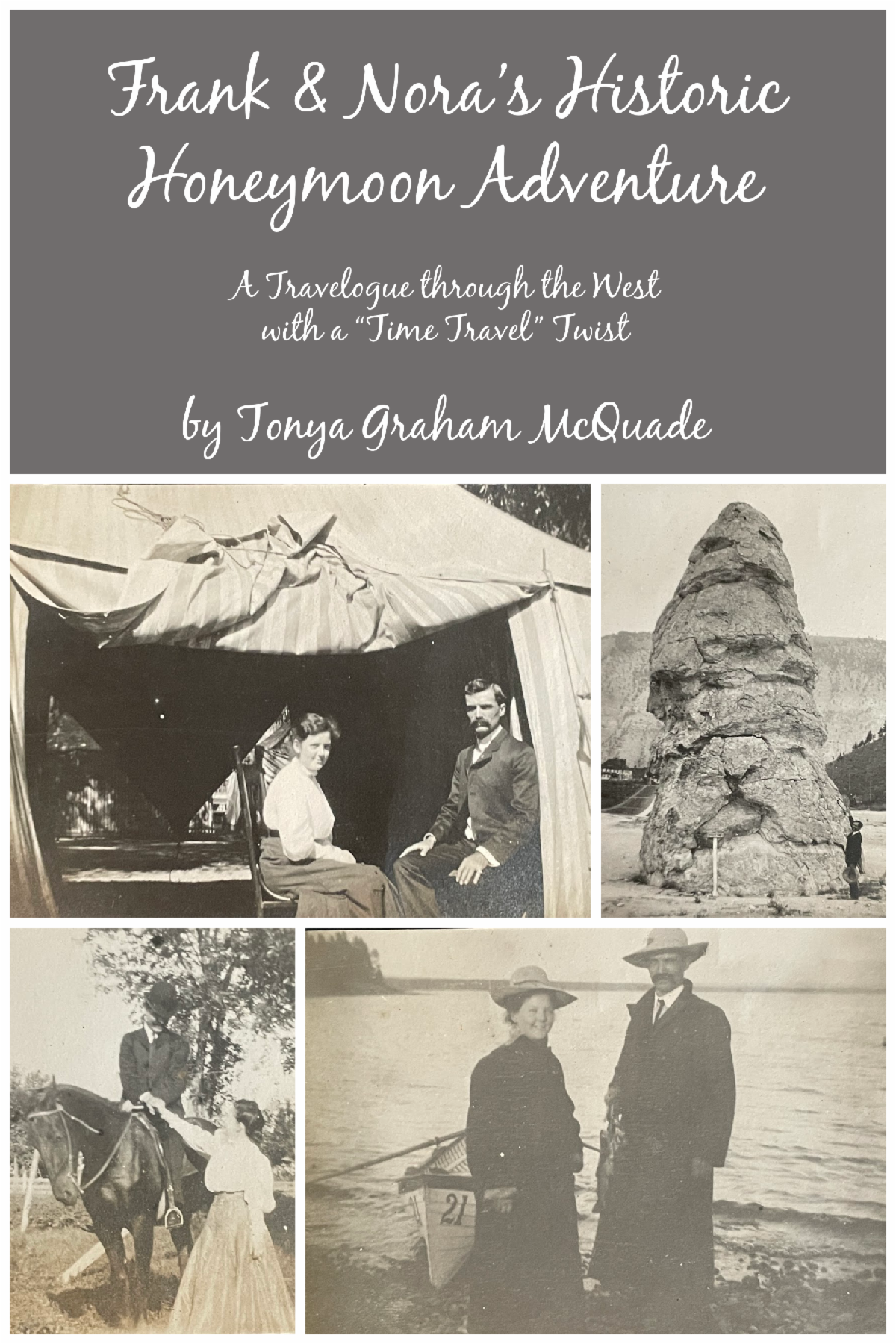
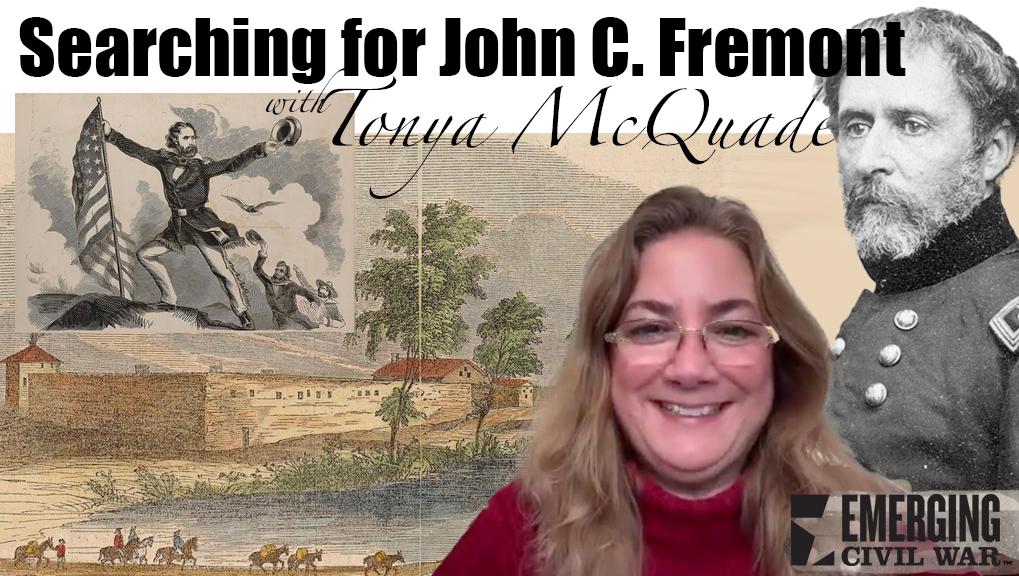
Tonya Graham McQuade has published a new book, again tied to her family history research. Titled Frank and Nora's Historic Honeymoon Adventure: A Travelogue through the West with a "Time Travel" Twist, the book describes the amazing four-week, 4,500+ mile honeymoon Tonya's great grandparents, Dr. William Francis "Frank" Traughber and Nora Petree Traughber, enjoyed in 1905 that took them to the luxurious Hotel Del Monte in Monterey, the Big Trees of Sants Cruz, Catalina Island, pre-earthquake San Francisco, Portland's "Lewis and Clark Centennial Exposition" World's Fair, Seattle's early days of horse racing at Washington Park, and a six-day wagon trek around Yellowstone National Park. The book weaves together photos and captions from Frank and Nora’s original 1905 scrapbook photos with significant amounts of historical research and Tonya's own modern-day travels to many of those same iconic spots, providing a snapshot of American travel in the age of railroads, a picturesque look at the American West, and a unique “time travel” perspective that bridges more than 120 years of marriage and adventure then and now. The book is now available on Amazon and can be purchased here. As an interesting side note, Nora Petree Traughber was the granddaughter of James Calaway Hale, whose Civil War letters formed the core of Tonya's previous book; and Frank Traughber was the grandson of Emanuel Traughber, from Centralia, Missouri, who fought for the Confederacy.
| |
ECW Multimedia
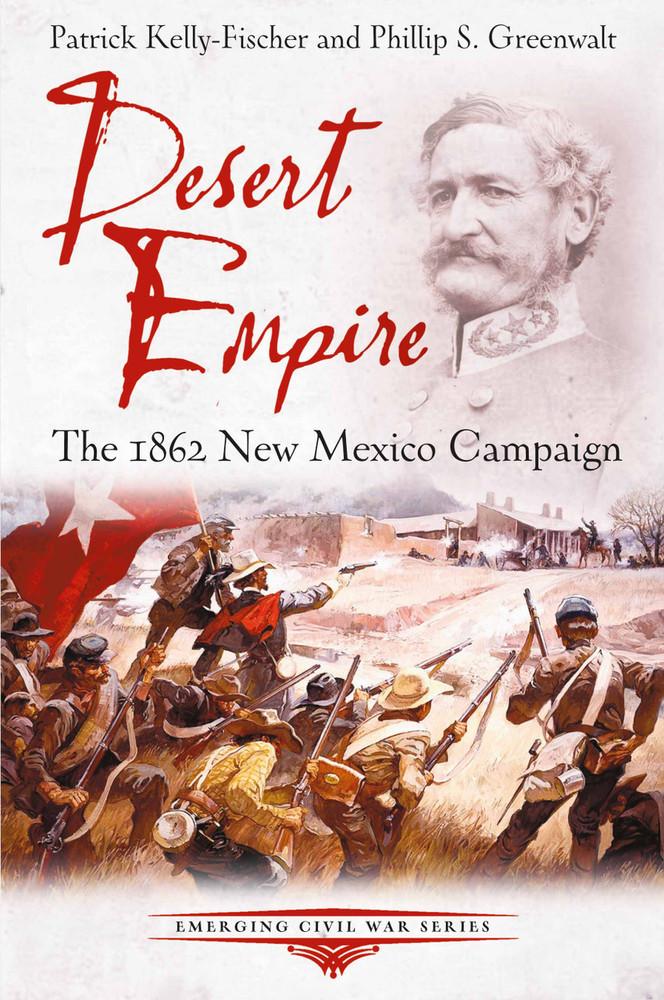
This month, while finally defrosting after a long winter, ECW contributors have produced some great content you don’t want to miss! On the podcast, Chris sat down with Patrick Kelly-Fischer and Phillip Greenwalt to talk about their new book, Desert Empire: The 1862 New Mexico Campaign. The authors take you through one of the least-studied campaigns of the war, and its consequences in the southwest and beyond. Check out Savas Beatie to get yourself a copy!
| | And on the YouTube channel, Chris had a chat with Adam’s County Historical Society Executive Director Andrew Dalton about the upcoming Gettysburg Film Festival, April 2-4. Fitting in with the nation’s 250th, the theme of this year’s festival is the American Revolution in film. The lineup includes great guests like Ken Burns, Rick Atkinson, Hamilton original cast members, and more. Even if you aren’t able to make it to Gettysburg, there are virtual viewing options for some of the presentations, so check their website here. | |
Emerging Revolutionary War News
March 1776 was historic in its own right, starting on the night of March 4 and into the morning of the 5th, as George Washington's army, courtesy of the "Noble Train of Artillery" brought by Henry Knox from Fort Ticonderoga to the outskirts of Boston, was placed on Dorchester Heights. This commanding position, which overlooked both the town of Boston and the harbor, became the deciding factor in breaking the Siege of Boston. The British had to evacuate, especially after determining that a frontal assault was not possible up the slopes of Dorchester. The Royal Navy was also compromised as the Americans could rain shot and shell down on the ships at anchor in the harbor.
So, on March 17, General William Howe evacuated Boston. George Washington had his first victory of the American Revolution, and then set his eye on New York, which would become the focal point of the late summer campaign season.
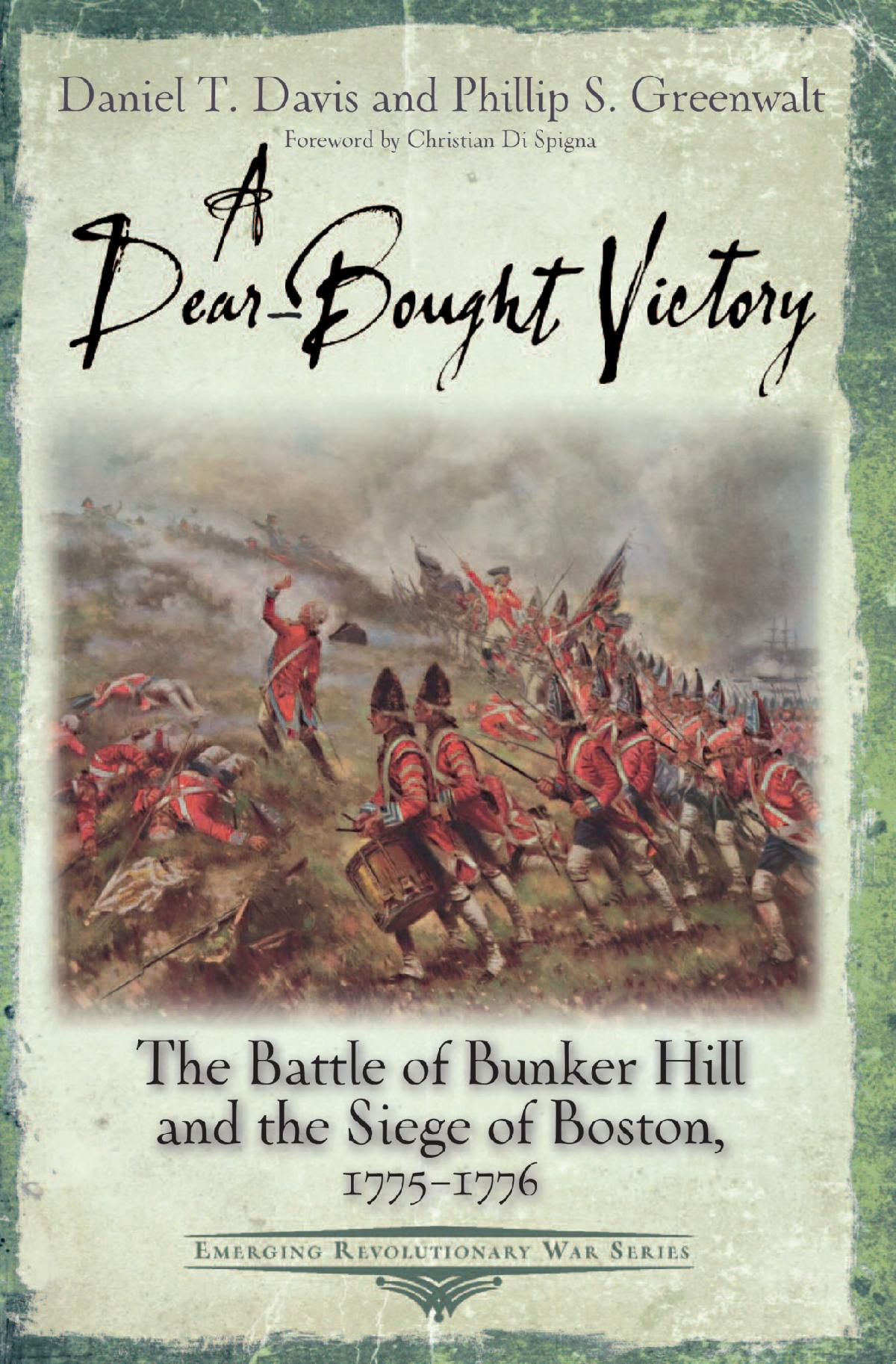
The next volume of the Emerging Revolutionary War Series will cover the actions of the latter part of the siege, Dorchester Heights, and the evacuation. Continue to check out the blog for updates on when that volume will be available for purchase. And catch a sneak peek of the cover to the right!
In the meantime, check out the events that Emerging Revolutionary War historians will be speaking at over the coming months:
-
On April 30, at the Quincy (MA) Historical Society, Chris Mackowski will give a talk on Atlas of Independence: John Adams and the American Revolution in John Adams's hometown. Look for details at the Quincy Historical Society.
-
On May 7–9, at the National Museum of the Army, Billy Griffith and Mark Maloy will be part of the "Revolutionary War 250: Struggle for Independence, 1777-1779 Symposium." Details are here: National Museum of the United States Army
-
On June 9, July 2, and July 23 (all Thursdays), Phillip S. Greenwalt and Rob Orrison will be presenting programs on the American Revolution in Wheeling, West Virginia as part of "The People's University: American Revolution" program at the Ohio County Public Library. Details can be found here: Ohio County Public Library
-
Also in July and August, Phillip S. Greenwalt will be presenting two programs for America 250. On Tuesday July 28 at 6 p.m. on the "Summer of 1776" and Tuesday, August 25 on "The New York Campaign" at the Gettysburg Library in Downtown Gettysburg, Pennsylvania. Details can be found here: America250PA | Adams County Library
-
Then, to round out the summer, in early September, join Mark Maloy and Rob Orrison in Boston as they conduct a multi-day tour, "Cradle of the Revolution: Boston to Lexington and Concord," September 9–13, for the Blue and Gray Education Society. Details on how to sign up for that tour is here: Cradle of the Revolution: Boston to Lexington and Concord
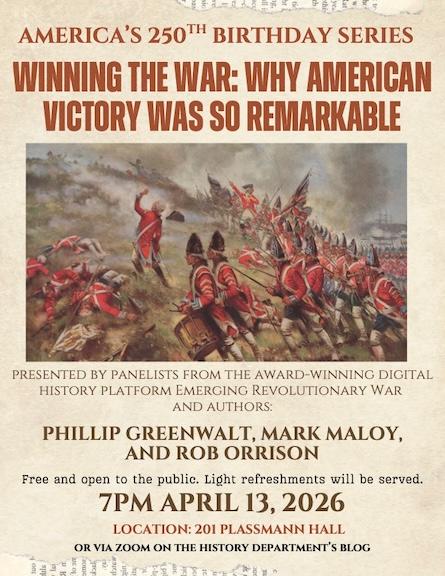
ERW is also cosponsoring a lecture series with St. Bonaventure University to commemorate America's 250th. The programs are being broadcast live on Zoom. You can get full details--along with Zoom links--from St. Bonaventure's History Department blog. On April 13, ERW historians will present a program as part of that series, focusing on military aspects of the Revolution. (See the flier below)
As always, continue to check out the blog, subscribe to the site to never miss a new post, and keep current on the history of the American Revolutionary Era. That includes checking out our popular "Rev War Revelry" Sunday night programs. A complete schedule is on the blog, www.emergingrevolutionarywar.org. And then listen again on YouTube or our podcast channel, both "Emerging Revolutionary War."
| |
|
You Can Help Support Emerging Civil War
Emerging Civil War is a 501(c)3 not-for-profit organization. If you’re interested in supporting “emerging voices” by making a tax-deductible donation, you can do so by visiting our website: www.emergingcivilwar.com; you can mail us a check at the address below (make checks payable to "Emerging Civil War"); or you can make a gift through PayPal.
Thank you!
| | | | |
April
2: Dave Powell, Bella Vista Civil War Round Table, Bella Vista, AR
4: Curt Fields, The General's Breakfast On the Grounds of the Cherry Mansion, Savannah, TN
10: Jon-Erik Gilot, "A Neglected Campaign: Loring's Offensive in the Kanawha Valley, September 1862" Shenandoah Valley Battlefields Conference, Martinsburg, WV
10: Kevin Pawlak, "The Battle of Shepherdstown," Shenandoah Valley Battlefields Conference, Martinsburg, WV
11-12: Curt Fields, Appomattox Surrender observation, Appomattox Court House National Historical Park, VA
16-19: Dave Powell, Atlanta Campaign battlefield tour for Blue-Gray Education Society, Atlanta, GA
17-18: Multiple ECW Authors, Carnegie Civil War Symposium, Carnegie, PA
18: Melissa Winn, “Healing Open Wounds: How First Manassas Transformed Medical Care,” Carnegie Library Civil War Symposium, Carnegie, PA
18-19: Curt Fields, Civil War Symposium, Adams County-Quincy, IL
20: Neil P. Chatelain, "Confederate Privateering Activity in San Francisco," Inland Empire Civil War Round Table, Virtual Presentation
20: Arie De Young, "Sink the Albemarle!: William B. Cushing and the American Civil War’s Most Daring Mission," Madison County Civil War Roundtable in Anderson, IN
23: Brian Kowell, “The Case of Lucy Bagby: The Last Fugitive Slave,” Lodi/Harrisville Historical Society in Lodi, OH
23: Bert Dunkerly, "The Final Attack at Antietam," North Jersey Civil War Round Table (zoom)
25: Jon-Erik Gilot, "Jenkins's Trans-Allegheny Raids," "Jones-Imboden Raid," Minnesota Civil War Symposium, Bloomington, MN
23-26: Curt Fields, Grant Days!, Georgetown, OH
26: Bert Dunkerly, Revolutionary War Walking Tour of Lewisburg, PA Cemetery
29: Neil P. Chatelain, "This Great Contest Afloat: The Civil War on the Seas, Coastline, Rivers, and Oceans," CivilWar Talk, Virtual Presentation
30: Chris Mackowski, "Atlas of Independence: John Adams and the American Revolution," Quincy (MA) Historical Society
May
1-3: Dave Powell, Central Coast Civil War Conference, Monterey, CA
7: Chris Mackowski, "A Tempest of Iron and Lead: The Battle of Spotsylvania Courthouse," Milwaukee (WI) Civil War Roundtable
8: Chris Mackowski, The Civil War Round Table of Chicago (IL)
11: Bert Dunkerly, "Surrenders of the Civil War," Raleigh NC Civil War Round Table
12: Brian Kowell, “Civil War Horses,” Northeast Ohio CWRT in Willoughby, OH
12: Dave Powell, Battle of Kennesaw Mountain, Columbus Ohio Civil War Round Table
16: Melissa Winn, “Grant’s Conscience: The Unique Camaraderie Between Ulysses S. Grant and his Chief of Staff John Rawlins,” Galena History Festival, Galena, IL
18: Evan Portman, "A Question of Conscience: Saint Vincent Archabbey in the Civil War," Greater Pittsburgh (PA) Civil War Round Table
18: Kevin C. Donovan, “The Court Martial of Fitz John Porter: Fair or Fixed?”, Inland Empire CWRT, Redlands, CA (via Zoom)
19: Neil P. Chatelain, "Treasure and Empire in the Civil War," Scottsdale (AZ) Civil War Round Table
20: Doug Crenshaw, Hanover Tavern: 7 Days
27: Curt Fields, Grant at Fort Henry and Fort Donelson, St. Louis CWRT, MO
| | | | |