The Physician’s Perspective:
Why you should consider growing some of your own food this month.
|
While you may think you’ve accidentally stumbled on the weekend gardening column, rest assured, this really is a doctor’s essay on health. Hang in there with me for a few paragraphs, and you’ll see why “growing your own” could be a game-changer for you. For some of you out there, the idea of planting and harvesting tomatoes and zucchinis might sound like a waste of time, or something too complicated to bother with. But for a lot of us, we have already been bitten by the bug and have seen the benefits to our health and the health of our communities. |
|
|
Try to list hobbies that give you exercise - aerobic (when you consider mowing and weeding), strength training (carrying bags and buckets of mulch and soil around), balance and stretching (gotta get that one, last weed just out of reach); free vitamin D, exposure to stress banishing nature, outdoor social interaction (especially nice during Covid times), and then at the end of it bushels of delicious veggies, fruits, and herbs (1). What gym membership gives you all that? You don’t have to wear Spandex, you don’t have to pay 75 bucks a month, and the only sweat you have to smell is your own!
The obvious benefits to your own health are listed above. But there are the subtler, wider benefits, as well. For one, you may tend to waste less produce. Due to nurturing them since they were wee “babies”, I eat almost every misshapen tomato and slug-nibbled leaf of kale (the rest goes on the compost pile, to feed next season’s garden). These are items that would have been tossed out even before getting to the supermarket. For another, the environment benefits directly. As Dr. Scott Stoll and his team point out in their paper on regenerative organic agriculture, modern-day industrial agriculture is a major contributor to air and water pollution (2). By growing your own, you now have less dependence on gasoline for getting potatoes from a field in Idaho to your plate in Austin. You don’t need to use any gas to get from your kitchen to the back yard (unless you have a really, really big backyard), and your produce isn’t pre-packaged in plastic. Additionally, your organic garden supplies an important and safe food source for bees and other insect pollinators that are in decline due to the use of harmful chemicals by industrial agriculture. You also may find yourself eating more with the seasons, which connects us with nature. At our house, we’re much more likely to make fresh eggplant and tomato pasta sauce in August when they’re ripe, and much less likely to do so in January, when they’d be shipped from Latin America.
Regarding longevity, Dan Buettner points out the commonality of gardening among the inhabitants of the Blue Zones - areas around the world with high concentrations of healthy, long-lived people (3). Sardinian septuagenarians, Okinawan octogenarians, and Nicoya nonagenarians can all be found out back, digging in the dirt. And that might have something to do with their vibrant longevity.
But where to start? I highly recommend growing some greens. For one, greens are one of the real powerhouses in a healthy diet. They’re packed with vitamins, minerals, antioxidants, phytonutrients, and fiber that keep your arteries open, help keep cancer at bay and maintain a healthy microbiome. Another reason to grow them is that they don’t stay fresh for very long after you bring them home from the grocery store. By growing them, you can pick just what you need, and just when you need them. Maybe start with growing some kale and chard since they’re pretty easy to grow. But of course, there are mustard greens, collards, Asian greens, spinach, sorrel, beet greens, and many others. Once you get them going, you’ll have the chance to pop out to your garden daily, harvest a handful of leaves for your green smoothie, or to put in your bean stew or veggie stir fry.
Don’t worry if you’ve never grown your own fruit and veg before. YouTube and other internet resources are full of people ready to teach you how to do it, for free! Also, check out your local cooperative extension service or master gardener program. They have great info regarding what to plant in your specific area, and when the best time is to plant them.
Gardening really is good for the heart, for the mind, and for the soul. So if you haven’t already, give it a shot. And don’t stress about getting it perfect - as they say, you don’t have to be good at gardening, for gardening to be good for you!
References
1. “Gardening For Health: A Regular Dose Of Gardening”. Richard Thompson. Clin Med (Lond). 2018 June; 18 (3): 201-205.
2. “The Power Of The Plate: The Case For Regenerative Organic Agriculture In Improving Human Health”. Jeff Moyer, Scott Stoll, MD, Zoe Schaeffer, Andrew Smith, PhD, Meagan Grega, MD, Ron Weiss, MD, Joel Furhman, MD. 2020.
3. The Blue Zones: 9 Lessons For Living Longer From The People Who’ve Lived The Longest. Buettner, Dan. 2012.
|
|
|
|
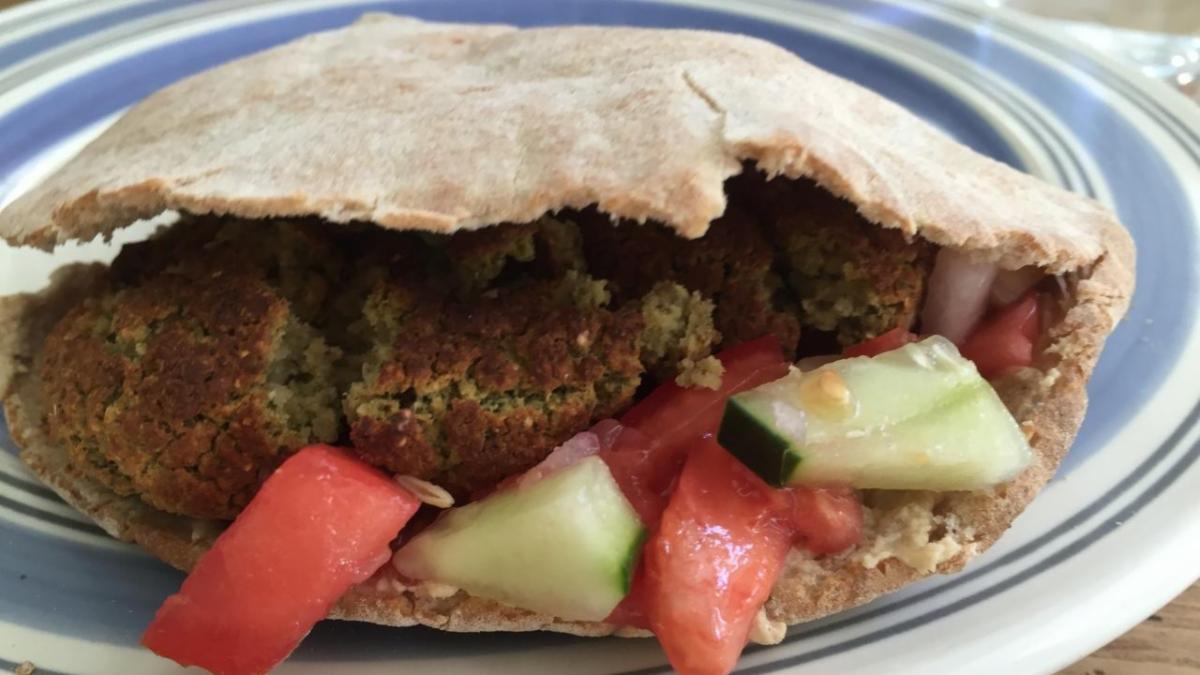
Baked Falafel
Are you like us and love falafels?? We normally eat them over a bed of greens, topped with a diced tomato and cucumber salad, and a lemon tahini dressing. We occasionally eat them in a whole wheat pita. Either way, this dish brings back those memories of eating falafel sandwiches on the streets, except without the dangers of eating deep-fried food and white flour pitas.
|
|
|
Ingredients:
- 2 cups chickpeas (in liquid, lightly strained, reserve liquid)
- 3 cloves garlic
- 1 medium onion
- ½ bunch parsley
- ½ bunch cilantro (or use all parsley if you don’t like cilantro)
- 1 tbsp Bragg's liquid aminos
- 2 tsp ground cumin
- 1 tsp ground coriander
- ½ cup chickpea flour (as needed)
- 2 tbsp ground flax seed
- black pepper (to taste)
- Cayenne pepper (optional, to taste)
|
|
Instructions:
- Preheat oven to 425 (if you have a convection oven or air fryer that will work well too, just watch and adjust the cooking time to make sure you don’t burn them.)
- Combine chickpeas, garlic, onion, parsley, cilantro, Braggs in a food processor, and process until coarsely mixed. Add additional chickpea liquid as needed until the mixture blends thoroughly.
- In a large mixing bowl, combine processed chickpea mixture, cumin, coriander, flaxseed, pepper, and chickpea flour as needed to create a batter thick enough that you can clump it together.
- Place in 12 clumps (loosely shaped like balls) on a parchment paper-lined baking sheet
- bake at 425 for 25 minutes, or until golden brown
|
|
|
Lifestyle Telemedicine - Optimizing Your Appointments with PlantBased TeleHealth |
|
|
Telemedicine has provided an incredible opportunity for patients to partner with doctors outside of their immediate location to get and stay healthy. Our PlantBased TeleHealth doctors recently discussed their experiences with learning to care for patients virtually. Following are some highlights on what to expect and how to have the most valuable experience.
What can people do to make the time they spend with their doctor during a telemedicine appointment most effective?
-
Share openly. The more information you share with your physician, the more valuable your time together will be. In the absence of physical contact (for example, feeling your pulse) the physician is more dependent on you telling them exactly how you feel. Communicate openly with your physician.
-
Provide info prior to appointment. With time constraints, the intake forms are key. Fill out forms prior to the appointment to let your doctor get a look at your entire history prior to the appointment. By looking at the routine questions and medical history prior, the doctor can actually get into the nitty-gritty details during the appointment.
-
Think comprehensively. Lifestyle Medicine doctors build out a comprehensive and integrated health plan based on the complete picture -- so it’s important to share both traditional medical info and lifestyle info. What supplements are you taking? What’s your standard diet? What kind of activity do you do? What is your stress level like?
How do the physicians accommodate patient care via telehealth appointments?
-
Listening is key. Dr. Klaper, Dr. Marbas, and Dr. Miller all spoke during the recent webinar about the importance of listening. The physicians described the value that comes from having time to review basic information beforehand but then spend time during the appointment really listening to the patient describe how they are feeling and what’s going on in their lives that may be affecting their health. It’s as if the ears become the hands for doctors during telemedicine and are the main tool when assessing the patient.
-
Embrace the environment and flexibility. People and doctors alike sometimes worry that the connection and relationship may suffer when the appointment isn’t in person. However, experience has shown that it’s actually very connecting - sometimes even more so than a traditional visit. The patient and doctor are virtually in each other’s homes and sharing an uninterrupted conversation. The PlantBased Telehealth physicians are also able to work with patients across the entire country, which would previously be impossible.
-
Use of the tools. The PlantBased TeleHealth doctors make great use of their electronic health record (EHR) and patient portal messaging. The secure messaging allows them to share resources, images, and any follow-up information with patients in a timely and ongoing manner. It's two
How does the PlantBased TeleHealth doctor fit into your primary care?
-
Teamwork. The PlantBased TeleHealth doctors are always open to talking with and sharing information with your primary care physician. They don’t replace your primary care provider -- they serve as an additional member of your healthcare team. The most common response from primary care physicians after seeing the results of their patients working with a PlantBased physician is along the lines of “you’re making great improvements -- keep doing what you’re doing”.
For more a detailed discussion on what to expect when working with a PlantBased TeleHealth doctor, you can watch a recording of the full webinar here.
|
|
|
|
|
|
|