|
Monthly newsletter from the City of Chula Vista
Sustainability Division
| |
|
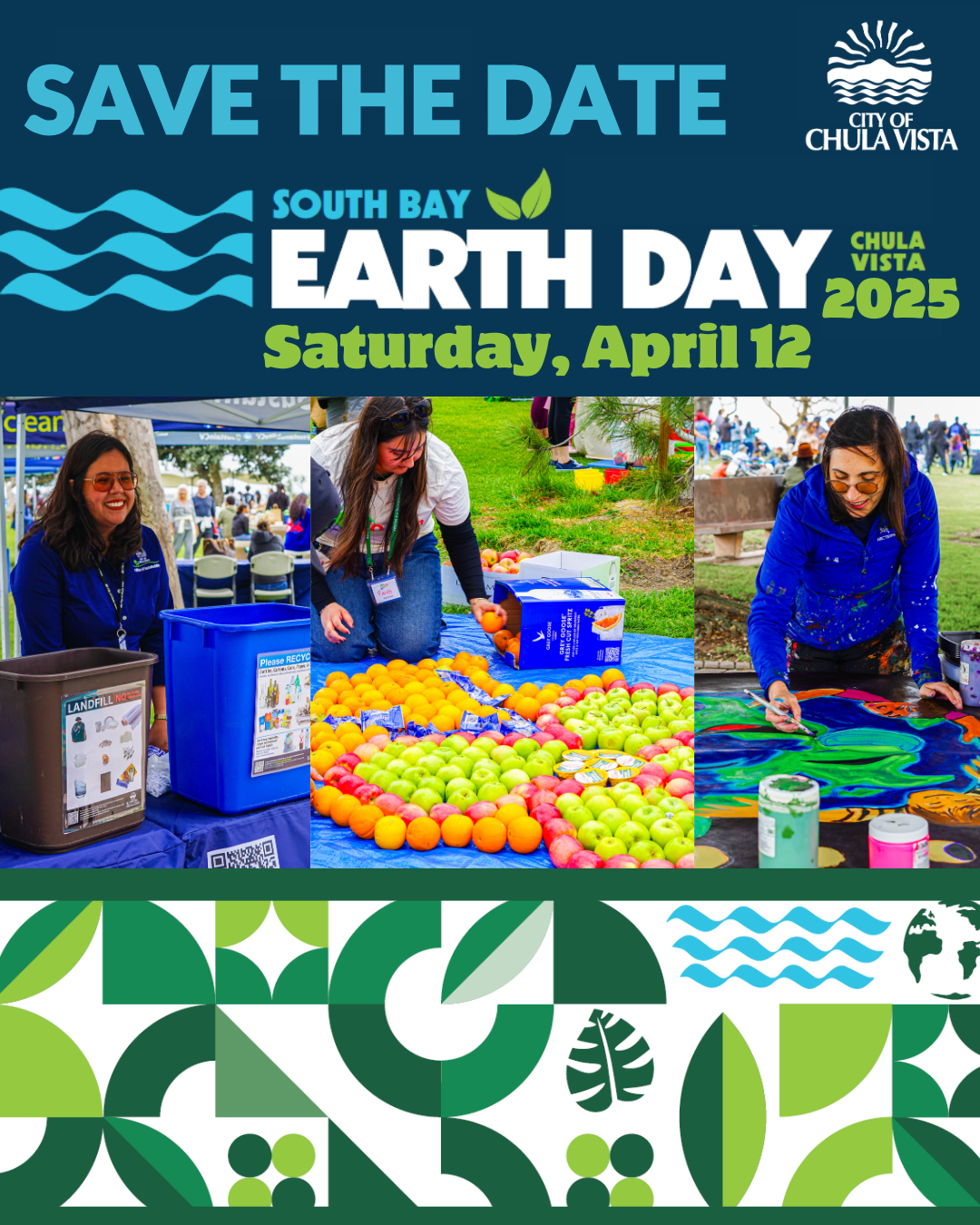
Chula Vista’s South Bay Earth Day Returns to Bayfront Park for Annual FREE Event April 12
Join us at South Bay Earth Day, the City of Chula Vista’s Annual Earth Day Celebration. The event will take place at Chula Vista Bayfront Park, 980 Marina Way, Chula Vista, CA 91910 from 11 am – 3 pm. This celebration will feature a host of family-friendly activities, workshops, exhibits, vendors, art, food and drink, nonprofits, how-to and all-day entertainment featuring amazing local and regional artists. In addition to celebrating our precious, fragile planet and its bounty, South Bay Earth Day will engage and motivate visitors to choose environmentally friendly products and lifestyle choices, learn and practice, sustainable and mindful habits. Highlights of the zero-waste, day-long event will include:
-
Fix-it-Clinic. Repair extends the life and reduces the environmental footprint of devices, furnishings and objects. Have something that needs fixing from small electronics to mechanical devices? Bring it in! One of our experts will help you evaluate, diagnose and fix it if they can.
-
Tie-Dye Workshop. Upcycle your plain (light-colored) garments and fabrics into original, colorful creations. Other hands-on workshops taking place include Zero-Waste Living, Food Waste Tips and Tricks, Ask the Recycler and Electrifying Your Home.
-
Live Entertainment. All-day musical performances that will energize you to dance and enjoy the beautiful setting.
-
Over 50 Green Vendors. Everything sustainable and eco-conscious, from home furnishings to jewelry and apparel to garden gadgets, as well as exhibits and booths from local nonprofits.
-
Artist Alley. Enjoy the sight of beautiful art creations with environmentally safe art exhibits at the Artist Alley. There will be at least three live painters on- site and many artists will be present to talk about their works. Some items will be available for purchase.
-
Kid Zone: The Living Coast Discovery Center will be on site with their animal friends, other activities include fun recycling sorting games, coloring, Conservation corn hole and many others.
-
Food Trucks. The San Diego area’s most diverse array of food truck options.
-
Compost Giveaway. Learn about the benefits of compost and take a small sample home.
-
Free Bike Valet. Opt for your human-powered vehicle (your bike!) and check it in at our designated bike-only valet located on the northeast corner of the park.
South Bay Earth Day is presented by the Port of San Diego Experiences and has been organized by the City of Chula Vista since 2018. Chula Vista is a leader in sustainability awareness and activity, rolling out citywide recycling programs in 1993, joining the U.S. Conference of Mayors in 1997 and publishing its first Climate Action Plan in 2000. Chula Vista also developed an Operations Sustainability Plan and Waste Reduction Strategic Plan, or Zero Waste Plan, that considers “People, Planet and Prosperity” as the “triple bottom line” to achieve social, environmental and economic sustainability in the local community.
| |
|
Tie Dye at South Bay Earth Day
Bring an old shirt to tie dye for free at the South Bay Earth Day on Saturday April 12 and give it some extra color. The Tie Dye Workshop will have a variety of dye colors and volunteers to help tie dye any prewashed, white, 100% cotton shirt or other items that you want to bring. Tie dye is a great activity for all ages and an excellent way to extend the life of an older or stained shirt.
| |
|
Ask the Expert Sustainability Series
Come meet us! The Sustainability team will be at the newly renovated Loma Verde Community Center March 22, 2025, from 9 AM – 12 PM.
Get your waste and energy questions answered by experts and take home a free kitchen caddy and other fun giveaways. We look forward to seeing you.
| |
|
2024 Energy Data Benchmarking Link Now Live
Calling all Building Owners! To comply with the City of Chula Vista's Building Energy Saving Ordinance, owners of buildings 20,000 square feet and larger must report their energy use, otherwise known as benchmarking, annually on the free Energy Star Portfolio Manager platform. Over time, low-performing buildings will need to perform audits and potentially address cost-effective building upgrades.
The deadline to report energy use data is May 20. Visit www.chulavistaca.gov/benchmark for the reporting link and for helpful resources including one-on-one appointments, a How to Comply Guide, informational videos and more.
If you have any questions or need additional assistance, please email benchmark@chulavistaca.gov or call (619) 691-5134.
| |
|
Apply Today for a No-cost Energy Audit to Fulfill Conservation Requirements
Do you own a building in Chula Vista that is 20K square feet or larger? If so, you may be required to obtain an energy audit as a part of the Chula Vista Building Energy Saving Ordinance requirements. The City of Chula Vista is offering on-site American Society of Heating, Refrigerating and Air-Conditioning Engineers (ASHRAE) Level 2 energy audits at no cost to selected participants. These audits will fulfill the Building Energy Saving Ordinance audit requirements. Audits are anticipated to take place mid-late 2025. The quantity of no-cost audits is limited, so apply today! The first review of applications will be March 24.
Program Requirements:
- Building must be located within the City of Chula Vista and 20K square feet or greater
- Building must have submitted energy benchmarking data previously
- Building owner or representative must be willing to participated in pre and post audit surveys
Apply today: https://forms.office.com/g/nzr2nZDacC or email benchmark@chulavistaca.gov for additional information.
| |
|
Nominate a Sustainability Champion by March 31
Have you heard about the Sustainability Champion Awards? Nominations for the Chula Vista Sustainability Champion Awards are being accepted until March 31. Any person or group living or working in Chula Vista is eligible to be nominated for an award and potentially recognized for their local sustainability achievements. The Sustainability Champion Awards – an initiative of the City of Chula Vista’s Sustainability Commission and the City’s Sustainability division – are designed to recognize those who are helping to achieve clean air, clean water and clean land for future generations within Chula Vista.
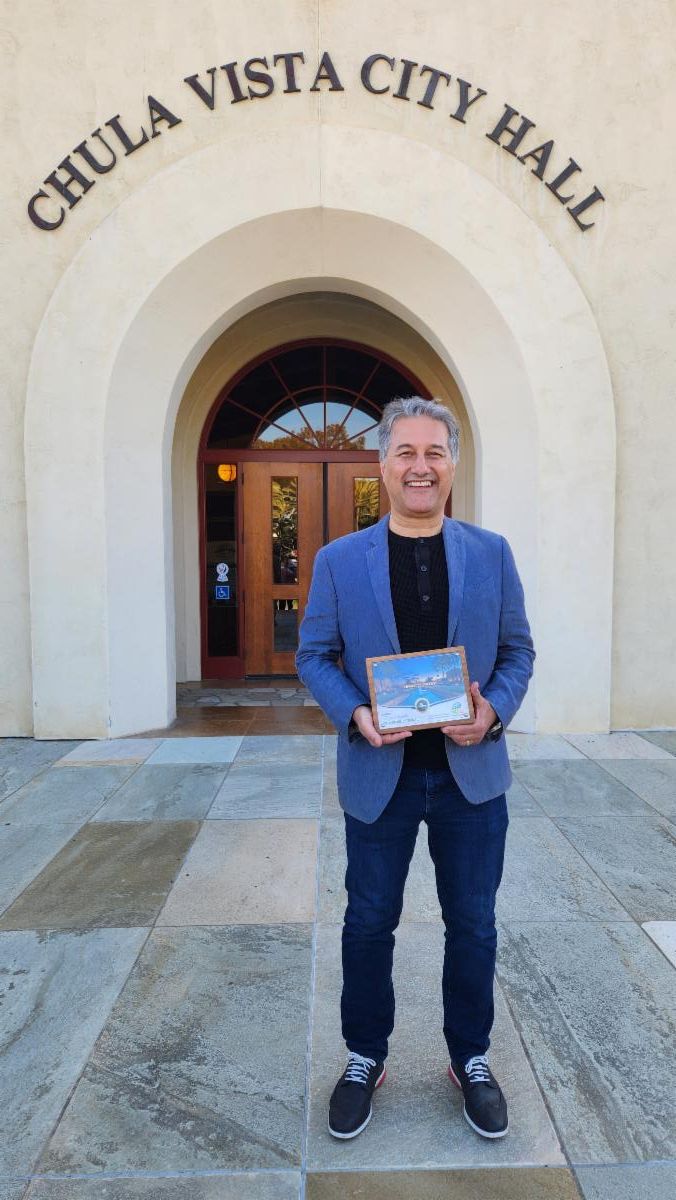
Nomination forms can be completed and submitted from the City of Chula Vista’s website at https://www.chulavistaca.gov/departments/sustainability/sustainability-forms/sustainability-champion-awards-nomination-form. Nomination forms are due by 5:00 pm on March 31, 2025. Award winners will be recognized at a City Council meeting in April and at South Bay Earth Day on Saturday April 12.
The Sustainability Commission hopes that the annual awards help celebrate local sustainability champions and inspire others to make eco-friendly choices in their everyday actions. More information on the City of Chula Vista’s environmental programs and services can be found at www.chulavistaca.gov/clean.
| |
|
Help Shape Our Energy Future – Participate in the San Diego Community Power Survey
San Diego Community Power is inviting you to participate in a critically important customer feedback survey that will directly impact the future of energy in our region. This comprehensive survey is not just about gathering data, but also about shaping a sustainable energy future that benefits everyone.
And, as a token of appreciation, you could win one of three $500 Home Depot gift cards available to survey participants!
Take the Survey Today. Don't miss this chance to have your say and possibly win a great prize. Encourage fellow Community Power customers to join by sharing this message. Click the link below to participate now.
Take the residential survey here.
Take the commercial survey here.
| |
|
Sustainable Home Toolkit
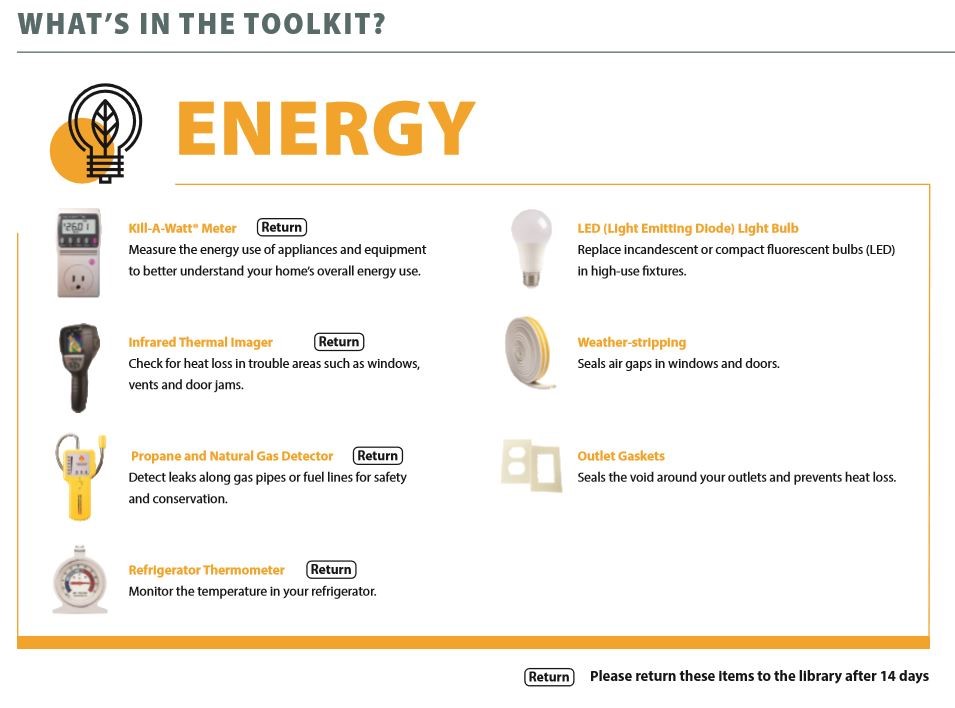
Have you heard about an exciting free resource at the Chula Vista library called the Sustainable Home Toolkit? Are you trying to live a more sustainable lifestyle? Chula Vista’s Sustainable Home Toolkit makes it easy for residents to save money on utility bills by conserving energy and water. The toolkit contains various tools, measuring devices and an easy-to-use guide.
The toolkits are available for checkout at the Civic Center Branch and Otay Ranch Branch library locations; it's as easy as checking out a library book! Visit www.chulavistalibrary.com to reserve your toolkit online (search “DIY sustainable home toolkit” in Search Our Collection field). The toolkit is free to checkout for 14 days with your library card. The tools and toolbox must be returned, but the equipment you install is free to keep.
| |
|
Chula Vista Bicycling
Bicycling offers a wealth of benefits for everyone – individuals, businesses, schools and our community as a whole. It's a key component of promoting active lifestyles, alleviating traffic congestion and improving air quality. Plus, it's undeniably enjoyable! We're proud that the City has been recognized for its commitment to cycling, achieving bronze-level "Bicycle Friendly Community" status by the League of American Bicyclists.
The City is actively working to improve pedestrian and bicycle infrastructure, guided by the Active Transportation Plan that was approved by City Council in 2020. This plan provides a foundation for those improvements and focuses on enhancing the safety and comfort of existing pedestrian and bicycle facilities as well as increasing connectivity to key attractions such as schools, employment centers, retail districts and recreational areas.
Ready to explore the City’s existing bike lanes? Start your cycling journey now, but consider these safety tips before you start your journey:
- Always wear a helmet
- Before every ride check for air in the tires, your brakes are working properly and if you have gears on your bike that the chain shifts properly and is lubricated.
- If you are wearing pants, ensure that excess material around your calf or ankle is not loose and causing it to potentially get caught in your gears.
- If you ride at night make sure you have the proper reflectors, a headlight and a taillight to ensure that you are seen by drivers.
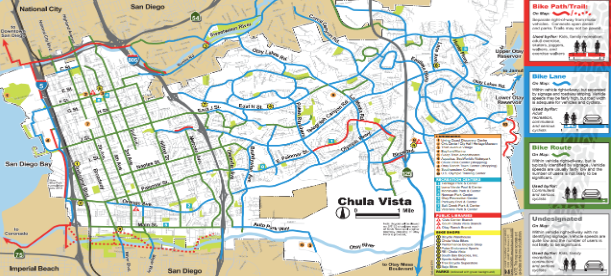
To learn more about bicycling safety and alternative transportation, visit the City’s webpage on Bicycling and Alternative Transportation. Additionally, check out this map that illustrates the City’s existing bicycle lanes, routes and trails.
| |
|
Ten tips to Use Less Natural Gas and Save on Your Energy Bill
Reducing natural gas use at home may contribute to energy savings and it’s better for the environment. Check out these energy-saving tips to help you save on your bill during the cold weather:
Block the chill.
Caulk and weather-strip around drafty doors and windows. Use a door sweep, door sock or towel at the bottom of doors with a gap. Also remember to shut your chimney flue when not in use to prevent warm air from escaping.
Keep your furnace and air filters clean.
Check furnace filters once a month and replace them regularly. A dirty air filter can increase your energy costs and cause problems with your equipment.
Set your ceiling fan to run clockwise.
This causes the fan to produce an updraft, forcing the hot air that rises to your ceiling down and into the rest of the room. In the summer, you can switch the fans to counterclockwise to keep the room cool.
Schedule a no-cost gas appliances check with SDG&E.
Book an appointment online at MyEnergyCenter.com. Select the Services tab, Services Overview and then Gas Appliances Check. Learn more at sdge.com/GasCheck.
Lower your thermostat.
Try lowering your thermostat a few degrees and throwing on a cozy sweater and socks or cuddling with your fur baby! You can also invest in a smart thermostat. Rebates are available at sdge.com/rebates.
Lower your water heater thermostat.
Lowering the thermostat on your water heater to 120°F, if possible, will save energy and avoid scalding. Find water heater rebates from $75 to $500 at sdge.com/rebates.
Use the “energy saver” switch on your dishwasher.
Set it on a low temperature setting when feasible. Also, think about turning off the heat drying cycle – you don’t need it! Only run full loads and turn the appliance off after the dishes are washed. And make sure to run it during off-peak hours before 4 p.m. or after 9 p.m.
Keep your blinds and curtains open during the day and closed at night.
During the day, let the sunlight and warmth in. When the sun goes down, close your blinds to keep the warm air in.
Make sure your home is well-insulated.
Without good home insulation, the hot air your natural gas heating system emits can escape through cracks, doors, windows, the attic and garage.
Use water efficiently.
Take shorter showers and wash clothes in cold water. Consider installing low-flow fixtures, insulating your hot water pipes and using a water heater timer.
Visit sdge.com/winter for more bill-saving and energy management resources.
| |
|
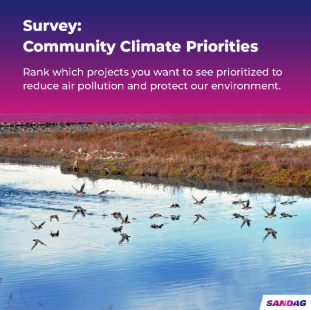
SANDAG Climate Action Priority Survey
To clean up the air, improve people’s health and protect our environment, SANDAG is working on a plan to reduce air pollution and greenhouse gas emissions in the San Diego region. Your opinion matters! Take their survey by Wednesday, March 26 to inform them about what types of projects you want to see in your community. bit.ly/ClimateSurvey25
| |
|
Spring into Action: Create a Buzzworthy Pollinator Garden and Win the “Best in District” Title
With Spring right around the corner, it’s time to start cultivating our gardens. But beyond the vibrant blooms and fragrant herbs, have you considered the vital role your garden can play in supporting our planet's pollinators? Creating a pollinator garden isn't just a beautiful addition to your landscape - it's a crucial contribution to a healthy ecosystem.
Pollinators, including bees, butterflies, hummingbirds and even bats, are responsible for the reproduction of nearly 90% of the world's flowering plants, including many of our food crops. However, these essential creatures are facing unprecedented challenges due to habitat loss, pesticide use, and climate change. Their decline has far-reaching consequences, impacting biodiversity, food security and the overall health of our environment.
That's where you come in! By creating a pollinator garden, you can provide a vital refuge for these hardworking animals and save on water usage. Here's why it matters:
Food Source: Pollinators rely on nectar and pollen for sustenance. A diverse selection of flowering plants ensures a consistent food supply throughout the seasons.
Promote Native Species: Choosing native plants benefits both your garden and the environment, as they require less watering and are preferred by pollinators.
Habitat Restoration: Urban sprawl and agricultural intensification have fragmented natural habitats. Your garden can serve as a crucial steppingstone, connecting fragmented landscapes and providing safe havens.
Biodiversity Boost: A thriving pollinator garden attracts a variety of species, increasing biodiversity and creating a more resilient ecosystem.
Food Production: Many of the fruits and vegetables we enjoy, such as apples, berries and tomatoes, rely on pollinators for production. Increasing pollinator populations directly benefits our food supply.
A Beautiful and Educational Experience: A pollinator garden is a delightful space to observe nature's intricate workings and learn about the interconnectedness of life. It provides a valuable educational opportunity for children and adults alike.
The City of Chula Vista's NatureScape webpage offers a wealth of information, including native plant guides and safer pest control options, to help you get started. If you successfully implement these tips at your own home, you can enter Otay Water District's WaterSmart Landscape Contest! The deadline to enter is May 9th. Winners will earn “Best in District” title and a $250 plant nursery gift card. For more information visit the Otay Water District website.
Here are some tips to get you started on creating a WaterSmart and pollinator paradise:
Plant a Variety: Choose a diverse selection of native plants that bloom at different times of the year, providing a continuous food source.
Go Native: Native plants are best adapted to your local climate and provide the specific resources pollinators need.
Avoid Pesticides: Pesticides can be harmful to pollinators. Opt for natural pest control methods.
Create Shelter: Leave some areas of your garden undisturbed to provide nesting sites and shelter.
Plant in clumps: Grouping the same types of plants together makes it easier for pollinators to find them.
Think about the whole life cycle: some pollinators need specific host plants for their larvae. For example, Monarch butterflies need milkweed.
Every garden, no matter how small, can make a difference. By planting a pollinator-friendly garden, you're contributing to a healthier planet and ensuring a brighter future for these vital creatures!
| |
|
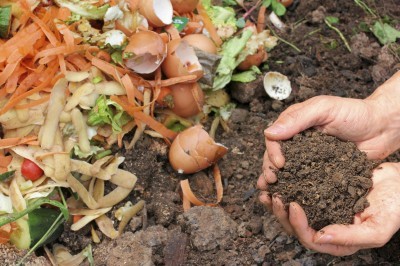
A Step-by-Step Guide to Composting in Chula Vista
Composting is one of the simplest yet most impactful ways to reduce waste, enrich soil and contribute to Chula Vista’s sustainability efforts. With landfills filling up and organic waste making up a significant portion of household trash, composting offers an easy solution to turn food scraps and yard waste into nutrient-rich soil. Whether you live in an apartment or have a backyard, Chula Vista provides various options to help residents start composting. By understanding the basics of composting and following a few key steps, anyone can contribute to a more sustainable city.
Step 1: Choose a Composting Method
The first step in composting is deciding on a method that fits your living situation. For those with outdoor space, traditional backyard composting is a great option. This involves using a compost bin or creating a designated pile where organic waste can decompose naturally. For apartment dwellers or those with limited space, vermicomposting (using worms to break down organic waste) or a bokashi system (a fermentation-based method) can be effective indoor alternatives. Additionally, Republic Services offers green waste collection services that allow residents to dispose of organic waste responsibly. Through the Food and Yard Waste Collection Program, residents can now place food waste, food-soiled paper products and yard waste items in their green carts.
Step 2: Know What to Compost
Successful composting depends on the right balance of materials. Organic waste is divided into two categories: “greens” and “browns.” Greens include fruit and vegetable scraps, coffee grounds and grass clippings, which provide nitrogen. Browns consist of dry leaves, cardboard, newspaper and wood chips, supplying carbon to the mix. To maintain a healthy compost pile, it’s essential to balance these elements, typically with a ratio of about three-parts browns to one-part greens. Avoid composting meat, dairy and oily foods in the home compost bin, as these can attract pests and slow down decomposition. Meat and dairy are accepted in curbside green carts.
Step 3: Maintaining the Traditional Compost Pile
Once the composting process begins, regular maintenance is necessary to ensure proper decomposition. Turning the pile every week aerates the materials, prevents odors and allows the organisms to break down the materials. Keeping the compost moist, but not too wet is also important. If it is too dry, decomposition slows down; if it is too wet, it can become slimy and start to smell. With time and proper care, the organic matter will break down into dark, rich soil that can be used for gardening, landscaping or even shared with community gardens.
Step 4: Utilize Chula Vista’s Composting Resources
Chula Vista offers several resources to support residents in their composting efforts. The city provides educational workshops and resources on composting, helping residents learn the basics of reducing waste and creating nutrient-rich soil. Additionally, Chula Vista’s waste management provider, Republic Services, offers curbside green waste collection, allowing residents to dispose of organic materials like food scraps and yard waste responsibly. These initiatives are part of Chula Vista’s broader efforts to make the city more sustainable and help residents contribute to waste diversion goals. For more details on these services and to find composting resources, residents can visit the City of Chula Vista’s Sustainability Division page at www.chulavistaca.gov/sustainability.
Conclusion
Starting a composting system in Chula Vista is a straightforward and rewarding way to reduce waste while benefiting the environment. By choosing a composting method, balancing greens and browns, maintaining the pile and utilizing local resources, residents can contribute to the city’s sustainability goals. As composting becomes more widespread Chula Vista moves closer to a greener, more environmentally friendly future, one household at a time.
| | | | |