|
|
Why Are You Getting This?
You signed up to receive The Privacy Professor® Tips, or initiated contact to stay in touch with Rebecca and/or Privacy & Security Brainiacs® (PSB) and consented to receive the Tips. Please read our Privacy Notice & Communication Info at the bottom of this message for more information. You may unsubscribe from there as well.
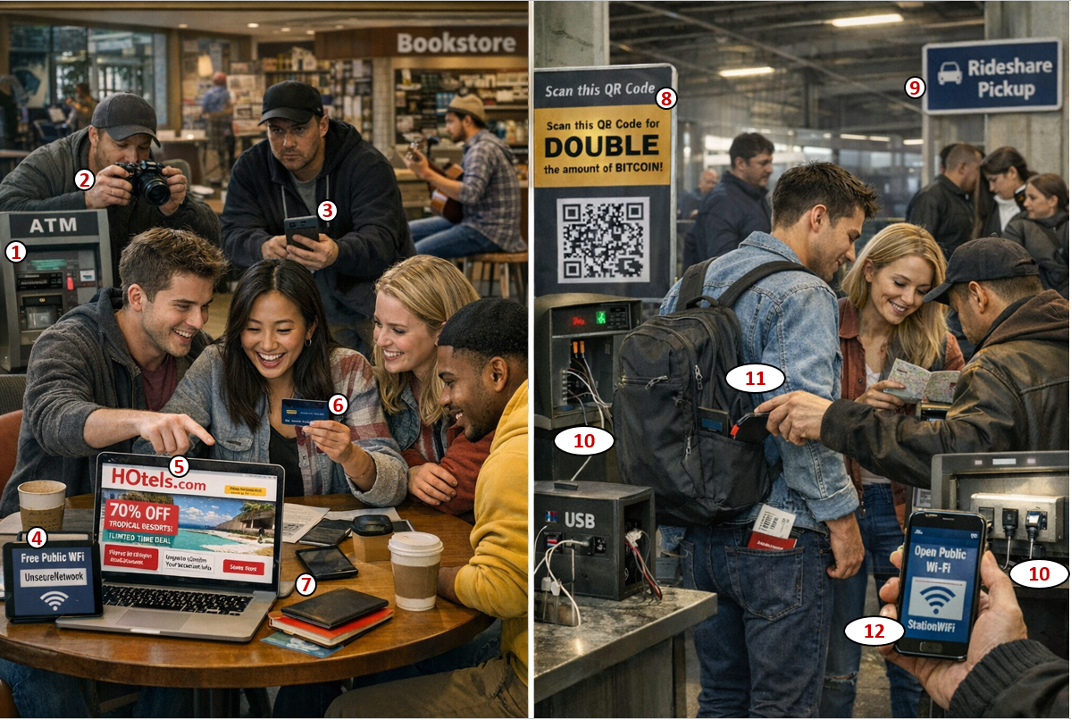
| | AI generated image generated using ChatGPT showing four friends planning a spring break vacation on the left, and traveling to their destination on the right. Many different risks are represented in these images. See the list of them in the “Check It Out!” section at the end of this Tips issue. | | Spring Break: Party Hard, Privacy Harder | | |
Spring break should be all sunshine, selfies, and sandy toes, not surprise scams or digital disasters. From phishing hooks disguised as "too-good-to-be-true" villa deals to the accidental "Overshare Sunburn" on social media, your personal data is as much a target as that prime spot on the sand. Before you swap your password for a piña colada, remember that digital sharks don’t take spring breaks. They just wait for you to wade into the "Free Airport Wi-Fi," or steal your phone out of your back pocket. Vacation season is prime time for cybercriminals who love nothing more than distracted travelers, unsecured Wi-Fi, and overshared itineraries. Staying alert to privacy tricks and security threats doesn’t have to kill the vibe; it simply keeps your fun from turning into a cautionary tale. Consider this your pre-trip tune-up for a safer, smoother getaway.
In the Q&A section of this newsletter we’ve also included answers (that we wrote using our own expertise and experience, not using AI) to some great reader questions covering our Question of the Month about the security and privacy risks of AI used in online retailers and in other digital shopping tech. We answer questions about privacy laws in the U.S., Canada, and Europe, homeowners’ use of smart security cameras, marketing privacy mistakes, AI data retention, and the difference between California privacy law and HIPAA. Thank you for sending them in!
Please read to the end where we provide some information about our recent articles.
Since 2005, we have been freely distributing the Privacy Professor Tips monthly publication to help both businesses and individuals, of all ages, identify risks throughout their daily lives, within their own businesses, and to help them know how to prevent security incidents, privacy breaches, and to keep from being a victim of scams.
By sharing this Tips issue with others in your organization, you are also supporting a wide range of regulatory and other legal compliance requirements to sending such awareness communications. Thank you for reading and sharing!
| | |
We would love to hear from you!
Did you find the tips we provided useful? Did you like this issue? Do you have questions for us to answer? Please let us know at info@privacysecuritybrainiacs.com.
| | |
March Tips of the Month
- News You May Have Missed
- Privacy & Security Questions and Tips
- Where to Find the Privacy Professor
| | |
Many readers are sending us alerts of privacy related news on a wide range of privacy topics. Thank you! We love getting your notices. With your help we are finding more unique news stories to share with you than ever before, along with news items that we believe are important for most folks to know, but that often do not get much mention in traditional news, or even in security and privacy news outlets.
Here are just a few of the 150+ news stories we discovered throughout the past month that provide a wide range of interesting security and privacy related news. These news items demonstrate that such types of risks exist basically anywhere in the world, and that everyone needs awareness.
This month we list 40 news items. We are grouping them into four broad categories: the first is for this month’s topic of “Don't Take a Break from Privacy While On Spring Break,” with tips and news to raise awareness for everyone. Followed by privacy related news in the categories, “Of Broad Interest,” “Privacy in Businesses, Governments, and Other Organizations,” and “Laws, Legal Issues, and Lawsuits About or Significantly Involving Privacy and/or Security Issues.” Within each category the items are in no particular order. Some include “INSIGHTS” to provide some advice or additional insights to specific news items. Thanks to those many readers who sent your positive feedback; we appreciate it!
Do you have interesting, unusual, bizarre or odd stories involving security and privacy? Some of the most surprising items are in local news! Or questions about any of the notes we included for the stories we listed this month? Let us know!
| | Don't Take a Break from Privacy While on Spring Break | | |
Privacy and security while on spring break, and other types of vacations.
1. FBI says ATM ‘jackpotting’ attacks are on the rise, and netting hackers millions in stolen cash. ATM jackpotting hackers have rapidly ramped up their attacks in recent years, with more than 700 attacks on cash dispensers during 2025 alone, netting hackers at least $20 million in stolen cash. Per the bulletin, the FBI says hackers are using a mix of physical access to ATM machines, such as generic keys for unlocking front panels and accessing hard drives, and digital tools, like planting malware that can force ATMs to rapidly dispense cash in a flash.
2. How AI is making travel scams nearly impossible to spot. “Randy Rupp thought he'd seen it all. A retired federal law enforcement agent with years of experience spotting fraud, he and his wife, Becki, were planning a hiking trip to Italy's Dolomites. They'd booked their hotel in Bolzano, Italy, months earlier through an online travel agency. Then came the WhatsApp message that nearly got them. The message appeared to come from hotel staff and included specific details about their booking.”
3. Woman owes $3,556 for cruise she already paid for after falling victim to elaborate Zelle scam. L. Williams sent money through Zelle to a fake consultant who used a stolen credit card to book Carnival Freedom trip.
4. Booking Spring Travel? Protect Yourself From Online Scams With These Expert Tips. Follow these best practices before, during and after your trip. “Airlines expect to carry more than 170 million passengers in March and April. According to the Federal Trade Commission, there were more than 58,000 reports of travel, vacation and timeshare plan fraud in 2024. That same report put scams totaling $274 million with the typical loss per victim close to $1,000. Scammers don’t need you to be careless. They need you to not be paying close attention.”
| |
5. Planning your spring break getaway? Avoid these rental scam red flags. People ages 18 through 29 were three times more likely than other adults to report losing money to a rental scam, according to the Federal Trade Commission.
6. How to Avoid Scams and Protect Digital Identity on Spring Break [video]. “Former Secret Service agent, author and NBC News law enforcement analyst Evy Poumpouras joins TODAY with tips for protecting your finances and digital identity from fraud and scams during the spring break travel season. She breaks down what to be aware of before, during and after your trip, including fake listings, posting on social media while traveling and more.”
7. FBI Offers Precautions for Spring Break Travelers. INSIGHTS: Published in 2024, but the information and tips are still applicable today.
8. As spring break nears, travel experts are predicting a 10% increase in spending on premium vacations by families and college students. “Fraudulent vacation rentals, third-party booking sites, and fake travel agencies are on the rise, targeting those seeking great vacation deals.”
9. Scammers Are Definitely Looking For People Who Search Online For Vacation Deals. “So far this year, 159 travel, vacation, and timeshare-related scam reports have been filed in BBB ScamTracker, costing consumers nearly $55,000. Nationwide, the Federal Trade Commission (FTC) reports that in 2023 alone, 55,000 travel scam complaints led to more than $122 million in losses.”
10. Get ready for NCPW 2026. It’s almost time for National Consumer Protection Week (NCPW) 2026. “The Week kicks off on Sunday, March 1 and goes through Saturday, March 7. During that time, the FTC and organizations across the country will host outreach events, highlighting advice to help people avoid frauds and scams and know their consumer rights.”
| | Image of spending spring break at an amusement park created by Rebecca Herold using Canva Magic Media | | |
11. AI Bathroom Monitors? Welcome To America’s New Surveillance High Schools. "Even where privacy protections are in place, there’s the potential for the technologies to be turned into more nefarious snooping systems. Motorola, the company that makes the Halo bathroom listening devices, said they don’t store information recorded in bathrooms. They only flag noises of concern, like gunshots or someone crying “help,” in real-time and raise alarms. But earlier this year, a Portland teenager hacked his school’s Halos so they could be surreptitiously turned into permanent listening devices that could record everything happening in the bathroom. The teen said the hack was possible because he could repeatedly guess a device’s administrator password with no limitations. Motorola fixed the security vulnerability with an update." INSIGHTS: If you use the Halo system, or any other types of computing systems, make sure you keep them automatically updated to help ensure your systems are not vulnerable to similar types of hacks.
12. Scammers are targeting Americans after winter storm. Scammers exploit confusion after storms, posing as utilities and repair services. Learn to identify and avoid these scams. From fake utility texts to bogus travel refunds, fraudsters are exploiting winter storm chaos, and consumers need to know what to watch for.
13. He spent decades perfecting his voice. Now he says Google stole it. NPR’s David Greene says he was “completely freaked out” when he heard an AI voice that sounded just like his own, and he’s suing over it. INSIGHTS: Many apps, AI tools, social media, and other video and audio hosts take what is posted and use it elsewhere. Check the privacy notices for your apps, etc. and ensure you were not automatically opted-in (consented) to allowing your images and audio to be used without your explicit consent.
14. TikTok is tracking you, even if you don't use the app. TikTok is growing its data harvesting empire, and avoiding the app won’t protect you – but some easy steps can keep you safe. TikTok keeps track of everything you do on its app – no surprises there. What's less obvious is how the company follows you around other parts of the internet that have nothing to do with TikTok.
15. Romance scammers convince victims to open home loans, research finds. The loans targeted by scammers, called Home Equity Lines of Credit (HELOCs), are ones that a bank will extend to a homeowner, using their home as collateral.
16. A $7.5 Million Lie: PCH Sweepstakes Scam Targets Veteran. Manny believes he’s won $7.5 million from a sweepstakes, but criminals steal his life savings. Local media outlets share his story, and local businesses step in to help and restore hope.
17. IRS improperly disclosed confidential immigrant tax data to DHS. The tax agency only recently discovered the mistake and is working with other federal agencies on a response.
18. Patient sues Sharp HealthCare over ambient AI use. “The plaintiff claims a Sharp Rees-Stealy Medical Group clinic recorded a July appointment with Abridge’s ambient clinical documentation app without his consent, according to the complaint obtained by Becker’s. He learned of the recording after reading his medical notes from the visit, per the proposed class-action lawsuit filed in late November in the Superior Court of California for San Diego County. The lawsuit claims the health system lacked a consent process that complied with California law.”
| | |
19. Doorbell cams, surveillance tech face growing backlash. Sentiment around widely used home surveillance tools is souring as high-profile cases reveal just how deeply law enforcement can tap the data they generate.
20. Federal judge dismisses attempt to obtain Michigan voter data in latest rejection of DOJ. "Election officials have raised concerns that federal officials are trying to use the sensitive data for other purposes, such as searching for potential noncitizens on the rolls." "In September, Michigan officials said the state would only share public voter registration information, which does not include identifying information such as birth dates, addresses and partial Social Security numbers, prompting the federal lawsuit. “Today’s decision affirms that the law is on our side,” Benson said in a statement Tuesday."
| | Privacy In Businesses, Governments, and Other Organizations… | |
22. Iowa company faces lawsuit over massive health-data cyberattack. Class action claim asserts OpenLoop was attacked by cybercriminals. A Des Moines company is facing a potential class action lawsuit over an alleged cyberattack that may have exposed the health data of 1.6 million people to unauthorized disclosure. OpenLoop Health, a digital-health infrastructure company that partners with various health care organizations in providing telehealth services to patients, is being sued in U.S. District Court for the Southern District of Iowa.
23. It Looks Like a School Bathroom Smoke Detector. A Teen Hacker Showed It Could Be an Audio Bug. A pair of hackers found that a vape detector often found in high school bathrooms contained microphones and security weaknesses that could allow someone to turn it into a secret listening device. "A couple of years ago, a curious, then-16-year-old hacker named Reynaldo Vasquez-Garcia was on his laptop at his Portland-area high school, seeing what computer systems he could connect to via the Wi-Fi—“using the school network as a lab,” as he puts it—when he spotted a handful of mysterious devices with the identifier “IPVideo Corporation.” "After a closer look and some googling, Garcia figured out that a company by that name was a subsidiary of Motorola, and the devices he’d found in his school seemed to be something called the Halo 3C, a “smart” smoke and vape detection gadget. “They look just like smoke detectors, but they have a whole bunch of features like sensors and stuff,” Garcia says." "As he read more, he was intrigued to learn that the Halo 3C goes beyond detecting smoke and vaping—including a distinct feature for discerning THC vaping in particular. It also has a microphone for listening out for “aggression,” gunshots, and keywords such as someone calling for help, a feature that to Vasquez-Garcia immediately raised concerns of more intrusive surveillance." INSIGHTS: A different perspective about a previously mentioned news topics.
24. International Data Protection Authorities Issue Joint Statement on Privacy Risks of AI-Generated Imagery and Generated Deepfakes. Sixty-one global data protection authorities signed a joint statement identifying concerns and expectations around the proliferation of nonconsensual AI-generated explicit deepfakes. The DPAs committed to enhanced cooperation on strengthened enforcement to ensure platforms "engage proactively with regulators, implement robust safeguards from the outset, and ensure that technological advancement does not come at the expense of privacy, dignity, safety, and other fundamental rights."
25. AWS outages caused by AI coding bot blunder, report claims. You really shouldn't give AI free rein to do anything it wants on your system.
| |
26. AI-assisted hacker breached 600 Fortinet firewalls in 5 weeks. "Amazon is warning that a Russian-speaking hacker used multiple generative AI services as part of a campaign that breached more than 600 FortiGate firewalls across 55 countries in five weeks. A new report by CJ Moses, CISO of Amazon Integrated Security, says that the hacking campaign occurred between January 11 and February 18, 2026, and did not rely on any exploits to breach Fortinet firewalls. Instead, the threat actor targeted exposed management interfaces and weak credentials that lacked MFA protection, then used AI to help automate access to other devices on the breached network. Moses says the compromised firewalls were observed across South Asia, Latin America, the Caribbean, West Africa, Northern Europe, and Southeast Asia, among other regions."
27. US tax agency broke privacy law ‘approximately 42,695 times’, judge says. A federal judge has ruled that the Internal Revenue Service violated its own Code 6103, one of the strictest confidentiality laws in federal statute, which largely prohibits the disclosure of tax return information without consent,
“approximately 42,695 times by disclosing last known taxpayer addresses to ICE.”
28. 110+ Data Privacy Statistics: The Facts You Need To Know In 2026. “We reviewed recent data, surveys, and reports from authoritative sources including Cisco, ISACA, IAPP, KPMG, and the World Economic Forum to provide a comprehensive view of the data privacy landscape today.”
29. Research from Daniel Solove was published, "Privacy in Authoritarian Times: Surveillance Capitalism and Government Surveillance." "The federal government and some state governments are intensifying surveillance and data collection efforts, targeting immigrants, punishing those involved in seeking or providing abortion services, and cracking down on gender-affirming healthcare. Personal data is being weaponized against critics and others who resist these efforts."
30. Microsoft says a Microsoft 365 Copilot bug has been causing the AI assistant to summarize confidential emails since late January, bypassing data loss prevention (DLP) policies that organizations rely on to protect sensitive information. “This bug (tracked under CW1226324 and first detected on January 21) affects the Copilot "work tab" chat feature, which incorrectly reads and summarizes emails stored in users' Sent Items and Drafts folders, including messages that carry confidentiality labels explicitly designed to restrict access by automated tools.”
| | Laws, Legal Issues, and Lawsuits About Or Significantly Involving Privacy and/or Security Issues… | |
31. Record Surge in Trade Secret Litigation. "Recent verdicts — including awards exceeding $200 million — have reinforced trade secret litigation as a high‑stakes enforcement tool rather than a secondary alternative to patent claims. Another theme was the growing wave of AI‑related trade secret litigation, where cases involving both the theft of information and its subsequent use are consistently producing substantial damage awards. Based on current analytics, these trends show no signs of slowing." INSIGHTS: Comprehensive and effective data security and privacy programs should include protections that would help to protect trade secrets.
32. Your AI Conversations Are Not Privileged: What a New SDNY Ruling Means for Every Lawyer and Client. "On February 10, 2026, in United States v. Heppner, Judge Jed Rakoff of the Southern District of New York ruled that dozens of documents a criminal defendant generated using a non-enterprise consumer version of Anthropic's Claude are neither privileged nor protected as “work product.” The decision is the first of its kind, and its reasoning should affect how every attorney advises clients about AI. (It also builds on a trend in the same court, where Judge Oetken recently ruled that 20 million ChatGPT conversation logs are likely subject to compelled production in the OpenAI copyright litigation, finding that users have a "diminished privacy interest" in their AI conversations.)"
| | |
33. Groundbreaking Lawsuit Tests Whether AI Hiring Tools Trigger FCRA Compliance. "A company selling artificial intelligence (AI)-powered applicant assessment tools has been hit with a lawsuit that may be the first of its kind to claim that such tools violate the federal Fair Credit Reporting Act (FCRA) and its California equivalent, the Investigative Consumer Reporting Agencies Act (ICRAA). This case could be the tip of the iceberg for lawsuits based on AI-powered tools that employers are increasingly using to make hiring and other employment decisions."
34. Lawsuit claims Sharp HealthCare secretly recorded exam room conversations without patient consent. Sharp began using an AI app called Abridge in April of this year, according to the complaint. The tool records conversations between patients and clinicians and then generates draft medical notes. According to the lawsuit, the app captured everything said inside the exam room — including symptoms, diagnoses and personal details — and sent the audio to the company’s servers, where employees could review it. INSIGHTS: Another perspective of a previously mentioned news item.
35. Berlin court tells X to hand over data on Hungarian election. Longtime leader Viktor Orbán faces fierce opposition from rival Péter Magyar in Hungary’s vote. A court in Germany on Tuesday ordered Elon Musk's social media site X to hand over data related to the upcoming election in Hungary to researchers for scrutiny.
36. Google agrees to new privacy features in class action settlement. A judge granted final approval to the settlement but scolded both parties’ attorneys over their dueling requests for fees. “The plaintiffs sued the company in 2021, accusing the company of having violated state and federal law by promising that it does not sell account holders’ personal information to third parties, while repeatedly selling the data through real-time bidding (RTB) auctions to advertisers.”
37. Judge approves $30 million settlement in YouTube child privacy case. There could be around 1 million legitimate claims from the class, with each member awarded between $20 to $30 over Google's data collection practices on YouTube. "The families and their children first filed the class action in 2019, claiming that Google violated the privacy of minors by collecting personal information while they watched YouTube videos." "The families also accused channel owners of “baiting” vulnerable children by using cartoons, nursery rhymes and other child-directed content to entice them to view YouTube channels to further their goals of collecting data without parental consent."
38. The amended Cybersecurity Law of China (CSL) entered into force on Jan. 1, 2026. “These amendments, officially approved by China’s top legislature in October 2025, mark the first major changes to the law since it took effect in 2017. Without altering obligations of cybernetwork operators under CSL, the amendments specify the penalties applicable to breaches of different obligations, expand the government’s power to enforce against extra-territorial activities jeopardizing China’s cybersecurity, and set forth certain policy and regulatory goals for the new governance regime on developing and applying AI.” INSIGHTS: This analysis provides an overview of changes, and areas where the law was not changed.
39. Judge scolds prosecutors in hearing on search of Post reporter’s home. The judge appeared inclined to find a middle ground that would allow the court to do a search of the devices on behalf of the government.
40. Trump’s Immigration Crackdown Is Built on AI Surveillance and Disregard for Due Process. “As the Trump administration seeks to sweep away obstacles to developing artificial intelligence, the president’s team has brought its zeal for the new technology to the federal government itself. Orders came down from the White House budget office in April urging every corner of the government to deploy AI.” INSIGHTS: As history has demonstrated, such rush to use to use new tech leads to cybersecurity incidents and privacy breaches. AI is being quickly being adopted for new types of surveillance activities that are not specifically regulated. Organizations need to keep such security and privacy risks in mind, and use risk management processes, as standard due diligence.
| | Check out our Privacy & Security Brainiacs blog page for more unique security and privacy news items. Have you run across any surprising, odd, offbeat or bizarre security and/or privacy news? Please let us know! We may include it in an upcoming issue. | | |
Privacy & Security Questions and Tips
Rebecca answers hot-topic questions from Tips readers
March 2026
| | |
We continue to receive a wide variety of questions about security and privacy. Questions about current hot topics in society, and increasingly more about healthcare privacy and security. Thank you for sending them in! This month in addition to our Question of the Month about the security and privacy risks of AI used in online and in other digital shopping tech, we answer questions about privacy laws in the U.S., Canada, and Europe, homeowners’ use of smart security cameras, marketing privacy mistakes, AI data retention, and the difference between California privacy law and HIPAA.
Are the answers interesting and/or useful to you? Please let us know! Keep your questions coming!
| | Q1: What are the security and privacy risks of AI used in online or other digital shopping tech, and how can consumers can protect themselves? | | |
A1:
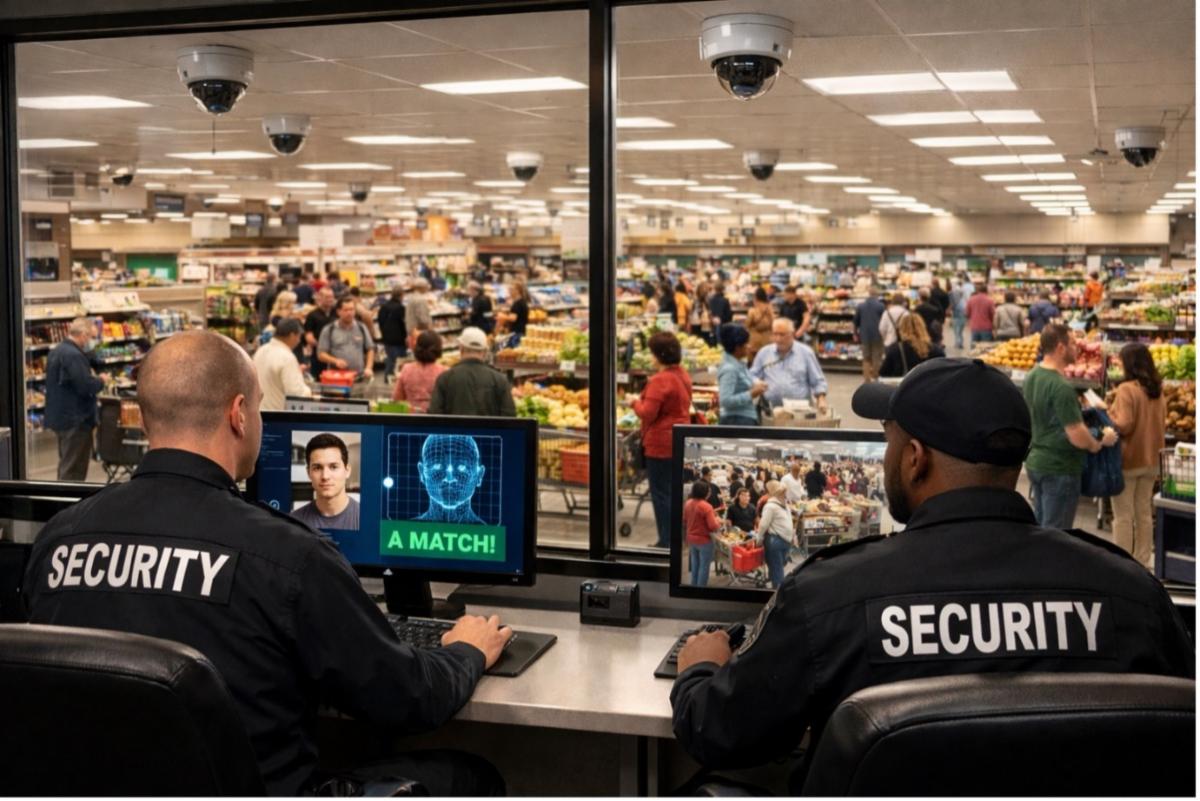
Great question! While AI tools can provide many potential benefits, a growing number of which are already being realized, they also bring many types of security and privacy risks. Those risks have already been being exploited. Here are just three examples out of hundreds of unique risks:
-
In October, 2024, Infosecurity Magazine reported retailers were experiencing over 569,884 AI driven attacks per day, including distributed denial of service (DDoS) attacks, data scraping (collecting data online without the consent or awareness of such actions by the associated data owners), and application program interface (API) abuse. That number for AI attacks has been increasing ever since.
-
The same Infosecurity Magazine article reported attackers used AI bots to scrape product data, pricing, and customer visible content at scale and used it for large language model (LLM) training.
-
Kaspersky reported in December, 2025 that a general AI threat trend had emerged where attackers deployed AI chatbots impersonating retailer support to stealing credentials.
AI is pervasive throughout the internet, and within retail stores where shopping technologies are widely used throughout stores interconnected with generally five categories of systems. Here are just some of the common risks that exist with the incorporation of AI agents within each category of systems.
1) Payment, financial and fraud management. AI agents are increasingly interacting with payment gateways, fraud scoring systems, and customer accounts. Risks: They may be manipulated to auto-approve refunds, auto-update billing info, or auto-trigger transactions. Prompt injection can cause an agent to reveal payment tokens or execute unauthorized transactions. Agents can be tricked into misclassifying fraud, enabling large scale abuse.
2) Supply chain, fulfillment and supply chain. AI agents are coordinating inventory, routing, supplier interactions, and warehouse robotics. Risks: A compromised or misaligned agent can misroute thousands of shipments, over-or-under order inventory, or issue conflicting instructions to warehouse robots. Data poisoning can also distort demand forecasting.
3) Customer service and support. AI agents can access personal data, modify accounts, issue refunds, or close tickets. Risks: Prompt injection can cause unauthorized account changes, fraudulent refund approvals, and personal data leakage. AI agents can generate infinite ticket loops and spam customer relationship management (CRM) systems.
4) Marketing, personalization and recommendation engines. AI agents are generating content, adjusting pricing, running marketing campaigns, and personalizing experiences. Risks: AI agents can leak segmentation data, misprice/reprice items, overspend on marketing and advertising platforms, generate harmful, manipulative, or obscene content. AI agents can be used for data poisoning to distort recommendations.
5) Vendor/third-party management and procurement. AI agents are negotiating contracts, placing orders, and evaluating suppliers. Risks: AI agents can issue unauthorized purchase orders, leak contract terms, manipulate supplier scoring, and trigger supply chain disruptions. Prompt injection attacks can cause AI agents to favor malicious suppliers.
Here are some actions that consumers can take to help protect themselves from these AI-based retail risks:
1) Strengthen your authentication. Use strong and unique (different for each site, and never the same as your business) passwords, utilize multi-factor authentication (MFA), and don’t digitally store payment card details whenever possible. If you want to use a password manager, use one that is local (under your sole control, on one of your computing devices).
2) Don’t include personal details in retailer reviews. Avoid including your personal data, images that include you or others, videos with voice audio, etc.
3) Baby-sit your account activity. Most people set up their account profiles and never look at it again. Some folks never look at the activity in their account. Treat your account data like a baby; it needs regular attention and care. Check your card statements regularly. Changes could indicate compromise, or AI changes that went haywire.
4) Watch out for bogus websites. Attackers are deploying AI chatbots that impersonate retailer support to steal credentials. Verify a URL (website address) is legit before clicking it.
5) Install apps only from official stores. AI is being used to generate realistic malicious shopping apps that then steal payment info. If you don’t use an app, uninstall and completely delete it from your device.
6) Beware of deals that are too good to be true. AI now brings significant online, and increasingly in-store, shopping threats that are enabling highly personalized scams targeting each potential victim’s shopping weaknesses.
7) Keep your phones, tablets, laptops and other computing devices updated with the latest software. AI-enhanced malware targets outdated systems.
8) Use privacy-supporting browser settings. This will reduce the ability for AI bots to scrape your personal data.
| | |
(Somewhat) Quick Hits:
Here are five more questions, most of which we are answering at a comparatively high level. We provide more in-depth information and associated details about these topics in separate blog posts, videos on our YouTube channel, in infographics and e-books, LinkedIn posts to our business page, and within our online training and awareness courses.
| | |
Q2: I own a small business, but I have customers in the U.S., Canada and Europe. What are the primary/overarching laws and regulations in each of those countries that govern how to deal with data privacy/protection complaints? Please show how each of the applicable privacy laws/regulations requirements for responding to individuals’ privacy complaints map to each other, and how they differ.
A2:
Great question! A complete answer to these questions would take several pages (or a book)! However, here is an overview:
In the U.S. there are many local, state, federal, and industry specific privacy laws. No single law governs privacy complaints for all businesses. Currently there are at least 22 state privacy laws considered to be "comprehensive" which include complaint-handling obligations. Major federal laws with complaint response requirements include (but are not limited to) the Health Insurance Portability and Accountability Act (HIPAA; healthcare industry), the Gramm Leach Bliley Act (GLBA; financial industry), the Children's Online Privacy Protection Act (COPPA; all sites that engage children 13 and younger), and in many ways the Federal Trade Commission Act (FTC Act; business practices in all industries).
In Canada the Personal Information Protection and Electronic Documents Act (PIPEDA) governs private sector organizations across Canada (except provinces with substantially similar laws).
In Europe, the General Data Protection Regulation (GDPR), a comprehensive privacy law that applies to all organizations, anywhere in the world, that collect personal data from EU citizens and residents). On February 12, 2026, the Information Commissioner’s Office (ICO) issued guidance on how to deal with data protection complaints under a different regulation, the Data (Use and Access) Act. These guidelines go into effect on June 19, 2026.
Of all the regulations, those in Europe generally exceed the requirements of those in the U.S. and Canada. If an organization complies with the guidelines provided for the European Data (Use and Access) Act, and the EU GDPR, they will be meeting or exceeding most of the requirements in the laws from Canada and the U.S., which often will provide coverage for most small businesses. However, without legal analysis, you need to assume there still may be some unique requirements. Check with your lawyer about this.
Here are the guidelines for responding to complaints for the European laws:
Get in touch with us and we will provide more help if you need it. We will also try to put out a more detailed answer for this question as a blog post, and point to it in an upcoming Tips issue.
| | Q3: I just got a new "smart" home security camera. My neighbor scolded me for the locations where I installed them, and where they were pointing. He said I was contributing to mass monitoring throughout society. I just wanted to protect my home and property! Please provide me with some facts to share when I am engaged once more in a friendly debate with my neighbor. | | |
A3:
You’re not wrong to want to protect your home with cameras; they are very useful safety and security tools. Adoption of these smart security cameras has surged in the U.S. since 2020, largely due to price drops for such popular options like Ring and Nest. This is in addition to extras that are being included with the cameras, such as package theft concerns, and AI features. There have been several surveys for how many U.S. homeowners use them that vary greatly, anywhere from 69% (rural areas), to 76% (urban), to 82% (suburbs). Research shows that use of video doorbells in particular increased in 2025 from 2024 by 12%.
In the U.S. it is generally legal for homeowners to install security cameras on their own property for security purposes. Some local (city, county) laws do exist, so check your own area’s regulations about this. Security cameras usually record areas that are visible from public vantage points (street, sidewalk, visible front yards, driveways), because people have a lower “reasonable expectation of privacy” (a common term in many of the laws and ordinances) in those places. Legal problems tend to emerge when cameras are aimed into places where people reasonably expect privacy, such as a neighbor’s home windows, inside their fenced-off backyards that are not visible from the street, or other clearly private spaces. Police, lawmakers and lawyers often focus on where is the camera pointing, and how private that space is expected to be. In other countries, such activities often fall under their data protection and privacy regulations, which are more widely interpreted and have had courts rule that that generally recording of any part of neighbors’ properties would violate those regulations.
Home security cameras and video doorbells do raise legitimate societal questions, especially when footage is stored in the cloud and can be shared with companies or law enforcement. For example, some doorbell camera companies have allowed police to request footage from many homes at once, which civil liberties groups have described as building a large surveillance network across neighborhoods. There are even advertised “AI neighborhood” features in some smart cameras that allow people search across many cameras, or that add facial recognition and license plate recognition. These have raised significant concerns about such mass surveillance.
It’s possible to use security tools while taking reasonable steps to respect your neighbors’ privacy while also addressing concerns about “mass monitoring.” Here are some actions to take to demonstrate you are considering your neighbors’ privacy while also exercising your right to use such a tool to help protect the safety of your home and those within.
- Aim the cameras primarily at your own entry points and property (doors, driveway, yard), and avoid direct focus on neighbors’ windows or obviously private areas (swimming pools, back yards, etc.).
- If a camera’s field of view unavoidably includes part of a neighbor’s property, tilt or reposition it to minimize that coverage where practical. This helps to demonstrate your due diligence in taking the privacy of your neighbors into consideration.
- Many modern cameras have privacy mask or “activity zone” features that can block or blur certain areas in the frame so they are never recorded. Check if your camera has this privacy-protection feature. Use it to exclude neighbors’ yards, windows, etc.
- Speak with your neighbor whenever possible. If he is worried, show him a live view on your phone to demonstrate that the camera is focused on your own property as much as possible and not set up to be spying on them.
- Opt-out of automatic video and audio sharing with all other entities. You should be able to opt-in for specific situations, if you want to, and then opt-out when the need for each of those specific situations no longer are applicable.
| | Image created by Rebecca Herold on Freepik. | | |
Q4: What proactive steps can companies take to ensure their marketing strategies respect privacy laws and avoid costly compliance missteps?
A4:
It is great to see you considering this very important issue that too many organizations still completely disregard. Organizations that want to market confidently while staying on the right side of privacy laws need to treat compliance as an integral part of their marketing design principles and activities, not an afterthought. The good news is that most of the heavy lifting to incorporate privacy protections comes from building a few privacy-smart habits into everyday marketing operations.
1) Build privacy into campaigns from the start of consideration (“privacy by design”). Evaluate every new marketing initiative for all the impacts from all the types of data collected. Document each data item collected, why it’s collected, how long it’s kept, if it can be associated with a specific individual (which would indicate it is personal data), and those with access. Do not collect anything that isn’t genuinely needed. Don’t leave this to the last minute, after all other marketing planning has occurred; that is never effective. And indeed, can result marketing disasters; financially, reputationally, and legally.
2) Involve legal and privacy teams early and often. Have privacy lawyers review new campaigns, partnerships, and data collection methods. Keep them in the loop when adopting new marketing technologies. Use them as strategic partners.
3) Keep data governance tight and well documented. Work with your IT, security and/or privacy areas to maintain an up-to-date data inventory (what you collect, where it is located, who uses/accesses it). Implement strict access controls and role-based permissions. Regularly delete data that’s no longer needed (data minimization).
4) Vet all marketing tools, platforms, and vendors. Third party exploited risks is one of the biggest sources of privacy regulation fines. Review contracts and data processing agreements with CRM systems, analytics tools, ad networks, and email platforms. Document confirmation that vendors meet the same privacy standards your organization is held to. Do not use tools that share or sell user data without explicit consent.
5) Regularly (at least annually) train marketing teams on privacy basics, and send ongoing awareness reminders. Provide recurring training on data handling, consent rules, and regional regulations. Teach teams how to spot risky practices (e.g., uploading customer lists to ad platforms without proper consent).
6) Regularly conduct marketing activity privacy audits. Review campaigns, tracking technologies, and data flows at least annually, but more often is better. Test whether opt-outs work correctly. Check to ensure cookie banners and privacy notices are up-to-date.
7) Make sure your marketing activities are aligned and in compliance with your organization's posted privacy policy.
8) Work with the organization's IT, security and/or privacy areas to ensure appropriate privacy supporting technologies and practices are used for each marketing campaign, and that it incorporates appropriate information to respond to data subject requests for personal data deletion, access, correction, and opt-out in compliance with legal requirements.
Regulators, as well as concerned consumers who are quicker to bring lawsuits than ever before, increasingly expect organizations to show that they took proactive steps to protect consumer data. When companies can demonstrate that they built privacy into their marketing operations, penalties are far less likely, even if something goes wrong.
| | |
Q5: How long does Google and all the other AI tools keep the logs of the questions they receive and the associated meta data for each question? Does the meta data include the questioner’s name?
A5:
I wish there was a standard for them all. However, legal requirements for AI logs are currently scarce, and those that exist are different from each other. Plus, each company publishes its own privacy policy and data retention documentation. Those documents are the authoritative sources because data retention rules differ by product, location, whether or not the associated individual is signed on, whether or not the organization has established retention controls into the associated AI tool, and other factors unique to each AI tool. I’ll provide you with some of the current rules-of-thumb that are generally true for the major AI tool providers. They typically differ based upon the type of associated data.
1) Short term operational logs (minutes/seconds to months). Most (possibly all?) AI systems keep short term logs for system performance, abuse detection, debugging, real-time security monitoring.
2) Longer term audit or security logs (months to years). These are typically logs related to security events, account access, system integrity. These are often needed not only for compliance with a wide range of legal requirements, but also for trouble-shooting, and digital forensics activities.
3) User visible content retention varies by product. Some services allow users to do such things as save chat history, delete chat history, opt-out of data retention. Others automatically delete content after a set, static period. Because each company sets its own policies, retention can range from never stored to stored forever, or until the user deletes it.
Metadata usually includes such data as timestamp, IP address, location/region, device and browser type and/or digital fingerprint, session, cookie and/or request ID, whether the user is signed in, technical performance details, etc. Metadata does not typically include the associated individual's name unless they are signed in to an account and the AI service they use associates activity with that account, in which case the metadata usually stores an account identifier, not the literal name.
| | |
Q6: How is the primary California state privacy law different from HIPAA?
A6:
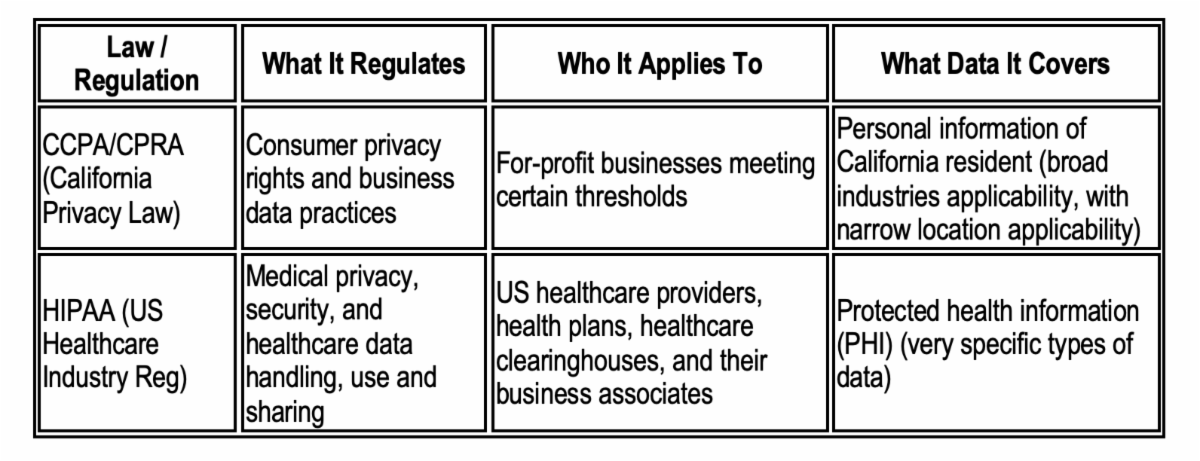
By “primary” California state privacy law, I am going to take this as meaning the California Consumer Privacy Act (CCPA), as amended by the California Privacy Rights Act (CPRA); together often called “CCPA/CPRA.” This is another topic where I could provide many pages, or even a large book, to parse through all the differences, as well as commonalities. For the purposes of this publication, I’ll provide a high-level overview, and if you need more help, get in touch with us.
First, consider the high-level purpose and applicability for each law and regulation:
| | |
These laws overlap only in rare cases. Most businesses with consumers in California fall under CCPA/CPRA, which excludes data (protected health information, PHI) which is regulated by HIPAA. And only healthcare‑related entities and their business associates fall under HIPAA.
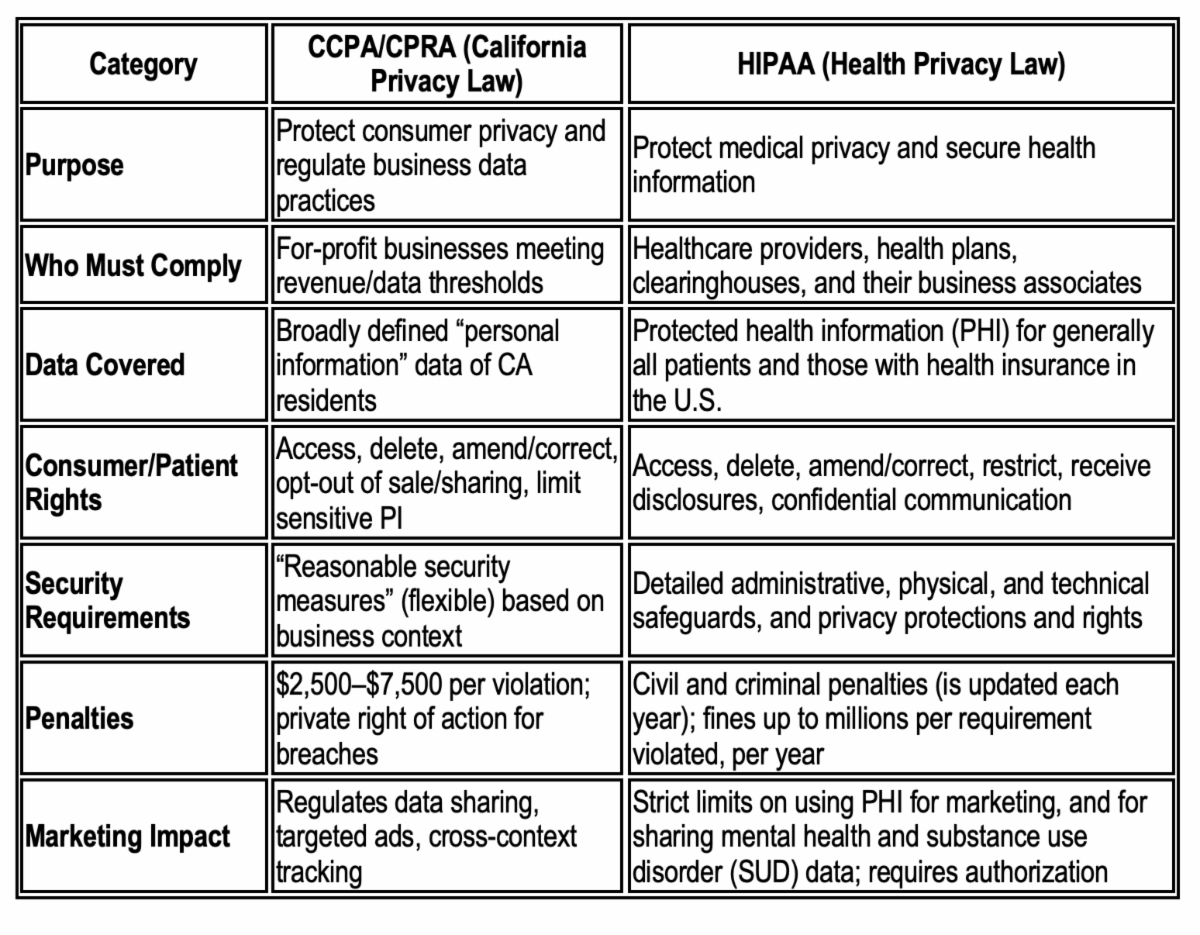
Here is a side-by-side view that should help you to understand the primary privacy and security requirements differences for key categories in each law.
| | We hope you found the previous news items and questions/answers interesting and/or useful! Please send us any other security, privacy and/or compliance questions you have. We thank you for reading the monthly Privacy Professor Tips! | | |
The following describes the major risks shown in the first image in the Tips, as they correspond to the associated numbers shown on the image above. If you see additional risks, please let us know.
1) ATM skimmers secretly capture card data and PINs, enabling criminals to create counterfeit cards or make unauthorized withdrawals and purchases, which can rapidly drain bank accounts and cause significant financial loss. Because the stolen data can be reused, shared, or sold, victims also face broader privacy risks such as identity theft, large-scale financial fraud, and misuse of their personal information across other accounts or services.
2) Someone photographing what is on your screens or documents can capture enough personal and financial data (names, addresses, card numbers, loyalty IDs, frequent flyer numbers, barcodes, booking references) to commit fraud, account takeover, or identity theft. Once captured, those images can be copied, shared, and analyzed indefinitely (including via optical character recognition, aka OCR, and facial recognition), making it difficult to contain exposure and increasing risks like stalking, targeted scams, and long-term profiling. This exposure also creates a privacy and safety risk because sensitive details, such as travel plans, account numbers, or authentication data, can be stored, shared, or exploited without your knowledge.
3) Someone nearby recording confidential information audible in public can capture sensitive details like passwords, account numbers, medical info, or personal identifiers, enabling identity theft, fraud, financial losses, or targeted scams. These audio clips can be endlessly replayed, transcribed via AI/OCR, shared online, or exploited for phishing, stalking, blackmail, making deepfakes, or result in regulatory violations (e.g., HIPAA/GDPR breaches), with no practical way to revoke access once disseminated. Someone in public with a device intercepting wireless transmissions (e.g., Wi-Fi, Bluetooth, near-field-communication, aka NFC) from your computer or phone, which the man in the image may also be using, can capture unencrypted data like credentials, session cookies, personal identifiers, or keystrokes, enabling session hijacking, account takeovers, malware injection, or identity theft. These signals propagate openly, allowing passive eavesdropping within range, with captured data potentially shared or exploited indefinitely for fraud, stalking, phishing, or regulatory violations without your knowledge.
4) Using a free, unsecured public Wi-Fi network exposes you to data interception, where anyone on the same network can capture what you send or receive, including login credentials, messages, and financial information. It also creates a privacy risk because attackers can impersonate legitimate hotspots, redirect you to fake sites, or inject malware into your traffic, leading to identity theft or account compromise.
5) A website masquerading as a legitimate one via subtle URL changes (e.g., "H0tels.com" vs. "Hotels.com") tricks users into entering credentials, financial details, or personal data, enabling phishing attacks that lead to account takeovers, identity theft, or financial fraud. These fake sites can also deliver malware to compromise your device, exfiltrate stored data, or facilitate further scams like business email compromise, with risks amplified by the convincing mimicry that evades casual inspection.
6) Holding a credit card with a visible number and wireless chip (NFC/RFID) in a crowded retail center, airport, etc., risks shoulder surfing of the account details for immediate fraudulent purchases or online fraud, plus NFC skimming or eavesdropping by nearby attackers using portable readers to capture chip data within inches. Captured info enables card cloning, unauthorized transactions, or identity theft, with stolen data potentially shared indefinitely despite chip protections like dynamic codes, especially if limits allow no-PIN taps (contactless theft risk).
7) Leaving a phone or billfold unattended on a table in a crowded public area risks swift theft by opportunistic passersby or even seated acquaintances, exposing stored credentials, financial apps, payment methods, personal photos, emails, and authentication tokens to unauthorized access, account takeovers, or data exfiltration. Even brief distraction enables shoulder surfing of unlocked screens/PINs or NFC skimming of cards, leading to immediate fraud, identity theft, or resale of compromised devices and data in the dark web markets.
8) Scam QR codes promising deep bitcoin discounts or doubling often direct your wallet to the scammers' address, resulting in irreversible, immediate, and potentially large financial losses through theft of your cryptocurrency, with no recovery options since transactions are permanent with blockchain. Scanning QR codes may also install malware, grant wallet access for draining funds, or expose private keys, amplifying risks of total loss and secondary fraud.
9) Accepting a too good to be true rideshare offer from someone posing as a driver in an airport or hotel pickup area exposes you to serious safety risks, including being lured into an unvetted vehicle, with uninsured drivers who may rob, assault, kidnap, or traffic you, as there's no app-based tracking, verification, or emergency sharing of your location. These crimes are documented concerns at major airports. Taking a ride with a poser driver also creates a privacy and financial risk, since imposters may overcharge you, steal your belongings, or gather personal information under the guise of providing a ride. These impostors often evade airport enforcement, heightening risks of overcharging, detours to remote areas, or worse crimes without any corporate accountability or safety protocols.
10)Using public USB ports for charging risks "juice jacking," where attackers install malware and/or skimmers to steal credentials, contacts, photos, financial data, and other personal information via the data connection inherent in most types of public USBs. This enables identity theft, account takeovers, persistent device compromise, or data resale, with infections spreading to linked accounts and no easy reversal once data is exfiltrated. The crooks may even gain remote control of your device.
11)Keeping a phone visibly protruding from a back pocket, backpack, or purse in a public crowd invites snatch-and-grab thefts by agile pickpockets or opportunistic criminals, who can swiftly access unlocked screens, apps, messages, photos, banking credentials, and biometric data before you notice. Stolen devices enable account takeovers, data exfiltration to dark markets, ransomware deployment, or SIM swapping for broader identity theft, with low recovery rates increasing long-term privacy violations and financial risks.
12)Using a public Wi-Fi network with an unrelated name like “StationWiFi” at an airport, hotel, etc., risks connecting to a malicious "evil twin" hotspot set up by attackers to mimic legitimate ones, enabling man-in-the-middle interception of unencrypted data such as logins, emails, and financial details for identity theft or fraud. These rogue networks facilitate malware distribution, session hijacking, and packet sniffing without your knowledge, compromising connected devices and leading to persistent account takeovers or data exfiltration.
| | |
We are excited to provide ways for MSPs, law firms, and other professional services organizations to offer our monthly tips to their clients! It is already working well for some such organizations. Get in touch with us for the details!
Here are some travel privacy and security items for you to consider in our 8-page “Protecting Privacy and Security While Traveling” guide.
What topics would you like to see us create videos, and more formal online courses, for? Let us know!
Have questions about our education offerings? Contact us!
| | Where to Find The Privacy Professor | | Rebecca enjoyed providing leadership lessons from the Olympics to Debbie Laskey as part of her, “WINTER OLYMPICS LEADERSHIP SERIES 2026,” blog post correlating with the 2026 Winter Olympics. | | | |
Permission to Share
If you would like to share, please forward the Tips message in its entirety. You can share excerpts as well, with the following attribution:
Source: Rebecca Herold. March 2026 Privacy Professor Tips
www.privacysecuritybrainiacs.com.
NOTE: Permission for excerpts does not extend to images.
Privacy Notice & Communication Information
You are receiving this Privacy Professor Tips message as a result of:
1) subscribing through PrivacyGuidance.com or PrivacySecurityBrainiacs.com or
2) making a request directly to Rebecca Herold or
3) connecting with Rebecca Herold on LinkedIn.
When LinkedIn users invite Rebecca Herold to connect with them, she sends a direct message when accepting their invitation. That message states that in the spirit of networking and in support of the communications that are encouraged by LinkedIn, she will send those asking her to link with them her monthly Tips messages. If they do not want to receive the Tips messages, the new LinkedIn connections are invited to let Rebecca know by responding to that LinkedIn message or contacting her at rebeccaherold@rebeccaherold.com.
If you wish to unsubscribe, just click the SafeUnsubscribe link below.
| | | | |