In this issue:
- The Science of Sap Flow
- Get your Ticket!
- Upcoming Programs
- Scientific Illustration Showcase
- Tales From the Outdoor Kitchen
- Green Ways
- Michigan Master Naturalist program
|
|
The Science of Sap Flow
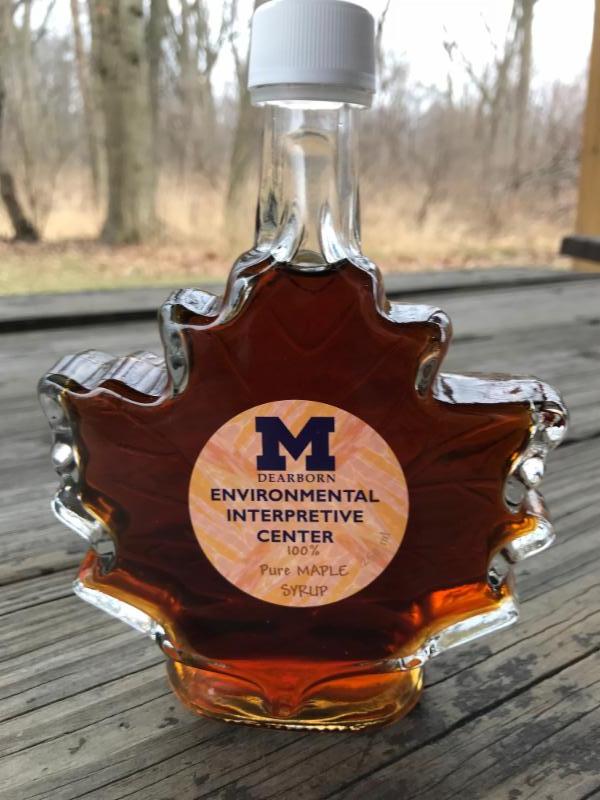
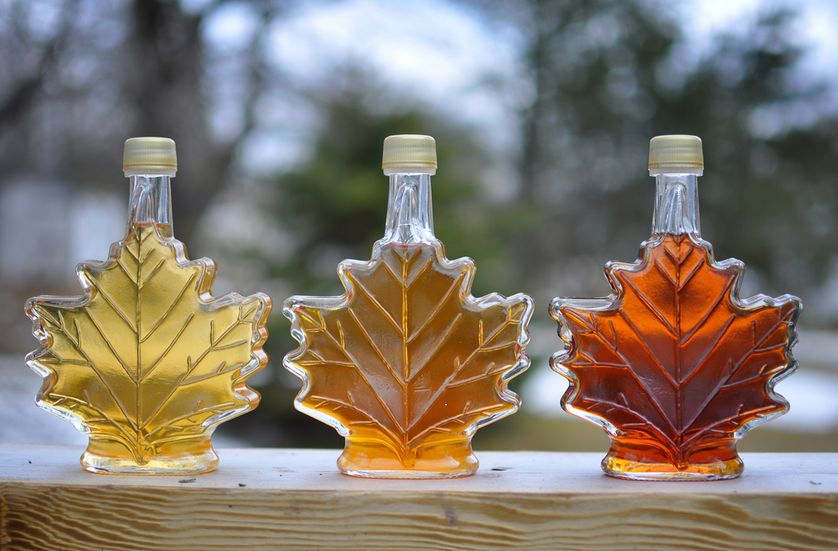
This is a sweet time of year as spring slowly replaces winter, and an upper North American tradition begins anew. We know the product of this tradition–maple syrup–but parts of the process remain a “maple mystery.” Tapping trees and tasting syrup is exciting and fun, but there is also an interesting biological aspect to this process.
A question we often get about syrup is if any tree can be tapped besides maples. Technically yes, because all living trees produce sap. But there are some fascinating reasons why Sugar Maples are the primary source for syrup products, and the only species we tap at the EIC.
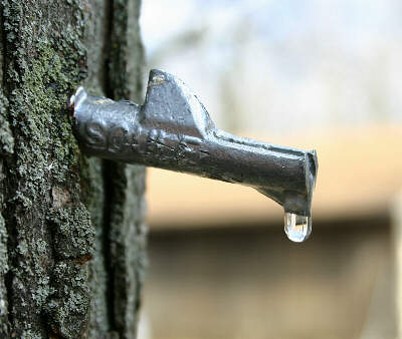
Sap is simply defined as the liquid inside trees: water with dissolved nutrients, sugars, hormones and more. Sap moves within the trees in two types of tissues; generally, xylem tissue moves sap from the roots up to the leaves, while phloem tissue moves sap from where sugars are made (leaves) or stored (roots) to where they are used. The xylem sap is what we access when we tap Sugar Maples.
Maple Trees have a higher xylem sap sugar content than other species of tree. These sugars are the energy that fuels new growth and other maintenance. Instead of storing all their excess sugar in the roots for the winter, like other trees do, they also store some in the xylem tissue.
|
|
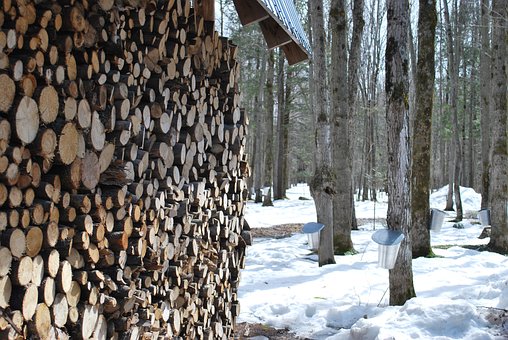
Even so, the sugar content in Sugar Maple xylem sap is only 2%. It takes an average 40 gallons of sap to produce 1 gallon of syrup with 66% sugar content. Boiling away all the extra water takes many hours and many loads of firewood, so if we tapped trees with a lower sugar content the work required would be tremendous! |
|
|
Of course, sugar maples don’t keep all that sugar in their xylem just for our taste buds! Scientists are still working out the details, but they believe that the xylem-stored sugar has a special function for moving sap very early in the season when most trees are still dormant. This quality is related to the very precise time of the year when we tap Sugar Maple trees, featuring freezing temperatures at night and above-freezing during the day.
|
|
Early sap run means maples get a jump on producing leaves ahead of other trees which is an evolutionary advantage for living in the crowded, shady, forest understory. Early season sap is also what we need for tasty syrup because as spring advances, sap contains more dissolved minerals and enzymes that make the flavor bitter. |
|
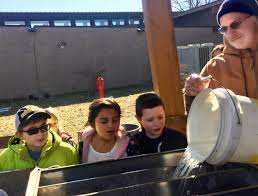
Now that you know why maples produce such sweet sap, why don’t you come out and see how we produce such sweet syrup? Maple syrup is only made in certain areas in North America, and lucky for us, the EIC is one of them! Our next program is coming up on March 11 (see below) and will include a visit to the outdoor kitchen where we boil that xylem sap and produce maple syrup. We hope to see you there!
-Dale Browne, EIC Staff Member
|
|
Continuing the Vision:
An Interactive Experience to Benefit the EIC
Enjoy the beautifully restored first floor of historic Fair Lane: Home of Henry and Clara Ford and support the Environmental Interpretive Center.
Friday April 14, from 6-9 PM
We hope you can join us!
Artwork by Alexis Kott
|
|
Upcoming & Ongoing Programs |
|
From Tree to Treat...
Saturday, March 11. 2 walks: 1:00-2:30 or 1:30-3:00
|
Take a guided hike with the EIC naturalists to the sugar bush, where it all begins, and wind up at the "outdoor kitchen," where the maple sap is boiled down to pure maple syrup, from the trees to you. Enjoy a taste of last year's sunshine, in liquid form!
|
|
Summer Young Naturalist Program
Monday - Thursday, 9:30 am -12 noon
Ages 7-9: July 17-20
Ages 10-11: July 10-13
Get your child outdoors and learning about nature! Led by UM-Dearborn student interpreters, this science-oriented program provides direct, hands-on learning in a beautiful natural setting. Session topics will include pond life, birds, insects and spiders, and frogs and turtles. The program fee is $60. Register online.
|
|
Sprouts Gardening Program for Children
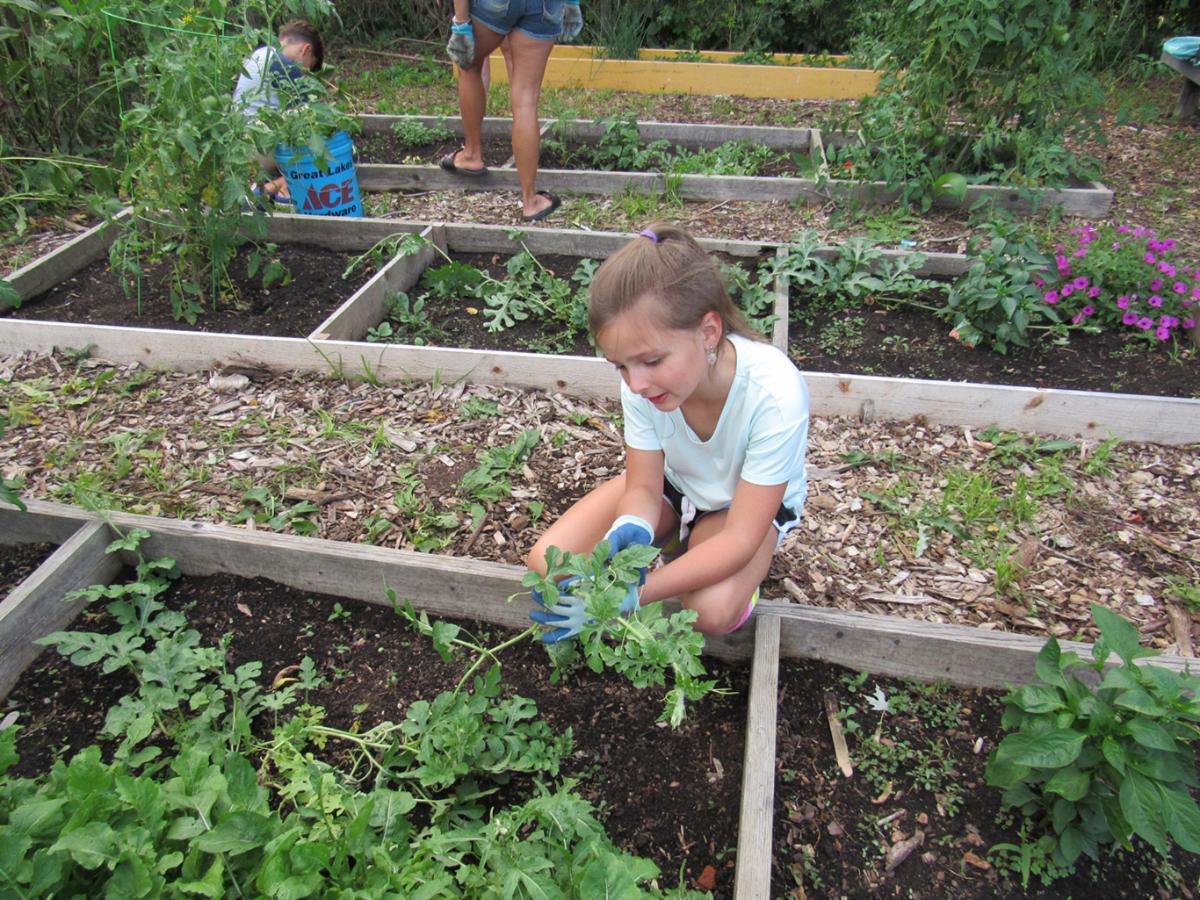
Children ages 6-8 are invited to participate in another exciting season of gardening at the campus Community Organic Garden. The children will directly experience the joys of gardening as they plant, tend, and harvest their own vegetables. The gardeners will also have fun exploring soil, worms, composting, garden creatures, and pollination.
|
|
|
The cost of this program is $40 and children must be accompanied by an adult guardian at all the program sessions. Eight program sessions are planned, from 6 -7:30 pm on the following Tuesdays: 5/30, 6/6, 6/20,6/27, 7/11, 8/1, 8/15, 8/29. Register online.
|
|
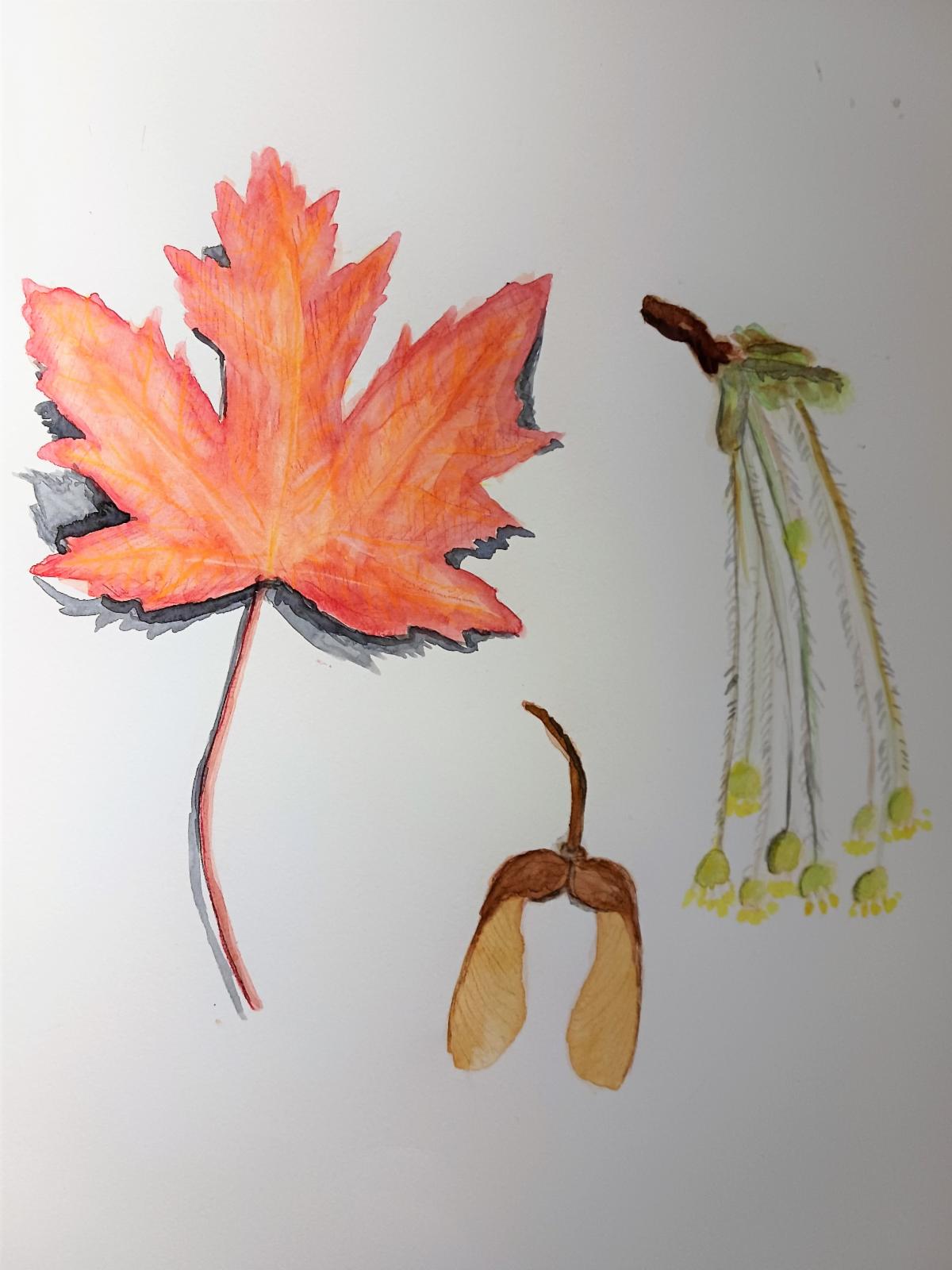
Scientific Illustration Showcase
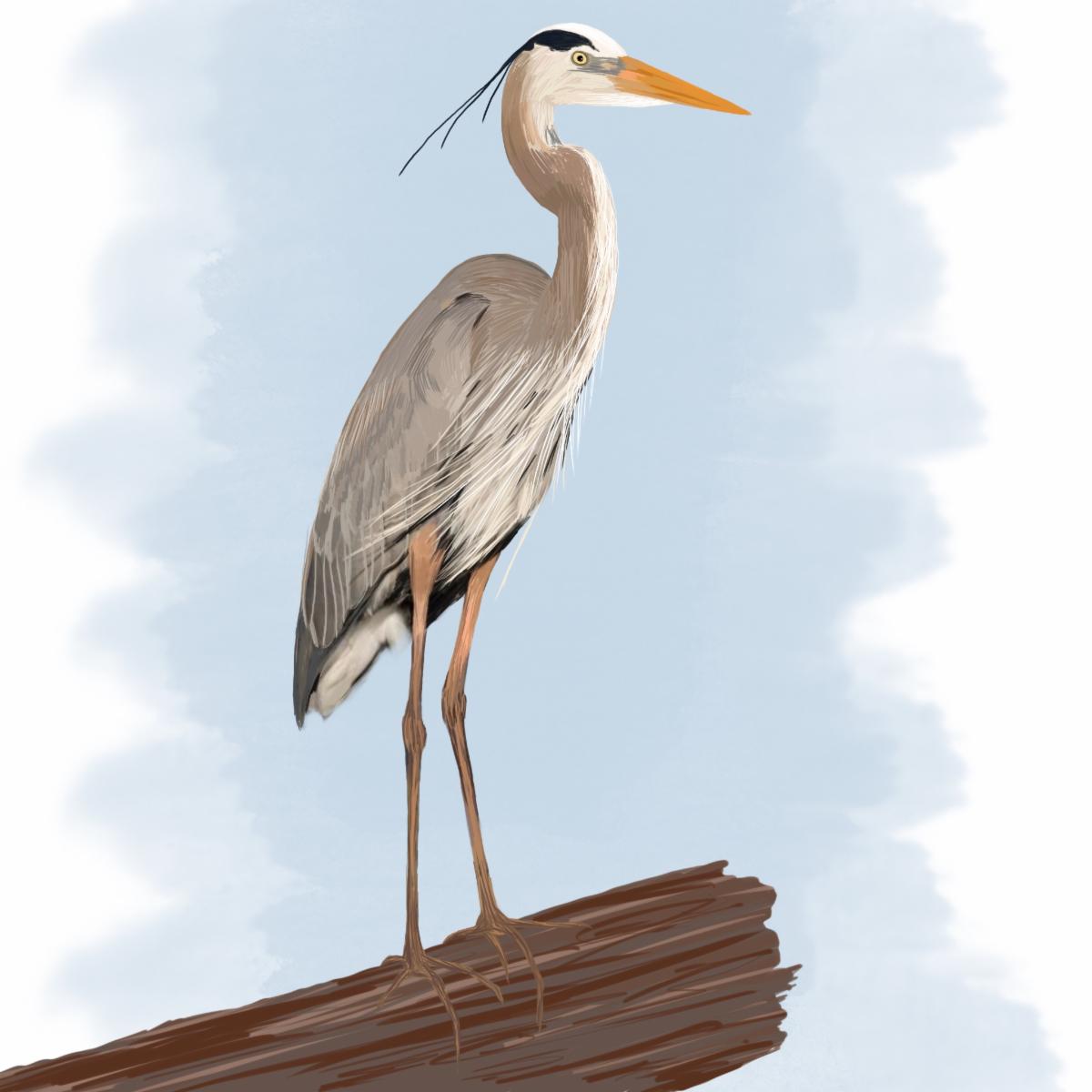
This exhibit spotlighting the work of students in Professor Madeleine Barkey's Scientific Illustration course is open to our EIC visitors. Students started with assignments, such as simple line drawings of objects, and then worked more closely with subjects related to geology, biology, botany, and finally the layered anatomy of an animal. The exhibit will be on display in the EIC lobby until spring. (Maple sketch by Andra Dobrescu)
|
|
Tales From the Outdoor Kitchen |
|
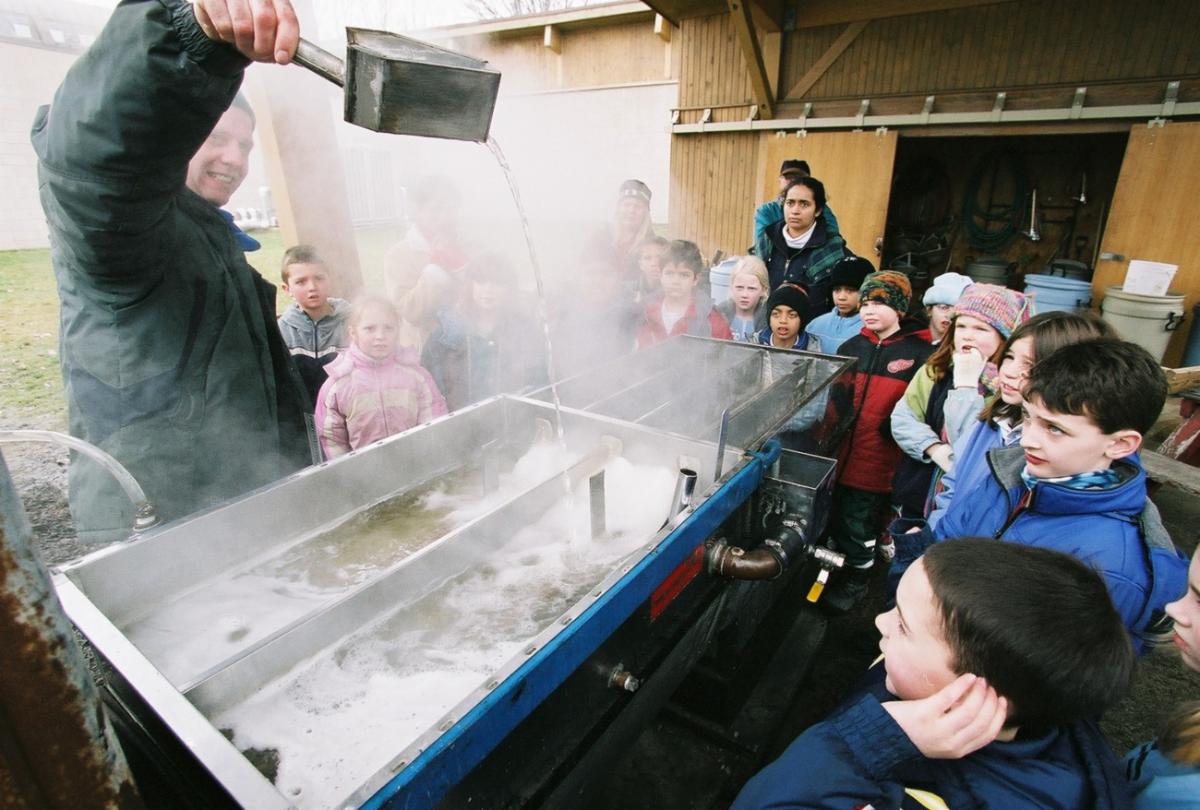
In this time of “sprinter”(spring and winter combined), some of us spend less time on the trails and more time “chained to the stove”—in this case, the maple syrup evaporator. Boiling down sugar maple sap, which is only about 2% sugar and 98% water, is a process that can’t be rushed. It can take 6-8 hours to boil 40 gallons of sap into 1 gallon of syrup. Very few things require the pace of life to slow down, but the results are sweet, and not just the syrup!
Rick Simek (above, in the steam cloud) and I are celebrating multiple decades on campus in the Environmental Study Area and we have desperately missed this signal of spring and all the memories it brings. After a two-year gap, we are joyfully welcoming back the many school groups and public visitors to gather around the syrup stove at the EIC, as we demonstrate the process of making sap into syrup, “from tree to treat.”
|
|
Cooking sugar over a wood fire is a tricky business, as sugar can scorch in a heartbeat, so tending the syrup stove necessitates an attentive syrup chef. However, being outdoors for long stretches of time is really what our job is about. Rick likes to reflect that, “When you’re standing at the syrup stove, spring comes to you!” |
|
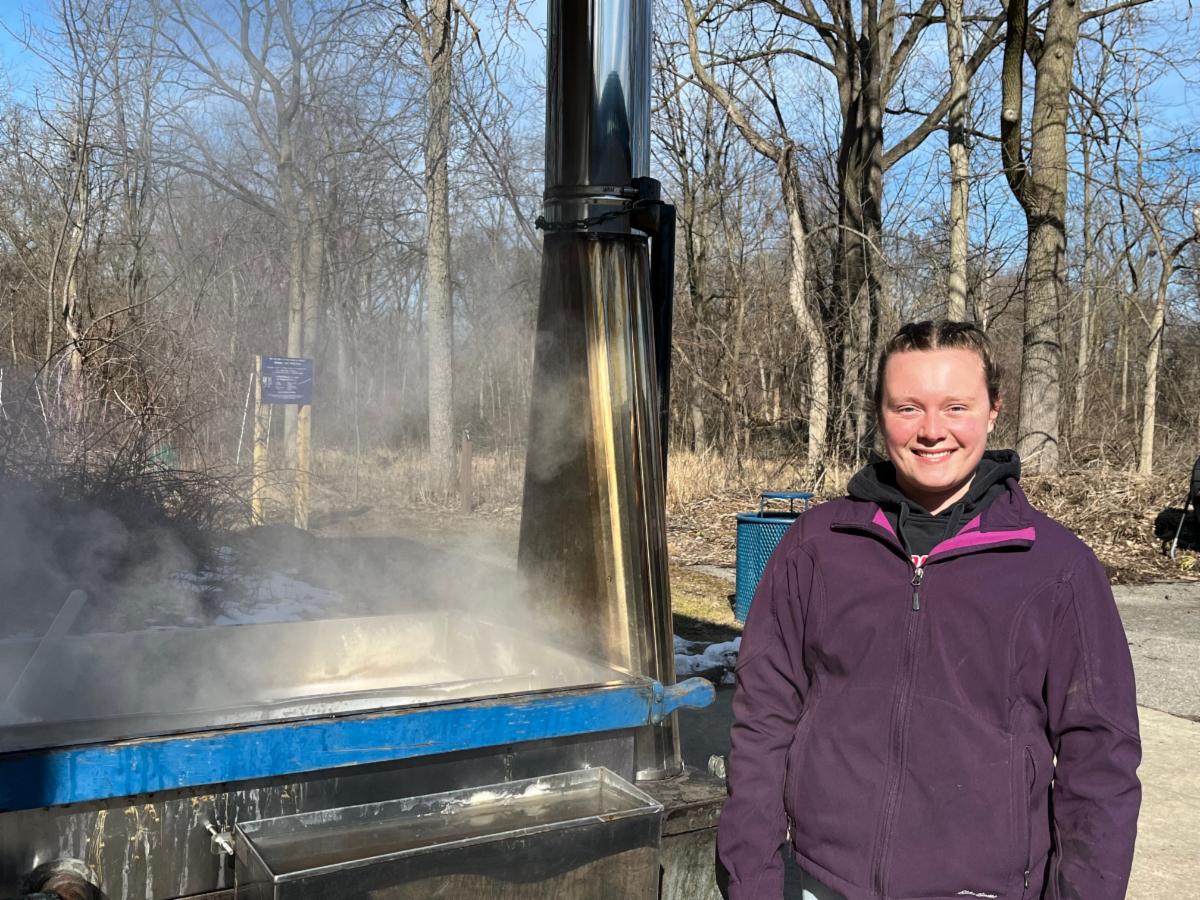
Rick is joined by two dedicated syrup chefs this year: Long-time volunteer Joe Turek (above left with staffer Mike Solomon) and new volunteer Lauren Benedict (below). |
|
Lauren recently graduated from another university with a degree in Zoo and Wildlife Biology and a minor in French. After graduating, she spent six months in Alaska studying sea-duck and seabird nesting with the US Geologic Survey, and will be heading off to Oregon soon to work with the US Forest Service to study Northern Spotted owls. Lucky for us, she was looking for "something to do" in between projects! |
|
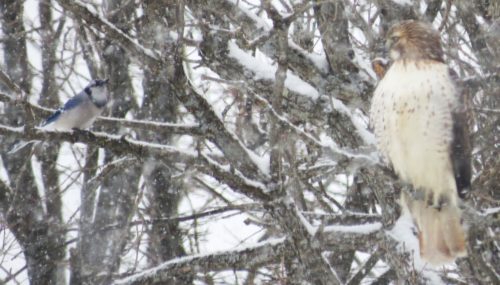
Our new student staff is also enjoying this new experience of hanging out together at the stove, watching the spring changes appear before their eyes. Just last week we all got some pretty good looks at a perched red-tailed hawk getting swooped by protective blue jays in a sort of “neighborhood watch” exercise!
(Photo by Lise Balthazar)
|
|
|
A season at the stove takes us roughly from late February until St. Patrick’s Day, March 17. During that time, tree buds open into early leaves, early migrant birds, like this red-winged blackbird, reappear from southern lands, birdsongs serenade us, and the longer daylight hours make us smile.
(Photo by Jim Simek)
|
|
Company at the stove makes us smile, too. When you’re on campus, visit the EIC and follow your nose to the “outdoor kitchen” for a glimpse into the process of syrup making and join us in welcoming spring back to our neck’o the woods.
-Dorothy McLeer
|
|
"Leave the Leaves"
As the snow melts and spring begins to approach, you may be getting ready for spring cleaning. Although your first instinct might be to rake up all of the leftover leaves and throw them into the yard waste bin, we encourage you to “leave the leaves!”
|
|
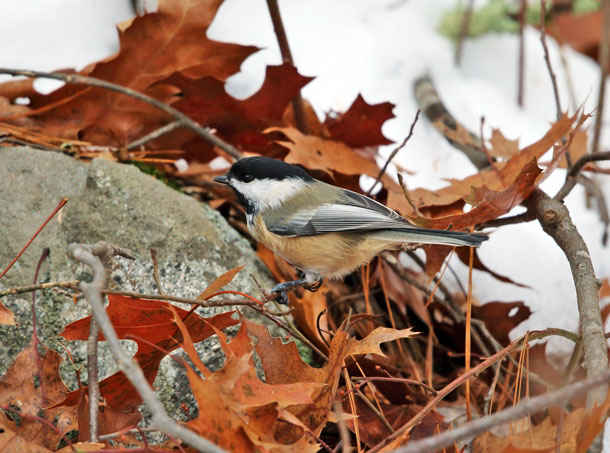
Dried leaves provide a variety of benefits to your garden, especially during early spring. The leaves act as a mulch, keeping the weeds and pests away from your sprouts. They also add nutrients for microorganisms and organic matter to the soil, which can help your plants grow faster and healthier.
(Photo by Tom Murray)
|
|
|
Last but not least, the cover of the leaves serves as a home for many pollinators, ensuring that your new plants will be happy and healthy going into the new season.
-Valerie Osowski, EIC Parkhurst Natural Areas Fellow
|
|
Michigan Master Naturalist Program |
|
This Could Be YOU!
The EIC is offering the Michigan Master Naturalist program again, one Saturday a month from May through October! Registration is now open. Check our Rouge River Region program website for more information.
|
|
|
Venturing outdoors and encountering nature is good for your health. Our trails are accessible, so please visit our Environmental Study Area. Stay engaged in learning activities and check out our Remote Learning Activities & Resources page for ideas to create a “Neighborhood Nature Journal” and “Family Nature Walk” activities!
We also hope to see you in person at our upcoming programs!
|
|
|
Please remember...
The EIC Environmental Study Area is open daily from sunrise to sunset. We would like to remind nature-goers that fishing on site is prohibited and to leave bikes and dogs at home because they cause disruption and stress to the EIC wildlife.
|
|
|
|
|
|
|
|