|
Please share our newsletter with friends and colleagues.
|
A Message from Vint Cerf,
Marconi Society Chair
Networks to Support First Responders
|
One of my primary interests these days is understanding how to make the Internet accessible by, and useful for, those that rely on it for important functions, such as learning, economic opportunity and public safety.
I'm particularly gratified that some of this work happens through the Marconi Society. For the past several years, we have had productive colloquies with key government agencies, such as the Federal Communications Commission (FCC) and the Department of Homeland Security (DHS), to discuss current issues in networking.
I am especially interested in ways that the Internet and other communication technologies can support the all-important work of first responders, since this is where networks can truly save the lives of both first responders and the people they service. The problems are complex and must be solved in an interoperable way so that first responders can communicate with each other.
|
Expert Perspective
Wireless Communication and Applications
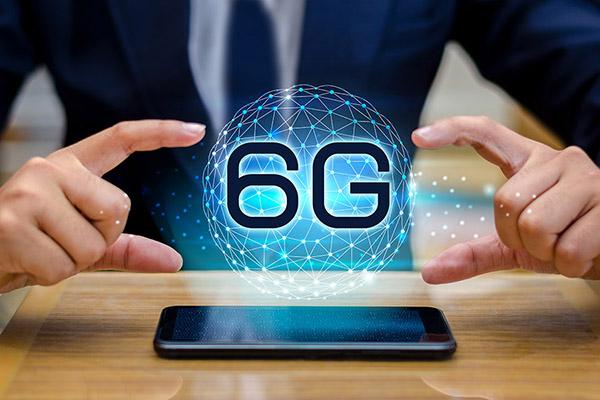
Above 100 GHz: Opportunities and Challenges
for 6G and Beyond
|
By Ted Rappaport
We have never, in the history of the US, opened up spectrum above 95 gigahertz (GHz).
Now the FCC is opening up new spectrum, which allows us to move all the way up to the terahertz (THz) range. In this range, there are things we can do that we never thought our smart phones would do.
For the past ninety years, everything has been below 6 GHz - from FM radio to cellular to wifi. Opening the mmWave spectrum has given the US a great ability to compete on the world stage as we move above 6 GHz with bandwidths that we never thought would be possible.
Some people believe that you cannot do much with these frequencies above 95 GHz, but that's what they thought about mmWave frequencies above 6 GHz. At NYU we showed that applications could work even better at these higher frequencies with more bandwidth than before.
|
News About Marconi Fellows
and Young Scholars
The first call from a cell phone was made 46 years ago this month by Marconi Fellow Marty Cooper. Check out this perspective and infographic on the journey from brick to pocket computer.
Read More.
"Rethinking National Security" is a new paper by Marconi Fellow, Marty Hellman, just published for the Federation of American Scientists and calling for bi-partisan dialog on critical security questions.
Read More.
Check out the story about how Georgla Tech's Online Master's of Science in Computer Science (OMSCS) was started by Marconi Society board member Zvi Galil and Sebastian Thrun of Udacity.
Read More.
|
Privacy and security in a decentralized world are at the heart of current discussions in blockchain and cryptocurrencies. Marconi Fellow Whit Diffie shares his views on how we can safely operate in a world with more people, more regulatory environments and more business models than ever before.
Read More...
|
|
From beta test software that recognizes and transcribes human speech into visible form to handheld devices that translate between English and Chinese, Vint Cerf shares some of the most intriguing innovations that he has seen on his global travels.
Read More...
|
|
Marconi Fellow Bob Kahn shares an overview of Digital Object Architecture and shares how organizations are using it today and going forward.
Read More...
|
|
May 17, 2019
Marconi Society Young Scholar Symposium
Stanford University
9:00 am - 2:00 pm
Nothing But Net: How the Net and the Web
Will Continue to Shape Our World
Celebrating 30 years of the World Wide Web with panels of leading young engineers creating the future of communications, discussing the latest developments in security, mobility and emerging technologies.
|
May 17, 2019
Marconi Society Annual Awards Gala
Hiller Aviation Museum, San Carlos, CA
6:00 - 9:30 pm
Honoring the 2019 Marconi Fellows and Young Scholars.
|
With Gratitude to our Supporters
|
ABOUT THE MARCONI SOCIETY
Established in 1974 by the daughter of Guglielmo Marconi, the Nobel Laureate who invented radio, the Marconi Society promotes awareness of key technology and policy issues in telecommunications and the Internet, and recognizes significant individual achievements through the Marconi Prize and Young Scholar Awards. More information may be found at
www.marconisociety.org
.
The Marconi Society does not take political positions.
|
|
|
|
|
|