|
IN THIS ISSUE
-
NEWS: House Democrats Override Governor's Veto of Marijuana Bill...at 3:26 AM
-
NEWS: Second Time is the Charm for Marriage Protection Amendment
-
NEWS: Governor Signs $6.996 Billion State Operating Budget
-
NEWS: Appropriations for Public Works Projects and Nonprofit Grants Approved by Lawmakers
-
NEWS: Gun Dealer Licensing Bill Clears Legislature
-
NEWS: Bill Will Allow Veterans to Shield More Pension Income from State Taxation
-
NEWS: North Millsboro Bypass to Soon be Known by a Different Moniker
-
NEWS: Bill to Establish Type II Diabetes Reduction Program to Soon Become Law
| | |
House Democrats Override Governor's Veto of Marijuana Bill...at 3:26 AM
House Democrats waited until the wee hours of July 1 to override the governor's veto of a disputed bill limiting county governments' authority over marijuana businesses.
Senate Bill 75, as amended, largely ties the hands of county officials to impact where marijuana businesses can set up shop and what hours and days they can be open.
The bill passed the House and Senate last year without Republican support. A handful of Democratic lawmakers also opposed its passage.
House Republicans took issue with the state interfering with local authority. Governor Matt Meyer seemingly agreed, vetoing the measure last August.
In his veto message to the General Assembly, Gov. Meyer, a former county executive, raised concerns about the bill's intent to broadly preempt local decision-making on where and how cannabis retail locations and growing operations could function.
"This bill overrides those local judgments through broad preemption, significantly curbing the authority of our counties to regulate the location, design, and operation of cannabis establishments within their borders," the governor said. "It removes the democratic rights of local communities to regulate the location of these stores, relative to schools, child care facilities, residential treatment facilities, parks, and libraries in all three of our counties.
"While I fully support the goals of implementing a safe, equitable, and accessible adult-use cannabis market in Delaware, displacing local land use authority without offering any corresponding partnership or support is not how we build durable, effective policy or trust," he said.
The Senate overrode the veto on January 28, 14-6, gaining the needed 60% supermajority needed for the action.
However, the House of Representatives chose not to act until after 3 AM yesterday morning, when the House sponsor of the bill, House Majority Whip Ed Osienski (D-Newark), brought it to the floor for an override vote -- more than five months after the Senate acted and with only about two hours left in the legislative session.
State Rep. Shannon Morris (R-Farmington, Felton, Harrington), in photo, questioned the timing, calling it a transparent attempt to evade attention, carried out in the middle of the night when most citizens were asleep.
Rep. Osienski said they had to delay due to a court case involving an earlier law passed by legislative Democrats that also dealt with the state usurping local authority. However, on questioning from Rep. Morris, Rep. Osienski conceded that the decision had been handed down in May.
"We've met on at least a dozen occasions since then," Rep. Morris said. "So why wait until now to do this?"
In the end, the House voted 25-16 to override the veto, with two Democrats joining all 14 members of the House Republican Caucus in opposition.
With the successful override, SB 75 (as amended) was enacted into law.
| | |
Second Time is the Charm for
Marriage Protection Amendment
On Tuesday night, the House of Representatives approved the first leg of a proposed constitutional amendment on marriage.
Senate Substitute 2 for Senate Bill 100 seeks to add marriage as a fundamental right in the state constitution, "that may not be denied or abridged on the basis of gender or any other legally protected criteria" (i.e., race, color, national origin, and sex).
Constitutional amendments must win approval in two separate General Assemblies, securing a two-thirds supermajority in each chamber on both occasions to be enacted.
In the House, constitutional amendments must receive at least 28 "yes" votes for passage.
One week earlier, SS 2 for SB 100 had failed by a vote of 24 yes, 3 no, and 14 not voting.
At the time, the bill's prime House sponsor, State Rep. Claire Snyder-Hall (D-Rehoboth Beach), changed her vote from "yes" to "no" before the final tally--a procedural move that allowed her to recall the bill for another vote on Tuesday.
On this occasion, several representatives who had voted "no" or "not voting" during the first tally chose to flip their votes and approve the measure, giving it the minimum needed for passage.
Opponents did not challenge the established concept of same-sex unions, but rather contended that there was no compelling need for an amendment at this time.
Marriage equality is already well-protected under Delaware law, with the state having legalized the practice 13 years ago. More importantly, the U.S. Supreme Court's 2015 decision in Obergefell v. Hodges held that the right to same-sex marriage is protected under two clauses of the 14th Amendment to the U.S. Constitution. There is no case pending consideration by the High Court that poses any threat to this right.
To be added to the Delaware State Constitution, the proposed amendment will need to complete its second leg, winning approval in the upcoming 154th General Assembly.
| | |
Governor Signs $6.996 Billion
State Operating Budget
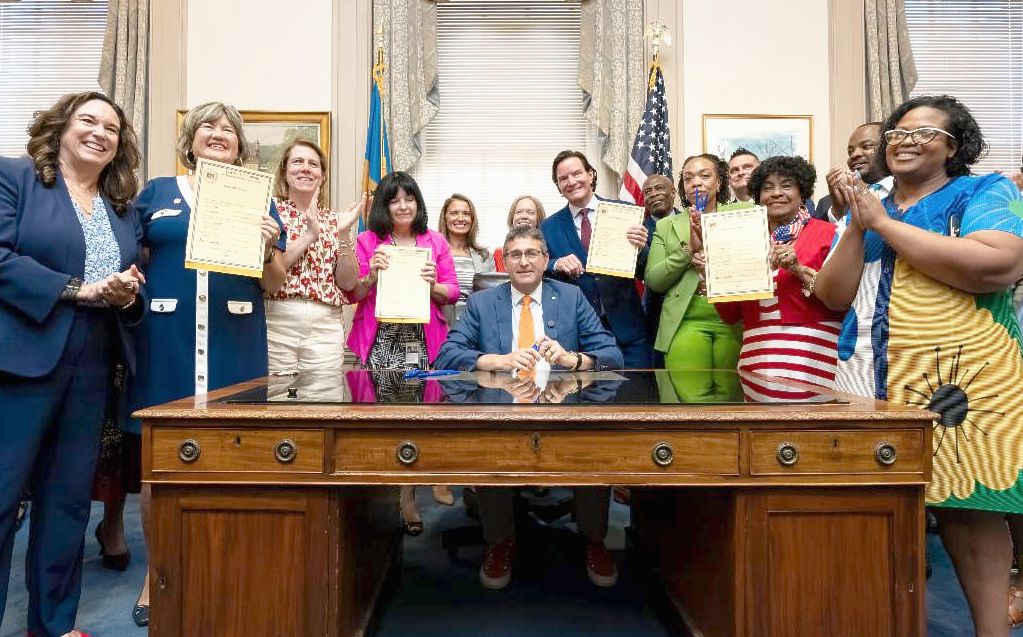
Surrounded by legislators, budget officials, and other staff in his ceremonial Legislative Hall office on Tuesday afternoon, Gov. Matt Meyer signed into law a $6.996 billion General Fund operating budget (Senate Bill 335) for the new fiscal year that began yesterday.
The new spending plan pays for the day-to-day operations of state government and is $416 million higher than the budget it replaces, an increase of 6.32%.
The top category for FY 2027 expenditures was public education. The state pays for about 70% of school operating expenses. Collectively, that will cost state taxpayers $2.518 billion, constituting 36% of the budget.
The second largest budget expenditure was the Department of Health and Social Services (DHSS), accounting for $1.948 billion, or nearly 28% of the total. Medicaid and other medical assistance programs, which fall under the agency’s administration, were the largest share of that total at $1.23 billion — about 18 cents of every dollar spent. Approximately a quarter of all Delawareans are enrolled in Medicaid.
Four House Republicans -- State Reps. Jeff Hilovsky, Bryan Shupe, Charles Postles, and Rich Collins -- did not support the passage of the operating budget. Among the reasons cited were a lack of transparency on corporate revenue, one of the state's largest revenue streams, and the unsustainable growth of state spending in recent years.
According to the Office of the Controller General, actual General Fund expenditures have risen from $4.519 billion in Fiscal Year 2021 to $7.117 billion (projected) for the fiscal year (FY 2026) that just ended on Tuesday, an increase of $2.594 billion, or more than 57%, over that period.
| | |
Appropriations for Public Works Projects and Nonprofit Grants Approved by Lawmakers
While the state Fiscal Year 2027 operating budget was signed into law on Tuesday, two of the state's other major annual funding bills, which provide funding for public works projects and nonprofit groups, cleared the General Assembly early Wednesday morning.
The $1.256 billion FY 2027 capital budget (House Bill 500) is the fourth-largest in state history, falling just below the FY 2022, 23 & 24 budgets. However, it's a nearly 29% increase over the $977 million capital spending plan it replaced.
Also known as the Bond Bill, because a portion of the appropriation is supported through the sale of bonds, the legislation pays for the construction and maintenance of public schools, roads, bridges, and state facilities.
The measure includes $20 million for the Community Reinvestment Fund, which will help pay for capital projects benefiting nonprofits and municipalities. Other noteworthy aspects of the capital budget include the following:
-
$110 million for the new container terminal project at the Port of Wilmington.
-
$60 million for renovating the former Emily P. Bissell Hospital to serve as the new Division of Forensic Science Facility.
-
$15 million (total) to renovate and repurpose the former Family Courthouse buildings in Kent and Sussex counties.
-
$34.5 million for Delaware State Housing Authority programs to create workforce housing, affordable housing, and conduct urban redevelopment.
-
$55 million (total) for maintenance and construction projects at DelTech, Delaware State University, and the University of Delaware.
-
$35 million to add public meeting spaces to the State Capitol.
-
$168 million for road projects.
-
$269 million for public school construction, upgrades, and renovations
The FY 2027 Grants-in-Aid Bill is a record-setting $99.4 million. It is a marginal increase of $900,000 over the assistance package it replaced. The omnibus measure issues grants to hundreds of Delaware nonprofit groups performing work ranging from historic preservation and substance abuse treatment to emergency services and programs for veterans, seniors, and youths.
Senate Bill 337 includes the following:
-
$22 million to support paramedic services.
-
$9.9 million to aid more than 40 senior centers statewide.
-
$15.5 million for Delaware fire companies and public ambulance services.
-
$1.7 million for senior transportation services.
-
$2.5 million for programs benefiting municipal and county police agencies.
| |
|
Gun Dealer Licensing Bill Clears Legislature
On Tuesday afternoon, the Senate approved an amended version of a disputed bill that will require Delaware firearms dealers to be licensed by the state and to comply with new regulations established under the measure.
Sponsors and critics of the bill alike describe the measure as an imperfect but meaningful compromise.
Senate Substitute 1 for Senate Bill 300 (as amended), sponsored by Senate President Pro Tem David Sokola (D-Newark), will require anyone engaging in the sale or transfer of guns, including pawnbrokers and Federal Firearms License holders (FFLs), to obtain a new state firearms dealer license.
Supporters of the measure claimed that federal supervision of firearms dealers is lacking and that stronger regulations and oversight on the state level are needed to reduce the number of guns acquired by criminals.
Opponents say the overwhelming majority of firearms dealers operate responsibly and that the firearms used in gun crimes are often obtained through illegal means, such as theft or straw purchases, not the result of dealers knowingly making illicit transactions. They say they are concerned the new mandates will increase costs and coerce firearms dealers into abandoning the business.
The House sponsor of the bill, State Rep. Mara Gorman (D-Newark), worked with State Rep. Jeff Spiegelman (R-Townsend, Smyrna, Clayton) and firearm rights advocates to craft a compromise. The revised measure eases targeted restrictions, reduces some burdens on smaller dealers, and makes clear that the new protocols will not create a registry of firearms owners.
The amended bill also includes a provision expanding opportunities for licensed dealers to participate in gun shows, sportsman shows, outdoor shows, or similar events. Additionally, one of the revisions mandates that the Delaware State Police engage with stakeholders and advocacy groups to guide the creation of the regulations to implement the law.
| | |
Bill Will Allow Veterans to Shield More Pension Income from State Taxation
Veterans will be getting a tax break on their pension income under a bill approved by the Delaware General Assembly.
Sponsored by State Sen. Eric Buckson (R-Dover) and State Rep. Jeff Hilovsky (R-Long Neck, Oak Orchard), Senate Bill 219 (as amended) would gradually, over three years, increase the income tax exclusion on military pensions from $12,500 to $25,000.
To be eligible for this exemption, veterans who are 60 or older and were legal Delaware residents before January 1, 2027, must have resided in the state for at least 3 years. Veterans in the same age group who become legal residents after this date must reside here for at least five years to claim the benefit.
When fully phased in, the tax break is expected to collectively save the state's retired veterans about $2.8 million per year.
The bill awaits the governor's review.
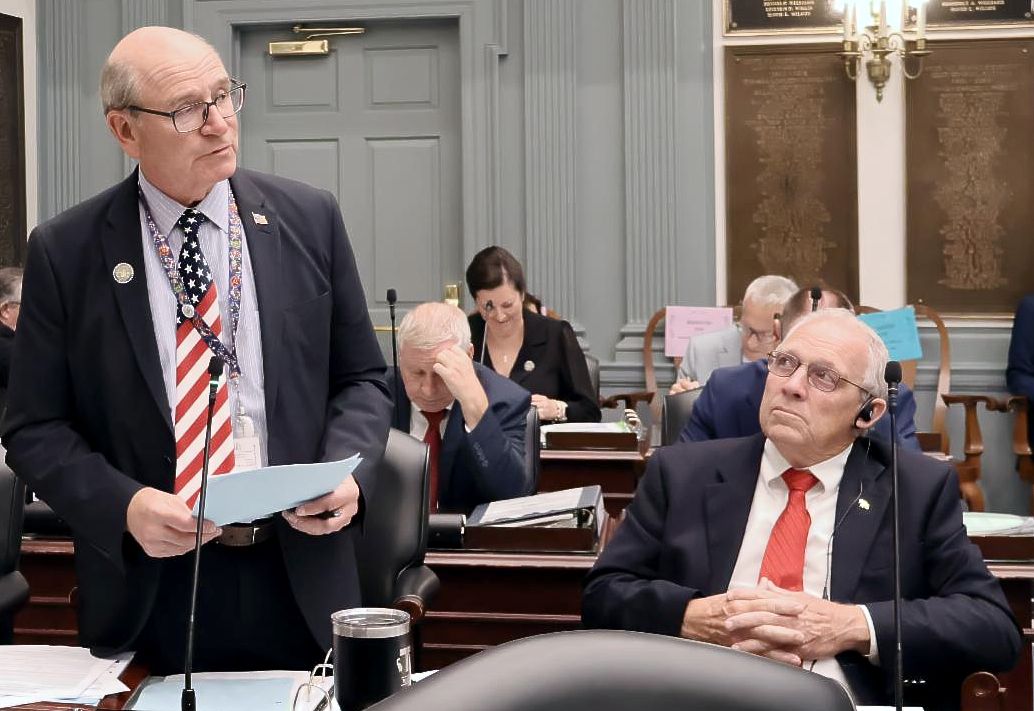
IN PHOTO, FROM LEFT: State Rep. Jeff Hilovsky and State Rep. Rich Collins on the last night of this year's legislative session.
| |
|
North Millsboro Bypass to Soon be Known by a Different Moniker
The North Millsboro Bypass, a 2.4-mile connector that diverts trucks and resort-bound traffic around a bottleneck in downtown Millsboro, will soon have a new name.
Late Tuesday night, the House approved Senate Bill 349. Sponsored by State Sen. Brian Pettyjohn (R-Georgetown), the bipartisan measure will rename the $140 million public works project the Senator Richard S. Cordrey Bypass.
A Millsboro native, Richard Cordrey served in the Delaware General Assembly from 1970 to 1996, spending all but two years of his tenure in the Senate. From January 1977 to November 1996, he was the Senate President Pro Tempore. At the time of his retirement, he was the longest-serving person in that position in the nation. In 2005, he joined the Minner administration as Secretary of Finance, a cabinet post he held for four years.
Sen. Cordrey successfully sponsored two constitutional amendments that were adopted in 1980 as part of the state government's financial management reforms driven by Gov. Pete du Pont. The first established a spending cap of 98% of anticipated General Fund revenues, with the second creating a budget reserve account, the “Rainy Day Fund,” to be used for unexpected emergencies.
Senate Bill 349 cleared the House and Senate unanimously. It is pending the governor's consideration and will likely be signed into law at a ceremony near the bypass.
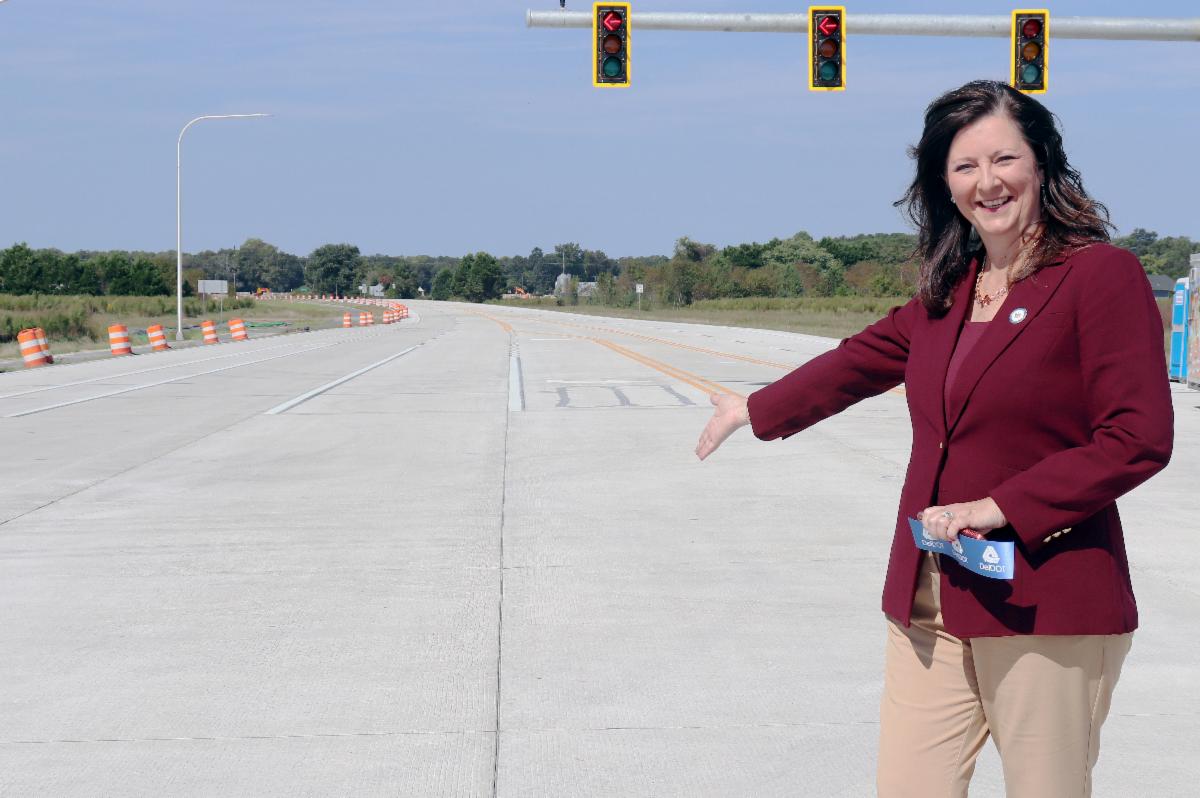
IN PHOTO: State Rep. Valerie Jones Giltner (R-Georgetown), the House sponsor of SB 349, on the North Millsboro Bypass just before its opening in September 2025.
| | |
NEWS:
Bill to Establish Type II Diabetes Reduction Program to Soon Become Law
A bipartisan bill that promises to improve public health and reduce healthcare costs in Delaware is heading to the governor's desk.
Sponsored by retired medical professional State Rep. Jeff Hilovsky (R-Long Neck, Oak Orchard), House Bill 305 provides a framework for a three-year observational study to reduce the incidence of Type 2 diabetes.
People with this condition do not respond properly to insulin, making it harder for glucose in the bloodstream to enter cells and be used for energy. This impaired process causes high blood sugar levels that can, over time, damage the heart, kidneys, eyes, nerves, and other organs.
The chronic disease is a massive drain on resources. According to one recent study, treating people diagnosed with diabetes accounts for 1 in 4 healthcare dollars spent in the U.S. People with the disease have medical expenditures 2.6 times higher than what would be expected without it. The cost of diabetes care in Delaware reportedly exceeds $1.1 billion annually.
The pilot program that will be set up under the bill will follow a representative group of diabetic patients as they undergo a new, intensive approach to reverse the progression of the disease. The program will incorporate technology, regular testing, professional management, and incentives to improve outcomes.
Federally funded through the Federal Rural Health Transformation Program, the initiative will carry no direct cost to Delaware taxpayers. Gov. Meyer supports the initiative and will sign the bill into law.
| | | | |