|
The good news: East Tennessee's housing market is back to normal.
The flipside: Normal looks a lot like 2018, and we have some catching up to do.
The regional housing market enjoyed a buoyant spring, with pent-up demand driving unseasonably high sales as early as November 2025 and double digit growth through July. As we finish out the month of August, the pending sales increase of 3% over last year would indicate a standard fall season with modest growth.
These normalized patterns are exactly what we would hope to see; the market must return to a more subdued rate of growth in order to allow wages and purchasing power to catch up after more than 5 years of skyrocketing prices. A slow flattening back to normal acceleration also allows current owners to keep their gained equity and continue to grow it.
In the Q2 Market Pulse Survey recap below, members anticipate a healthier market.
| | |
Home Sales Report
July 2026
-
East Tennessee home sales increased 10% in July from 2025.
-
The median sale price was $385,000 — up 2.69% from the previous year.
-
Total housing inventory is up 4.5% from 2025.
-
Half of the homes sold were under contract in 28 days or less, up 3 days from one year ago.
-
43% of homes sold for the asking price or above, with 19.8% selling for more than the asking price. 8% sold for at least $10,000 over asking and 2.5% sold for at least $25,000 over asking price.
-
The sale-to-list price ratio held steady at 98.8%, exactly the same as last year.
-
New construction was 12% of total home sales, down from 13% in 2025.
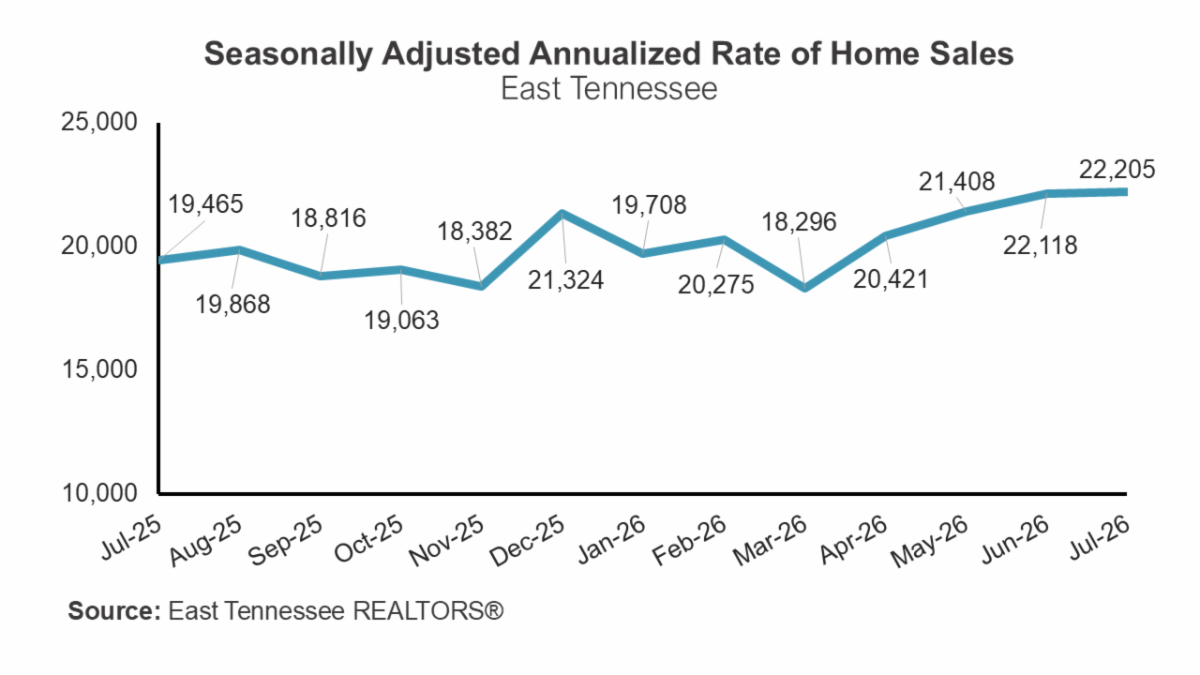
| | East Tennessee REALTORS® reports home sales data using a seasonally adjusted annualized rate (SAAR). This method takes into account seasonal fluctuations in the real estate market, such as increased home sales during the spring and summer, by adjusting the data to provide an annualized rate representing the projected number of homes that would be sold over a year if the current sales pace were to continue. | | |
What's the outlook?
Home sales continued at a fast clip in July, another double-digit growth month over last year. However, early sales data for August indicates a more subdued fall market. The typical seasonal pattern appears to holding true with inventory beginning to build back up, especially for listings priced over the median.
Year-to-date, East Tennessee has seen an 8.2% increase in sales over 2025.
We believe that the initial rush of pent-up demand has mostly run its course. In other words, the first wave of households who wanted to purchase but had been cautiously waiting for several years jumped into the market this spring.
These buyers may have been in a spot where they "had to" buy to preserve quality of life, convenience or other nonnegotiable circumstances. This rush of activity both fueled sales growth and tightened inventory in the mid-range and lower than median price categories.
Broadly, we also know the purchasing rush was not driven by affordability; while listing prices have calmed somewhat, mortgage rates are up from last year and affordability has not meaningfully increased in that time.
The remaining pool of buyers will look much more similar to past years, with anyone who can afford to be choosier waiting for the perfect listing. Each neighborhood varies somewhat between a seller's market and a buyer's market; hyper-local insights and strategy will be increasingly important for REALTORS® and their clients.
If current rates of borrowing remain steady, the market can look forward to a healthy, "normal" rest of the year for home sales.
| | |
Inventory by county
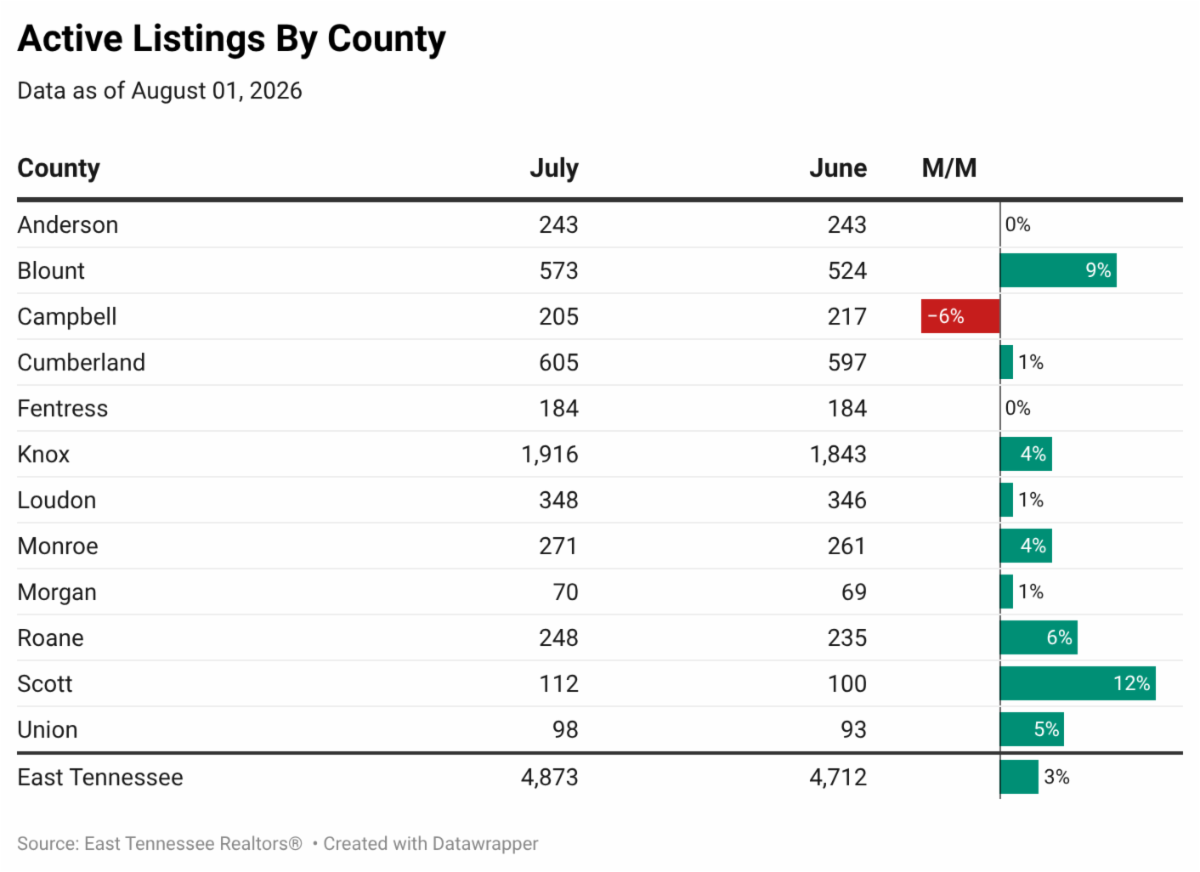
Out of the 12 counties in the East Tennessee REALTORS® footprint, 9 marked measurable increases in active listings month-over-month. Overall, regional inventory increased month-over-month by 3%.
| | Local Realtors® anticipate stability in latest Market Pulse Survey | |
The Q2 2026 Market Pulse Survey results are in, and East Tennessee REALTORS® members are anticipating stability for the year ahead.
Real estate sales have improved, and members are cautiously optimistic about the outlook; most expect the market to return to more normal patterns, while a few still think the growth is not over.
Members' business has picked up, with 39% currently assisting 3 or more clients.
About 36% of respondents expect home sales to increase over the next year even given today's high sales volume.
Notably, the percentage of respondents who are working with an out-of-state buyer has declined again, falling from 42% last year to just 34% this year. This snapshot supports population data that indicates out-of-state moves have slowed in favor of in-state shifts.
The number of contracts that appraised at or above the sale value dropped slightly this year to 93%, suggesting that some listings may still be overpriced for their area. As one respondent noted, "Sellers need to let go of 2021 pricing and realize the market now is not the same." Buyers may be deterred by a high list price, even if the seller is willing to negotiate.
Contingency activity is mostly unchanged since last year, with one exception: the number of buyers who waived the appraisal contingency has dropped from 18% in 2025 to 11% in 2026, reinforcing the idea that buyers are gaining leverage.
Overall, consumers are adapting to current interest rates and are no longer waiting for rates to decline before purchasing a home. Many members felt this shift in buyer behavior has contributed to increased market activity.
| | |
East TN municipal moratoriums spread for data center zoning
As local communities express concerns about the impact and proliferation of data centers, planning, engineering and civic professionals are jumping in to help update the guardrails.
It's a complicated process, and the first step is defining "data center." Already in existence in many areas, data centers are a broad and essential category of business that spans many types of online storage facilities supporting modern technology.
This could include everything from a small IT services cloud storage firm supporting a handful of websites, to a sprawling bitcoin farm that uses the equivalent electricity of five large hospitals. While the growth of AI tech has brought this issue to the forefront, the term data center encompasses far broader industries.
Knox County has three. Two are cloud storage facilities that have quietly blended into the residential landscape for years, and one is a bitcoin organization located (appropriately) in an industrial park.
Thankfully, in this case utility provider Knoxville Utilities Board (KUB) has protective contracts in place that can throttle data center use of power or water, require all infrastructure be paid up front, and prohibit expenses from adding to consumer bills. But not all areas are so well-prepared.
Further complicating the issue, zoning rules vary broadly by municipality for industrial development. Some counties have none in place and approach case-by-case, while others like Knox County do have industrial zoning but it may not address today's data center types, sizes and effects. For example, noise ordinances exist now for industrial development, but they are mostly focused on volume where data centers might produce a consistent, low drone of noise.
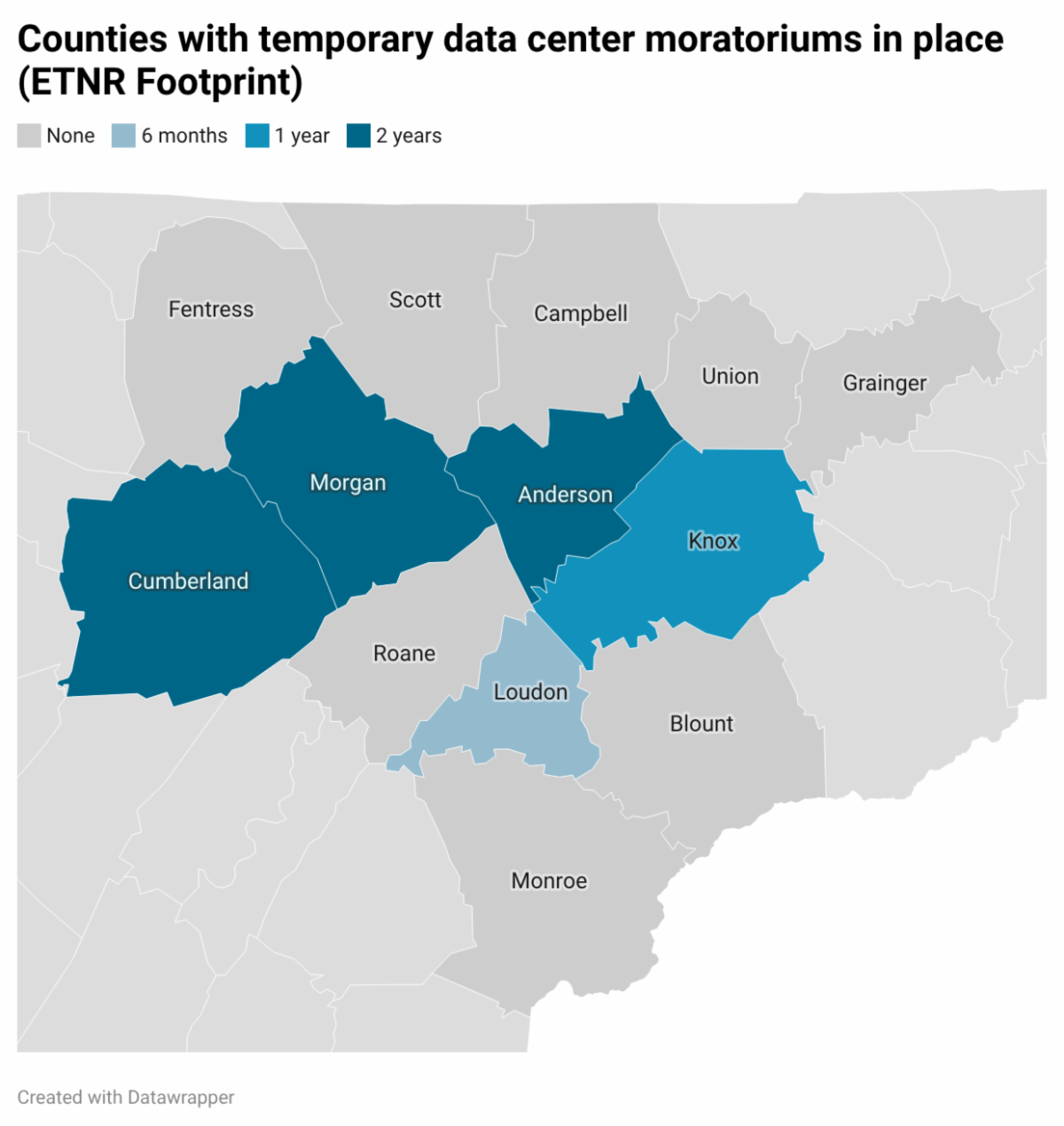
To give elected officials time to learn more, planning professionals to draft new rules and community members to give input, many East Tennessee counties and municipalities have enacted temporary moratoriums. Here's a county snapshot:
| | |
Roane and Blount counties are in the process of considering a moratorium.
Residents' main concern is how these facilities might impact their quality of life, from broad environmental questions about noise, water and power, to financial considerations like effect on property value.
The National Association of REALTORS® is leading the charge on research around property values, and will begin sharing results and insights in mid-September.
| |
A few recent zoning case studies:
Loudoun County, Virginia is sometimes called the "Data Center Capital of the World" because of the high concentration of facilities. Local leaders saw an opportunity for their previously stagnating economy several decades ago, actively recruiting some of the first internet services businesses, fiber-optic and then data centers.
Data centers are a massive part of the county's economy, estimated to generate about $1.2B in 2026 from about 3% of the county's land footprint. Several university studies found the centers to have no measurable impact on property values.
However, residents are not necessarily on board and the county faced pushback around data centers in residential areas. A recent update in 2025 removed their by-right data center zoning, and new projects are required to undergo public hearings. Read about the ongoing process to update their zoning here.
Frederick County, Maryland took a more specific approach. Local leaders acknowledged that their existing data center infrastructure was crucial to their economy, and that they might need more. However, they determined that updating zoning would be complicated since currently permitted areas were sprinkled throughout differing zones.
This resulted in the creation of a Critical Digital Infrastructure Overlay, which restricts data center development to specific areas but still allows them to negotiate for infrastructure investments that benefit the remainder of the county. Read about the zoning here.
Fayetteville, Georgia is the site of one of the most nationally-discussed data center projects. Noticeably low water pressure in homes led residents to discover the massive amount of water being used by the nearby data center, which due to a meter reading error was also a surprise to the local utility. The firm argued that this was temporary usage for construction, and that the final center would be a closed-loop system where nearly all water is recycled.
This did not satisfy the public, who had ironically received a notice at the same time from the city asking them to conserve water usage. Fayetteville has now put in place a permanent ban on all new data center construction.
The Urban Land Institute published a useful starter guide covering the basics for local municipalities and governing authorities in 2024. See it here.
The National Association of Counties maintains a regularly updated resource for municipal governments, and reports on major updates. See it here.
Rooted Futures Lab, an environmental justice group, has created an interesting project tracker that shows where in the country the largest data centers are located. Of course, East TN does have one on the map - Oak Ridge National Laboratory.
| | Knox County cuts the ribbon on Hero's Hill tiny homes for vets | |
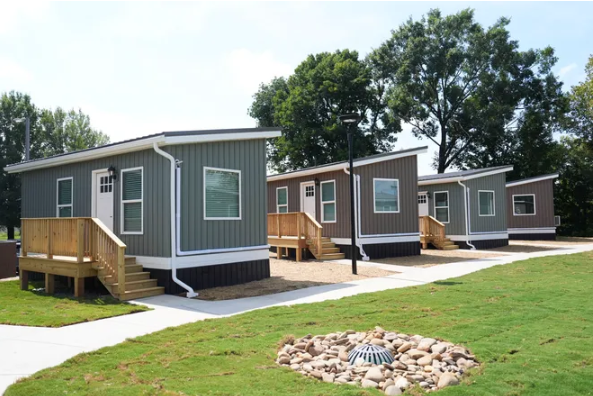
Knox County recently completed its innovative supportive housing community for veterans. Named Hero's Hill to honor future occupants, the development of 20 tiny homes, meeting space and amenities will serve currently unhoused vets.
The project was built in less than 6 months in large part by Knox County high school students supervised by professionals from the Associated General Contractors of Tennessee, Knoxville Region.
The project showcases a full strategy for providing support to the residents, offering a community center, on-site services, event spaces, laundry facilities and more. In the near future, a walking trail will connect the complex to nearby veteran housing center Liberty Place for additional community opportunities.
| |
View the full photo gallery from Knox News here.
Knox County Mayor Glenn Jacobs shared the intent for the project to function as a playbook for similar efforts nationwide, with partners documenting the process in detail including improvements and challenges.
With a precedent set for zoning and logistics, the county could see more similar projects in the future, dependent on the availability of appropriate land. Crucially to the project's success, this property was owned by the County, is located close to supportive services, and is just across the street from education and workforce opportunities through the Tennessee College of Applied Technology.
Impressively, much of the labor and materials were provided free of cost. Students from Knox County high school Career & Technical Education programs joined trainees from the Skilled Trades Academy Regional Training Center and justice-involved trainees at the Knox County Detention Center. D.R. Horton donated a large portion of the building materials. All of the 20 units used standardized designs for efficiency.
Community organizations including nonprofits, schools, individual donors, private businesses across construction, homebuilding, appliances and more, came together to complete the project. Knox County's online fundraiser to provide amenities and basic furnishings reached more than 100% funding this summer.
| |
Strong job growth could bring more buyers into the national market
Pending home sales remain about 30% below 2019 levels, even as national employment has grown 5%, showing a widening gap between job growth and homebuying activity.
Eight states have added at least 10% more jobs since 2019, expanding the pool of employed households that could enter the housing market.
As mortgage rate stabilize or decline, strong job growth could translate into increased buyer demand and homes sales, particularly in states that have experienced the largest employment gains.
– Dr. Lawrence Yun, Chief Economist for the National Association of REALTORS®
Read the full analysis here.
| | |
Mortgage Rate Update
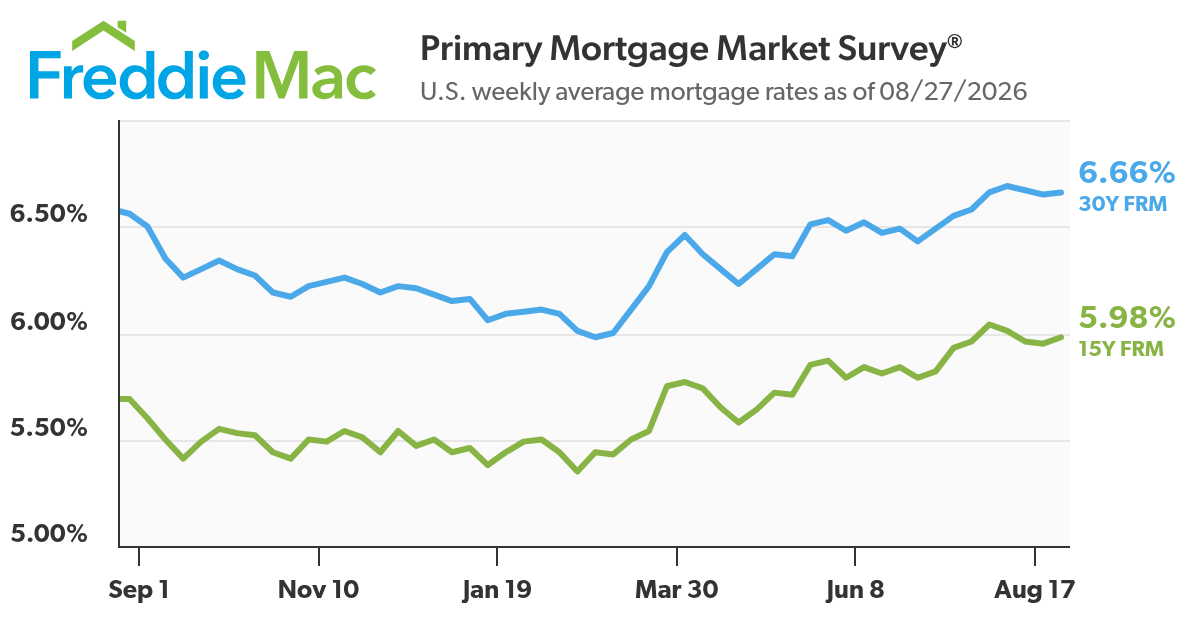
The average 30-year fixed mortgage rate (30Y FRM) held relatively steady over the past several weeks, ending the week of August 28, 2026 at 6.66%.
| | |
During the Federal Reserve's annual retreat and announcement, the board of governors voted not to change the bank rate now. A handful of members have begun to advocate for rate hikes sooner than the end of the year to help control inflation, but the majority voted to keep the status quo.
New Fed Chair Kevin Warsh shared that the Fed will no longer give frequent forward guidance, in part to allow the market to move without that influence. He stopped short of committing to timing on rate changes, but gave the general impression that hikes might be coming soon and warned that inflation is remaining higher for a longer period than expected.
Almost immediately after the press conference, rates saw a very slight bump. The market was not surprised by this stance, but the industry is watching closely.
While we don't yet know the timing or scale of potential rate hikes, experts are aligned that they expect mortgage rates to continue inching upward if current conditions persist.
| | Stay up to date with the most recent information about East Tennessee's housing and real estate market. Here's the latest from local media: | | |
National Association of Home Builders | August 6, 2026
| |
National Association of REALTORS® | August 4, 2026
| | |
Pew Charitable Trusts | August 20, 2026
| | Market Pulse is a monthly research newsletter providing a rundown of the latest housing and economic research and analysis across East Tennessee. | | Was this email forwarded to you? Subscribe here. | | | | |