|
In This Issue:
- Market Update: U.S. Rice Sale to Colombia Good News for Farmers
- USRPA Applauds El Salvador Reciprocal Trade Agreement, Highlights Progress on Rice Mislabeling Issue
- Washington, D.C. Update
- RMTC Confirmed Speaker: Dennis DeLaughter
- RMTC Exhibitor Highlights: AMD Color Sorter & Mysilo
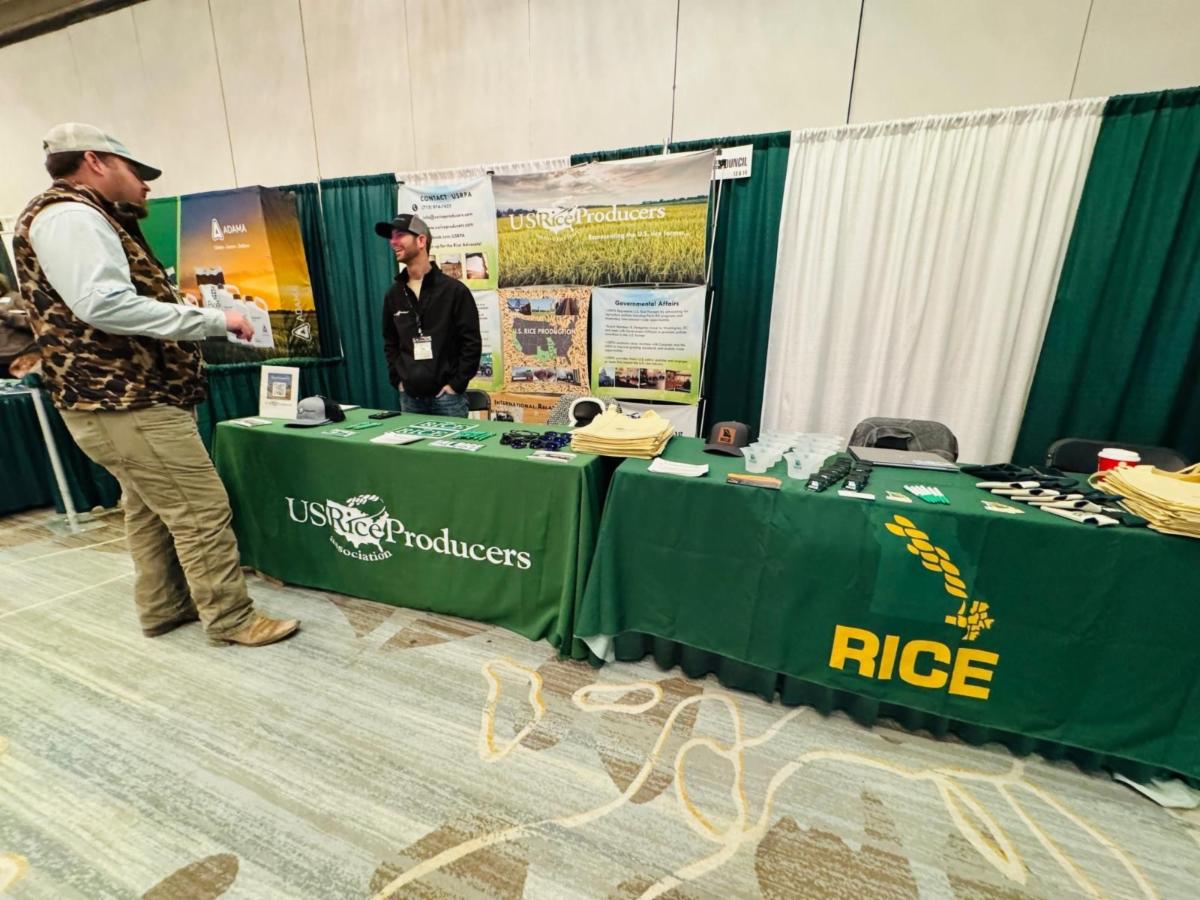
- Photo from Rice Country
| |
| U.S. Rice Sale to Colombia Good News for Farmers | | |
It has been a long time since we’ve had something to look forward to, and this week we have two big opportunities before us. The first is the result of the Colombia TRQ tender, the largest of recent tenders at 144,000 MT. The tender was held on January 26th, and with results not formally announced, we understand the full amount was awarded.
The second wild card is Venezuela. There is no way to speak with certainty on the timeline or the language of an agreement, but there is an expectation that the U.S. will claw back some of its market share taken by Brazil in recent years. Venezuela is largely dependent on food imports, and with the U.S. now taking a larger role in the government, working rice imports into any future plans is gaining traction. However, U.S. milling yields and the cooking quality remain an obstacle as Venezuela has been entirely a market for rough rice.
These two opportunities breathe welcome life back into the rice market, where price is still in the doldrums and producers are actively looking to cut rice acres for the coming year’s crop. A smaller supply, steady business to Haiti and Iraq, along with potential sales to Colombia and Venezuela do provide price support, something that has been lacking since the free-fall began over a year ago.
Milled prices are still registering at $575 pmt, and there is potential we have found the bottom here. Except for Brazil, Mercosur has reduced inventories of rice and are focused on the beginnings of the new crop harvest. The U.S. has an ample supply at the moment. Prices from East Asia and the Middle East are still problematic though, as India is showing prices at $360 pmt and Vietnam at $365 pmt. Surprisingly, Thailand jumped up to $395 pmt this week but is weighted down by its Indian and Viet counterparts.
Prices on the ground haven’t changed, as Texas is registering at $9.55/cwt and Louisiana at $10/cwt. Mississippi, Arkansas, and Missouri are all at $9.50/cwt. Prices like these are leading to the lowest expected acreage of any rice crop since the early 1980’s.
The weekly USDA Export Sales report shows net sales of 59,600 MT for this week, down 5% from the previous week, but up 48% from the prior four-week average. Increases were primarily for Haiti (20,600 MT, including decreases of 400 MT), Mexico (18,600 MT), Japan (13,700 MT), El Salvador (4,500 MT), and Canada (1,100 MT). Exports of 82,800 MT were up 35% from the previous week and 86% from the prior four-week average. The destinations were primarily to Iraq (44,000 MT), Haiti (28,300 MT), Mexico (4,400 MT), Taiwan (1,900 MT), and Japan (1,600 MT).
| | USRPA Applauds El Salvador Reciprocal Trade Agreement, Highlights Progress on Rice Mislabeling Issue | | |
US Rice Producers Association welcomes the signing of the U.S.–El Salvador Agreement on Reciprocal Trade, announced by United States Trade Representative Jamieson Greer on January 29, 2026. The Agreement strengthens bilateral trade ties and addresses a range of non-tariff barriers that have hindered American agricultural exports, including issues of mislabeling and market access for U.S. rice.
“This is good news for our rice producers,” said Mollie Buckler, President and CEO of US Rice Producers Association. “USRPA has been hard at work on this issue early last year, working with FECARROZ (the Central American Rice Milling Federation) who brought the issue to our attention, and from there advocating for fair treatment of U.S. rice exports and clear labeling standards in El Salvador. We commend USTR and our partners for including provisions aimed at preventing mislabeling practices that unfairly disadvantage U.S. rice in key markets.”
The U.S.–El Salvador Agreement on Reciprocal Trade lays the foundation for deeper economic cooperation between the two nations, building on the existing Dominican Republic–Central America–United States Free Trade Agreement (CAFTA-DR). Clear labeling and accurate product designation are essential to maintaining the integrity of American rice exports and protecting the interests of U.S. producers in global markets.
“Mislabeled rice not only misleads consumers, but also undermines trust in U.S. agricultural products and makes it harder for our producers to compete on a level playing field,” added Buckler. “We are pleased to see these concerns recognized in the Agreement, and we look forward to continued engagement with El Salvadorian officials and USTR negotiators to ensure effective implementation of these commitments.”
USRPA will continue to work with policymakers, trade officials, and international partners to monitor progress and ensure that the benefits of the Agreement are fully realized for U.S. rice producers and agricultural exporters.
| | |
Congress up against Jan 30 funding deadline amidst trying to pass remaining FY26 appropriations
This past week, the Senate has been engaged in active negotiations to try and pass a minibus including the six remaining FY2026 appropriations bills for Labor-Health and Human Services (LHHS), Transportation-Housing-Urban Development-Education (THUD), Defense, Financial Services-General Government and National Security-Department of State, and Homeland Security in time to clear the January 30 funding deadline. Due to recent developments in Minneapolis concerning U.S. Immigration and Customs Enforcement (ICE) Agency enforcement, the Homeland Security bill remains a subject of partisan contention, potentially jeopardizing the passage of the current minibus package the includes the five other mentioned spending measures. Senate Democrats have made it clear that they are not willing to vote on the Homeland bill without meaningful reforms related to ICE oversight and accountability. If the Senate is unable to find a bipartisan solution by Friday at midnight, a partial government shutdown is imminent and will last as long as it takes lawmakers to finally reach a compromise or pass a new continuing resolution (CR) to extend the current funding deadline further down the road.
At this point in time, six FY26 appropriations bills have been enacted into law — including those for Agriculture, Legislative Branch, Mil-Con VA, CJS, Interior, and Energy-Water. In the event of a partial government shutdown, services funded through administrative agencies including the USDA and the EPA are expected to continue without interruption, as they remain fully funded through September 30, 2026.
Senate Ag advances crypto market structure legislation out of Committee: On Thursday, January 30, the Senate Committee on Agriculture, Nutrition, and Forestry convened a business meeting to consider the Digital Commodity Intermediaries Act that would provide new authority to the Commodity Futures Trading Commission (CFTC) to regulate digital commodities and modify consumer protections for the emerging market. This legislation is related to and builds on the House-passed CLARITY Act. The Committee stated that this legislation intends to address the following:
- A clear legal definition of digital commodities and the establishment of a spot market digital commodity intermediary regulatory regime with the CFTC;
- Robust consumer protections including customer fund segregation requirements, conflict of interest safeguards, and appropriate customer disclosure requirements;
- A trading registration regime designed to facilitate and onshore liquid and resilient regulated markets while protecting retail participants;
- Requirements for the CFTC and SEC to coordinate and collaborate on necessary inter-agency rulemakings;
-
Robust protections for software developers and innovative technology; and
- A new funding stream for the CFTC to stand up a spot market regulatory regime.
The market structure legislation ultimately passed out of Committee along a party line vote. You can find bill text here and the Committee’s section-by-section here.
| | RMTC Confirmed Speaker: Dennis DeLaughter | |
| |
We’re excited to welcome Dennis DeLaughter, a true fan favorite, as a speaker at RMTC 2026.
Known for his deep industry knowledge and engaging presentation style, Dennis brings valuable insight and a real-world perspective that consistently resonates with audiences. His sessions are always among the most anticipated, sparking meaningful discussion and fresh ideas.
Don’t miss the opportunity to hear from one of RMTC’s most popular voices. Make plans to attend RMTC 2026 and be part of the conversation.
| |
| RMTC Exhibitor Highlight: AMD Color Sorter | |
| RMTC Exhibitor Highlight: Mysilo | |
| | |  |
Food & Agriculture
Regulatory & Policy Roundup
| | | World Agricultural Production | | | Grain: World Markets and Trade | | | | | | Inter-Rice World Rice Market Report | | |
|
February 5 - 6, 2026
29th Annual National Conservation Systems Cotton & Rice Conference
Jonesboro, AR
More Information
| |
February 11, 2026
Arkansas State University Agribusiness Conference
Jonesboro, AR
More details to come
| |
February 19, 2026
Missouri Rice Council Annual Meeting
Gobler, MO
More Information
| |
February 24, 2026
University of Missouri Extension Rice Meeting
Dexter, MO
More Information
| | |
May 26 - 28, 2026
Rice Market & Technology Convention
Cartagena, Colombia
More Information
| | |
June 6, 2026
LSU AgCenter South Farm Rice Field Day
Crowley, LA
More Information
| | |
USRPA does not discriminate in its programs on the basis of race, color, national origin, gender identity, sexual orientation, religion, age, disability, political beliefs, or marital/family status. Persons who require alternative means for communication of information (such as Braille, large print, sign language interpreter or translation) should contact USRPA at 713-974-7423. |
| | | |