|
In This Issue:
- Market Update: U.S. Rice Market Finds Support from Iraq Sale Amid Global Pricing Pressures
- Washington, D.C. Update: USDA Releases Second Stage of Crop Disaster Assistance
- USRPA Leads Delegation to SS Rice News Convention in Thailand
- USRPA Joins Third Culinary Workshop in El Salvador
- Ray Stoesser Memorial Scholarship: Just Two Weeks Left to Apply
- RMTC Sponsor Highlight: Zaccaria
- Photo from Rice Country
| |
| U.S. Rice Market Finds Support from Iraq Sale Amid Global Pricing Pressures | | |
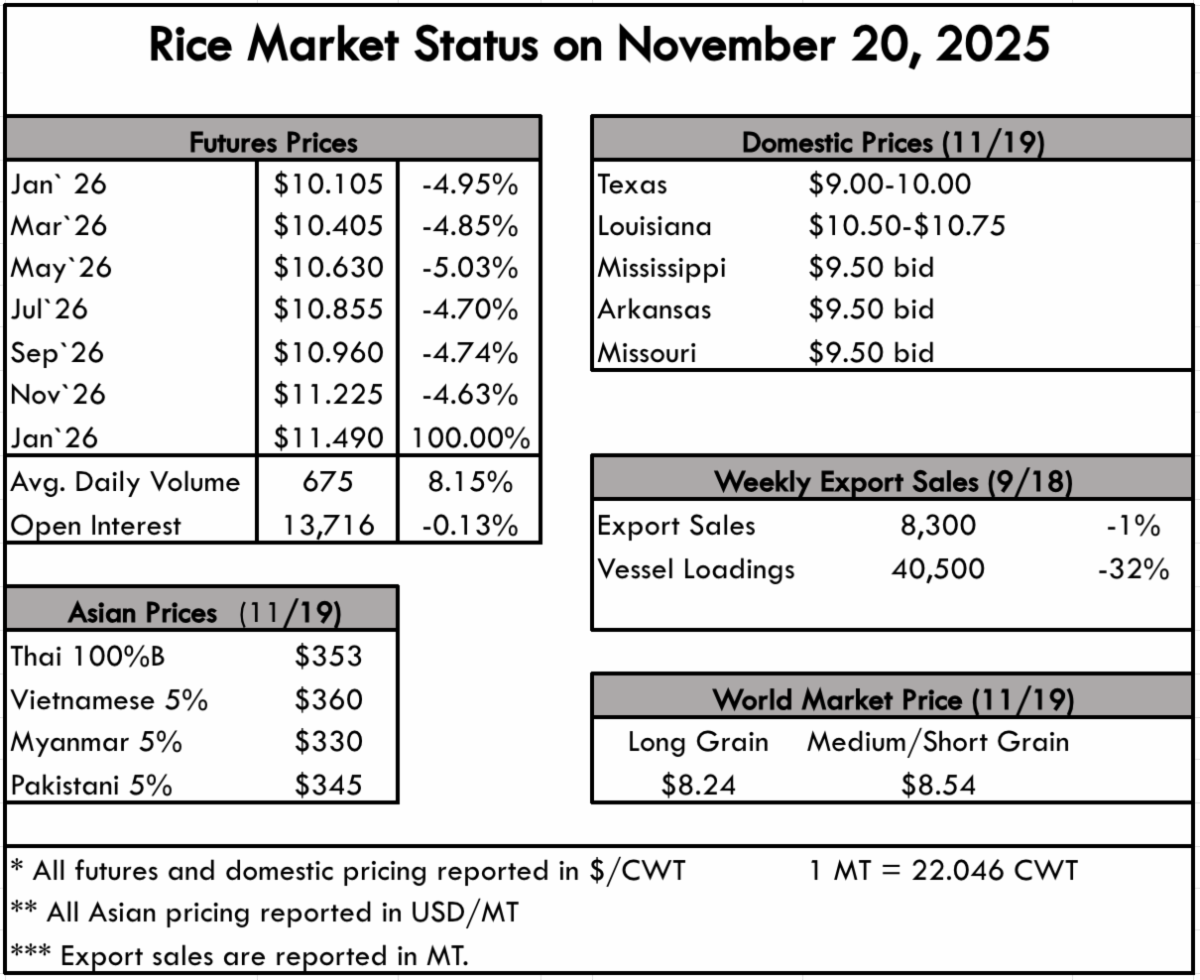
With data now available and the government back to work, we were hoping to start the untangling process for the market. However, this week’s export sales report is updated only through October 2, so we will still have to rely heavily on the narrative led by speculation and the rumor mill. Despite this, a confirmed sale to Iraq has ignited optimism in the U.S. long grain sector, as thoughts only weeks ago were that we may have to wait until January to confirm this sale. But with two 40,000-ton cargos with delivery dates of November 2025/February 2026, the mills are busy filling the order. The hope is that this leads to a demand for spot market rice, but with prices reported not to have exceeded $555 pmt FOB NOLA, cash prices aren’t likely to at numbers that will excite producers to sell.
Larger paddy sales to Central and South America have been happening as well, but the pricing still leaves something to be desired. Paddy prices have continued a slow decline, now reported well below that $300 pmt threshold at $280 pmt for indicative pricing. There have been reports of premium paddy sales leaving from the South Louisiana Rail Facility because of their higher quality and ability to provide IP rice to customers. This is proving to be the only effective long-term strategy that is offering a consistent premium in the marketplace.
We touched on a subject last week that we expect will garner much more attention in the near future, and that is the fact that India’s level of subsidies — and thus production and exports — is creating a fundamental change for the global rice market. The involvement of the Indian government is so integrated in India’s rice economy that it is entirely distorting the global supply flows. This is therefore requiring other governments (Thai, Viet, U.S., Paki to name a few) to take an outsized role in their respective rice industry through subsidies in production and export local price supports. The simple truth is that India is making rice production economically unviable for the rest of the globe. Therefore, governments will be forced to enact short term stimulus packages to ensure food production continues, but the longer-term strategy will require a coalition of countries to come together to the WTO to speak out against India’s unfair trade practices… and then the WTO will have to do something about it.
The pricing matrix continues to defy expectations and keep trending downward. Thai prices are reported at $345 pmt, Viet at $365 pmt, and Indian rice at $355 pmt. In the Western Hemisphere, U.S. rice sold to Iraq at roughly $550 pmt FOB NOLA, but indicative pricing is closer to $570 pmt. Brazil is registering at $465 pmt, Uruguay at $450 pmt, and Argentina at $385 pmt.
| | |
USDA releases second stage of crop disaster assistance
On Monday, November 17, the U.S. Department of Agriculture (USDA) announced its second stage of funding designated for agricultural disaster relief through the Supplemental Disaster Relief Program (SDRP) that was first appropriated and approved by Congress last December. This wave of funding includes $16 billion for SDRP, in addition to the already issued $9.3 billion towards Emergency Commodity Assistance Program (ECAP) assistance, and $705 million in Emergency Livestock Relief Program (ELRP) assistance allocated this year. Applications for Phase Two assistance for SDRP will open on Monday, November 24, and cover eligible crop, tree, bush, and vine losses not covered by Phase One. Additionally, the Milk Loss Program will have $1.65 million in payments available to eligible dairy operations for milk lost in natural disasters. For more information, the official press release can be found here, and the Stage Two fact sheets can be found here.
Trump announces modified reciprocal tariff product exemptions for certain agricultural products
On Friday, November 14, President Donald Trump announced an adjustment to his previously issued Executive Order (EO) 14257 that modifies the scope of the reciprocal tariffs placed on countries on April 2, 2025, allowing for specific product exemptions. The announcement included a modified Annex II and Potential Tariff Adjustments for Aligned Partners (PTAAP) list which exempted over 200 agricultural goods from the reciprocal tariff rates only. It is worth noting that many of the included products are natural resources not largely produced, if at all, in the U.S. This list of exempted products applies to all exporting countries that the U.S. imposed a reciprocal tariff through actions of EO 14257. This includes countries that have not yet reached a trade deal. Of note, the only rice related product that was included in the Annex was rice paper for religious purposes. The exemptions do not impact any additional tariffs placed as a result of other Administration actions or any other Section 232 or 301 related tariffs. You can find the official modified EO here, and the link for the referenced Annex here.
EPA proposes revisions to federal jurisdiction over Clean Water Act permitting
On Monday, November 17, the Environmental Protection Agency (EPA) announced a revised definition of Waters of the United States (WOTUS) to be applied to the federal jurisdiction of the Clean Water Act (CWA). This new definition will implement the Supreme Court’s Sackett v. EPA decision and limit federal jurisdiction to waters that are standing or flowing for at least the entirety of the wet season. This definition removes the interstate category from its jurisdiction, and clarifies exclusions for ditches, converted cropland, and waste treatment facilities. These revisions will be published in the Federal Register for a 45-day public comment period, and EPA and the Department of the Army will hold two hybrid public meetings. The official fact sheet for these revisions can be found here.
| | USRPA Leads Delegation to SS Rice News Convention in Thailand | | |
The SS Rice News Convention was held in Pattaya, Thailand this month, attracting over 600 rice industry leaders across the globe to gain market insights and promote rice trade. During the convention, USRPA hosted a booth to showcase U.S. rice products and engage with international delegates, interacting with around 200 regional rice traders and buyers, collecting trade leads, and strengthening relationships with key stakeholders in the Asian rice market.
By attending keynote speeches, panel discussions, and market outlook sessions, USRPA also gained valuable insights into global rice trade trends, sustainability practices, and regional market dynamics. The success of the event underscored USRPA’s continuous efforts on developing international markets for U.S. rice, making business connections and promoting trade opportunities.
| | USRPA's Grace Wang and Dwight Roberts also had the opportunity
to meet with USDA ATO staff while in Thailand. | | USRPA Joins Third Culinary Workshop in El Salvador | | |
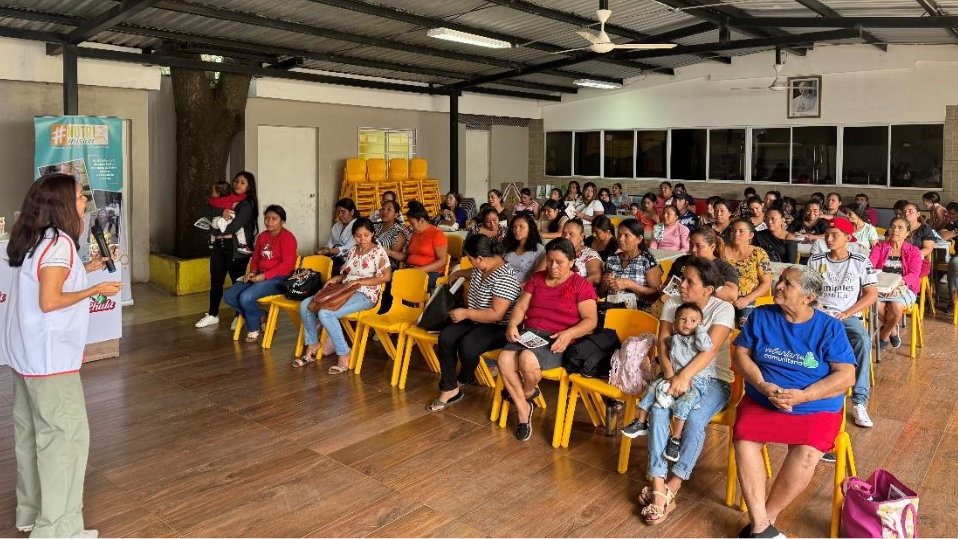
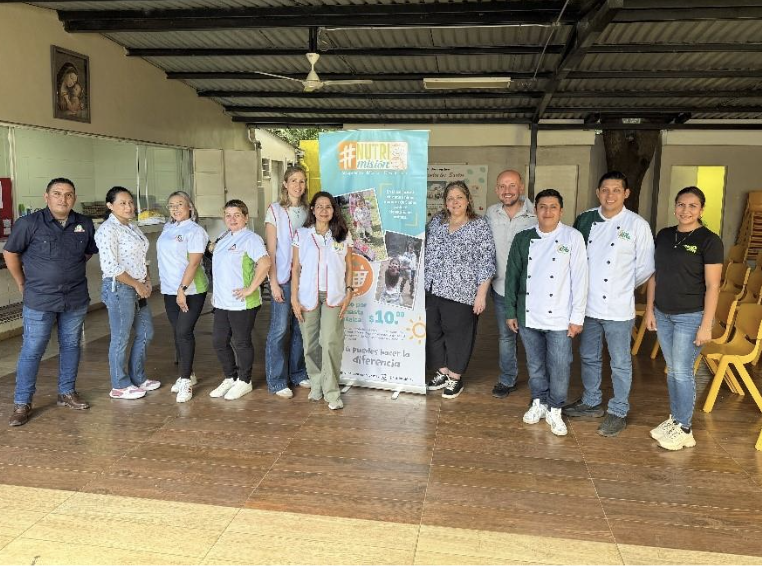
On November 13, the community of San Julián, Sonsonate gathered for the 3rd Culinary Workshop with mothers from the Nutri-Misión program and the Centro San Juan Pablo II. The event brought together over 50 participants for a morning filled with learning, flavor, and community spirit.
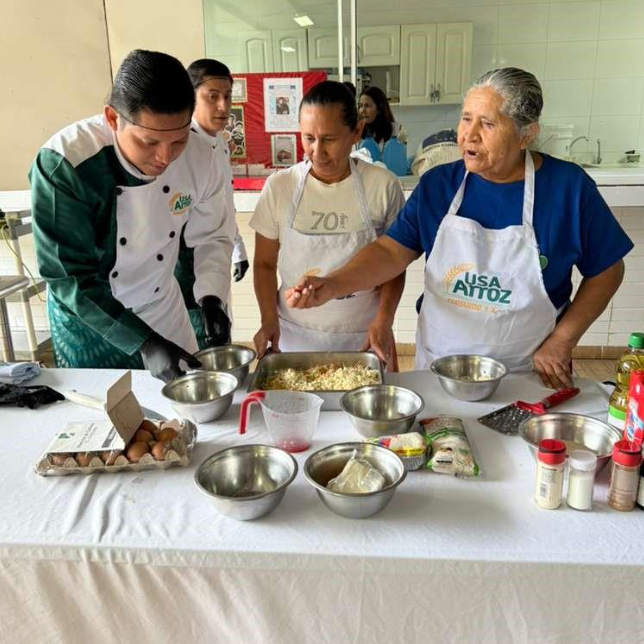
With the support of Fundación Dona Tu Cora, US Rice Producers Association together with Arrocera OMOA and Agroindustrias Cemersa, Productos La Chula, and the Centro San Juan Pablo II, El Salvador, attendees enjoyed an engaging hands-on culinary experience. Chefs demonstrated how to prepare four healthy recipes, including two made with U.S. rice: crispy rice nuggets and the traditional "poleada de arroz" (rice custard), both crowd favorites during the tasting session.
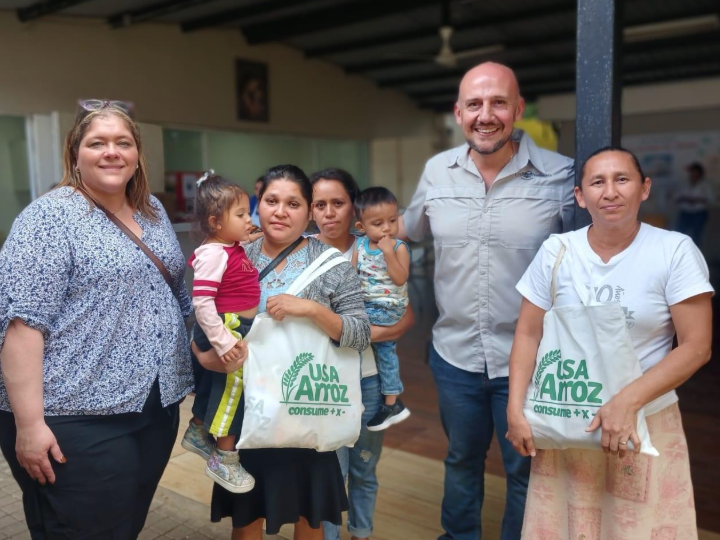
To make the day even more meaningful, each participant received a bag of food products and a recipe booklet featuring the year’s best preparations, encouraging families to continue cooking nutritious meals at home.
USRPA was proud to participate in this inspiring initiative that strengthens community ties, promotes good nutrition, and celebrates the versatility of U.S. rice in everyday dishes.
| | Rice Custard was a fan favorite. | |  | Local participants joining chefs while cooking. | | | USRPA representative, Iris Figueroa, and local El Salvador contractor for USRPA, Salvador Diaz, handing out bags to the participants. | | | Representatives from Fundación Dona Tu Cora, US Rice Producers Association together with Arrocera Omoa and Agroindustrias Cemersa, Productos La Chula, and Centro San Juan Pablo II, El Salvador. | | | Ray Stoesser Memorial Scholarship: Two Weeks Left to Apply! | | RMTC Sponsor Highlight: Zaccaria | | Happy Thanksgiving from US Rice Producers Association! The USRPA office will be closed Thursday, November 27 and Friday, November 28. The Rice Advocate will resume publishing on Friday, December 5. | |
| | | |
Food & Agriculture
Regulatory & Policy Roundup
| | | Inter-Rice World Rice Market Report | | | 2025 Arkansas Rice Performance Trial Results | | | |
January 21, 2026
Western Rice Belt Conference
More details to come
| |
February 5 - 6, 2026
29th Annual National Conservation Systems Cotton & Rice Conference
Jonesboro, AR
More Information
| |
February 19, 2026
Missouri Rice Council Annual Meeting
Gobler, MO
More Information
| |
|
May 26 - 28, 2026
Rice Market & Technology Convention
Cartagena, Colombia
More Information
| | |
USRPA does not discriminate in its programs on the basis of race, color, national origin, gender identity, sexual orientation, religion, age, disability, political beliefs, or marital/family status. Persons who require alternative means for communication of information (such as Braille, large print, sign language interpreter or translation) should contact USRPA at 713-974-7423. |
| | | |