|
Where Are Interest Rates Headed?
One of the drivers behind the recent stock market rally has been an expectation that the U.S. Federal Reserve (Fed) will respond to softening economic data by lowering the federal funds rate, reported Saeed Azhar, Johann M Cherian and Sanchayaita Roy of Reuters.
Fed rate cuts are intended to stimulate economic growth by making it less expensive to borrow money. When it’s cheaper to borrow, companies’ expenses may fall and profits can increase, lifting stock prices, reported Mary Hall of Investopedia.
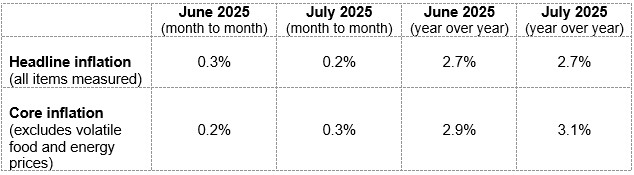
After last week’s Consumer Price Index was released, expectations for a September Fed rate cut soared above 90 percent, according to CME FedWatch. “Inflation is still higher than the Federal Reserve would like — but not high enough to stop the central bank from cutting interest rates next month. That’s investors’ takeaway from yesterday’s consumer price index report,” reported Phil Serafino and Edward Bolingbroke of Bloomberg.
The catch is that a Fed rate cut doesn’t always have the intended effect. Sometimes, the Fed reduces or increases the federal funds rate and other interest rates don’t follow suit. Bloomberg Economics Chief Economist Tom Orlick explained:
“Let’s cast our minds back briefly to the early 2000s, to [former Fed Chair] Ben Bernanke and to the famous savings glut hypothesis. So, back then, the Fed was hiking [the federal funds rate] but long-term Treasury rates weren’t going up. Bernanke said it’s because there’s a glut of global savings. All of this money is coming from China and Saudi into the U.S. Treasury market…that situation is reversed and we’re no longer in a world with a savings glut. We’re in a world with a savings shortage. And that means it doesn’t matter who President Trump appoints as the next Fed chair…that savings shortage is going to mean that long-term rates, the 10-year Treasury yield stays high and…we think 4 to 5 percent for the 10-year Treasury is the new normal.”
The 10-year U.S. Treasury note yielded 4.27 percent at the start of last week. By week’s end it was at 4.33 percent.
|