Week InReview

Friday | Jul 4, 2025

Trouble reading this briefing? View as webpage.

Equity futures fall.

Euro-area and US equity futures fell, with Asian stocks ahead of the US holiday.


The US House passed a $3.4 trillion fiscal package that cuts taxes and curtails spending on safety-net programs.


Treasuries tumbled and the dollar rose as stronger-than-forecast employment growth soothed concern the US economy is poised to slow, stanching speculation the Federal Reserve will need to cut interest rates any time soon. Stocks hit fresh record highs.


Hong Kong’s de-facto central bank bought the city’s dollar to defend its foreign-exchange peg, as two previous rounds of intervention failed to send funding costs high enough to dampen bearish currency bets.


The Chinese government intends to cancel part of a summit with European Union leaders planned for later this month, in the latest sign of the tensions between Brussels and Beijing. The US is reaching out to business executives to weigh interest in accompanying him on a possible trip to China.

let's recap...

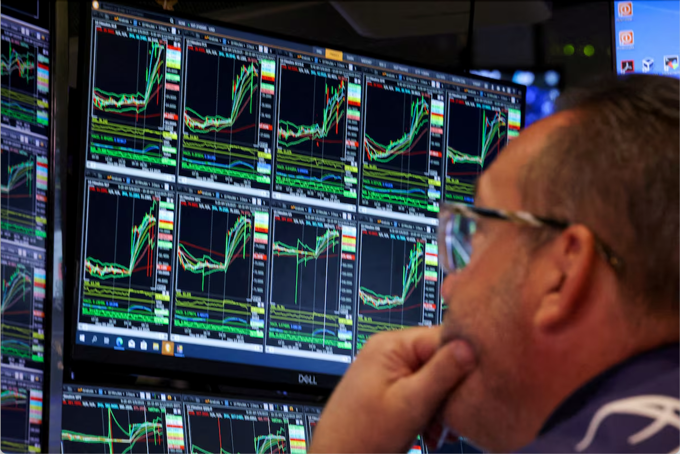
Traders work on the floor at the New York Stock Exchange (NYSE) in New York City, May 12, 2025. Photo: Brendan McDermid | Reuters

Investors brace for weeks of potential market turbulence triggered by wildcard events

Major asset managers are preparing to navigate sharp swings across markets, targeting assets vulnerable to both upside and downside surprises — including gold, corporate credit, US Treasuries, the dollar, the yen, and eurozone bonds. (Reuters | Jul 3)


UBS survey: Central banks grow more concerned about FSX 'weaponization'

Central banks are increasingly alarmed by the geopolitical "weaponization" of foreign exchange reserves, prompting a greater shift toward gold, according to a new UBS Group AG survey. Nearly half (49%) of reserve managers now view this trend as a significant investment risk—up from 32% in 2024 and just 14% in 2023. The survey, conducted last month, included responses from nearly 40 central banks. (Bloomberg Economics + Markets | Jul 3)


Top hedge funds extend winning streak amid market turmoil

Leading hedge funds notched further gains in June, capping a strong first half despite global market upheaval triggered by US tariffs and the Israel-Iran conflict. The performance underscores hedge funds’ reputation as stabilizers during periods of intense asset-class volatility. (Bloomberg Markets - Finance | July 2) see also Hedge funds seek to expand into private credit (Financial Times | Jun 30)


Banks see opportunity — and risk — in US tax bill

Economists at Nomura and Citi believe the proposed US tax bill, which includes extensions of expiring tax cuts and new incentives for business investment, could stimulate the US economy and help avert a fiscal slowdown in 2026. Morgan Stanley also sees potential gains for businesses, individuals, and sectors like communication services, industrials, and energy. However, the bank cautions that the bill poses significant risks to fiscal sustainability. The Congressional Budget Office projects that the legislation would add at least $3 trillion to the federal deficit over the next 10 years and place a heavy administrative burden on the IRS due to its complex tax provisions. (CNBC | Jul 1)


US Dollar Index slips to new lows near 96.50 ahead of key manufacturing data

The US Dollar Index (DXY), which tracks the USD against a basket of six major currencies, extended its decline for a ninth consecutive session, dipping to around 96.70 during Tuesday’s Asian trading — its lowest level since March 2022. The continued weakness comes as investors await key US labor market reports and the release of the June ISM Manufacturing PMI later in the day. These figures are expected to play a crucial role in shaping the Federal Reserve’s policy outlook for July. (FXStreet | Jul 1)

a little bit of cyber (+ AI)

Salt Typhoon ‘largely contained’ in telecom networks: Top FBI cyber official

Chinese hackers have infiltrated nine US telecommunications companies, but are currently contained and not actively stealing data, according to Brett Leatherman, head of the FBI’s cyber division. The group, identified as Salt Typhoon, remains inside the networks, Leatherman said.

CyberScoop


States defeat 10-year ban on AI regulation

The US Senate on Tuesday rejected a budget reconciliation provision that would have blocked states from passing laws regulating artificial intelligence for the next decade. The proposed moratorium faced strong opposition from state officials, who welcomed the outcome as a win for local authority. They argued that retaining the ability to craft state-specific regulations is crucial for protecting their residents. Still, some cautioned that the fight isn’t over — the issue may resurface in future legislation.

The Wall Street Journal


Controllers embrace strategic leadership amid AI and data expansion

As AI and automation reshape the business landscape, controllers are stepping into more strategic leadership roles, says Kristi Chapman of EY. No longer limited to traditional oversight, controllers are now key players in driving business strategy, managing growing data demands, and supporting cross-functional initiatives. With data becoming increasingly central to decision-making, they are emerging as vital information hubs and strategic collaborators across departments.

CFO Dive

binge reading disorder

Puma Sophyr loafers and Hoka Speed Loafers are selling out quickly. Illustration: 731; Source : Puma and Hoka

Snoafers — Sneaker-loafer hybrids — step into the spotlight as footwear's newest craze

Fashion is no stranger to hybrids — think skorts, jeggings, and shackets. Now, enter the snoafer: a bold blend of sneaker comfort and loafer sophistication. Featuring cushioned soles paired with classic uppers, snoafers offer a versatile, business-casual style designed for all-day wear. While their unconventional look sparked early skepticism, the trend has since exploded, with major sneaker brands embracing snoafers as their latest viral hit.

Bloomberg Industries | Consumer


Inside the Hamptons' luxe fitness craze — where Cartier and Lambroghinis are just part of the warm-up

In the ultra-exclusive Hamptons, landing a spot in the hottest workout classes has become a status symbol all its own. Among weekenders who casually shell out $97 for lobster salad and $10 for a single tomato, the high prices don’t deter demand — they signal prestige. Some studios release openings a week in advance, others only at the start of the season, often triggering waitlists with 20+ hopefuls. Instructors call it a “fitness gold rush,” with summer 2024 and early 2025 seeing record-breaking attendance.

The Wall Street Journal


Dollar slips as de-dollarization gains ground: The real risk is domestic

The threat comes from within. The Bloomberg Dollar Index has plunged nearly 8.5% — its sharpest decline since the 1980s. Meanwhile, subtle but steady indicators suggest that alternative currencies are quietly gaining traction.

The Daily Economy

220 x 128 px