|
ARTICLES AND A BOOK CHAPTER
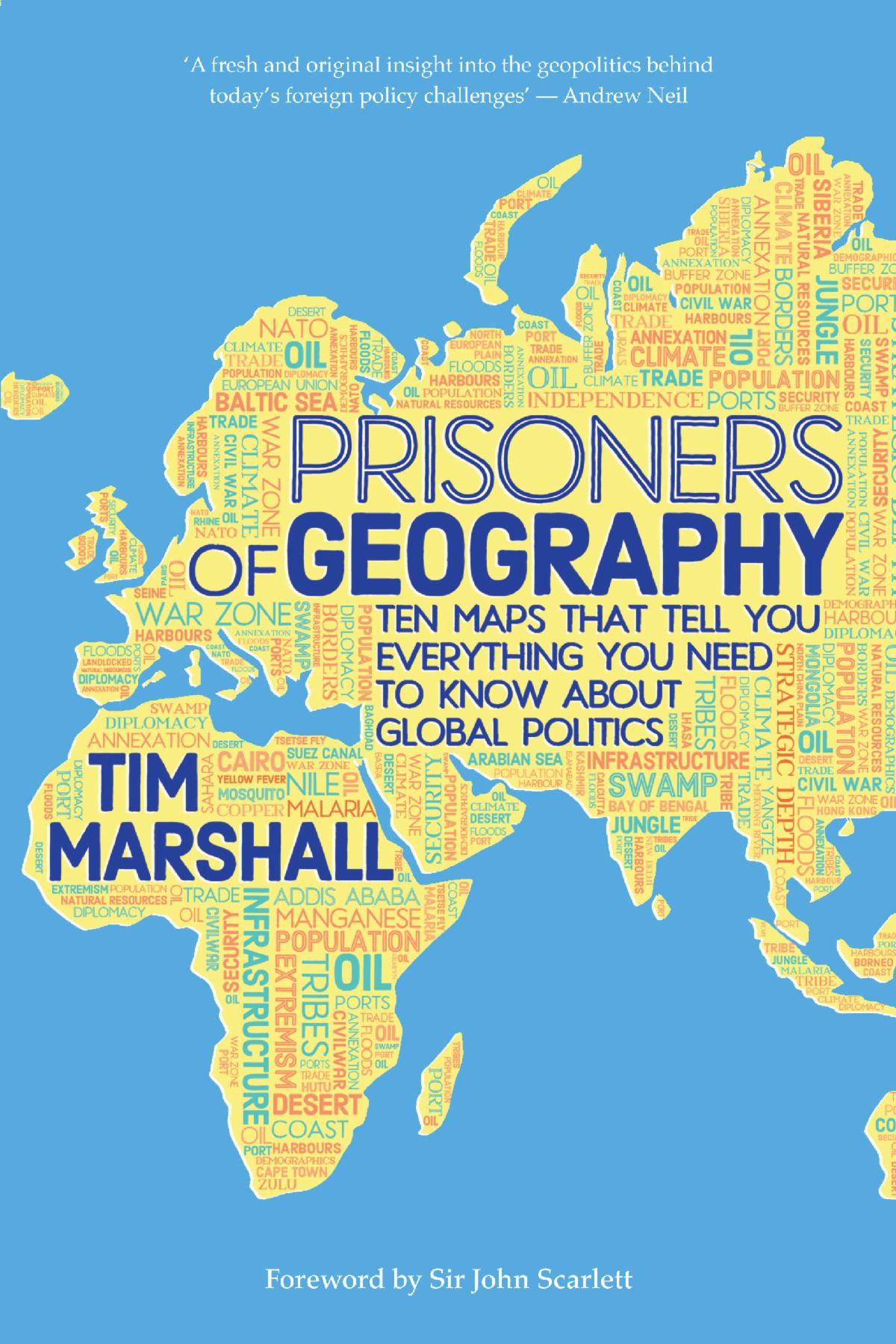
Prisoners of Geography (China) by Tim Marshall: Geography plays a meaningful role in the development of nations and cultures. From temperature to topography and proximity to precipitation, the environment people live, move, and interact in shapes them in a myriad of ways. For this reason, I referenced Tim Marshall’s book to understand how geography may have shaped China throughout the years.
Being a large continental power has advantages and disadvantages. On the positive side, they provide considerable natural resources and the ability to expand their territories, given the lack of natural barriers. But open space is often a double-edged sword. The Mongols famously began their rule of China in the late 13th century, which lasted almost 100 years. Centuries later, Japan had its pick of numerous options from which to launch its successful invasion of China.
Concern over these types of dangers looms large in the psyche of modern-day China. It’s one of the reasons China has been so intent on possessing Tibet. Its mountains provide a natural barrier against an attack from India. Another reason is the Tibetan mountains are a meaningful source of water for China - to the point that it is often called China’s Water Tower. Tibet is a vital part of China’s national security.
Modern-day China, however, is far more than just a land power. Due to its fairly dubious claim over inconsequential islands (some little more than a few acres of rock), it asserts ownership over the majority of the South China Sea - much of which is well over a thousand kilometers away and much closer to countries like Vietnam, Malaysia, the Philippines, and Taiwan. The reason? These waters are some of today’s busiest trade routes. They are also thought to contain significant oil and gas fields – resources they may need in the future.
Given China’s population, increasing wealth and power, and geographical location, it aspires to match the U.S.’s achievements. China wants to be the global hegemon that controls a large land mass, maintains economic interests around the globe, and protects power over two large bodies of water: the South China Sea and Pacific Ocean. While it will take more time, they are well on their way to achieving this goal.
Deutsche Bank Asia Corporate Newsletter Q3 2024: Economic growth is accelerating in Asia, with Vietnam, Thailand, and the Philippines leading the way. Only China, Singapore, and Vietnam are currently experiencing lower growth rates than a decade ago.
Modi’s Moscow Visit Spotlights India’s Tricky Balancing Act on Russia: India is in an enviable but tricky geopolitical position. It has the world’s largest population, fifth-largest economy (soon to be third largest) and is in close proximity to China and Russia. This makes it an attractive ally and force to be wary of. When it comes to aligning with the west, or China and Russia, India has chosen a middle path – enabling it to reach favourable deals with both sides.
On the one hand, it purchases cheap oil from Russia and will be operating a port in Iran. These actions would usually lead to American-led sanctions; however, the West’s need to counterbalance China and Russia has also enabled India to reach tech deals with the U.S.
If India can maintain this balancing act, it should help accelerate its growth for years to come. But with so much happening around the world, it won’t be easy.
Global Wheat Production by Country - Visual Capitalist: I was surprised to learn that China, India, and Russia are now the world’s largest wheat producers and account for 43% of global wheat production. I was even more surprised to find out that Canada is only the eighth-largest producer and accounts for just over 4% of the world’s total.
Gold Reserves by Country - The World Gold Council: The price of gold (in USD) has increased by more than 13% this year. Some of this resulted from investors buying the yellow metal. However, central banks in or near Asia have also bought gold aggressively. The most recent numbers (for Q1) from the World Gold Council show Turkey, China, India, Kazakhstan, and Singapore as the largest buyers.
I’m increasingly coming across articles about developing countries that acquire gold to either reduce or counterbalance their U.S. dollar holdings. Should the geopolitical situation become more precarious, gold could be one of the biggest beneficiaries. This is one of several reasons why we’ve maintained an exposure to gold for years.
China's making more cheap wind and solar kit than the world knows what to do with: 'the timing couldn't be worse' - Recharge News: I’m not quite sure how I feel about this. China is, by far, the world’s most efficient producer of solar and wind energy products. And its production levels are vastly under capacity. At the same time, the world needs much more renewable energy to fight global warming. Sounds like a perfect fit.
Unfortunately, it’s not so simple. With the friction between the West and China, developed countries are reluctant to become dependent on China for renewable energy products. Many nations also desire to develop their own green energy industries, which won’t happen if lower-priced Chinese renewables are allowed to flood the market. As a result, these Chinese renewables will likely face sizable tariffs for some time - likely slowing the adoption of renewable energy.
The Right Kind of Stubborn by Paul Graham: Paul Graham’s latest essay explores the difference between being obstinate and determined. He believes the difference is that determined people, while having a high level of conviction, are also very open-minded. He’s found that those who are less open-minded, usually have inferior results.
|