MARKET WATCH


Although January has been somewhat volatile, most global markets currently trade near their year-end values. Interestingly, although the international stock index also remains relatively flat, Japan (it’s largest component) continues its impressive run, rising more than 8% on the month. (See more on Japan under the books section below.)


The U.S. market is also higher, but only by a percent or two, driven mostly by the continued strength of The Magnificent 7 stocks (not including Tesla, which has had a poor start to the year).


Emerging markets began the week 3% lower on the month. However, following economically supportive announcements by the Chinese government and central bank, Chinese stocks have enjoyed a good week, which in kind, enabled the EM index to claw back to level ground. Commodities also benefitted from this news. China’s economic weakness, has hurt demand for energy and copper. Although they remain negative on the year, they also rallied the last few days.


Looking forward, the days of excessively low interest rates are likely behind us. If that holds, a paradigm of stable, but higher inflation and interest rates will provide bond owners with better yields than they’ve experienced over the last decade. Commodities should also be stronger - perhaps much stronger.


Having said that, unresolved factors remain in play. The upcoming U.S. election will likely be contentious, and, unless there is a clear-cut winner, the aftermath could be even more volatile. Two wars (Ukraine and the Middle East) continue. With the recent election in Taiwan, China could escalate its sabre-rattling over the island it claims as its own. There is also the recession that many have expected by now. If it occurs, it should be mild, but that could change. And these don’t include events that could come out of left field – as they often do.


Although I claim no unique ability to predict the future, I believe we remain prepared for most negative or unforeseen situations. Should they arise, we are well positioned to take advantage.


As always, feel free to reach out if you have any questions, and if you’re looking for more timely information on the markets, you can find them on the research section of my website, or on my Twitter, Facebook, and LinkedIn feeds.

BOOKS


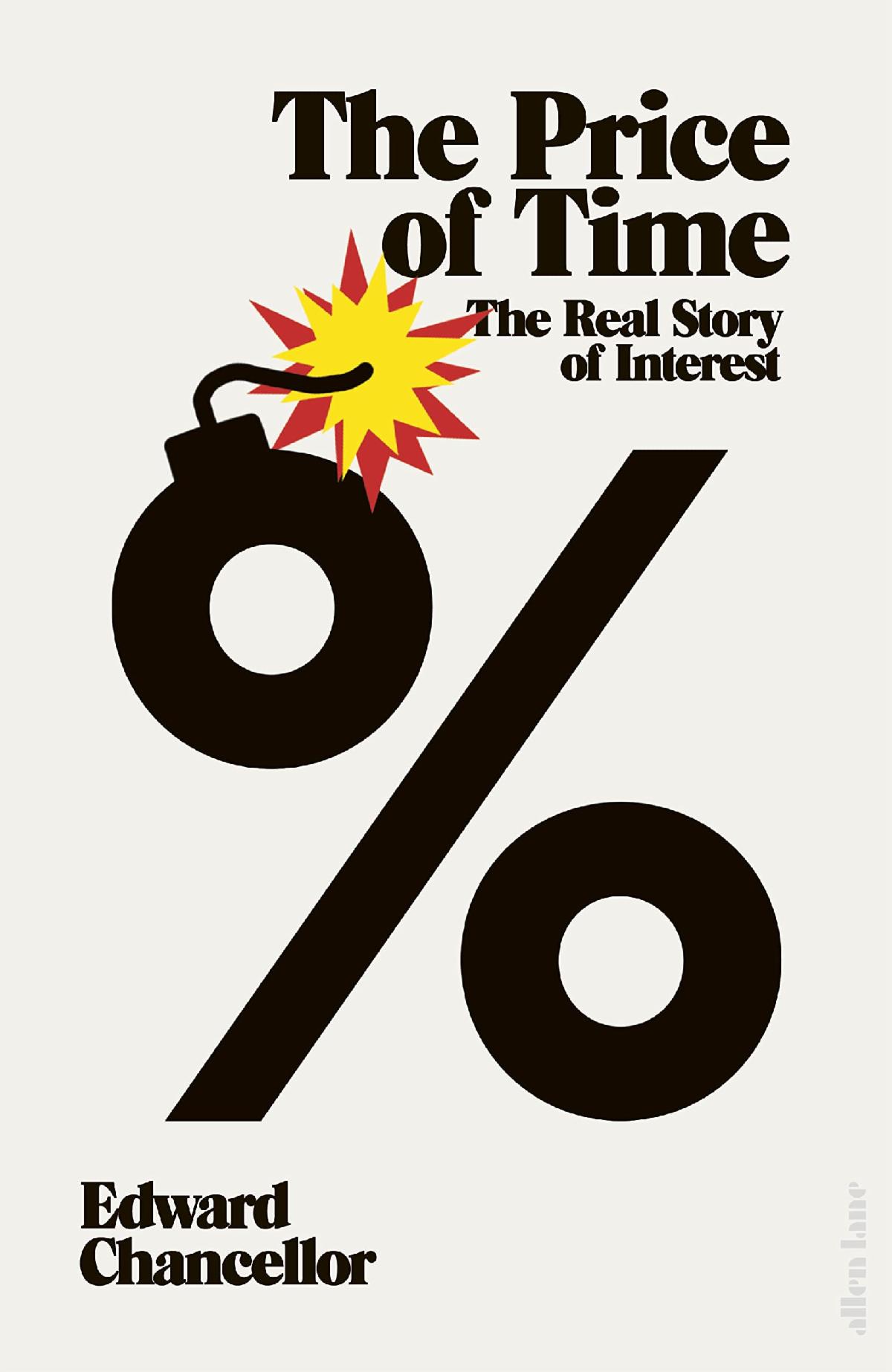
The Price of Time by Edward Chancellor: Great book on the history of interest rates. Providing a broad range of historical context, it makes a compelling case against artificially low interest rates maintained for extended periods. Which is the exact approach taken in Japan since the 1990s, and the rest of the developed world since the 2008 crash until recently.


One of the book’s strongest critiques against suppressed interest rates regard the perverse incentives they create. When borrowing is excessively cheap, investors borrow more to buy stocks and real estate. Business owners borrow too much to grow their businesses. CEOs, whose compensations are often tied to their business’s stock price, borrow to reduce their share count, and consumers spend more money on goods, cars, and homes than they probably should. These all create bubbles, while saddling borrowers with more debt than they can handle. And when interest rates rise, the situation can turn dire. But poor results occur even when they don’t.


Japan’s economy has been listless for years. Though widely attributed to their elderly and declining population, there’s more to the story. Their multi-decade experiment with anemic interest rates played a role too. In the ’80s and early ’90s, Japan’s economy was on fire. To capitalize, Japanese companies borrowed, borrowed, and borrowed some more. But when the music stopped, as it inevitably does, this mountain of debt forced companies into a perilous position. To enable their survival, interest rates were lowered to well below 1%. However, these businesses - referred to as zombie companies - were shadows of their former selves. Unable to innovate or grow, but still alive and taking up space, zombie companies made it difficult for new energetic companies to enter the market, as would normally be the case when companies are allowed to fail.


More than two decades later, these companies have finally paid down most of their debt enabling the Japanese economy to show signs of life again. How badly where Japanese companies hurt? If you invested in the Nikkei 225 (Japan’s index) in 1990, you’d still have lost money - even with their index rising more than 35% over the last 13 months!


The Power Broker (Volume 1 of 3) by Robert A. Caro: This huge 1974 Pulitzer Prize-winning biography of Robert Moses has been on my bucket list for years. He was the most powerful person in the city and state of New York for more than 40 years - and most people have never heard of him.


His life is fascinating study on how to acquire power. He didn’t’ gain it through personal wealth, running a business, or even elected office. He was a bureaucrat. But a bureaucrat that, through cunning and connections, amassed unchallengeable power. Even governors and mayors hesitated crossing him.


Volume 1 (the first 22 hours of the 65-hour audiobook) begins with Moses’ early life and career. It reads like the Anakin Skywalker story. He began as a progressive idealist wanting to improve New York. Unfortunately, his idealism got him fired by those abusing the system. When given a second chance, he stopped playing nice and ruthlessly acquired power and influence, often ruining people’s lives to do so - or just out of spite.


One of the great things about a well-written biography is how they’re so much more than a story about the protagonist. The Power Broker also explains how NYC developed, from its parks, beaches, and roads, to its infrastructure and buildings. It also contains short biographies on FDR (when he was governor of New York) and Governor Al Smith, a fascinating character himself.


Never Let Me Go by Kazuo Ishiguro: Thought-provoking novel about a boarding school for orphans with an interesting twist. If the author’s name seems familiar, he also wrote The Remains of the Day, which was later made into the 1993 movie starring Anthony Hopkins and Emma Thompson.

ARTICLES


Investors Fleeing China Are Going Big in Japan by Jacky Wong: China’s stock market weakness may, in part, be directly related to the recent rise of Japan’s stock market. Chinese investors have been selling Chinese stocks and using those funds to aggressively invest in Japan’s index.


Easy Money by Howard Marks: As luck would have it, Howard Marks also recently read The Price of Time (see above). His most recent 16-page memo covers many of the most important ideas from it. Those being:

  • Low interest rates have widespread impacts on economic and investment behaviour
  • Easy monetary conditions sow the seeds of crises when tightening inevitably occurs
  • Investors should adapt their allocations to strategies suited to a higher rate environment
  • The consensus for steadily declining rates seems overly optimistic
  • The period of ultra-low rates from 1980-2021 has ended and is unlikely to return unless we have a serious recession. This requires a regime change in investor thinking


Byron Wien’s 20 Life Lessons: Some really good life lessons.


The First Four Months of the Year Are a Danger Zone of TFSA Contributors by Rob Carrick: The CRA website may not be fully updated until the end of April, so don’t trust the TFSA contribution amount listed on your CRA page if you made contributions or withdrawals from your TFSA in the previous year. In the meantime, everyone 18 or older can contribute at least $7,000 for the 2024 year. If you’d like more clarity on your TFSA contribution limit before the CRA updates their records, clients can always reach out to us to review their 2023 contributions and withdrawals.


2024: A Pivotal Year on the Brink by Ray Dalio: Ray Dalio thinks 2024 could be a critical year for the world.


The Munger Operating System: How to Live a Life That Really Works: Some great life lessons and quotes from Charlie Munger.


Full Transcript from CNBC’s “Charlie Munger: A Life of Wit and Wisdom”: Great Charlie Munger interview. It’s incredible how lucid he still was at 99!

PODCASTS AND DOCUMENTARIES


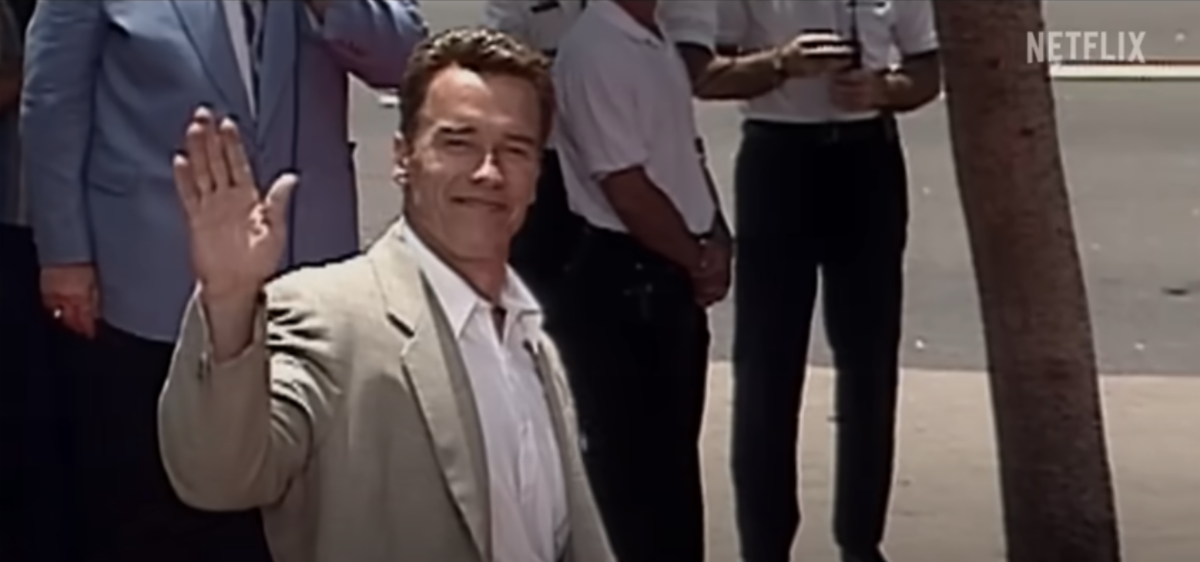
Arnold: Fascinating three-part documentary on Arnold Schwarzenegger’s bodybuilding, movie, and political careers. His sheer will, determination, and chutzpah were impressive. But, perhaps just as important, was his strategic prowess.


Only Murders in the Building (Season 1-3): Tanya and I really enjoyed this comedy-mystery series starring Steve Martin, Martin Short, and Selena Gomez. However, I’m not sure what to make of Tanya thinking that Steve Martin’s character (75 years old) and I have a lot in common. For now, I’m taking it as a compliment…


Welcome to Wrexham (Seasons 1 and 2): We also power watched the first two seasons of the docuseries on the Welsh football team Ryan Renolds and Rob McElhenney recently purchased. We’ve watched a number of sport docuseries - this is the best by far.


Citizen Jane: Battle for the City: Listening to The Power Broker led me to watch this documentary on the life of Jane Jacobs and her fight against Robert Moses over roads that would have ruined several neighbourhoods.


Founders #327 Ted Turner: The fascinating life of Ted Turner.


Aswath Damodaran on Invest Like the Best (Part 1 & Part 2): Really good conversation with Aswath Damodaran on investing, valuations, and how to look at companies.

SELECTED INSIGHTS


“Another thing that I found is an intense interest of the subject is indispensable if you are really going to excel. I could force myself to be fairly good in a lot of things, but I couldn’t be really good in anything where I didn’t have an intense interest. So to some extent, you’re going to have to follow me. If at all feasible you want to drift into doing something in which you really have a natural interest.”

-      Charlie Munger


“When meeting someone new, try to find out what formative experience occurred in their lives before they were 17. It is my belief that some important event in everyone’s youth has an influence on everything that occurs afterwards.”                                                                                   

-      Byron Wien from his 20 Life Lessons

-       

“Easy money is the great cause of over-borrowing. When an investor thinks he can make over 100 per cent per annum by borrowing at 6 per cent, he will be tempted to borrow, and to invest or speculate with borrowed money.”                                                                    

-      Edward Chancellor, The Price of Time

Matthew Lekushoff
416-777-6368
matthew.lekushoff@raymondjames.ca
Subscribe to My Newsletter
 
Twitter  Linkedin  Facebook  
This provides links to other Internet sites for the convenience of users. Raymond James Ltd. is not responsible for the availability or content of these external sites, nor does Raymond James Ltd endorse, warrant or guarantee the products, services or information described or offered at these other Internet sites. Users cannot assume that the external sites will abide by the same Privacy Policy which Raymond James Ltd adheres to. The views of the author do not necessarily reflect those of Raymond James. This article is for information only. Raymond James Ltd. Member-Canadian Investor Protection Fund. Unless otherwise mentioned, all market returns are sourced from Thompson One.