|
LearningToGo Newsletter - Vol. 2, No. 27 - October 14, 2016
|
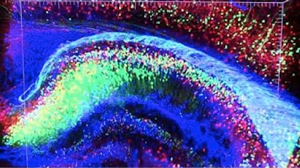
For the past decade, advances in neuroscience have shed new light on how the brain learns. While this science is still in its infancy and there are more questions than answers right now, many teachers, instructional designers and trainers are implementing brain-aware techniques into their work as educators. Yet a quick review of the top 20 sales programs in 2016 offers pretty much the same solution selling approach that has been in vogue for decades. While the rest of the education and training profession is finding new ways to apply the expanding understanding of how brains work, sales trainers often seem stuck in the past. This would be fine if the selling techniques of the past were actually working, but new research shows that people often make a major purchase decision in spite of the sales person, rather than because of him or her. If you want to give your organization a competitive advantage, this post provides some practical applications of brain science you can use today to revitalize your sales training programs. The full article is posted here, on the latest issue of
eLearning Magazine.
|
Seeing the Brain Through the Eyes of an Artist: Elizabeth Jameson
 There is mounting evidence that performance arts enhance brain development at any age. A
recent study
found that dancers and musicians share very similar brains - they have more connections between different regions of the brain than the average non-artist. Over time, tasking the brain to create music or art requires the use of a large percentage of the brain, so these areas develop thicker interconnections, which enhances brain processing power and creativity.
Read more...
There is mounting evidence that performance arts enhance brain development at any age. A
recent study
found that dancers and musicians share very similar brains - they have more connections between different regions of the brain than the average non-artist. Over time, tasking the brain to create music or art requires the use of a large percentage of the brain, so these areas develop thicker interconnections, which enhances brain processing power and creativity.
Read more...
|
LearningToGo Podcast: Elizabeth Jameson
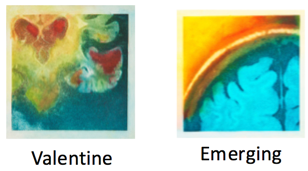
Elizabeth Jameson is an artist who specializes in the intersection of art and science. She creates with the intent of transforming how people view the human experience of disease, allowing room for celebration of the imperfect body. Her practice emerged after she was diagnosed with Multiple Sclerosis. Undergoing numerous brain scans to track the progression of the disease, she developed a deep fascination with the architecture of the brain.
|
Featured Infographic
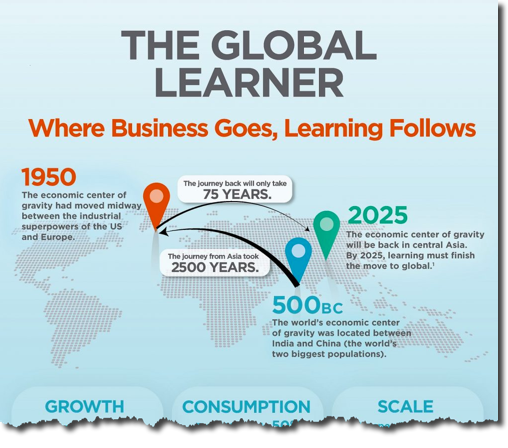
The Global Learner
If you are responsible for deploying training in multiple countries, cultures and languages, you may find some useful information in this week's infographic, produced by
BiWorldwide, a training company in the UK.
This clean and attractive infographic features an interesting case study at the bottom of the document.
(Click image to view full infographic)
I can recall a few projects that reached similar scope, so it is not unusual in global deployments to run into many different devices, languages and other considerations.
|
Upcoming Events
Nov 3-17, 2016
Essentials of Brain-Based Learning
(Live online: Nov 3-17 & Dec 1-15, 2016 and more)
If you could understand what was happening in the brains of your target audience, would you be a more effective trainer, designer, consultant, or leader? Thanks to recent advances in neuroscience, learning and talent development professionals now have an opportunity to alter their approaches to change management, leadership development, training, and instructional design. Learn how the brain receives, encodes, and retrieves information to construct knowledge, and use these insights to improve your learning programs.
Read more...
If you're a member of ATD, remember that you get a nice discount on this and other ATD courses. (And if you're not a member, this might be a good reason to
join.)
All scheduled dates for Essentials of Brain-Based Learning course:
- Nov 3-17, 2016
- Dec 1-15, 2016
- Feb 9-23, 2017
- May 4-18, 2017
- Sep 7-21, 2017
- Oct 26-Nov 9, 2017
|
y
common knowledge
that there are not enough people to fill the gaps left by the Baby Boomers as they exit the workforce. While most research and articles which address this looming crisis look to overcoming the
skills gap
, this paper looks beyond entry level to the leadership level.
Read more...
|
|
|
|
|