|
Dear Colleagues and Friends,
We hope you are all doing well! Planning is in full swing for our 2021 events and we are excited to share information with you about these events. Our Spring Longevity Academy kicks off in April and the What's Next Longevity Venture Summit will take place June 16-17. See below for a complete list of events and their dates.
The Innovator's Pitch Challenge (IPC), part of the Longevity, Health & Innovation Conference, March 18-19, is an opportunity for early stage companies to gain additional exposure to conference attendees, pitch directly to a panel of relevant investors, and participate in a live Q&A session. More than 100 investors participate in this conference and the curated database means investors and start-ups are appropriately matched before meetings are set.
|
|
|
|
|
|
|
What's Next: Living Longer Better Smarter Podcast
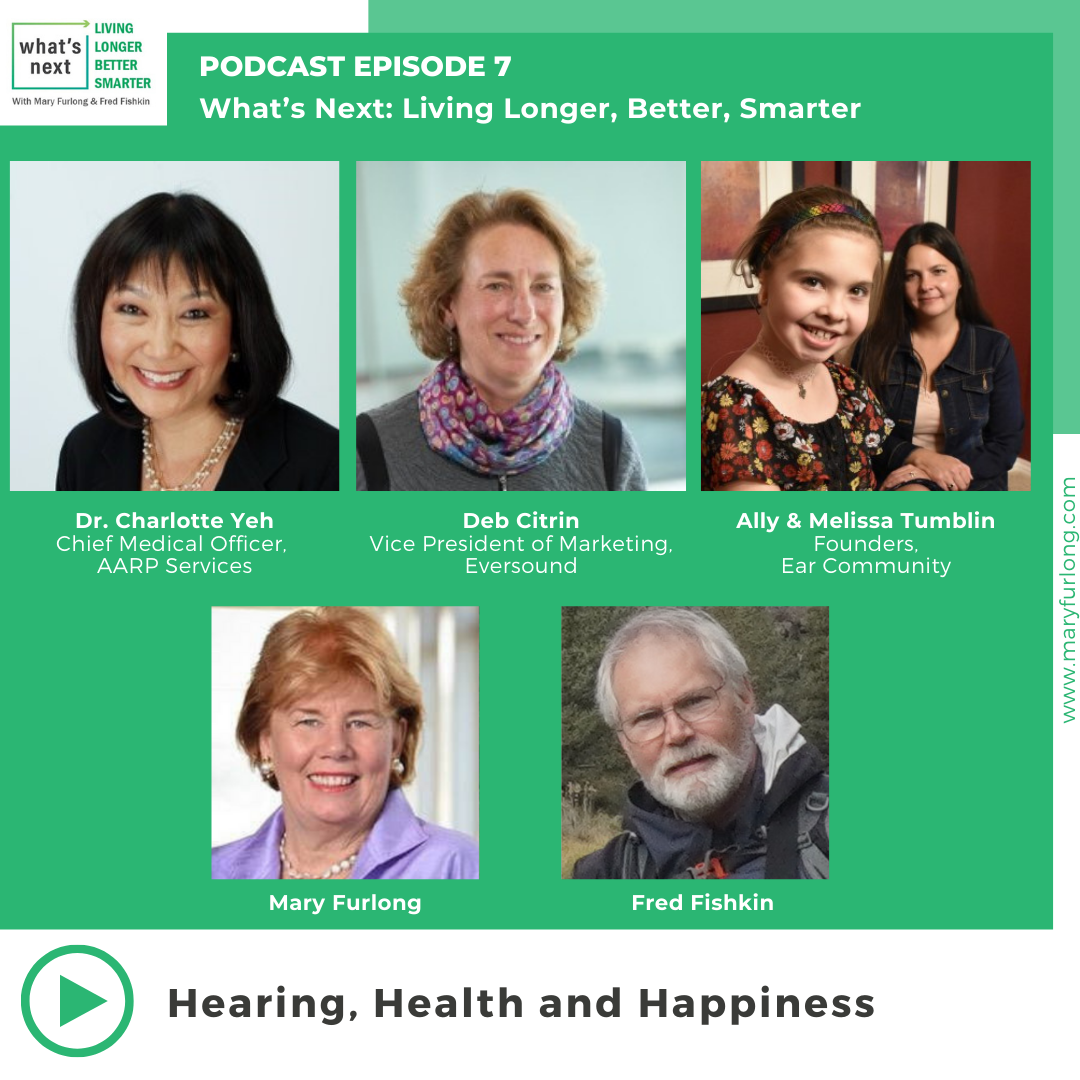
Episode 7: Hearing, Health and Happiness
According to the Mayo Clinic, about a third of people between 65 and 75 in the U.S have some degree of hearing loss. That percentage reaches 50 percent for those over 75. In this episode, Mary and Fred talk with knowledgeable guests about the different aspects of hearing loss and the assistive devices available.
Part 1: Dr. Charlotte Yeh, Chief Medical Officer for AARP Services, and Deb Citrin, Vice President of Marketing, for EverSound, will discuss the challenges faced by individuals with hearing loss, the pandemic's effects, and the options that are available. Part 2: 11 year old Ally Tumblin and her mom, Melissa Tumblin, will share their story, describe how Ally's Act, H.R. 477 and S. 41 came to be, and recount founding Ear Community, a global nonprofit for individuals with Microtia and Atresia.
Ally and Melissa are the inspiration behind Ally's Act, H.R. 477 and S. 41, the national bills before Congress ensuring private insurance companies provide coverage for osseointegrated hearing devices (OIDs), including Bone Anchored Hearing Aids (BAHA) and Cochlear Implants (CI), from birth to age 64, including services, upgrades, surgery, and associated costs. |
|
Necessity for Reform in America's Nursing Homes
COVID-19 vaccines offer hope
Residents of nursing homes & long-term care facilities are less than 1% of the U.S. population but more than a third of COVID deaths. Vaccines offer hope, but as AARP EVP & Chief Advocacy and Engagement Officer Nancy LeaMond writes, more must be done to ensure the health and safety of vulnerable seniors now and into the future. To read more about the necessity for reform in America's Nursing Homes visit AARP.
|
|
iN2L's Bridging the Loneliness Gap Report
Comparing perspectives before and after the pandemic
iN2L, the leading provider of person-centered digital engagement to the senior living market, released a research report in December 2020 and spoke about it on an MFA panel in January. Bridging the Loneliness Gap examines the experiences and perspectives of three groups before and during the pandemic: senior living residents, residents' family members, and senior living community leaders. Find the full report here.
|
|
Why You Should Sit Less and Stand More
Article written by WAHVE's Sharon Emek, Ph.D., CIC
Sharon Emek, Ph.D., CIC, the founder and CEO of Work At Home Vintage Experts (WAHVE), wrote an article on, Why You Should Sit Less and Stand More. The article discusses the negative effects sitting can have on the body including anxiety and depression, poor posture, and weakened muscles. The article also gives 10 tips to combat these negative effects. Read the article here.
|
|
Embodied Labs Releases Immersive Training on Social Isolation
The virtual reality-based experience is now available to all subscribers
As the pandemic continues, customers of Embodied Labs have already spent hours training on how to identify and mitigate the effects of social isolation in older adults. In the new "Frank Lab," released this past December, trainees embody the 1st person perspective of a 72-year-old man experiencing many of the social, physical, emotional, and environmental factors that can lead to social isolation. Preliminary data shows that people who do this training feel more confident in identifying social isolation factors in older adults, and more prepared to take action to alleviate social isolation in their own communities. Learn more here or email info@embodiedlabs.com.
|
|
Voice and Video Caregiving Technology Strengthens Stressed Healthcare Teams
Constant Companion provides technical support for older adults
New technologies that support caregivers and provide added assistance to people they serve, like Constant Companion, are growing in popularity. Constant Companion provides customized smart speakers, available with or without video, that enable voice-operated access to entertainment (music, games and stories), hands-free calls with friends and family, reminders, timers, unlimited access to information via voice-based web searches and more. The company's aim is to improve quality of life for older adults by providing the technical support, setup and training that makes these innovative technologies easier to use. Read their first article here.
|
|
MyndVR Partners with TADWA
Expands Operations to Australia, New Zealand, & Oceania
MyndVR, the premier provider of virtual reality (VR) solutions for seniors in the United States, announced today that it has signed a partnership with Technology for Ageing & Disability (TADWA), a not-for-profit enterprise that's been dedicated to making a positive difference in the lives of Western Australians since 1984.
MyndVR's partnership with TADWA marks its expansion into Australia, New Zealand, and Oceania. It will enable occupational therapists and technicians to utilize customized headsets, care tablets, and MyndVR's expansive content to help older people, people with disabilities, and their caregivers do what is important to them. Read the press release here.
|
|
Upcoming Mary Furlong & Associates Virtual Events
|
|
Books, News, and Reports
The biggest news in...
Funding:
Resources:
- The United States Centers for Disease Control (CDC) has a new web page with guidance for vaccinating the homebound.
|
|
|
|