October 2025 Canine Newsletter | |
Hi Everyone,
We just got back from a trip East, and the homecoming could not have been sweeter. Nellie and Jupiter put on their usual welcome home rodeo, and even the three cats lined up for attention. After a round of hugs and happy chaos, we poured homecoming celebratory glasses of wine and settled into chairs in the paddock, watching the horses munch hay.
Speaking of celebrations—Jim’s birthday was on the 26th of September! I managed to catch a quick video of him working with Jupiter and then with Nellie down by the pond. It’s fascinating to compare the two: you can really see the contrast in how each of them releases (or tries to hide, as in the case of Jupiter), and the way Jim’s steady presence keeps them “in the neighborhood,” as he likes to say.
First up: Jupiter
| | |
The techniques that Jim uses here could really help your dog that may have hind-end stiffness. Dr. Robinett talks below about dogs brought into her practice that "bunny hop" behind. She suggests that it starts with stiffness and can progress into more serious territory, such as luxating patellas, which in layman's terms means the dog’s kneecap slipping out of alignment in the knee joint of the hind leg. Yipes!
Both Nellie and Jupiter play hard, so keeping those muscles and joints soft and moving is the best practice.
Lastly, as October 1 - 7 is officially National Walk Your Dog Week, take a quick look below at how you can incorporate bodywork on your walk. It's a great idea, especially for your older companions and those recovering from veterinary care.
Until next month,
Smooches to those four-footed animals that we all love,
Conley
| | Turn Every Walk into Bodywork | | |
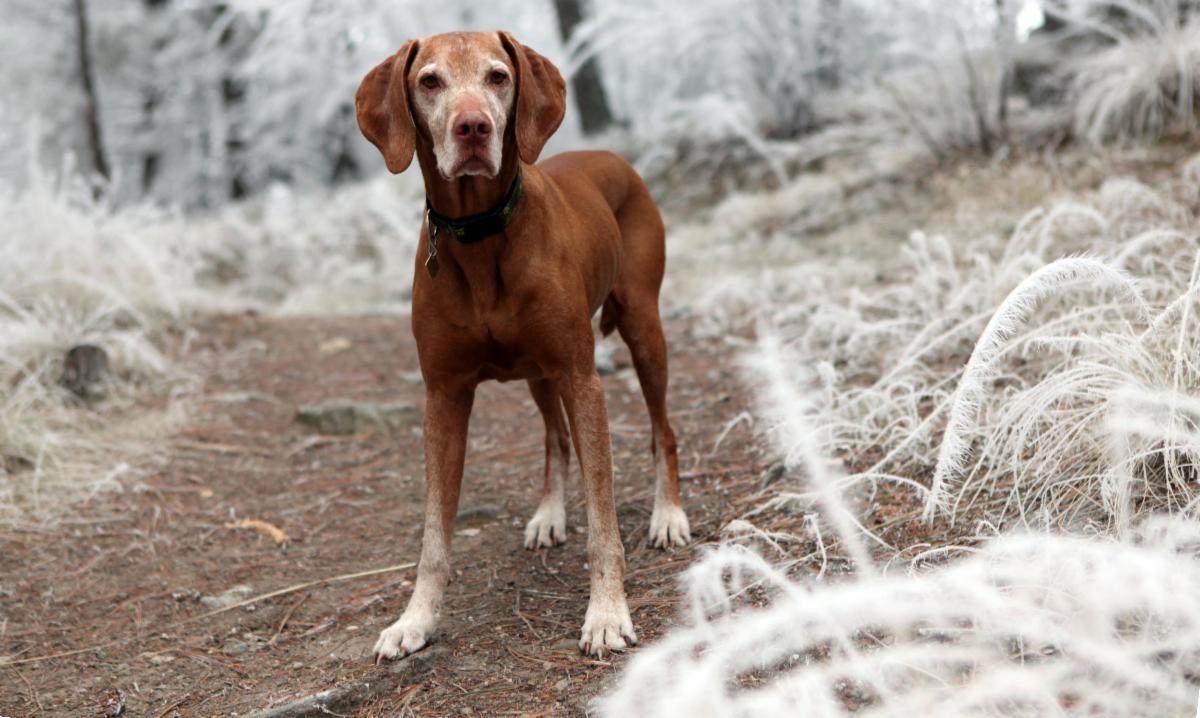
National Walk Your Dog Week is a reminder that walking doesn't need to just be about exercise, but is an opportunity to connect with them and spot any tension or stiffness.
Here are some ways you can bring bodywork and awareness into a walk:
Pre-walk check-in:
If you’ve got a golden oldie, a dog recovering from injury, or one with a current issue, spend a few minutes on gentle Masterson Method work before you hit your stride. Even for a healthy dog, it sets a clear line of communication before you’ve left the house. Start with the Bladder Meridian Technique or Search, Response, Stay, Release (SRSR), and notice any areas that might be holding tension. If your dog has a stiff back and you’re familiar with movement techniques, try adding a little Body Rocking to introduce gentle motion through the back.
On‑walk assessment:
Most of us have a routine when we head out for a walk with our dog, but this is an opportunity to really focus on how they're moving. Use each walk to observe movement: do they have an even stride on each leg, is there a toe that drags a little, does their head bob when one leg hits the ground? Knowing your dog’s “normal” helps you recognize small changes early, and you can practice some bodywork to help prevent a niggle from becoming a problem.
| | |
Letting the nose do the work:
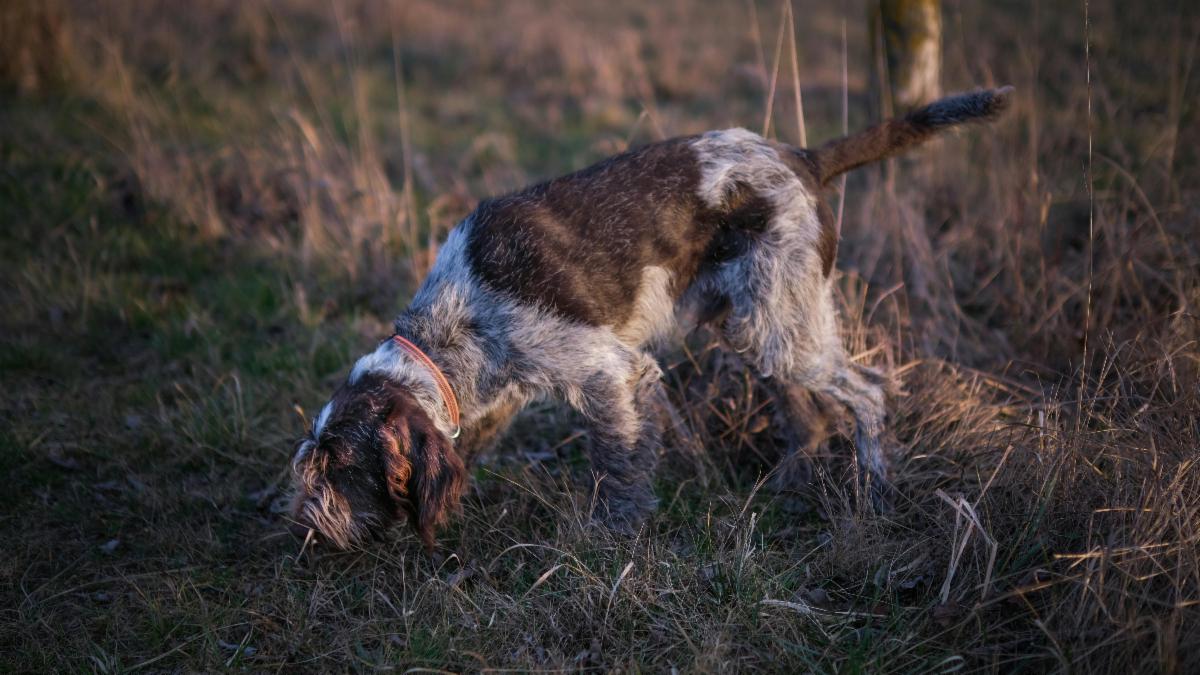
Dogs have a sense of smell that's up to 100,000 times more sensitive than ours. Building in time for 'sniff-stops' and allowing your dog to literally 'smell the roses' provides crucial mental stimulation, acts as a stress reliever, and allows them to process their environment.
| | | |
On-walk reset:
If your dog is nervous, or you're trying out a new route, take a moment to help both of you relax and reset. Find a place to pause and sit, and do some SRSR along your dog's chest or neck (or wherever they might be tight) and match your breath to theirs. When your dog blinks/sighs, resume your walk at a gentle pace.
Post-walk cooldown:
For those of you with active dogs (we're talking to you collies and vizslas!) or you've been on a more strenuous route, it's useful to spend a few moments just checking in with your dog when you get home. Stiffness doesn't always show up immediately, so observe how they're getting up and moving around a few hours afterward.
| |
Dr. Robin Robinett, DVM
From Beyond Dog Massage: Pages 173-175
"Bunny-hopping or Skipping with Hind Legs"
| | |
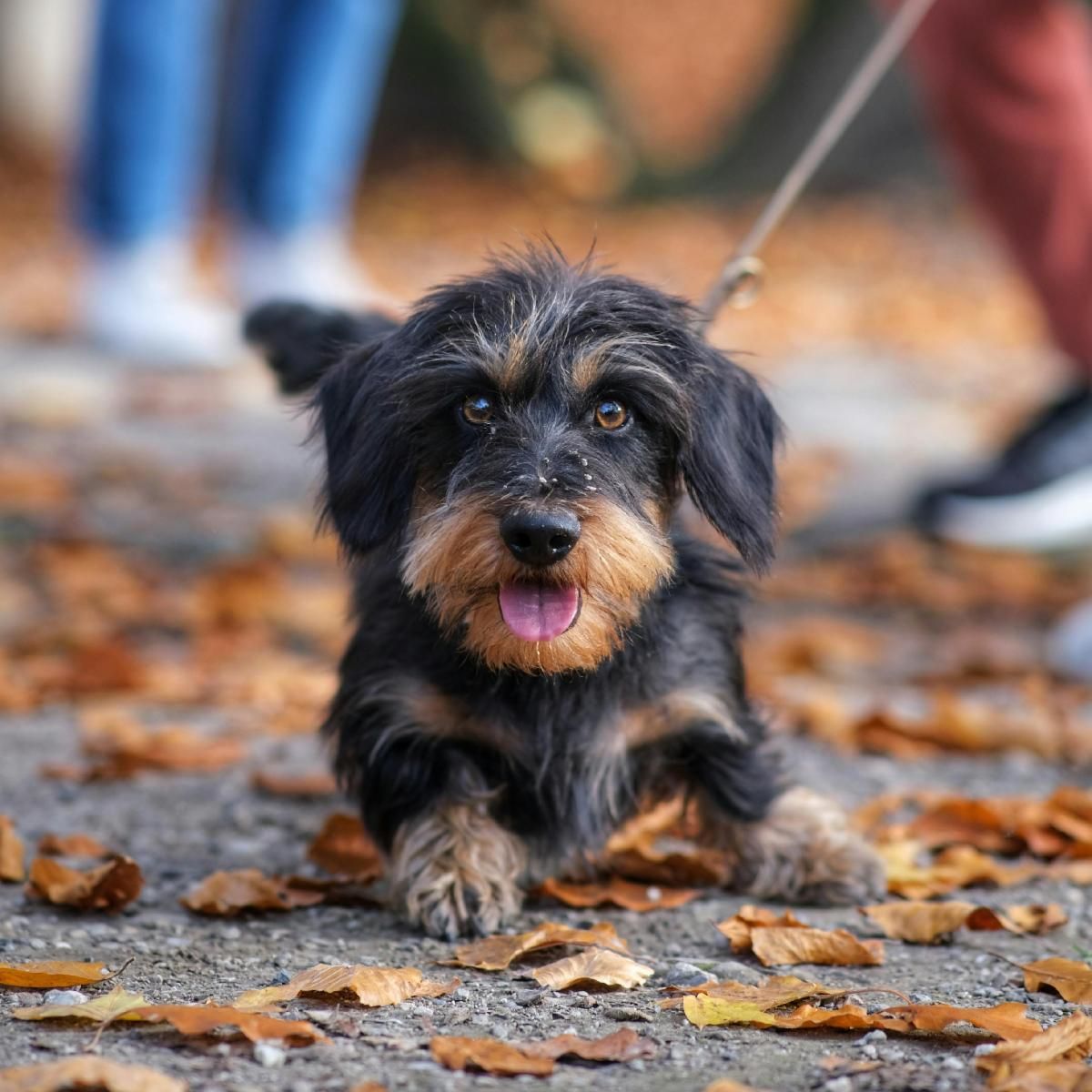
Bunny-hopping or skipping is much more common in toy breeds and other smaller breeds of dogs and is due to a hind-end problem. This is the result of a condition called medially luxating patella (MPL). Over the years of working on many dogs with this condition, and successfully treating them without surgery, I have found that this condition develops over time due to muscle and postural imbalances, resulting in muscle tension and compensations pulling the patella out of place. Using techniques to release muscle tension in the hind end helps to improve - or may correct - this condition, depending on how long it's been going on.
Regular bodywork to relax the hind end, along with exercises to strengthen the outer thigh or hip and stifle flexor muscles, helps these dogs immensely and may prevent them from needing surgery to correct the condition.
Also, don't forget to release the occiput and atlas (the joints between the head and neck), because these dogs are often very tight and carry a lot of tension in the neck. Releasing tension in the neck and front end helps to release the hind end.
For information on techniques that can help, check out pages 173-175 in the Beyond Dog Massage book or join one of our online courses (listings below).
| | |
Question: My border collie is normally super active, but lately he seems to walk a bit more restricted in his hind leg. Can I help him regain his normal mobility using The Masterson Method?
Answer: Border Collies are enthusiastic, high-energy dogs that love to run full speed and play. Sometimes, the stifle (the dog’s equivalent of the human knee) can get sore or twisted, which affects their mobility.
The stifle is a hinge-type joint designed to move only forward and backward. Because it’s such a hard-working and delicate link in the hind limb, injuries can occur when twisting forces are applied. Careful conditioning is important to support this joint, keeping the surrounding muscles, tendons, and ligaments flexible, supple, and balanced, which helps reduce the risk of injury.
As instructor Kalin Finsand explains, using the very light mobility technique shown in this video, we can help our dogs release tension from running and playing, and prevent it from building up to the point where it could cause injury.
Pro-tip - when you have practiced reading your dog's responses a few times, try it also with your eyes closed to focus on the feel of the movement.
| | Kalin will be teaching our next Read and Release course, starting November 4. Scroll down to find out more information and to register with your dog now. | | Canine Zoom Courses for 2025 & 2026 | | |
Read and Release Courses
(First in the Series)
Read and Release is the first course to start your journey with The Masterson Method Canine Bodywork. Enjoy learning from the comfort of your home.
Students will learn to recognize and use their dog’s visual responses to find and release tension. These visual responses give you insights into your dog’s physical and emotional needs. In this course, you and your canine companion will build connection, enhance movement, and improve comfort.
Tuesdays at 6:00 pm CT, November 4, 11, 18, 2025, with Kalin Finsand
Saturdays at 11:00 am CT, January 17, 24, 31, 2026, with Amelia Nalli
| | |
Introducing Movement Courses
(Second in the Series)
Introducing Movement is your next step after completing the Read and Release Course.
Adding to the foundation of using touch effectively and understanding what your dog is communicating, you are ready to start applying Masterson Method Movement Techniques. In this course, you will learn all movement techniques from the Beyond Dog Massage book and help your dog with easier and more natural movement.
Saturdays at 11:00 am CT, October 4, 11, 18, 2025, with Stef Watts
Saturdays at 11:00 am CT, February 7, 14, 21, 2026, with Kalin Finsand
| | If the course you are interested in is full, please email dog@mastersonmethod.com and we will add you to the wait list. | | | | |