June 2026 Canine Newsletter | | |
Hi Everyone,
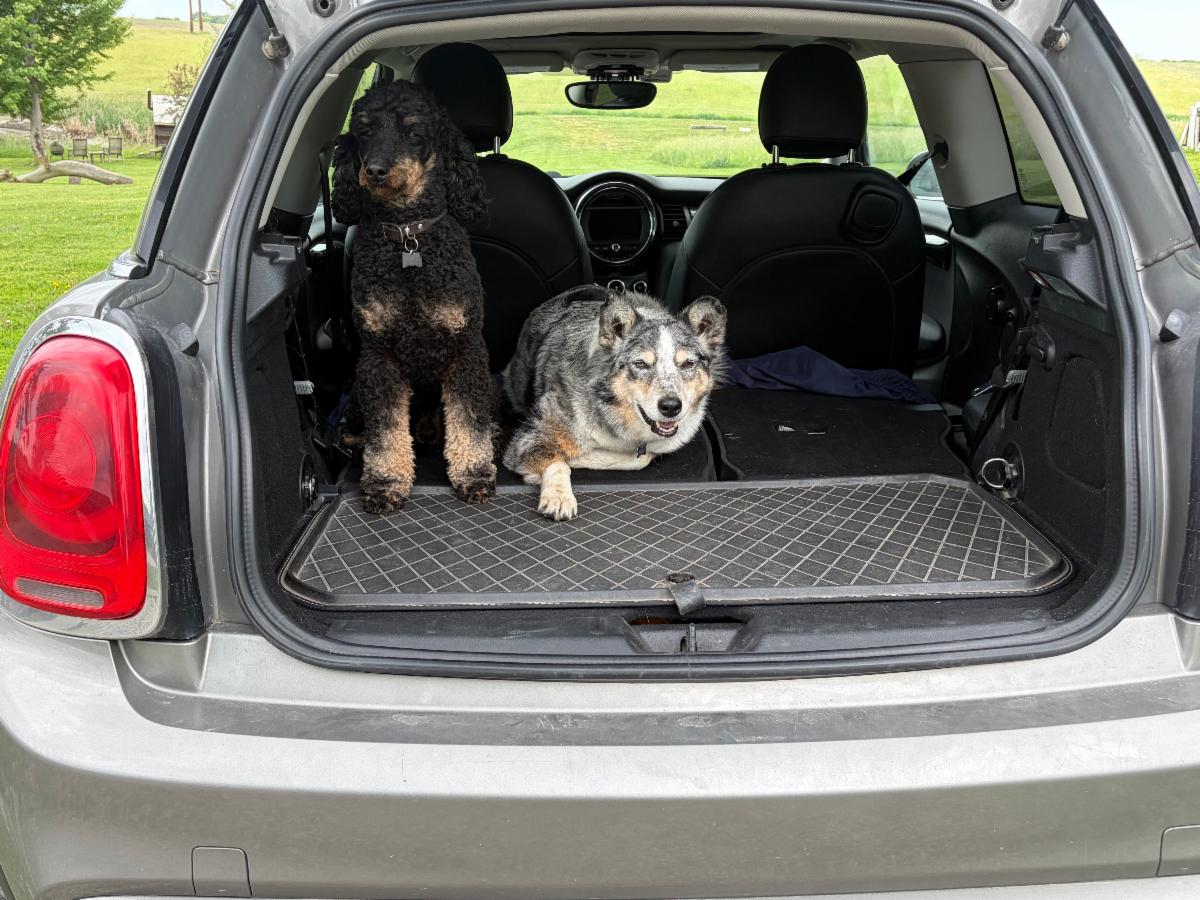
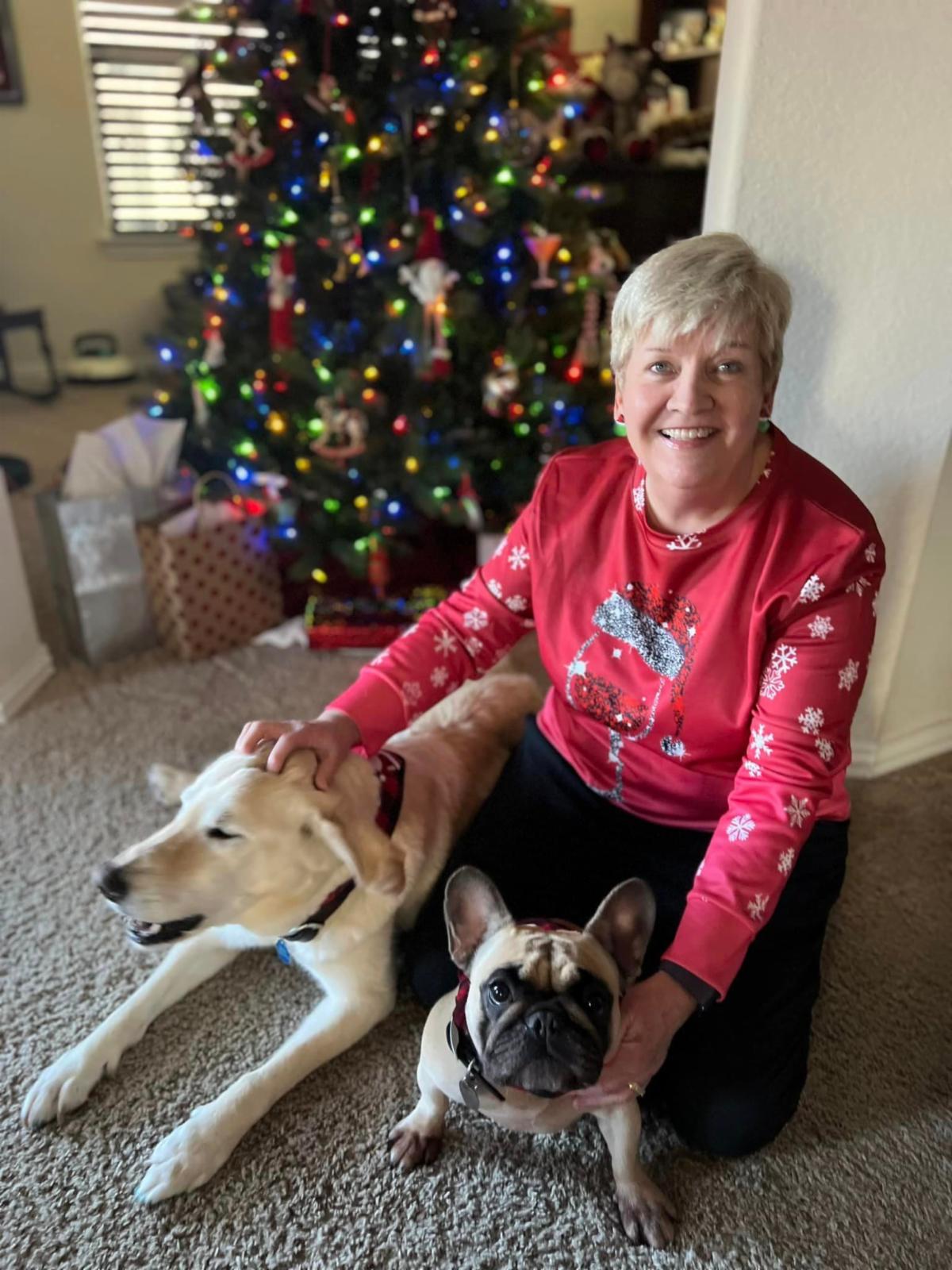
Just arrived home from my trip to the East coast! As you can see below, it was wonderful to have this reception!
| | |
The trip east to visit family was wonderful. And as much as I missed Jupiter and Nellie, I have to admit it was nice to travel without worrying about their needs.
Since it’s vacation time, I thought I’d share a few resources and things to think about when traveling with your dog.
First up: Flying with your Pup.
As you may remember, Jupiter came to me by air. I bought him from a breeder in California, and thankfully, the breeder was very accommodating. She handled the vet check and pulled together the paperwork Jupiter needed for the flight.
Below is a video explaining the process your dog may go through if they have to fly in cargo.
Please think carefully before choosing this option. Flying in cargo can be very stressful for a dog, and to my knowledge, only a few airlines are still willing to transport pets this way. For larger dogs, especially nervous dogs, older dogs, or dogs with health issues, driving or making other travel arrangements may be the kinder choice.
| | |
Flying with a dog in the passenger cabin is very doable, but airlines have become stricter in recent years. In most cases, only small dogs are allowed in the cabin, and they must travel in an airline-approved carrier that fits under the seat in front of you. Most airlines have a combined weight limit for the dog and carrier, usually between 15 and 25 pounds. Your dog must remain inside the carrier for the entire flight.
One of the most important things to know is that every airline has different pet policies. Airlines such as Alaska, Southwest, Delta, American, and United all allow small pets in the cabin, but they differ in carrier dimensions, fees, breed restrictions, and the number of pets allowed on each flight. Because airlines limit the number of pets permitted in the cabin, it is important to reserve your pet’s spot as early as possible and confirm the reservation directly with the airline after booking your ticket.
The carrier itself matters quite a bit. Soft-sided carriers are usually preferred because they fit more easily under airplane seats. Your dog should be able to stand up, turn around, and lie down comfortably inside. Many experienced travelers recommend measuring both your dog and the airline’s under-seat dimensions carefully before purchasing a carrier.
For domestic flights within the United States, health certificates are not always required, but airlines may still ask for vaccination records. International travel and flights to places such as Hawaii often require additional paperwork, including rabies certificates, microchip information, and USDA forms. It is important to check requirements well in advance because some destinations have strict animal-entry rules.
Airport security can also be stressful if you are unprepared. At TSA checkpoints, you will need to remove your dog from the carrier and carry them through security while the carrier goes through the scanner separately. Many travelers find it helpful to practice carrying and handling their dog calmly before the trip.
Flying with a pet also comes with extra costs. Most airlines charge between $95 and $150 each way for an in-cabin pet, separate from baggage fees.
| |
Traveling by Train:
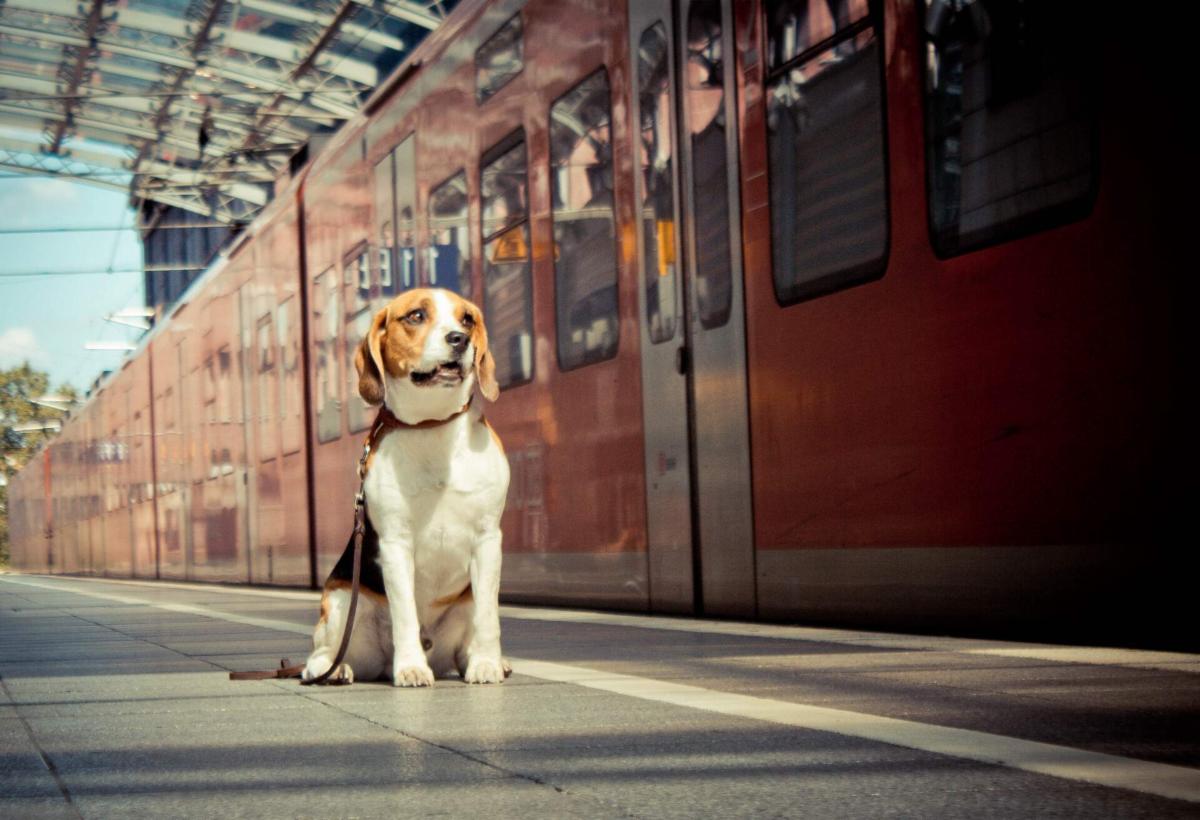
Amtrak allows small dogs and cats on many routes, with a few rules:
- Your pet must weigh 20 lbs or less including the carrier.
- They must stay in a carrier the whole trip.
- There’s usually a pet fee (commonly around $29).
- Trips must generally be under 7 hours.
- Pets are allowed in coach class on eligible trains, but not in sleeping cars or food service cars.
- Service animals are allowed separately under different rules.
Some routes and trains don’t allow pets, so it’s best to check when booking.
| |
Traveling by Bus:
Greyhound is pretty strict. In most cases, they do not allow pets on board, except for trained service animals.
That means:
- Regular dogs and cats usually cannot ride on Greyhound buses.
- Emotional support animals generally don’t count under their policy anymore.
- Service dogs are allowed with the passenger at no extra charge.
Most “pet-friendly” options are either:
- smaller regional companies,
- private shuttle services,
- charter buses,
- or city transit systems that allow pets in carriers.
Megabus, and FlixBus generally do not allow pets.
| |
Traveling by Car:
BringFido
Probably the best overall site for traveling with dogs.
Good for:
- Pet-friendly hotels.
- Dog friendly camping.
- Exact pet fees and weight limits.
- Dog-friendly restaurants and attractions.
- Reviews from other dog owners.
What makes it useful:
- You can filter by number of dogs and size.
- They often show rules other sites hide.
- Customer service will sometimes call hotels for you.
| |
Hotels?
PetsWelcome
Good for:
- Independent motels.
- Smaller roadside hotels.
- Budget-friendly places.
TripAdvisor + “pet friendly”
Useful because reviews mention:
- whether staff were actually dog-friendly.
- nearby grass areas.
- noise levels.
- cleanliness.
Airbnb
Good if you need a fenced backyard.
| |
Best Apps for Dog Bathroom/Exercise Stops
Sniffspot
Like Airbnb for private dog yards. Private spots you can rent for your dog to play safely.
Great if:
- your dog is reactive.
- you need fenced space.
- you want a safe off-leash break.
AllTrails
Good for finding:
- short walks.
- dog-friendly parks.
- easy nature stops.
| | |
Jim and I found that our dogs actually traveled very well. Most of the time they simply slept in the car and were happy to stop occasionally to stretch their legs and sniff around a bit before hopping right back in.
We usually planned our family trips during the spring or fall when the weather was cooler. That made it much easier if we needed to leave the dogs in the car briefly with the windows open or cracked while we stopped for a meal.
Traveling with dogs does add extra work, though. Along with your own luggage, you’re also packing dog food, bowls, leashes, medications, toys, and blankets to protect hotel furniture. And of course, there’s no sleeping in when you have dogs that need an early morning walk!
General tips we have found:
- Use Google Maps or Roadtrippers for routing.
- Use BringFido for overnight stays.
- Use iExit during the drive.
- Keep backup hotel options bookmarked.
- Target hotel chains known to accept dogs.
A few practical tips:
- Book ground-floor rooms when possible.
- Carry vaccination records.
- Bring a portable water bowl.
- Stop every 2–4 hours for longer trips.
- Search “dog park near me” about 30 minutes before stopping.
- Bring "chuck it" to throw balls or frisbees for the rambunctious dogs that need to let off some steam.
| | |
I hope this gives you a helpful starting point for traveling with your dogs, whether you’re heading across the country or just out for a weekend getaway.
Until next month, I’ll be soaking up some quiet time at home with my two pups.
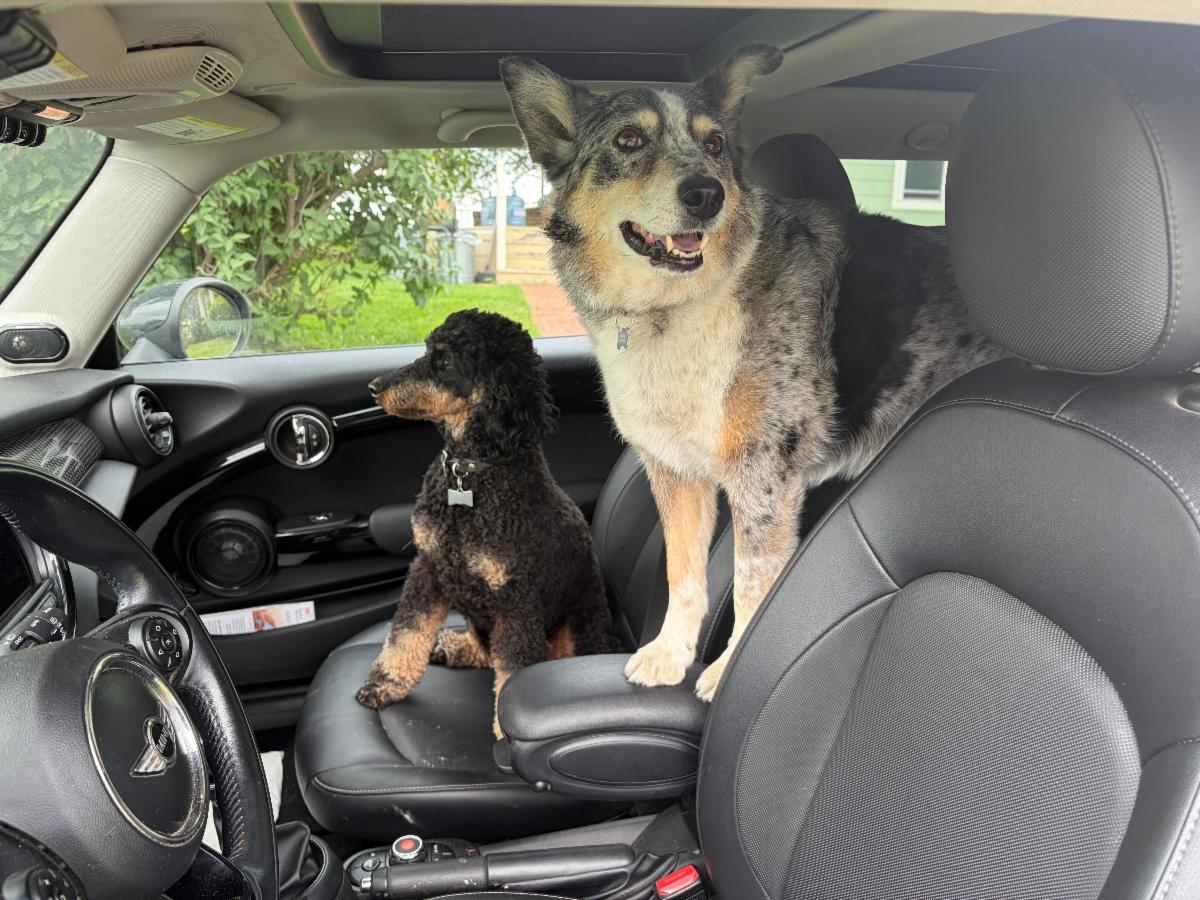
Here’s to safe travels, wagging tails, and making good memories! And, if anyone is curious, yes, we do travel with the dogs in my Mini Cooper!
Conley, Jupiter and Nellie
| |
Girl Scouts Discover Canine Communication, Bodywork, and Basic Training
Lori Thompson, MMCP Canine,
Shared With Us Her Day Demonstrating
the Masterson Metthod®
|
| |
Lori Thompson, MMCP - Canine, shared with us her day demonstrating the Masterson Method.
"Recently, I had the pleasure of introducing a local Girl Scout troop, ages 5–12, to The Masterson Method as part of their work toward earning an Animal Badge.
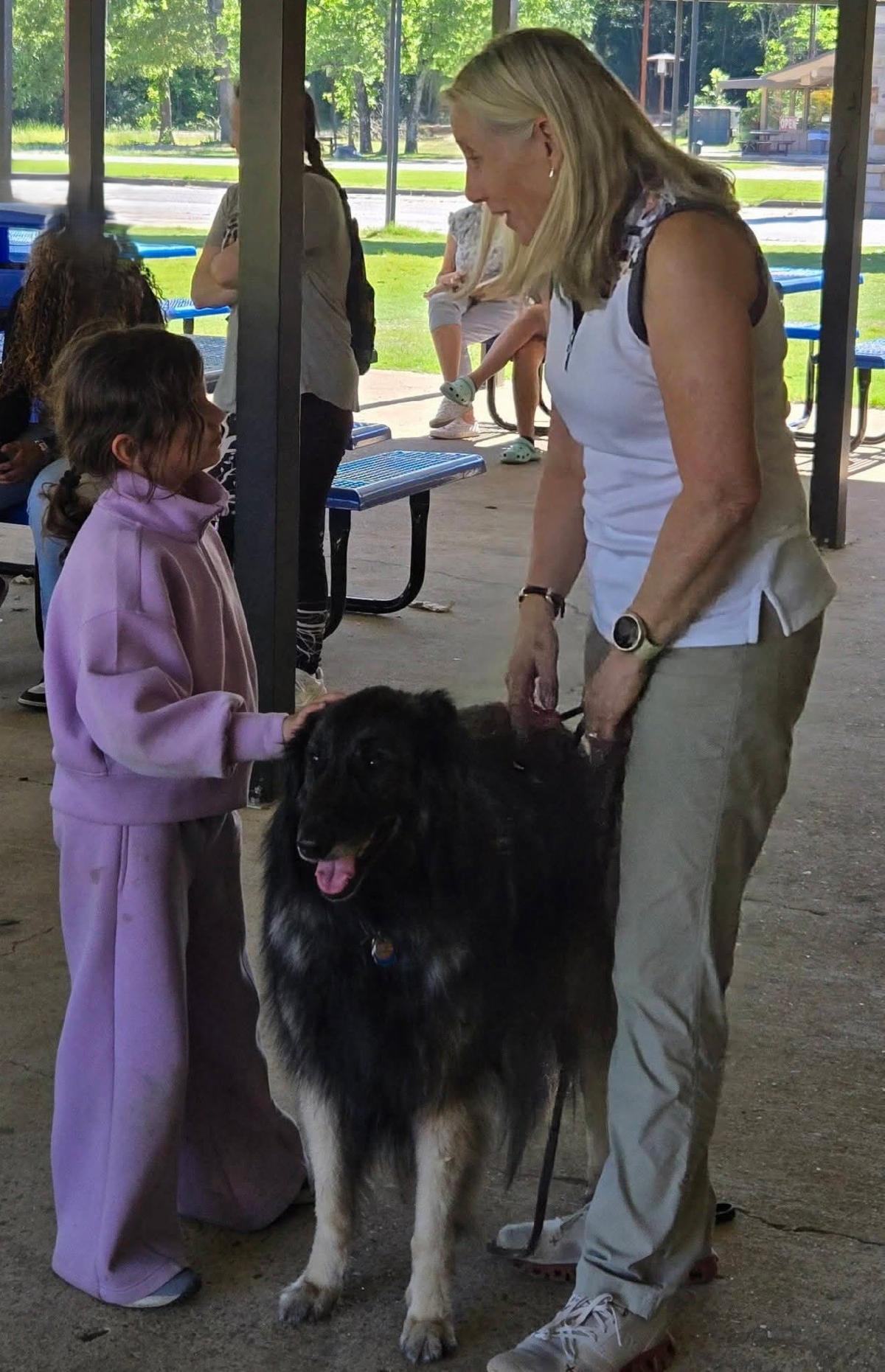
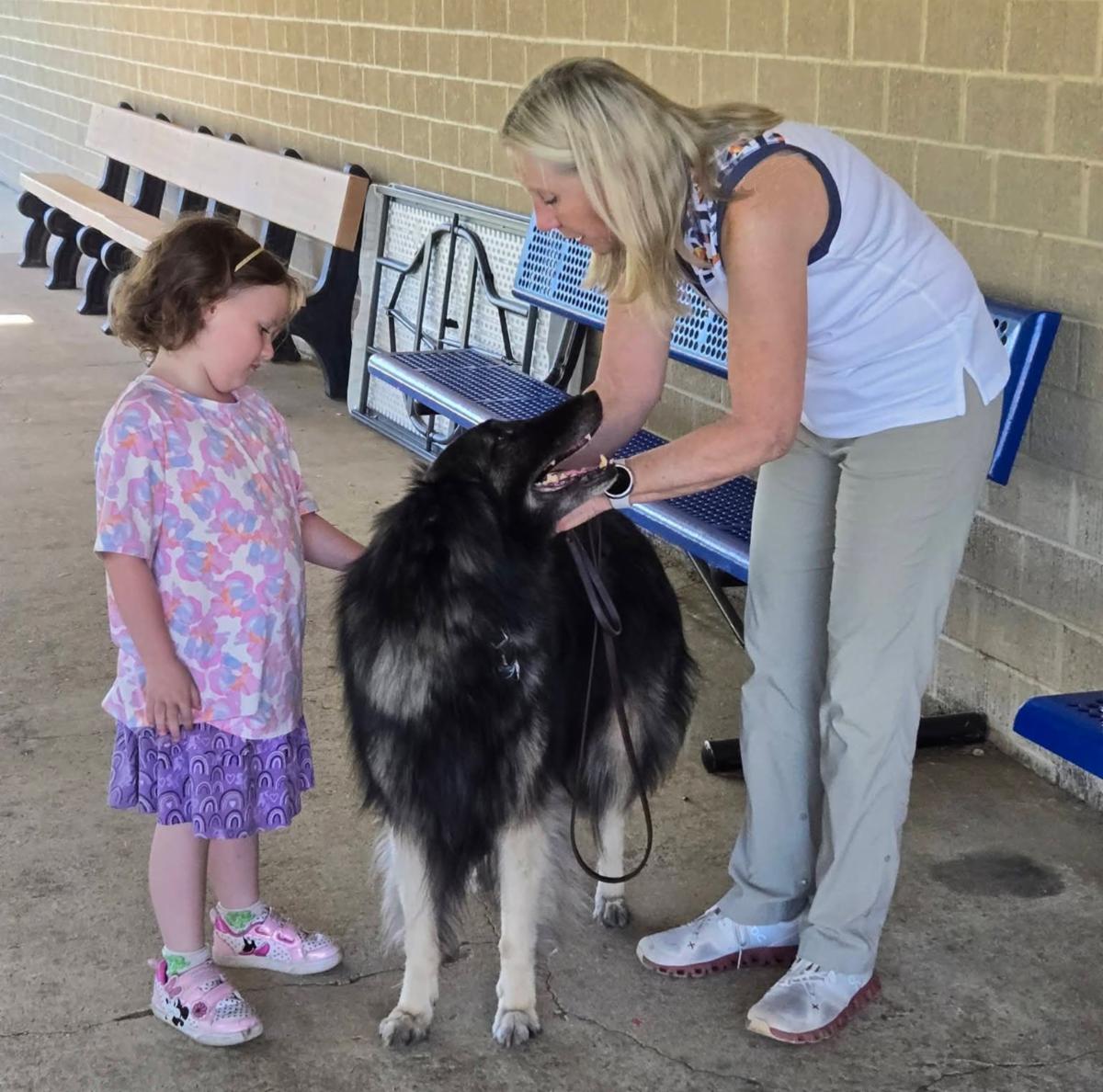
To give the girls a broader understanding of responsible dog ownership, I invited my friend Mary Figueras, a dog trainer, to demonstrate basic training with her dog, Schafer. We both believe that well-trained dogs have a better chance of living happy lives in loving forever homes. Mary and Schafer were an instant hit with the troop, and Schafer happily soaked up every bit of attention.
| | |
The girls learned that while dogs may recognize some spoken words, they communicate primarily through body language. Body posture, ear and tail position, facial expressions, blinking, yawning, and even changes in breathing all tell us something about how a dog is feeling and what it is trying to communicate.
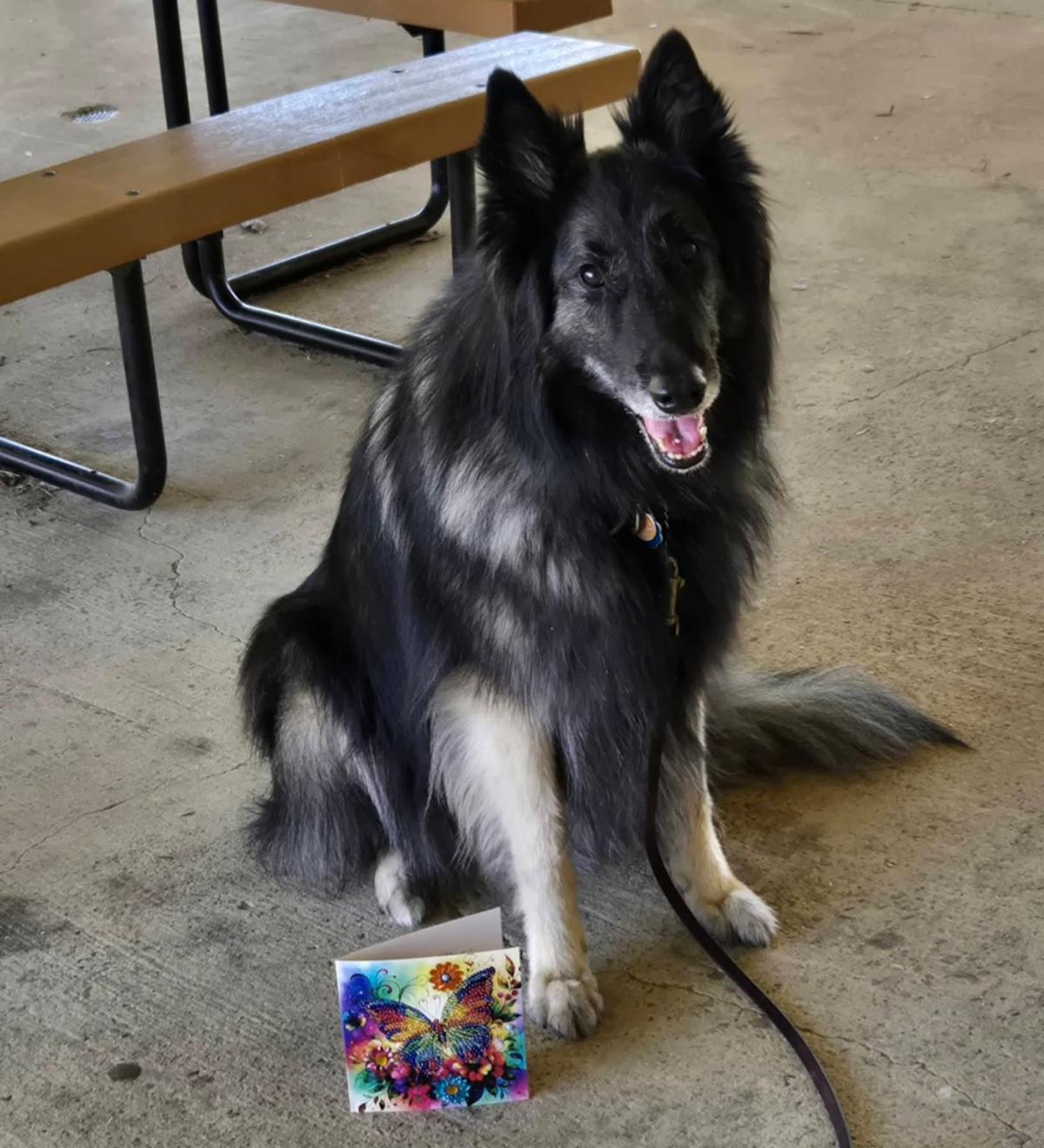
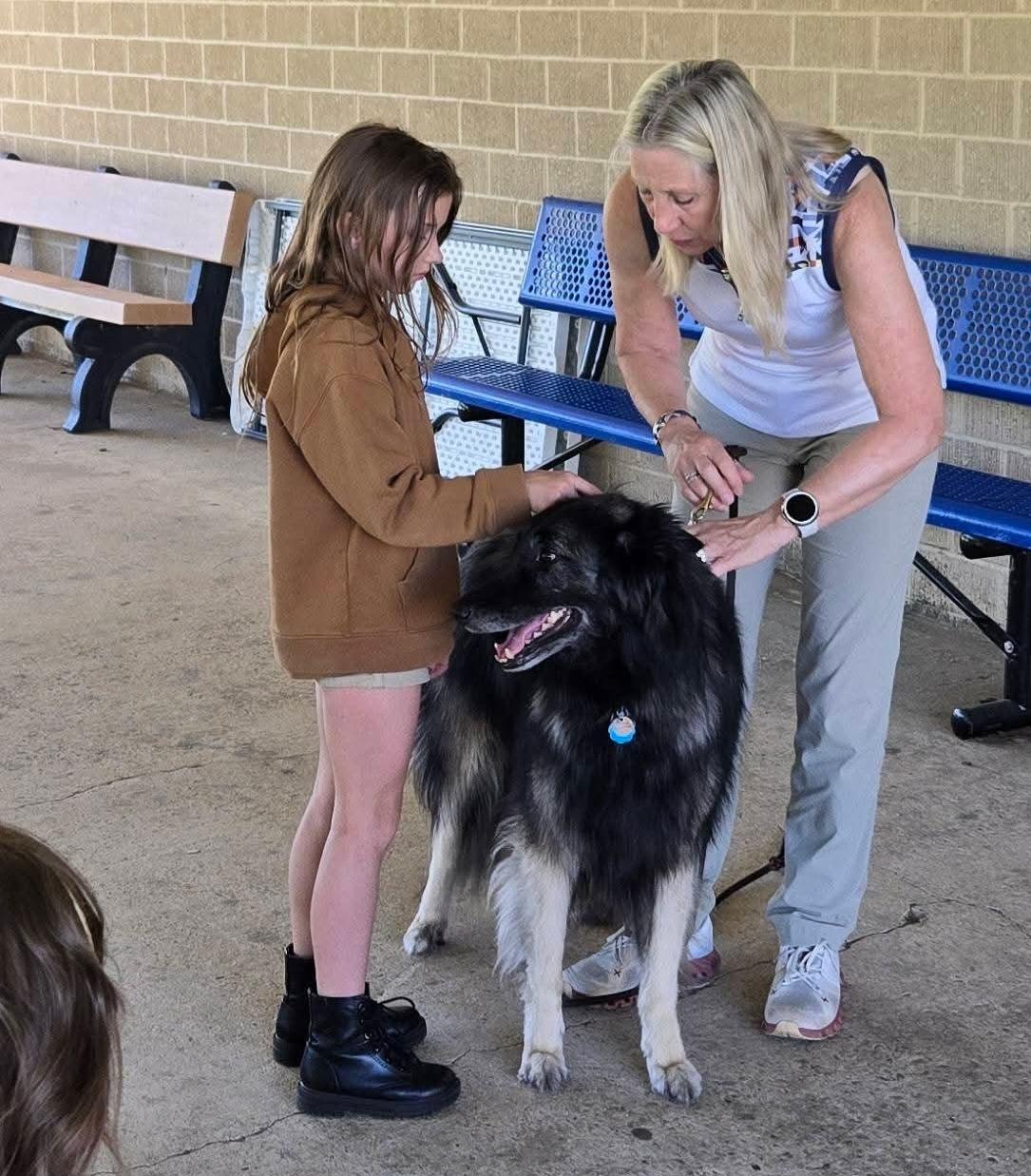
The girls were especially excited to meet Schafer, a Belgian Tervuren who competes in Rally, Agility, and Obedience. Before any petting began, Mary explained how to safely approach an unfamiliar dog. Together, the troop discussed why it is important to ask an adult first, check with the dog’s handler, and allow the dog to choose whether to come closer rather than the person rushing in.
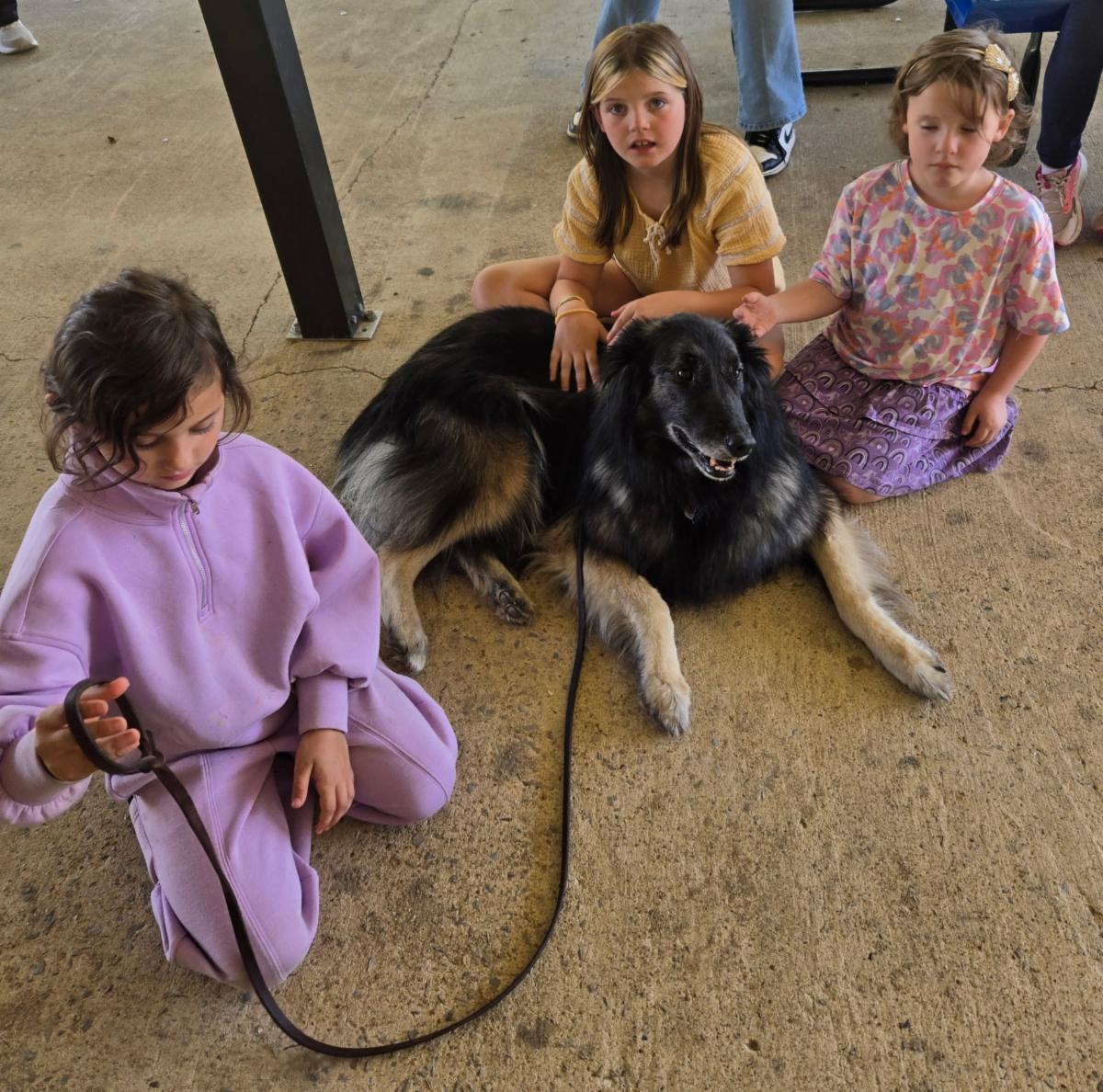
The troop then put those lessons into practice by observing Schafer’s body language and greeting him one at a time. Each girl approached calmly, paused, and waited respectfully, helping Schafer feel comfortable and making the interaction a positive one for everyone.
After the excitement of meeting and petting Schafer, the girls learned a few basic facts about a dog’s body:
- 320 bones that make up the skeleton, and the bones allow the dog to stand, jump, and play.
- Over 300 joints.
- Depending on the breed 600 – 700 muscles that help them run, jump, and play.
Next, we talked about how dogs use their muscles during play—whether tugging, chasing a ball, or, in the case of many small dogs, jumping on and off furniture. All of that movement can leave muscles needing help to relax and move freely again. Before demonstrating the Bladder Meridian technique, I showed each girl what “Air Gap” pressure feels like on her hand. They were amazed that such a light touch could be used with dogs. As I demonstrated the technique on Schafer, I explained Search, Response, Stay, Release (SRSR), and the girls were able to see the changes in his body language as he offered clear responses and releases. Schafer was the perfect instructor.
After the demonstration, each girl had a chance to practice “Air Gap” pressure on Schafer. Using the lightest touch—barely grazing the ends of his coat—they were delighted to see his responses and releases for themselves. Schafer clearly enjoyed the experience, too.
| | |
Once the girls had learned about the Bladder Meridian, Mary shifted the focus to basic training and why it matters for a dog’s safety and success as a beloved family companion. She shared practical examples of how reliable obedience can protect dogs, from preventing them from running into the road to stopping them from eating dropped medication off the floor.
Mary and Schafer then demonstrated several basic skills the girls could practice with their own dogs at home. One older Girl Scout volunteered, and Mary guided her through having Schafer walk neatly at her side, switch sides, stop on command, sit, and lie down.
Mary also emphasized that positive reinforcement helps build a dog’s confidence and willingness to learn. Schafer demonstrated beautifully how both people and animals thrive in a calm, encouraging environment.
The Girl Scouts had been preparing for our visit for weeks and had already spent time discussing dog-related topics. They were eager to meet Schafer and even made homemade dog treats for him as part of their project. At the end of the visit, we each received a thank-you card that each girl had signed.
I left feeling grateful for the troop’s curiosity, kindness, and thoughtful questions. Their enthusiasm for learning about dogs and compassionate care was heart-warming, and they took an important step toward becoming confident animal advocates. Best of all, they earned their Animal Badge!"
| |
Question for Dr. Robinett, DVM
co-author of the book, Beyond Dog Massage
| | |
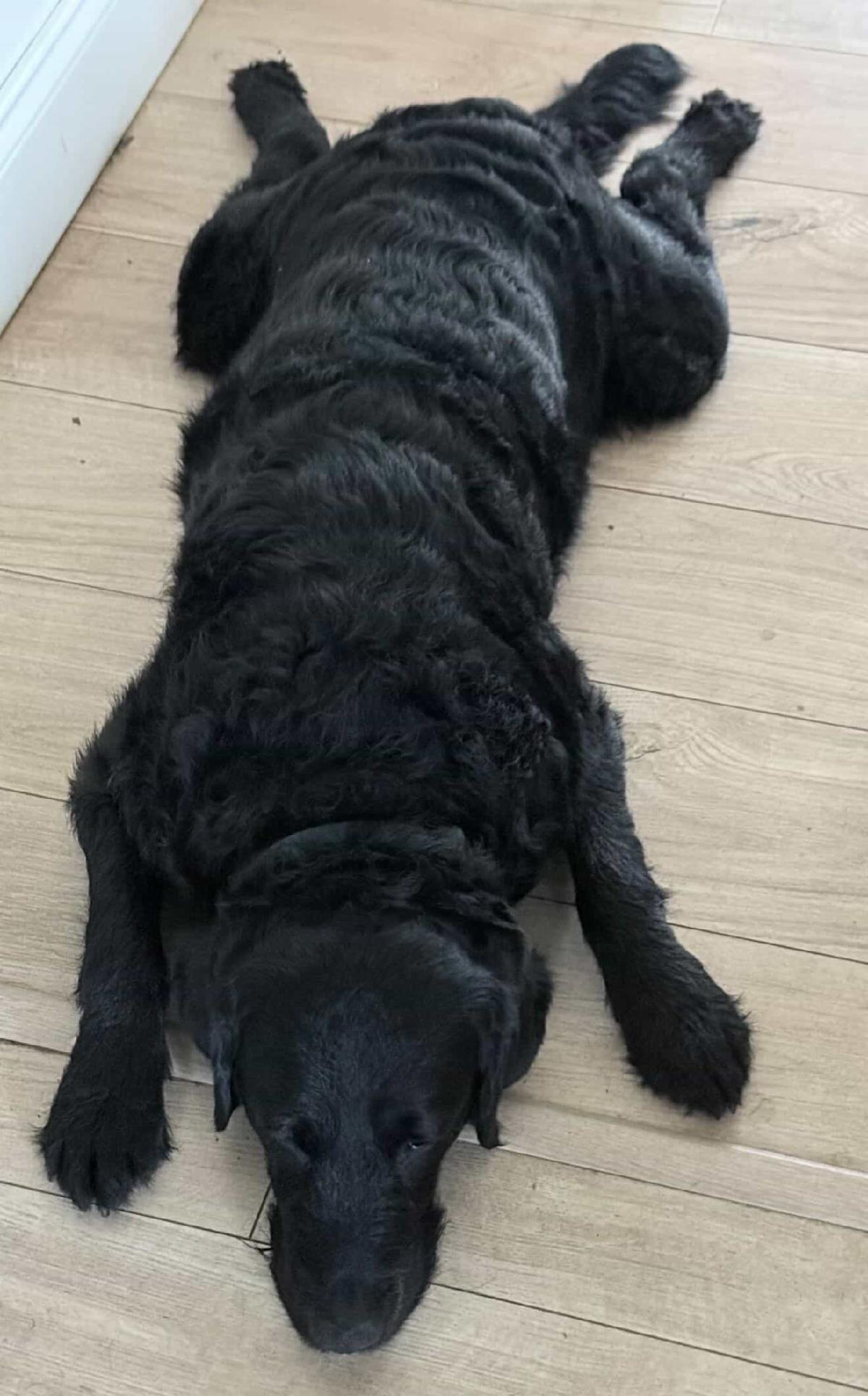
One of our students is wondering why her dog, always lies down with his legs stretched straight out to the sides (see photo below).
Both her vet and trainer have said it’s because he has good hip health.
Could you ask Dr. Robinett, DVM, her thoughts?
| | |
From Dr. Robinett:
I agree with her vet and trainer. This is a common sleep or relaxed resting position for many different breeds of dogs, commonly called a “sploot“ by dog lovers.
In order to lay like this I usually think their hips, pelvis and low back are not bothering them and they are relaxed.
Stella (Dr. Robinett's dog) could not do this initially when we got her but after about a year and a half she developed enough strength and muscle over her hips that she is able to do that. She likes to lay like that a lot now.
That is one of Cora’s favorite positions (another dog of Dr. Robinett's) unless she needs a chiropractic adjustment and her back is tight.
| | |
"Woof and Answer" from our
MM Canine Facebook Page
|
| |
Question: Lately my dog has been a bit reluctant to open his mouth. He is still eating the same but he just seems uncomfortable. Is there a way I can help him using The Masterson Method?
Answer: Based on what you’re describing, your dog might have tension in the Temporomandibular Joint (TMJ). Dogs that play fetch a lot, carry balls around, or chew on bones may develop tightness in the TMJ and jaw muscles. Some dogs can also develop arthritis in the TMJ. These dogs might be sensitive around the TMJ points or may seem uncomfortable when you work on this area. To help with this, start with the Air Gap pressure technique, which means barely touching the hair in the area. To do the TMJ Point Technique, use one finger to gently search the area of the TMJ joint, just below the dog’s ear. You’ll know you’ve found the spot when your dog blinks. Using Air Gap pressure, stay on that spot until your dog shows a release response. Watch our Read and Release instructor, Steff Watts, demonstrate this technique and how the dog releases tension.
Join us on Wednesdays on our Canine Facebook page for more Questions and Answers, and submit your own question
| | Canine Zoom Courses for 2026 | | |
Read and Release Courses
(First in the Series)
Read and Release is the first course to start your journey with The Masterson Method Canine Bodywork. Enjoy learning from the comfort of your home.
Students will learn to recognize and use their dog’s visual responses to find and release tension. These visual responses give you insights into your dog’s physical and emotional needs. In this course, you and your canine companion will build connection, enhance movement, and improve comfort.
Saturdays at 9:00 am CT June 6, 13, 20, 2026 with Leslie Kennedy
Fridays at 10:00 am CT, July 31, August 7, 14, 2026 with Amelia Nalli
| | |
Introducing Movement Courses
(Second in the Series)
Introducing Movement is your next step after completing the Read and Release Course.
Adding to the foundation of using touch effectively and understanding what your dog is communicating, you are ready to start applying Masterson Method Movement Techniques. In this course, you will learn all movement techniques from the Beyond Dog Massage book and help your dog with easier and more natural movement.
Wednesdays at 11:00 am CT, September 13, 23, 30, 2026 with Kalin Finsand
Saturdays at 11:00 am CT, November 7, 14, 21, 2026 with Amelia Nalli
| |
Newly Certified Practitioners - Canine
Need Help For Your Dog?
| | Find a Masterson Method Certified Practitioner (MMCP) Canine near you. Our Certified Practitioners are dedicated professionals who have acquired highly attuned skills in partnering with the dog to release tension and increase range of motion, thereby restoring healthy posture and performance. Add an MMCP Canine to your dog’s wellness team by visiting the Masterson Method Website (top right corner of home page) and look for the link to find a Certified Practitioner Canine near you. | |
Dr. Robinett, DVM
Houston, TX
| | |
Dr. Robin Robinett grew up in the Houston area and always had a love of animals. At 3 years old after getting her first puppy, she decided she wanted to become a veterinarian and worked toward that goal throughout her education.
She graduated from Pasadena Dobie High School with Honors and has a Bachelor of Science Degree from Texas A&M in Biology. She returned to Houston and worked at M.D. Anderson Cancer Center for two years before returning to Texas A&M. She graduated in 1989 from Texas A&M College of Veterinary Medicine with a doctorate in Veterinary Medicine.
Robin rode and showed horses in hunter shows, dressage and combined training/eventing before graduating from vet school. Dr. Robinett worked for the Houston SPCA after graduation. Then she was a co-owner and founder of a veterinary hospital in Pearland. After leaving that practice in 1997, she did small animal veterinary relief work and had a mobile practice for veterinary chiropractic. She received her Veterinary Chiropractic Certification by the American Veterinary Chiropractic Association in September 1996, then became certified in Acupuncture from the Chi University in 2009.
Dr. Robinett opened Veterinary Chiropractic and Rehabilitation Clinic, PC. (VCRC) in October 2008. VCRC provides Chiropractic, Acupuncture and Rehabilitation services for dogs, cats, and horses. VCRC is one of the few privately owned clinics in the USA, which does small animal and equine rehabilitation and has an underwater treadmill for dogs and one for horses.
Dr. Robinett is certified in Equine Rehabilitation by the Animal Rehab Institute in Florida and has completed a practice-based residency and will sit for exams in 2025 for board certification by the American College of Veterinary Sports Medicine and Rehabilitation (ACVSMR. Dr. Robinett is a member of many professional veterinary organizations including: American Veterinary Medical Association (AVMA), Texas Veterinary Medical Association (TVMA), American Association of Equine Veterinarians (AAEP), American Veterinary Chiropractic Association (AVCA), American Association of Rehabilitation Veterinarians (AARV), the Texas Equine Veterinary Association (TEVA), the International Veterinary Academy of Pain Management (IVAPM), and the International Association of Veterinary Rehabilitation and Physical Therapy (IAVRPT). She was a finalist for IAVRPT International Rehab Therapist of the year in 2020 and 2021.
After taking the Masterson Method Equine courses, Dr. Robinett met Jim Masterson and became a Masterson Method Certified Veterinary Practitioner in 2021. Robin co-authored the book, Beyond Dog Massage with Jim, which was released in October 2023. Robin earned her MMCP Canine in 2025.
| | |
Read and Release Testimonial from
student, Kait Willer
| | | | |