September 2025 Canine Newsletter | |
A Cool Day, Fast Bikes, and Happy Dogs
Last weekend’s unusually cool weather in Iowa gave Jim and me the perfect excuse to take our electric bikes out for a spin around a nearby lake. At the last minute, we decided to bring the dogs along, because, really, an adventure just feels better when they’re with us.
Our dogs are athletic and good at keeping up on trail rides with the horses. But bikes set a different pace. We start out steady, and move to faster, and sometimes, there's not much room for slowing down. Before long, we could tell Nellie was starting to tire. So, we did the sensible thing: returned the dogs to the truck and headed back out on our own.
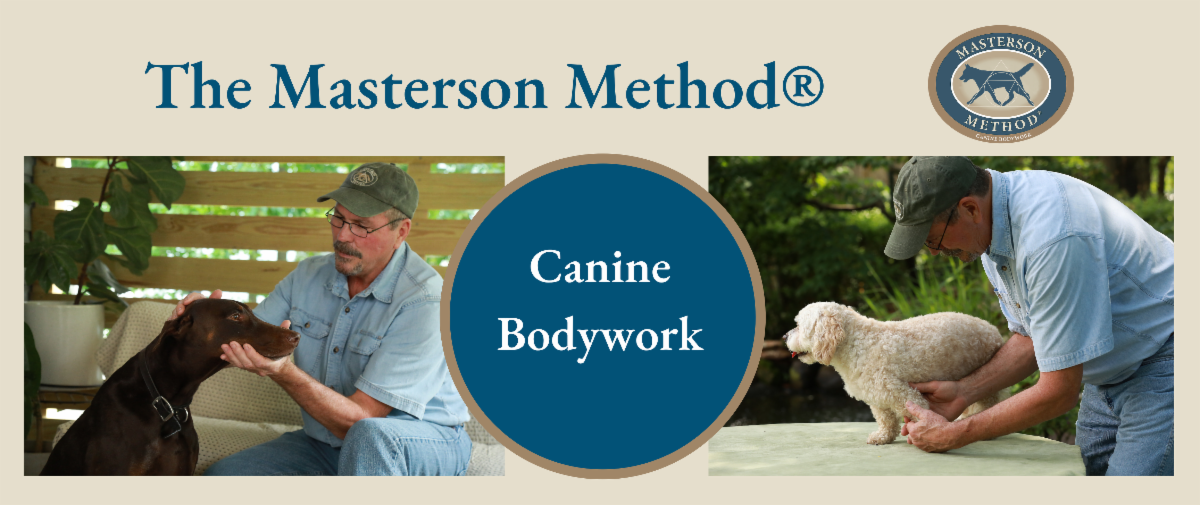
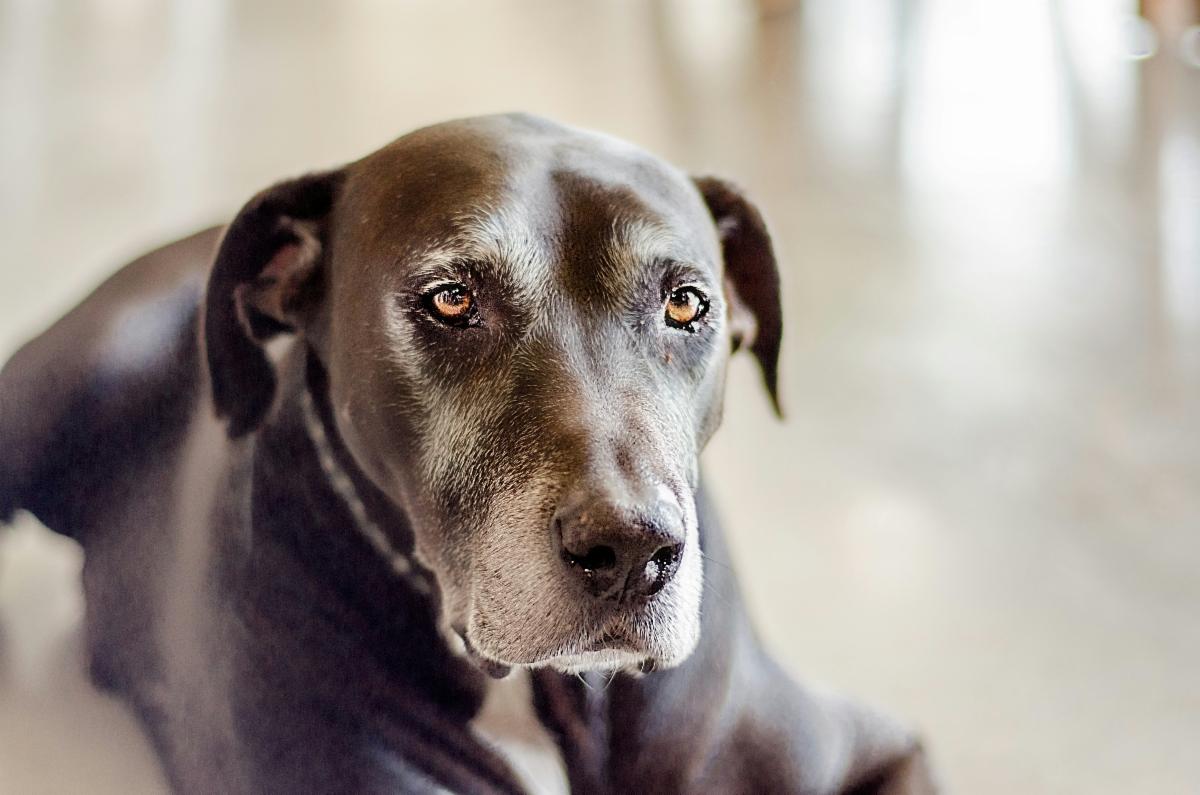
That afternoon, Jim noticed that Nellie was walking with a hunched back, so we moved the furniture in the living room and Jim got down on his hands and knees to see what he could do. I thought you might like to see the techniques he used to release the tension in her shoulders, legs, and spine.
Just like last month, the video doesn’t tell the whole story. When Jim says, “watch Nellie blink,” you’ll notice the angle makes it hard to actually see her eyes. I hope you’ll forgive my camera skills and trust that Jim could see her eyes just fine, and respond accordingly.
Why not try this on your own dog? Nellie isn’t the easiest dog to work with. Yours might be a “wiggler,” trying to evade or hide any tension. But by using Techniques of Opportunity, Jim was still able to get a lot done.
Lastly, I don't want to leave you without telling you that September 26th is Jim's birthday. And we are having a fun promotion! Read all the details below, but really quickly; Jim wants to know how the Masterson Method has helped your dog! Send us your stories and Jim will choose one entry at random every Monday (starting Sept 8th) for a one-to-one phone call with you (and your pooch).
Pretty cool, huh? This promotion also will extend to people and their horses. Hoping we have more entries than the equine side. I guess this is bringing out my competitive side :)
Until next month,
Here's to your pups!
Conley
| | |
September is Jim’s birthday month, and he wants to celebrate by connecting with the people who make the Masterson Method community so special…YOU!
We want YOU to share your story about how the Masterson Method has helped you or your dog in a meaningful way, for a chance to win a call with Jim!
Here’s how to send us your story (it’s easier than blowing out the candles on a birthday cake!):
📧 Email it to sonia@mastersonmethod.com
📱 Post it on social media and tag @mastersonmethodcanine on Facebook or @mastersonmethod.canine on Instagram
💬 Send us a Direct Message on Facebook or Instagram
📸 Remember to include any videos or photos of you and your dog!
Your story could not only inspire others but also earn you a one-on-one conversation with Jim.
For more info on the competition, click the button below. We can’t wait to celebrate with you this September! 🎉
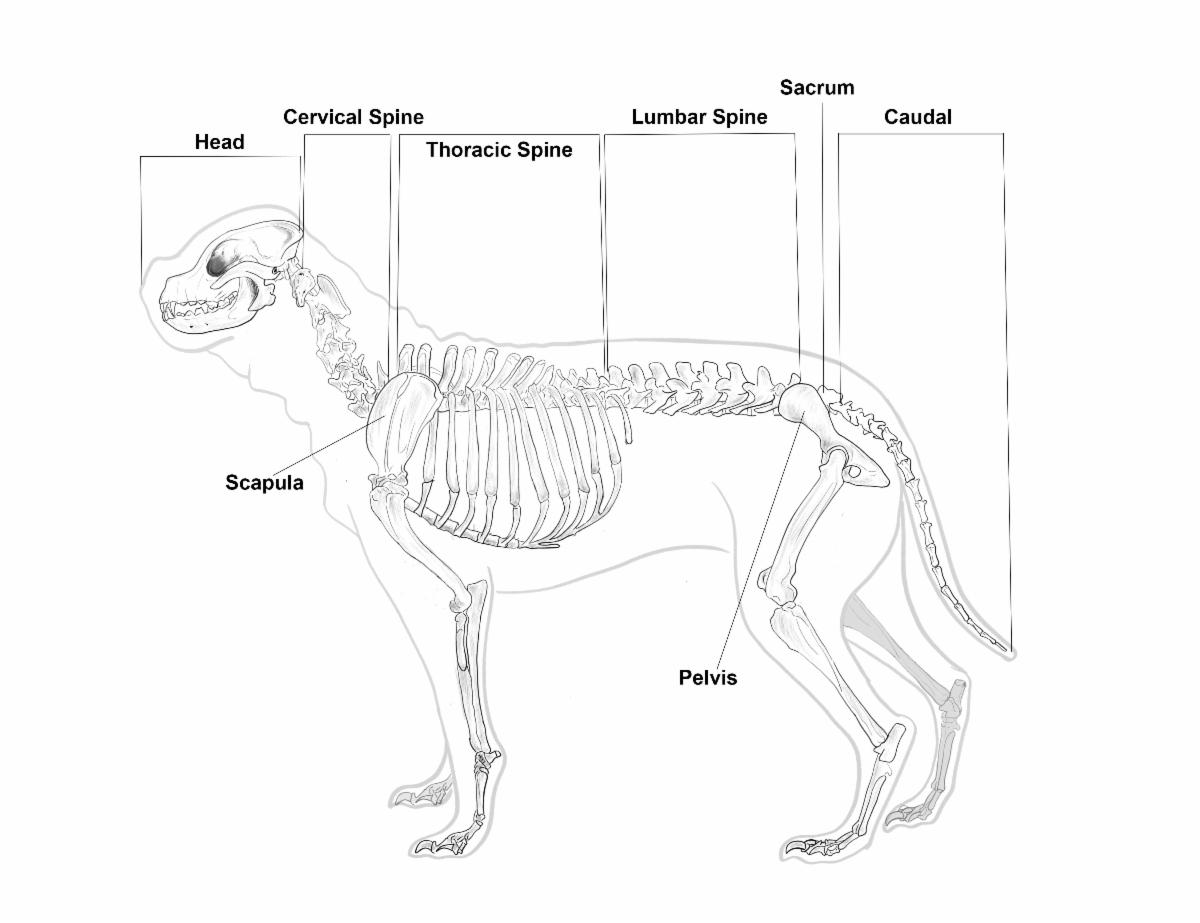
| | The Bare Bones of the Matter | | Someone recently asked if they needed to understand anatomy to sign up for one of our Canine Courses (keep scrolling to find out the answer!), so we thought this was a great time to show you the basics of your dog's skeleton. | | |
A dog's skeleton consists of between 319-321 bones, which is around 100 more than we humans have, and approximately 700 muscles. While this may sound intimidating, you don't need to be an expert in anatomy to get results using Masterson Method techniques.
Our focus is on the four sections of the spine, the main parts of the body that attach to the spine, and the junctions where they come together. These four sections are:
-
The neck, or cervical spine, has seven vertebrae C1 - C7 (fun fact - almost all mammals, and humans have seven, with a few exceptions, one of which is the sloth, which can have up to 10!).
-
The trunk, or 'thoracic spine, consists of 13 vertebrae T1 - T13. Each vertebrae has its own rib attached.
-
The lumbar spine, like the neck, has 7 vertebrae, L1 - L7.
-
The sacrum consists of three fused vertebrae.
The three junctions are the Head-Neck junction, the C7-Scapula junction, and the Lumbosacral-Pelvic junction. By learning to release tension in these junctions, and the muscles that connect them, we release tension throughout the whole body.
| | |
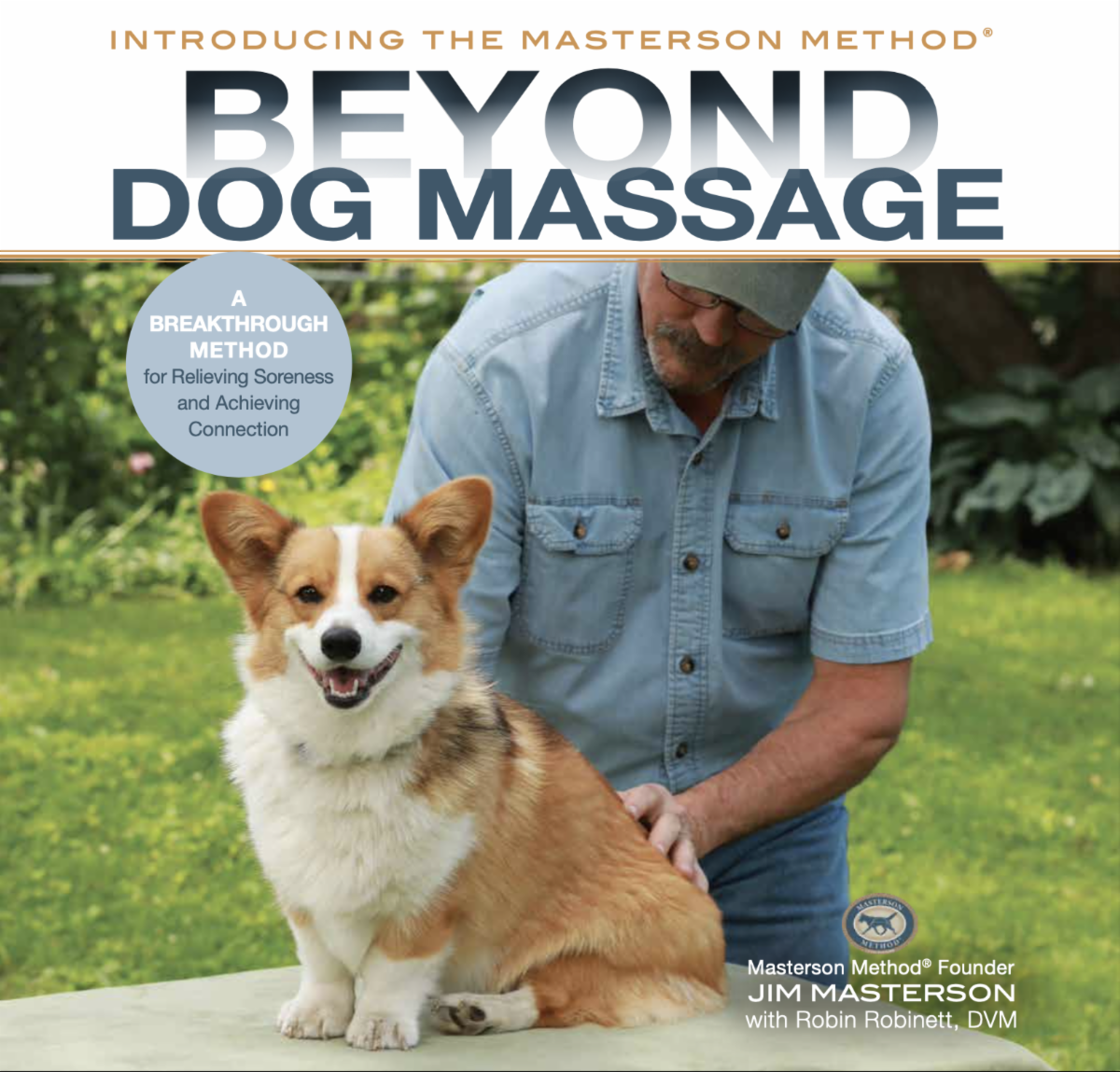
We'll be covering more basic anatomy in upcoming newsletters, but you can learn more in the Beyond Dog Massage book.
Click on the image or button below for more info.
| | |
Dr. Robin Robinett, DVM
From Beyond Dog Massage: Page 157 - 158
"Back Stiffness"
| | Many things can cause stiffness, and there are numerous considerations to take into account. Age can be a factor; with younger dogs, stiffness is most likely caused by them being overly active. It's usually a temporary problem or a more recent injury. With an older dog, it is more likely due to a chronic ongoing problem or problems that have become aggravated. | |
Back stiffness is a common condition, and if it's not caused by injury, it may be caused by a disc issue, like Intervertebral Disc Disease (IVDD), or arthritic changes in the back, particularly in older dogs. Usually, these occur in the lumbar spine or at the back of the rib cage (check out the image above if you're not sure of the location).
In a condition like IVDD, after the acute or immediate phase, it can become a chronic or "old" problem. Though your dog may not show any signs of discomfort, he'll always have some compensation patterns. If he overdoes it - by playing too hard or running around - he can become very sore and require veterinary care, but it could just show up as stiffness.
Releasing tension in the front and hind ends helps release tension in the back, along with specific techniques for the back, such as The Bladder Meridian Technique and Sublumbar points.
For information on techniques that can help, check out pages 157-158 in the Beyond Dog Massage book.
| | |
Question: Do I need to know anatomy to take the Read and Release Online Course?
Answer:
No, you don’t need to be an anatomy expert to start learning The Masterson Method Canine Bodywork! During the course, our instructors teach some basic anatomy to help you visualize what areas of your dog you are working on.
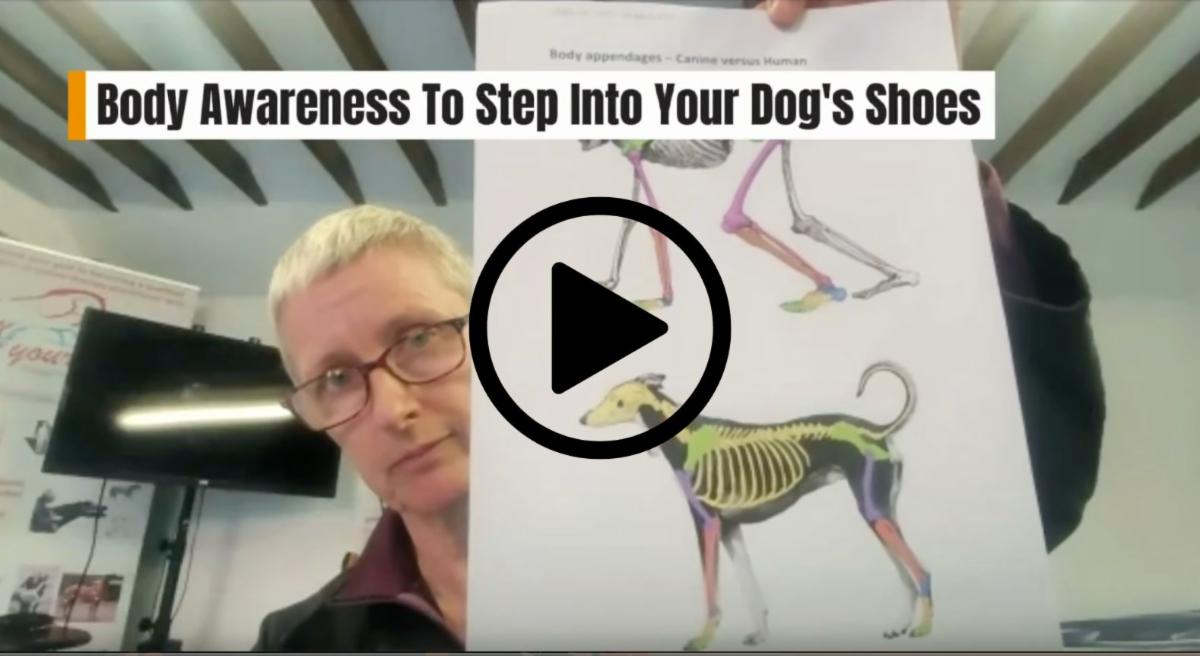
Dogs can be experts at hiding tension and stress. In the clip below, Stef Watts explains how thinking about your own body and how muscles and joints feel can be a powerful tool to understand what your dog might be experiencing.
| | |
Stef will be teaching the next course for 3 consecutive weeks, starting on Saturday, September 6, and there are still a few spaces left. In each online class, you'll learn techniques that gently and effectively release tension and improve movement.
Check out the course listings below, and register now to start learning with Stef!
| | Canine Zoom Courses for 2025 | | |
Read and Release Courses
(First in the Series)
Read and Release is the first course to start your journey with The Masterson Method Canine Bodywork. Enjoy learning from the comfort of your home.
Students will learn to recognize and use their dog’s visual responses to find and release tension. These visual responses give you insights into your dog’s physical and emotional needs. In this course, you and your canine companion will build connection, enhance movement, and improve comfort.
Saturdays at 11:00 am CT, September 6, 13, 20, 2025, with Stef Watts
Saturdays at 11:00 am CT, January 17, 24, 31, 2026, with Amelia Nalli
| | |
Introducing Movement Courses
(Second in the Series)
Introducing Movement is your next step after completing the Read and Release Course.
Adding to the foundation of using touch effectively and understanding what your dog is communicating, you are ready to start applying Masterson Method Movement Techniques. In this course, you will learn all movement techniques from the Beyond Dog Massage book and help your dog with easier and more natural movement.
Saturdays at 11:00 am CT, October 4, 11, 18, 2025 with Stef Watts
| | If the course you are interested in is full, please email dog@mastersonmethod.com and we will add you to the wait list. | | | | |