March 2026 Canine Newsletter | |
Hi Everyone,
I don't know about you, but I am feeling the first breath of Spring. And with that, the slight change in the grass from brown to small spikes of green. What a relief!
Talking about green, St. Patrick's Day is almost upon us. Of course, St. Patrick’s Day isn’t just about green shirts and shamrocks, but more a celebration of Irish heritage, hard work, and a bit of good fortune.
Irish folklore carries older, quieter stories. One of them is the tale of the Cú Sídhe, the fairy hounds of Ireland. In Celtic legend, the Cú Sídhe were large, otherworldly dogs said to move between the human world and the spirit world. They were powerful, watchful, and deeply attuned. Some stories describe them as guardians. Others say they could sense things long before people could.
Whether you take those stories literally or not, they reflect something true about dogs. They notice what we miss. Subtle shifts. Quiet tension. Changes in energy.
That sensitivity is something we work with every day.
Dogs are masters of feel. They respond to the smallest change in our posture, our breathing, even our attention. And their bodies respond just as clearly to what is happening within themselves. A slight restriction in a toe. Tension in the foot. A guarded shoulder. Often these changes are quiet. Easy to overlook. But the dog feels them.
The old Irish stories described the fairy hounds as moving between worlds. In a way, when we work with our dogs’ bodies, we are doing something similar. We move between what we can see and what we can feel. Between structure and sensitivity.
Between effort and release.
This St. Patrick’s Day, instead of just celebrating luck, take a moment to appreciate your dog’s awareness. Notice how quickly they soften when you soften. Notice how a small release in the foot can change the whole limb. Notice how listening changes everything.
The legends remind us that dogs have always held a special place in human life. Not just as workers. Not just as companions. But as deeply perceptive partners.
If we slow down enough, they will show us exactly what they need.
| | |
From both of us,
Happy March and Happy St. Paddy's Day!
Conley & Jim
| | |
A couple of quick tips for what's up in this newsletter…
We've added TWO Woof and Answer Wednesdays from our Masterson Method Facebook page below, with one question on rehabbing a hind leg by flexing the toes, and the other, carrying tension in the head and neck.
Kalin Finsand, one of our fabulous Canine Instructors, has shared her blog on toes - dog toes, that is.
This month, we are highlighting two Canine Instructors: Amelia Nalli and Kalin Finsand. See their courses on our calendar below and on the website.
Dr. Robinett, DVM, co-author of the Beyond Dog Massage book, gives us a quick look at one the of "wait and melt" techniques.
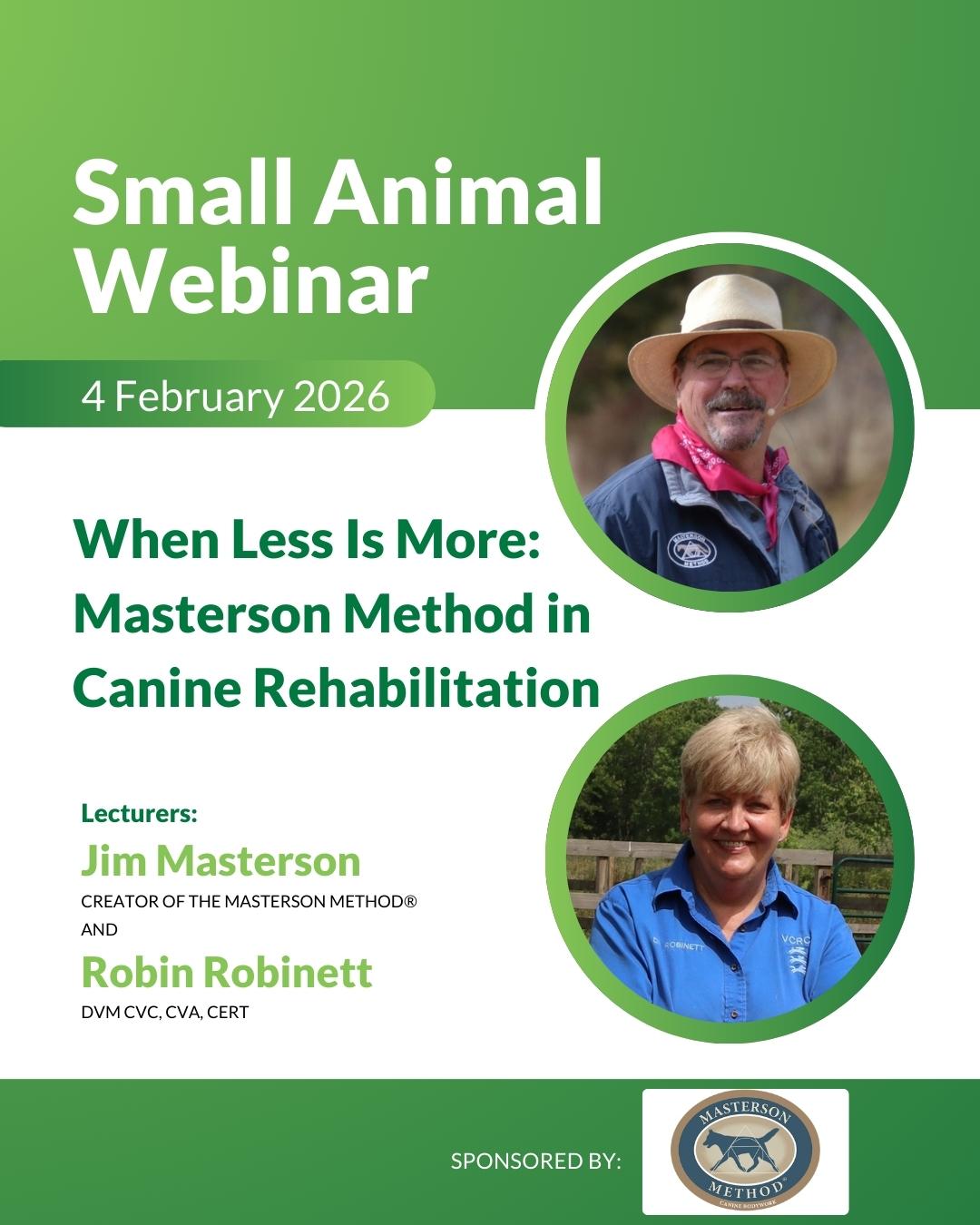
And finally, good news: If you missed Jim's and Dr. Robinett's (co-author of the Beyond Dog Massage book) FREE webinar on Canine Rehabilitation through Onlinepethealth, you can still watch it! Scroll to the bottom and click on the link.
Finally, again, from Jim and me — have a wonderful St Patrick's Day and enjoy a great start to Spring!
| |
Woof and Answer Wednesday
from the Masterson Method Facebook Page
| | |
Question: Our dog recently recovered from a mild tendon injury in his hind leg, and the vet recommended gently moving his toes as a little rehab. How can I do this lightly with my dog?
Answer: Gentle toe mobilization can be helpful for many dogs, especially after mild injury or guarding. A dog’s toes have tiny joints, tendons, and lots of nerve endings, so they can get stiff or sensitive. Very small, calm movements can support comfort, circulation, and normal mobility as long as you don’t force anything.
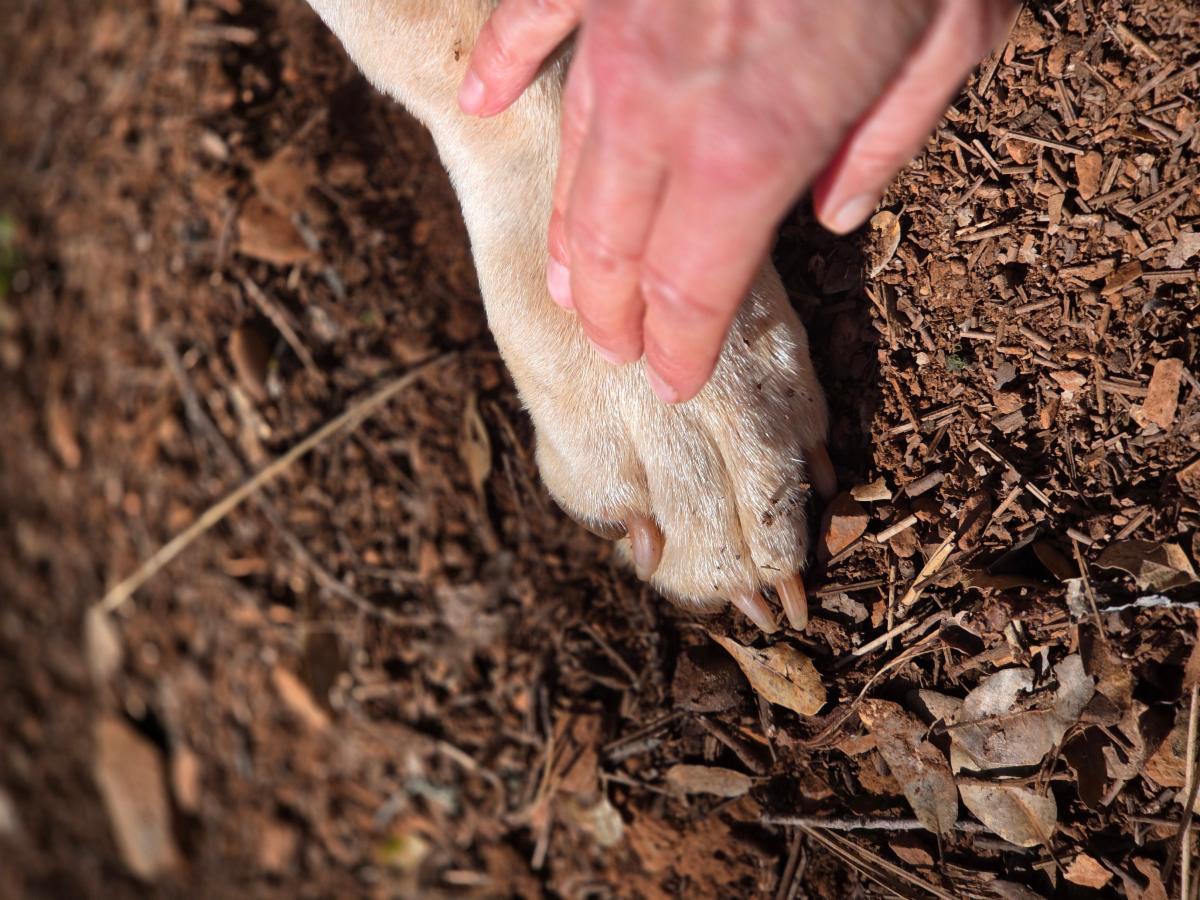
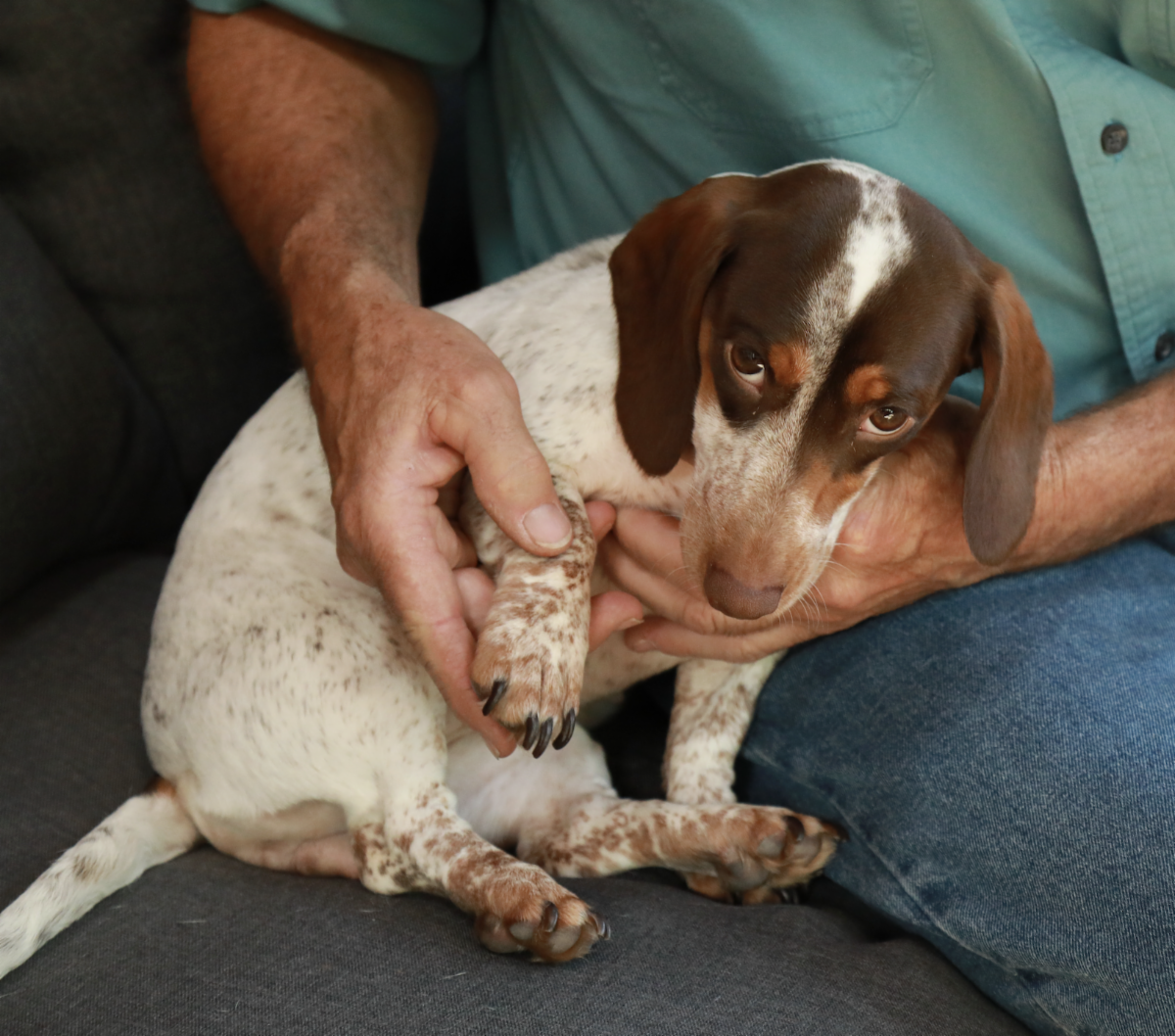
In Masterson Method work, we use Toe Micromovements as a gentle way to support comfort and mobility. It can help maintain a normal range of motion in the small toe joints, encourage healthy circulation through the foot, reduce protective holding in the tendon chain, and improve body awareness of the paw.
Try the Toe Movement Technique:
◾First, support the leg with one hand and slide your other hand down to the toes.
◾With very soft fingers, gently wiggle each toe through a tiny range of motion. Watch for blinks, softening, licking, or a deeper breath.
◾Set the leg down and let your dog move, stretch, or reset if he wants.
Tip: Keep it short (30–60 seconds), go micro, and stop if there’s heat, swelling, or a strong discomfort response.
| |
A Soft Pause on the Paws
From Kalin Finsand, Canine Instructor
| | |
Your dog’s paws and toes contain many joints, tendons, and ligaments that work together to support body weight and allow movement, but they can become quite sore and sensitive. I like to think of the toes as little athletes—independent yet working together as a team. Even a single tender toe can change how your dog moves and cause compensations that may lead to seemingly unrelated issues long after that toe has healed. This is why it’s important to identify any sensitivity early, before your dog’s playtime is affected.
Many dogs are wary of having their toes touched. Often, the only time we handle them is during a nail trim, which doesn’t always go as planned. This is why your dog may appreciate you starting a little higher up at the carpal joint, just above the paw, a spot you may have thought of as the “knee.” Begin with the lightest touch and pause to observe your dog’s response as you move very slowly toward a toe—any toe. As soon as you notice a fidget, try to soften your touch and stay there for a bit, or move slightly back toward the “knee.” Can you reach the tip of each toe, or is there one where your dog clearly says, “No way, don’t go there!”? Now you have valuable information about your dog’s incredible support team: the toes.
If you want to know what to do with the information your dog has given you, start with the Masterson Method Beyond Dog Massage book, and then sign up for a Read and Release class—live online sessions via Zoom where you and your dog can participate in real time from the comfort of your home.
Woof!
| |
Woof and Answer from ourMM Canine
Facebook Page
| | |
Question: My dog carries a lot of weight in his head and neck. Is there something simple I can do to help relieve that tension?
Answer: Yes. One gentle way to address this area is with the Head Up technique.
Many dogs (especially active or strong breeds) develop tension at the Occiput–Atlas junction (the small joint just behind the skull). When this area becomes restricted, it can affect comfort and mobility through the entire neck.
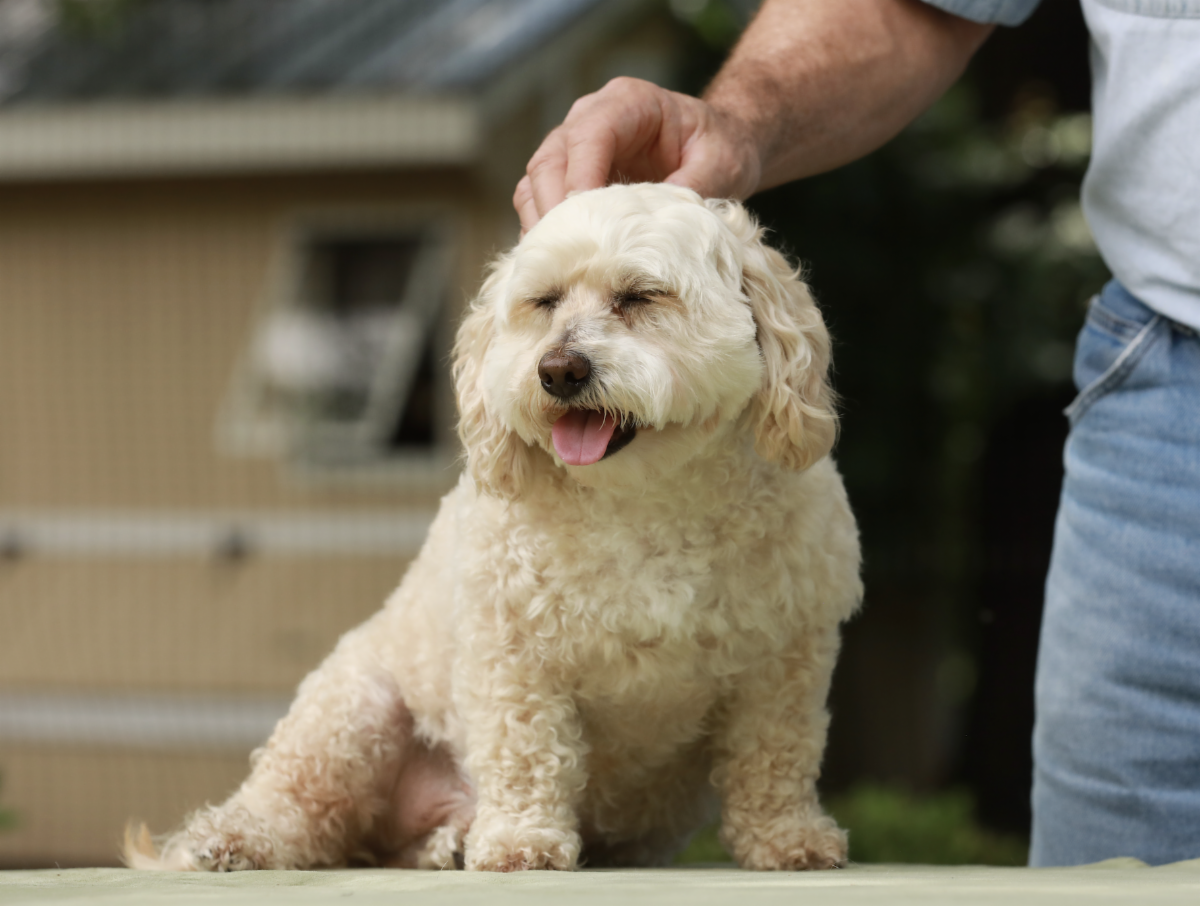
With the Head Up technique, you’re not lifting or stretching the head. Instead, you calmly support it and allow your dog to settle the weight of his head into your hand.
From there, you introduce very subtle, slow movement, just enough to encourage the joint to move softly.
The key is relaxation. If your dog braces or lifts away, reduce the movement and slow down.
As the joint begins to move more freely, you may notice small responses such as blinking, softer breathing, or a visible release of tension. By quietly supporting this junction and allowing gentle movement, you create the opportunity for your dog to release tension in his own time.
Often, when this key area softens, the sense of ease can spread through the neck and into the body.
| | Canine Zoom Courses for 2026 | | |
Read and Release Courses
(First in the Series)
Read and Release is the first course to start your journey with The Masterson Method Canine Bodywork. Enjoy learning from the comfort of your home.
Students will learn to recognize and use their dog’s visual responses to find and release tension. These visual responses give you insights into your dog’s physical and emotional needs. In this course, you and your canine companion will build connection, enhance movement, and improve comfort.
Thursdays at 6:00 pm CT March 19, 26, April 2, 2026 with Amelia Nalli
Saturdays at 9:00 am CT June 6, 13, 20, 2026 with Leslie Kennedy
| | |
Introducing Movement Courses
(Second in the Series)
Introducing Movement is your next step after completing the Read and Release Course.
Adding to the foundation of using touch effectively and understanding what your dog is communicating, you are ready to start applying Masterson Method Movement Techniques. In this course, you will learn all movement techniques from the Beyond Dog Massage book and help your dog with easier and more natural movement.
Thursdays at 6:00 pm CT April 9, 16, 23, 2026 with Amelia Nalli
Sundays at 11:00 am CT, April 12, 19, 26, 2026, with Stef Watts
| |
Newly Certified Practitioners - Canine
Need Help For Your Dog?
| | |
Find a Masterson Method Certified Practitioner (MMCP) Canine near you. Our Certified Practitioners are dedicated professionals who have acquired highly attuned skills in partnering with the dog to release tension and increase range of motion, thereby restoring healthy posture and performance. Add an MMCP Canine to your dog’s wellness team by visiting the Masterson Method Website (top right corner of home page) and look for the link to find a Certified Practitioner Canine near you.
We will be highlighting new Certified Practitioners so you can get to know them!
| | |
Canine Instructor
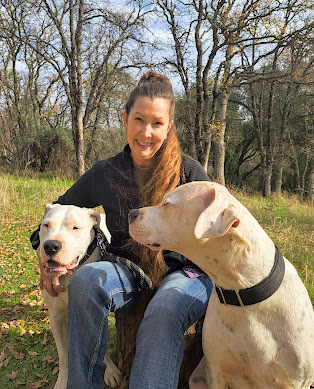
Dogs have always been a part of my life—from family companions who enjoy long hikes and trail rides, to obedience training, non-competitive agility, and scent detection work.
As a Masterson Method Certified Practitioner – Equine, I’ve had the opportunity to explore The Masterson Method® bodywork with a wide variety of barn dogs at the ranches I visit. I’m passionate about helping dog guardians connect more deeply with their dogs through gentle touch so both human and dog can experience the benefits of releasing tension and restoring the dog’s natural balance and movement. Throughout the year, you can often find me at local dog fairs and dashes across Northern California, sharing what The Masterson Method® Beyond Dog Massage is all about.
Whether your dog is competitive, a family companion, aging, or in rehabilitation, gentle bodywork can support them in achieving optimal wellness. My services are designed to help dogs of all disciplines, breeds, and ages engage in their own healing process, in partnership with appropriate holistic veterinary care.
Located on the American River Divide, my practice serves the Sacramento and Tahoe foothill region of Northern California. To ensure your dog’s comfort, I travel to your home or barn.
| |  |
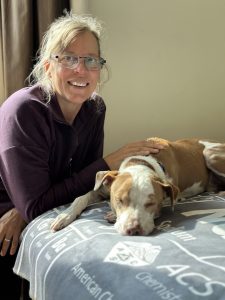
Amelia Nalli
Culver City, California
Canine Instructor
Amelia is a Masterson Method Certified Practitioner and Instructor for equine and canine bodywork courses.
Additionally, she produced and edited the videos linked in the Beyond Dog Massage book. This gave her the unique opportunity to watch Jim work with many types of dogs of different breeds and temperaments. That experience helped her to understand the importance and differences of bodywork between dogs and horses; while the techniques are similar with dogs compared to horses, they are on a smaller scale. Canine responses and releases can also be very quick but the release of tension is just as rewarding.
An avid animal lover, Amelia volunteers at a dog adoption center to offer Masterson Method Canine Bodywork and relieves tension and anxiety with as many dogs as possible who are in difficult situations.
| | | How to Help Your Dog Release Tension in the Pelvis | | In this reel, Dr. Robin Robinett, DVM, demonstrates the Pelvis Release Technique, one of the "Hold, Wait, and Melt" type of techniques from The Beyond Dog Massage book. Using light contact and stillness, the practitioner reads the dog’s responses and waits for signs of release. | | | The pelvis is a part of the dog's body that plays an important role in movement, balance, and comfort. | If you liked that, watch Dr. Robinett, DVM, and Jim on the webinar below! | | | | |