September 2026 Canine Newsletter | | |
Hi Everyone,
Last month, we announced that our Canine Certification Program will launch in early 2027, and we were thrilled by the excitement and enthusiasm the news received! This month, we are sharing more about the vision behind the program, the courses it will include, and what students can expect as they work toward certification.
At the heart of the program is a clear goal: to prepare our canine graduates with the knowledge and skills to become well-rounded practitioners and valuable partners in a dog’s overall health and well-being.
Becoming a Masterson Method Certified Practitioner Canine wis about much more than simply “doing the techniques.” Students will learn to use bodywork as a way of listening to the dog and interpreting what the dog is communicating. They’ll learn to connect those responses with what they observe in the dog’s body and behavior, while also considering breed characteristics, movement, and other factors that help complete the picture.
Bringing all of these pieces together requires knowledge, observation, and hands-on skill. Throughout the certification program, students will build and strengthen these abilities, developing the confidence and proficiency to see the whole dog and respond to what each individual dog is telling them.
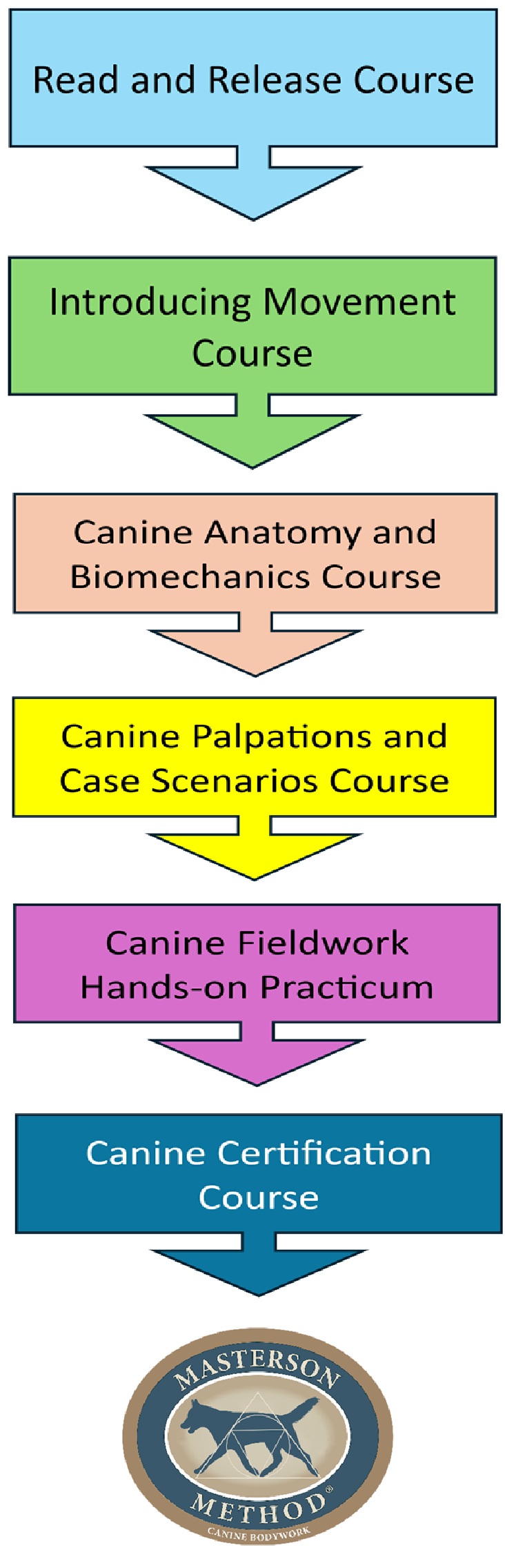
Below is a visual overview of the certification program and how the courses fit together. All courses will be offered live via Zoom, giving students the opportunity to learn directly from instructors, ask questions, and engage with other students throughout the program.
Like Jim and me, enjoy your dogs!
Warmly,
Conley, Jupiter and Nellie
| | |
Join us to become Certified in
the Masterson Method® Canine
| |
What Does MMCP Canine Mean?
Earning the Masterson Method® Certified Practitioner Canine credential represents much more than completing a series of courses.
It shows that the practitioner has participated in a robust learning program, developed a broader understanding of the canine body, gained experience working with different dogs, and demonstrated proficiency in Masterson Method skills.
Most importantly, an MMCP Canine has learned to observe, listen, think, and respond to the individual dog. They can bring together body language, movement, anatomy, breed characteristics, history, palpation, and hands-on bodywork to better understand what the dog is communicating.
The goal of the certification program is to develop knowledgeable, thoughtful, and skilled practitioners who can be valuable partners in supporting the overall health and well-being of the dogs in their care.
| |
Step #1: Prerequisite Courses
Before beginning the certification program, all students complete two foundational courses: Read and Release and Introducing Movement. These courses establish the skills and principles students will build on throughout the rest of the program.
Read and Release - First Prerequisite
The Read and Release Course introduces students to the incredible power of light touch. Many people are familiar with hands-on approaches that use larger or more abrupt movements, so seeing the impact that barely touching a dog can have is often a completely new concept.
In this work, “less is more.” The lighter the touch, the more deeply the dog can feel and respond.
Just as important as learning light touch is learning to observe and listen. Students begin developing the ability to recognize what a dog is communicating through body language and connect those responses to what they are doing with their hands.
The most effective canine practitioners have a “conversation” with the dog. They recognize when the dog is comfortable continuing and, equally important, when the dog is asking for a break. Rather than pushing the dog to the point of bracing or resistance, students learn to work with the dog and respect what the dog is communicating.
As students become more skilled at recognizing the subtle ways each dog communicates, a deep connection is developed.
Introducing Movement - Second Prerequisite
Once students have developed an understanding of light touch, observation, and non-resistance, they’re ready to add movement techniques.
In the Introducing Movement Course, students learn how to ask the dog for relaxed movement, how to recognize when the dog isn’t ready for a particular area of the body to be moved, and when it may be appropriate to ask for more movement.
Students are often amazed by the positive changes they see in their dogs and by how much their connection deepens. That connection grows from trust: the dog learns that the person working with them is paying attention, listening, and respecting what they have to say.
| |
Step #2 Canine Anatomy and Biomechanics
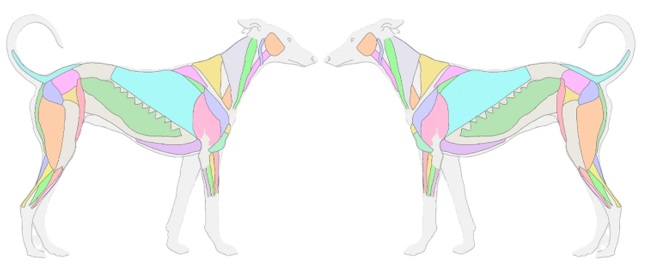
The Canine Anatomy and Biomechanics Course gives students a more comprehensive understanding of the canine body and how it functions in movement.
The course is divided into five blocks of material taught over three weeks, with an open-book quiz following each block. Students learn foundational anatomy while developing a better understanding of how the different structures of the canine body work together.
Week 1
-
Block One: A detailed look at the structure and function of canine muscles, tendons, ligaments, and fascia.
-
Block Two: A detailed look at the structure and function of the canine skeletal system.
Week 2
-
Block Three: An exploration of canine static conformation, gait assessment, movement, and biomechanics. Students also learn about potential musculoskeletal challenges associated with certain common breeds and sporting activities.
Week 3
-
Block Four: An overview of the structure and role of the canine nervous system and its relationship to biomechanics.
-
Block Five: An overview of the structure of canine skin and its role as part of the sensory nervous system, particularly as it relates to hands-on therapy and biomechanics.
Together, these five blocks give students another important piece of the picture: a stronger understanding of what they are feeling and observing during bodywork and how it may relate to the way a dog is built and moves.
| |
Step #3 Canine Palpation and Case Scenarios
This course brings observation, anatomy, movement, and hands-on skills together in a practical and engaging way.
Students learn where and how to palpate a dog, gathering information that may provide clues about what is happening in the dog’s body. This feedback gives the practitioner valuable information before beginning a bodywork session.
Students then put their developing knowledge to work through fictional case scenarios, which we’re told is a favorite learning experience!
Each scenario introduces a dog, its owner and lifestyle, along with information about past or recent conditions, activities, or traumas. From there, students become detectives.
They learn to identify important details in the case history as well as information that may be missing and would be helpful to know in a real-life situation. Using breed, condition, trauma, and activity charts, along with their knowledge of anatomy and previous experience, students consider where key areas of tension might be found and how that tension could create patterns of compensation elsewhere in the body.
For each scenario, students complete a chart to guide their “detective work” before meeting as a group. During the live class, everyone brings their observations together to build a more complete picture of the dog and discuss the reasoning behind their conclusions.
It’s an opportunity to practice one of the most important skills of a well-rounded canine practitioner: putting all the pieces together to better understand the individual dog in front of them.
| |
Step #4: Canine Fieldwork
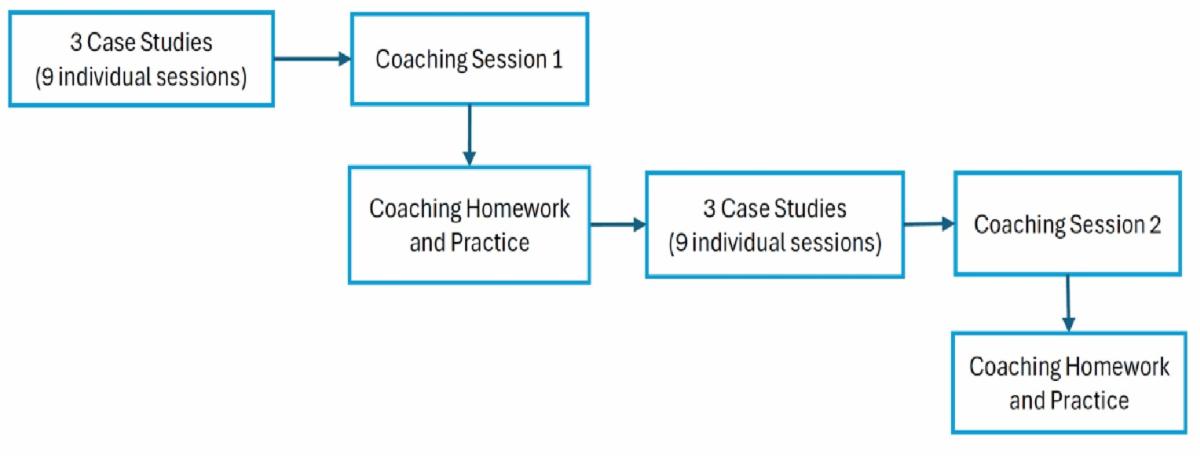
This part of the program has two components:
- Written bodywork session reports (case studies) submitted to their Instructor for feedback.
- Coaching sessions in which the student demonstrates Movement techniques.
| |
Case Studies and Coaching Sessions
Armed with the knowledge and skills developed in the previous courses, students are now ready to put their learning into practice.
Each student will work with six different dogs for three bodywork sessions each, documenting what they observe and experience during every session. These written case study reports are reviewed by the student’s Instructor, who provides individualized feedback and suggestions to help guide future sessions.
Halfway through the case studies, students participate in a Coaching Session with their Instructor. This provides an opportunity to check their progress, answer questions, and make sure they are developing their skills as expected.
After all case studies are complete, students participate in a final Coaching Session to review their work and prepare for the final stage of certification.
| |
The Final Step: Canine Certification Course
The Canine Certification Course brings everything together!
In this wrap-up course, students will demonstrate their Masterson Method skills as part of their final evaluation. They’ll also have an opportunity to ask questions and discuss topics that may come up for an MMCP Canine when working with dogs of different breeds, backgrounds, and jobs.
This is the culmination of the learning, observation, hands-on practice, and critical thinking students have developed throughout the program.
| |
Reading Requirements
We want our graduates to have a broad understanding of dogs that extends beyond hands-on bodywork. To support that goal, certification students will complete 60 hours of reading throughout the program.
Students will receive a suggested reading list and can select topics that support their interests and expand their knowledge. The 60 hours will include:
-
30 hours related to anatomy and biomechanics, including how other systems of the body may contribute to patterns of tension.
-
30 hours related to topics such as canine breeds, conditions, activities, injuries, prognoses, veterinary care, and rehabilitation examples.
This independent learning helps students continue building the broader knowledge base needed to understand the whole dog, not just what they feel beneath their hands.
| | Woof and Answer from our Facebook Page | | |
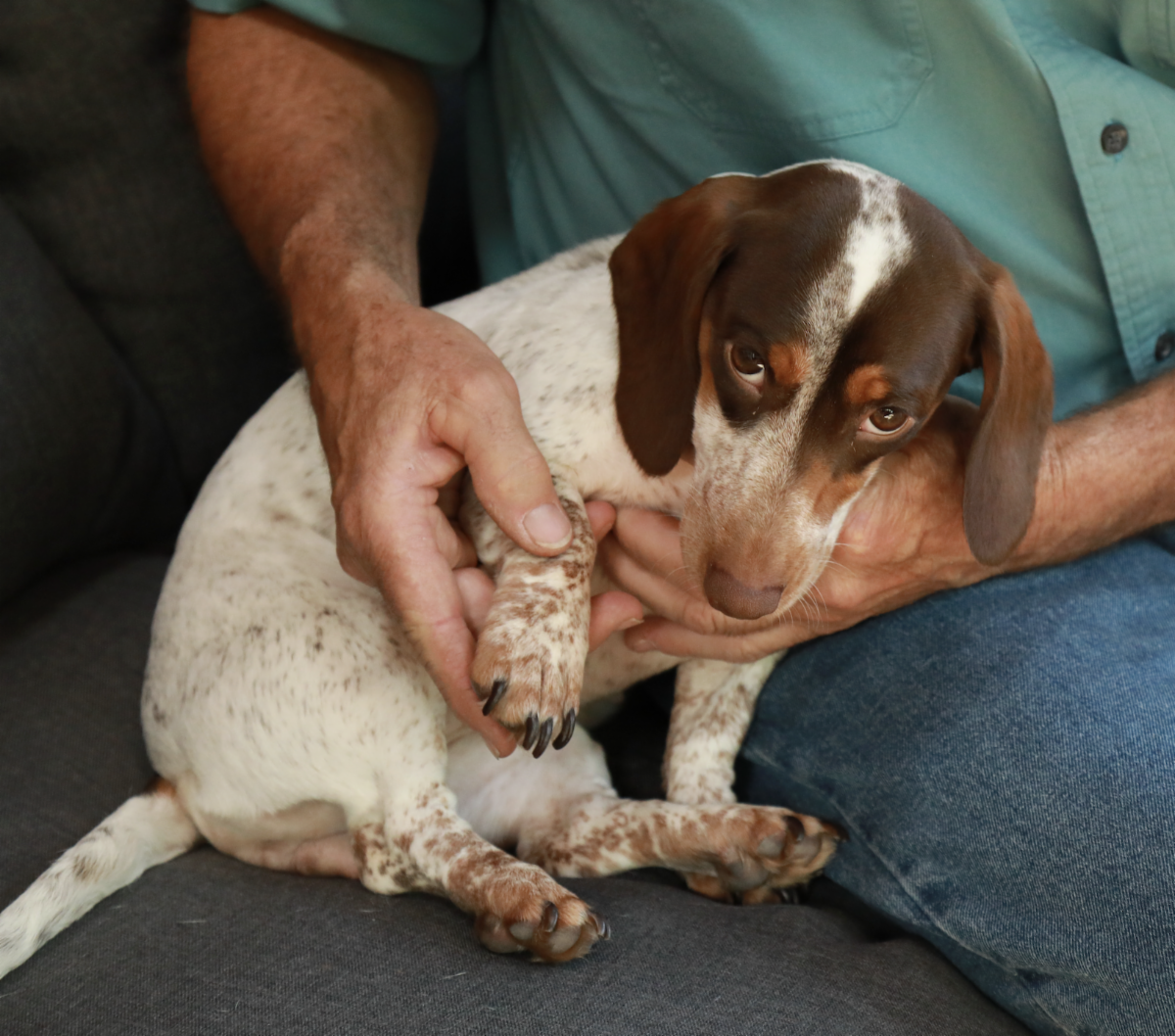
🐾Woof & Answer Wednesday: My dog tenses up when I try to clip his nails, especially when it comes to getting him to give me his front legs. I want to show him that I can be gentle and that he can trust me. Is there a technique to help him relax his front limbs?
Answer: Absolutely! One of our favorite techniques is SRSR (Search, Response, Stay, Release) along the forelimb. Rather than trying to hold or position your dog's leg, begin at the shoulder where the forelimb attaches to the body. Using light, gentle touch, slowly trace down the leg, through the elbow, and continue toward the carpus (wrist), paying attention to any responses your dog offers. Many dogs hold tension in the front limbs (especially around the elbows and lower legs), and simply allowing them to release that tension can make a remarkable difference.
This technique is about following their responses and adjusting your touch to match them, so the dog feels he has nothing to brace against or worry about and can relax and release tension. By doing this practice, you'll notice that you'll be reaching a deeper trust level, and helping them become more comfortable with handling over time.
| | Canine Zoom Courses for 2026 - 2027 | | |
Read and Release Courses
(First in the Series)
Read and Release is the first course to start your journey with The Masterson Method Canine Bodywork. Enjoy learning from the comfort of your home.
Students will learn to recognize and use their dog’s visual responses to find and release tension. These visual responses give you insights into your dog’s physical and emotional needs. In this course, you and your canine companion will build connection, enhance movement, and improve comfort.
Fridays at 11:00 am CT, October 16, 23, 30, 2026 with Kalin Finsand
Mondays at 3:00 pm CT, November 9, 16, 23, 2026 with Leslie Kennedy
Sundays at 9:00 am CT, January 10, 17, 24, 2027 with Leslie Kennedy - new price
| | |
Introducing Movement Courses
(Second in the Series)
Introducing Movement is your next step after completing the Read and Release Course.
Adding to the foundation of using touch effectively and understanding what your dog is communicating, you are ready to start applying Masterson Method Movement Techniques. In this course, you will learn all movement techniques from the Beyond Dog Massage book and help your dog with easier and more natural movement.
Wednesdays at 11:00 am CT, September 16, 23, 30, 2026 with Kalin Finsand
Fridays at 11:00 am CT, November 6, 13, 20, 2026 with Amelia Nalli
Tuesdays at 11:00 am CT, December 1, 8, 15, 2026 with Kalin Finsand
Saturdays at 11:00 am CT, February 6, 13, 20, 2027 with Amelia Nalli
| | Fin a Certified Canine Practitioner, Near You! | | Find a Masterson Method Certified Practitioner (MMCP) Canine near you. Our Certified Practitioners are dedicated professionals who have acquired highly attuned skills in partnering with the dog to release tension and increase range of motion, thereby restoring healthy posture and performance. Add an MMCP Canine to your dog’s wellness team by visiting the Masterson Method Website (top right corner of home page) and look for the link to find a Certified Practitioner - Canine near you. | | |
If you haven’t discovered this lovely show yet, I encourage you to give it a try. The Dog House UK is a heartwarming, unscripted series filmed at Woodgreen Pets Charity in Cambridgeshire, England.
The series follows the Woodgreen team as they get to know the personalities and needs of the rescue dogs in their care, while hopeful adopters arrive looking for a four-legged friend who just might change their lives.
If you love dogs and the special relationships they build with people, this is a wonderful show to watch. It’s touching, uplifting, and a fascinating reminder of just how individual every dog is.
| | | | |