
The Legal Spotlight

June 2024


U.S. State Data Privacy Law Updates for 2024

Since the passage of the California Consumer Privacy Act (“CCPA”) in 2018 and its amendment in 2020 by the California Privacy Rights Act (“CPRA”), a rapidly-increasing number of U.S. states have passed comprehensive data privacy legislation that broadly protects the personal data of their residents and gives residents a wide range of rights and choices with regard to the collection and use of their personal data. Modeled after the CCPA/CPRA, these new state data privacy laws provide state residents a wide range of rights with respect to their personal data, including the right to know what personal data is being collected and how it is used by the business through disclosures in a privacy policy, the right to correct or delete their personal data held by the business, and the right to opt-out of sales of their personal data. In 2023 alone, comprehensive data privacy laws became effective in four states (Colorado, Connecticut, Utah and Virginia). 2024 will see comprehensive data privacy laws go into effect in Montana, Oregon, and Texas. The following is a brief overview of the key points of each of these new state data privacy laws going into effect in 2024.

Read More

Buying Real Estate in Another State—Don’t Forget to Consider Qualifying to do Business There

As a general rule, corporations, limited partnerships or limited liability companies that aim to do business in a state other than where the entity was established must qualify to do business in that other state. However, as qualification may bring with it added costs, governmental compliance or filings and taxes or fees, most businesses are reluctant to qualify in other states. Thus, a business may seek to avoid qualification and typically try to do so by arguing that its activities do not constitute “doing business.”

Read More

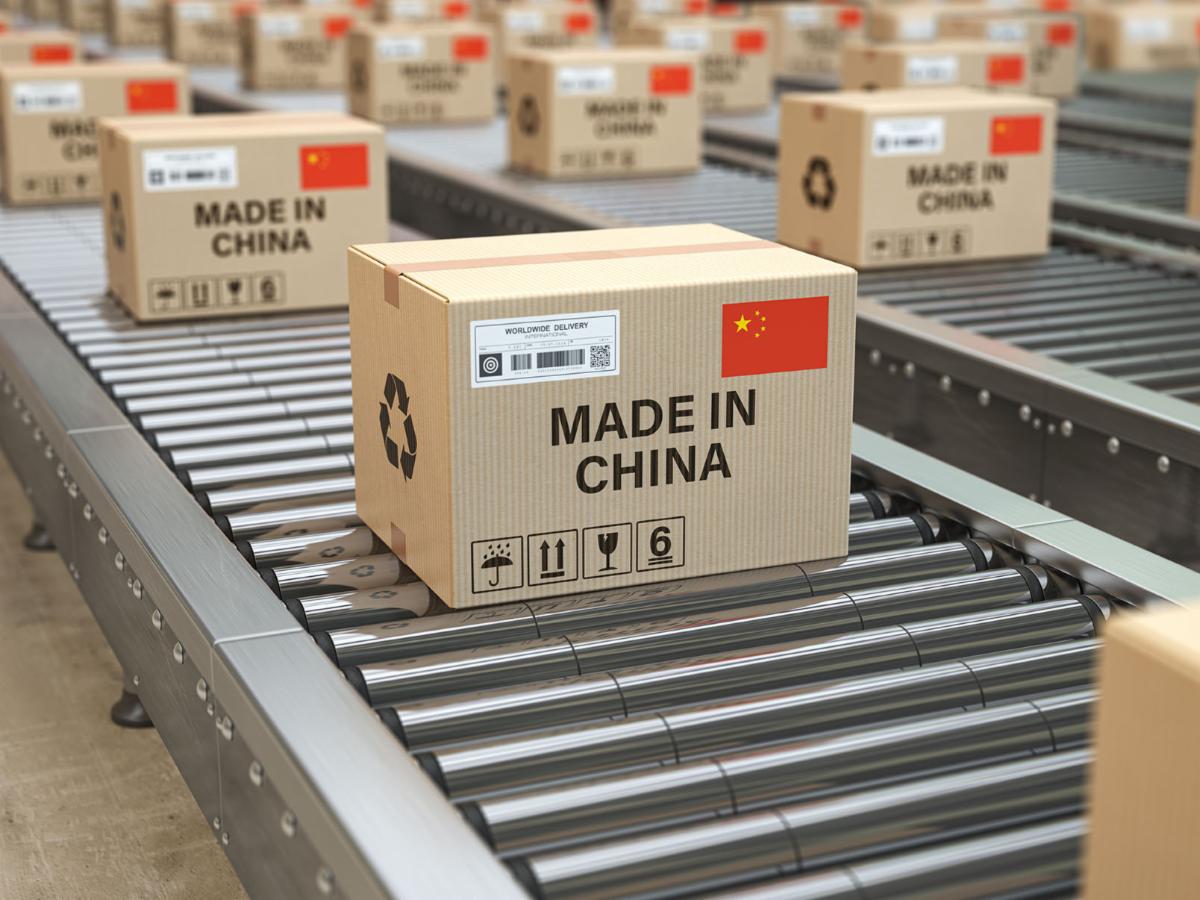
Biden Administration Targets More Chinese Imports


On May 14, 2024, the Biden Administration announced additional tariffs on $18 billion worth of imports of Chinese goods. Citing Section 301 of the Trade Act of 1974, the Biden Administration voiced its concerns over Chinese unfair trade practices, including unfair intellectual property transfers in favor of Chinese businesses from American ones and the flooding of the market with artificially low-priced goods from China. The Administration is also expected to keep existing tariffs on Chinese goods in place.

Read More
 

Remote Workers and the Need for Foreign Qualification in Other States

Determining whether a company must qualify in another state for “doing business” in such state has always been a tricky proposition. Rather than having clear and concise rules, states either look to see if a company has “regular, systemic or extensive” business activities within the state or they determine what activities are not considered “doing business.”  

Read More

U.S. Patent Infringement Opens the Door to Damages Based on Foreign Conduct

Multinational companies beware – the U.S. Court of Appeals for the Federal Circuit’s recent decision in Brumfield v. IBG LLC, 97 F.4th 854 (Fed. Cir. 2024), has opened the door for U.S. patent holders to seek damages based on wholly foreign sales for patent infringement occurring in the United States.


Read More

Child Labor Law Violations are Increasing


Most developed countries have laws governing the use of child labor. In addition, many companies have codes of conduct that address human rights obligations as well as prohibitions against the use of child labor. In the United States, the Department of Labor (“DOL”) enforces the Fair Labor Standards Act (“FLSA”). The FLSA sets forth the minimum wage, overtime, and recordkeeping requirements, as well as the various child labor restrictions. In addition to the FLSA child labor requirements, all fifty states have implemented child labor laws that impose different or more stringent requirements on the use of child labor. 

Read More

Substantial USCIS Filing Fee Increases Implemented

The USCIS increased its filing fees on April 1, 2024. The filing fees have substantially increased for most employment-based petitions. Fees in some categories increased between 200% to 300% with an additional Asylum Program Fee. The new fee schedule is broken down based on the type of visa classification sought, the size of the employer and whether the company is designated as a non-profit entity. Employers with 25 or fewer full-time-equivalent (FTE) employees, as well as employers who are designated by the Internal Revenue Service as a 501(c)(3) non-profit entity, now pay lower filing fees in certain categories. 


Read More
 
 
Linkedin  

Chicago


203 North LaSalle Street

Suite 2500

Chicago, IL 60601-1262

P 312.245.7500

F 312.245.7467


Detroit


39555 Orchard Hill Place

Suite 600

Novi, MI 48375

P 248.564.1116

F 312-245-7467


Los Angeles


19191 South Vermont Ave

Suite 420

Torrance, CA 90502-1051

P 310.630.5900

F 310.630.5909


Schaumburg


200 North Martingale Road

Suite 800

Schaumburg, IL 60173-2033

P 847.734.8811

F 847.734.1089