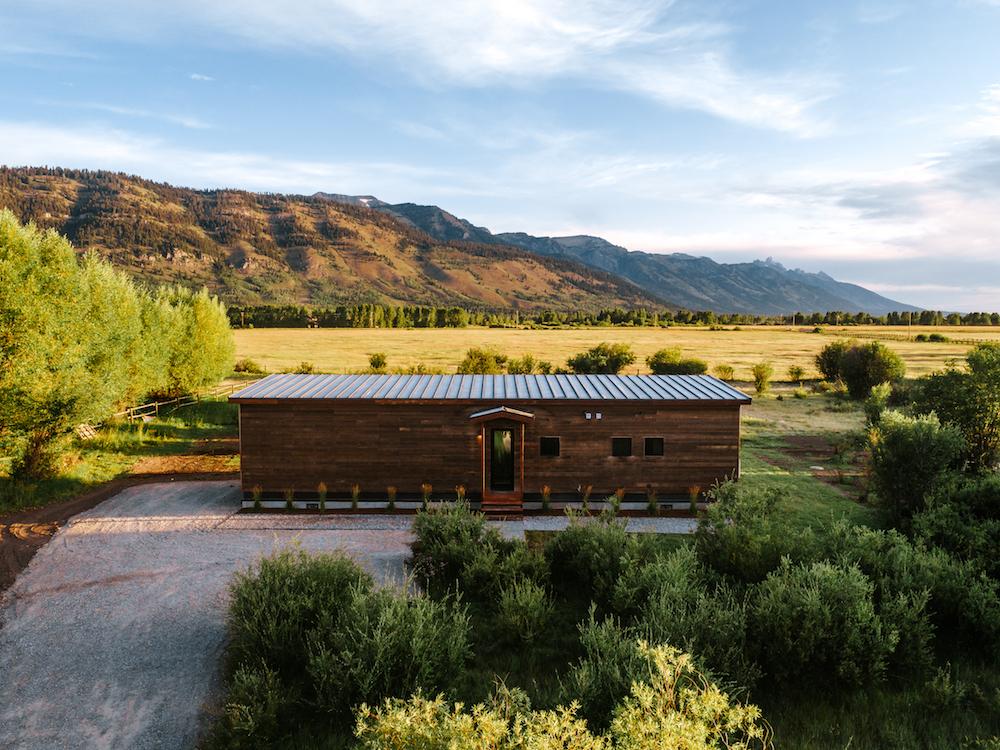
Camille Obering Fine Art is pleased to present Matthew Day Jackson's "Waterfalls and Birds" an exhibition addressing the mythology of the American West, on view at Guesthouse
July 8, 2021 – January 23, 2022.
Jackson's work grapples with the fatal attraction of the frontier and the faith that man places in technological advancement without considering the outcome of said “advancement”. Frequently monumental, his work imposes not only on a large physical scale, but also conceptually. For the last 20 years Jackson has been an anatomist of America, to better understand power, technology and history to inform our current moment and what lies ahead.
|
|
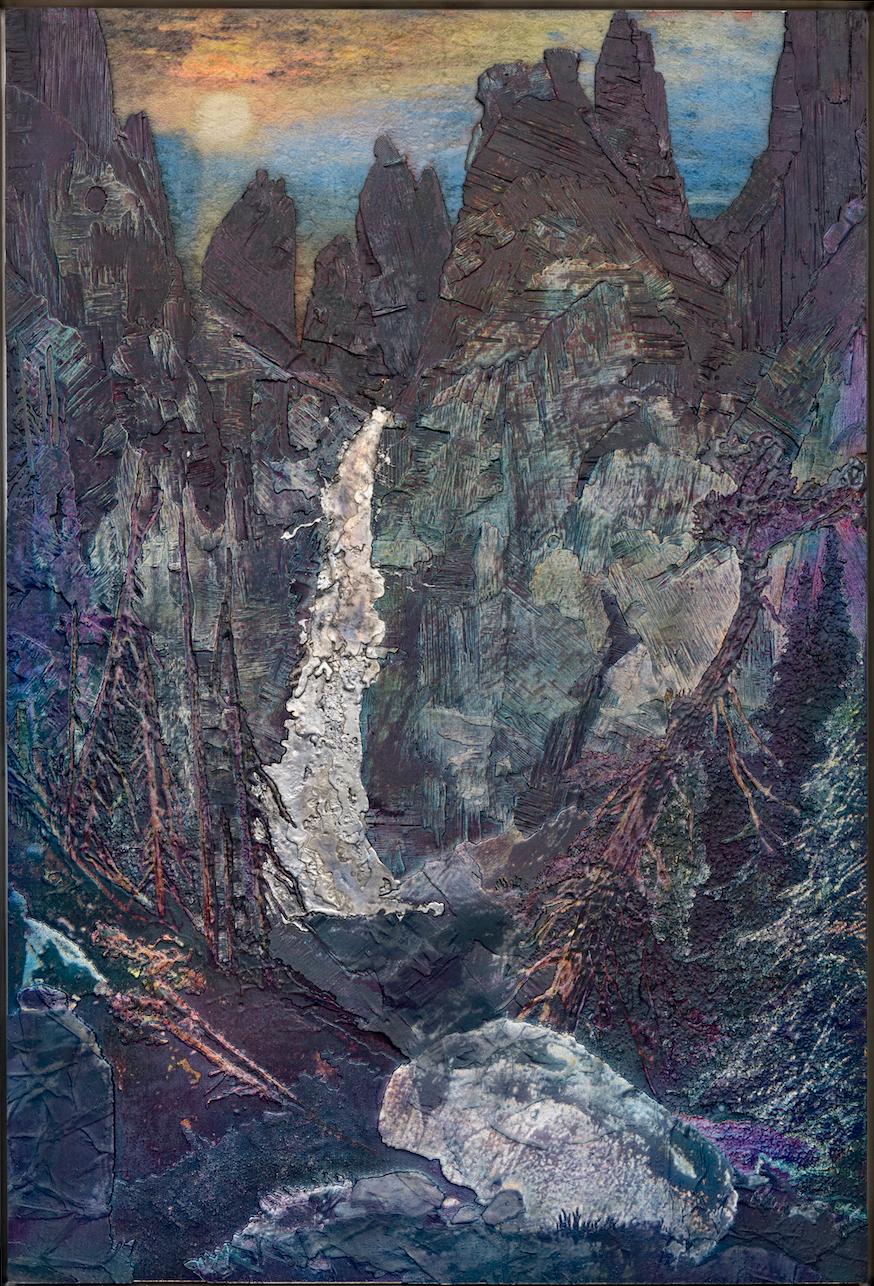
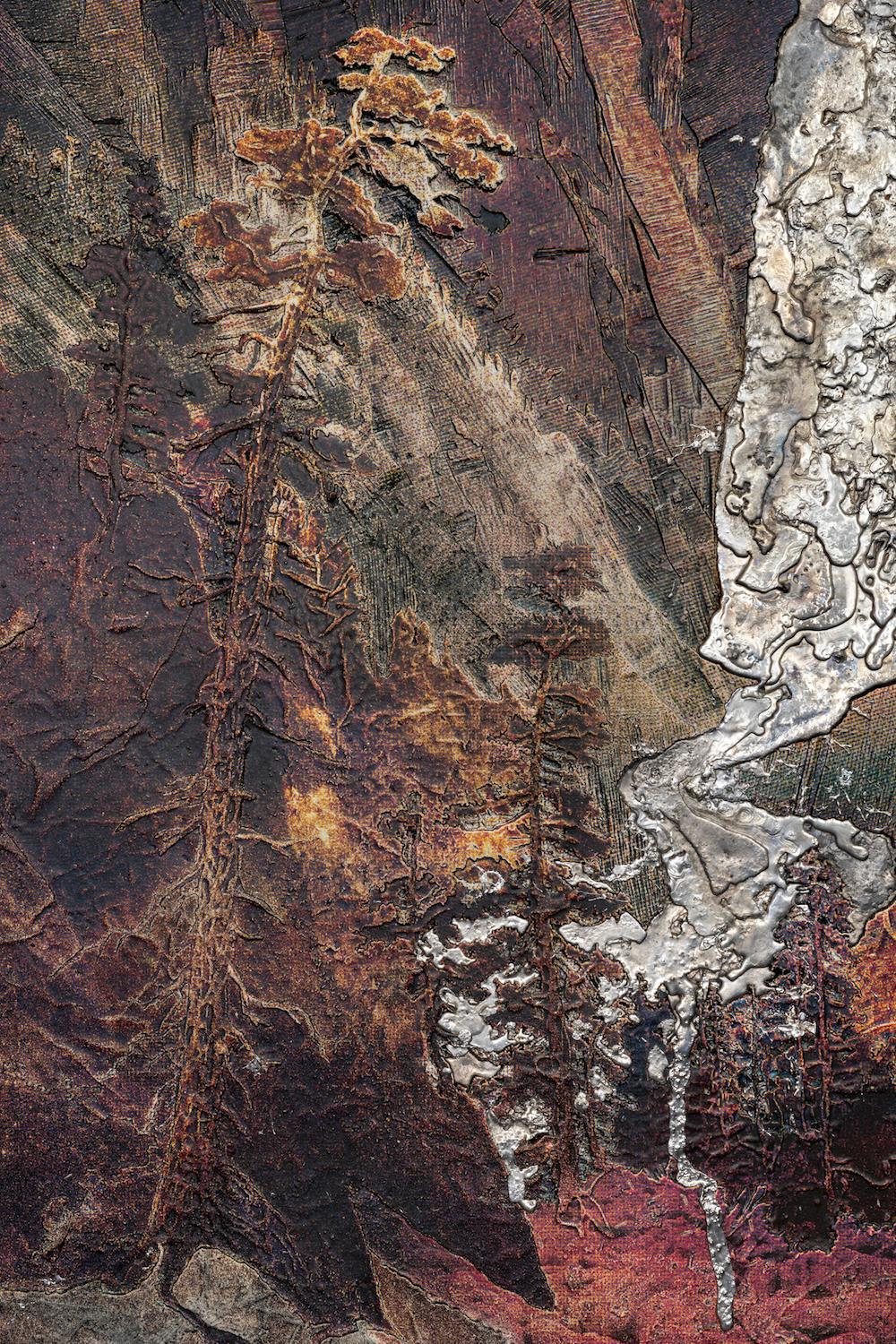
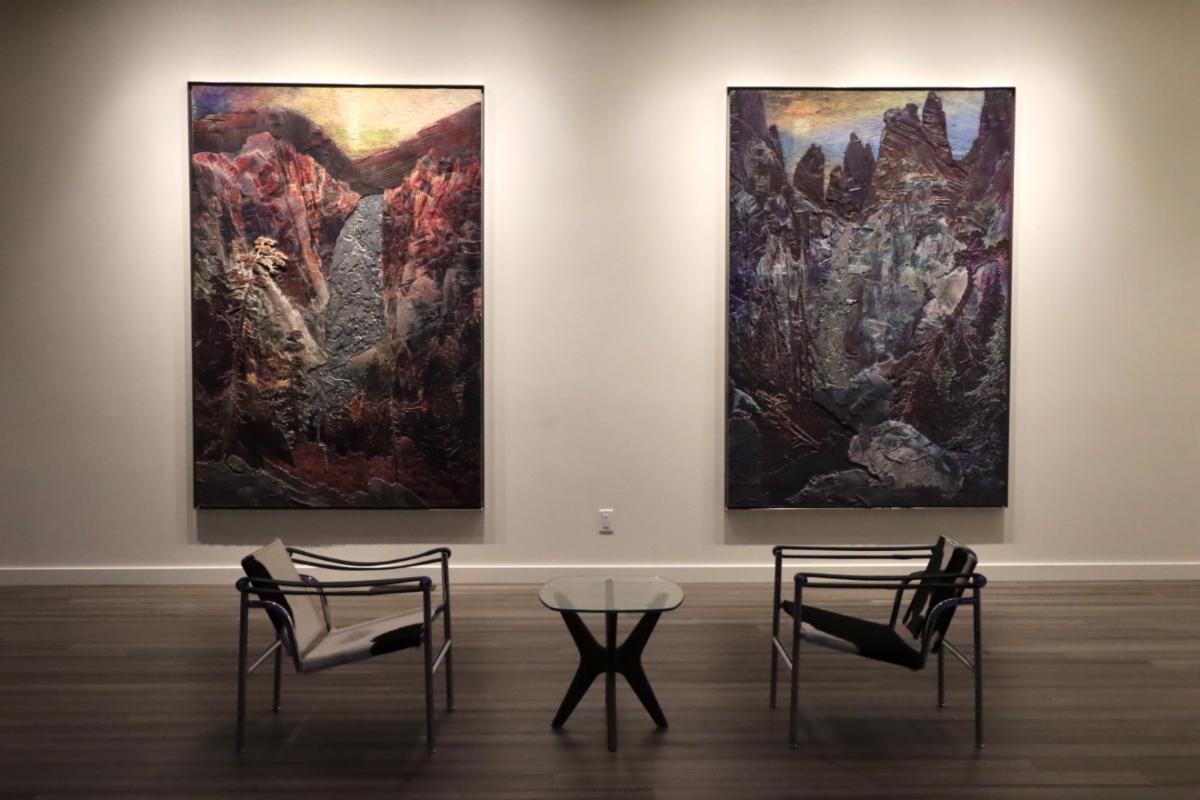
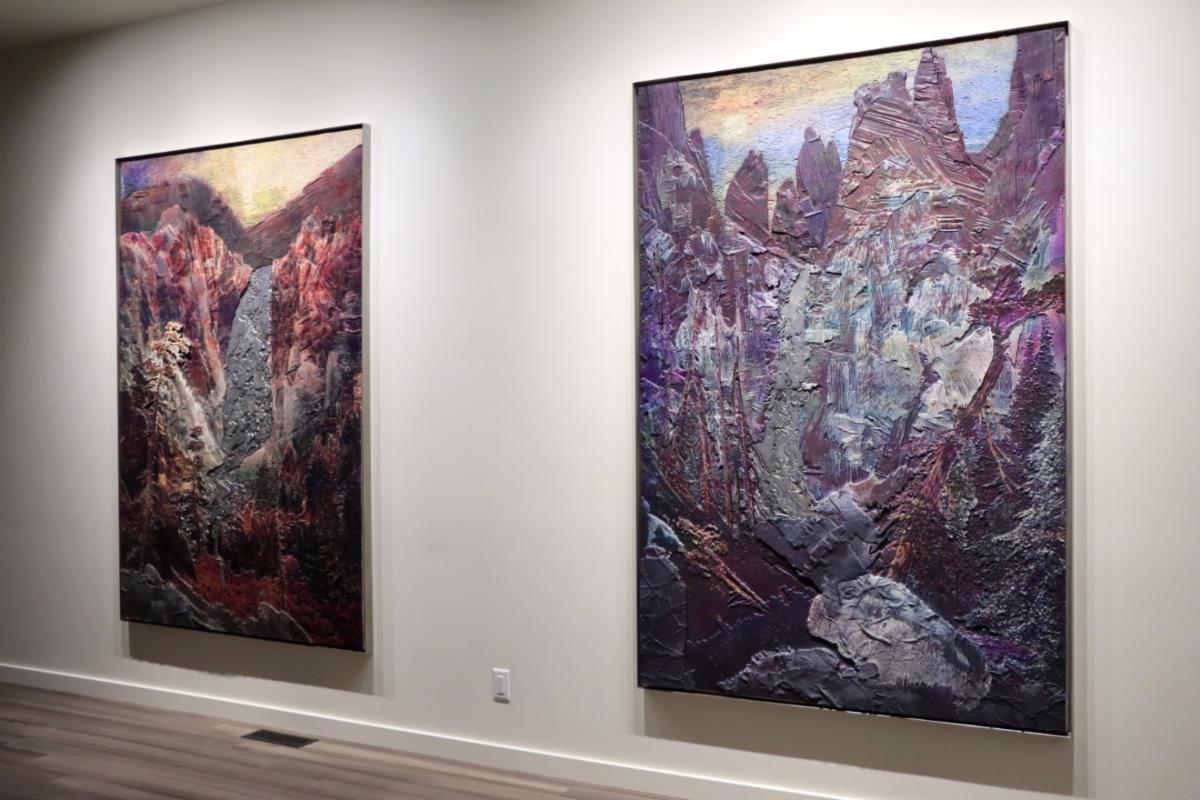
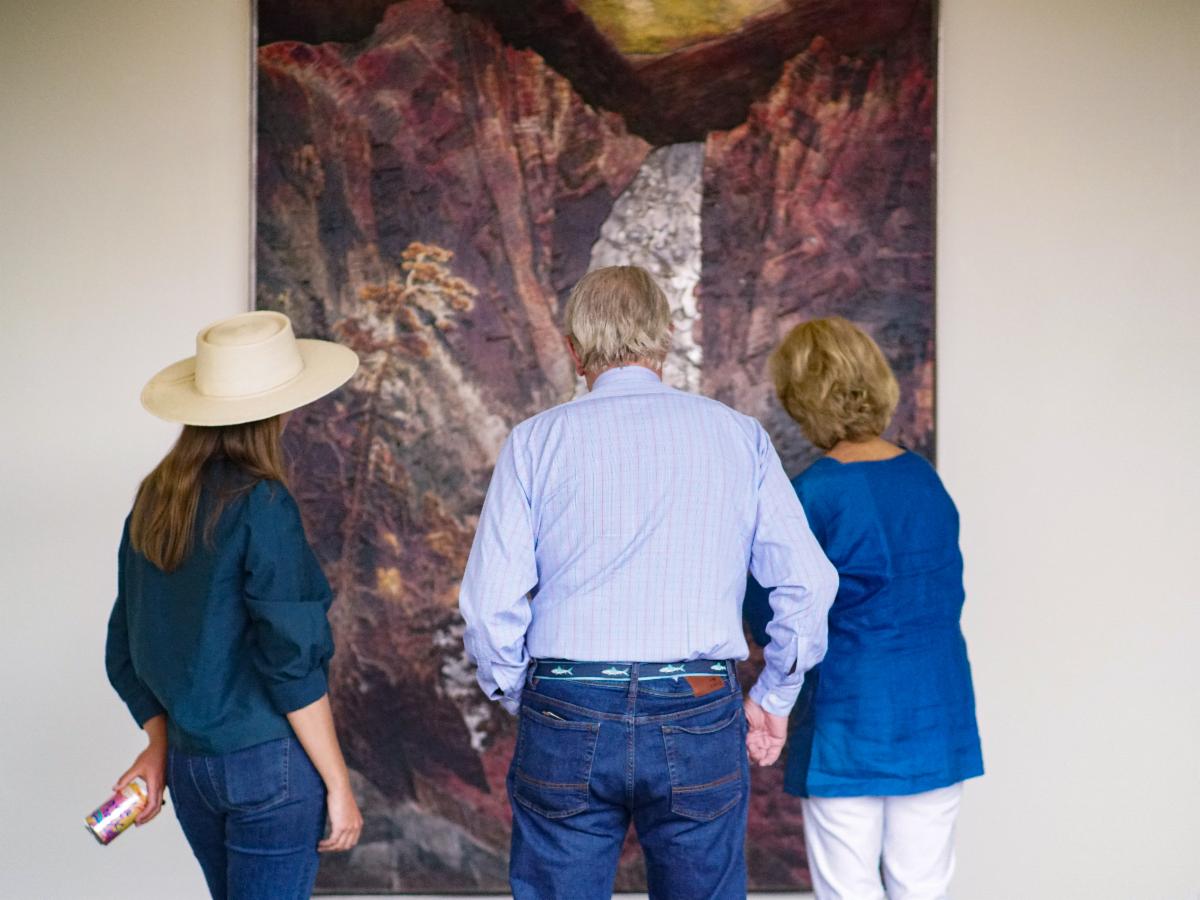
Matthew Day Jackson, “Tower Falls after Moran” 2021, 84 x 59 inches, wood, acrylic paint, lead, stainless steel |
|
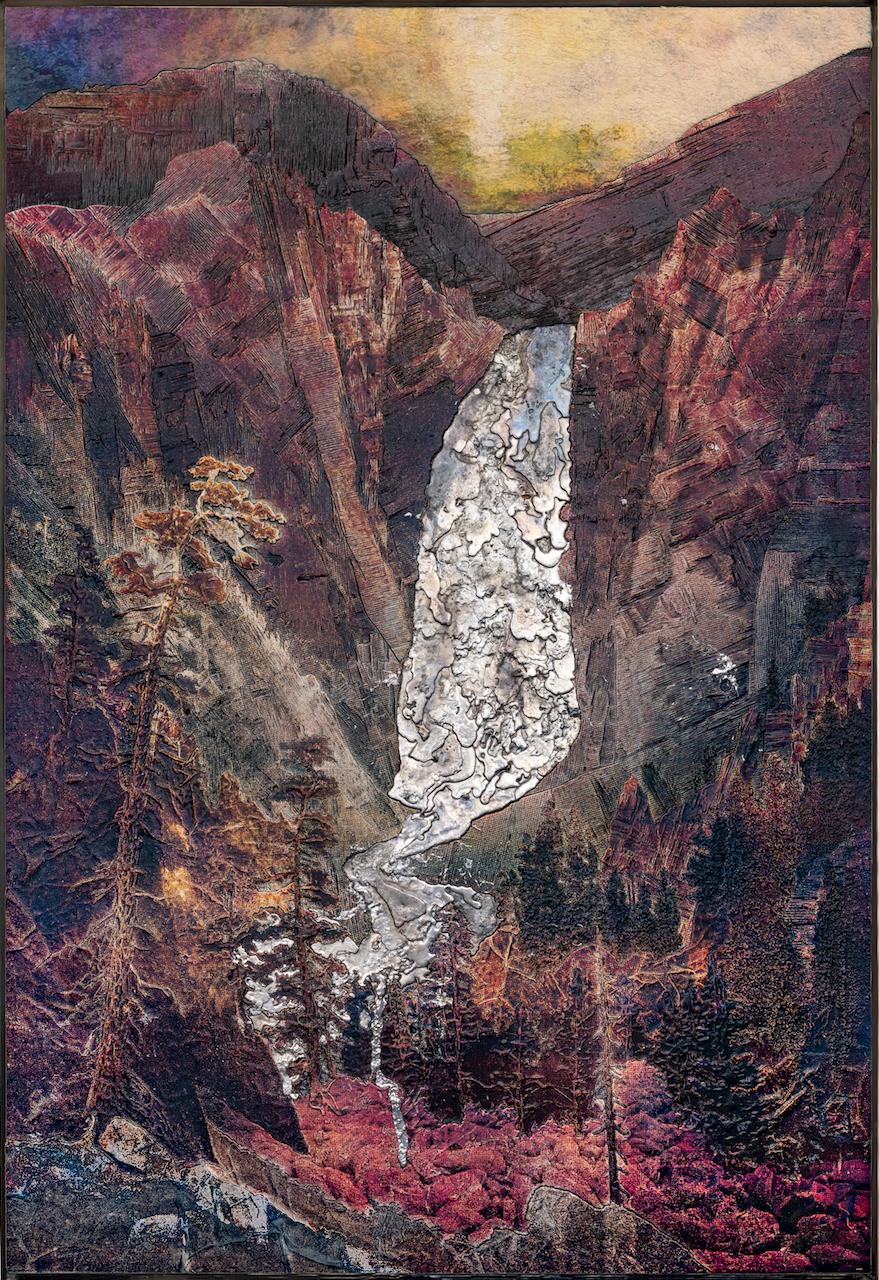
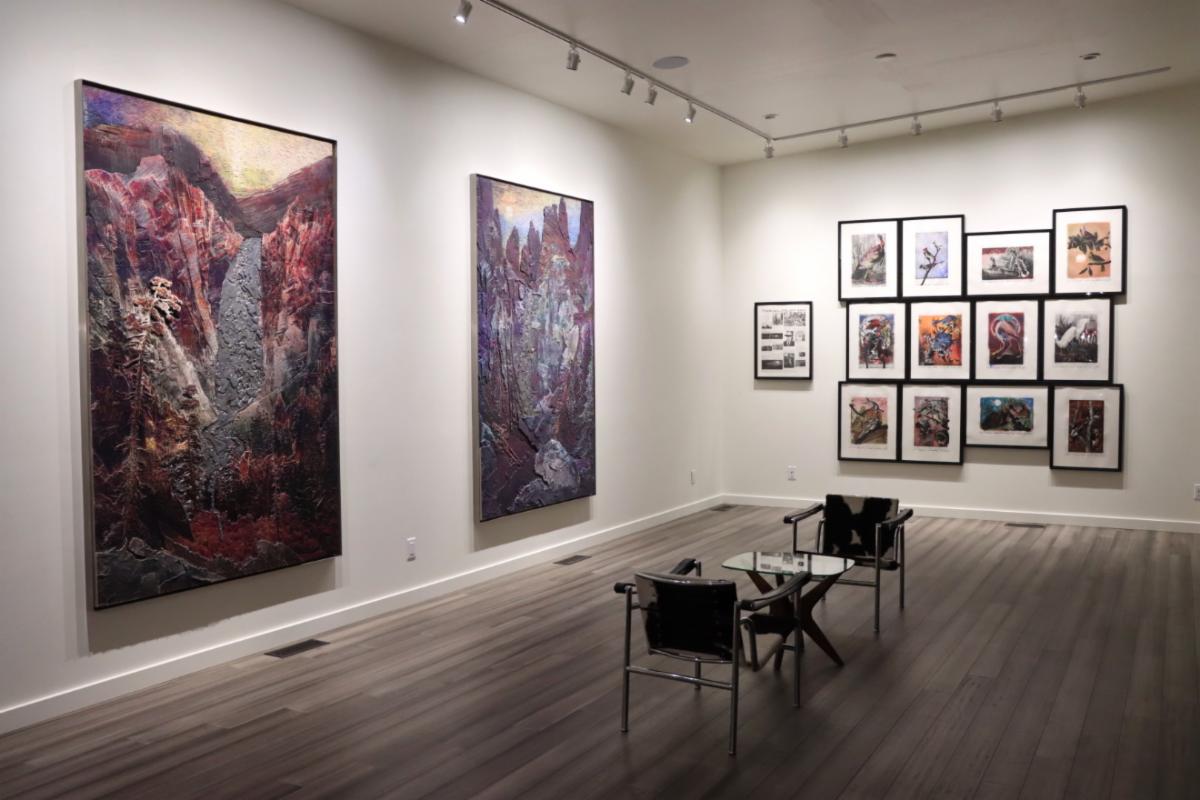
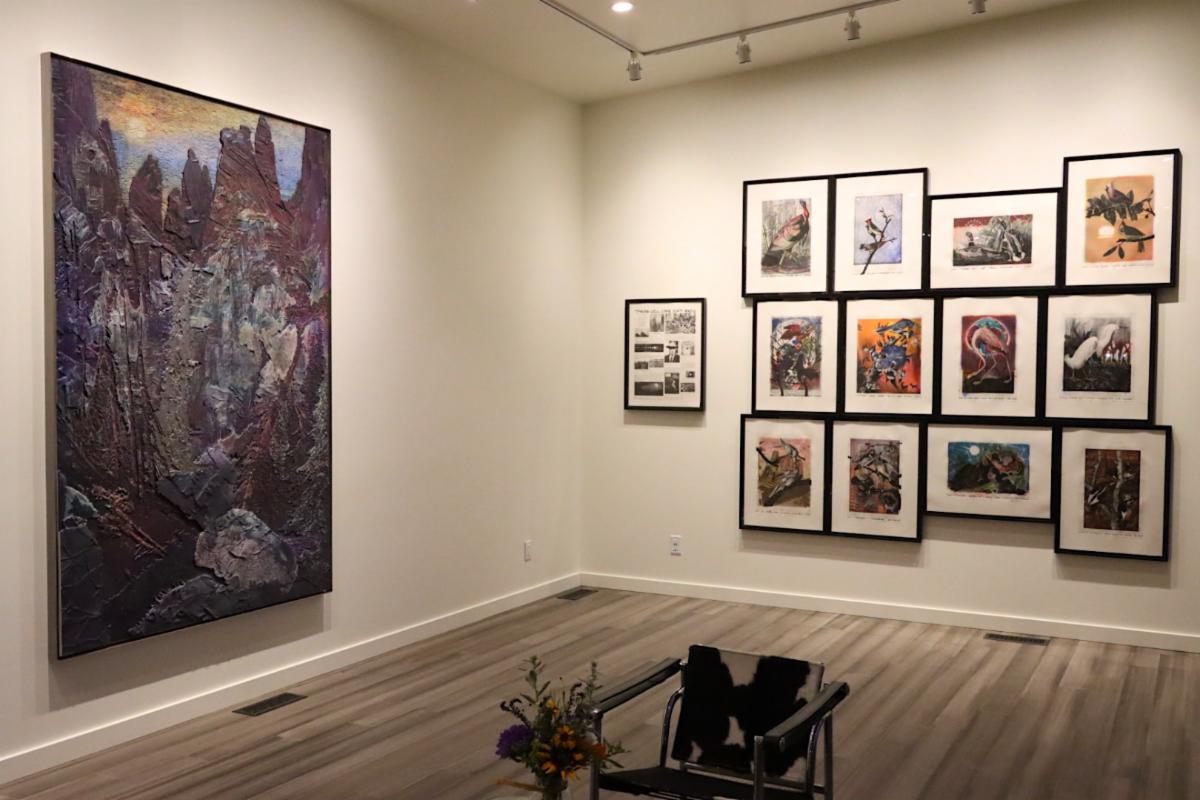
"Waterfalls and Birds" comprises two new paintings and the artist's most ambitious etchings to date. The paintings are based on Albert Bierstadt's "Yellowstone Falls" and Thomas Moran's "Tower Falls" which are some of the most famous images painted of Yellowstone National Park. These paintings of Yellowstone are fundamental to how we think of beauty, aspects of property ownership and romantic ideas that revolve around land and nation. |
|
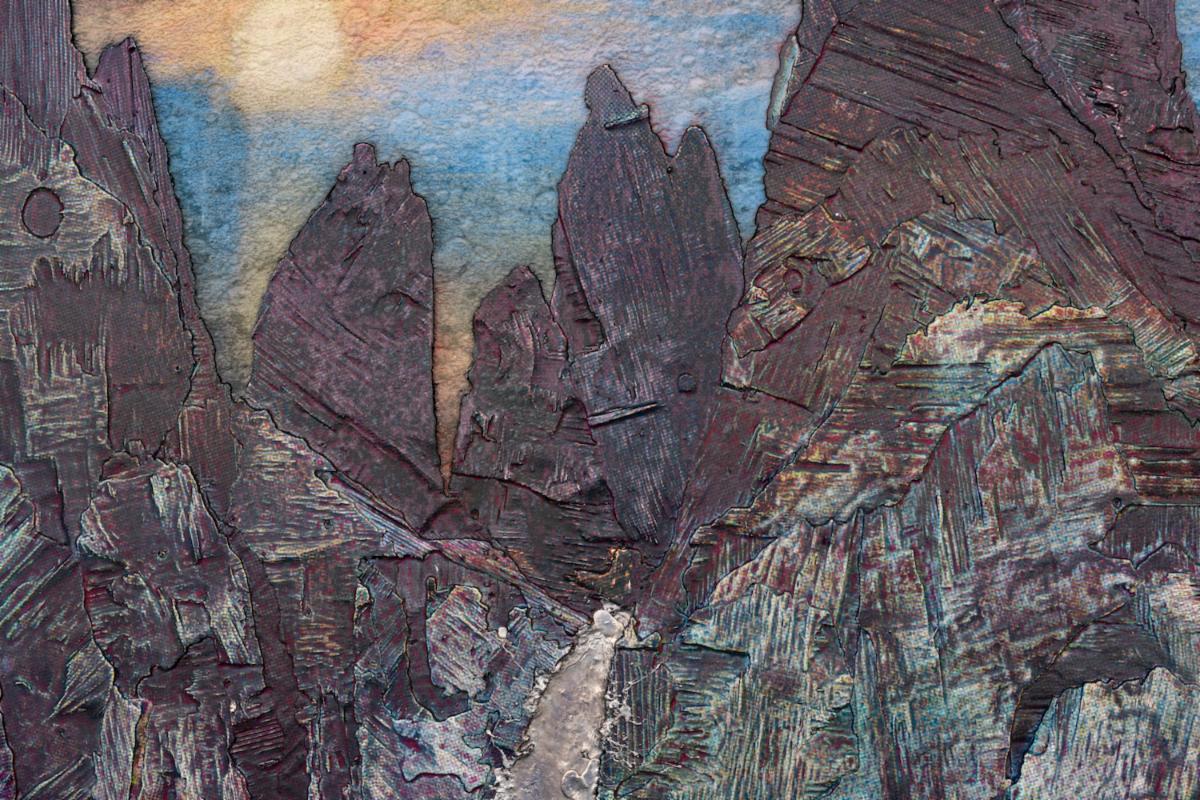
Matthew Day Jackson, detail of “Tower Falls after Moran” 2021, 84 x 59 inches, wood, acrylic paint, lead, stainless steel |
|
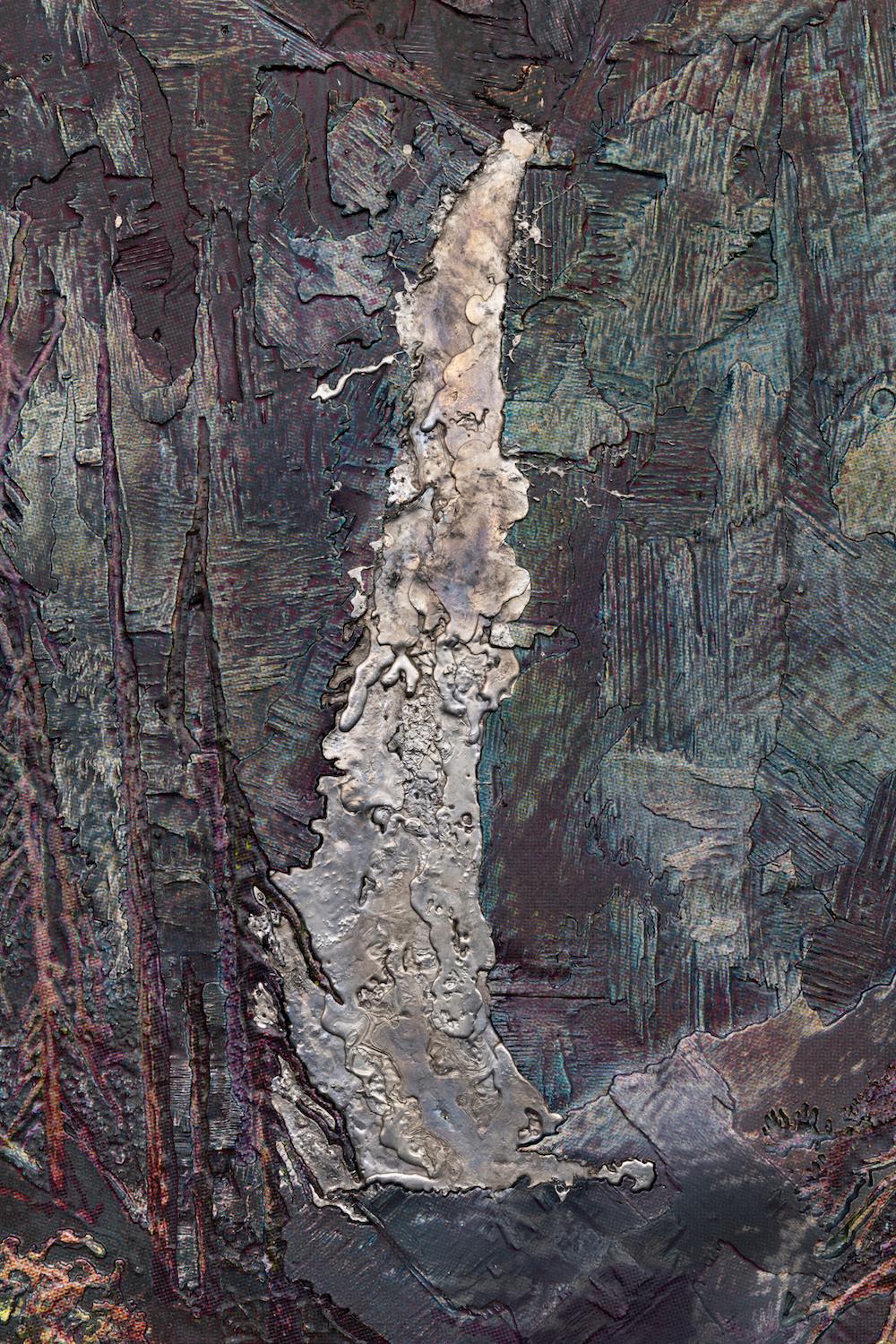
Matthew Day Jackson, detail of “Tower Falls after Moran” 2021, 84 x 59 inches, wood, acrylic paint, lead, stainless steel |
|
For example, Moran’s act of painting “The Grand Canyon of the Yellowstone” and sending it to Congress to convince the government that this land should not be owned by one person but should be protected and democratized so that all people could enjoy and experience its tremendous beauty, was a progressive idea. This pioneering act was the catalyst for the United States and then the World, to recognize and protect landscapes and historically important architecture through UNESCO's designation of World Heritage Sites. |
|
Matthew Day Jackson, “Lower Falls after Bierstadt” 2021, 84 x 59 inches, wood, acrylic paint, lead, stainless steel
|
|
Matthew Day Jackson, detail of “Lower Falls after Bierstadt” 2021, 84 x 59 inches, wood, acrylic paint, lead, stainless steel |
|
Bierstadt’s paintings beckoned American immigrants Westward on the promise of spectacular landscapes and vast tracks of land. John James Audubon “singlehandedly” showed European scientists (along with Lewis and Clark) that the abundance of animals living in United States was of great importance. However, this only tells part of the story. |
|
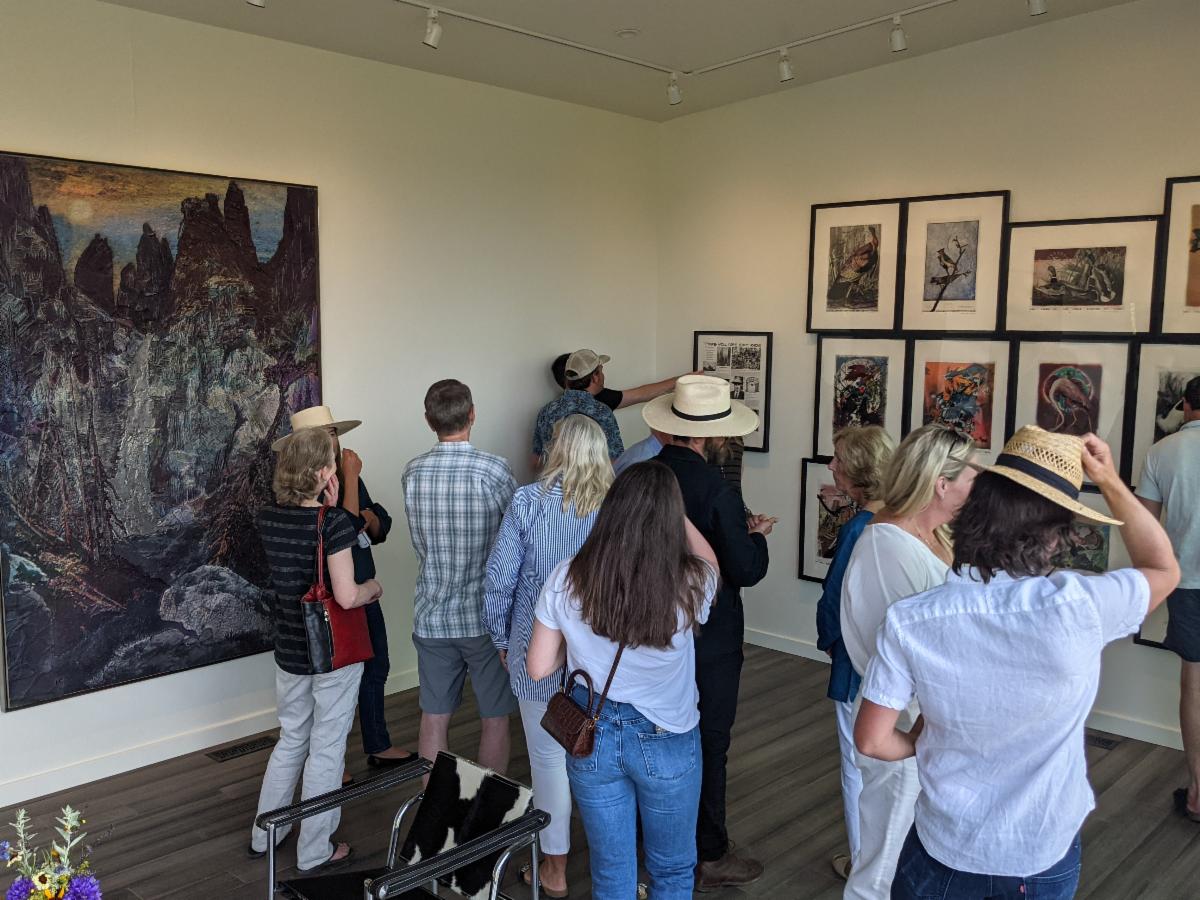
Installation view of Matthew Day Jackson's "Waterfalls and Birds" at Guesthouse |
|
These artists painted a version of the world they wanted others to see. Was it truth? Partly. Was it a mechanism to frame a history they wanted to memorialize? Yes. Art has always been a way to possess, and it is less about what is pictured than what is not. What has been left out – the footprints, fences, military trenches, deeds, treaties, lots of blood, a handshake…. the infinite ways of transferring and demarcating ownership. The lack of human presence or indigenous names of either land or animal presented the place and its inhabitants as being ownerless. We know this not to be true. Historically, as in present day, media has been used to reframe truth. |
|
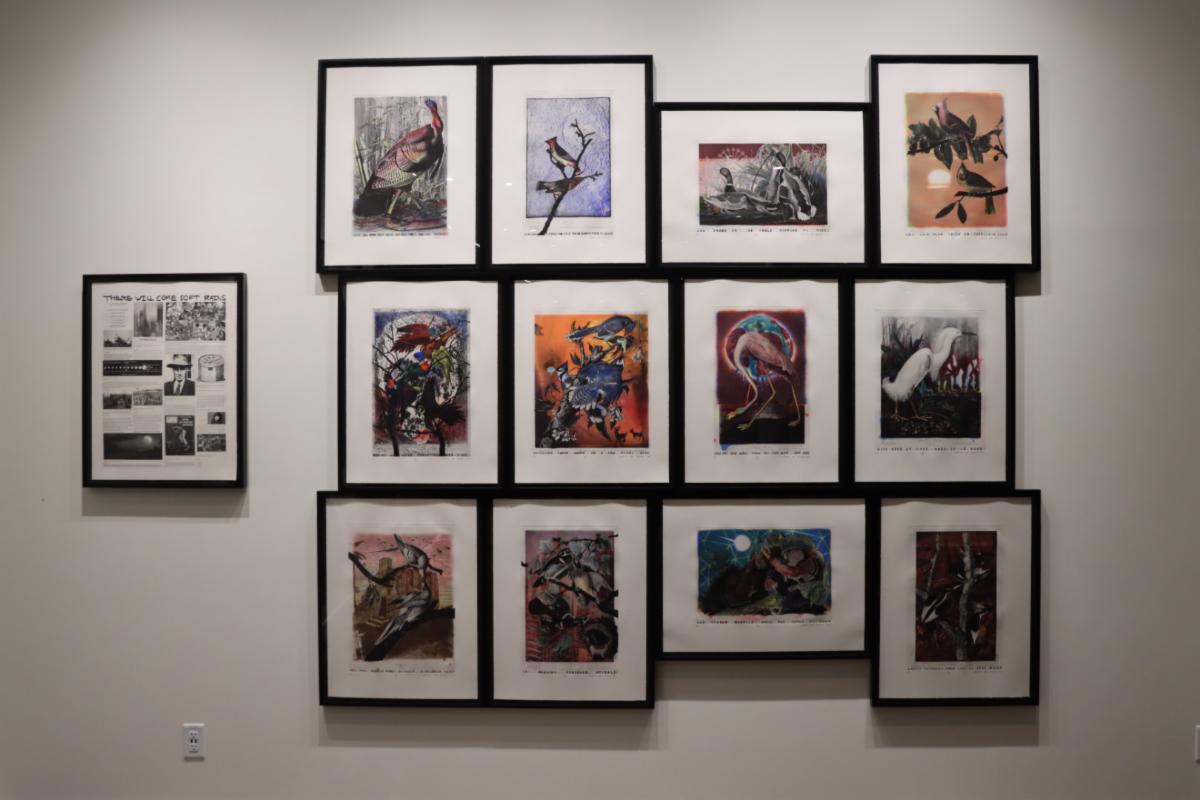
Matthew Day Jackson, “There Will Come Soft Rains” 2015-16, 12 four color, four plate etchings + 1 color colophon
Each sheet size: 27" x 20.5" (68.6cm x 52.1cm), Published by Collaborative Art Editions printed by Christopher Creyts
|
|
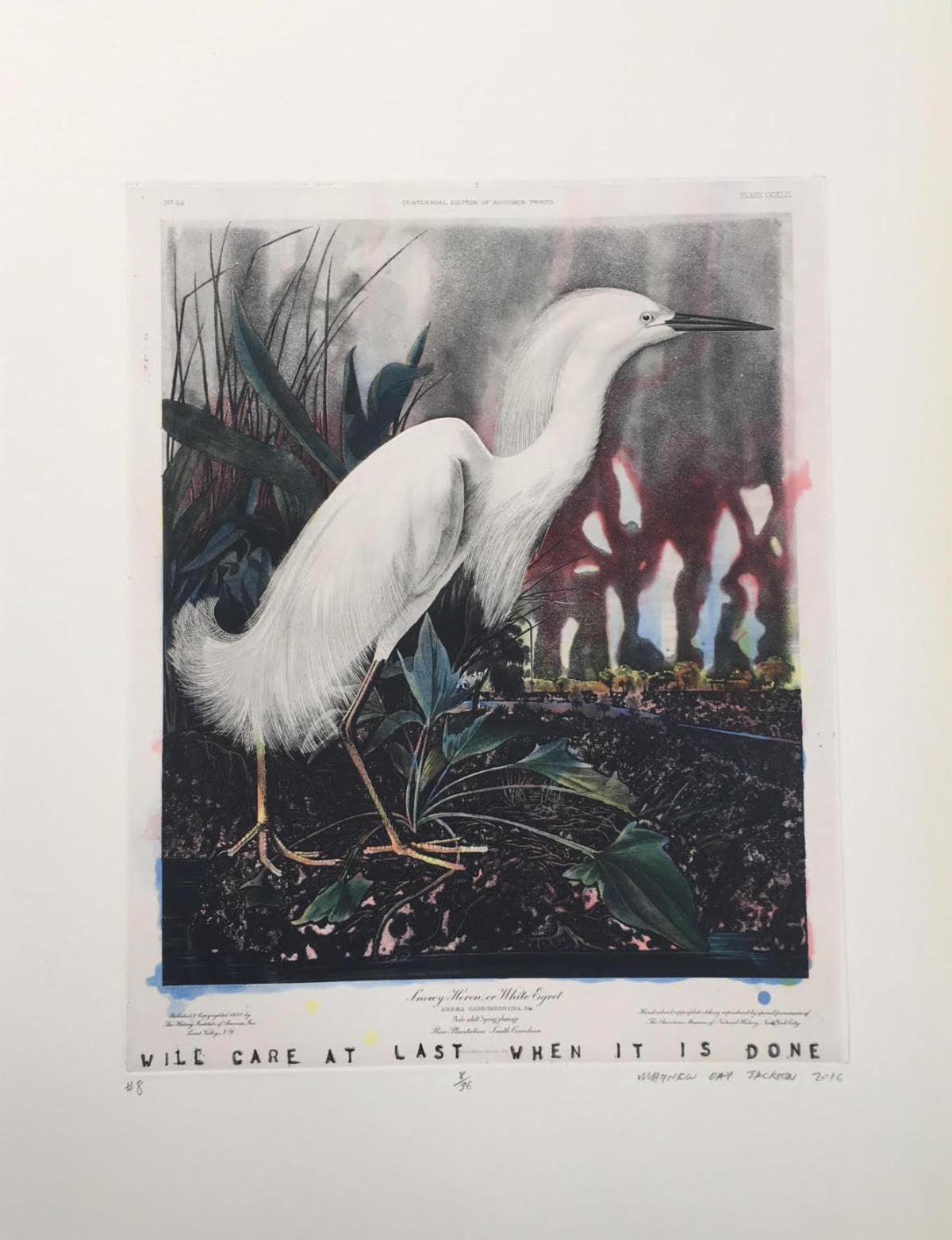
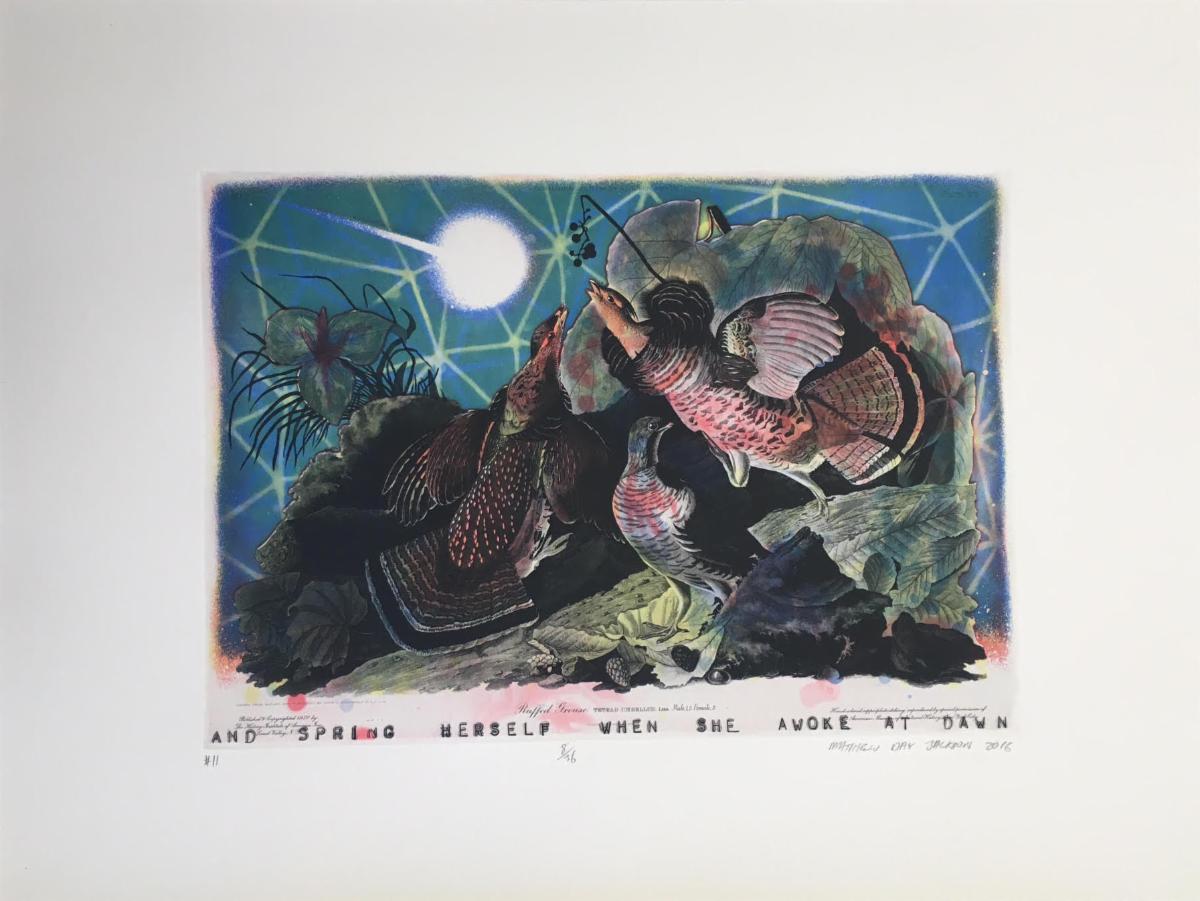
Jackson embraces his role as creator and storyteller through his art making, employing both old practices and new technologies to create works layered with ideas and meaning. For example, through his work "There Will Come Soft Rains" Jackson has masterfully orchestrated a portfolio between three American artists (Audubon, Jackson, and Sara Teasdale) from different eras using iconic images of the past to address contemporary issues of today. Each image is a reworking of four engraved copper plates from a failed attempt in the 1930's to recreate Audubon's "Elephant Folio" of the "Birds of North America" at half scale. Using iconic symbols of conservation, each Audubon bird sits in front of an apocalyptic event from history. Pulitzer Prize winning poet Sara Teasdale’s words from her poem “There Will Come Soft Rains” weave through the work further engaging our senses to absorb its meaning. Institutions such as the Metropolitan Museum of Art’s inclusion of this piece in their collection validates this tour de force in contemporary printmaking, unrivaled in its economy and skill, let alone the historical significance.
|
|
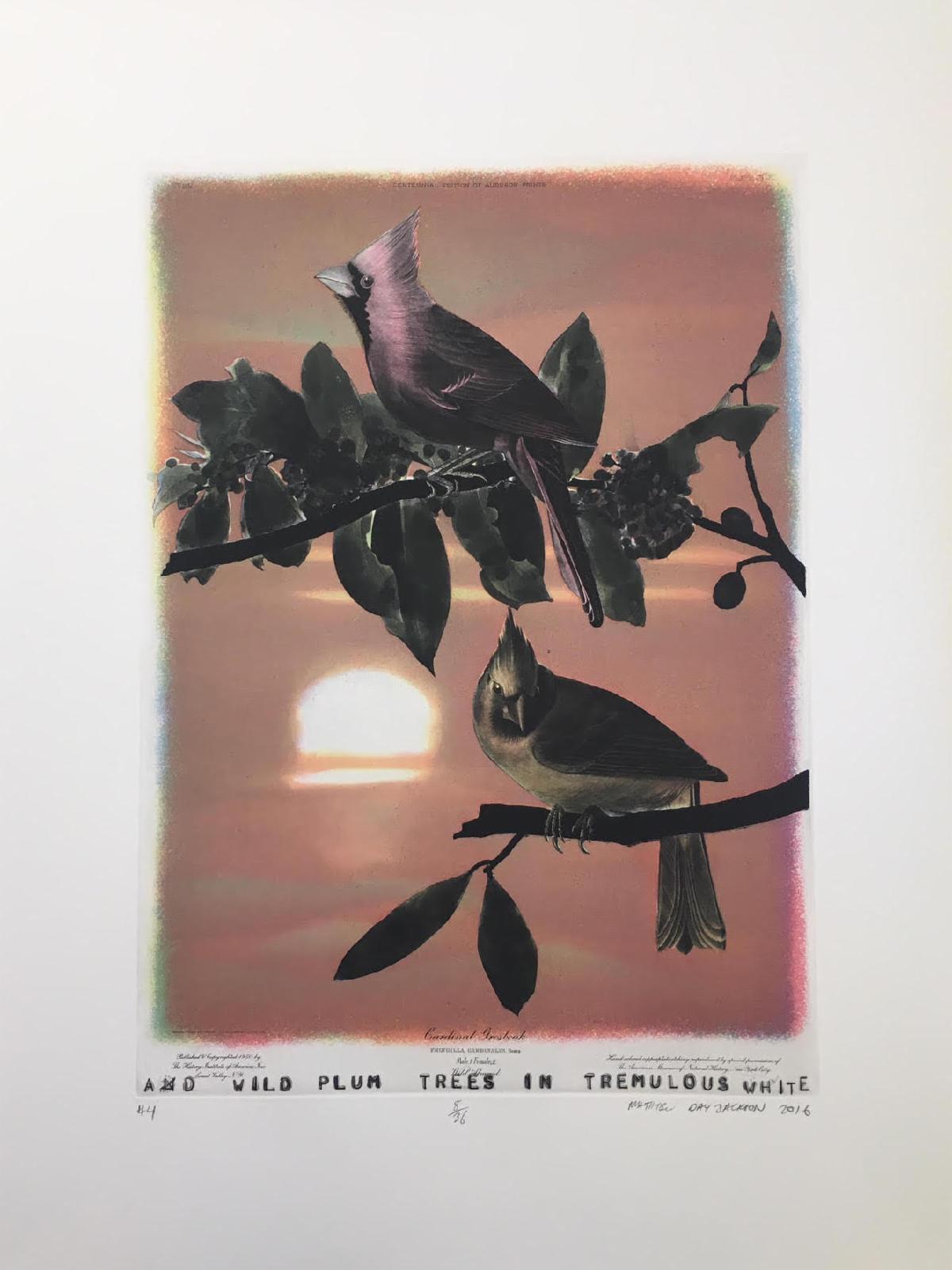
Matthew Day Jackson, “There Will Come Soft Rains” 2015-16, plate 4 of 12 four color, four plate etchings + 1 color colophon
27" x 20.5" (68.6cm x 52.1cm), Published by Collaborative Art Editions printed by Christopher Creyts
|
|
Matthew Day Jackson, “There Will Come Soft Rains” 2015-16, plate 8 of 12 four color, four plate etchings + 1 color colophon
27" x 20.5" (68.6cm x 52.1cm), Published by Collaborative Art Editions printed by Christopher Creyts
|
|
Matthew Day Jackson, “There Will Come Soft Rains” 2015-16, plate 11 of 12 four color, four plate etchings + 1 color colophon
27" x 20.5" (68.6cm x 52.1cm), Published by Collaborative Art Editions printed by Christopher Creyts
|
|
"There will come soft rains and the smell of the ground,
And swallows circling with their shimmering sound;
And frogs in the pools singing at night,
And wild plum trees in tremulous white,
Robins will wear their feathery fire
Whistling their whims on a low fence-wire;
And not one will know of the war, not one
Will care at last when it is done.
Not one would mind, neither bird nor tree
If mankind perished utterly;
And Spring herself, when she woke at dawn,
Would scarcely know that we were gone."
-Sara Teasdale 1920
|
|
Installation view of Matthew Day Jackson's "Waterfalls and Birds" at Guesthouse |
|
Installation view of Matthew Day Jackson's "Waterfalls and Birds" at Guesthouse |
|
The paintings were made in Jackson’s studio in Red Hook, Brooklyn in the spring of 2021. Utilizing contemporary technology, Jackson drew the works in a CAD program, then scrap materials were shredded and broken and then laser cut to perfectly fit into one another. The paintings were assembled to create a bas-relief and then painted white. Once the paintings were painted white, they were then sprayed with Yellow, Magenta, Cyan and Black and etched to create interwoven dot patterns to photomechanically reproduce images of the original paintings by Moran and Bierstadt. Utilizing the common place technique of four-color printing found in many contemporary homes, Jackson leaves the machine to decide what colors we might see, removing human input from the final product. Through these pieces, Jackson shows his favorite place - the greater Yellowstone ecosystem - through a strange reflection of itself. |
|
Installation view of Matthew Day Jackson's "Waterfalls and Birds" at Guesthouse |
|
Matthew Day Jackson is an American artist whose multifaceted practice encompasses sculpture, painting, collage, photography, drawing, video, performance and installation. Born in Panorama City, California, in 1974 and he currently lives and works in Brooklyn, New York. Jackson is represented by Hauser and Wirth and Grimm Gallery. Jackson’s work is included in many private and public collections such as the Metropolitan Museum of Art , New York, NY (US), Astrup-Fearnley Museum, Oslo (NO); Whitney Museum for American Art, New York, NY (US); Stedelijk Museum, Amsterdam (NL); François Pinault Collection, Paris (FR); Museo d’Arte Moderna, Bologna (IT); Zabludowicz Collection, London (UK); Blanton Museum of Art, Austin, TX (US); Kunstmuseum, The Hague (NL) and High Museum of Art, Atlanta, GA (US); Museum Boijmans van Beuningen, Rotterdam (NL) and Qiao Zhibing Collection, Shanghai (CN). When not in Brooklyn, Jackson and his family can be found skiing, hiking, biking and generally soaking up the beauty of Jackson Hole, Wyoming.
|
|
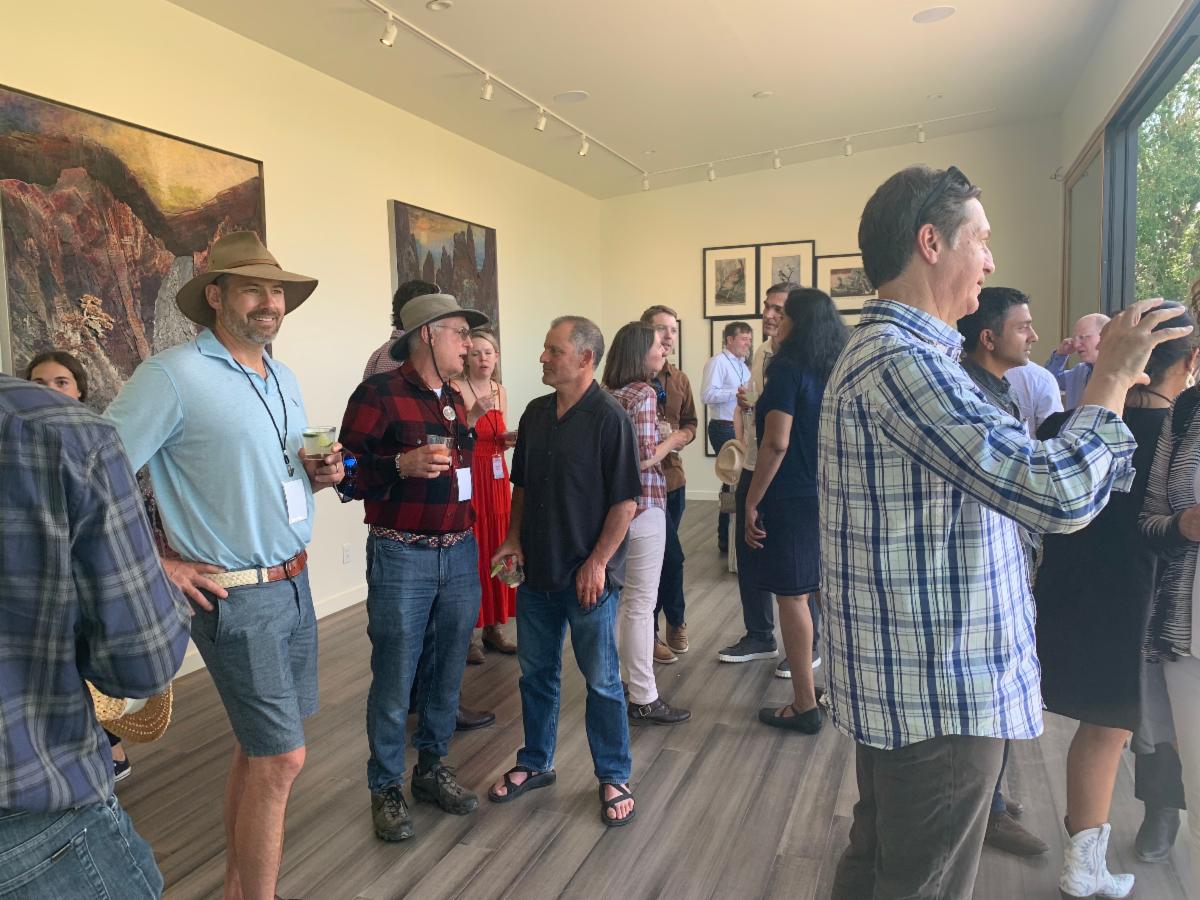
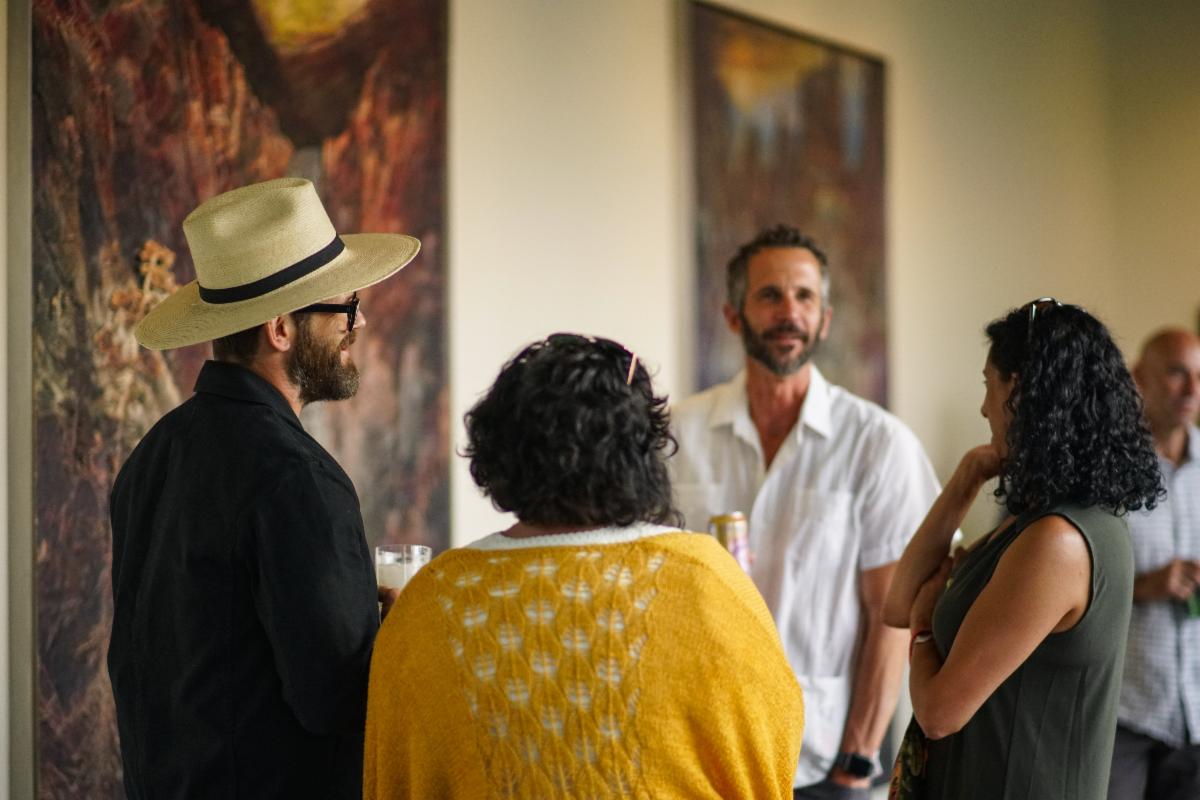
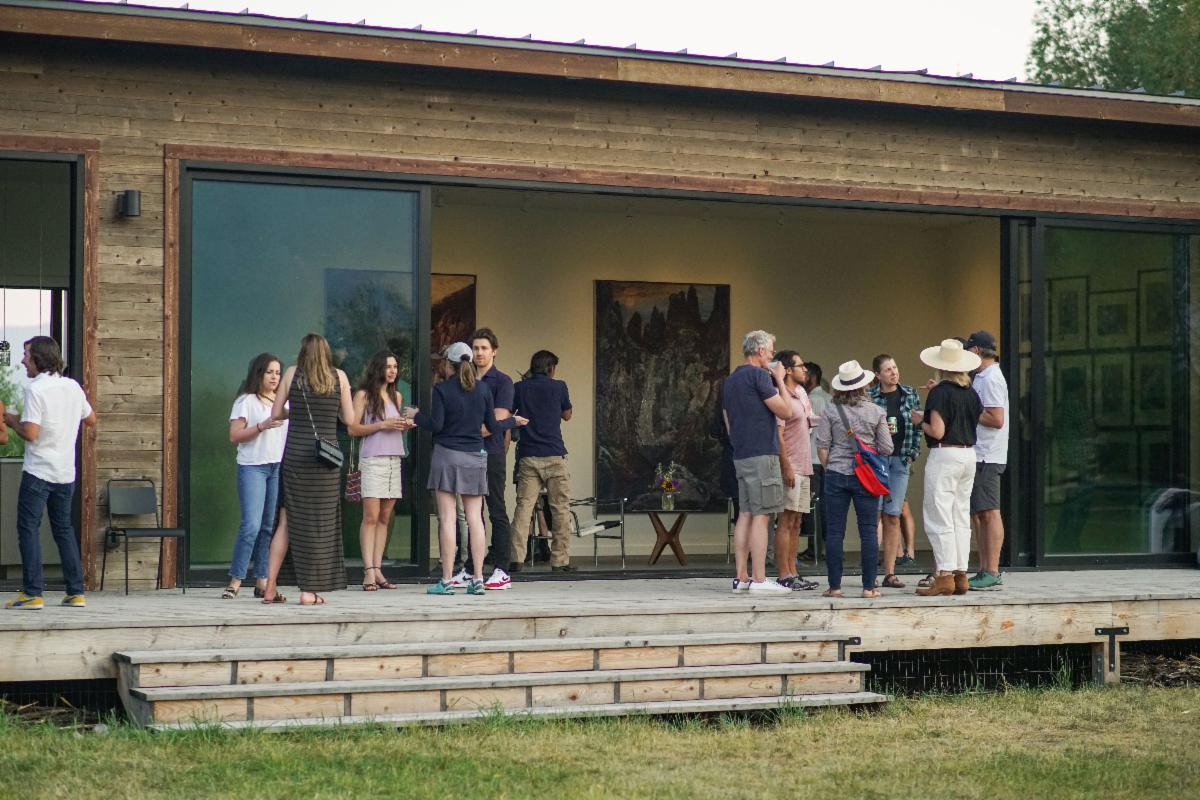
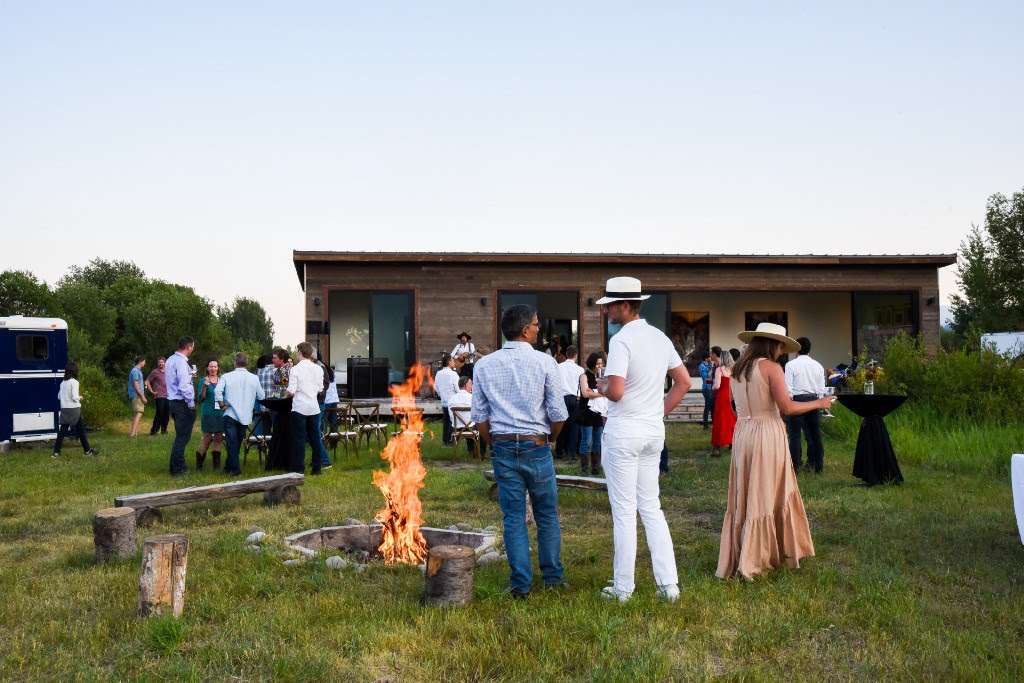
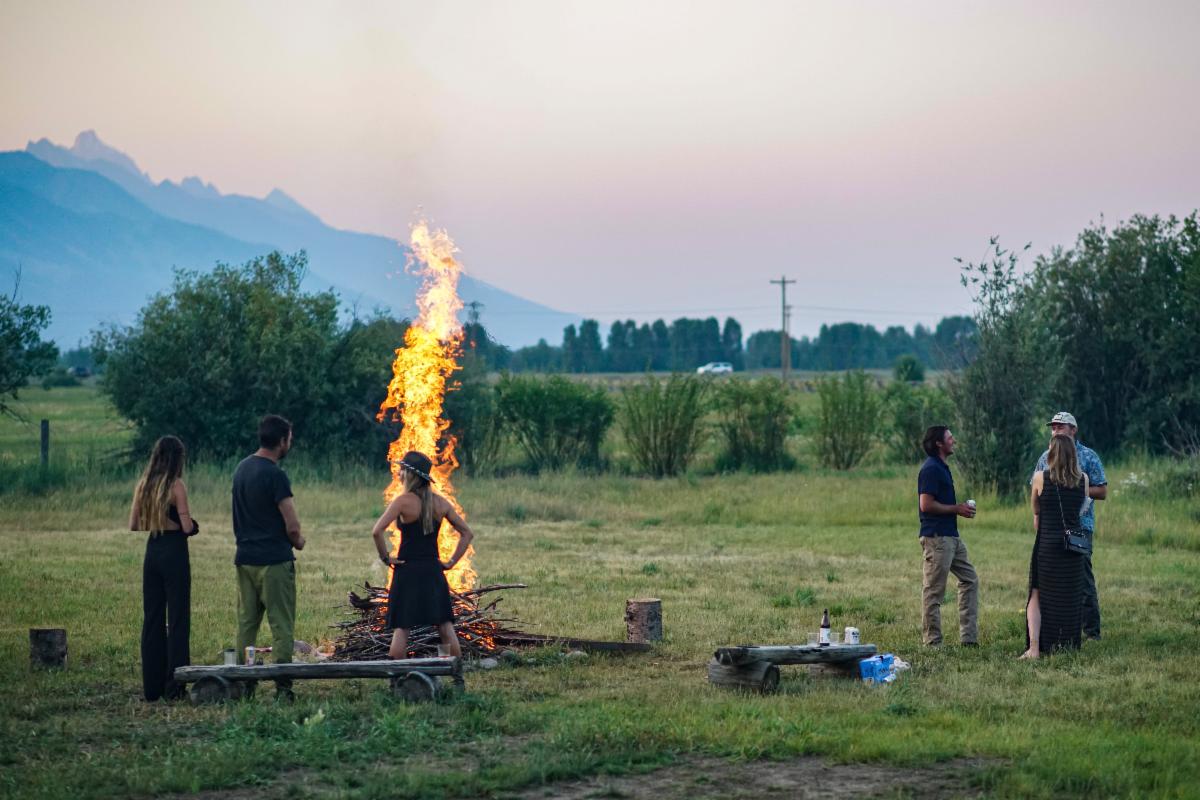
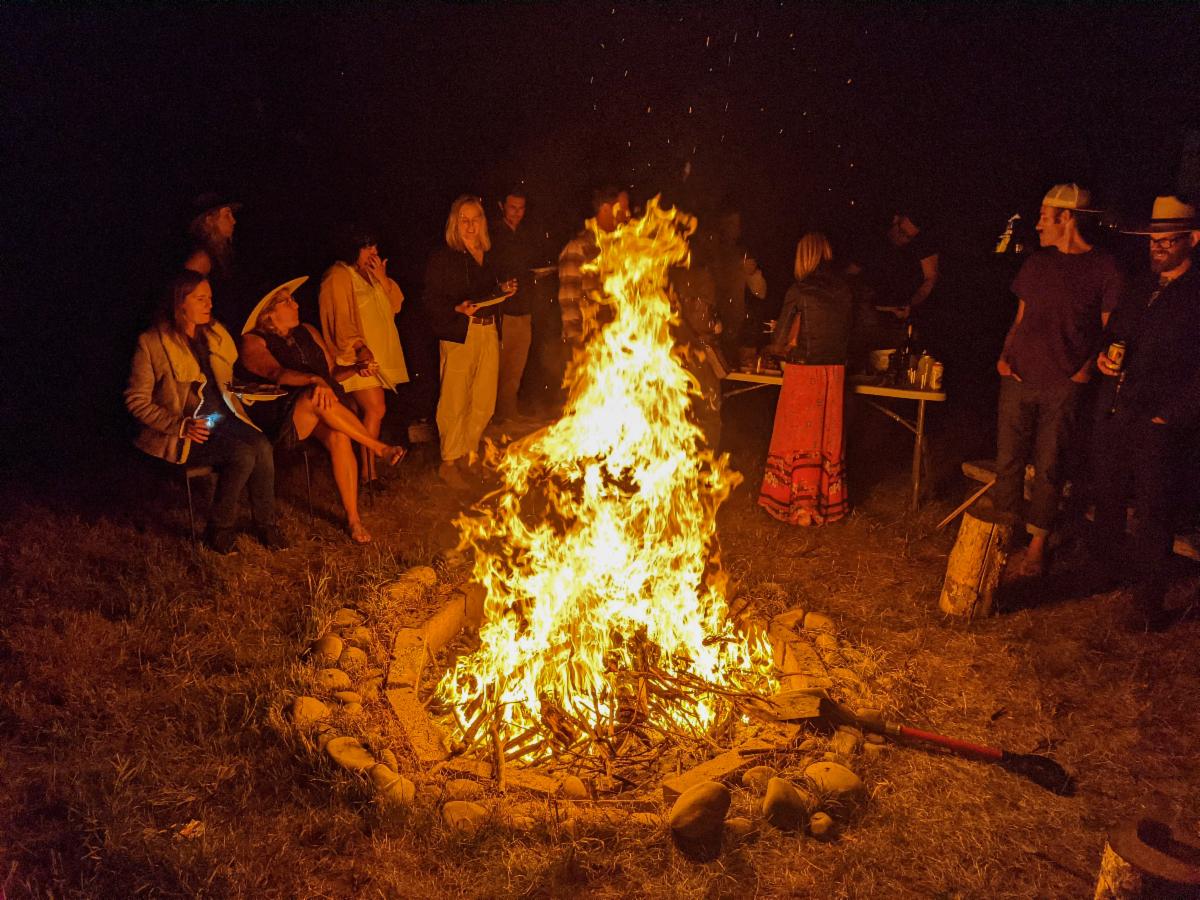
Opening night, Matthew Day Jackson's "Waterfalls and Birds" at Guesthouse |
|
Guesthouse is a private studio space in Jackson Hole, WY, which invites artists, musicians and creators, to present their work to a new audience or explore and present new ideas. The space is run by art advisor and curator Camille Obering, and Ben Musser (Benyaro), a multi-instrumentalist and composer.
|
|
|
|
|
|
|