Relational
Leading

|
|
Masters program in
Relational Leading
and
|
By focusing on the positive aspects of aging, and the availability of resources, skills, and resiliencies, research not only brings useful insights into the realm of practice but creates hope and empowers action among older people. By moving beyond practices of repair and prevention, to emphasize growth-enhancing activities, practitioners also contribute more effectively to the societal reconstruction of aging.
|
www.positiveaging.net
|
Sign up for this free newsletter in the following languages:
- English
- Spanish
- Danish
- German
- French
- Chinese
- Portuguese
|
|
|
Ideas, News and Resources
May 2015
|
|
We hope you enjoy receiving our newsletter which includes constructionist ideas and practices as well as news and resources from the Taos Institute.
|
|
|
Brief Encounters from the Taos Institute
This month we welcome Allen Moore as he shares thoughts on Relational Leading...
Relational Leading, Neurons, and Grandmothers 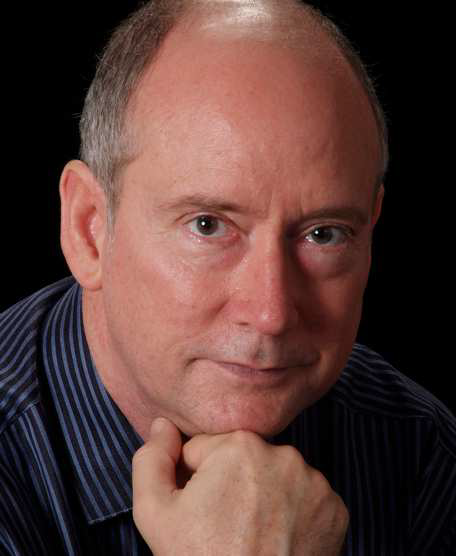
What memories come to mind when you hear the word grandmother? I knew my maternal grandmother only during my youngest preschool years, so the memories are few and yet they remain intimately near. Her soft gray hair swept back into a bun, her wrinkled skin, her gentle eyes, calming voice, and kind spirit. She smelled like her kitchen; was an alchemist of cornbread, fresh churned butter, garden greens, fried chicken. Memories of my grandmother, stored away and reviewed countless times over these many years.
But where, exactly, are these memories stored? Is there a specific small set of neurons in my brain - like a cabinet drawer - dedicated to these memories? If some injury damaged or removed these neurons, would my memory of grandmother be lost forever? Neuroscientists frequently engage in this debate over "grandmother cells." Some, in an idea appropriately known as sparseness, advocate that each memory is held within a few local neurons - like a cabinet drawer or office file folder. More widely accepted, however, is the opposing concept of distributed representation theory. From this stance, the memory of grandmother resides in a wide, diverse ensemble of neurons across various cortical areas, bringing together the wrinkles, face, gray hair, smells, and events into a complex conceptual representation - and as this wonderful distributed ensemble synchronously fires together, grandmother vividly emerges.
In my work as a consultant, I am often asked to engage with an organization to help "improve their leadership." Entering the engagement, I am tempted to ask just where exactly they think their leadership exists. Is it locked away in a cabinet drawer? Following sparseness theory, do they assume that leadership resides only in a few critical senior executive neurons at corporate headquarters? As one who chooses a relational perspective, I'm much more biased toward the distributed representation camp.
From a relational perspective, Leadership is not held within any one leader, just as cognition in a relational neuro theory does not reside within a single neuron. Leadership and cognition both emerge through a beautiful synchronous dance of relational interaction across a wide array of contributors. Neuroscience makes use of an fMRI - an imaging technology that allows us to see this dance of neurons "lighting up" as they synchronously fire together in response to stimuli. As a consultant, I try to look for the same in organizations - what do I see "light up" as leadership in response to the stimuli of environment shifts, market opportunities, competitive threats, employee needs? Where are the synchronous, interactive relationships of leadership that are needed to activate, energize, and move into co-action?
Neurotheory describes our brains as having the wonderful capacity for neuroplasticity: they can change the relationships between neurons, strengthening some, pruning others, to dynamically create new patterns of interaction and thus new forms of cognition. My view of an organization's leadership is similar: since leadership is relational interaction, it has plasticity -- it can be dynamically re-formed, strengthened, pruned, and edited to create new possibilities that did not previously exist. Where should it "light up" into co-action; what relational changes would better support the interaction required to generate new possibilities and new outcomes?
Leadership is far too wondrously complex to fit into a model labeled sparseness; it is much more than just the sum of individual leaders. Viewing Leadership as distributed throughout the organization, an abundant set of dynamic relationships emerges. This capacity of leadership is observed as the organization's ability to make sense of environmental challenges or opportunities, to invoke shared practices, and to continually learn and adapt toward shared purpose. When this capacity is reduced, there are a few areas the practitioner can seek to strengthen: the webs of relationships, the emphasis on community and clarification of shared purpose, the quality of dialog, the adoption of shared practices, and the courage to iterate forward into the unknown.
Relational theory, grandmothers and neurons all support an understanding that knowing exists in relating.
-------------------------------------------- Allen Moore is the Senior Partner and Global Head for executive coaching at Korn Ferry. He is also a Founding Fellow with the Institute of Coaching at Harvard's McLean Medical School. He received his PhD from Tilburg University with a dissertation on Relational Leadership, and is part of the Taos faculty for the MSc program in Relational Leading. As a Taos Associate, Allen welcomes any feedback, questions, or communication. Email: Allen.Moore@kornferry.com
**********************
|
|
Reflections on the Second Latin American Congress of International Certificate for Collaborative-Dialogic Practices in Tucumán, Argentina, April 22 - 25, 2015
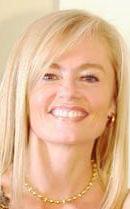
I just returned from the Second Latin American Congress of International Certification for Collaborative and Dialogic Practices, that, like the first one which took place in Sao Paulo in November 2013, was a marvelous experience. While the Sao Paulo event was organized by Interfaci, the Tucumán conference was convened by Fesna (Tucumán) and FundaCes (Buenos Aires), in association with the Houston Galveston Institute and the Taos Institute. Thanks to the livelihood and exhilarating spirit of all the participants and speakers the Congress was a huge success, both on a professional and a personal level. We fortunate to gather over 200 attendees, some of them traveling for over 24 hours with three or more stopovers in order to join us. We had participants from Mexico, Colombia, Peru, Paraguay, Chile, from different parts of Argentina, Norway, Denmark, the US, Spain, among others. I was very pleased by everyone's enthusiastic engagement and was delighted to learn about the diverse and creative ways participants are currently applying Collaborative-Dialogic Practices in their contexts and cultures. It is a true joy to see how these ideas continue to spread rapidly, not only in Latin America, but also in different parts of the globe, especially since we live in a world in which conflict still prevails, one important reason why active listening and Collaborative Practices are pivotal. We were so engrossed in the conference - and that includes myself - that for a while we were oblivious to a newly erupted volcano in Chile, which threatened some of our return trips back home due to its rapidly moving ashes into Argentinean territory. Some of us were lucky and escaped this menace and were able to travel normally, others had to reschedule their flights. The next Congress will be in the Canary Islands in April 2017 and will be hosted by Josep Seguí Dolz and Umans Red. We all look forward to the continuity of these wonderful encounters.
Karin Taverniers, Ph.D. (Taos Associate) Email: ktaverniers@gmail.com Psychotherapist Editor-in-chief, Sistemas Familiares y otros sistemas humanos Faculty staff, FundaCes |
A Dialogue with the Author - Book Study with Frank Barrett
Join in now for the online conversation. May 4 - 22, 2015.
Yes to the Mess: Surprising Leadership Lessons from Jazz
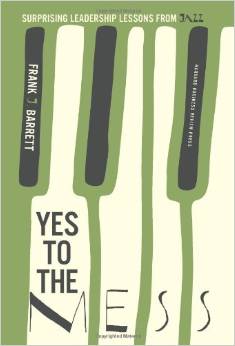
Join us now through May 22nd. Frank Barret will visit the Taos Institute Online Community website during these three weeks to engage with participants. Participants can come to the online community website dialogue space anytime during the three weeks to post, read, share, and engage with the others. It is a virtual gathering. All are welcome. Week 1 will focus on the preface, chp 1 and chp 2. Week 2 will focus on chp 3, 4, 5. And finally, week 3 will focus on chp. 6,7,8. The three weeks will culminate in a live video webinar with Frank Barrett. Register and participate at: http://taoslearning.ning.com/conversations/dialogue-with-the-author-frank-barrett This is a free event. Read the book for a fuller level of participation. The book is available as hard-back or ebook. On Amazon. |
- International Summer Institute
| June 14-18, with Harlene Anderson, Isla Mujeres, Cancun, Mexico
- Collaboration: From Chaos to Creative Flourishing - New Practices for Challenging Times | June 19-20, with Ken Gergen and Miriam Subirana, Barcelona, Spain.
- Social Construction: Premises and Practices, an Online Workshop | Oct. 26 - Nov. 22, with Celiane Camargo-Borges and Dawn Dole. Participants can join in from anywhere in the world.
For information visit:
http://www.taosinstitute.net/upcoming-workshops
More workshops will be listed soon.
|
|
********************************
- Contact the presenters to register for these workshops:
Workshops sponsored by the Evanston Family Therapy Center
- Advanced Narrative Therapy Intensive in Tuscany, Italy | May 25-29, with Jill Freedman and Gene Combs
Workshops sponsored by the Corporation for Positive Change
The Power of Appreciative Inquiry: Theory and Practice
- June 9-12, Rocky Mountain Center for Positive Change, Golden, CO, with Amanda Trosten-Bloom and Barbara Lewis
- June 16-19, European Center, Amsterdam, with Ralph Weickel
- June 25-28,- Hong Kong Center for Positive Change, Hong Kong, with Dorothy Tsui
- Oct. 19-22, Virgina Beach, Virginia, Linda Berardi
- Nov. 19-22, Hong Kong Center, with Dorothy Tsui
Applications of Appreciative Inquiry
- June 10-12, 2015 - West Coast Center, Orange County, CA, with Tenny Poole and Ralph Weickel
Appreciative Inquiry Summit (On-line)
- September 24, 2015 through November 12, 2015 (8:00 a.m.-10:30 a.m. MDT) - Rocky Mountain Center for Positive Change, with Amanda Trosten-Bloom and Barbara Lewis
Appreciative Leadership Development Program
- July 20-24, West Coast Center for Positive Change, Orange County, CA, with Tenny Poole and Ralph Weickel
- September 17-20, Hong Kong Center for Positive Change, Hong Kong, with Dorothy Tsui
- Nov. 24-27, Amsterdam, Netherlands, with Ralph Weickel
- Dec. 10-13, Hong Center, with Dorothy Tsui
Appreciative Coaching
- Sept. 15-16, Amsterdam, Netherlands, with Ralph Weickel
For details and registration information see:
www.taosinstitute.net/friends-of-taos-institute-workshops
*****************
Sponsored by the International Certificate Program in Collaborative Practices, TI is a co-sponsor:
-
Third Conference on Collaborative and Dialogic Practices, Canary Islands, Spring of 2017. Mark your calendar. Details to come.
*****************
Conferences: www.taosinstitute.net/upcoming-conferences
The Taos Institute is a co-sponsor of these events:
The Taos Institute is a Friend of the Conference at:
- 2015 World Appreciative Inquiry Conference - Building Flourishing Societies Together: Elevating, Aligning and Reflecting our Best to Create a Prosperous World for All, South Africa, July 6-10, 2015. www.2015waic.com
For details, registration and more workshop listings, visit our website.
www.taosinstitute.net/friends-of-taos-institute-workshops
**************************************
Relational Welfare - a Conference
- June 26th - 28th 2015 - Copenhagen, Denmark
For details visit: www.taosinstitute.net/europe-events
Also visit the Taos Institute Europe website at
|
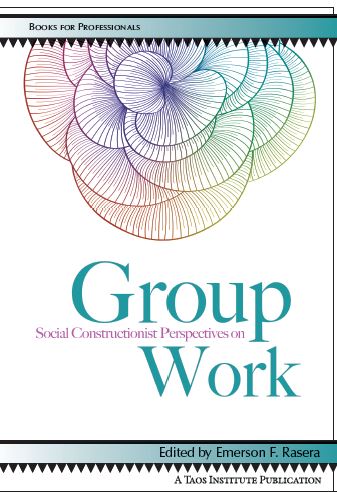 In this delightful and highly readable volume created by our Brazilian colleagues, we discover new and highly creative practices that emphasize the relational approach to group work, whether in the family, the school, the organization or the community. These gifts to the world allow practitioners in any context to maximize their transformative potentials working with groups. Its an exciting contribution to the literature in social construction! Mary Gergen Professor Emerita, Penn State University, Brandywine Co-Founder of the Taos Institute |
WorldShare Books

Free Download Books - Check it out - More free books are available all the time!
www.taosinstitute.net/worldshare-books
Sharing Ideas and Practices From Around the World
The Taos Institute offers free-of-charge books for downloading to your computer or favorite reader. Our ultimate aim is to offer books in all languages. Like all the Taos Institute Publications, WorldShare Books represent significant contributions relevant to social constructionist theory and practice. More books are being added all the time.
Check them all out!
All books are available in PDF format. Visit WorldShare Books
|
 International Certificate Collaborative Practices is an international learning community and network. Sponsored by Taos Institute and Houston Galveston Institute To find a program in your part of the world, take a look at: Collaborativepractices.ning.com |
|
|
The Taos Institute's mission is to bring together scholars and practitioners concerned with the social processes essential for the construction of reason, knowledge, and human value.
We are committed to exploring, developing and disseminating ideas and practices that promote creative, appreciative and collaborative processes in families, communities and organizations around the world through a social constructionist lens.
We look forward to your participation in the dialogue.
Dawn Dole, Executive Director
The Taos Institute
info@taosinstitute.net
Keep Up with Our Updates!



|
|
|