 |
Iron & Steel Preservation
|
|

.
|
After visiting Austin, San Antonio, and Waco in December, 2019, we left Texas for our drive back to Lansing, Michigan, with the intention of returning to Waco in the summer of 2020 during the rehabilitation work on the Waco Suspension Bridge. Within weeks of returning home, the world was in the grips of a catastrophe that has left this country struggling to find a way back to normal. It's as if a major bridge suddenly failed, collapsed, its members strewn along the riverbed, lives lost, sights and sounds changed. Routines are disrupted, familiar sights disappear, habits are forced to change. As I write this, what comes to mind is a book I purchased and read while attending the
2013 Society for Industrial Archaeology conference in Minneapolis, Minnesota: "The City, The River, The Bridge, Before and After the Minneapolis Bridge Collapse." There are parallels within this narrative to some of what we're experiencing today, and what gives me comfort in rereading some of the chapters is that in the end, people with good intentions prevail.
Some of the articles in this newsletter were posted on social media earlier this year; here I have included more pictures and script. We still hope it will be possible to travel again and to bring you more news of the Waco Suspension Bridge rehabilitation, now scheduled to begin in fall of 2020.
Vern Mesler
Iron & Steel Preservation
|
|
Presentation/Discussion: You are invited to join me for a live (online) presentation and discussion with Patrick Sparks of Sparks Engineering, San Antonio, Texas, about the current Waco Suspension Bridge rehabilitation project. Tuesday, May 26, 4 - 4:30pm EDT via WebEx.
If you are interested in being part of our meeting, please send me your name and email address. I will then provide you with a WebEx invitation with a link to the meeting. (You do not need to have a WebEx account to access the meeting.) I hope many of you will join us for this discussion.
|
Waco Suspension Bridge in Waco, Texas
|
|
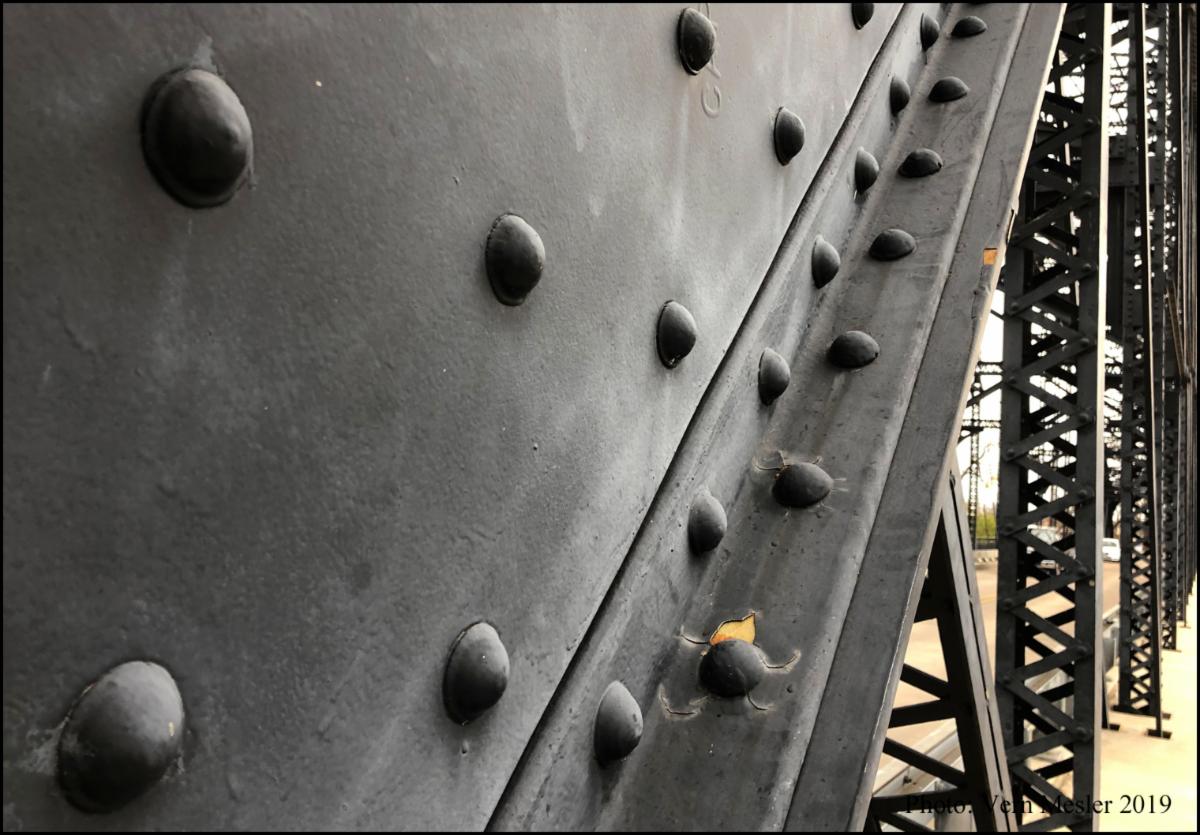
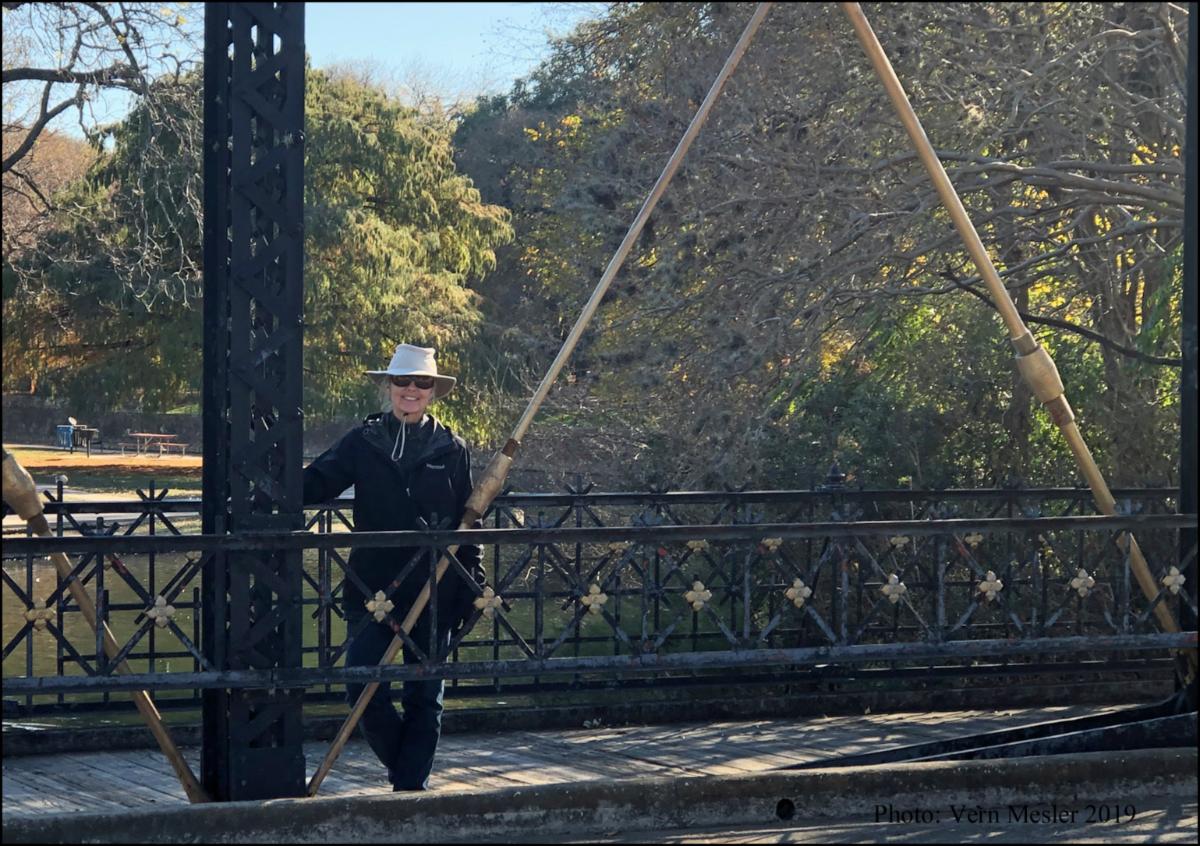
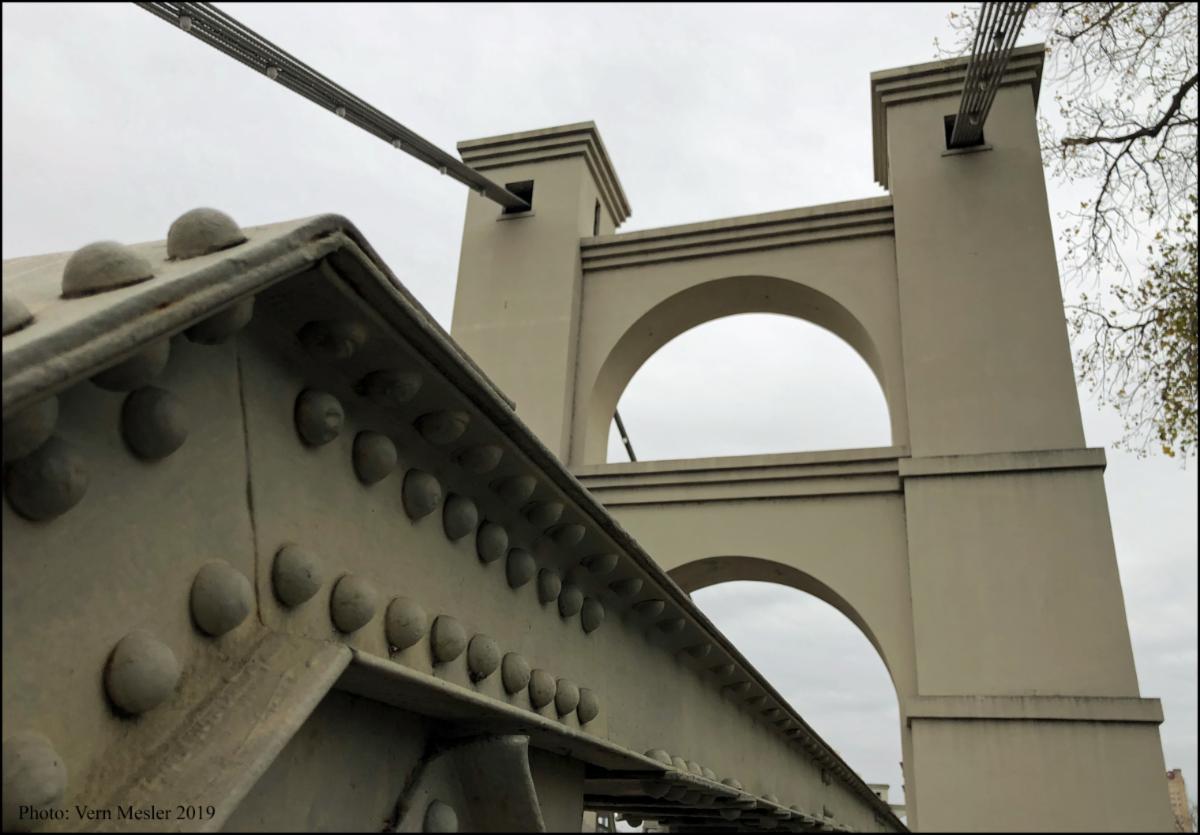
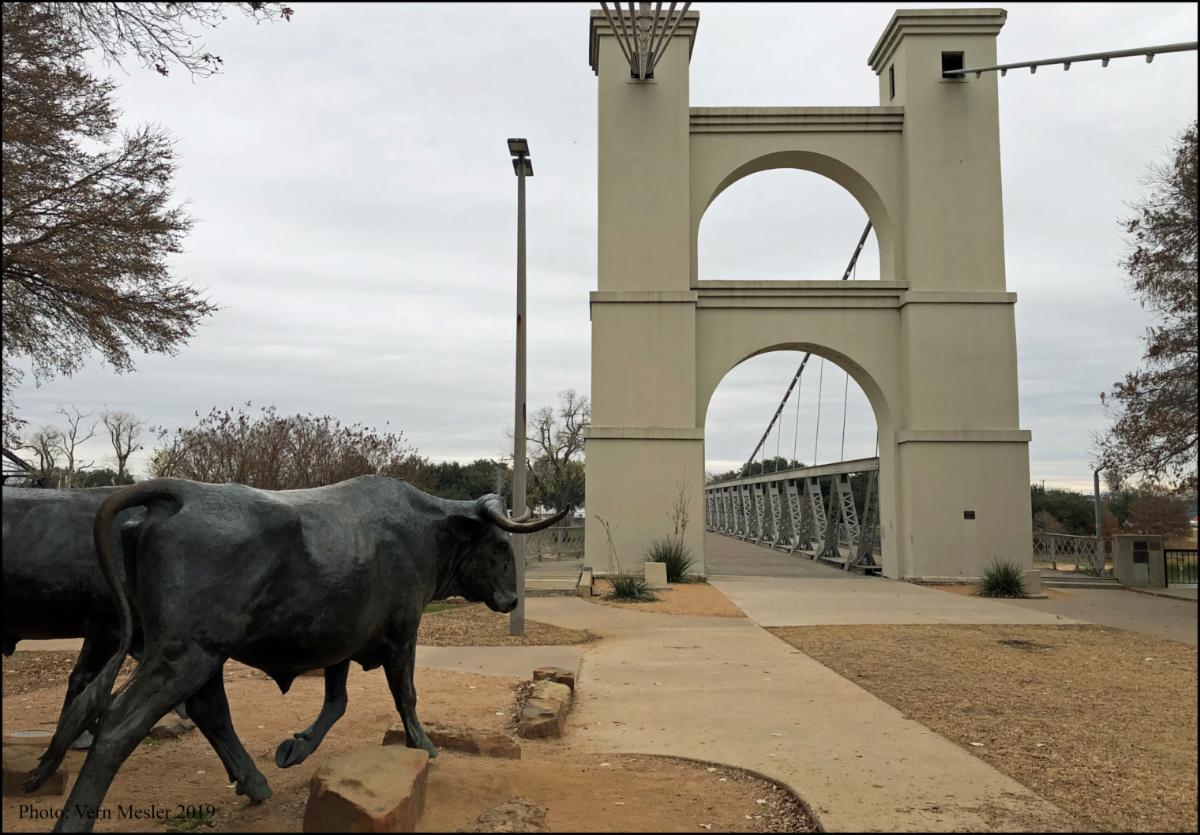
We arrived in Waco, Texas, on a clear brisk cold December morning. Parking spaces along the North University Park Drive approach to the Waco Suspension Bridge were all empty, one advantage for visiting a popular tourist attraction on an offseason day. Before exploring the Waco Bridge site, we stopped at a local coffee shop near the bridge, the Dichotomy Coffee Shop on Austin Avenue. A hot coffee and breakfast snack warmed us up for a close look at the bridge and what the riveted connections might reveal of its manufacturing history.
Crossing the wide Brazos River was made easier for cattle drivers with the opening of the Waco Suspension Bridge in 1870, at the time the longest suspension bridge west of the Mississippi River. Herds of longhorn cattle were driven across the bridge. To commemorate this history, a scene from a Chisholm Trail cattle drive was created with twenty-five longhorn cattle and three larger-than-life cowboys, all in bronze. Texas sculptor Robert Summers was commissioned for the Waco Chisholm Trail Heritage Sculptures ("Branding the Brazos"), a project completed in 2014 that has become one of Waco's most popular historic sites.
By 1913, what some people called the "unsightly bridge" was almost replaced, but a decision was made not to demolish the historic bridge. Instead, it underwent major renovations. It was later closed for vehicular traffic in 1971 and renovated for pedestrian traffic. During our visit to San Antonio a few days before stopping in Waco, we had an opportunity to meet with Patrick Sparks of Sparks Engineering. We learned that the Waco Suspension Bridge will undergo another major rehabilitation in 2020. Patrick's firm has done the engineering work to develop the rehabilitation design for this project and will regularly visit the construction site to monitor the progress once construction begins. I've worked with Patrick in the past in offering preservation workshops for the Texas Transportation Department and training a rivet crew for riveting on the San Antonio Hays Street Bridge, and I look forward to visiting Waco again sometime during the rehabilitation project of the Waco Suspension Bridge.
|
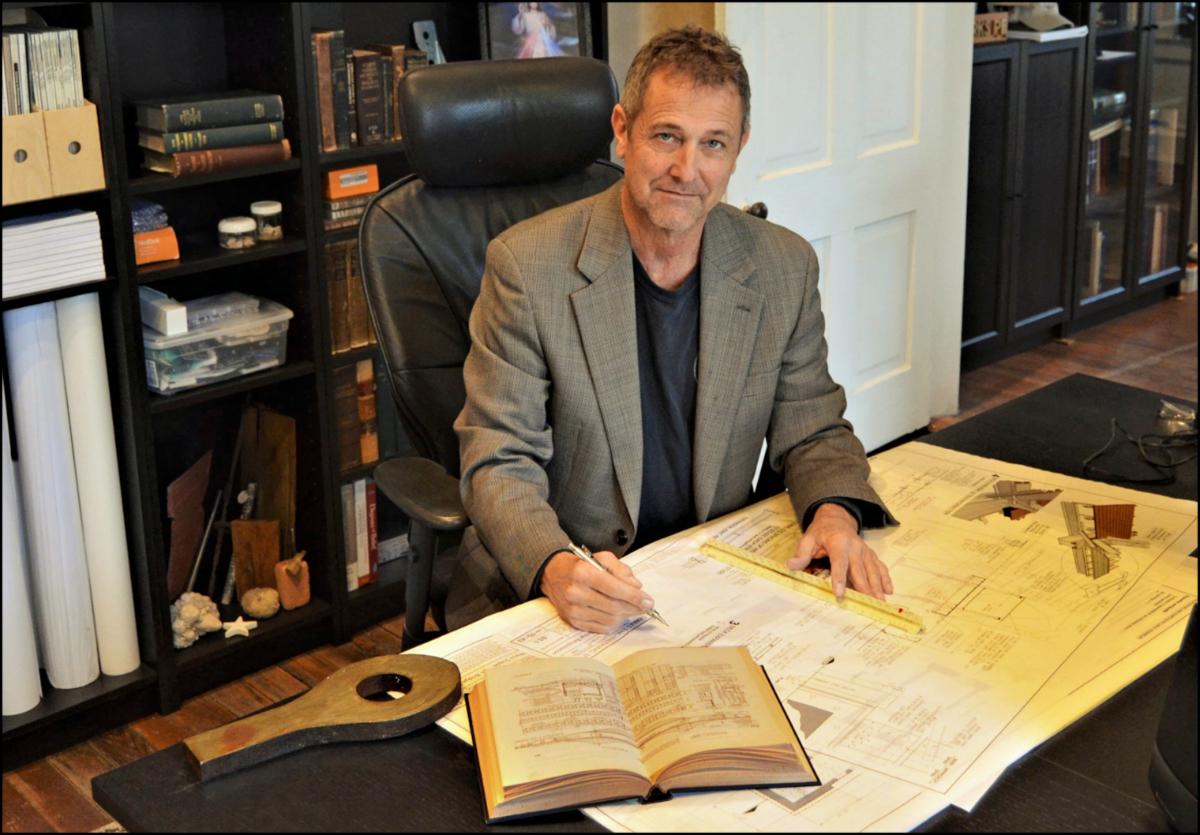
Patrick Sparks at his desk with Steinman's "Suspension Bridges," a wrought iron eye-bar, and Waco Suspension Bridge historic prints.
|
|
|
 |
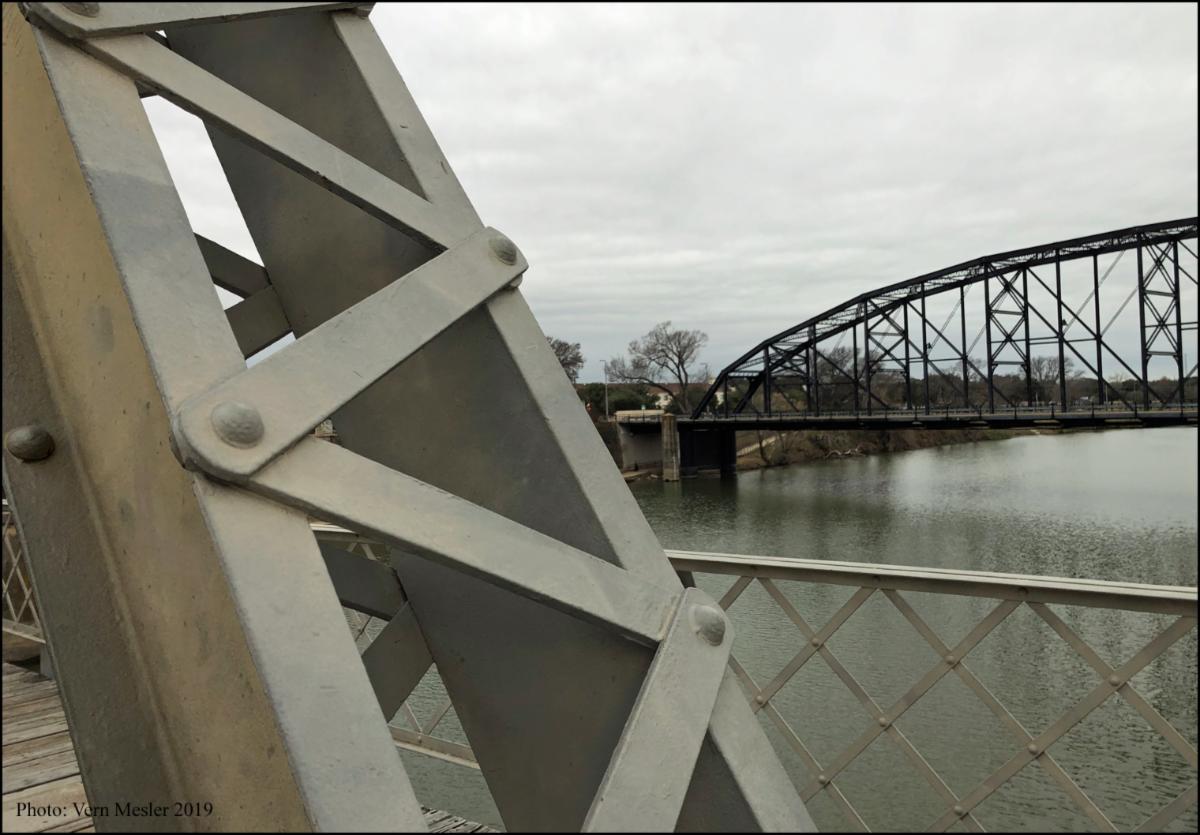
The 1901 Washington Avenue Bridge in the distance, as seen from the Waco Suspension Bridge
|
|
Washington Avenue Bridge in Waco, Texas
|
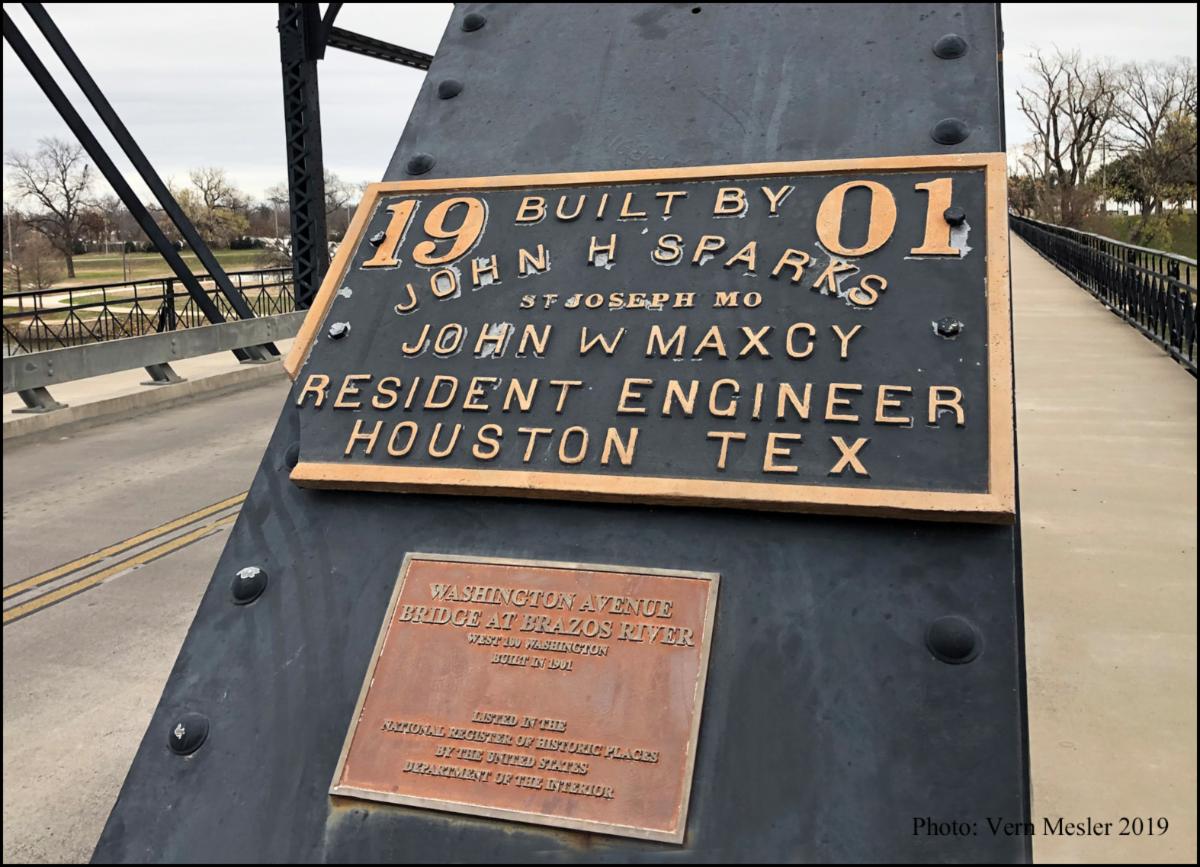
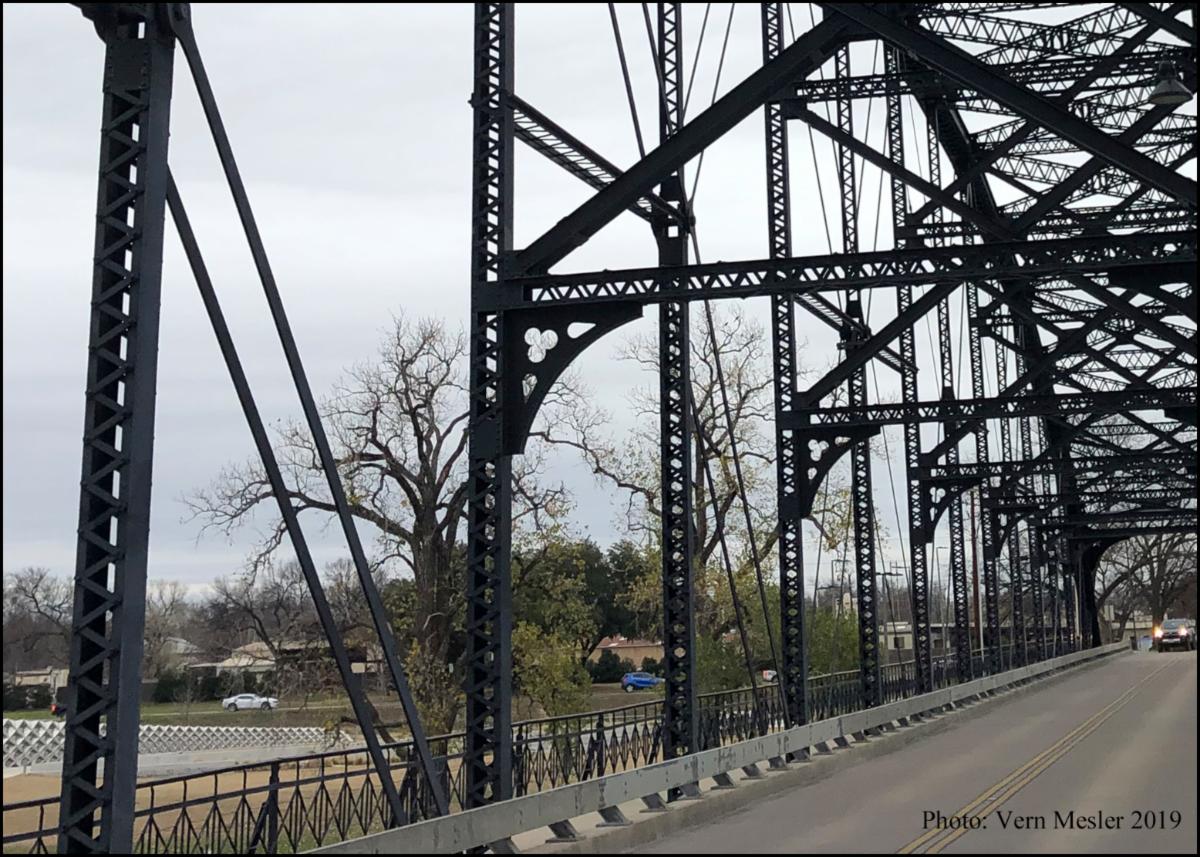
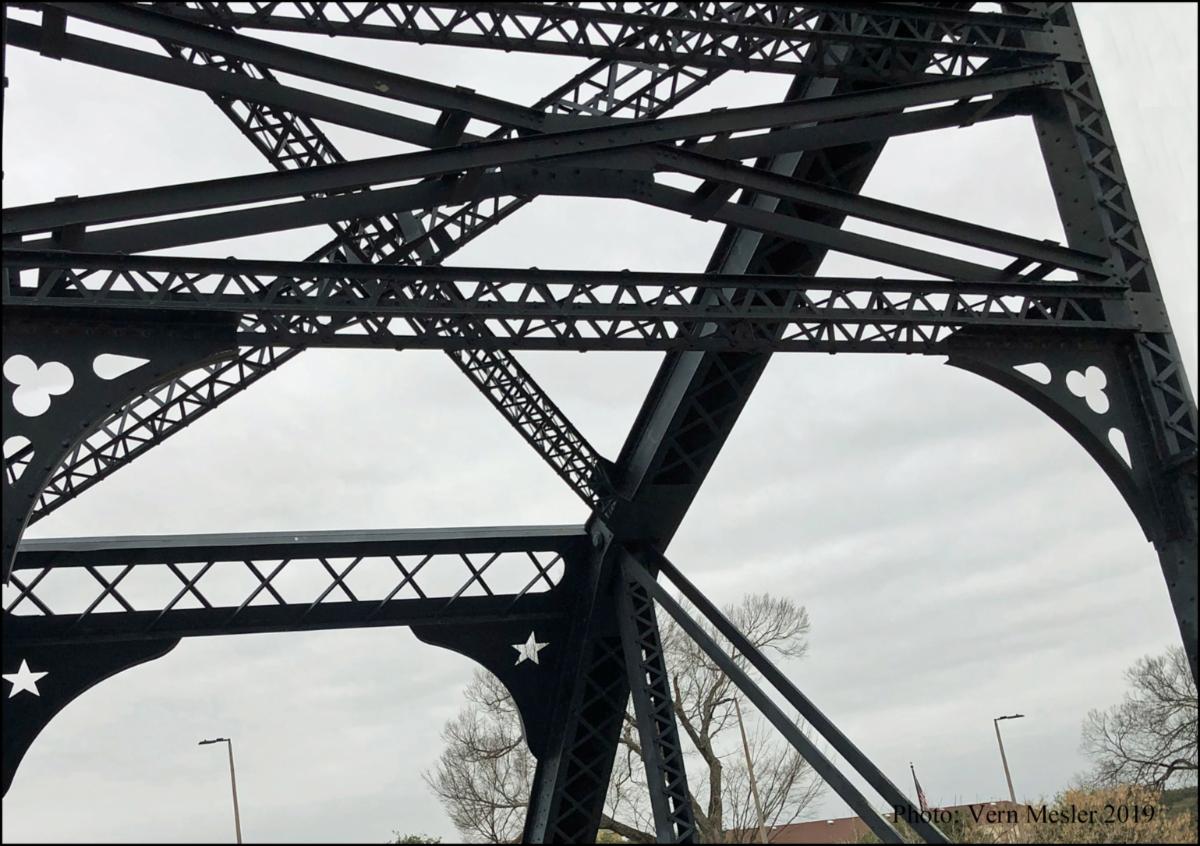
At one time the Washington Avenue Bridge, a pin-connected, Pennsylvania through-truss was the longest single span truss bridge in Texas. In 2009 it underwent an extensive historic rehabilitation that was completed in 2010. Fabricated and erected between 1901 and 1902, the bridge continues to function as a vehicular bridge. Ninety five percent of the original structural members were preserved, and the bridge is listed on the National Register of Historic Places.
|
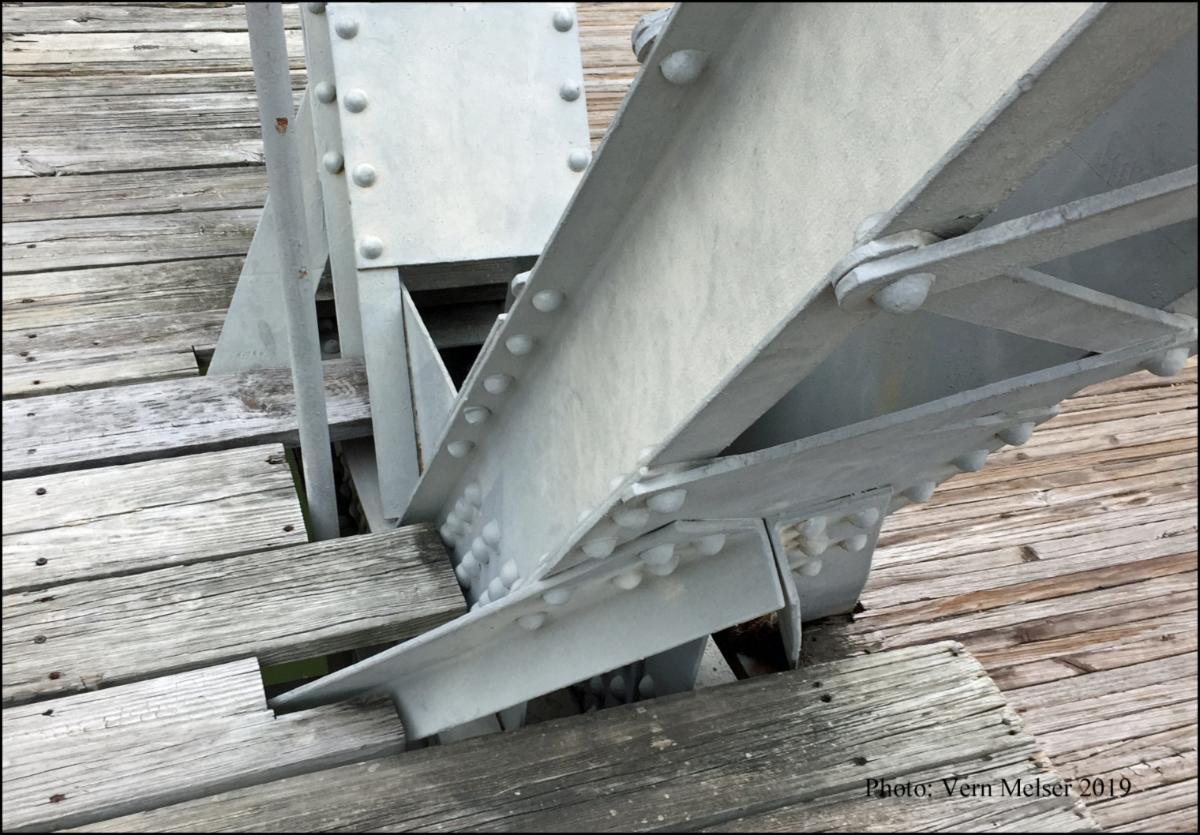
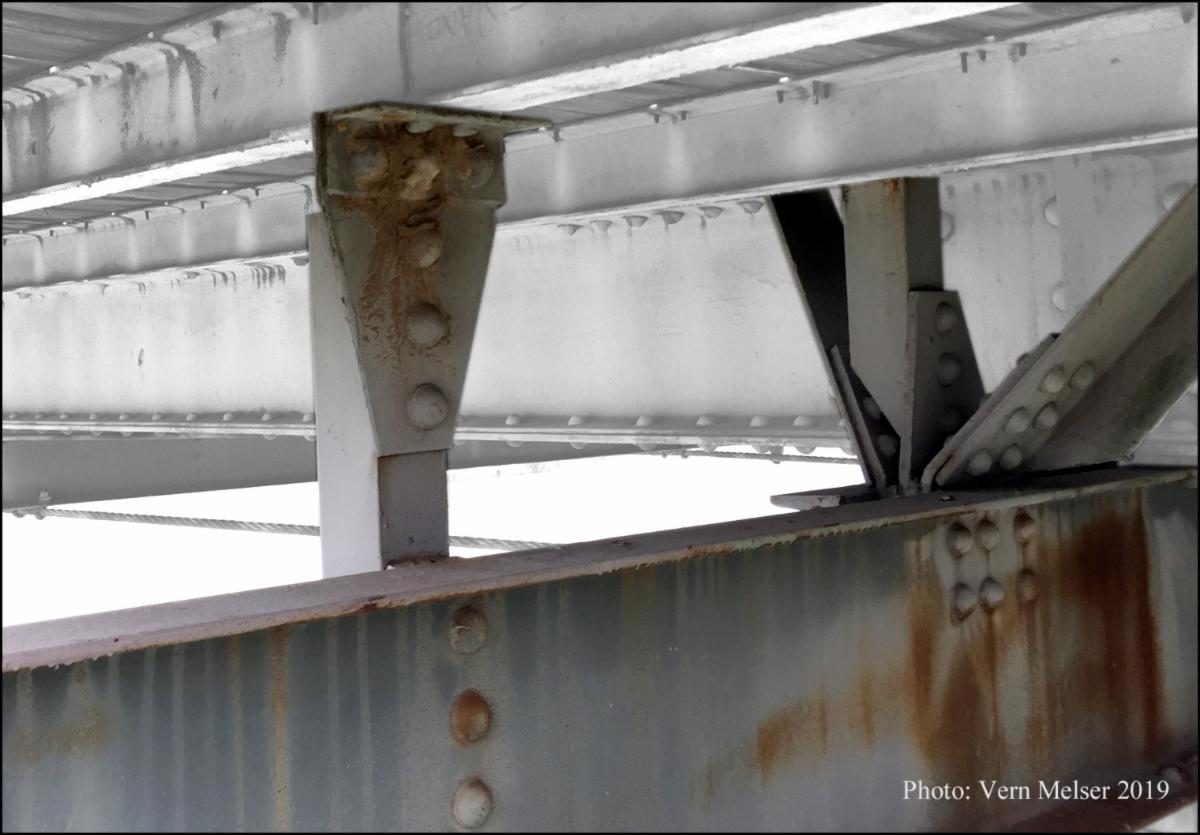
A feature on the Washington Avenue Bridge that I found of particular interest was the riveted lattice bar construction for the horizontal struts and cross bracing, as seen in the two pictures below. Each of these members has lattice bar on four sides. This same riveted lattice bar construction is also seen in structural members of the Brackenridge Park Bridge.
|
Brackenridge Park Bridge in San Antonio, Texas
|
|
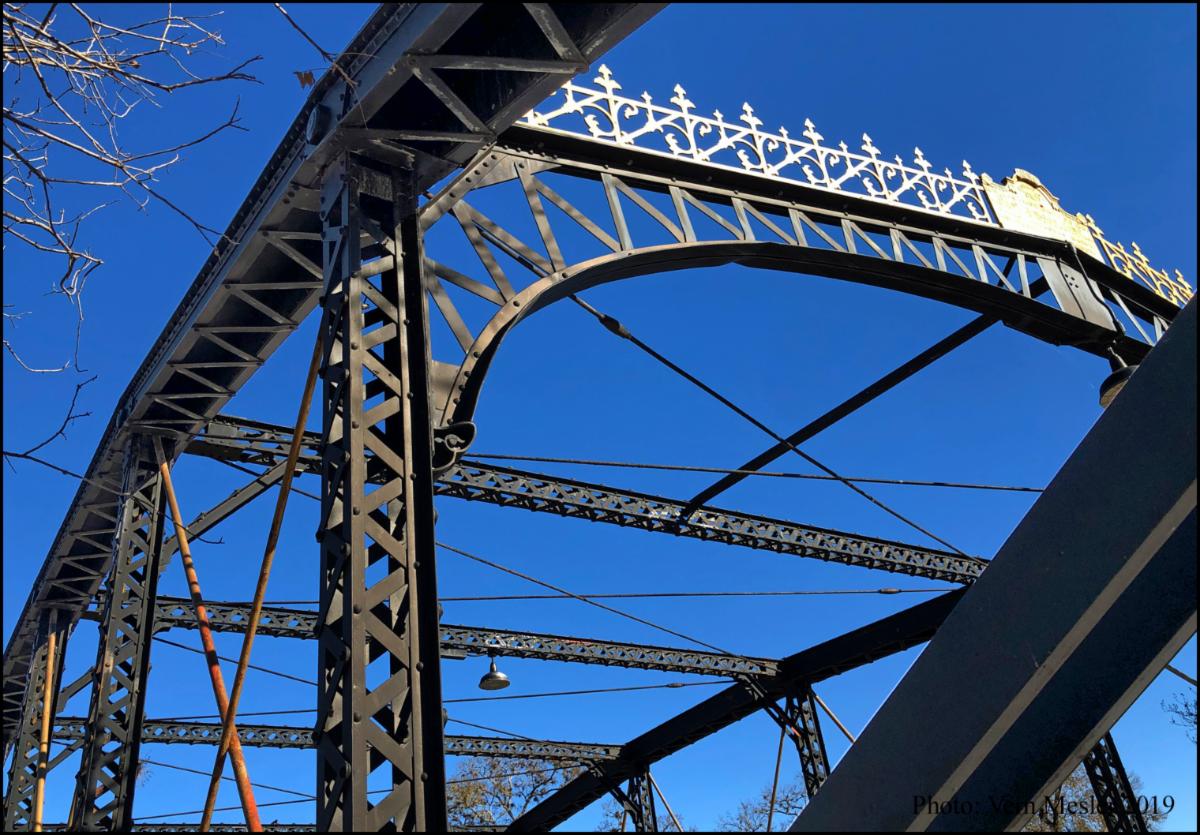
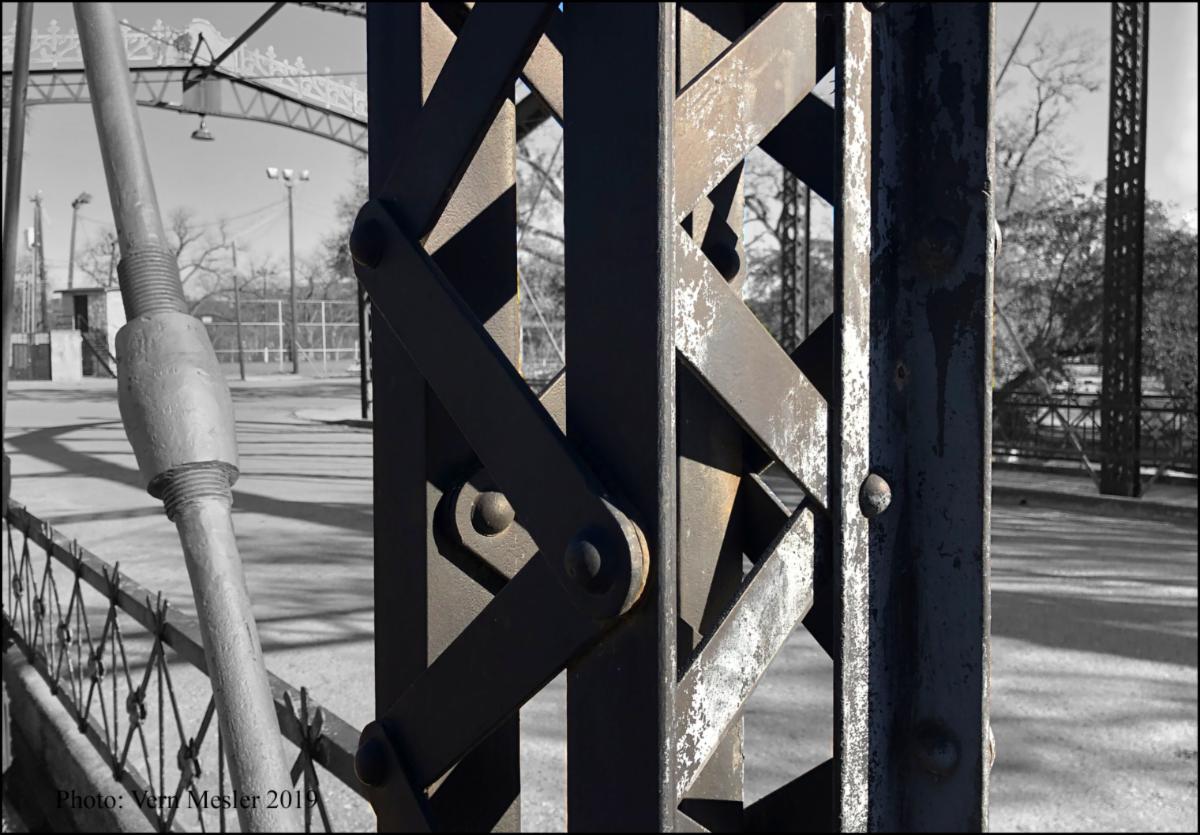
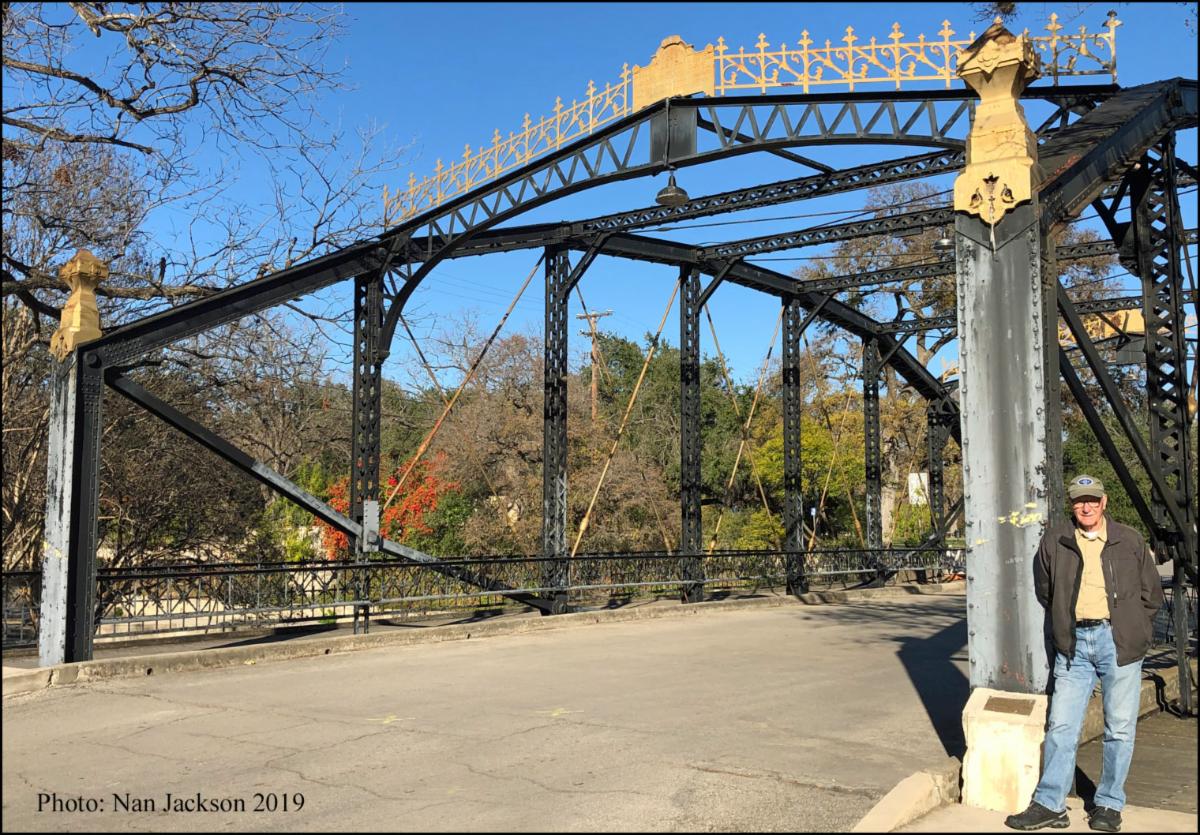
Spanning the San Antonio River in Brackenridge Park is a lenticular through-truss bridge moved to the park in 1925 from its original location in downtown San Antonio. Built in 1890 by the Berlin Iron Bridge Company, the Brackenridge Park Bridge has the riveted lattice bar construction seen in the Washington Avenue Bridge, here used for columns as well as for horizontal members.
|
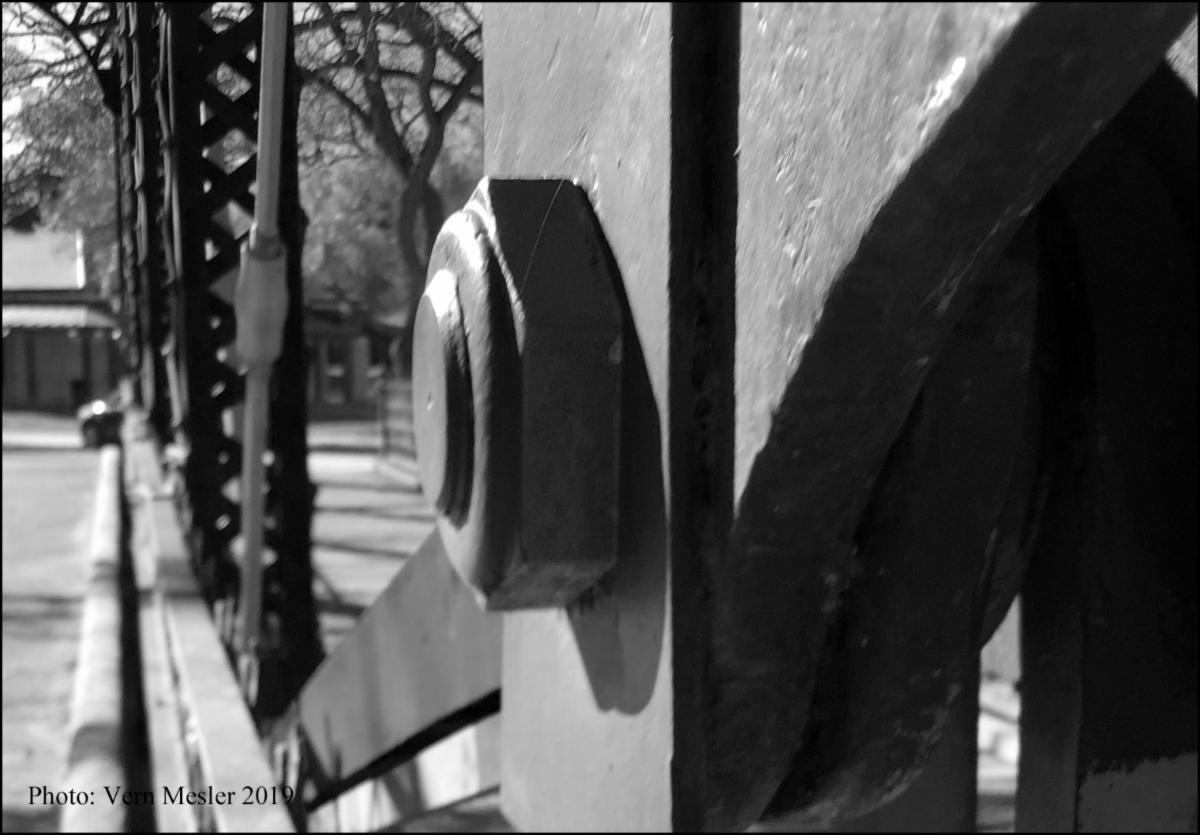
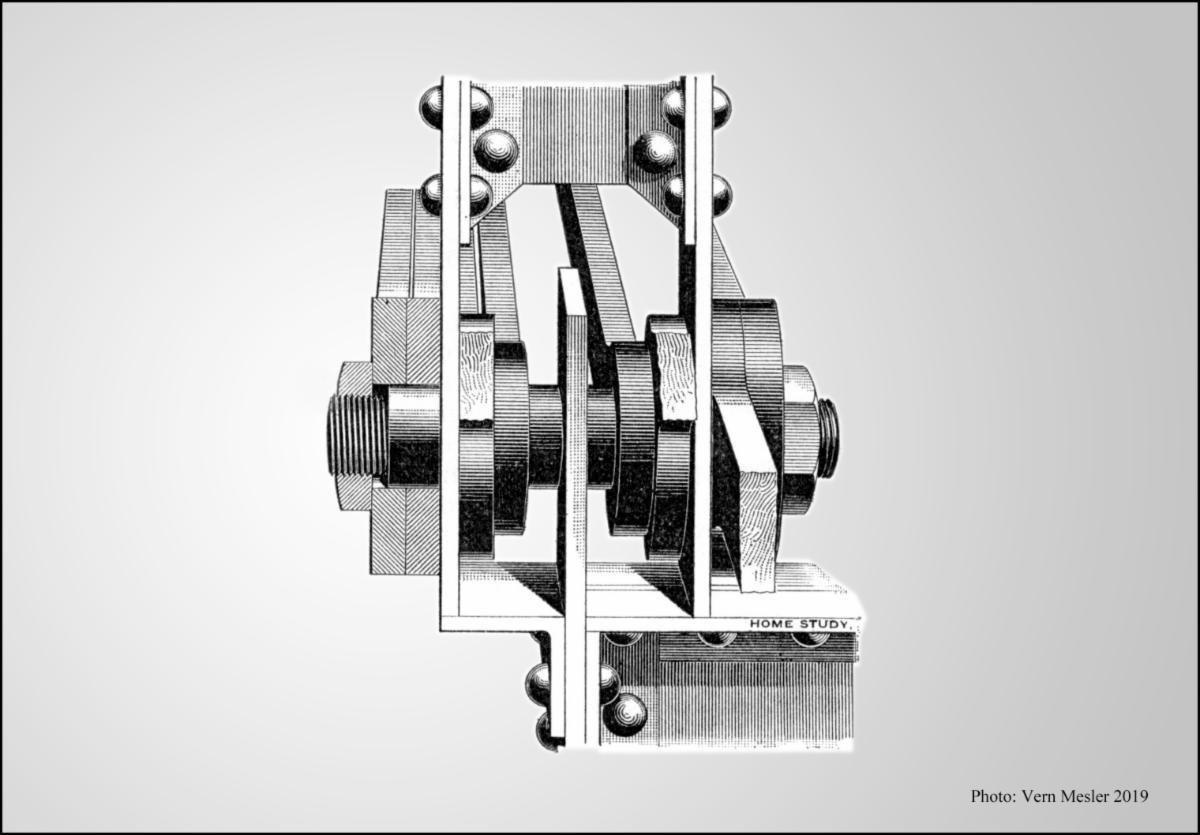
Both the Washington Avenue Bridge and the Brackenridge Park Bridge have another historically significant feature: the chord pin and recessed nut, often overlooked as historic, with its function least recognized. An article in the
1897 Home Study Book describes in detail the function of the chord pin and recessed nut. (In rehabilitation projects, replacing these with new standard threaded nuts and pins would diminish the overall historic appearance and historic record of a bridge.)
Below is a close-up photo of a chord pin and recessed nut on the Brackenridge Park Bridge (left) and a detailed cross section drawing from the 1897 Home Study Book (right).
|
Historic Bridge Foundation in Austin, Texas
|
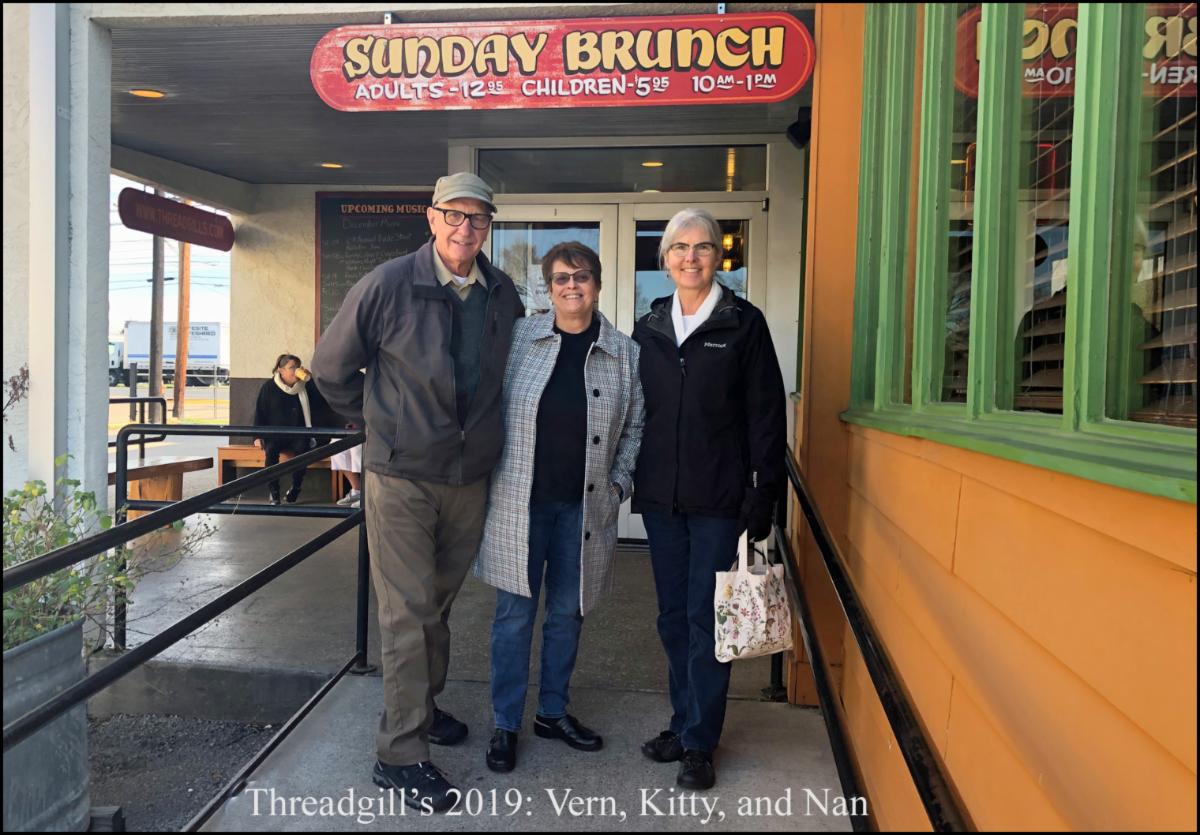
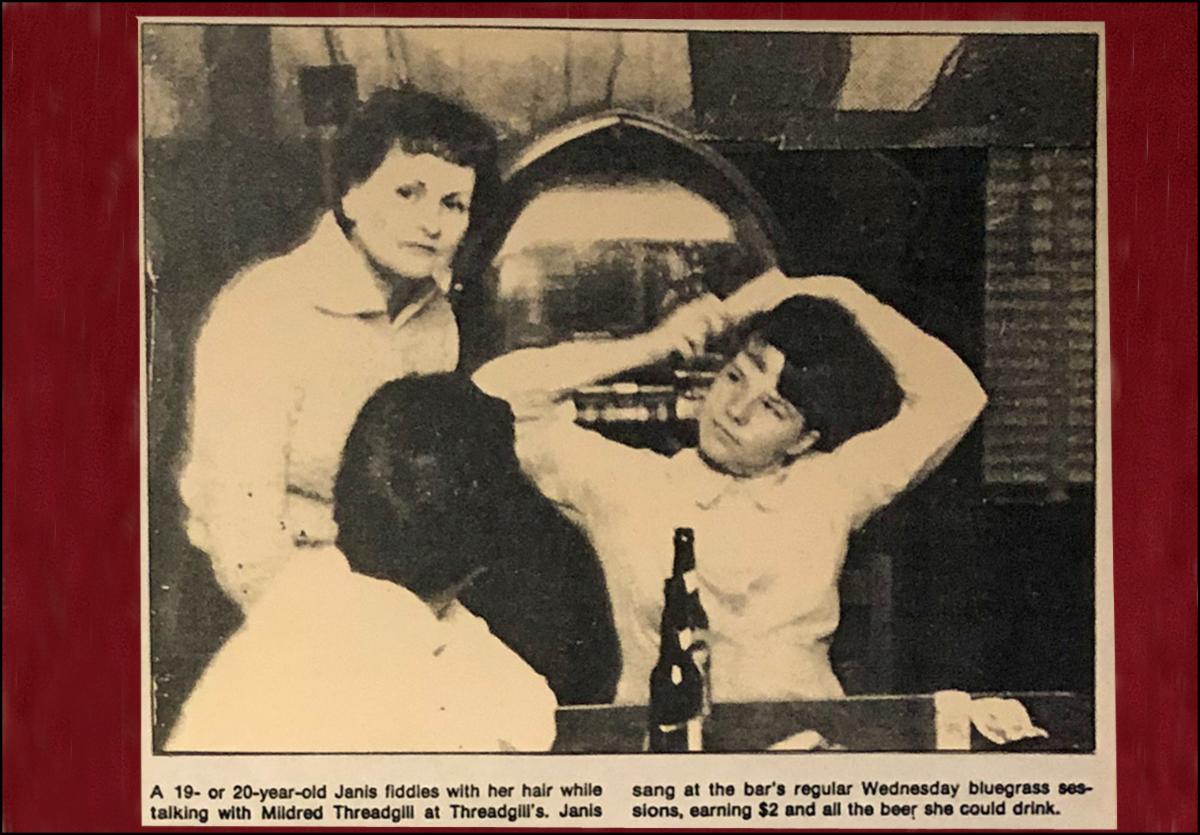
A trip through Texas would not be complete without a stop to visit Kitty Henderson, Executive Director of the Historic Bridge Foundation based in Austin. Kitty recognizes the importance of the craftsmen's record, wrought in the iron and steel of historic bridges. For many 19th and early 20th century bridges, it is the only record where no written historic record exists. The Historic Bridge Foundation, through their online catalog of bridges and their newsletter, describes their preservation work in saving historic riveted truss bridges and the preserving the craftsmen's record. Kitty treated us to lunch at a famous local restaurant, Threadgill's. Kenneth Threadgill opened his tavern in 1933, and it is known as the birthplace of the "Austin Sound." Threadgill let Janis Joplin sing at his Wednesday bluegrass sessions, earning $2.00 and all the beer she could drink. They became lifelong soulmates. Some folks credit Threadgill with giving Joplin her start, although Threadgill himself puts it this way: "People say I gave Joplin her start, I say she gave herself her start." The walls of the tavern are papered with Joplin-related newspaper clippings.
|
|
Program Fund
Please consider contributing to the Iron and Steel Preservation Program Fund. This fund was established to support projects, research, conferences and scholarships related to the repair, rehabilitation, and restoration of metals. The Lansing Community College Foundation is a nonprofit 501(c)(3) corporation.
Donate Here
|
|
|
|
Past Iron & Steel Preservation Newsletters
|
Thank you to all our donors!
We appreciate the many contributions to the Iron and Steel Preservation Program Fund during the past year.
|
|
|
|
Sponsor
|
Want to become a sponsor?
|
|
Lansing Community College
5708 Cornerstone Drive
PO Box 40010
, MC 4100W
Lansing, MI 48917
|
|
|
|
|
Copyright © 2020. All Rights Reserved.
|
|
|
|