I-site newsletter is a global educational newsletter launched in 2009, that monthly provides independent updates from the international literature on specialty (R)GP lenses such as corneal, orthokeratology and scleral lenses and related topics. View as Webpage
|
|
A brand new BCLA global consensus report delivers evidence-based guidance to the profession on all aspects of prescribing and fitting contact lenses to allow for best patient care. The Contact Lens Evidence-based Academic Reports (CLEAR) were published in the April 2021 issue of the BCLA journal Contact Lens and Anterior Eye and consist of 11 different reports ranging from anatomy and physiology to all types of lens modalities. The two items that stand out for us in the context of this newsletter are the ones on ortho-k and scleral lenses - both generated by a a panel of globally respected experts. In this edition of I-site, we will focus on ortho-k, hosted by Stephen Vincent from QUT in Brisbane (AU): a 29-page paper, with a reference list of 386 citations (over six pages long). Stay tuned for the scleral lens report in the next edition of I-site newsletter. For more on the CLEAR papers, sign up for the 2021 BCLA Clinical Conference on June 13+14.
|
|
'Ortho-k is the process of deliberately reshaping the anterior cornea by utilizing specialty contact lenses,' is the opening line of the CLEAR paper. It captures the essence of ortho-k and differentiates it entirely from any other form of contact lens modality, as typically with contact lenses we aim for the opposite: changing the ocular surface shape as little as possible. What are the consequences of deliberately changing the shape of the cornea? |
|
Patient & Initial Lens Selection |
|
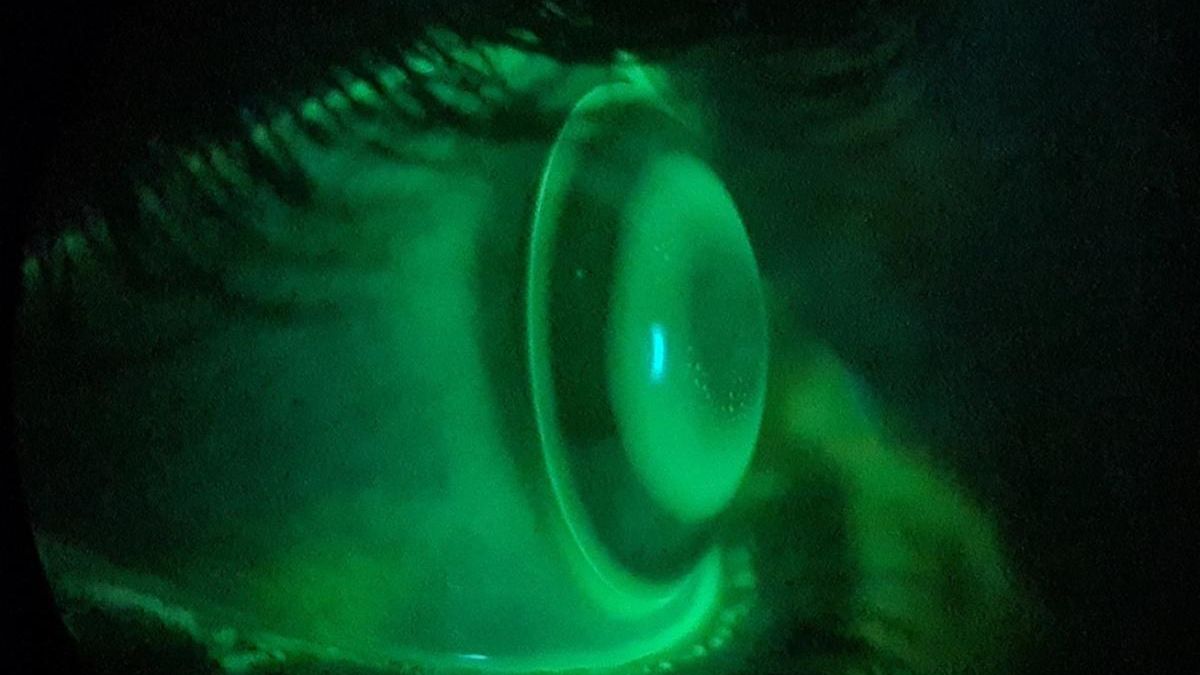
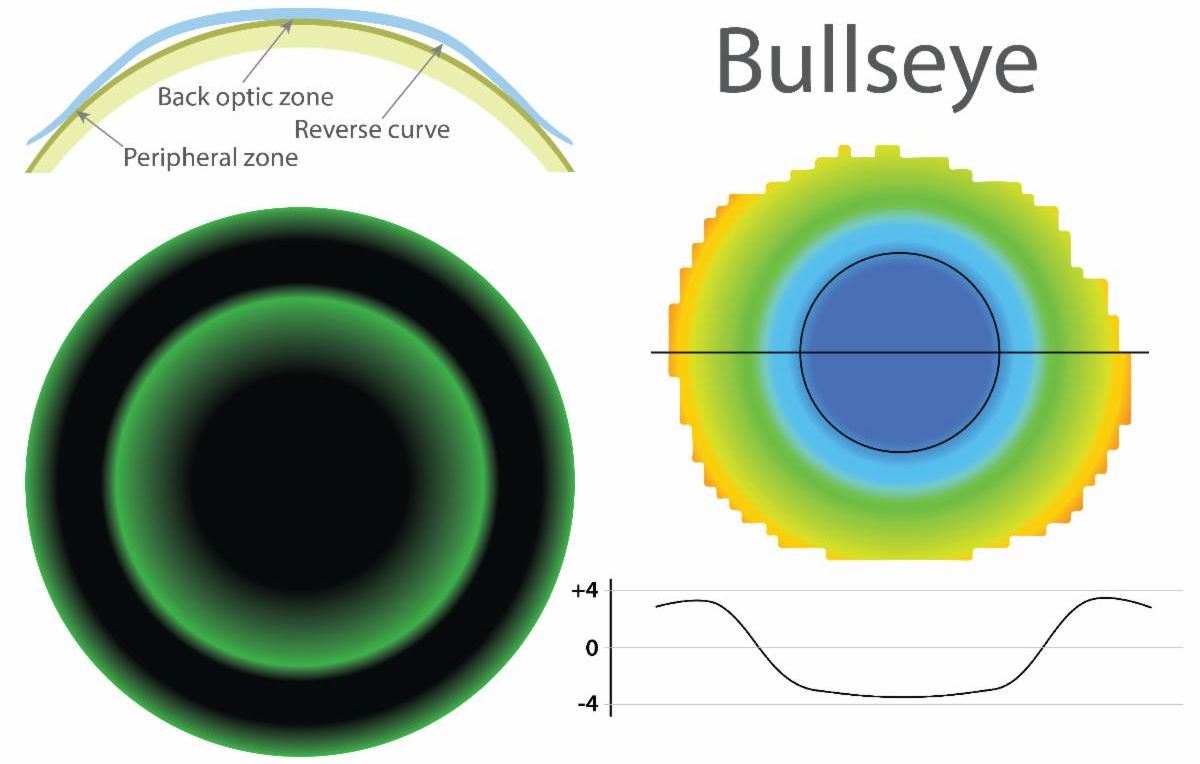
Good potential ortho-k candidates include those who have myopia up to 4.50D, corneal or refractive astigmatism up to -3.00D and a pupil diameter less than 6.0 mm. Refractive correction of hyperopia and presbyopia is possible with ortho-k, but the outcomes are less predictable and much more variable compared to the correction of myopia. For myopia, the back optic zone radius is fitted flatter than the flattest corneal meridian by the desired amount of refractive correction, with an additional refractive buffer of ∼0.75D; this is called the Jessen or compression factor, which is used to account for daily regression in corneal flattening. Ortho-k lenses with a spherical back optic zone radius that are applied to a toric cornea (typically with greater than 1.50D corneal toricity) can result in lens decentration (often infero-temporally). The majority of toric ortho-k lenses available cater to with-the-rule astigmatism up to ∼1.75D, and a few lenses correct greater magnitudes of astigmatism (up to 4.00D, in theory).
Image: Massimo Ferrara
|
|
The greatest change in corneal topography occurs after the first night of ortho-k lens wear and typically stabilizes by 7 to 14 days. The time to stabilization increases with higher ametropia. These changes regress by about 0.25–0.75D throughout the day. Sectorial differences in both central and mid-peripheral corneal topography changes following ortho-k have been reported: greater flattening has been observed in the temporal sector compared to the nasal sector within the central treatment zone, along with greater steepening in the temporal mid-periphery compared to the nasal mid-periphery. The amount of time for ortho-k-induced ocular changes to regress to pre-treatment levels following the cessation of lens wear increases with increasing treatment duration and with baseline level of myopia. One study reported that the change in refraction had regressed by ∼80% to 100% compared to pre-treatment values one week after ceasing lens wear. Following longer-term lens wear in children (mean of four years), residual corneal flattening was still apparent along the flatter corneal meridian (mean 0.07mm) two weeks after ceasing lens wear (and was greater for children with higher myopia). Some higher-order aberration levels (primary spherical aberration) may remain elevated one month after ceasing lens wear for larger pupil diameters (5mm or greater). |
|
Overall central corneal thickness decreases due to epithelial thinning in ortho-k, while the mid-peripheral cornea becomes thicker due to epithelial and stromal changes. Stromal oedema may be partly responsible for the mid-peripheral corneal thickening due to the oxygen transmissibility of the contact lens material. Using Munnerlyn’s formula, studies have demonstrated that changes in corneal epithelial thickness can account for refractive changes induced by ortho-k. These analyses provide evidence that redistribution of the anterior corneal tissue, rather than an overall bending of the cornea, is responsible for the refractive effects of ortho-k. Epithelial thinning of 15 to 17 micron has been observed for a target treatment of 2.50 to 2.75D of myopia. Small meridional variations in mid-peripheral epithelial tissue changes have also been reported for toric corneas fitted with spherical ortho-k lens designs.
Image: Paul Gifford
|
|
Microcellular Alterations |
|
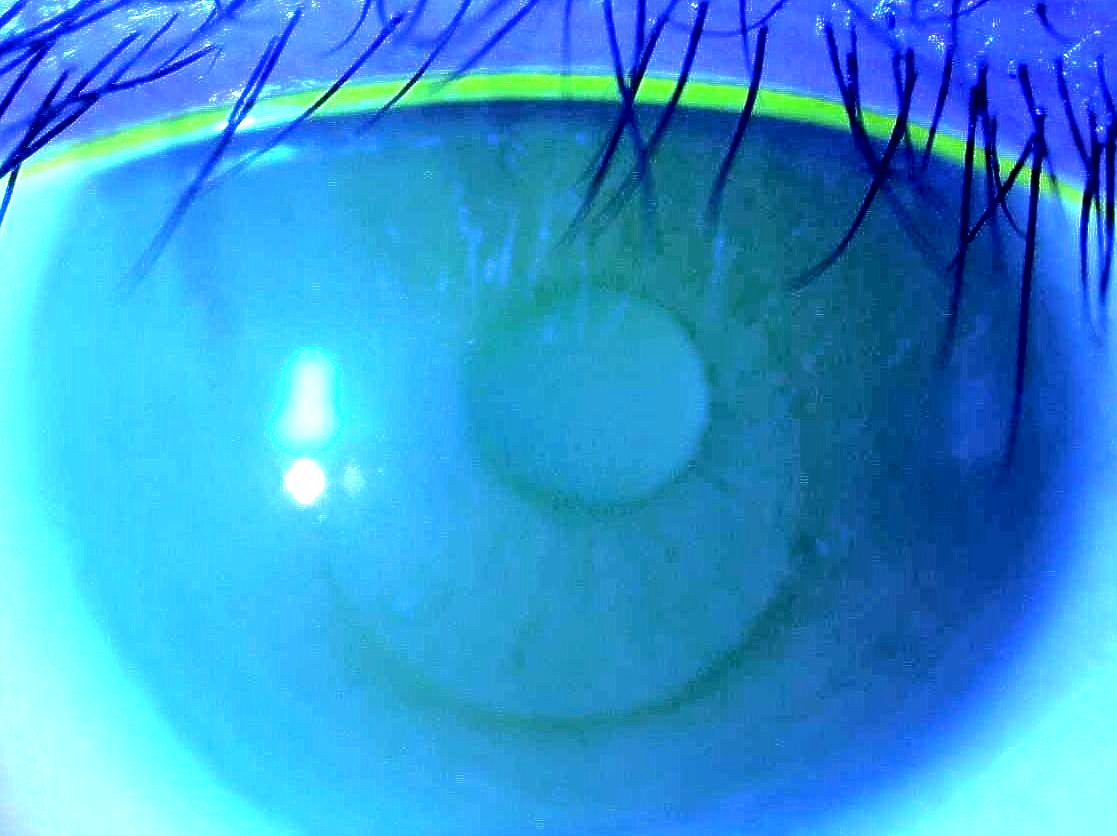
One study found an increase in endothelial cell polymegethism after one year of ortho-k lens wear in 15 young adults; this decreased after one month of cessation of ortho-k but did not completely return to the baseline level. The middle and posterior stromal keratocyte densities do not change significantly after one year of ortho-k, another study found, but a decrease in anterior stromal keratocyte density has been reported, along with an increase in activated keratocytes. Pigmented corneal arcs or rings are increasingly reported in ortho-k. It is presumed that the pigmented arc or ring is comprised of iron. Over time, the pigmented arc can expand into a complete ring (e.g., after one month of lens wear). Marked fibrillary lines in ortho-k lens wearers are believed to represent the sub-basal and epithelial nerve plexus. But in summary, the CLEAR paper states that corneal changes induced by ortho-k are mostly reversible after ceasing lens wear, which is compatible with the recovery of the topographic and refractive effects induced by the treatment. While corneal thickness recovery occurs within days or weeks of lens discontinuation, the reversal of other effects, such as the redistribution of the sub-basal nerve plexus, may take longer, likely dependent upon the duration of treatment and target refraction. Image: Pauline Cho
|
|
The safety of ortho-k has been a topic of interest due to the overnight wear modality and, hence, to the potential increased risk of serious corneal infection (microbial keratitis, MK). But the most common complication observed in ortho-k lens wearers is superficial trace corneal staining, which is typically observed in the central cornea and peaks during the first few weeks or months of lens wear. A positive correlation has been reported between corneal staining and higher baseline myopia. Lens binding is a relatively common phenomenon (incidence of ∼30% to 60%) observed upon eye opening after overnight ortho-k lens wear and is associated with a corneal indentation ring and central corneal staining. Patients must be made aware of the potential for lens binding and taught how to manage it. Corneal microcysts are a clinical sign of hypoxia, but due to the use of high-Dk rigid lens materials, microcysts have only been observed occasionally. MK is the most significant and the only potentially vision-threatening complication associated with ortho-k lens wear. Pseudomonas aeruginosa is marked as the primary infective organism, with Acanthamoeba a close second. The latter organism is far less responsible for MK in general contact lens wear modalities. The estimated incidence of MK in overnight ortho-k wear is greater than for soft lenses worn on a daily wear basis, which should be a consideration when discussing the potential management options with patients. Compliance is a major issue in which the eye care pratitioner can play a pivotal role. Good compliance is essential in ortho-k, especially with the involvement of overnight lens wear in children.
|
|
CLEAR - Orthokeratology Panel |
|
Stephen J. Vincent, Pauline Cho, Ka Yin Chan, Daddi Fadel, Neema Ghorbani-Mojarrad, José M. Gonzá́lez-Ḿeijome, Leah Johnson, Pauline Kang, Langis Michaud, Patrick Simard, Lyndon Jones. |
|
Amsterdam, Netherlands
Copyright © 2020. All Rights Reserved
This newsletter is kindly supported by:
|
|
|
I-site is an educational newsletter that is distributed on a monthly basis and provides an update on rigid gas permeable-related topics (scientific research, case reports and other publications worldwide). I-site is objective and non-political. Disclosure: I-site's editor Eef van der Worp, optometrist PhD FAAO FBCLA FIACLE FSLS, receives educational grants from a number of industry partners but is not related to any specific company. |
|
|
|
|
|
|