May 2022 | Volume 14 Issue 5 |
|
Happy May, everyone! April was a bit of a wild ride, wasn't it?
Later this month there will be a conference in Colorado, the Central Grasslands Roadmap Summit. The Central Grasslands Roadmap is a collaborative guide to increase the conservation of grasslands from Canada to Mexico. You can find their Executive Summary and Scorecard on their website and if you agree with what they are proposing, you (as an individual) can submit a letter of support.
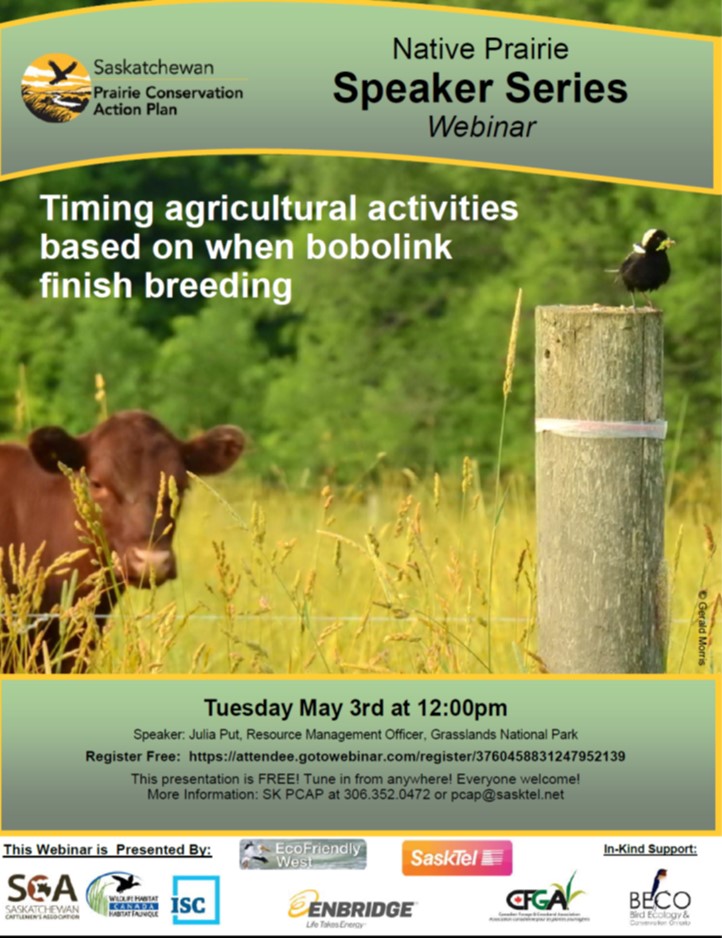
We have one Native Prairie Speaker Series webinar planned in May about bobolinks! You can register here! If you're interested in birds, there's a few bird-related events in Regina and virtually this month. Also, if you want to learn more about the Avian Influenza and Birds, you can check out information from the Government of SK. I was disappointed when I thought I had to delay putting out my new bird feeders and bird bath, but it seems as if passerines are not susceptible to Avian Influenza. Wild Birds Unlimited put together a list of info from various bird sources that you can find here.
We had two Native Prairie Speaker Series webinars in April. Ann McKellar from Environment and Climate Change Canada discussed using new technologies to track terns. We also have Julia Adamson from Friends of the Saskatoon Afforestation Areas Inc who discussed iNaturalist and the City Nature Challenge. The recordings are available on PCAP's YouTube Channel!
And finally, we would like to thank our sponsors for their generous support: Camp Wolf Willow, Canadian Forage and Grasslands Association, EcoFriendly Sask, Enbridge, Information Services Corporation, Mosaic Company, Saskatchewan Cattlemen's Association, SaskEnergy, SaskPower, SaskTel, SaskWater, Wildlife Habitat Canada and Environment and Climate Change Canada, as well as the continuous support of all the PCAP Partners.
Have a great month!
Carolyn Gaudet, SK PCAP Manager
|
Native Prairie (and other issues) in the News
|
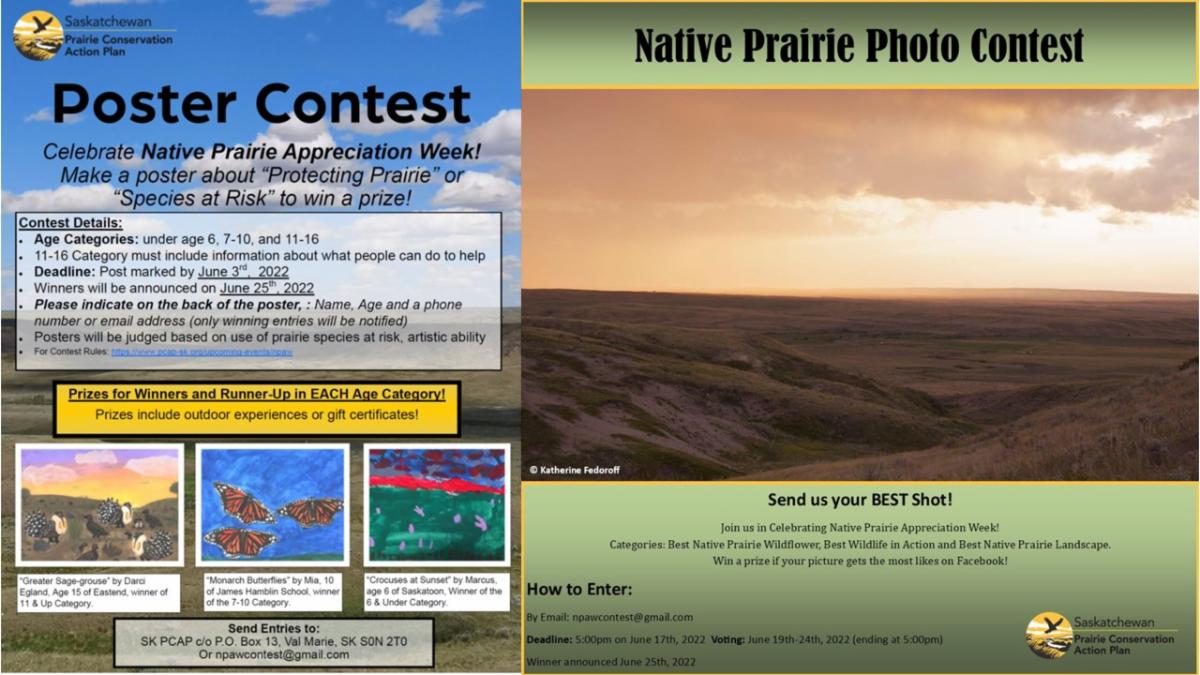
Native Prairie Appreciation Week!
Native Prairie Appreciation Week 2022 (June 19th-25th) is coming up fast! We will have one webinar (TBA).
We've also been planning a NPAW tour with the Society for Range Management - Prairie Parkland Chapter in Eastend, SK, June 22-23. You can find the schedule here.
We will be handing out packets of native wildflower seeds at various farmer's markets during NPAW, we'll have a schedule up in the June newsletter.
We would like to thank our Presenting Sponsor for Native Prairie Appreciation Week:
|
EcoStress Regina offers free 8-week sessions to discuss distress caused by environmental threats and losses. Groups meet for two hours weekly by Zoom. Group meetings are facilitated and include conversation and sharing of our experiences, as well as instruction and practice of coping and self-care knowledge and skills. The group also discusses moving forward, meaningful ways to take action, and building community. If you are interested in further information or to be put on their contact list, please email ecostressregina@gmail.com
|
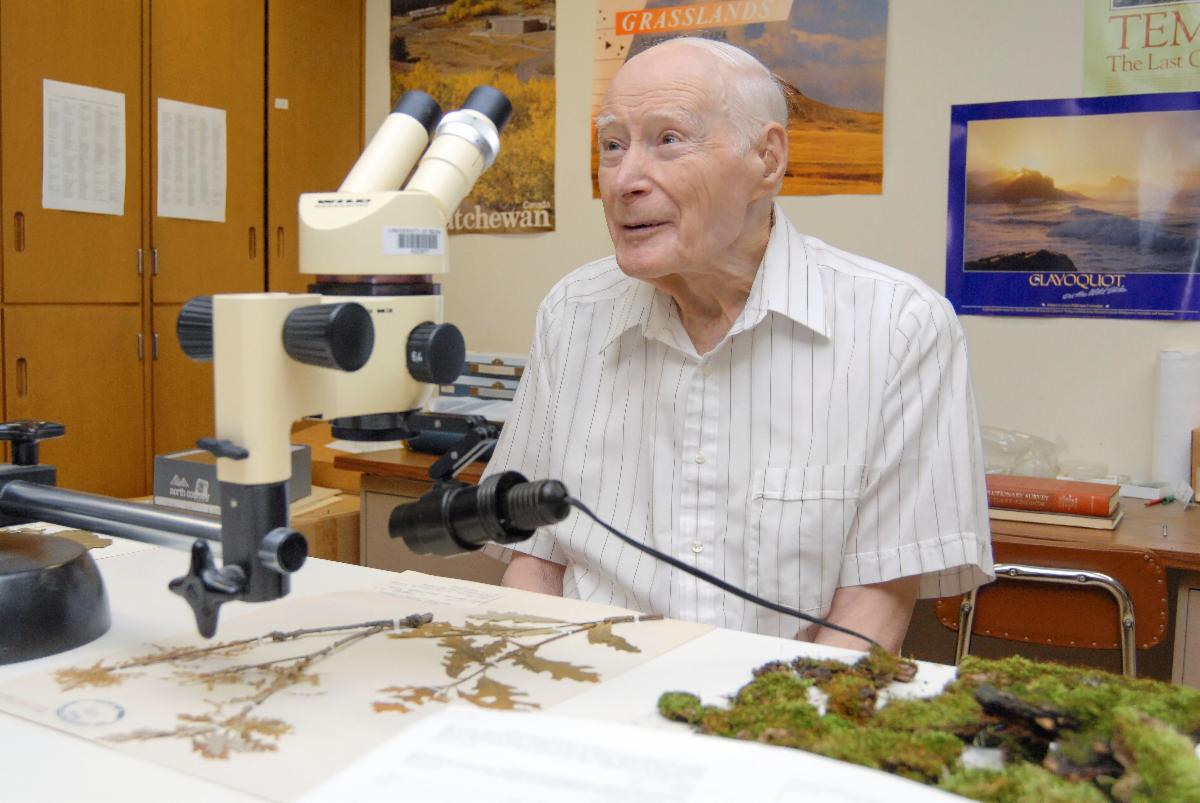
The George Ledingham Herbarium at the University of Regina
The University of Regina has a little-known gem hidden in the Faculty of Science: The George Ledingham Herbarium. Its namesake, Dr. Ledingham, was instrumental in the establishment of Grasslands National Park, and was widely recognized for his extensive conservation work in preserving native prairie. Until a few months before his death in 2006 at 95 years of age, George would spend part of his day working in the herbarium, despite having retired from full time teaching at the University in the late 70s and from part time teaching in the early 80s. Saskatchewan species are well-represented in the 50,000 specimens housed in the collection, and a large portion of the 10,000 lichen specimens were collected by Bernard de Vries, author of “Getting to know Saskatchewan Lichens”. The Faculty of Science wants this gem to be hidden no longer, and recognizes the best way to share the Herbarium’s treasures as widely as possible is through digitizing the entire collection. However, help is needed to meet the expense of sharing our prairie plants with the world. If you’re interested in supporting this exciting project, please connect with Luanne.Drake@uregina.ca. If you’d like more information, feel free to connect with mel.hart@uregina.ca.
|
Partner Spotlight
Ducks Unlimited Canada
Submitted by Chuck Deschamps
While most commonly known for its focus on the restoration, conservation and management of wetland ecosystems, Ducks Unlimited Canada (DUC) has been heavily investing in programs positively impacting upland areas since the late 1990s. With the anticipated arrival of carbon markets on Canada’s economic scene, DUC is well-positioned to deliver carbon-based programming in addition to its current suite of on-farm programs.
Saskatchewan’s grasslands are important assets not only for livestock producers, but also for the broader agricultural sector and society as a whole. Grasslands often contain embedded wetlands, shrub and bush habitats, contributing to their well-deserved reputation as hot beds of biodiversity.
It is estimated that between 50 and 100 unique plant species can be found in the same quarter-section of land and that even more unique animal species make use of that same area, many of them living below ground. At least 30 at-risk species make their home in Saskatchewan grasslands.
Vast carbon stores, as well as the ability to sequester additional carbon, are key to our provincial fight against climate change. Canada Parks and Wilderness Society estimates that between two and three billion tonnes of carbon per hectare lies in the first meter of uncultivated grassland soil.
Despite all the benefits grasslands provide, like wetlands, they continue to be lost as a result of market pressures and urban expansion.
Of the estimated 52 million acres of grasslands in Canada, much of the land base is sustainably managed by cattle farmers and ranchers. Across the country, beef production accounts for one third of the agricultural land base yet contains 68% of the wildlife habitat capacity. The need to work with and support those who own and manage these natural areas has never been greater.
But the benefits from conserving natural areas on working land aren’t limited to ranchers. There’s opportunity for grain producers, too, and this is only likely to increase going forward.
Wetlands and grasslands embedded in cropland have been shown to increase crop yield, in part through the provision of habitat for pollinators and other beneficial insects that are farmer allies. And for society grappling with the impacts of climate change, over a 25-year period a farmer stores the same amount of carbon implementing zero till on his entire 160-acre quarter as he does by protecting only four acres of wetlands.
DUC continues to focus on partnering with Saskatchewan farmers and ranchers to ensure we develop complimentary programs of benefit to farms, wildlife, and to society. In keeping with this, DUC is currently exploring new avenues to expand upon our work with the agricultural sector, looking for solutions that will enable all landowners to realize economic benefits of stewarding natural areas. To learn more visit: www.ducks.ca
|
|
Plan to attend our upcoming Native Prairie Speaker Series webinars! |
Timing agricultural activities based on when bobolink finish breeding
Speaker: Julia Put, Grasslands National Park
Tuesday May 3 @ 12 PM
|
SAVE THE DATE
for the July webinar:
Topic: Habitat selection and prey composition by great horned owls
Speaker: Victoria Hartley-Cox, MSc Student, University of Regina
Tues July 19 @12 PM
More information is on the way!
|
May 3-5, 2022
Red Deer, AB
May 4, 2022 @ 7:30 PM
Birding at Wascana Marsh
May 8, 2022 @ 10AM, 11AM or 12 PM
May 11, 2022 @ 7 PM
May 11, 2022 @ 6 PM MT
World Migratory Bird Day
May 14, 2022
Regina, SK
May 28, 2022
Meeting Lake, SK
June 5-7, 2022
Assiniboia, SK
June 17-19, 2022
Regina, SK
June 22, 2022 1-4 PM
Gladmar, SK
June 22-23, 2022
Eastend, SK
July 12-15, 2022
|
Career Opportunities
Saskatchewan Association of Watersheds: Agri-Environmental Watershed Coordinators
|
2022/23 Education Programs:
Presenting Sponsors:
|
2022/23 Education Program Supporting Sponsors
Camp Wolf Willow
|
|
Carolyn Gaudet, Editor, Saskatchewan Prairie Conservation Action Plan Newsletter |
|
SK PCAP gratefully acknowledges financial support in 2022-2023 from:
Camp Wolf Willow, Ducks Unlimited Canada, EcoFriendlySask.ca, Environment and Climate Change Canada, Parks Canada - Grasslands National Park of Canada, Saskatchewan Cattlemen's Association, Saskatchewan Ministry of Agriculture, Saskatchewan Ministry of Environment - Fish and Wildlife Development Fund, SaskEnergy, SaskPower, SaskTel, SaskWater, University of Regina, University of Saskatchewan - College of Agriculture and Bioresources, Water Security Agency and Wildlife Habitat Canada.
SK PCAP gratefully acknowledges in-kind support for 2021-23 from:
Agriculture and Agri-Food Canada - Science and Technology Branch, Canadian Parks and Wilderness Association, Environment Canada - Canadian Wildlife Service, Friends of the Royal Saskatchewan Museum, Meewasin Valley Authority, Native Plant Society of Saskatchewan, Nature Conservancy Canada, Nature Saskatchewan, Parks Canada - Grasslands National Park, Prairie Wind & Silver Sage, Ranchers Stewardship Alliance Inc., Redberry Lake Biosphere Region, Saskatchewan Association of Rural Municipalities, Saskatchewan Association of Watersheds, Saskatchewan Bison Association, Saskatchewan Burrowing Owl Interpretive Centre, Saskatchewan Cattlemen's Association, Saskatchewan Environmental Society, Saskatchewan Forage Council, Saskatchewan Ministry of Agriculture, Saskatchewan Ministry of Environment, Saskatchewan Ministry of Energy and Resources, Saskatchewan Ministry of Parks, Culture and Sport, Saskatchewan Stock Growers Association, Saskatchewan Stock Growers Foundation, Saskatchewan Wildlife Federation, SaskEnergy, SaskOutdoors, SaskPower, Society for Range Management - Prairie Parkland Chapter, South of the Divide Conservation Action Program Inc., University of Regina, University of Saskatchewan - College of Agriculture and Bioresources.
|
|
|
|
|
|
|