May 2023 - Catch up on the latest news from CAARI! | |
|
Dear William,
All of CAARI’s rooms are occupied as semesters end and researchers stream in from around the world. We stand at the brink of a signal summer: after three years of pandemic cancellation, the Summer Archaeological Workshop will at last resume and anticipation is sky-high. It will take place on June 17. As cheerful as the Workshop’s resumption is the roster of new CAARI Fellows, whose introduction constitutes the larger portion of this newsletter. We have no fewer than eight fellowship awardees, including four CAARI postdoctoral Fellows, three CAARI graduate student Fellows, and a Fulbright Fellow. Their projects range from 16th century BC to the Cyprus of today. We welcome them very warmly and with pride.
The introduction of the new Fellows is followed by Dr. Andrew McCarthy’s description of how he converted an unexpected find at his Neolithic site of Prasteio-Mesorotsos into a celebrative, delicious experimental meal for 300 diners prepared using Neolithic methods. The meal has become, as he says, “a central feature in the village identity” and a way of giving back to that community.
Dr. McCarthy’s article takes up the theme of food that was introduced in our last newsletter. We hope to take up food again in the future. Dr. Laura Swantek invites archaeologists in our community to join her in preparing a full issue of the newsletter that is devoted to the archaeology of food. Food is an entrance to culture: it unites us in the present as we share meals and the food preferences that help define our ethnic identities, and it connects us to the past through the material remains of food preparation. She invites interested participants to contact her at lswantek@asu.edu and share their stories of food and meals shared or research on the archaeology of food on Cyprus.
| |
|
Message from CAARI’s Director
Dear friends and supporters of CAARI,
This message comes to you from a full CAARI, where we are enjoying a packed academic and social Cyprus schedule! We visited the excavation teams at Pyla-Kokkinokremos and the Ancient Seafaring Explorers of Cyprus (ASEC) team at Mazotos as they seek to find the earliest Epipalaeolithic visitors to Cyprus. Our group can be seen here in the photo just below.
| |
From left to right: CAARI Trustee Sturt Manning with the ASEC team Lisa Maher, Sally Stewart, Danielle McDonald and CAARI Trustee Alan Simmons | |
|
It was a delight to attend the Australian Paphos Theatre Project barbecue, the first since the pandemic, and we’ve also hosted a US tour group and an archaeology student tour group, to name just a few of the activities we’ve been getting up to.
We’ve had a Roman theme for our final two spring lectures. Dr Craig Barker from the University of Sydney gave a super interesting whirlwind tour of nearly 90 years of antipodean archaeology on the island and winding up with his excavations at the Neapaphos Theatre: From Vounous to Paphos: A Brief History of Australian Archaeologists Excavating in Cyprus. This week, CAARI-CAORC Fellow Dr Dylan Rogers gave us a fascinating talk on the watery Roman world from around the empire, entitled Roman Cyprus Reconsidered: Fountains and Urbanism in Context. Now we are gearing up for the CAARI workshop, perhaps the biggest we’ve ever held with 25 papers packed into the day.
For those who will be visiting Cyprus soon, we’ve restocked our merchandise with some lovely new CAARI t-shirts and tote bags so do pop in and grab a few.
With very best wishes for an enjoyable summer ahead,
Lindy Crewe, PhD
Director, CAARI
| |
Congratulations to CAARI’s New Fellows | |
|
Edgar J. Peltenburg Postdoctoral Fellowship in Cypriot Prehistory
Established four years ago through a major endowment, this fellowship is unique to CAARI. Each year it supports the work of an outstanding young scholar in the field that Professor Peltenburg developed so significantly.
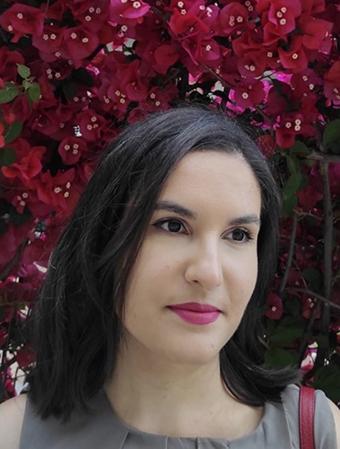
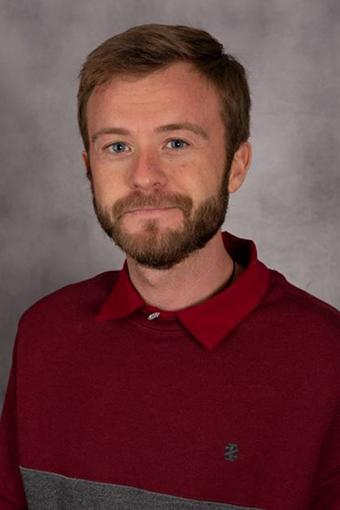
Dr. Francesca Meneghetti
Archaeological Research Unit, University of Cyprus
Beyond Dimensions: A New Approach to the Study of the Small-Size Pottery from Athienou-Bamboulari tis Koukounninas
| |
|
This project re-examines the function and role played by the so-called miniature pottery found at Athienou-Bamboullari tis Koukounninas in its Stratum III (16th-13th cent. BCE). Athienou’s small-size ceramics are traditionally interpreted as votives and primary indicators of ritual activities at the site, but they lack a complete catalogue and investigation of their context and function(s), and this brought me to question and review the votive interpretation of the material.
Without discarding this interpretation a priori, my research combines archaeological and anthropological approaches. My main goals during the fellowship are completing the catalogue of the small-size vessels and defining a “miniature category”. In the long term, the project will offer a more complete and updated analysis of Athienou’s miniature pottery, studying the archaeological context and applying theories such as miniaturization, haptics, rituality, and apprenticeship, clarifying the function of the pottery and the circumstances of its manufacture and deposition, together with the actors involved.
| |
|
CAARI/CAORC Postdoctoral Fellows
Annual funds from the U.S. Department of State through the Council of American Overseas Research Centers (CAORC) enable CAARI to offer two postdoctoral grants to American scholars to pursue research that will bring Cyprus into both their classroom teaching and their publications.
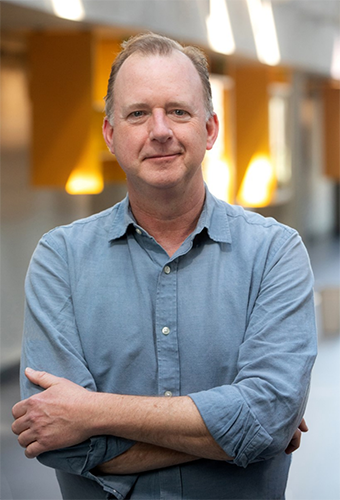
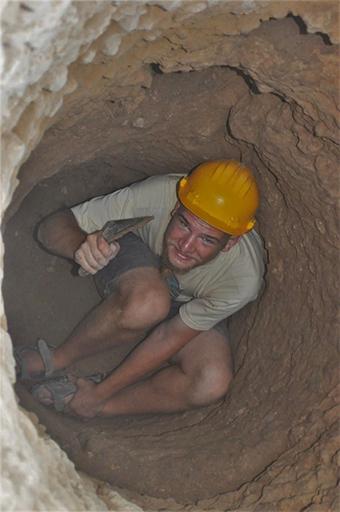
Dr. Bryan Burns
Wellesley College
Mycenaean Connections with Late Bronze Age Cyprus
| |
|
Cultural interaction with neighboring Mediterranean communities was central to the development of Aegean societies throughout the Bronze Age. My project is focused on the diverse Mycenaean connections with Cyprus, as I focus on varied relations and aim to distinguish between the movement of goods and the mobility of people.
My previous work on Mediterranean exchange embraced a theoretical model that emphasized the value of prestige objects to elite groups and centered my interpretations explicitly in the context of mainland Greek communities. In my new work, I seek a more comprehensive analysis of the long-distance trade and migration, including foreign craftspeople who were incorporated into the palatial systems of mainland Greece as well as the colonial entanglements of new Mycenaean settlements beyond the Aegean. I am eager to reflect on connectivity from the perspective of diverse locations in Cyprus, including coastal exchange centers like Hala Sultan Tekke as well as places of sustained occupation such as the complex, hybridized community at Enkomi.
| |
|
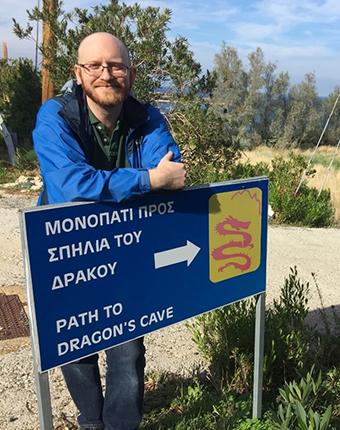
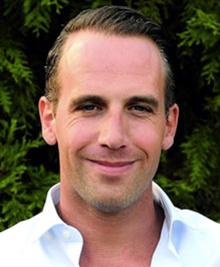
Dr. Aaron T. Hollander
Graymoor Ecumenical and Interreligious Institute
Beautiful Struggle: Hagiography and Liberation on
the Island of Saints
| |
|
Beautiful Struggle concerns the figuration and deployment of Saint George in modern Cyprus (since 1821), demonstrating that the inscription of the beloved saint's holiness (hagiography) in culturally circulated understanding and publicly accessible media constitutes a vernacular, everyday liberation theology comprised not primarily of treatises and homilies but of lived social processes and the material products of those processes. In Cyprus specifically, where St. George is shared and contested by the island’s gradually (and strategically) disentangled communities, hagiographical mediation is not only purportedly liberative (as plentiful narratives, images, and public ceremonies aim to render persuasively) but also empirically an engine of anticolonial and postcolonial resistance in a context where centuries of imperial power relations have yielded enduring intercommunal, intercultural, and interreligious conflict.
| |
|
CAARI Predoctoral Research Fellowships
CAARI offers the only research grants for graduate students that are specifically earmarked for Cyprus. It is impossible to overestimate the importance of these grants in attracting gifted young scholars who work on Cyprus, and in enabling the research that they do. They are made possible by our endowment and contributions from our donors.
The Danielle Parks Memorial Fellowship
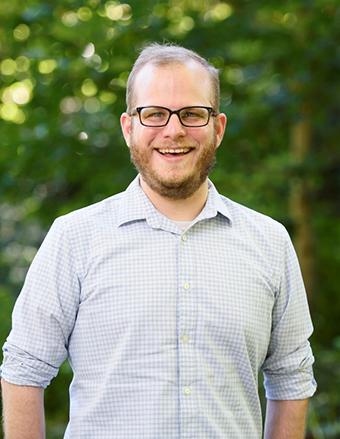
Clay Carpenter
Lipscomb University
The Ktisis of Early Christian Kourion: The Cosmic Symbolism of the Mosaics in the House of Eustolios and the Baptism of Ancient Kourion
| |
|
By way of contextual and comparative analysis, this project aims at providing an interpretation of the overall narrative and symbolism of the inscriptional and figural mosaics in the floors of the House of Eustolios, located within the ancient site of Kourion. Further, this project hopes to give interpretation to the cosmic symbolism derived from the archaeology remains of the Sanctuary of Apollo Hylates, located some 2km from the city. By comparing the cosmic symbolism of the Sanctuary of Apollo Hylates to that of the House of Eustolios, a better appreciation of how the inhabitants of Kourion would have understood the transformation of their city from paganism to Christianity may be ascertained. Summarily, this project hopes to better understand the transformation of Kourion from paganism to Christianity in the early fifth century AD from the cosmic perspective of the ancient inhabitants; a transition that was made possible at Kourion by the earthquakes of the late-fourth century AD.
| |
|
The Helena Wylde Swiny and Stuart Swiny Fellowship
Ana Gonzalez San Martin
Joukowsky Institute for Archaeology and the Ancient World, Brown University
Laborscapes of Bronze Age Cyprus
| |
 | 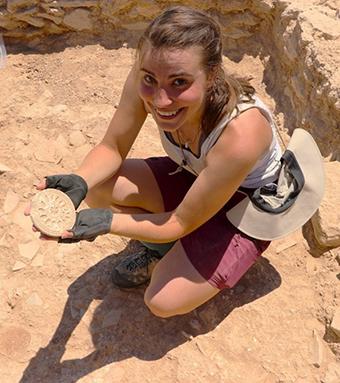 | My dissertation project aims to expand traditional frameworks for labor organization in the late prehistory of Cyprus by examining landscapes of labor organization. Through the concept of "laborscapes," I will explore local and settlement-specific taskscapes by collating physical indicators of labor organization documented through site excavation and regional surveys. In addition to formal and site-specific workplaces, my research will focus on instances of labor that occur outside these contexts and are associated with seasonality and temporality. Specifically, I will highlight the different dimensions of social connectivity between communities of practice of the hinterland, particularly between the Mesaoria plains and the northern Troodos foothills, by focusing on seasonal mobility for labor practices. My research will also emphasize the importance of environmental interactions in shaping labor organization, specifically the recurring seasonal nature of work associated with mining, forestry, and agriculture. Through this, I will underscore labor’s cultural and social dimensions, including ritual feasting and commensality associated with work, and the role of labor organization as a mechanism for social reproduction.
| |
|
The Anita Cecil O’Donovan Fellowship
Michał Michalik
Jagiellonian University, Cracow
The Sip of Cold Water in the Shade of the Portico. Water Supply of the Nea Paphos Agora in Context
| |
|
The aim of my ongoing PhD project is to investigate the transition between the Hellenistic (312 - 30 BCE) and Early Roman (30BCE - 2nd century CE) periods on Cyprus through the scope of water technology, considered to be an imprint of environmental, demographic, political, and sociocultural changes, with emphasis on the data from the excavations on Agora of Nea Paphos. During my fellowship in CAARI implemented between April and May 2023 I would like to develop the topic by attempting to contextualise analysed findings. My first goal is to seek and collect analogical remains of the water technology unearthed within the Hellenistic and Roman sites to verify patterns observed on the Agora and to investigate the relationship between the capital and other urbanised environments of Cyprus. The second goal is to understand the entangled relationship of utilitarian and cultural practises associated with the use of water through the analysis of ancient iconography and ethnographical sources.
| |
|
Scholar in Residence
Each year, CAARI welcomes an established scholar to reside for a period at the Institute as a mentor and model. Interchange across disciplines and age groups is an invaluable part of the CAARI experience.
Dr. Frederick Whitling
Independent Scholar
The Swedish Cyprus Expedition Revisited
| |
|
Crown Prince Gustaf Adolf, later King Gustaf VI Adolf of Sweden, was chairman of the Swedish Cyprus Committee, established in 1927 for the organization of the Swedish Cyprus Expedition (SCE, 1927–1931). He visited Cyprus in 1930 in connection with the division of the finds and also took part in the excavations.
The SCE carried out excavations all over the island, at more than twenty archaeological sites (many of which are presently located in Northern Cyprus). The overall ambition was to establish a thorough chronology in Cypriot archaeology. A more politically oriented ambition was to document the island’s ancient “Hellenization”. The project builds on earlier research work, and is expected to result in a book project on the expedition and the accompanying committee, which was active until 1954, when the Museum of Mediterranean and Near Eastern Antiquities (Medelhavsmuseet) was founded in Stockholm, incorporating the hitherto separate Cyprus collections (Cypernsamlingarna).
| |
|
Fulbright Scholars Program
The Fulbright Program is the U.S. government’s flagship program of international educational and cultural exchange. Scholars with Fulbright Fellowships for Cyprus have traditionally had a close bond with CAARI: witness the “Fulbright Suite” where many have stayed.
Dr. Thomas Landvatter
Reed College
Cyprus at the Hellenistic Transition: Excavations at Pyla-Vigla
| |
|
This project archaeologically investigates the incorporation of Cyprus into Hellenistic imperial systems through research and excavation at the site of Vigla, a fortified military settlement on Cyprus’ southeastern coast near modern Larnaca, overlooking the main coastal road between ancient Kition and Salamis. Initial excavations have indicated that Vigla was a military fortification occupied for only ca. 50 years, from ca. 325 to 275 BCE. With such a limited period of occupation, a sound stratigraphic profile consisting of multiple undisturbed floor and subfloor levels, a homogeneous material assemblage, and discrete chronological benchmarks, Vigla represents an ideal case study for examining the critical decades when the cultural and political transformations of the Hellenistic period began. The Fulbright Flex Award will support my time on Cyprus during two seasons of excavation as well as pre- and post-excavation processing and research in June-July 2023 and 2024.
| |
|
Supporting such an impressive list of new Fellows is at the heart of CAARI's mission. We have every confidence they will achieve their research goals and make significant contributions to the study of Cyprus in their respective fields. Just as the innovative research undertaken during the course of these fellowships demands investment, so too do the fellowship funds themselves. Please consider supporting our fellowship programs with a donation here:
| |
CAARI
11 Andrea Dimitriou Street
Nicosia 1066
Cyprus
| |
CAARI
209 Commerce Street
Alexandria, VA 22314
USA
| |
|
Playing with Fire: Experimenting with Neolithic Cooking at Prasteio-Mesorotsos
Dr. Andrew McCarthy
University of Edinburgh and the College of Southern Nevada
| |
|
The University of Edinburgh’s Prasteio-Mesorotsos Archaeological Expedition has uncovered remarkable evidence for Neolithic feasting and the establishment of a place of congregation. In the Neolithic period, some people began to change a mobile lifestyle into one with permanent settlements. This was the origin of house and home, territories, regional identities, and decisions about how to live their lives as herders and farmers. Success depended on an ability to claim ownership of a patch of land and to develop a regional social system that included cooperation and negotiation. The evidence at Prasteio-Mesorotsos, we believe, tells an important story about how these changes took place in Cyprus.
The Neolithic people who came to the west of Cyprus about nine thousand years ago first established a settlement at the base of a prominent rocky outcrop (Mesorotsos), the most important strategic position in the Dhiarizos Valley. The site continued to be occupied for thousands of years from at least the Pre-pottery Neolithic until the Bronze Age. The first people to come to this spot likely were seasonal visitors, probably a band of no more than a few dozen people, eventually coming to stay year-round and establishing a permanent settlement, including a sequence of houses and domestic-scale cooking installations.
Among the Pre-pottery Neolithic deposits, we found a large hemispherical pit (Area VII, feature 1212), 2.5m diameter and 1.25m deep. When our team of students excavated this pit over the course of four seasons, they gave it the nickname “the pit of despair”, because almost no artifacts were found inside, only ashy soil between heat-cracked igneous stones. Once we got to the bottom of the pit, we found that the pit was carefully crafted with a stone lining, which was also heat-cracked in situ. What was once considered a tedious trench by students turned out to be one of the more remarkable discoveries we have made at the site. It was clearly an enormous fire pit, but what was it for?
Perhaps it was lunchtime, but my mind immediately was drawn to its potential to cook food. The problem with this idea was that it was huge, and we already had found domestic scale cooking from the same early period. I was familiar with Polynesian imu-style cooking for kahlua pork at luaus, and I speculated that this could be for a similar method. That said, it was at the theoretical maximum size for this kind of cooking, which uses steaming rather than roasting. For this method to work, one must heat rocks, bury meat or other foods, seal the contents, and let the stones slowly radiate for at least 24 hours. Could a pit oven this size effectively cook meat? There was one way to find out: experimentation!
After travelling to Hawaii to learn how to cook using this method, I returned to Cyprus and sought advice from George Demetriades, owner of “7 St. Georges” restaurant in Geroskipou. He was experienced at pit oven cooking and is also an expert forager and knowledgeable about what wild plants would be available to the Neolithic people. Together we hatched a plan, and along with the willing participation of our friends at the Café Extreme View, located on the road adjacent to the archaeological site, we set out to reconstruct not only the pit oven in front of the restaurant, but also to use it to cook a feast.
| |
The archaeological fire pit, and the replica built for the experiment | |
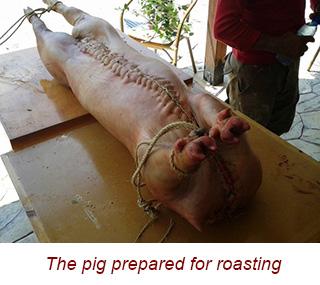
Our two-week experimental project replicated this pit oven using traditional techniques: sourcing and carrying stones from the riverbed, digging and lining the pit, sourcing wood and clay, tanning hides in the river, crafting mats to cover the meat, etc. Everything had substantiation in the Neolithic remains from the site, including what would be cooked: an 80 kilo pig and two 40 kilo goats totaling 160 kilos of meat! | |
A fire in the replica fire pit | | |
|
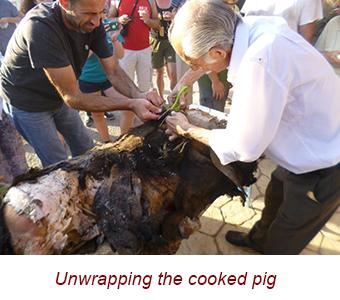
We lit a fire to dry and heat the surrounding soil and the stones lining the pit oven; then charcoal was made with a mixture of hard and soft wood. The pig was stuffed with bulghur, wild fennel and wild oregano and wrapped in wet burlap. The goat was chopped into pieces, flavored with wild oregano and wrapped in goat hides. Once the charcoal was formed on day three, stones were put on top of the coals, | |
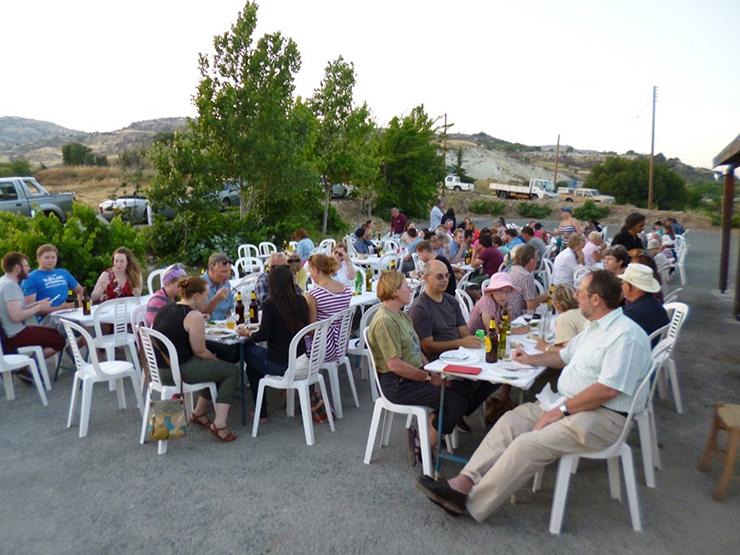
followed by branches of fresh bay, carob and mastic leaves. The meat was placed on top and covered by more leaves and sealed with a mud/clay mixture that was fire-baked into terracotta to trap heat within. On day four, we were ready to eat (fingers crossed!) and it culminated in our own Neolithic-style feast which fed more than 300 of our friends and colleagues from across the island. | |
|
The festive consumption of the meal | |
|
The replica pit oven looked really close to the original, but perhaps more importantly we also discovered many intangible things about the oven, for instance:
- It was expensive in ancient terms, using lots of wood and other resources.
- It required nuanced understanding of the qualities of fire, fuel, oxygen, heat and stones.
- It was delicious. Flavors from the aromatic herbs, the charcoal and the leaves infused into the fibers of the meat creating succulent and tender cooked pork and goat. We had accompanying Neolithic era vegetables too.
- We could easily feed 400 people with this oven. Plus, if you are firing it up, you might as well make as much as you can in one go.
- This was clearly not for a single community of a few dozen people. It was for intercommunity feasts.
This experience proved that the oven was not for cooking, but for feasting. We don’t have any direct evidence for what kinds of activities would have been involved in a Neolithic feast, but our own experience can guide discussion.
The oven was made big to cook a lot. Four days of a huge fire would have been a sight to behold, where one can imagine dancing and singing and drumming late into the night. We could imagine the various Neolithic communities who lived in the area converging on this spot to exchange materials, tell stories, develop friendships, resolve differences, intermarry and have a bit of fun as well as some somber ritual.
Finally, we gave this information back to the community who now lives at Prastio village and it has already become a central feature in the village identity as well as a draw to people from around the island.
| |
|
Help sustain CAARI
To ALL who play a role in the ongoing challenge of giving CAARI a firm foundation: our sincerest thanks! Please help sustain this effort!
| |
CAARI
11 Andrea Dimitriou Street
Nicosia 1066
Cyprus
| |
CAARI
209 Commerce Street
Alexandria, VA 22314
USA
| |
From all the CAARI community, thank you for your generous participation! We are grateful for your support. | |
Annemarie Weyl Carr
Vice President, CAARI Board
| | | | | |