Your Monthly News & Updates | |
|
|
April is always an exciting month of transition in New England. We start the month with the worry of snow and end with spring flowers covering the ground. The forsythia in full bloom across the landscape is such a vibrant reminder of what is to come after long months of the dull landscape that hasn't quite see enough snow in recent years.
I think a lot about what our landscape looked like 100 or 200 years ago. I feel like I get just a glimmer of it when walking the fields behind the Wheelock school. But each year, it becomes harder and harder to imagine what generations before us must have seen. But, we do know that it was beautiful – so beautiful that several artists were inspired to make Medfield their home.
Bunker, Cass, Francis, Inness, Monks, and countless other artists have called Medfield home over the years. And, visitors during Medfield History Weekend were able to enjoy both the standing John Jesse Francis exhibit at the Peak House along with a special exhibit of various paintings and other artifacts by John A.S. Monks at the Medfield Historical Society.
There are so many people to thank for their work on History Weekend from across town but for the Historical Society I would be remiss if I didn't offer my deepest gratitude to Chris McCue Potts who has worked tirelessly for now two years to develop the weekend as a way to foster collaboration between all of the historically minded organizations in town. A special thanks goes out to Norma Vogel for her incredible work on our featured Monks exhibit, and, to Rob Gregg for his continued work ensuring that the Historical Society's Peak House provides a rich and meaningful experience for visitors to Medfield.
Back toward the beginning of the month I personally presented a program focused on the development of cottage industries and the rise of the multiple straw hat factories that existed here in town during the 1800s. This was the sixth and final program of our season. Joe Opiela has done an outstanding job curating an amazing program lineup this year – so much so that we ended up offering six programs rather than our typical five.
With the completion of Medfield History Weekend, we are shifting our sights to our upcoming school program where every 3rd grader will begin to explore what it means to be from a place with such a rich deep history – and hopefully to ignite curiosity that will last them a lifetime. But more about that next month.
And, all this of course is in addition to the fundamental task of opening our doors multiple times a month to support the public. On the past Saturday for example, we were joined by two people looking to donate artifacts, two others looking to research their homes, yet another two looking to research different topics including the old post office and an old mill pond, and finally several people simply looking to learn more about our quaint little town.
And it is here that I will remind you, my dear reader, that we don't receive any funding from the town of Medfield. I love what we do for the town but I know that this is only possible with YOUR support. (Yes, even you.) Many people are surprised to learn that the Historical Society takes on the full cost of managing the Library Annex - from building maintenance, to insurance, to heat & electricity. In fact, we just spent $2,000 to upgrade the building alarm system. But that is the truth. And, the sad fact is that the mass majority of our fundraising today barely covers these costs which makes it very difficult to pursue our core mission which is to preserve, collect, and share the rich history of Medfield.
P.S. the new Medfield Magazines are in! Once again multiple businesses from around town have helped us make this a reality as their advertisements cover the considerable expense of printing. Let's keep Medfield Local! Please take an extra moment to visit them and show your appreciation.
If you can stop by from 10-12 this Saturday to collect your magazine, please do so. After that, we will be making these available at the town hall, the library, and the center.
| |
|
PeggySue Werthessen
President
| |
Medfield Sites Help Visitors Discover and Enjoy History | |
|
by Chris McCue Potts
Over a three-day period, more than 500 visitors from near and far enjoyed the various tours, activities and exhibits that Medfield History Weekend 2024 had to offer.
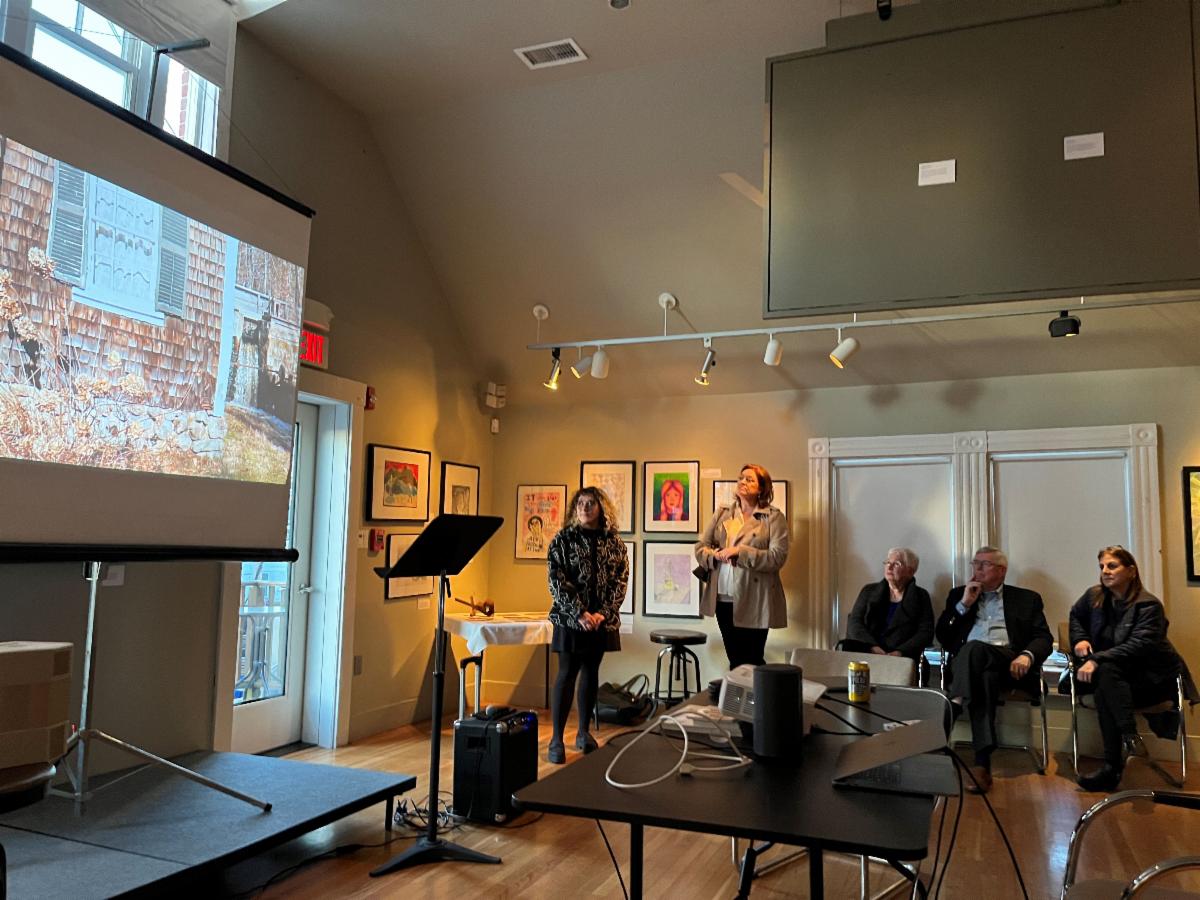
The Zullo Gallery kicked off the weekend with an evening gathering on Friday, April 26. Focusing on the overarching theme of storytelling through time, the event featured a premiere of Medfield TV’s “Preserving Colonial History as a Gristmill Keeper” about Red Gate Farm, and gave attendees the chance to learn about the history of the gallery, the circa 1900 building in which it operates, plus current and upcoming exhibits, including the exciting, “Evolution of a Small Town” augmented reality show opening this month.
| |
Attendees view the premiere of Medfield TV's "Preserving Colonial History as a Gristmill Keeper" about Red Gate Farm. | |
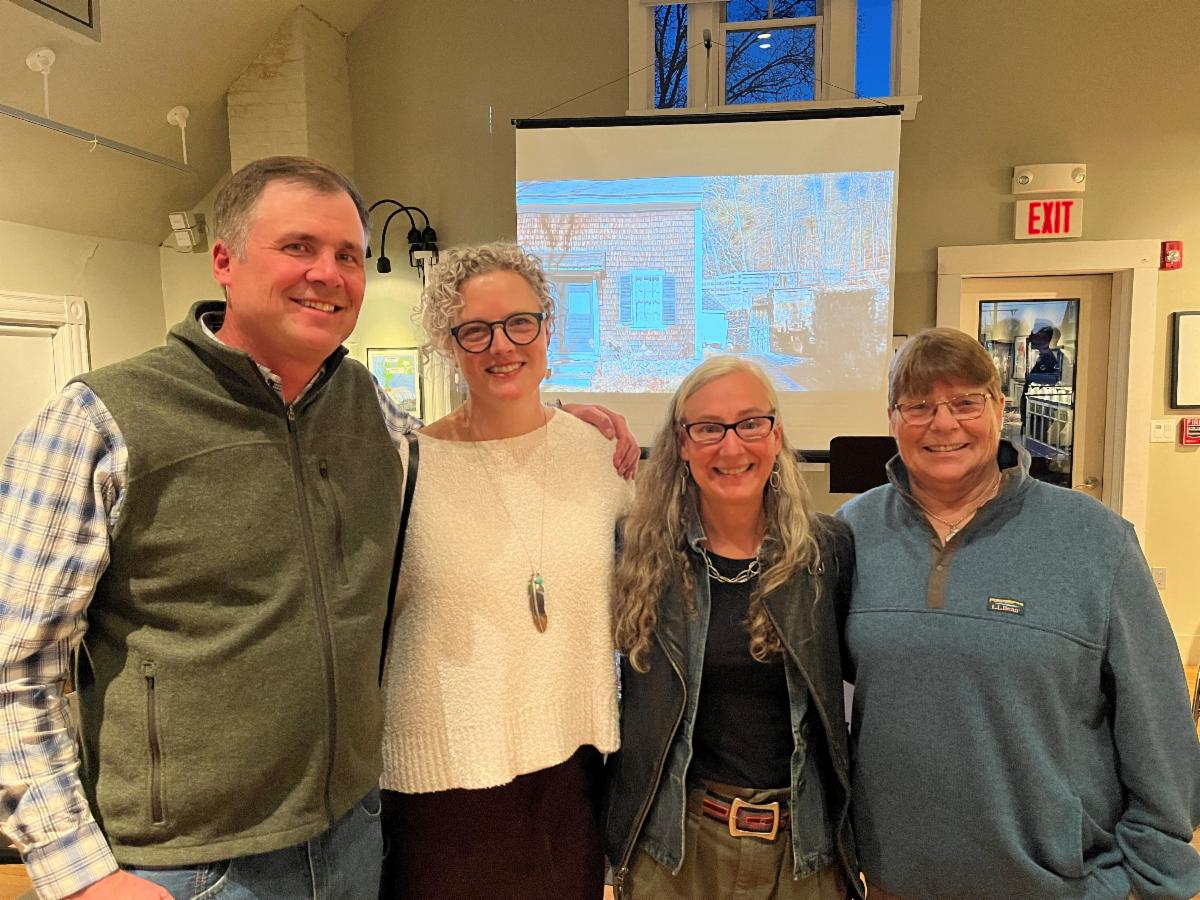
Current and past owners of the Red Gate Farm residence and mill – left to right: Alec Stevens and his wife, Deeni (current), and Brenda and Robin Kenny (former). | |
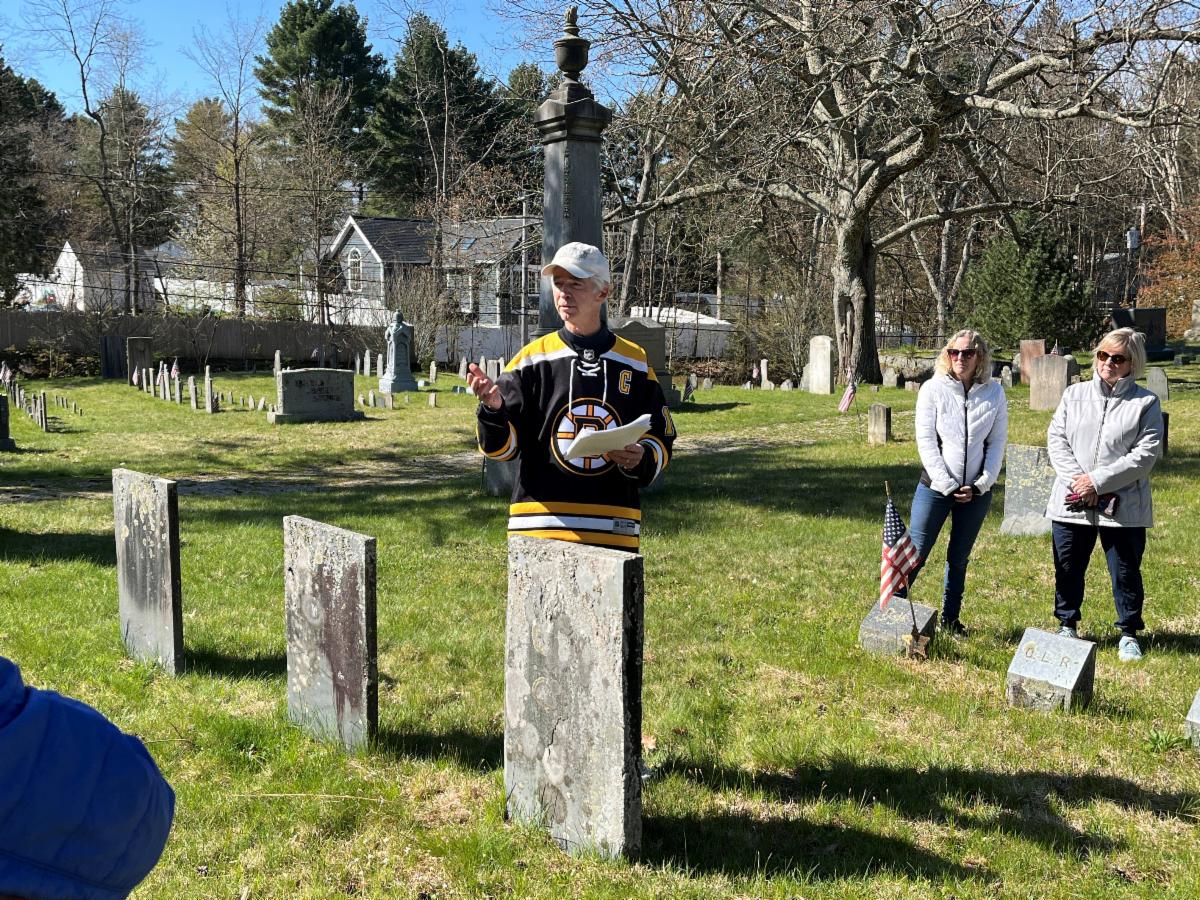
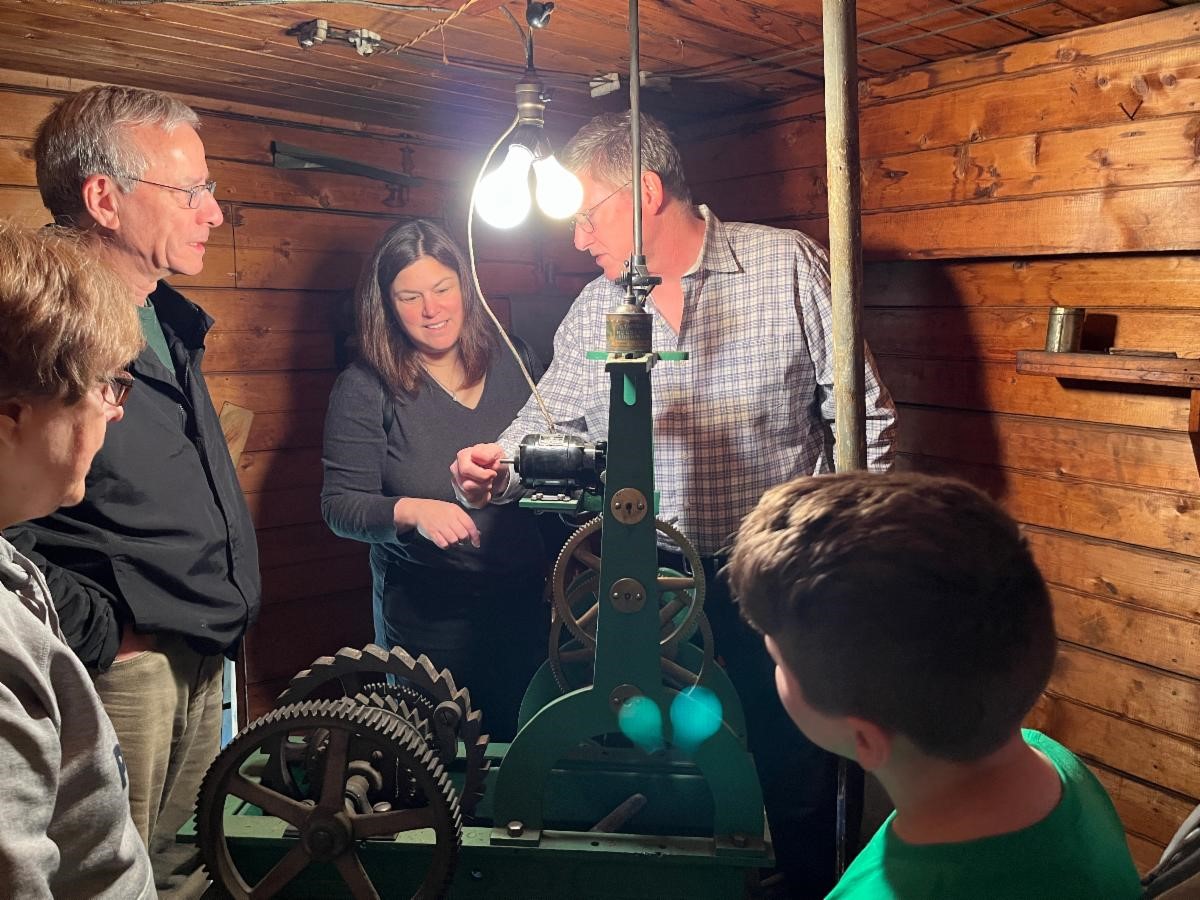
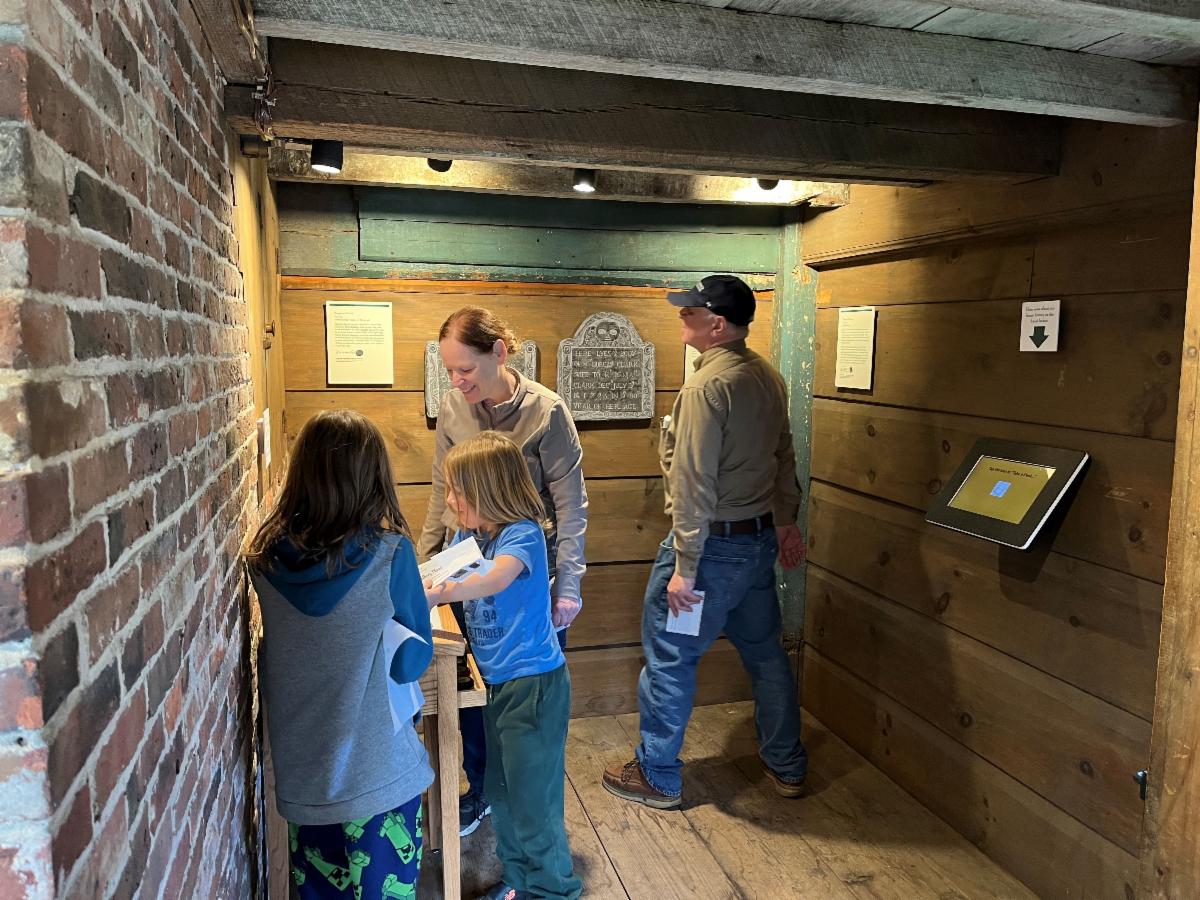
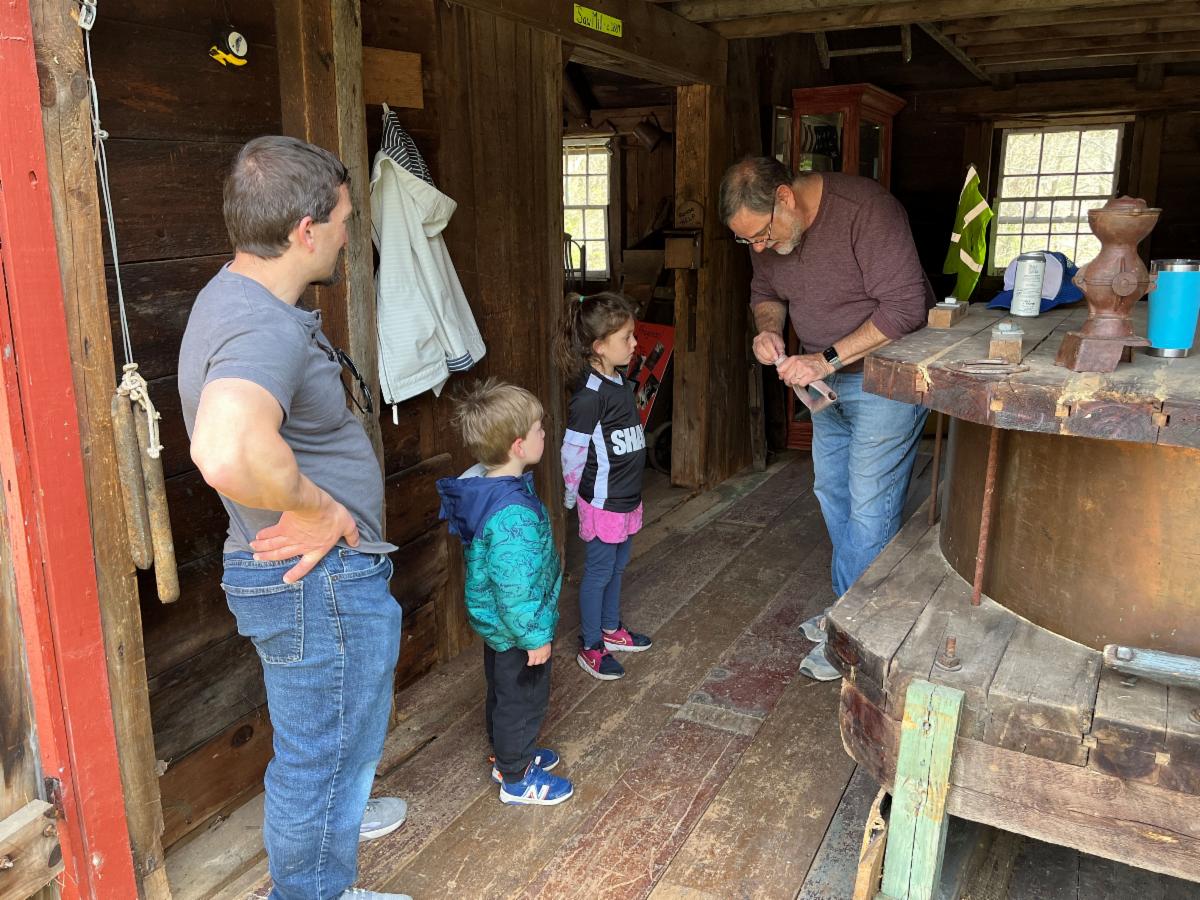
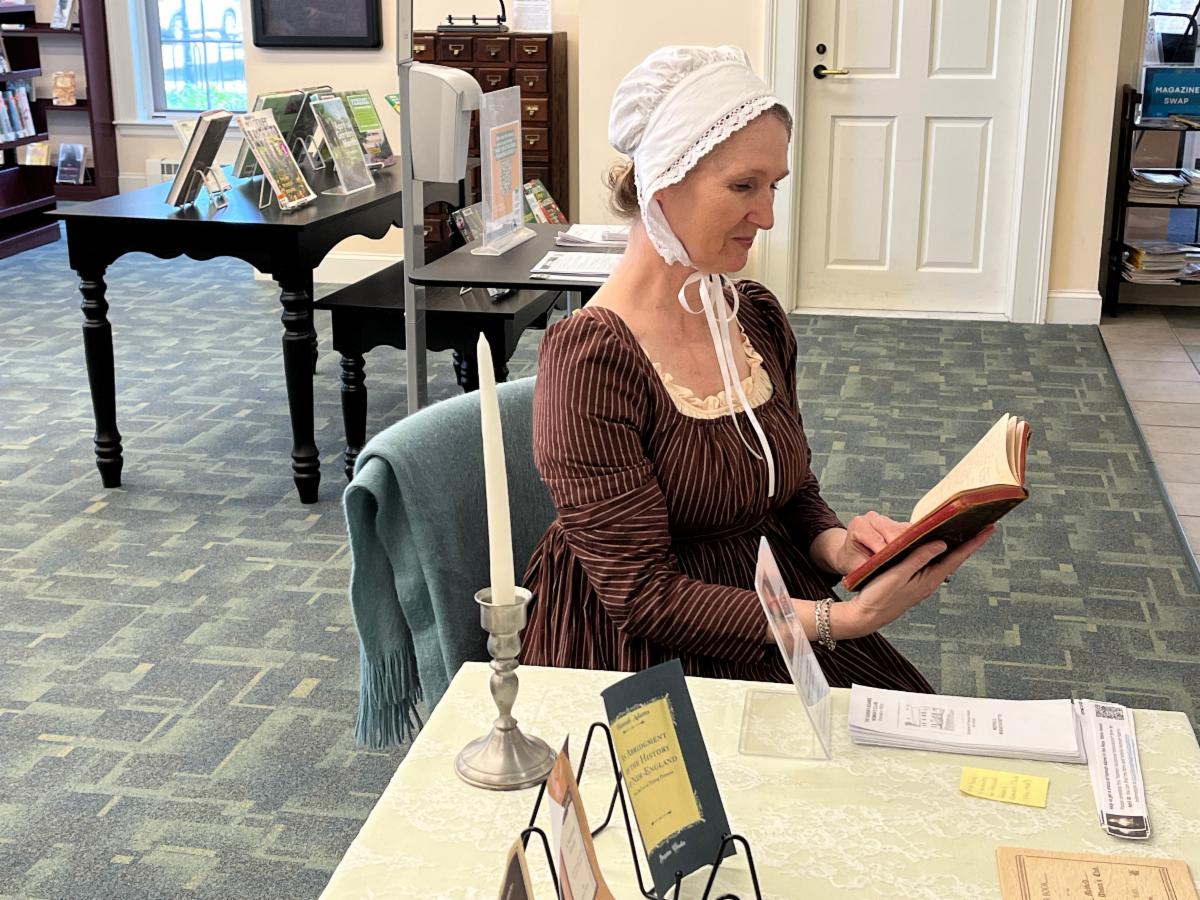
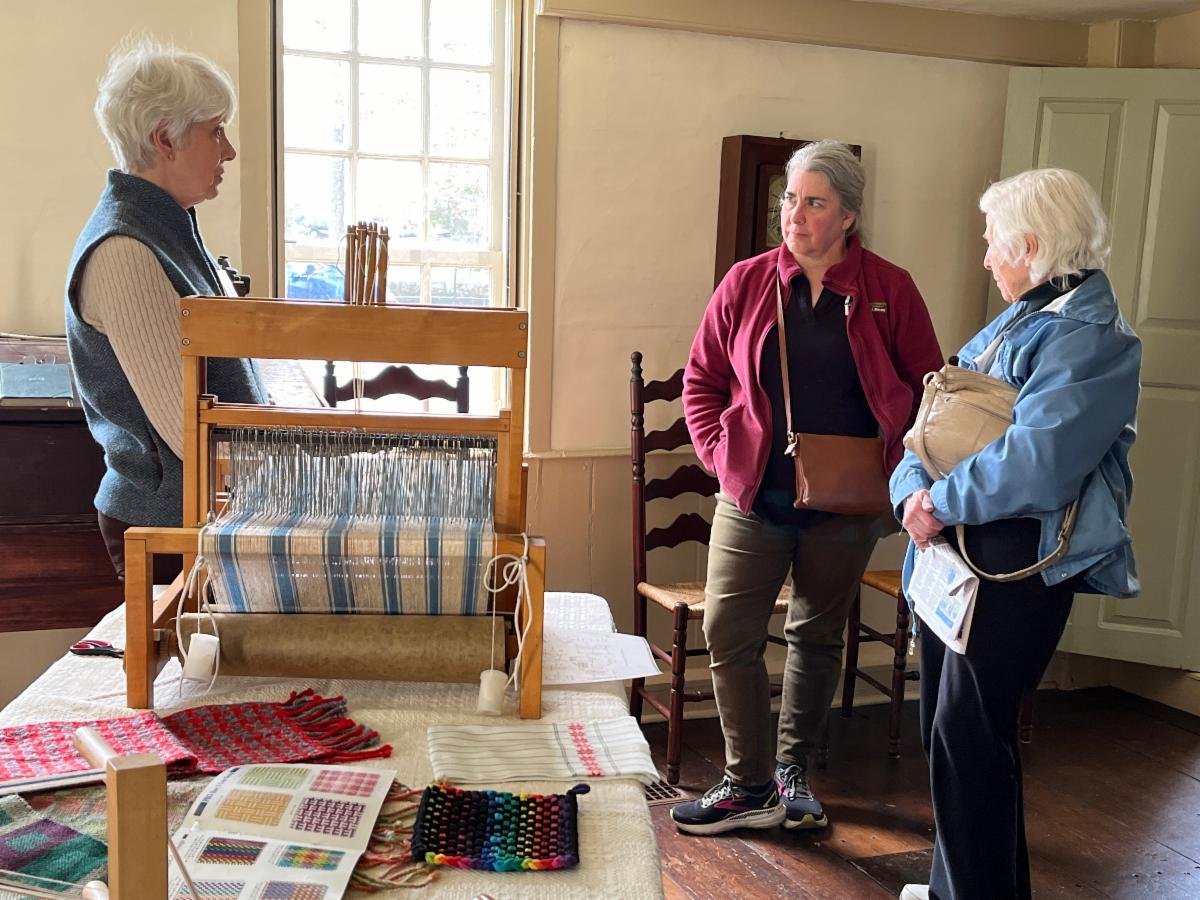
Under sunny skies, Saturday, April 27 was busy with a walking tour of Vine Lake Cemetery with Town Historian Richard DeSorgher, a steeple/Town Clock tour led by official co-clock-keeper Nick Werthessen, and historic sites open to visitors, including Dwight-Derby House, Peak House Heritage Center, Kingsbury Grist Mill, and our own Medfield Historical Society Museum. In addition, Medfield Public Library hosted a children’s scavenger hunt and a Hannah Adams exhibit featuring Hannah Adams Woman’s Club president and reenactor Theresa Knapp. Special attractions included spinning and weaving demonstrations at Dwight-Derby House, and a showing of original work by artist John Austin Sands Monks at the Society museum. | |
Walking tour of Vine Lake Cemetery with Richard DeSorgher. | |
Steeple/town clock tour led by co-clock-keeper Nick Werthessen. | |
Family exploring the Peak House Heritage Center. | |
Kids enjoying demonstration at the Kingsbury Grist Mill. | |
Hannah Adams exhibit at the Medfield Public Library. | |
Weaving demonstration at the Dwight-Derby House. | |
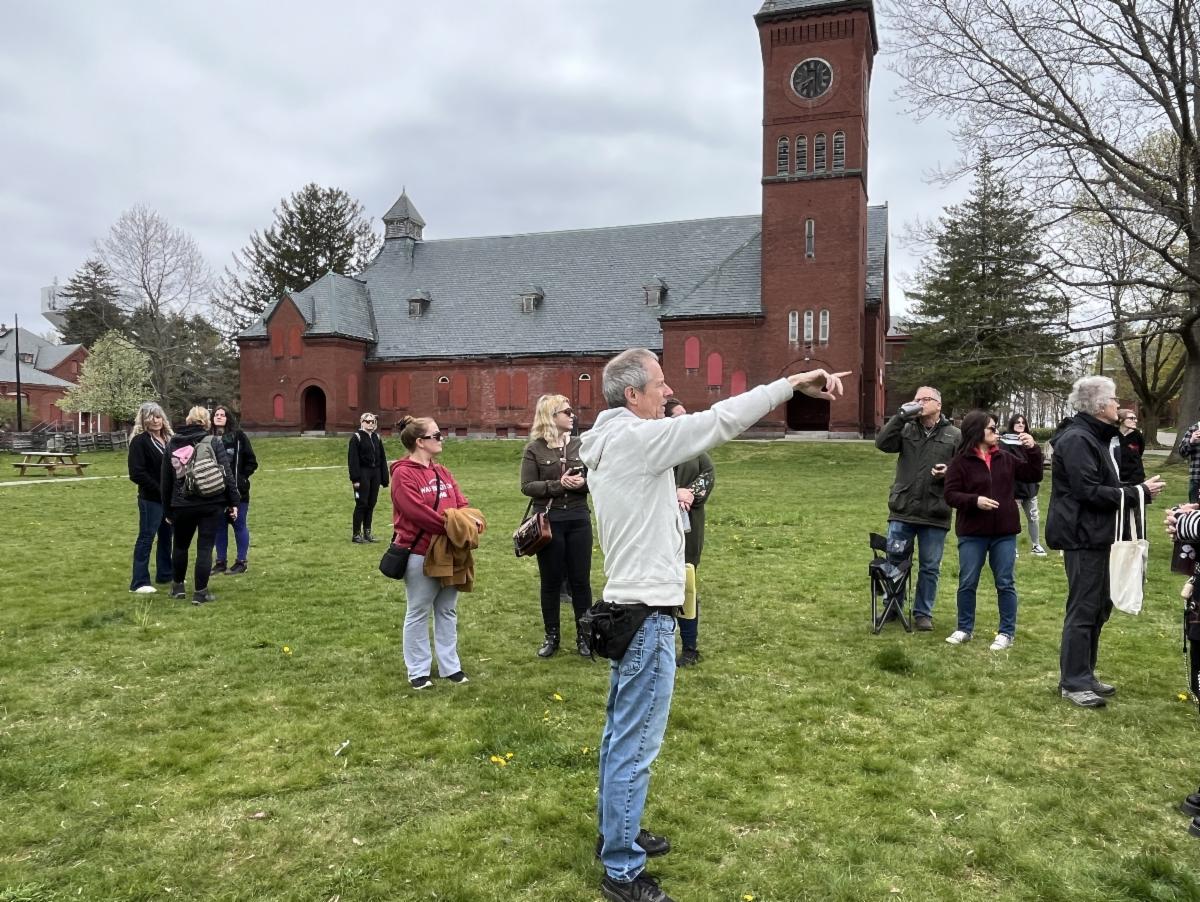
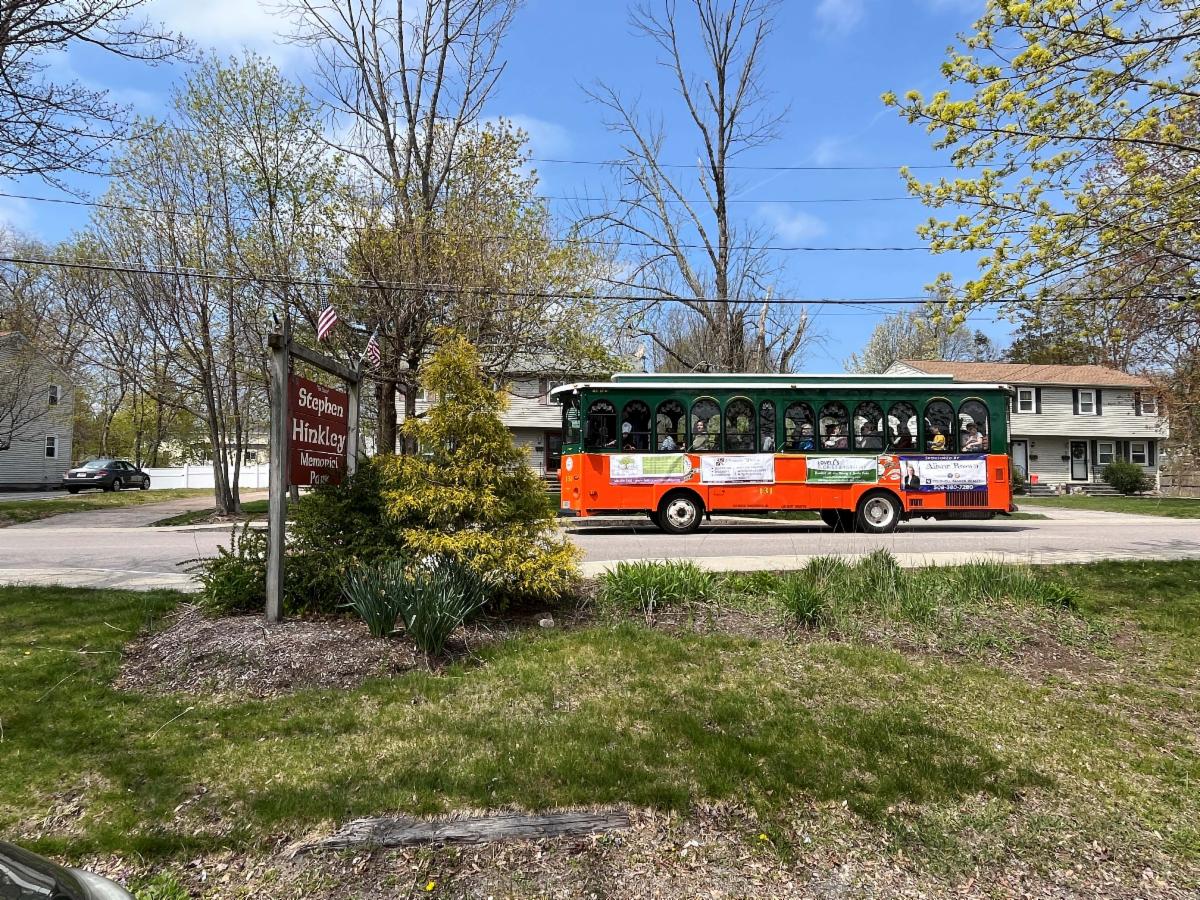
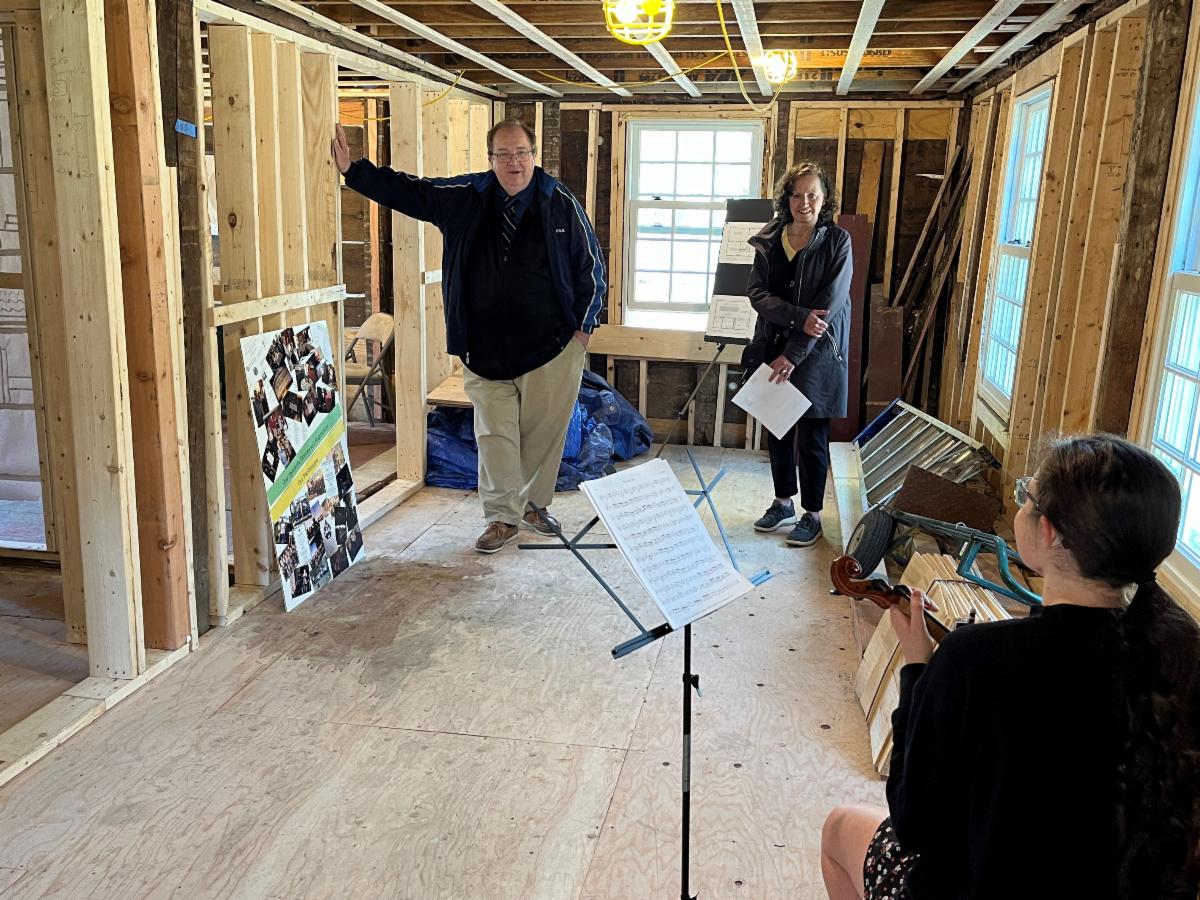
On Sunday, April 28, a walking tour of the former Medfield State Hospital campus (including Bellforge chapel) and narrated Old Town Trolley tours were virtual sell-out attractions, along with Medfield historic sites opening their doors once again to visitors. Joining the line up was Lowell Mason House with a student violinist performing in the afternoon. | |
Walking tour of the former Medfield State Hospital led by John Thompson. | |
Old Town Trolley tours narrated by Joe Opiela. | |
Student violinist performs at the Lowell Mason House. | |
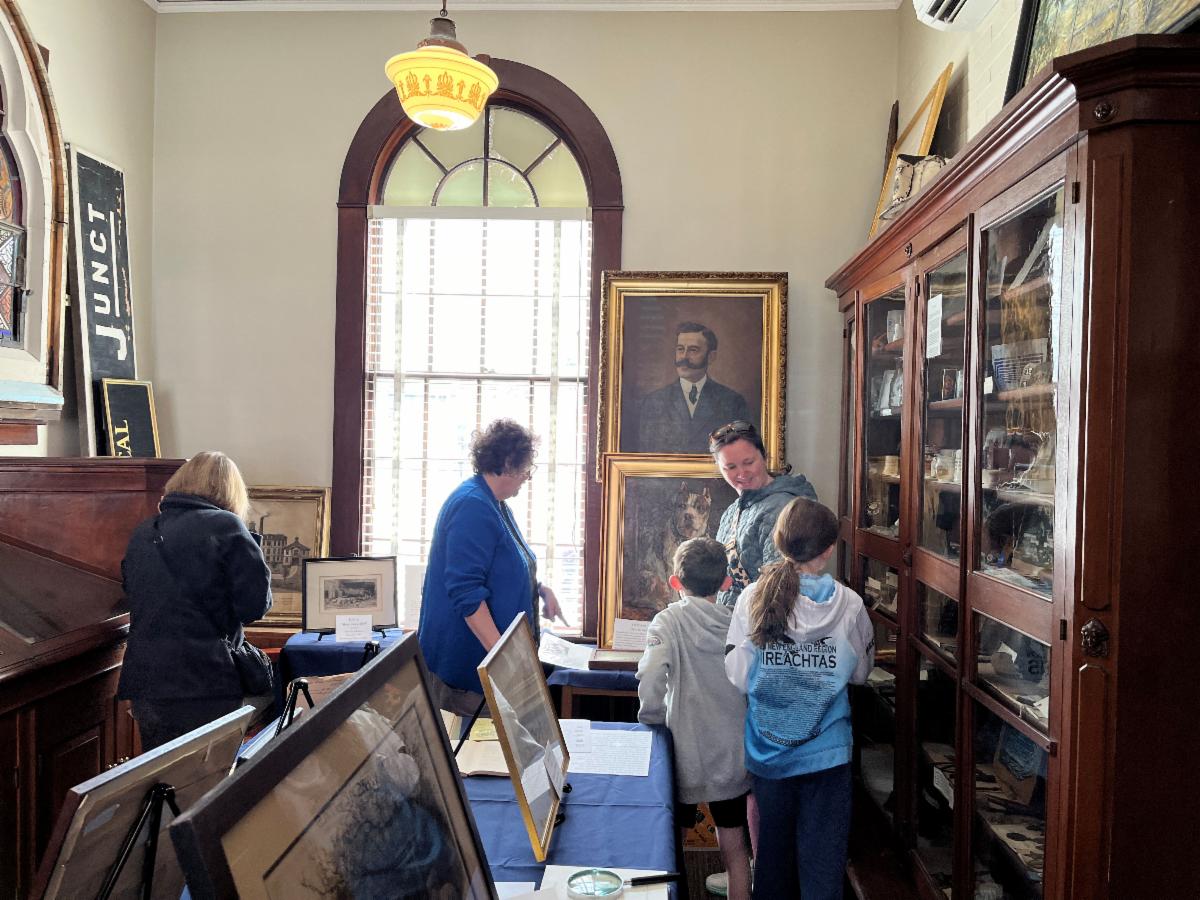
Visitors enjoy the John A. S. Monks exhibit at the Medfield Historical Society. | |
|
Needham Bank served as presenting sponsor of this year’s Medfield History Weekend, while Medfield Cultural Council provided a significant grant to help cover expenses. Additionally, Medfield TV, MEMO, Zullo Gallery and Hometown Weekly contributed to the success of the entire weekend, as did trolley sponsors Realtor Alison Brown, Geico Insurance, Realtor/Attorney Russ Hallisey, Holistic Wellness Center, Hurley-Testa Construction and Lovell’s Florist & Nursery.
Proceeds from Medfield History Weekend benefit the non-profit historical groups that participated in the weekend and served as partners in overall planning.
| |
Beyond Jack the Dog: Medfield History Weekend Visitors View Art of J.A.S. Monks | |
|
by Norma Vogel
Visitors to the Medfield Historical Society during History Weekend had the opportunity to view, for the first time in eleven years, our town’s collection of J.A.S. Monks etchings and paintings. This exhibit included both early and later etchings, an untitled watercolor, and of course, the famous oil painting of “Jack the Dog,” the beloved pet who saved the life of Medfield doctor Arthur Mitchell. “Jack” is always on display at the Historical Society, but this was a chance to see it in the context of Monks’ body of work and the timeline of his life.
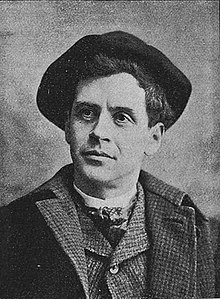
Although Monks was born in 1850 in Cold Spring, NY, he became closely connected with Medfield when in 1877 he married Olive B. Young, the granddaughter of Elijah Thayer who bought the land and buildings in the center of town in 1864.
| |
|
|
Thus, Monks took his place alongside Medfield’s other celebrated artists of the nineteenth century, George Inness, George Nelson Cass, Dennis Miller Bunker, and John Jesse Francis. Monks became a lifelong friend and student of Inness.
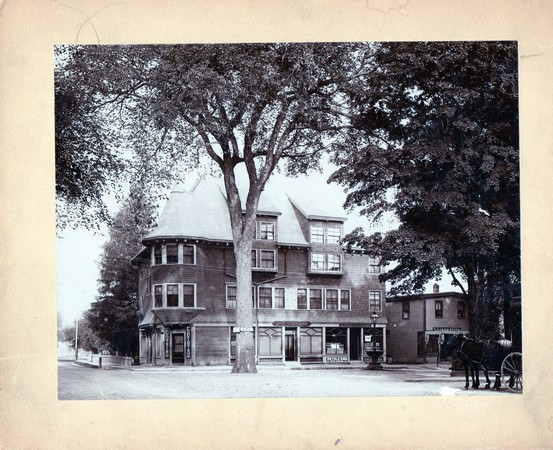
For this year’s exhibit we uncovered some fascinating tidbits to accompany the artwork, such as a rare book by Monks from the 1920s, How Etchings Are Made; contemporaneous reviews of Monks’ artwork from art critics of the time; an original letter accepting Monks into the New York Etching Club, and a photo-journalistic exhibit of the changing history of “Monks Block,” the familiar brown late-Victorian building in Medfield Center, at the corner of Main and North Streets. When we see a building every day, it is easy to overlook its architectural charm and history. This unusual building has a storied history that visitors could learn about.
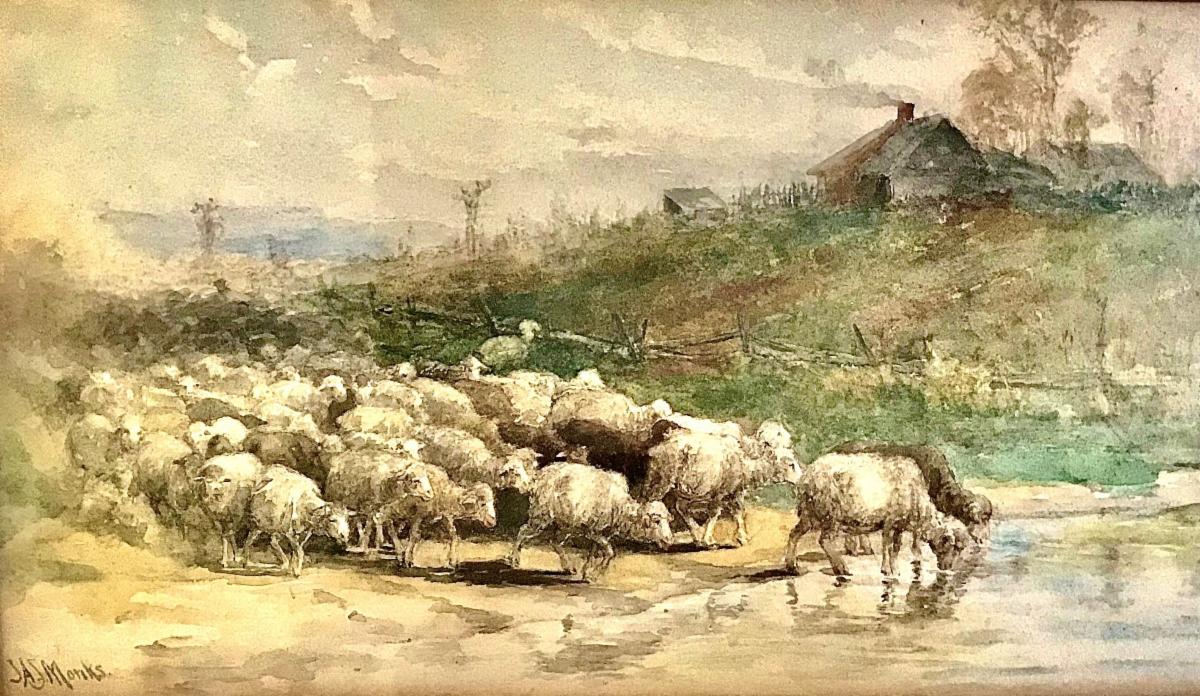
| Monks Block in Medfield Center | Monks was known as the great painter of sheep. Even for those who never gave sheep a second thought, it is impossible not to be moved by the natural, emotional depth of his Medfield landscapes and the creatures that populate them. In the words of Henry Willard Austin (1858-1912), a Medfield poet, writer and art critic, no other artist had proved capable of capturing the beauty of the natural, simple life in 19th Century Medfield. | Sheep in Stream by J.A.S. Monks | |
“The beautiful village of Medfield, with its long avenues umbraged by those gigantesque bouquets of grace and grandeur which we nickname elms, and with its lanes of golden-green maples, has proved an Eve to many an artistic Adam, and tempted him to eat of that fruit of knowledge whose taste is the taste of Beauty; but neither Cass nor Inness fully devoted himself to the study of Medfield scenery as did John Monks.”
Read more >>
| Of special note: For a limited time, visitors to the Museum can watch Jack the Dog come to life through augmented reality and a special Hoverlay app. Stop in to try it out! |
|
Beloved School Teacher Charles Hamant | |
|
When William S. Tilden (1830-1912) wrote his History of Medfield 1660-1886, he reported that Francis Hamant, one of Medfield’s original 13 settlers, was granted a house lot on South Street. Hamant had met the qualifications set out in Medfield founder Ralph Wheelock’s Agreement for would-be settlers that he was “honest, peacable, & free from scandall and erroneous opinnions.”
Tilden added, “The homestead has never been out of the possession of his descendants – and this is the only case of the kind among the first 13 settlers.”
Well over a century and a quarter later – more than 360 years after Francis built his first house – this stretch of continuous family ownership finally came to an end. In the 1980s, Daniels Hamant III built a house on the last remaining parcel of the original Hamant grant. His house is on South Street, at the downhill bend between Curve and Elm streets, and he sold that house about 10 years ago and moved to Florida.
Hamant Way, off Philip near South, is of course named for the family, though the name on the sign is misspelled with a double m. The large house in the background of the photo is the 1810 Hamant homestead. The original 1652 Francis Hamant house is long gone.
| 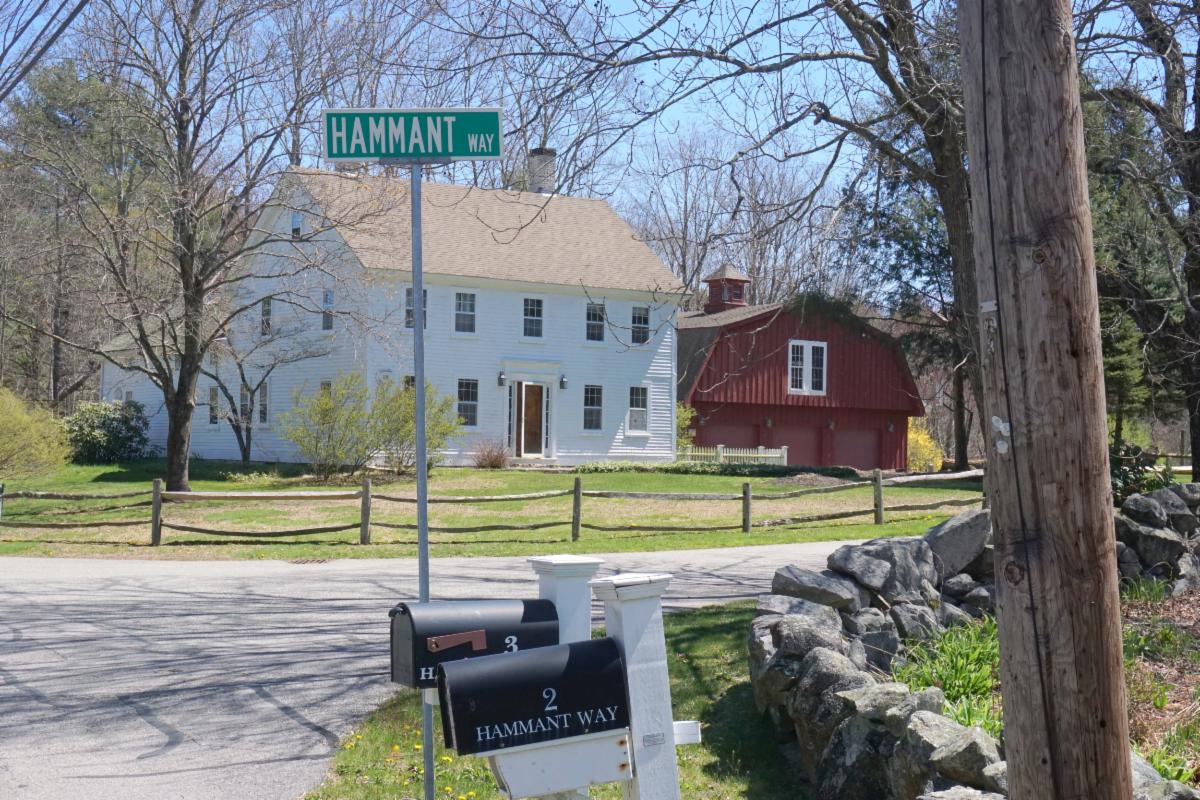 | The Hamant Homestead built in 1810. | |
Growing up in Medfield in the 1950s, I knew the family well – Daniels Hamant Jr. and his wife Muriel, and their children Ann, Susie, and Daniels III, who was called Stoke as a boy. They were all very bright, entertaining personalities.
Susie was a brilliant free spirit – a frequent challenge for her more conservative parents – but she had an exceptional career as a physician. At one point she donated one of her own kidneys to a patient who needed a transplant! Here’s a link to the obit of this extraordinary woman.
--
In addition to his history, Tilden compiled toward the end of the 19th century a series of short pieces which are bound together in a book called Anecdotes and Incidents – Medfield Life in the Olden Days.
The entire book is written in Tilden’s exceptionally beautiful and legible handwriting. Tilden authored most of the pieces himself, but some were written by Joseph Allen, one of the original incorporators of the Medfield Historical Society, and his brothers Nathaniel and James.
Here is a transcript of an article from that book, written by James Allen about his beloved teacher, Charles Hamant, who was born in 1812.
| |
|
James Hamant
By James Allen
As I recall the long list of teachers, men and women, under whose influence I came through childhood and youth, from Miss Mary Johnson in Waltham in 1834, (a true kindergartener in spirit, though probably she had never heard of Froebel;) to the gentleman who is the subject of my sketch, who also has probably never heard of "Pestalozzi" nor student "pedagogy", as a modern science, I am inclined to rank Mr. Hamant, if not "facilis princeps," at least among the first of Nature's born teachers, with whom I came in contact during my minority; and I do this through the retrospect of a full half century spent as a professional teacher.
Of Mr. Hamant's preparation for his work as teacher, I know little. It was certainly made through his own unaided efforts. He doubtless evolved his system and methods from his inner consciousness.
Read more>>
| |
After Eight Decades, Roy Owen Penned History | |
|
by Christine McCue Potts
One doesn’t need to be famous to write a memoir, or to engage readers through a journal or diary. In fact, volunteers at the Medfield Historical Society Museum have spent countless hours cataloguing numerous journals found in storage recently – all from average citizens, and with plenty of interesting stories to tell.
And while memoirs also don’t have an age requirement, oftentimes they don’t get written until someone has lived long enough to collect enough experiences to fill the pages, and they finally have the time to compile them all.
For Roy Owen, who passed away in 1998 at the age of 90 and is buried at Vine Lake Cemetery, he collected an abundance of colorful stories about his life in Medfield and how the town changed around him, including tales that don’t appear in any of the local history books.
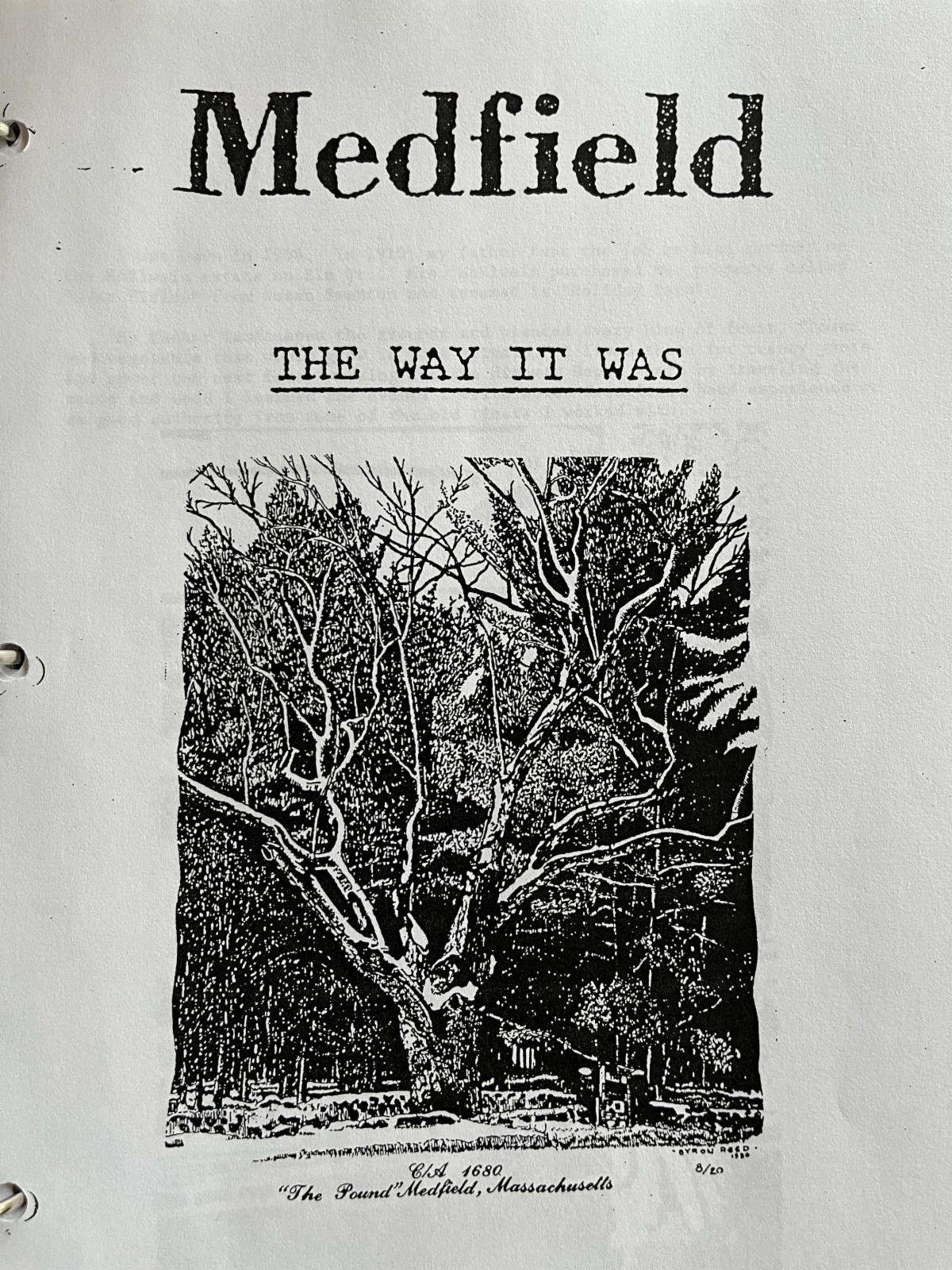
It was at the age of 80 when Owen was inspired to write down his memories and publish a 50-page booklet, Medfield – The Way it Was, allowing his tales about his beloved community over many decades to live on long after his death.
Read more >>
| |
People and Places of the Past | |
|
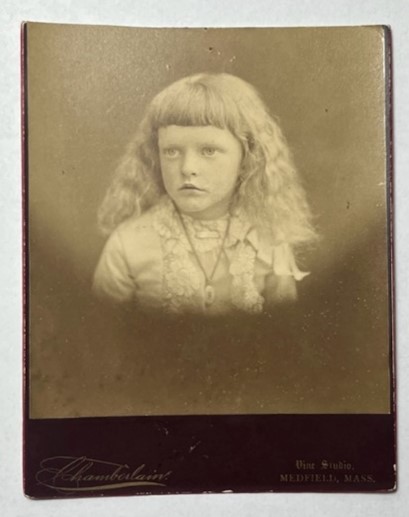
I was contacted by the Photo Angel through Ancestry.com. If you’re not familiar with her, she reunites long lost photos with families. She found me on a family tree that I created to work on Medfield families, and inquired if I was a relative of Amy Hewins. I am not, but suggested that the Medfield Historical Society might be interested in the photo. She then informed me that she had found a relative who was interested in receiving the original photo but was happy to send me an image.
As you can see, the photo was taken at the Chamberlain, Vine Studio, Medfield, MA. which was located at the corner of Frairy Street and Vinald Road.
Handwritten on the back of the photo is the little girl’s name, age, the year the photo was taken, her married name and, I believe, her marriage date. I’m not sure this date is accurate since documents state she was married in 1934 and here it is written 1938.
| |
Amy Sewall Hewins
Credit: Photo Angel | |
|
Amy had a noteworthy family lineage. Her great grandfather, Dr. James Hewins (1782-1846), was the first of the Hewins family to live in Medfield. The doctor arrived in Medfield in 1807 from Sharon, Massachusetts. He purchased a portion of the Joshua Fisher twelve-acre estate on Main Street in 1811, which included 435 Main Street, the old Fisher House across from South Street, 421 and 423 Main Street which was just land but in the late 1800s twin houses were erected on these two plots.
Read more >>
| | | | |