Accessibility & Health

May 2025

Image of a person propelling themselves in a wheelchair with wide space ahead of them.

Updates to Our Resources Page!

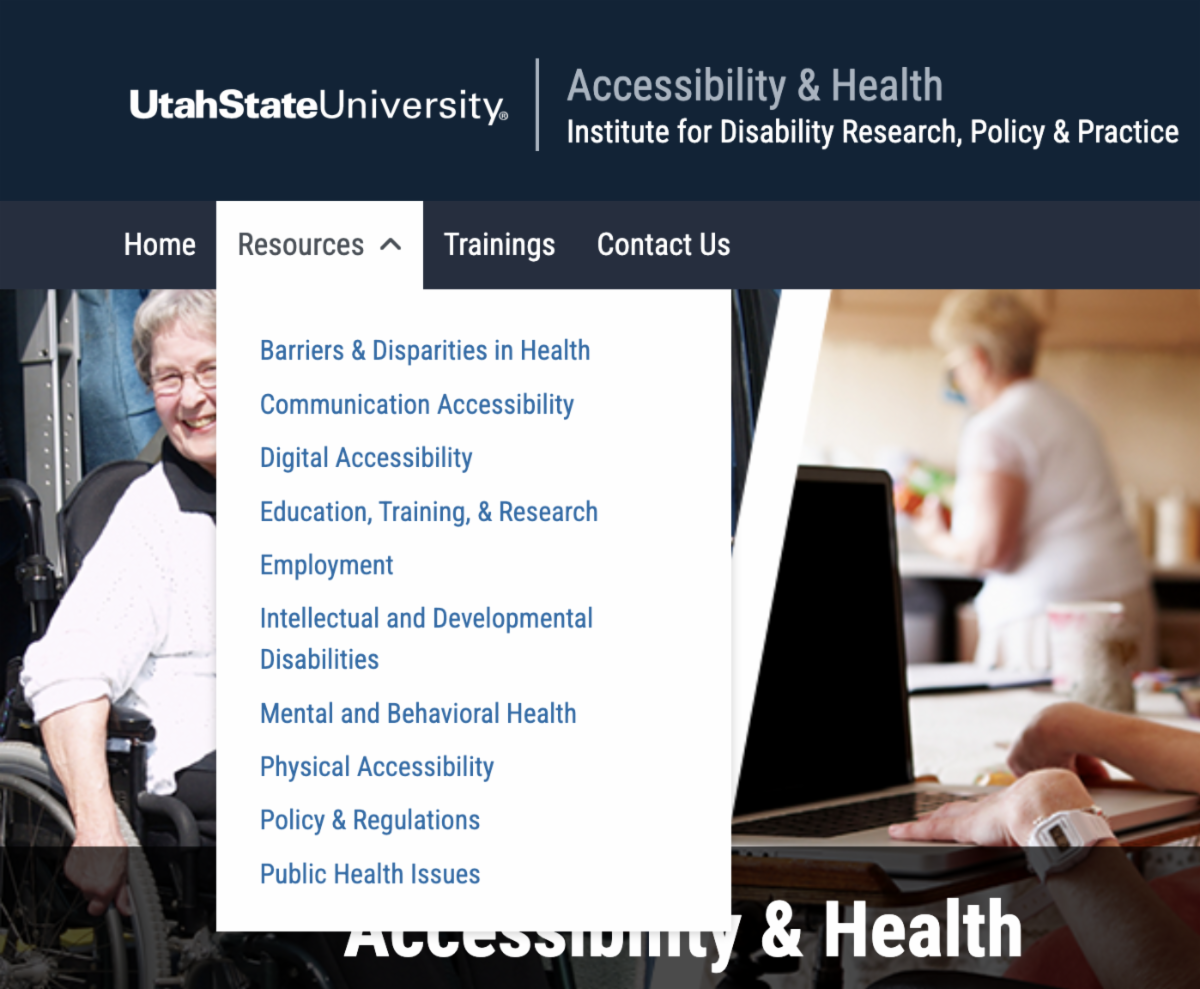
Instead of scrolling through one long list of resources on our website, now you can select a general topic of interest and search within that topic area for specific resources and information. This will streamline your ability to learn with us!

Accessibility & Health Resources tab preview from website

Share with Your Connections!


We encourage you to share these emails and Accessibility & Health content with others in your networks who may be interested to learn more with us!

If you haven't signed up to receive our monthly newsletter yet, do it now!


We are always creating new learning opportunities for people working in public health settings to better serve people with disabilities in their communities.

ADA Highlight

Telecommunications Relay Service (TRS)

Video thumbnail showing a text telephone (TTY)

By dialing 7-1-1, individuals with hearing or speech disabilities can access TRS—a free, nationwide service that uses trained operators to relay conversations between text-based devices and standard voice telephones.


How does it work?

People who have hearing or speech disabilities can use a text telephone (TTY) or text messaging to communicate with people who use standard voice telephones with the help of TRS. The communications assistant (TRS operator) tells the voice telephone user what the TTY-user is typing and types to the TTY-user what the telephone user is saying.


TRS also supports speech-to-speech translation for those who have difficulty speaking. When a person who speaks with difficulty is using a voice telephone, the communications assistant listens and then verbalizes that person’s words to the other party. This is called speech-to-speech transliteration.

Video thumbnail showing a person sitting in a power chair making a phone call

Public Health Examples


  1. Scheduling Appointments: When a patient who is deaf or hard of hearing needs to schedule a vaccine, clinic, or screening appointment by phone, staff can use TRS to communicate effectively.
  2. Contact Tracing or Case Investigation: During outbreaks, contact tracers may need to reach individuals who use TTY or have speech disabilities. TRS helps ensure accurate communication of important health information.
  3. Emergency Notifications: In urgent public health situations (e.g., disease outbreaks, boil water advisories), TRS can help ensure timely communication with community members who rely on text or speech-to-speech services.
  4. Follow-Up Calls for Services: If health department staff need to follow up with individuals receiving home visits, medical equipment, or chronic disease management support, TRS enables communication when the client can't use a standard voice phone.
  5. Public Health Hotlines: TRS ensures that hotlines for services like tobacco cessation, mental health support, or disaster response are accessible to all community members.
  6. Community Outreach and Education: When promoting public health events or resources, TRS can facilitate phone-based outreach to individuals who use TTY or have speech disabilities.
Woman typing on a computer

Training Topics?


We are working to provide trainings and learning resources that you will find valuable, but we would love to hear your insights.


Please let us know what you are interested in learning more about!

Archived Trainings

We have hosted many webinars over the last year. If you've missed any, you can still access and watch them! Find them conveniently linked below and on our Trainings page.

Hillary Hase

Workplace Supports


Presenter: Hillary Hase


Thank you to everyone who joined us for this month's training! If you missed it, we have it available for you on Canvas.

Hailey Judd

Demographic Disability Data in Utah: What’s the Status and Where to Find It


Presenter: Hailey Judd from Utah DHHS Healthy Aging

Teacher with young student working together on a computer

ADA & Section 504 Updates


Presenters: Nate Crippes and Mary Anne Davies from the Disability Law Center 

Mindy Johnson

Five Easy Tips for Social Media Accessibility


Presenter: Mindy Johnson


Eduardo Ortiz

Culturally Responsive Considerations for Working with Individuals from Diverse Backgrounds in Healthcare Settings


Presenter: Eduardo Ortiz

Matthew Wappett

Inclusion and Belonging


Presenter: Matthew Wappett

Aubrey Snyder

Disability 101


Presenters: Matthew Wappett & Aubrey Snyder

Institute for Disability Research, Policy & Practice logo

CONTACT US

(435) 797-1981

Facebook  X  Instagram  LinkedIn