Art Festival Newsletter | May 2026 | | |
This issue of the Art Festival Newsletter is inspired by the Art Festival Directors Conference held last month in Lubbock, Texas. It was a candid and forward-thinking gathering of festival leaders focused on how our field is evolving,
We discussed how to best use AI thoughtfully to support the back end of show management. We explored new ways to create more engaging and innovative patron experiences, took a deeper look at what the jury process truly means for both shows and artists, and discussed meaningful partnerships with local colleges and universities to enrich festivals through tech and art related partnerships.
Of course the best part of the conference is connecting with festivals across the country and discussing the issues we all face in an ever changing art festival environment.
| | Dear Artists (We Love You, But…): Notes from the Festival Director Group Therapy Session | | |
There is a quiet, unspoken moment at every art festival directors conference when a room full of otherwise composed, highly competent adults begins to look like people who have collectively just stepped on the same rake.
This year, in Lubbock, that moment arrived right after coffee, when the conversation turned to a deceptively simple question: “What would you like artists to change?”
What followed was less a discussion and more a gentle, cathartic unraveling.
Now, before anyone clutches their perfectly weighted tent leg in alarm, let me say this clearly: directors love artists. Without artists, art festivals would simply be well-organized fields where nothing happens. But there are… patterns. Small, persistent habits that, over time, have caused directors to develop a very specific facial expression usually reserved for people trying to assemble furniture without instructions.
Let us begin with the application. There is a strong belief among some artists that applications are a form of abstract expressionism, where capitalization is optional and spelling is a bold personal statement. It is not. If your website is spelled one way, your social media another, and your application introduces a thrilling third variation, the director is left wondering if they are evaluating one artist or an avant-garde collective of three. Not to mention the enormous amount of time it takes to fix this expressionism for websites, social media posts, booth signs, name badges, etc.
Also, and this is key: submit the application. On time. Not in spirit. Not emotionally. Actually submit it.
Which brings us to reading emails. Directors send emails not because they enjoy typing into the void, but because these messages contain answers. Often to questions that will be asked approximately 14 seconds after the email is sent. Reading the email before asking the question is considered, in some circles, a revolutionary act.
There is also a growing trend of requesting accommodations that were never offered, as though the show prospectus were merely a light suggestion, like “try the soup.” If a show does not include electricity, indoor plumbing, or a personal violinist, insisting upon these things does not cause them to materialize. It causes a director to stare into the middle distance.
On the topic of clarity, it would be helpful if everyone could agree on what a collaborator is. A collaborator is someone who actively participates in the creation of the work in addition to yourself. An associate is… not that. Adding a “collaborator” after acceptance who did not exist during jurying is less collaboration and more surprise plot twist.
And while we are discussing jurying, let us talk about the booth shot. Directors would like to gently remind everyone that the booth shot is not a decorative afterthought. It is not a place to showcase your car, your folding chair, or what appears to be a small kitchen. It is, in fact, one of the most important images in your application. Treat it accordingly.
Similarly, your artwork images should not be historical artifacts. Updating them each year is not just encouraged, it is deeply appreciated. The jury would love to know what you are making now, as opposed to what you were making during a particularly strong emotional period in 2017.
Your artist or jury statement should be written in the third person, which feels strange at first but has the added benefit of preventing sentences like, “I create art because I am an artist who creates art,” which, while technically accurate, does not move the conversation forward.
At the show itself, there are a few small considerations.
Standing in your booth shot is not ideal. Drinking, smoking, or engaging in activities that suggest you have mistaken the festival for a backyard gathering is also discouraged. This includes pot, which, while legal in some places, still tends to create an atmosphere not typically described as “fine craft adjacent.”
Closing early is another area of concern. When a show is open until 5 PM, this is not a suggestion or a philosophical concept. It is a time. Leaving early communicates to patrons, fellow artists, and directors that time itself is negotiable, which it is not.
There is also a gentle request to refrain from complaining to your neighbors, being disrespectful to staff, or behaving as though you are the only artist at the show. You are, in fact, one of many talented individuals who have all gone through the same process to be there.
Which leads us to the waitlist. Artists often ask, with understandable hope, if they are getting off the waitlist. Directors would like to answer this question. Truly. But the honest answer is: we don’t know. Not in a coy, mysterious way. In a very real, very human way. The future remains stubbornly uncooperative.
In a related note, showing up without an invitation to participate in the show is not a bold entrepreneurial move. It is, in most cases, confusing for everyone involved.
A word about sponsors. Sponsors are the reason many shows can exist at the level they do. They are not there to personally inconvenience you. They are there so that tents, marketing, and basic infrastructure continue to happen. Being kind to them is not just polite, it is practical.
Finally, if a show requests a Certificate of Insurance, it is not an abstract exercise. The dates should be correct. The show should be listed. This is not the moment for improvisation.
After all of this, it is worth saying again: directors and artists are on the same team. Everyone wants the same outcome, which is a successful, vibrant show where great work is seen, appreciated, and sold.
These “pet peeves” are not about control. They are about clarity, professionalism, and making sure that the entire experience works for everyone involved.
Also, and this is important, nobody stepped on a rake this year. But it was close.
| | ART WORTH APPLICATON DEADLINE 6/9/26 ON ZAPP | |
How AI Is Quietly Reshaping the Work of Juried Art Show Directors
Artificial intelligence has entered the art-festival world not with fanfare, but with a slow, steady hum in the background of daily operations. For juried art show directors, AI is not replacing judgment, taste, or experience—but it is changing how we manage time, information, and communication in an increasingly complex festival landscape.
Less Time on Admin, More Time on Curation
One of the most immediate impacts of AI has been behind the scenes. Drafting artist communications, refining prospectus language, preparing jury letters, organizing timelines, and responding to the never-ending flow of email are all tasks where AI can offer a strong first draft.
For directors juggling multiple shows, sponsors, boards, and artist communities, this support can mean fewer late nights and more focus on what truly matters: curating a balanced, high-quality show and supporting artists and patrons in meaningful ways.
AI doesn’t make decisions—but it can dramatically shorten the distance between idea and execution.
Clearer, More Consistent Communication
Juried shows depend on clarity. Load-in instructions, policies, deadlines, and expectations must be communicated consistently and professionally—often to hundreds of artists at once. AI tools help directors tighten language, remove ambiguity, and maintain a consistent tone across emails, websites, contracts, and social media.
The result is fewer misunderstandings, fewer follow-up questions, and smoother show weekends for everyone involved.
Data as a Planning Tool, Not Just a Record
Many directors sit on years—sometimes decades—of data: application numbers, category balance, sales trends, attendance, survey responses, and artist feedback. AI makes it easier to summarize patterns and surface insights that might otherwise stay buried in spreadsheets.
This doesn’t replace intuition or experience. It enhances it—helping directors make more informed decisions about jury balance, category limits, pricing structures, and long-term planning.
What AI Can’t Replace
For all its efficiency, AI has clear limits—and this is where juried art shows remain profoundly human.
AI cannot:
- Evaluate originality, craftsmanship, or artistic voice
- Sense how work will live in physical space
- Balance aesthetics, media mix, and audience experience
- Understand the subtle dynamics of artist communities
- Replace trust built over years of relationships
The jury room still requires human eyes, debate, disagreement, and lived experience. AI can organize information, but it cannot curate a show.
A Tool, Not a Threat
Used thoughtfully, AI becomes another tool in the director’s toolkit—no different from online applications, digital maps, or email platforms. The danger is not in using AI, but in confusing efficiency with expertise.
Strong juried shows are still built on integrity, transparency, and respect for artists. AI simply helps directors do that work more clearly and sustainably in a world that demands more communication, more documentation, and faster turnaround than ever before.
Looking Ahead
As AI continues to evolve, the most successful festival directors will be those who use it strategically, protecting the human core of jurying and curation while embracing tools that reduce burnout and administrative overload.
In the end, juried art shows are still about people: artists, patrons, jurors, volunteers, and directors. AI doesn’t change that. It just helps us show up better prepared.
| | VICKSBURG HIPSTORIC ART FESTIVAL APPLICATON DEADLINE 6/30/26 ON ZAPP | | How to Read a Rejection Without Spiraling | | |
Rejection is part of the juried art festival world, and no matter how experienced an artist becomes, it never feels good. You open the email, scan for congratulations, and when it is not there, the reaction is immediate. The disappointment is real and it deserves to be acknowledged. What matters most is what happens next.
A rejection is not a verdict on your talent, your relevance, or your future as an artist. It is one decision made within a very specific set of circumstances. Jurors are working with limited space, a particular panel of eyes, and the responsibility of building a balanced show. Excellent artists are declined every year, often multiple times, and often from shows they are later accepted into. One no does not cancel out years of good work.
The first reaction to a rejection is emotional, and that is normal. The mistake comes when decisions are made in that moment. Rewriting your entire application, questioning your body of work, or deciding that juried shows are not worth the effort rarely leads to clarity. Giving yourself a day before responding internally or externally allows the emotion to settle so the information can be seen more clearly.
It is also important to read the rejection letter for what it actually says, not what it feels like it implies. Most rejection letters are carefully written and intentionally brief. They usually communicate that the show was competitive and space was limited. They do not mean that your work lacks quality or that you will never be invited in the future. Reading between lines that are not there only adds unnecessary weight to the experience.
Once the initial reaction has passed, the most productive step is quiet self review. Consider whether your images truly represent the work you are making now. Look at your booth image and ask whether it reflects the same level of professionalism as the artwork itself. Think about whether the show was genuinely a good fit for your style, price point, and audience. These questions lead to growth rather than self doubt.
Many artists feel compelled to ask for feedback after a rejection, but it is important to understand that not all juries are able to provide it. Jury processes are often confidential, fast paced, and governed by clear policies. A lack of feedback is not a personal dismissal. When feedback is offered, it should be received as information rather than instruction. When it is not offered, the best use of energy is strengthening the parts of the application that are within your control.
Perspective is also essential. One rejection can feel overwhelming when viewed in isolation. When placed within the context of an entire season, it often becomes much smaller. Looking at how many shows you applied to, how many acceptances you received, and where this particular show fits into your broader goals helps restore balance. A single decision rarely defines a year unless it is allowed to.
The artists who build long and sustainable festival careers are not the ones who avoid rejection entirely. They are the ones who learn how to absorb it without burning bridges or losing momentum. They update images thoughtfully, refine their booth presentation over time, apply strategically, and keep showing up. Rejection handled well becomes part of professional resilience.
Feeling disappointed does not mean you are failing. It means you care about your work and where it lands. Juried shows are a long game, and progress is rarely linear. Read the letter, close the email, and return to the studio. That is where the real work continues, and where the next opportunity begins.
| |
|
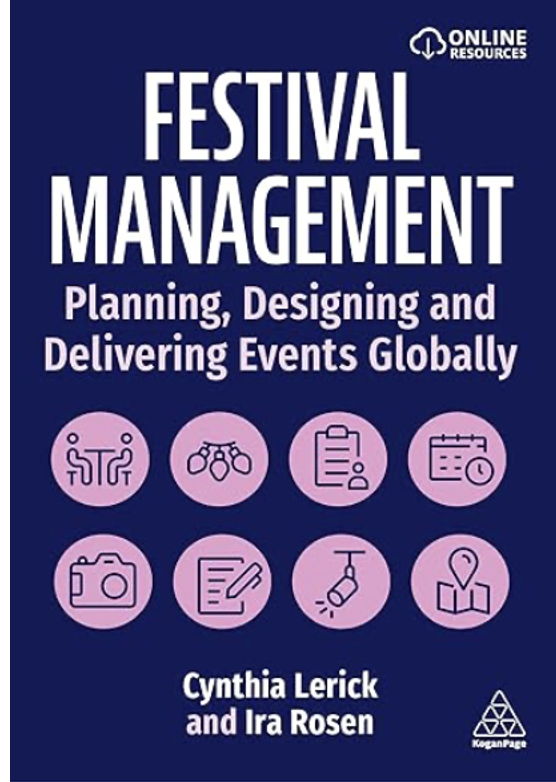
Art-Linx is pleased to introduce a new essential resource from two trusted voices in the field, Cindy Lerick and Ira Rosen, longtime friends of Art-Linx who understand that “just put up a few tents” is only the beginning. Festival Management: Planning, Designing and Delivering Events Globally is a grounded, experience-driven guide that speaks directly to the realities of producing festivals at every scale.
As Cindy Lerick shares:
“For my art fair friends, the people who know ‘just put up a few tents’ is where the adventure begins. This book is hands-on, practical, and written for the real world of festivals, the world of artists, sponsors, volunteers, site maps, weather plans, budgets, bathrooms, board members, and the thousand tiny decisions that somehow all become urgent at the same time. I wrote from the place I know best, in the middle of the field, solving problems, building experiences, and trying to make the impossible look effortless. My hope is that this book becomes something you actually use. Festival work is beautiful, exhausting, creative, strategic, messy, and deeply human. This book is my love letter, and my field guide, to that work.”
This is a book that should be on every show directors list to read this summer. You can preorder the book HERE
| | | |
The Art-Linx website has the most current Call to Artist information
| | | | |