May 2026

SWANCC is an intergovernmental agency that oversees the management of waste for its 23 member communities in north and northwest Cook County and provides programs and resources focused on waste prevention and recovery.

Clean Out: Ending the Year Sustainabily

Before throwing anything away, take a fresh look. Those half-used supplies aren’t clutter, they’re useful resources! With a little organization and planning, you can extend their life and make a meaningful impact.


Return Supplies to Students

One of the simplest strategies is to send usable supplies home with students. Many families appreciate having extra materials for summer learning, creative projects, or preparation for the next school year. Items like crayons, markers, scissors, and notebooks are especially valuable.


Give students ownership and responsibility

Have students sort through their own supplies during a designated clean-out period. Encourage them to create a “take-home” pile of usable items. Consider providing reusable bags or ask students to bring one from home.


Build an Inventory

If you’d prefer to keep supplies for next year - organize! Since you are already packing up your classroom, this is the perfect time to create a basic inventory. You don’t need a complex system. Even a rough count like “~50 pencils” or “2 bins of markers” can make a big difference when planning for the new year. This helps prevent over-ordering in the fall, saves classroom or school funds, and reduces unnecessary consumption.


Send a Family Questionnaire

Another thoughtful option is to connect directly with families to see if they could use extra supplies over the summer. Not every household has easy access to school materials, and a short questionnaire allows you to distribute items to families who will benefit most. Include a checklist of available items (e.g., notebooks, crayons, glue sticks)


Create a “Reuse Station”

A reuse station creates teachable moments about sustainability, sharing, and mindful consumption. Encourage students to swap items, donate supplies for others, and organize materials for storage or distribution.


Final Thoughts

With a bit of planning, end-of-year clean-out can become more than just a task. It can be a practical step toward sustainability, cost savings, and stronger support for your classroom community!

Stay Tuned

New education and grant oportunities available this fall

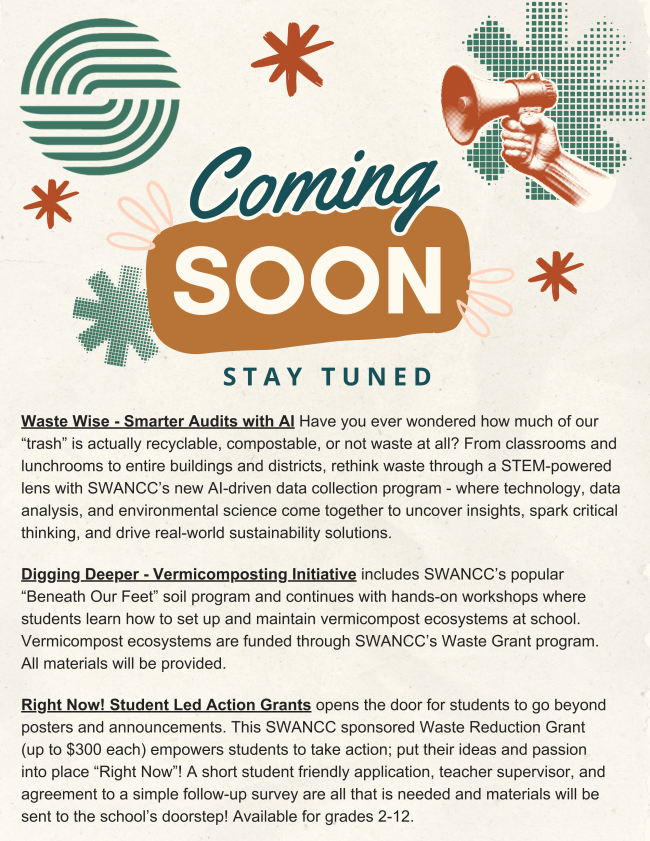
SWANCC is excited to announce three new program editions to arrive with the start of the 2026-2027 school year! Don’t miss the program registration announcement coming in August! A limited number of these programs and grants will be available. If you would like to be added to the priority early outreach list now, please email Theresa, SWANCC’s Education Coordinator.

What should I do with school supplies that are not reusable?


At the end of the school year, lockers, backpacks, and desks often fill up with leftover supplies. Taking a few minutes to sort them helps reduce waste and makes clean-out easier. But what to do with items that can't be saved for reuse?

Items eligible for recycle

  • loose paper
  • notebooks (metal spiral must be removed)
  • empty disposable plastic water bottles (lid on)
  • empty paper folders

Items NOT eligible for recycle

  • rulers
  • pens and pencils
  • crayons and markers
  • laminated materials
  • pencil cases / pouches
  • plastic folders
  • binders
  • reusable water bottles of any material

Please reach out to SCARCE in Addison or Greener Good in Arlington Heights to donate materials that are usable but won't find their way home with students or to a supply cabinet for next year!

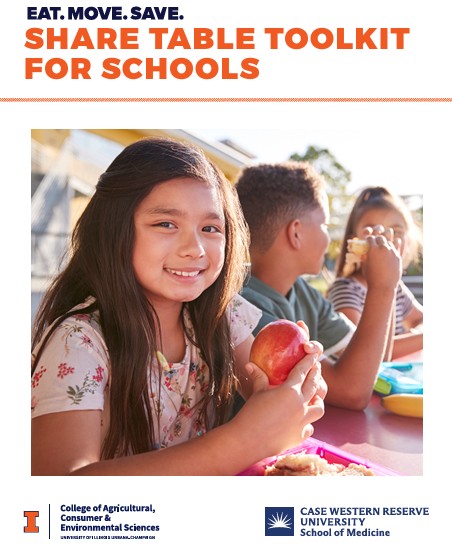
Share Table Tool Kit - Eat.Move.Save.

Eat.Move.Save. is a toolkit grounded in research conducted by the University of Illinois Urbana-Champaign and Case Western Reserve School of Medicine, as well as insights from the Multi-State Share Table Pilot Study in partnership with SNAP-Ed, a federal nutrition education and obesity prevention program.


It is designed to support schools and community organizations in launching share tables in simple, effective initiative ways that help reduce food waste while addressing food insecurity in a safe and practical way. By redistributing unopened, uneaten food items, share tables can make a meaningful difference in both sustainability efforts and student well-being.

Inside, you’ll find clear guidance and practical strategies to help you get started and sustain your program. Topics include:

  • Preventing foodborne illness
  • Collaborating with local health departments
  • Communicating effectively with staff
  • Promoting share tables to students and caregivers
  • Evaluating your program’s impact


Each section is paired with ready-to-use resources such as flyers, posters, and templates to streamline implementation. You can find a link to the Eat.Move.Save Toolkit on the SWANCC Website.

First United Methodist Preschool and We-e Care, Arlington Heights

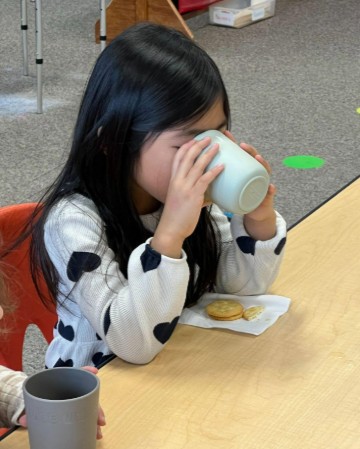
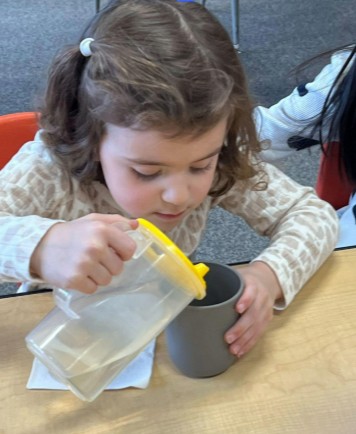
Kudos to the First United Methodist Church and Preschool for their success in reducing waste by switching from disposable cups to reusable ones during snack time. This translates to roughly 550 fewer disposable cups thrown away each week!


They also have increased student active participation in other ways too. Children help sort items, notice what can be reused, and practice making thoughtful choices about waste. They also use recycled materials in play and art, helping build early habits around caring for our environment in a hands-on way. 


Way to go!

Call it out!


Have you seen someone raise the bar on reducing waste or taking care of our planet? When you see something good, call it out! Sharing positive moments helps us celebrate the great work happening in our schools and across our community.

Get recognized! When you give a shout-out, SWANCC will highlight it in our next newsletter so everyone can be inspired by the good things making a difference!


Send a message and photos to theresa@swancc.org


More information at SWANCC.ORG

STAY CONNECTED

Facebook  Instagram