|
May 2026 Newsletter
Issue #111
| | |
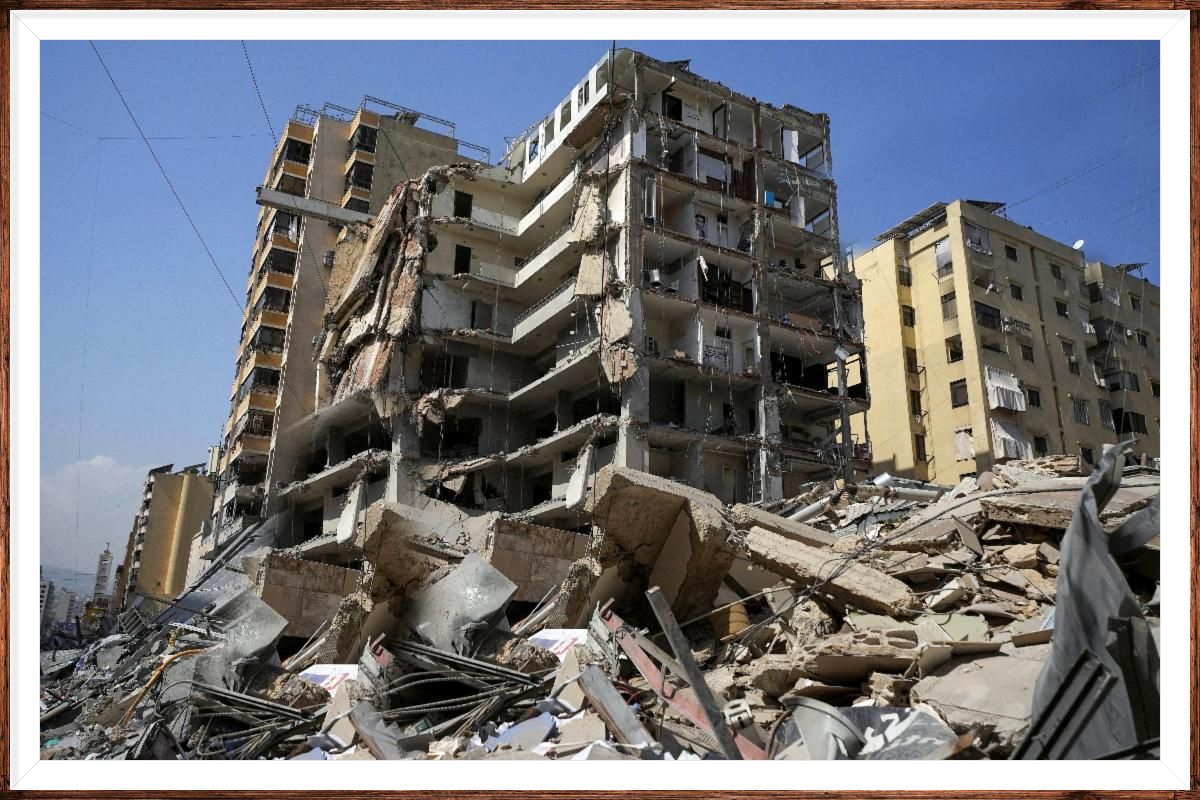
The current conflict began when the U.S. and Israel attacked Iran on February 28, with large-scale airstrikes, code-named "Operation Epic Fury." The conflict soon escalated into a regional war affecting dozens of countries.
Wikipedia
Stated reasons for the attack have included:
- To forestall Iranian retaliation after an expected Israeli attack
- To stop an imminent Iranian threat
- To destroy Iran's missile capabilities
- To prevent Iran from building a nuclear weapon
- To seize Iran's oil resources
- To achieve regime change by bringing the Iranian opposition to power
Wikipedia
More than 15,000 targets were hit by the campaign.
U.S. Department of Defense
In the first 2 weeks of the war, over 1,200 civilians were killed and 10,000 people were wounded.
Oregon Public Broadcasting (OPB)
A missile strike on an Iranian girls' school killed at least 165 civilians, many of them children.
Oregon Public Broadcasting (OPB)
At least 13 Americans have been killed, including 7 by enemy fire.
U.S. Central Command
3.2 million people have been displaced by
the conflict.
United Nations Office of the High Commissioner for Refugees
25 Iranian hospitals have been damaged and 9 are out of service.
Oregon Public Broadcasting (OPB)
So far, Iran has sustained an estimated $300 billion–$1 trillion damages.
Wikipedia
The U.S. spent about $16.5 billion in the first 12 days of the war.
Center for Strategic and International Studies (CSIS)
In the first 100 hours of the war, the U.S. spent about $3.7 billion or about nearly $900 million a day.
Center for Strategic and International Studies (CSIS)
The conflict has disrupted ~20% of global oil supply via the Strait of Hormuz, triggering a major
energy shock. The Strait of Hormuz typically facilitates the transit of 20 million barrels per day of crude oil and petroleum products.
International Energy Agency
Oil prices surged to around $119/barrel. Prior to the war, the price was around $70-73/barrel.
The Guardian
Fertilizer prices are expected to rise 31%, affecting the food supply. The war could push up to 45 million people into food insecurity.
World Bank
The U.S. also attacked Iran last June during a conflict known as the "Twelve-Day War," codenamed "Operation Midnight Hammer." That mission involved targeted strikes on 3 key Iranian nuclear facilities.
Congress.gov
Besides Iran, in the past 15 months the U.S. has attacked 6 other countries: Somalia, Iraq, Yemen, Syria, Nigeria and Venezuela.
Council on Foreign Relations
61% of Americans strongly or somewhat disapprove of the war in Iran and disapprove the handling of
the conflict.
Pew Research Center
59% say that the US. made the wrong decision to use military force in Iran.
Pew Research Center
45% of Americans say the military action is not going well.
Pew Research Center
54% of Americans believe the U.S. military action against Iran will continue for at least 6 more months, including 29% who think it will last 1 year or more.
Pew Research Center
40% of Americans say the military action against Iran will make the U.S. less safe in the long run.
Pew Research Center
33% of Americans say the U.S. military action will make the world less safe.
Pew Research Center
For more on War, click here.
| | |
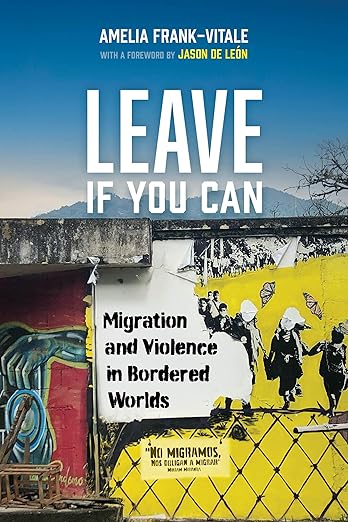
Leave If You Can: Migration and Violence in Bordered Worlds
By Amelia Frank-Vitale. Examines the consequences of U.S. border policies through the experiences of Honduran migrants. Offers a detailed portrait of the Honduran exodus and what it reveals about the broader consequences of changing US border enforcement policies. Highlights the stories of those who are often presented as unsympathetic: deported young men implicitly associated with the very violence they are trying to flee. In the process, challenges underlying assumptions frequently held by policy makers and humanitarian agencies. Connecting overlapping regimes of mobility control, shows how deportation does not deter migration but, in fact, keeps people moving, and how U.S. policies fuel the migration "crisis" they claim to address. Drawing from experiences accompanying migrant caravans over many years, the author also explores how caravans emerge as both protest movement and migration tactic in response to this expanding border regime. Read more.
For more on Immigration, click here.
| | |
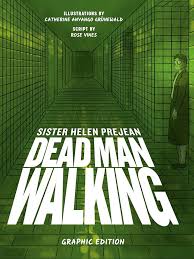
Dead Man Walking: Graphic Edition
By Helen Prejean CSJ. In this graphic adaptation of the bestselling memoir, brings to visual life the story of a nun who becomes a fierce advocate against the death penalty. Offers an accessible way to engage with one of the most complex moral and emotional issues facing our country. Interlaces recent developments with the original account, amplifying its relevance for today’s readers. The illustrations urge readers to grapple with the humanity of this story, drawing an evocative, unforgettable portrait of mercy and justice. Read more.
For more on Capital Punishment, click here.
| | |
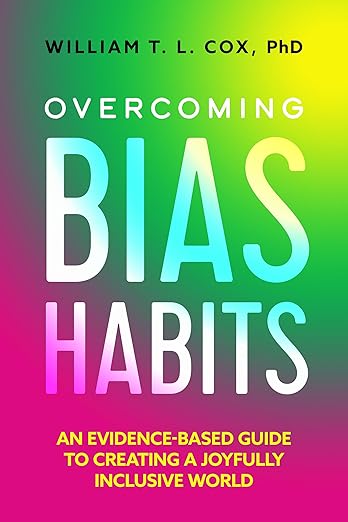
Overcoming Bias Habits: An Evidence-Based Guide to Creating a Joyfully Inclusive World
By William T. L. Cox. An action-oriented, scientifically tested guide to confronting and overcoming bias. Breaks down the science behind stereotypes, bias, and the habits that perpetuate these cognitive traps in daily life. Highlights lessons from empirically backed anti-bias training and provides actionable tools for preventing bias and speaking out in favor of diversity. Inspires readers to be agents of change by making meaningful transformations in behaviors and maintaining them over time. Focusing on individuals and habits, however, does not mean ignoring the systems and institutions that perpetuate discrimination: Doing the work empowers individuals to also hold institutions accountable and to effect genuine, lasting change in schools, workplaces, and communities. Read more.
For more Justice resources, click here.
| | |
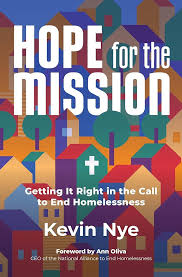
Hope for the Mission: Getting It Right in the Call to End Homelessness
By Kevin Nye. Highlights faith-based models that align with best practices, showing how churches and ministries can truly help end homelessness. Alongside critical evaluation of what groups have tended to get wrong, shares hopeful stories about what's going right. These exemplar organizations and churches illustrate how groups of all sizes can embody effective, evidence-based practices. Offers values to emulate and methods to embody toward solidarity with the unhoused. Invites readers to imagine a world where everyone has a home and equips them for the real mission: loving unhoused neighbors in ways that lead to fullness and flourishing. Read more.
For more on Housing, click here.
| | |
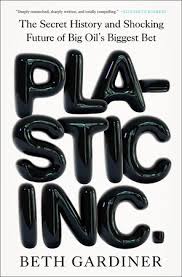
Plastic Inc.: The Secret History and Shocking Future of Big Oil's Biggest Bet
By Beth Gardiner. An exposé of the industry flooding the world with plastic. Gives readers an up-close look at the plastic industry’s growth, profits, pollution and its hidden role in exacerbating climate change. Reveals how Big Oil pushed the lie that recycling was the answer to the plastic mess, even though companies always knew it couldn't work at scale; the hidden health crisis caused by chemicals and microplastics in the items we use every day; and the parallels between the marketing strategies used by plastic producers and those of tobacco companies and Big Pharma. Read more.
For more on the Environment, click here.
| | |
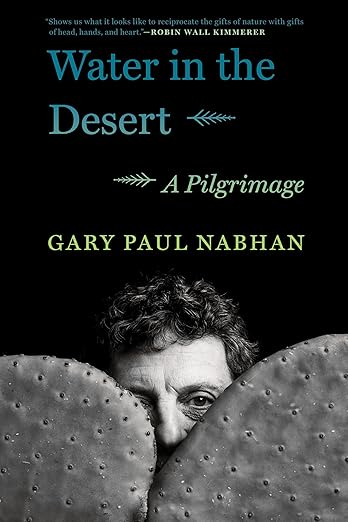
Water in the Desert: A Pilgrimage
By Gary Paul Nabhan. From an acclaimed agrarian activist and ethnobotanist, an account of interspecies belonging, collaborative conservation, and the sacred work of caring for the earth. The author traces the story of his life, offering in the process a vision for cultural renewal. An account of kinship with other species and cultures and a guide to the deeply collaborative ethic and practice of care required to flourish in kinship on Earth. Read more.
(Please note that this book will be available after
June 2)
For more on the Environment, click here.
| | |
A Cheat Sheet for Accelerating Clean Energy
A TED Talk, featuring climate advocate Kimiko Hirata, who shares the story after the Fukushima disaster shut down Japan's nuclear reactors, the coal industry rushed in to fill the energy gap. She watched dozens of new coal plant proposals quietly surface across the country — each one locking in decades of future emissions — and resolved to make them impossible to ignore. She tells how a small, scrappy civil society movement took on a fossil-fuel-dependent economy and got people to say "yes" to a renewable future. Watch now.
For more on the Environment, click here.
| | |
What I Got Wrong About Changing the World
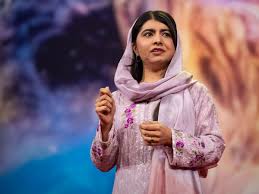
A Ted Talk, featuring Malala Yousafzai, who says that after watching hard-won progress collapse when Afghanistan fell to the Taliban in 2021, forced her to completely rethink what it means to create change. What she discovered replaced her shattered optimism with something more powerful and more honest: starting with something, working with others and staying ambitious. She also advocates to add crimes against women and girls as crimes against humanity to hold perpetrators accountable. Watch now.
For more on Gender Inequality, click here.
| | |
Why the World is Still Not Built for Women
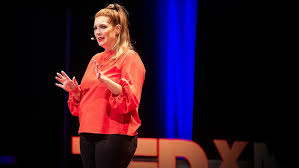
A TED Talk, featuring design consultant Virginia Santy, who set out to create an office space built specifically for women, flipping the script on the subtle (and not-so-subtle) ways that workplaces and cities still fail them. The results were striking: greater productivity, deeper collaboration and an environment where women felt genuinely valued, leading her to ask a simple question: What would the world look like if we designed with women in mind? Watch now.
For more on Gender Inequality, click here.
| | |
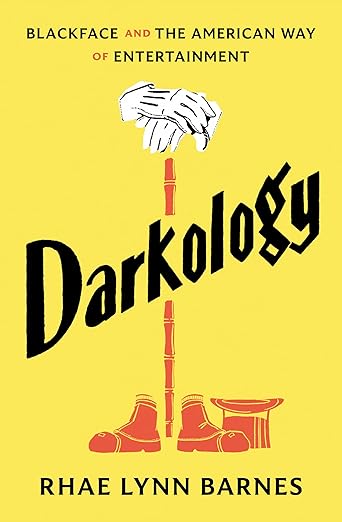
Darkology: Blackface and the American Way of Entertainment
By Rhae Lynn Barnes. A history that chronicles how blackface dominated American society culturally, financially, and racially for nearly two centuries. Unravels the complex, subterranean, and all-too-often expunged history of “Darkology”―the insidious study, commodification, and dehumanization of Black life, through which performers caricatured the enslaved and formerly enslaved for their supposed subservience and happy demeanor. Reveals the extent to which blackface took center stage in every era of American history. By tracing minstrelsy’s evolution through oral histories, material culture, and a wide range of multimedia sources, forces readers to reckon with the myriad ways the American Dream wore blackface. Read more.
For more on Racism, click here.
| | |
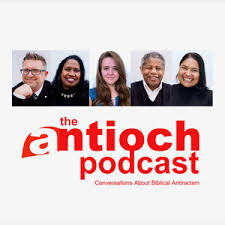
The Antioch Podcast: Conversations About Biblical Antiracism
A weekly recorded conversation among a multiracial team of Christian antiracism educators and friends. The hope is that these conversations model the kinds of conversation churches need to learn to have in order to become the beloved community that seeks the flourishing of all God’s children. The podcast is a collaboration with Calvin University to produce a number of episodes from Calvin’s “Story Tables” events, where diverse storytellers share their personal stories of bridging racial divides, centered around a unifying theme. Past guests have included: Sandra Maria Van Opstal, Mark Charles, Ekemini Uwan, Dr. John Lee, Jemar Tisby, Dr. Christina Edmondson, Adam Edgerly, Dr. David Daniels III. Learn more.
For more on Racism, click here.
| | |
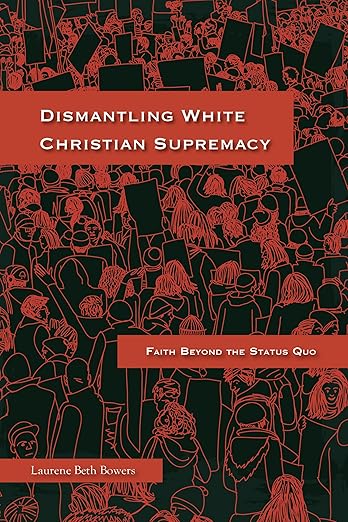
Dismantling White Christian Supremacy: Faith Beyond the Status Quo
By Laurene Beth Bowers. Holds that to the great detriment of Christian faith, Christian supremacy has been interwoven with American history since the time of European invaders. Helps white American Christians disentangle their faith's theology from their country's mythology. Read more.
For more on Racism, click here.
| | |
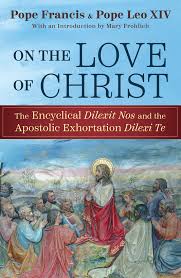
On the Love of Christ: The Encyclical Delexit Nos and the Apostolic Exhortation Dilexi Te
By Pope Francis and Pope Leo XIV. Combines two complementary papal documents: the last encyclical by Pope Francis and the first apostolic exhortation of Pope Leo XIV. Together they present a comprehensive reflection on Christ’s love, the first with emphasis on the spiritual dimensions; the second on the social implications. Together, they issue “a call to simplicity of life, personal encounter with Jesus, seeing with the eyes of the heart, being brothers and sisters with the poor, missionary discipleship, and active building of a society based in gospel values. It is this communion with ‘the human and divine love of the Heart of Jesus Christ’ that will enable the embers of the church’s renewal at Vatican II to come to life again in in the twenty-first century and beyond.” Read more.
For more Catholic Social Teaching resources,
click here.
| | |
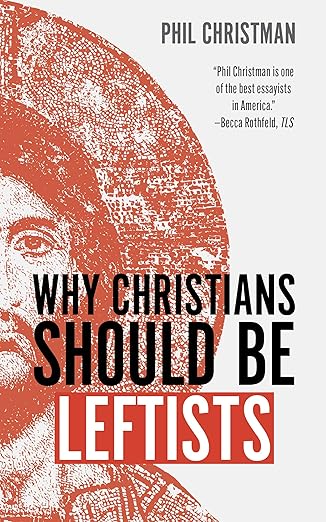
Why Christians Should be Leftists
By Phil Christman. Holds that being a Christian and being a socialist go together -- through a testimony of his own journey out of conservatism, an introduction to the American left, and a call to his fellow believers to take a fresh look at their own politics. Speaking to Christians who are already uncomfortable with how political leaders on the right leverage sexism, racism, and homophobia, encourages these believers to apply their moral discernment to capitalism too. Synthesizes politics, theology, pop culture, and ethics, offering a challenge to Christians who are disillusioned by politics as usual and searching for a new approach to civic life that takes Jesus’s teachings seriously. Read more.
For more on Economic Justice, click here.
| | |
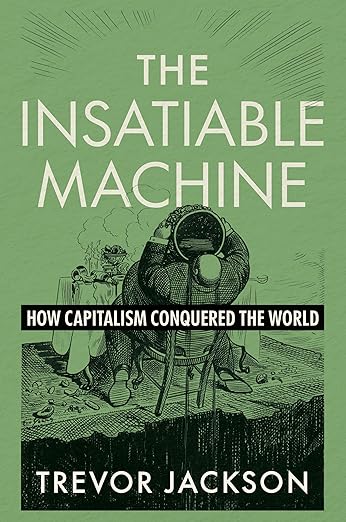
The Insatiable Machine: How Capitalism Conquered the World
By Trevor Jackson. A concise account of capitalism’s rise to global dominance. Explains where capitalism came from, how it spread across the globe, and how it came to be the dominant way of organizing life. Traces capitalism’s development from the accidental construction of an international monetary system to the creation of banking, the emergence of a new form of slavery in the eighteenth century, fossil-fuel industrialization, and finally the global capitalist system spread by imperialism in the nineteenth century. Provides a sweeping quantitative analysis and historical synthesis, makes clear that capitalism is neither a natural, permanent, nor inevitable feature of human life but rather an economic system that has a history. And just as it was made by people, it can also be unmade by them. Read more.
For more on Economic Justice, click here.
| | |
For Courage to Do Justice
Loving God, open our eyes that we may see the needs of others;
Open our ears that we hear their cries;
Open our hearts so that they may be comforted;
Let us not be afraid to defend the weak because of the anger of the strong,
Nor afraid to defend the poor because of the anger of the rich.
Show us where love and hope and faith are needed,
And use us to bring them to those places.
And open our eyes and our ears
That we may do some of the work of peace for you.
Amen
| | Important Dates This Month | |
Individuals Honored This Month | |
May 1st
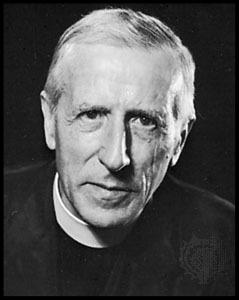
We are one, after all, you and I, together we suffer, together exist, and forever will recreate each other.
| |
May 9th
I want a change, and a radical change. I want a change from an acquisitive society to a functional society, from a society of go-getters to a society of go-givers.
| |
May 9th
Instead of building the peace by attacking injustices like starvation, disease, illiteracy, political and economic servitude, we spend trillions of dollars on war, until hatred and conflict have become the international preoccupation.
| |
May 9th
How can we expect fate to let a righteous cause prevail when there is hardly anyone who will give himself up undividedly to a righteous cause?
| |
May 19th
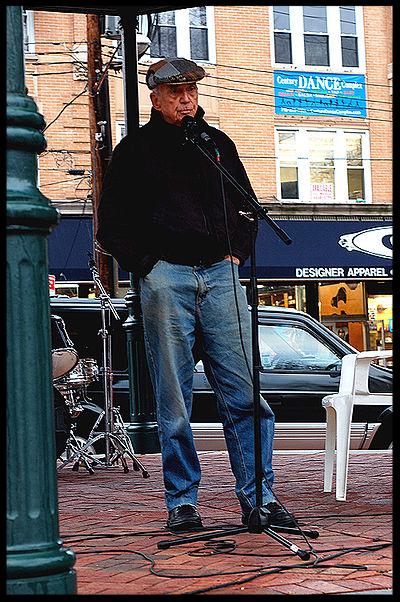
Here is what we seek: a compassion that can stand in awe at what the poor have to carry rather than stand in judgment at how they carry it.
| |
May 20th
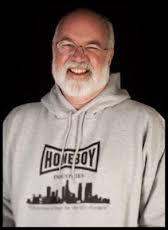
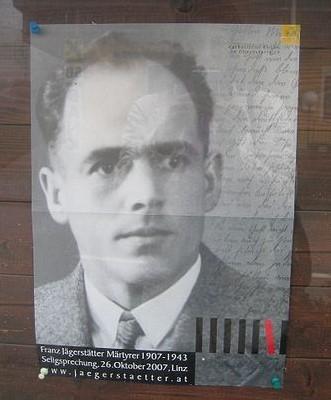
I am convinced that it is still best that I speak the truth, even if it costs me my life.
| |
The Social Justice Resource Center is an independent, faith-based organization that is financially supported by private donations. We're an all-volunteer team that relies on support from visitors like you. If you like what we do and want to help support our work, please consider making a small donation. The Social Justice Resource Center is registered as a 501(c)(3) non-profit organization and contributions are tax-deductible to the extent permitted by law.
Thank you!
| | |
Since 2017, there have been more than 500,000 visitors the Social Justice Resource Center website. We provide a wide variety of facts and figures on specific social issues as well as thousands of free resources including films, publications, links to other organizations, prayers, quotes, principles of social justice, key dates throughout the year, action ideas, Diocesan office contact information and biographies of famous people who have worked for social justice.
To learn more, click here.
| | Every month we email our newsletter to about 4,500 people around the country. Each issue focuses on a social justice topic and has resources that have been recently added to our website. If you know of others who might be interested in receiving our newsletter, please forward this email on to them or let us know and we'll add them to our mailing list. For our previous Newsletters, click here. | | |
Contact@SocialJusticeResourceCenter.org | | | | |