|
Student Awards
Undergraduate Award
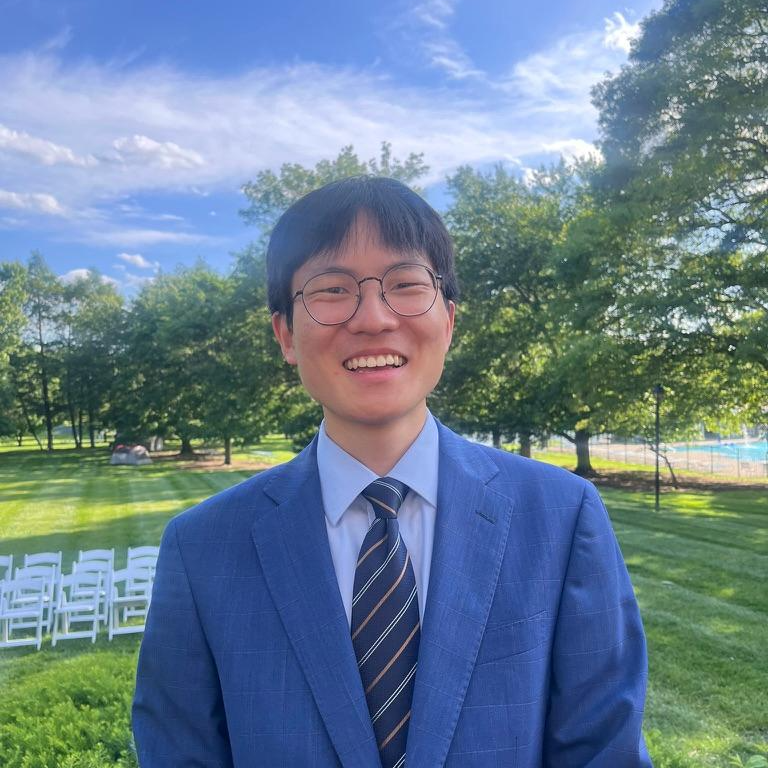
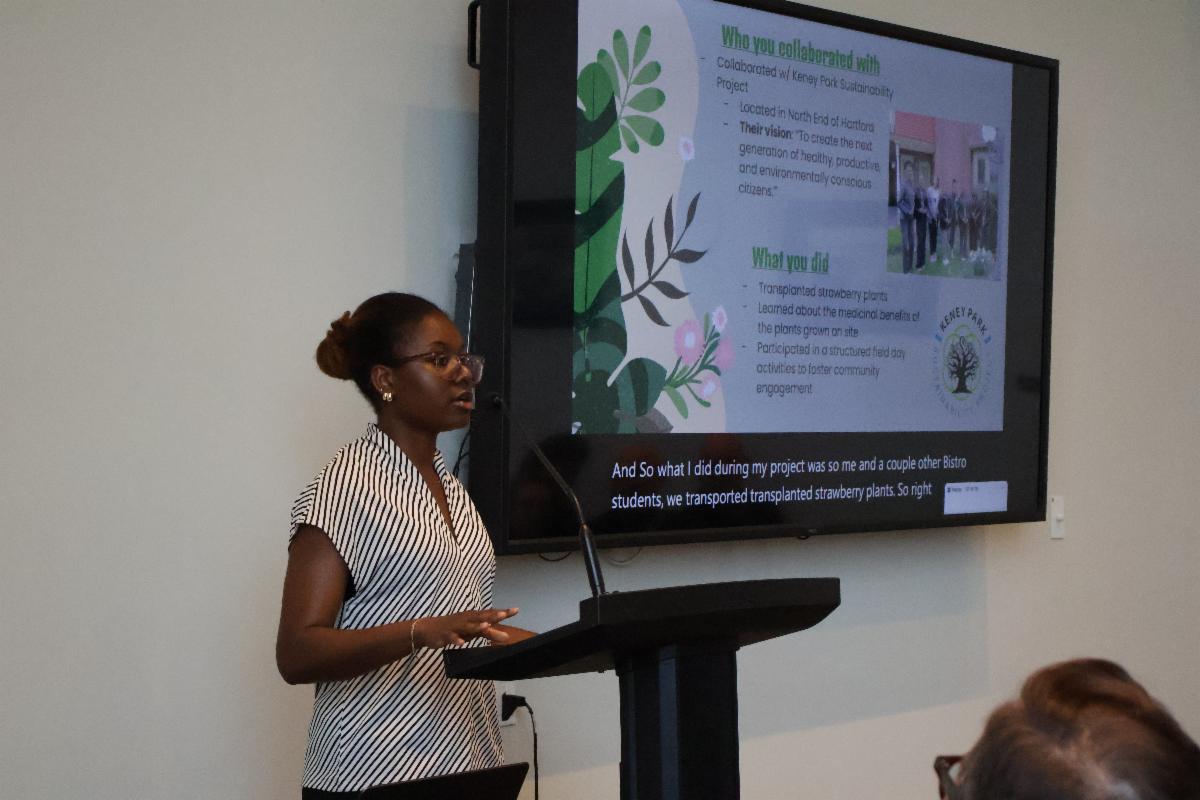
Andy Zhang ’26 (CLAS & CAHNR) exemplifies the highest standards of community-engaged scholarship through sustained leadership, innovative problem-solving, measurable community impact, and deep personal and academic growth. Over the past three years, Andy has not only contributed meaningfully to the University of Connecticut’s sustainability initiatives but has also fundamentally strengthened the infrastructure through which students, faculty, and community members engage with environmental work.
Andy’s leadership has been both sustained and progressively expansive. Beginning as a Sustainability Intern with the UConn Office of Sustainability, he quickly assumed increasing responsibility across multiple high-impact initiatives. He led the coordination of UConn’s annual Class Tree planting and Arbor Day programming, managing complex logistics, cross-sector partnerships, and public engagement efforts. Simultaneously, he has taken on leadership roles in student governance and founded the UConn Chapter of Plant Futures organization, where he leads a growing team focused on advancing sustainable food systems. His leadership trajectory demonstrates not only longevity but also a clear pattern of increasing scope, responsibility, and influence across campus and community initiatives.
Andy’s work is distinguished by a strong commitment to innovation and entrepreneurial thinking. Most notably, he founded the ECollaboration Sustainability Network (ESN), a first-of-its-kind initiative designed to break down silos within UConn’s sustainability community. By leveraging a digital platform, Andy created an accessible and inclusive space that connects students, faculty, and staff across disciplines, enabling real-time collaboration, resource sharing, and engagement. He has also introduced new programming, such as the “Sustainability Social,” fostering interdisciplinary dialogue and collaboration. Additionally, his data-driven work analyzing campus dining systems to reduce single-use waste reflects a creative integration of research, policy, and practice to address real-world sustainability challenges.
Andy’s initiatives have produced clear, measurable outcomes that demonstrate meaningful community impact. The ECollaboration Sustainability Network has grown to include over 300 active members spanning diverse academic and professional backgrounds, significantly increasing participation in sustainability initiatives across campus. His Sustainability Social events have brought together over 50 participants per session, catalyzing new partnerships and collaborative projects. His contributions to UConn’s Green Metric report and Tree Campus USA application support institutional benchmarking and recognition, amplifying the university’s impact on a global scale. Additionally, his advocacy for reusable dining programs directly reduces waste, with the potential to eliminate hundreds of thousands of single-use items annually.
Andy’s engagement in community-based work has driven exceptional intellectual, professional, and personal growth. As a dual major in Economics and Environmental Science with a perfect academic record, he integrates rigorous academic training with applied sustainability practice. Through his leadership experiences, Andy has developed advanced skills in project management, stakeholder engagement, policy analysis, and data-driven decision-making. His increasing confidence and initiative, evidenced by founding new organizations, leading large-scale projects, and presenting to diverse audiences, reflect a deep and ongoing commitment to growth as both a scholar and practitioner.
Collaboration is central to Andy’s work. Across all his initiatives, he has engaged a wide range of stakeholders, including students, faculty, administrators, community organizations, and government partners. His leadership in the ESN fosters continuous collaboration among over 300 participants, while his work on institutional sustainability reporting requires coordination with multiple university departments. His partnerships with dining services and engagement with external organizations demonstrate his ability to build and sustain meaningful, cross-sector relationships that strengthen community outcomes.
Graduate/Professional Student Award
Portia Washington, MS, and PhD candidate in Language and Cognition in Psychological Sciences in the College of Liberal Arts and Sciences, has demonstrated sustained leadership over multiple semesters through her role as Graduate Student Leader of the Community Engaged Research Team in the Cognitive Neuroscience of Communication program. Since Fall 2024, her responsibilities have grown from organizing workshops and meetings to shaping the program’s strategic direction, mentoring trainees, and leading major scholarly and outreach initiatives.
Portia’s efforts have produced a measurable impact by increasing engagement across UConn’s language sciences community, contributing to new outreach initiatives, academic programming, and broader awareness of community-engaged research. Her work also strengthens relationships with community members, including individuals with aphasia and underrepresented student populations.
Her work reflects significant intellectual and professional growth, integrating her academic research, lived experiences, and commitment to inclusive science. She has advanced as a researcher, mentor, and science communicator, translating community engagement into both scholarly outputs and professional skill development.
Portia has fostered meaningful collaboration among faculty, students, institutional partners, and community stakeholders. She has led co-developed initiatives with campus partners and ensured that community voices inform research design, implementation, and dissemination.
Student Team Award
A team of 14 University of Connecticut students has earned the prestigious Student Team Award for Excellence in Community-Engaged Scholarship, recognized for a sweeping multimedia project that informed thousands of residents while redefining student journalism’s role in public service.
The award honors the team behind “The Balance of Power,” an ambitious reporting initiative examining how shifts in federal authority have affected communities across Connecticut. Guided by Associate Professor Amanda J. Crawford, the students spent months researching, interviewing, and producing in-depth stories that connected national political developments to real lives on the ground.
According to the selection committee, what set the team apart was sustained leadership that evolved over multiple semesters and over the course of the project. Students were selected for the class based on their performance in past journalism classes, leadership in student media, and multimedia skills. For this project, they all began as researchers and gradually assumed greater responsibility, pitching stories, leading reporting teams, and ultimately stepping into editorial, multimedia, and public-facing roles.
By the project’s conclusion, many had become leaders not just within the classroom, but in the broader media landscape, publishing in professional outlets and speaking publicly about their work.
Rather than relying solely on traditional reporting, the team embraced innovative and creative storytelling techniques. Their project featured interactive guides to the U.S. Constitution, historical timelines of presidential actions, video series, databases, and multimedia maps, tools designed to make complex political issues accessible to everyday readers.
This entrepreneurial approach extended the reach of their work, with content shared through nonprofit collaborations and republished by major news organizations across the state. The project’s impact was both immediate and far-reaching. Stories produced by the students appeared in outlets such as The Hartford Courant, CT Examiner, and The Day, bringing critical insights to thousands of readers.
Their reporting filled a growing gap in local journalism, offering in-depth coverage of issues such as immigration policy, education, public health, and civil rights; topics often underreported due to limited newsroom resources.
The experience proved transformative for the students involved. Many secured internships or professional roles as a direct result of their work, while others discovered new career paths in public policy, multimedia storytelling, and investigative journalism.
Beyond career advancement, the project fostered intellectual and personal growth, equipping students with the skills to analyze complex systems, engage diverse communities, and communicate effectively on issues of public importance.
Central to the project’s success was a deep collaboration. Students worked closely with faculty, interviewed government officials and community leaders, and engaged with residents across Connecticut, from immigrants and educators to scientists and activists.
This broad participation ensured the project reflected a wide range of perspectives, embodying the very essence of community-engaged scholarship.
As journalism faces increasing challenges nationwide, the Balance of Power team demonstrated how student-led initiatives can rise to meet the moment by combining rigorous research, innovative storytelling, and civic responsibility.
In doing so, they didn’t just win an award; they delivered a powerful reminder of journalism’s enduring role in strengthening democracy.
Staff Award
Kenneth Barone, Associate Director of UConn’s Institute for Municipal and Regional Policy, has been recognized with a prestigious Provost’s Award for Excellence in Community-Engaged Scholarship in the Staff category.
At the center of Barone’s work is the Connecticut Racial Profiling Prohibition Project (CTRP3), a statewide initiative supported by the Institute for Municipal and Regional Policy (IMRP) housed at UConn’s School of Public Policy. What began as a compliance-driven mandate to collect and analyze traffic stop data
has, over time and under Barone’s leadership, evolved into a nationally recognized model for community-engaged policy reform.
Rather than positioning the work as an external evaluation, Barone has emphasized shared ownership of both the data and the solutions through the CTRP3 advisory board, a statutorily established body representing law enforcement, state agencies, legal professionals, and community members. Through monthly advisory board meetings and ongoing collaboration, voices from across the spectrum, from police chiefs to civil rights advocates, work side by side to interpret findings and develop strategies.
This approach has led to more than just dialogue. It has fostered consensus on complex issues and sustained participation from groups that historically struggled to find common ground. The result is a model of partnership defined not by oversight, but by mutual respect and shared decision-making.
Barone’s work is distinguished not only by collaboration but by results. Over a decade of engagement, disparities in traffic stops have declined by an average of 24 percent without an increase in crime or traffic incidents, through interventions guided by CTRP3 contributing to those outcomes.
The initiative now includes data from more than 100 law enforcement agencies, covering millions of traffic stops and tens of millions of data points. Regular public reports and community forums ensure transparency, while also giving residents a platform to voice concerns and influence policy. A notable outcome is a recent cultural shift across the state: police departments are increasingly seeking out the program voluntarily, looking for guidance on improving their own practices. That level of trust signals a transformation in how institutions and communities work together.
Barone’s leadership has also been marked by innovation and strategic use of resources. The “Connecticut Model” integrates rigorous data analysis with community engagement, offering a more nuanced and effective approach than traditional single-metric evaluations.
His work has drawn national attention. After testifying before Congress, federal grant programs expanded Connecticut’s funding and helped extend similar initiatives to more than a dozen states. Today, Barone advises jurisdictions across the country, helping replicate a model that bridges data, policy, and community voices.
Within UConn, Barone’s influence extends into the classroom and beyond. As an adjunct instructor, he connects students to real-world policy challenges, mentoring them into careers in public service and community engagement. His outreach efforts across departments further reinforce the university’s role as a partner in solving societal challenges.
Colleagues and collaborators describe Barone as a steady, principled leader who brings patience and credibility to complex issues. His work has not only strengthened public trust in Connecticut and contributed to UConn’s role as a national leader in community-engaged scholarship.
Community Partner Award
Waterbury Public Schools has been named the recipient of the University of Connecticut's Provost's Awards in Excellence in Community Engaged Scholarship in the Community Partner category, recognizing its outstanding collaboration with the University in advancing education, innovation, and community well-being.
The award celebrates community partners whose work demonstrates sustained impact, innovation, and meaningful reciprocity with the University. Waterbury Public Schools stood out for its decade-long partnership with UConn, a collaboration that has transformed opportunities for students, educators, and researchers alike.
At its core, the partnership is driven by a clear, shared purpose: to expand educational equity, foster innovation, and address the systemic challenges facing Waterbury's students. Through initiatives such as the Connecticut K–3 Literacy Initiative and the Literacy and Behavior Supports Research Network, WPS and UConn have worked together to improve early literacy outcomes and strengthen classroom instruction across the district. These efforts have provided educators with research-based tools and students with stronger academic foundations.
Innovation has been a hallmark of collaboration. The launch of the Waterbury Robotics Institute has introduced middle and high school students to hands-on STEM learning, pairing them with UConn mentors and faculty to build technical and leadership skills. Meanwhile, the USDA-funded NextGen Fellows Program is bringing hydroponics farming into five WPS schools, blending sustainability with experiential learning and preparing students for emerging careers. These initiatives reflect a forward-thinking approach that connects education to real-world challenges and opportunities.
The partnership also exemplifies a strong commitment to reciprocity. Waterbury Public School students benefit from access to university resources, mentorship, and innovative programming, while UConn students and faculty gain invaluable opportunities to apply their research and teaching in real-world settings. This mutually beneficial relationship has fostered co-learning, shared decision-making, and long-term collaboration across disciplines.
The impact on the Waterbury community has been both measurable and far-reaching. From improved literacy and social-emotional outcomes to expanded access to STEM education and sustainability initiatives, the partnership has strengthened local schools' capacity and enriched students' experiences. Community-wide events like WISHfest have further engaged thousands of students and families, promoting innovation, health, and environmental awareness.
At the same time, the collaboration has significantly enhanced UConn's academic mission. Students gain hands-on learning experiences that bridge classroom theory and practice, while faculty advance research through direct community engagement. The continued expansion of UConn Waterbury's research facilities is expected to deepen this partnership and extend its impact even further.
University leaders noted that Waterbury Public Schools has become a model of community–university partnerships, demonstrating how shared vision, innovation, and sustained collaboration can drive meaningful change.
As the recipient of this year's Community Partner Award, Waterbury Public Schools exemplifies the power of partnership in creating lasting benefits for both community and campus.
Institutional Transformation Award
UConn Waterbury has been named a recipient of the prestigious Institutional Transformation Award, recognizing a sweeping, campus-wide effort that has redefined how a public university engages with its community while advancing student success and societal impact.
At the heart of the recognition is UConn Waterbury’s deliberate and strategic alignment with the University’s mission, translating UConn’s commitment to public engagement into a powerful, place-based model that serves both students and the broader Waterbury region. Since 2022, the campus has built an integrated approach that embeds community engagement into teaching, research, and student life, positioning itself as both an academic institution and a civic partner.
What sets UConn Waterbury apart is not a single initiative, but a coordinated transformation driven by leadership across faculty, staff, students, and community partners. Under the guidance of campus leadership, the team has developed a repeatable model, anchored in programs like Ideas + Impact, that turns community-identified needs into hands-on student learning experiences, research opportunities, and sustainable partnerships. This structure ensures that engagement is not episodic, but institutionalized and scalable.
The motivation behind this transformation is deeply rooted in equity and societal impact. Serving a largely commuter, first-generation, and financially diverse student population, UConn Waterbury recognized that access to experiential learning and career pathways is critical to both student mobility and regional prosperity. At the same time, the campus responded to pressing community challenges, from workforce development and STEM education to housing and public health, positioning itself as a hub for collaborative problem-solving.
Internally, the campus has significantly strengthened its capacity to support community-engaged scholarship. Investments in student success infrastructure, including the Academic Achievement Center, expanded health and wellness services, and integrated advising, have removed barriers that often prevent students from participating in high-impact learning. New facilities, such as the downtown Neil O’Leary Building, have further expanded the university’s ability to host community programs, applied research, and workforce-aligned education.
Equally transformative has been the campus’s expansion of external engagement. UConn Waterbury has built a robust network of partnerships with schools, nonprofits, government agencies, and local businesses, significantly broadening its reach—particularly among underserved populations. Signature initiatives like WISHfest, the Waterbury Robotics Institute, Walkbury, and the Housing Clinic for Thriving Communities exemplify this impact, connecting thousands of community members with university resources while providing students with meaningful, real-world experience.
These efforts have been sustained through a remarkable ability to attract and steward external investment, with more than $30 million secured in grants and philanthropy since 2022. This funding has enabled the campus to scale its initiatives while ensuring long-term viability, demonstrating a model of innovation grounded in both ambition and sustainability.
The result is a campus that has evolved into a true anchor institution, one that not only educates students but also actively strengthens the community it serves. By aligning strategic vision, leadership, and implementation with a clear commitment to societal impact, UConn Waterbury has created a replicable model for community-engaged scholarship at scale.
For these reasons, the selection committee recognized UConn Waterbury as a leader in institutional transformation, an example of how higher education can drive meaningful change both within and beyond campus walls.
Individual Faculty Awards
Teaching Category
Distinguished Faculty Teaching Award
Professor Amit Savkar, PhD, Professor in Residence in the Department of Mathematics and Director of the Quantitative Learning Center (Q-Center), exemplifies the highest standards of community-engaged teaching through a sustained, deeply intentional integration of pedagogy, partnership, and impact. Over nearly two decades at the University of Connecticut, he has built an instructional ecosystem that not only transforms student learning but also strengthens institutional and community capacity. His work aligns strongly with the core criteria of community-engaged scholarships.
At the heart of Professor Savkar’s work is an innovative and rigorous pedagogical approach that integrates community engagement directly into course design and delivery. Grounded in the philosophy of meeting students where they are, his teaching builds meaningful bridges between academic content and real-world application. He has led the redesign of large-enrollment foundational courses such as Pre-Calculus and Calculus I using equity-minded, data-driven strategies that incorporate diagnostic assessment, adaptive learning, and scaffolded instruction. These courses, which serve thousands of students each year, become not just requirements but transformative entry points into STEM. Through co-curricular initiatives like “C-Cubed” (Coffee, Cookies, and Calculus), he creates informal, collaborative environments that deepen both conceptual understanding and a sense of belonging.
Professor Savkar’s commitment to partnership and reciprocity is equally significant. Within UConn, he has cultivated sustained collaborations across units such as CETL, the Q Center, Student Success, and multiple academic departments, co-designing curricula and faculty development initiatives. Externally, he has partnered with organizations including the Connecticut Mathematics Advisory Council, the National Science Foundation, and the Bill & Melinda Gates Foundation. These relationships are mutually beneficial, positioning partners as co-educators and contributors to teaching innovation. His creation of STEMIFY further demonstrates this commitment, translating his pedagogical innovations into a platform which over last eight years has been used by over twenty institutions nationwide.
The community impact of his work is both measurable and far-reaching. His innovations in placement assessment and course design have improved placement accuracy, course success rates, and retention in foundational mathematics courses. Through scalable tools, open educational resources, and shared assessment systems, his work builds capacity not only at UConn but across partner institutions. Within the university, he has also contributed to improvements in instructional infrastructure, including assessment systems and classroom technologies, benefiting thousands of students and faculty.
Professor Savkar’s impact on student learning is profound. His courses promote critical thinking, quantitative reasoning, and professional readiness through active, applied learning. He is especially committed to supporting first-generation and underrepresented students, ensuring that learning environments are inclusive and responsive. Through the Q Center, which serves an average of over 10,000 students annually, and through collaborations with cultural centers and learning communities, he expands access to high-quality academic support. His mentorship provides students with opportunities for leadership, research, and applied learning.
Finally, his leadership has been sustained and transformative. Serving as Director of the Q Center, former Director of Online Programs, and Interim Associate Vice Provost at CETL, he has shaped institutional approaches to teaching and faculty development. He has led major initiatives focused on equity-minded teaching and built communities of practice that support instructors across disciplines. During the COVID-19 transition, his leadership ensured instructional continuity and supported colleagues across the university.
Professor Savkar’s career reflects a rare combination of innovation, collaboration, and impact. His work advances student success while strengthening communities and institutions, embodying the highest ideals of community-engaged teaching.
Emerging Faculty Teaching Award
Na Zhang, PhD, Faculty in Human Development and Family Sciences at the Stamford campus, exemplifies outstanding community-engaged teaching through an intentional pedagogical approach, reciprocal community partnerships, measurable community impact, and sustained leadership. Professor Zhang integrates rigorous scholarship with meaningful engagement to promote family well-being and mental health.
Professor Zhang’s teaching is grounded in the principle that education should extend beyond the classroom to directly benefit individuals and communities. She integrates community engagement as part of her research design to evaluate the benefits of mindfulness for parenting and family resilience. Drawing on her NIH-funded research and Mindfulness-Based Stress Reduction (MBSR) teacher training, she creates opportunities for UConn students and community participants, including caregivers and health professionals, to engage in evidence-based practices and experiential learning. Her approach emphasizes contemplative reflection and the development of wisdom and compassion, to foster emotional well-being and resilience across diverse populations.
Central to Professor Zhang’s work is her commitment to authentic, sustained partnerships with community collaborators locally and nationally, including Peace at Home Parenting Solutions, Family Centers, St. Joseph Parenting Center, and the Center for Child and Family Wellbeing at the University of Washington. These partnerships are not one-time engagements, but ongoing relationships built on trust, responsiveness, and shared goals.
Professor Zhang’s teaching produces clear and measurable benefits for the communities she serves. Participants in her programs report reduced stress, improved emotional regulation, and stronger family relationships. Her MBSR courses and parenting workshops for communities offered practical tools to navigate parenting and life challenges. Notably, her programs have achieved high completion rates and generated powerful testimonials, with participants describing transformative improvements in their well-being and interactions with family members. Community partners have affirmed that her work not only educates but also creates lasting positive change.
Through her community-engaged teaching, Professor Zhang fosters meaningful learning experiences that promote awareness, compassion, and civic responsibility. Students and participants gain hands-on experience applying evidence-based approaches in real-world contexts. Her engagement with diverse audiences enhances cultural competency and encourages learners to approach complex social and family issues with insight and compassion. These experiences align with high-impact educational practices that prepare students for meaningful contributions to society.
Professor Zhang demonstrates strong leadership in advancing community-engaged teaching through her involvement in initiatives such as the Mindfulness, Spirituality, and Planetary Health Initiative. She contributes to program development, curriculum innovation, and student and collaborator mentorship through service. Her work has strengthened institutional connections with community partners and expanded the reach of community-based mindfulness education. Her sustained commitment to engagement and mentorship reflects her leadership in fostering impactful teaching practices.
Professor Na Zhang is a transformative educator whose work bridges scholarship and community impact. Her innovative teaching, meaningful partnerships, and dedication to student and community well-being make her an exceptional candidate for this award.
Research Category
Distinguished Faculty Research Award
Mohamad Alkadry, PhD, Professor in the School of Public Policy, College of Liberal Arts and Sciences, exemplifies community-engaged scholarship at its highest level, combining rigorous research, meaningful partnerships, and measurable public impact. His scholarship is centered on addressing structural inequities in public institutions, particularly disparities in workforce representation, compensation, and access to essential services. Grounded in real-world challenges identified through collaboration with government and community partners, especially across Connecticut, his work has examined issues such as pay inequity, digital access, and barriers facing justice-involved and other underserved populations.
Professor Alkadry employs innovative, participatory research designs that integrate stakeholder perspectives at every stage. By combining quantitative analysis with qualitative approaches such as focus groups and collaborative interpretation, he ensures that his findings are both empirically robust and practically relevant. This approach has produced actionable solutions, including research that informed several policy areas in the State of Connecticut, from work on cannabis equity to digital equity to equity in the State workforce.
A hallmark of Professor Alkadry’s work is his commitment to authentic, reciprocal partnerships. He has worked closely with state agencies, legislative bodies, and nonprofit organizations, co-producing knowledge that directly responds to community needs. These collaborations are built on trust, shared decision-making, and a strong commitment to public service.
The impact of his scholarship is both clear and significant. His research on workforce equity has led to major policy reforms, including the creation of Connecticut’s Office of Equity and Opportunity and the appointment of the state’s first chief equity officer. His ongoing projects on nonprofit capacity and social equity continue to shape how the state delivers services and promotes inclusive growth.
In addition to his community impact, Professor Alkadry is a highly regarded scholar whose publications have advanced understanding in public administration and social equity. His work bridges theory and practice and has earned national recognition, including his election as a fellow of the National Academy of Public Administration.
As founding director of UConn’s School of Public Policy, Professor Alkadry has demonstrated sustained leadership by strengthening connections between the university and the broader community. He has launched initiatives such as the Public Service Executive Leadership Collaborative, which has trained more than 1,000 professionals. He has mentored students and practitioners who continue to serve in leadership roles. As president of the global Network of Schools of Public Policy, Affairs and Administration, he played a major role in enhancing public policy and public administration education across the network's global network of over 320 public affairs Schools, Colleges and Programs.
Through a career defined by purpose-driven research, collaborative engagement, and lasting public impact, Professor Mohamad Alkadry has shown how scholarship can meaningfully improve communities, making him exceptionally deserving of this recognition.
Emerging Faculty Research Award
Sukhmani Singh, PhD, Assistant professor at the University of Connecticut’s School of Social Work, has been recognized with an early-career award for her groundbreaking community-engaged research tackling inequities in the criminal legal system.
Singh’s work centers on a pressing societal challenge: the disproportionate impact of legal, educational, and child welfare systems on marginalized communities, particularly youth of color, women, nonbinary individuals, and formerly incarcerated people. By framing these issues within broader systems of inequality rather than individual failings, her research brings new urgency and clarity to longstanding social problems.
What sets Singh apart is her innovative research design. She blends quantitative data with qualitative and participatory approaches, working directly with impacted individuals to co-create knowledge. This rigorous, community-centered methodology not only advances academic understanding but also ensures that findings are grounded in real-world experience.
Her partnerships with state agencies and community organizations, including the Connecticut Sentencing Commission, Department of Children and Families, and advocacy groups, are built on shared decision-making and mutual benefit. These collaborations allow research findings to move beyond theory and into action, shaping policies and programs that better serve communities.
The impact of Singh’s work is already being felt across Connecticut. Her research has informed policy discussions, contributed to justice system reforms, and helped improve outcomes related to education, employment, and reentry for system-impacted individuals.
In addition to her community impact, Singh has made significant contributions to her academic field through peer-reviewed publications and leadership in participatory research methods. She is also an active mentor and policy leader, helping guide students, colleagues, and public officials in advancing more equitable systems.
Together, these accomplishments reflect the core values of community-engaged scholarship, demonstrating how research, conducted in partnership with communities, can drive meaningful and lasting change.
Community Impact Category
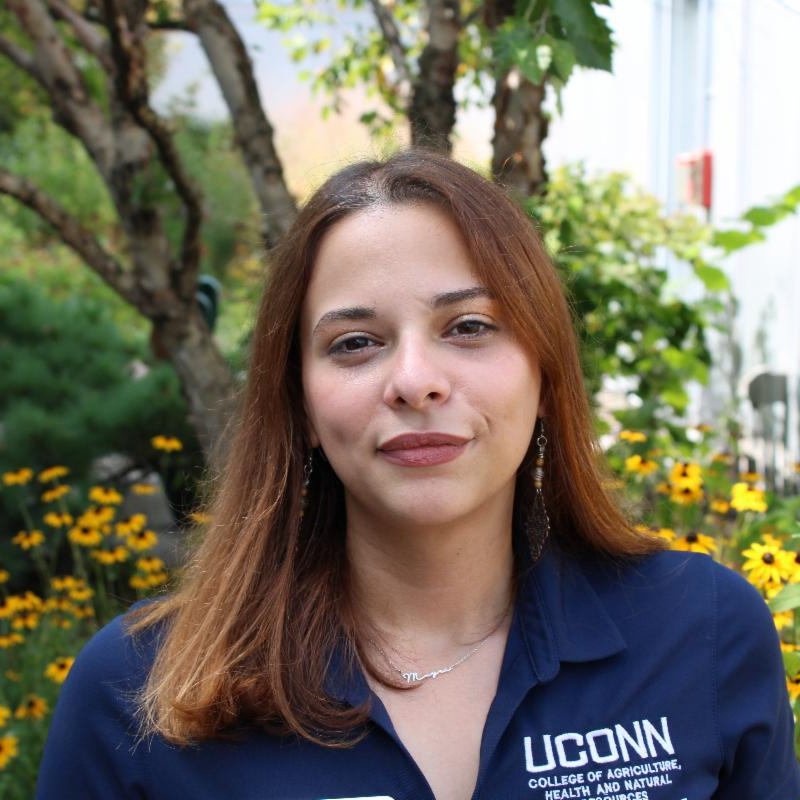
Mayra Rodríguez González, PhD, Assistant Cooperative Extension Educator, Department of Extension – Hartford County Extension Center at the College of Agriculture, Health and Natural Resources, has been selected for the Community Impact Award rooted in a body of work that exemplifies the highest standards of community-engaged scholarship—rigorous, inclusive, and deeply responsive to the needs of the communities she serves.
At the core of her contributions is a clear and compelling problem statement: the inequitable distribution of environmental resources and the disproportionate burden of climate and environmental challenges on marginalized communities. Through systematic needs assessments and community-centered sensemaking, Rodríguez González has worked alongside residents, particularly in nature-deprived urban areas with high concentrations of Hispanic populations, to identify barriers to urban forestry, environmental justice, and climate resilience. Her approach ensures that community voices are not simply consulted but actively shape the direction of programs and solutions.
Her approach to alignment is distinguished by its innovation and by the integration of scholarship with practice. By employing participatory research methods, geospatial analysis, and narrative-based tools such as the SenseMaker methodology, she transforms lived experiences into actionable data. This work bridges academic research with real-world application, demonstrating how extension, teaching, and research can operate in concert. Her leadership in introducing and advancing these methodologies within UConn Extension—and in translating them into peer-reviewed scholarship- reflects a model of engaged scholarship that is both intellectually rigorous and practically impactful.
The community outcomes and impact of her work are both measurable and sustained. In just a few years, Mayra Rodríguez González has advised hundreds of decision-makers, trained thousands of practitioners and educators, and supported climate resilience and urban forestry planning across multiple cities. Her initiatives have led to tangible improvements, including enhanced water quality, increased urban tree canopy, and strengthened local capacity for environmental stewardship. Programs such as Latino Conservation Week further demonstrate her ability to deliver meaningful outcomes, with the majority of participants reporting increased knowledge and engagement in environmental practices.
Equally central to her work is a deep commitment to inclusiveness. Mayra Rodríguez González designs programs that are culturally responsive, multilingual, and accessible to diverse audiences. She intentionally centers historically underserved populations, particularly Latine communities, ensuring they have access to education, resources, and decision-making processes. Her leadership in equity-focused initiatives, mentorship programs, and advisory roles reflects a sustained effort to expand opportunities and cultivate a more inclusive pipeline of future leaders in environmental and community development fields.
Finally, her leadership and influence extend well beyond individual projects. As a principal investigator and collaborator on numerous funded initiatives, she has shaped programs that inform policy, enhance public health and environmental outcomes, and foster community resilience. Her influence is evident in her service on advisory councils, her role in building cross-sector partnerships, and the recognition she has received from community organizations and professional bodies alike. Importantly, her leadership is defined not only by scale but also by her ability to build trust, elevate community knowledge, and drive enduring systemic change.
In sum, Mayra Rodríguez González embodies the spirit of the Community Impact Award. Her work demonstrates how early-career faculty can generate transformative changes by aligning scholarship with community priorities, centering equity, and fostering long-term partnerships that strengthen both communities and institutions.
Faculty Team Awards
Faculty Team - Research Award
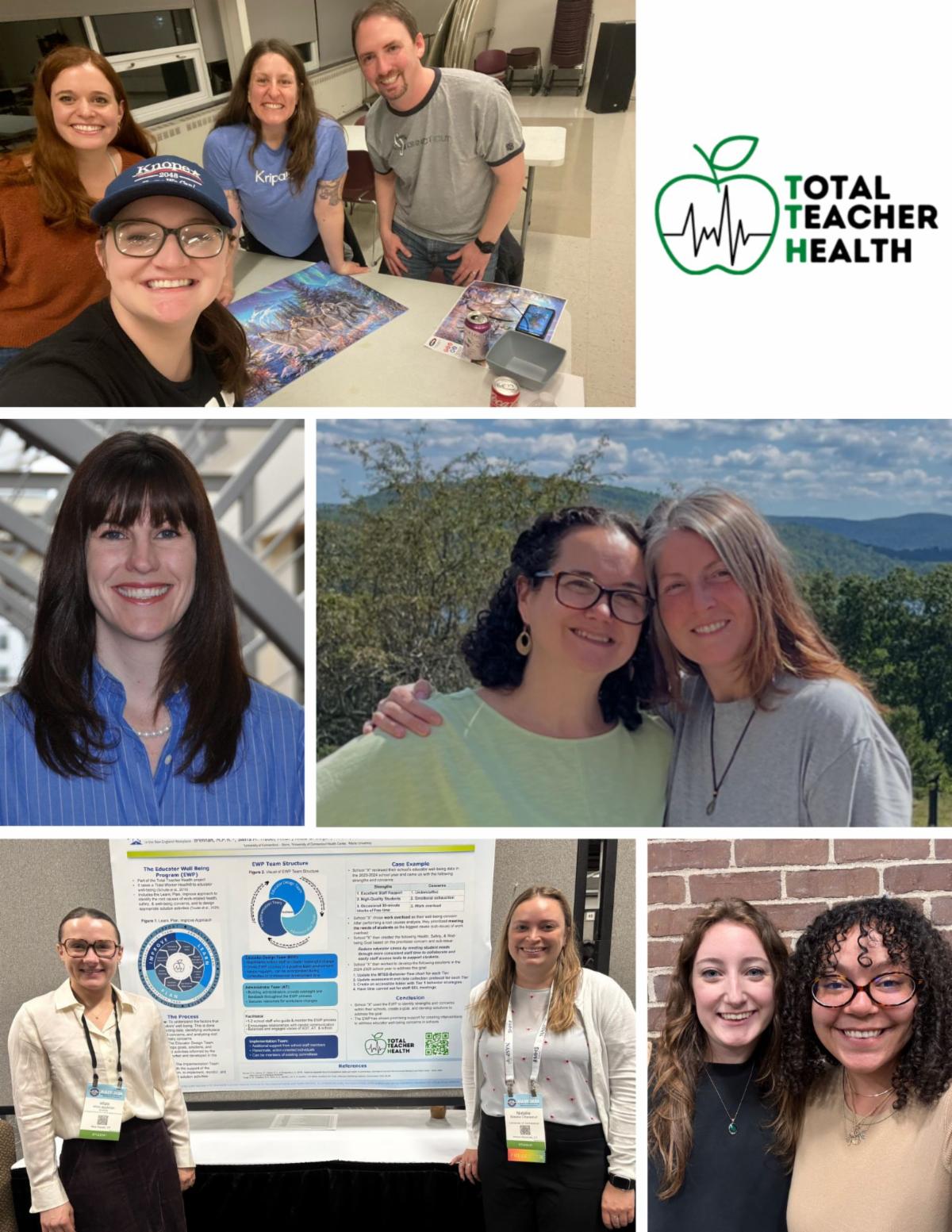
A multidisciplinary team of University of Connecticut researchers has been awarded the Provost’s Award for Excellence in Community-Engaged Scholarship in the Faculty Team – Research category, recognized for a groundbreaking initiative that is reshaping how schools address educator stress, by putting teachers themselves at the center of the solution. The award honors the Total Teacher Health (TTH) research team, whose work stood out across rigorous evaluation criteria, from defining a pressing societal problem to demonstrating measurable community impact and national scholarly influence.
At the heart of the team’s success is a clear and urgent problem: educator stress. Across the U.S., millions of teachers face high levels of burnout, anxiety, and depression, conditions that threaten not only their well-being but also the stability of schools and student success. Locally, the issue is even more stark. In Connecticut partner districts, more than three-quarters of school staff reported moderate to severe stress.
Rather than treating stress as an individual burden, the TTH team reframed it as a systemic issue rooted in workplace conditions. This approach immediately distinguished their work in the eyes of the selection committee.
What set the project apart further was its innovative research design. The team developed the Educator Well-being Program (EWP), a participatory intervention adapted from the Center for the Promotion of Health in the New England Workplace’s Healthy Workplace Participatory Program but redesigned through direct input from educators.
Teachers and school staff didn’t just participate; they co-created. Through surveys, interviews, and ongoing feedback loops, they helped shape the tools, refine strategies, and guide implementation in real time. The study’s rigorous stepped-wedge design allowed researchers to measure outcomes across multiple schools while continuously improving the program.
This blend of scientific rigor and real-world adaptability exemplified the kind of engaged scholarship the award seeks to recognize.
Central to the team’s achievement was its deep collaboration with school districts in Vernon and Windsor. Educators, administrators, and unions worked alongside researchers in a relationship defined by shared decision-making and mutual respect.
As one community partner noted in a support letter, the program succeeded because it was “grounded in the realities of school systems” and “deeply respectful of educator expertise,” creating solutions that were both practical and sustainable.
This reciprocal model ensured that the research was not only relevant but also embraced by the community it aimed to serve.
The results were tangible. Schools implementing the program saw significant reductions in anxiety, work-related stress, and work–life conflict among educators. Meanwhile, comparison schools experienced rising intentions to leave the profession, a stark contrast that underscored the program’s effectiveness.
Beyond statistics, the initiative fostered cultural change within schools. Teachers reported feeling heard, valued, and empowered to address challenges collaboratively shifting workplace dynamics in lasting ways.
The project also made a strong mark in academia, producing multiple peer-reviewed publications and dozens of conference presentations. Notably, students played leading roles in this work, often serving as first authors and presenters, an example of the team’s commitment to mentorship and leadership development.
Their efforts earned national recognition, including a prestigious award for excellence in intervention evaluation, further solidifying the project’s impact beyond Connecticut.
The TTH team’s leadership extended into classrooms, districts, and the broader field of community-engaged research. By training educators to lead change within their own schools and mentoring the next generation of scholars, the team created a ripple effect that will continue long after the project concludes.
In awarding the honor, the selection committee recognized more than a successful research project—they highlighted a model for how universities and communities can work together to solve complex societal challenges.
By centering those most affected, in this case, educators, the Total Teacher Health team demonstrated that meaningful, lasting change happens not in isolation, but in partnership.
Their work offers a powerful blueprint for improving not only teacher well-being, but also the health of school systems and communities nationwide.
Faculty Team - Community Impact Award
There is strong evidence that students thrive academically when schools attend to the whole child – including their social, emotional, behavioral, and physical needs. The aim of the Connecticut Whole School, Whole Community, Whole Child Partnership Team is to support districts in implementing the CDC’s Whole School, Whole Community, Whole Child (WSCC) model. Through sustained, reciprocal partnerships with Connecticut school districts, the UConn WSCC team learned that districts have a strong desire to adopt the whole child framework yet experience persistent barriers to implementation. By centering community input from the outset, the team ensured that their work addressed a pressing need experienced by educators, students, and families across the state.
Drawing on implementation science and interdisciplinary expertise, the UConn WSCC team developed a suite of evidence-based tools that translate complex research into practical applications. These policy evaluation instruments, practice briefs, and action-oriented blueprints were iteratively developed and refined through direct engagement with school communities to ensure usability and relevance. In 2023, the team received CDC funding for this work to provide structured professional development and technical assistance to districts across the state of CT. The CT WSCC Partnership has focused on enabling districts to embed whole child principles into existing systems including strategic planning processes. This integrated approach exemplifies how academic scholarship can be mobilized to drive meaningful impact.
The Connecticut WSCC Partnership has generated substantial impact. The team has reached most Connecticut school districts through trainings, technical assistance, and statewide initiatives, with participants reporting significant gains in knowledge and implementation skills. East Hartford Public Schools, a district designated as a priority partner for the CDC funding, has developed and implemented dozens of school-level action plans targeting student health, social-emotional learning, physical activity, and family engagement. These outcomes extend beyond the short term. By building infrastructure, aligning policies, and strengthening local capacity, the team has enabled sustainable and scalable improvements across districts.
A defining strength of the partnership is its deep commitment to improving access and outcomes for all students. The team’s tools and processes are intentionally designed to be adaptable across districts with varied needs and contexts, ensuring that all schools can meaningfully engage in whole child work. Importantly, the team emphasizes incorporating the perspectives of students, families, and communities who are not always included in decision-making processes. Their frameworks encourage schools to consider barriers to participation when developing policies and initiatives, thereby expanding opportunities and promoting positive outcomes for all students.
The WSCC Partnership team has demonstrated exceptional leadership in advancing systemic change at both the state and local levels. Their establishment of a Statewide WSCC Coalition has created a unified platform for cross-sector collaboration, breaking down silos and aligning efforts among education, health, and community leaders across the state. Through extensive professional development offerings, policy guidance, and strategic convenings, the team has positioned Connecticut as a national leader in whole child approaches. Their influence is evident in strengthened district infrastructure, expanded interdisciplinary collaboration, and policy integration that facilitates long-term sustainability. By shaping both practice and policy, the team has contributed to enduring improvements in educational and health outcomes statewide.
|