| | |
In this Issue
-
Welcome New and Returning Staff!
-
The Reconnection of Chamna - Healing the Yakima River Delta
-
Taking the Temperature of Our Rivers
-
Keeping Ellensburg's Streams Litter Free — One Stretch at a Time
-
Project In Focus - Cowiche Creek
- Funding Cuts Threaten Our Work - You Can Help!
| | | | Meet Our New Project Manager Lance Wyss | |
|
Lance Wyss brings more than two decades of hands-on ecological expertise to his new position as a Project Manager with Mid-Columbia Fisheries. Before launching his career in restoration, he spent over ten years as a fisheries and wildlife biologist — researching, surveying, and monitoring aquatic ecosystems across the Pacific Northwest. That fieldwork, combined with a B.S. and M.S. in Fisheries and Wildlife Science from Oregon State University, gave him a deep grounding in ecological processes and how species and their environments shape one another.
Since 2013, Lance has channeled that foundation into designing and implementing restoration projects for non-profit organizations in watersheds throughout Oregon. He is eager to bring that same commitment to collaborative, community-rooted work here in the Yakima River basin — helping to improve ecological conditions for everyone who calls it home.
| |
| | | Welcome Back Sarah Christopherson | | |
Mid Columbia Fisheries is thrilled to have Sarah Christopherson back for her second season on our restoration crew!
Sarah holds a Bachelor's degree in Environmental Geology from Central Washington University and brings a passion for conservation and riparian habitat restoration to everything she does. Sarah’s geology background gives her a unique perspective on the watershed — connecting soils, hydrology, and land health to the fish and ecosystems we work to protect.
Returning staff are the backbone of any field season, and Sarah's back with sharper skills, institutional knowledge, and an even deeper commitment to MCF's mission. We are glad to have her on the team again. Welcome back, Sarah!
| |
|
The Reconnection of Chamna:
Healing the Yakima River Delta
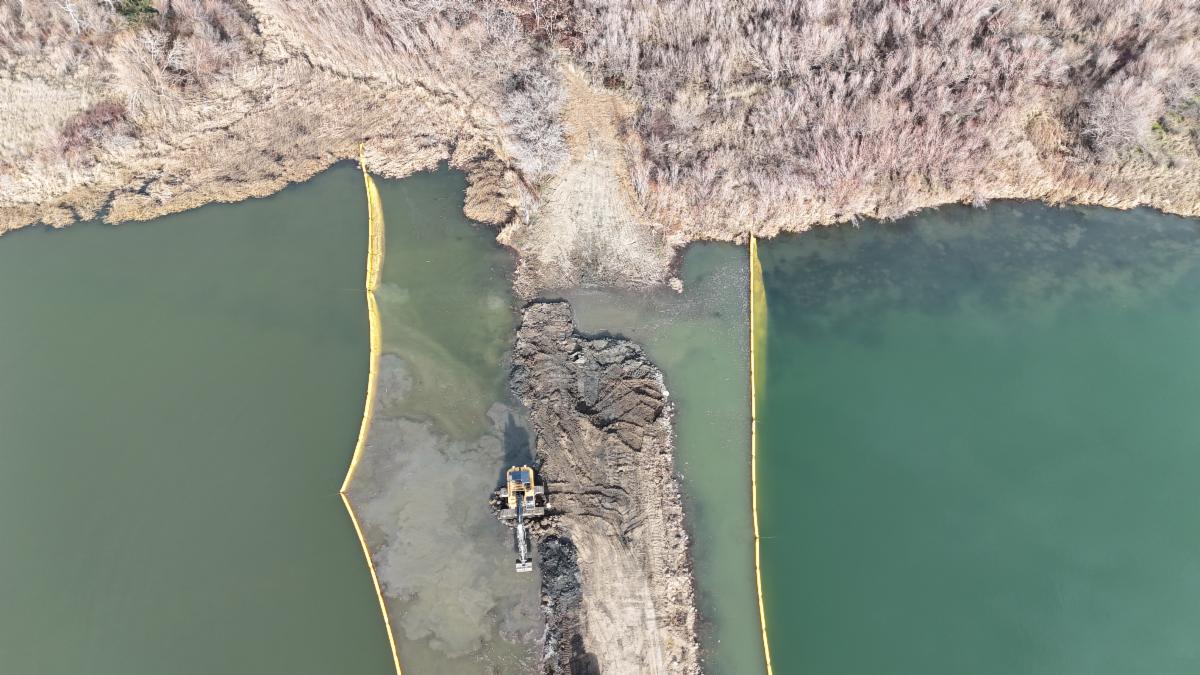
| | A nearly century-old barrier in the Yakima River delta has been removed — and a coalition of tribes, agencies, and communities gathered to celebrate what the river can now become. | | Aerial image of the reconnection courtesy
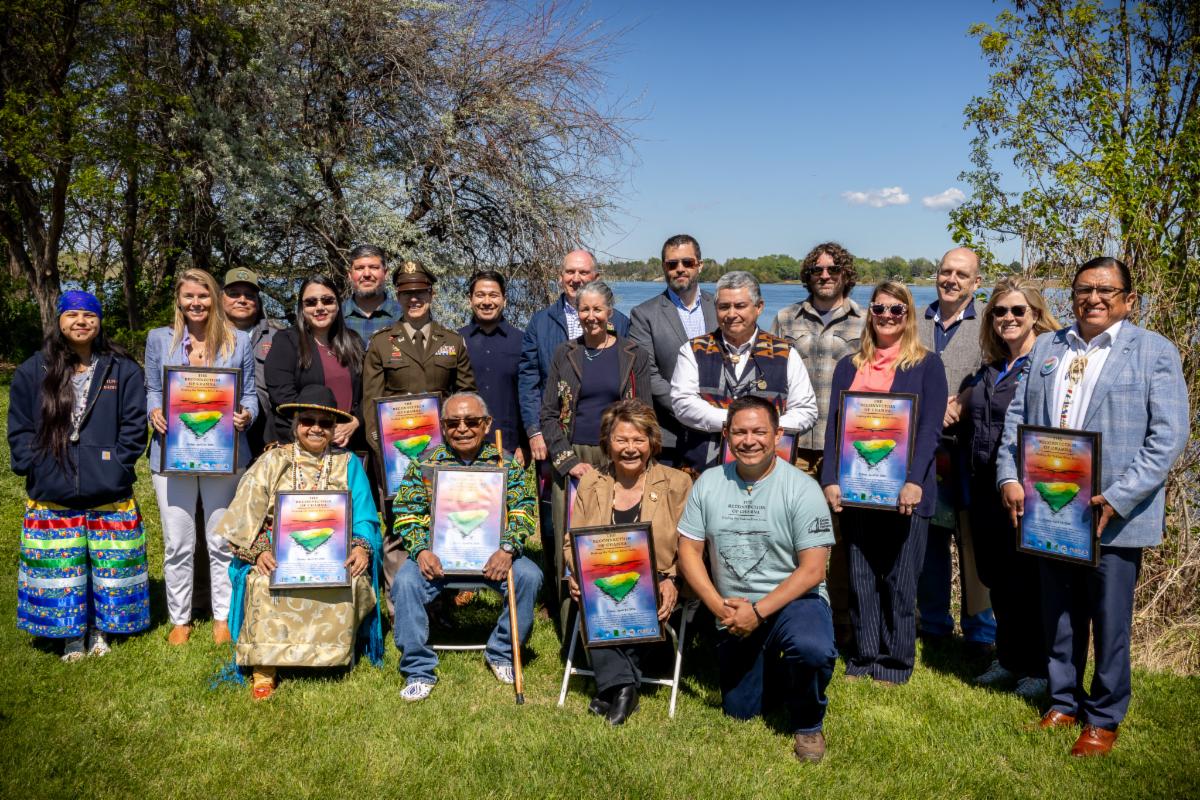
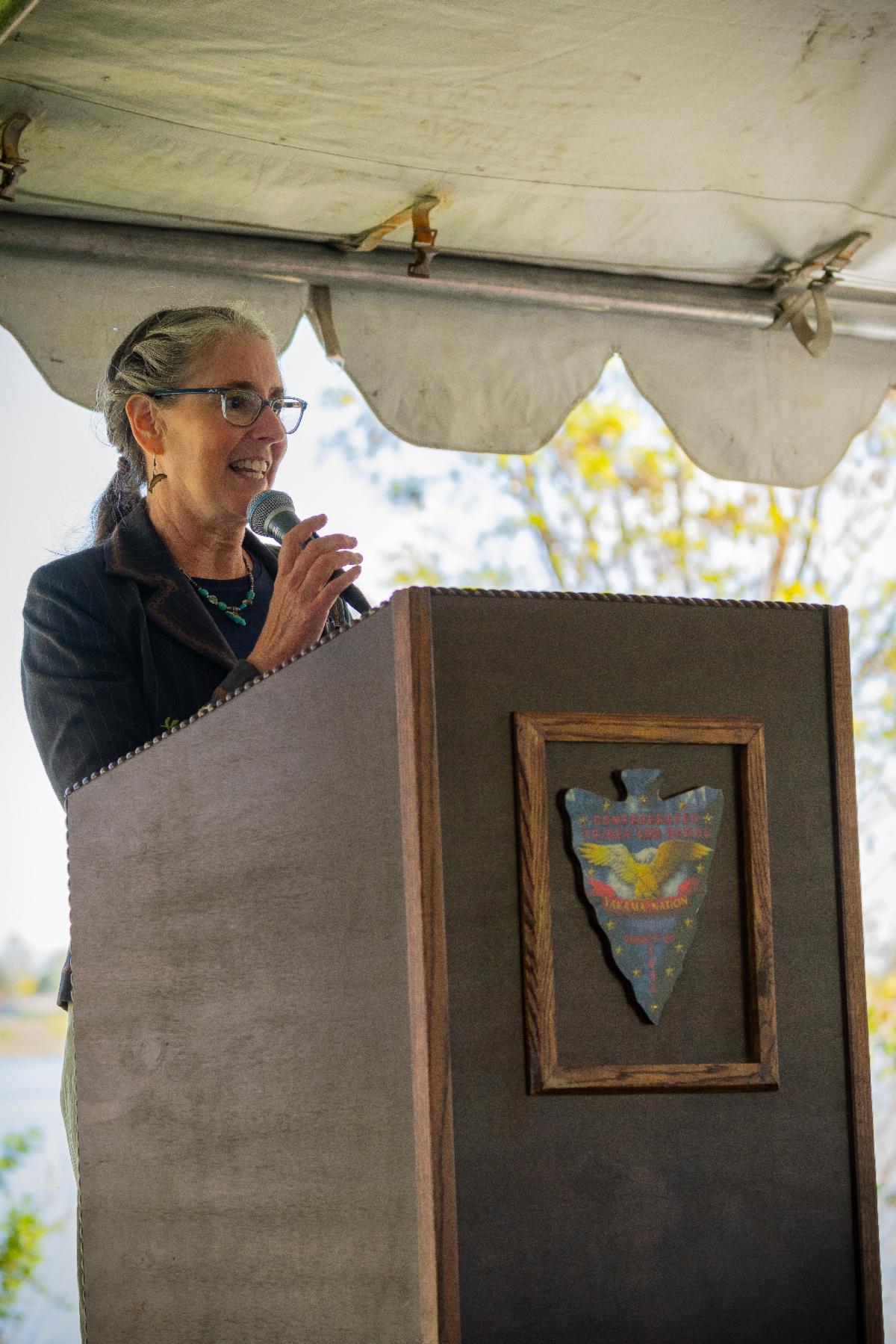
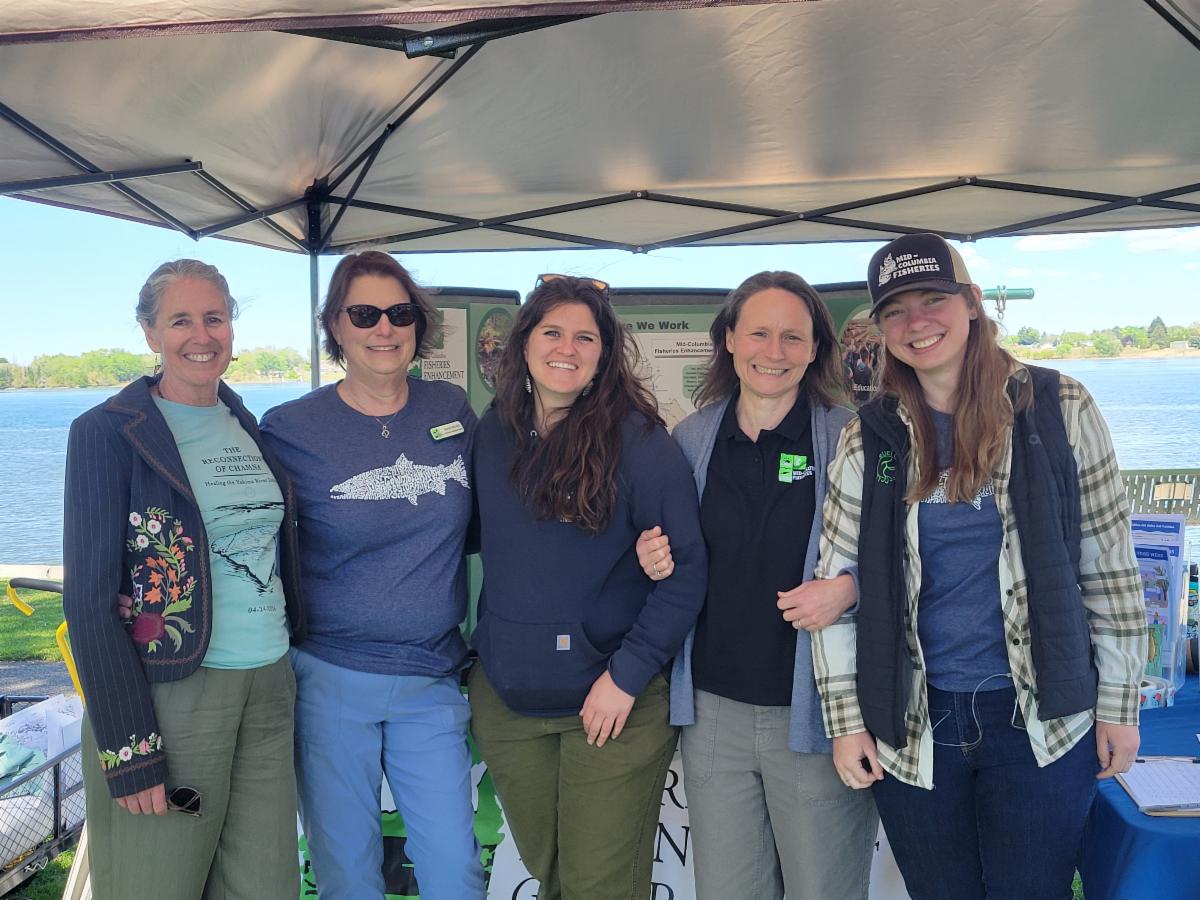
of the Benton Conservation District. | Ceremony presenters courtesy of Michael David Bushman, Yakama Nation Fisheries | | Mid Columbia Fisheries' Executive Director Margaret Neuman, courtesy of Michael David Bushman, Yakama Nation | | Attending Mid-Columbia Fisheries staff (from left): Margaret Neuman,
Merritt Mitchell, Tori Wood, Becca Wassell, and Emerson Blotz | | |
For nearly a century, a causeway at Bateman Island — where the Yakima River meets the Columbia River in Richland — blocked one of the Pacific Northwest’s most important salmon migration corridors. The structure created a warm, stagnant backwater hostile to juvenile and adult fish alike. In summer 2024, the causeway contributed to the deaths of more than 75 adult sockeye.
This year, after over 15 years of partnership work, much of which Mid-Columbia Fisheries was proud to facilitate, we are excited to announce that the barrier is gone.
Excavation began in January 2026, and by February 26th, the final scoop of earth was removed, reconnecting the Yakima River delta — known to the Yakama Nation as Chamna — for the first time since the 1930s. Since 2019, the project has been led by the U.S. Army Corps of Engineers in partnership with Yakama Nation Fisheries, WA Fish and Wildlife, and Mid-Columbia Fisheries Enhancement Group.
On April 24, 2026, nearly 400 tribal leaders, agency partners, and community members gathered at Columbia Park West in Richland for a celebration hosted by Yakama Nation Fisheries. The event opened with a traditional Yakama blessing and drum ceremony, honoring both the river’s reconnection and the Yakama people's persistence on this land.
Executive Director Margaret Neuman spoke on behalf of Mid-Columbia Fisheries, representing the organization’s decade-and-a-half of investment in the delta’s restoration and the partnerships that made this milestone possible.
“Restoring the Yakima River Delta is critical for the recovery of salmon, steelhead, and lamprey throughout the Yakima Basin”, said Executive Director Margaret Neuman.
Behind the scenes, Yakima Basin Program Director Rebecca Wassell played an early and continuing role in project implementation. Outreach and Communications Manager Merritt Mitchell played a critical role in project management and community outreach, coordinating with agency partners, tribal nations, and regional media to ensure the project continued to move forward and its significance was understood.
We didn't get here alone. A remarkable group of partners, funders, tribal nations, and community organizations stood alongside the Corps of Engineers, the Yakama Nation, and WA Fish and Wildlife to bring this complex project to life. We owe deep thanks to WA Department of Ecology, NOAA Fisheries, the City of Richland, WA Department of Natural Resources, Benton Conservation District, the Yakima Basin Fish and Wildlife Recovery Board, the Confederated Tribes and Bands of the Umatilla Indian Reservation, the Columbia River Inter-Tribal Fish Commission, the Lower Columbia Basin Audubon Society, Tapteal Greenway, the Benton County Mosquito Board, and the many community organizations that rallied around this work.
With Chamna reconnected, fish passage is improved to hundreds of miles of spawning habitat, thermal barriers have been ameliorated, and non-native predator habitat has been reduced.
Mid-Columbia Fisheries Enhancement Group is proud to have helped.
| |
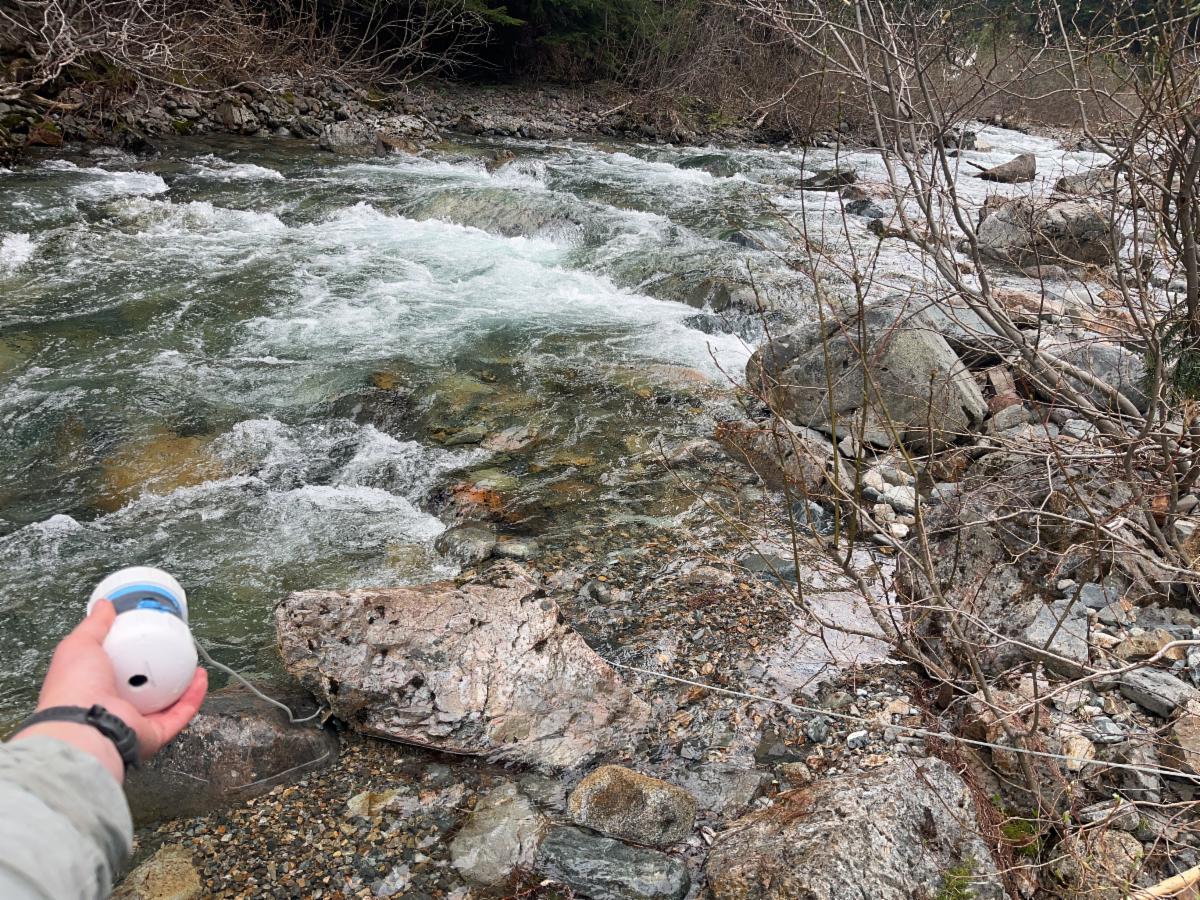
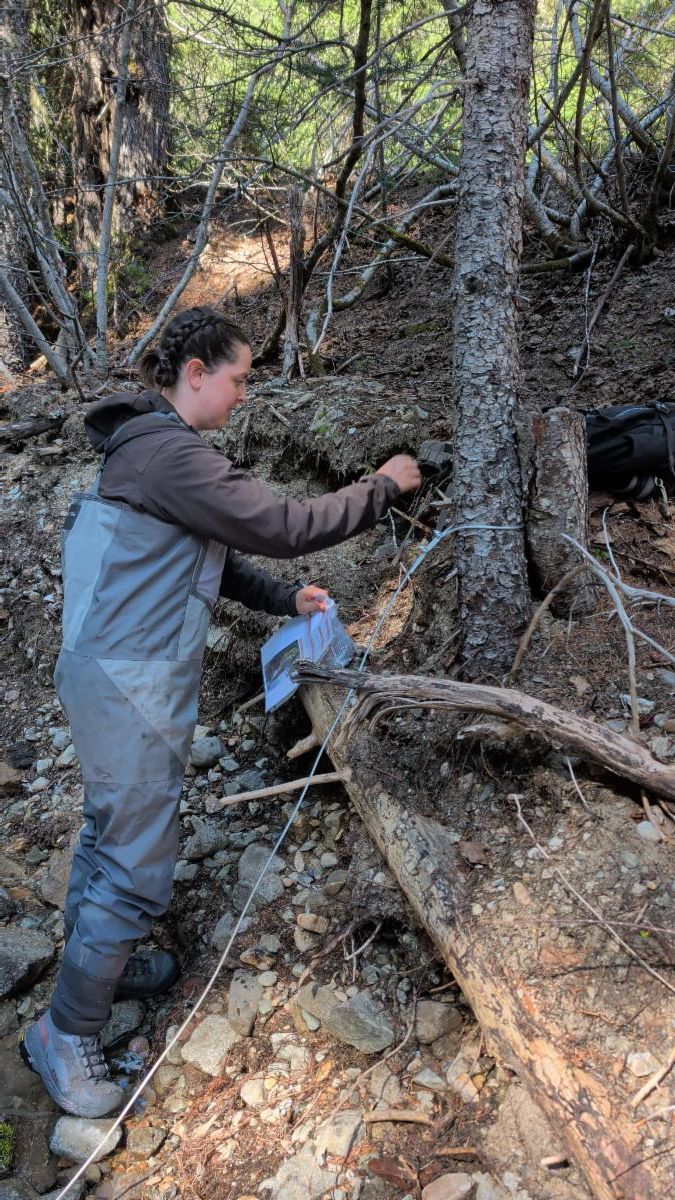
| Taking the Temperature of Our Rivers | | Bull Trout Task Force (BTTF) lead Aimee Taylor, pictured securing a deployed thermal logger | | |
Salmon, steelhead, and bull trout have one thing in common: they need cold, clean, oxygen-rich water to survive. For bull trout especially, that requirement is becoming harder to meet. As climate change drives water temperatures higher, the margins these fish depend on are quietly shrinking.
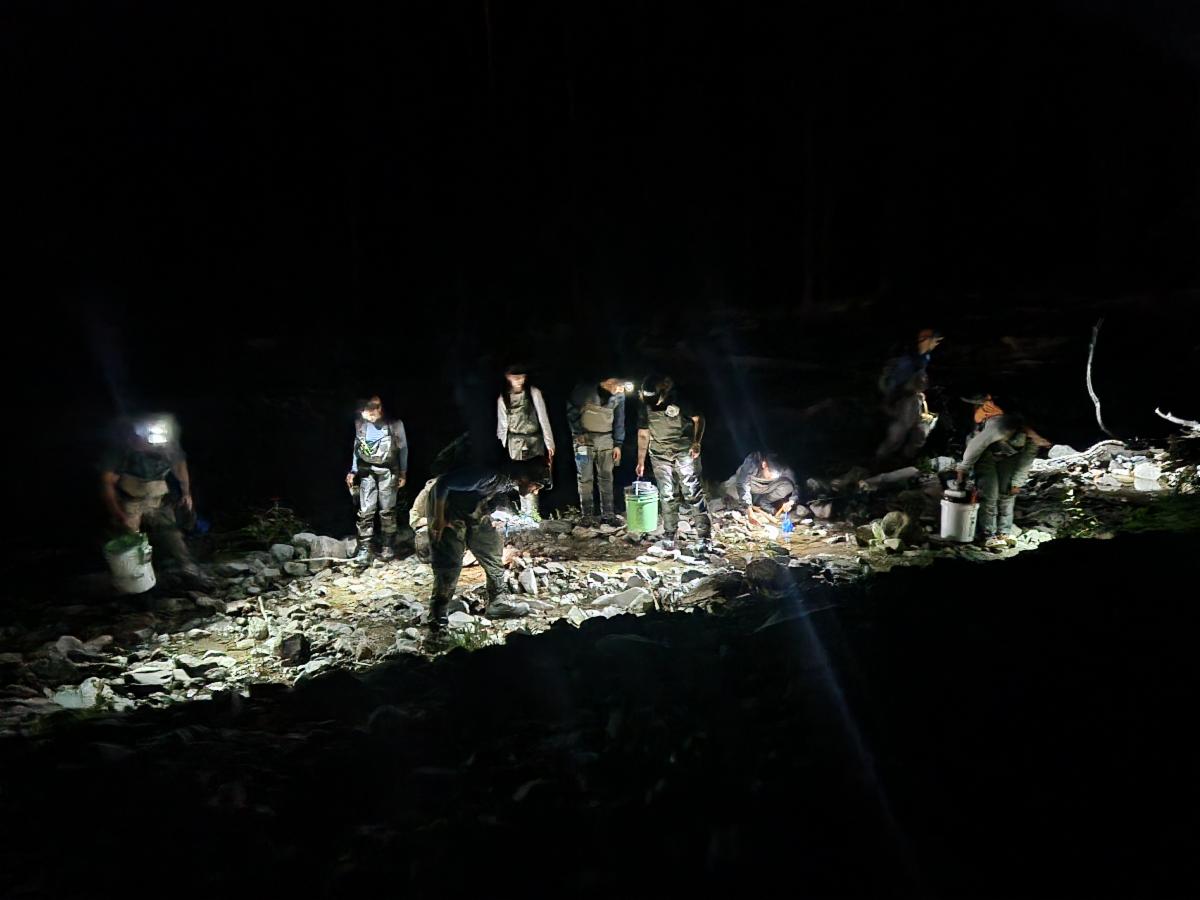
Each spring, Mid-Columbia Fisheries staff fan out across the region to deploy nearly 50 water temperature loggers along bull trout migratory corridors — a monitoring effort made possible through support from the Washington Department of Fish and Wildlife, the Washington Department of Ecology, and the Yakima Basin Integrated Plan.
These small devices do important work. Year after year, they build a picture of how our waterways are changing: where temperatures are creeping up, where conditions remain stable, and what the future might hold.
In drought years like this one, that data becomes even more critical. It helps us pinpoint cold-water refuges — the rare pockets where fish can escape the heat of summer — and track which streams are beginning to run dry altogether. It's the kind of information that turns concern into action, helping us make smarter decisions for the fish and the watersheds they call home.
| |
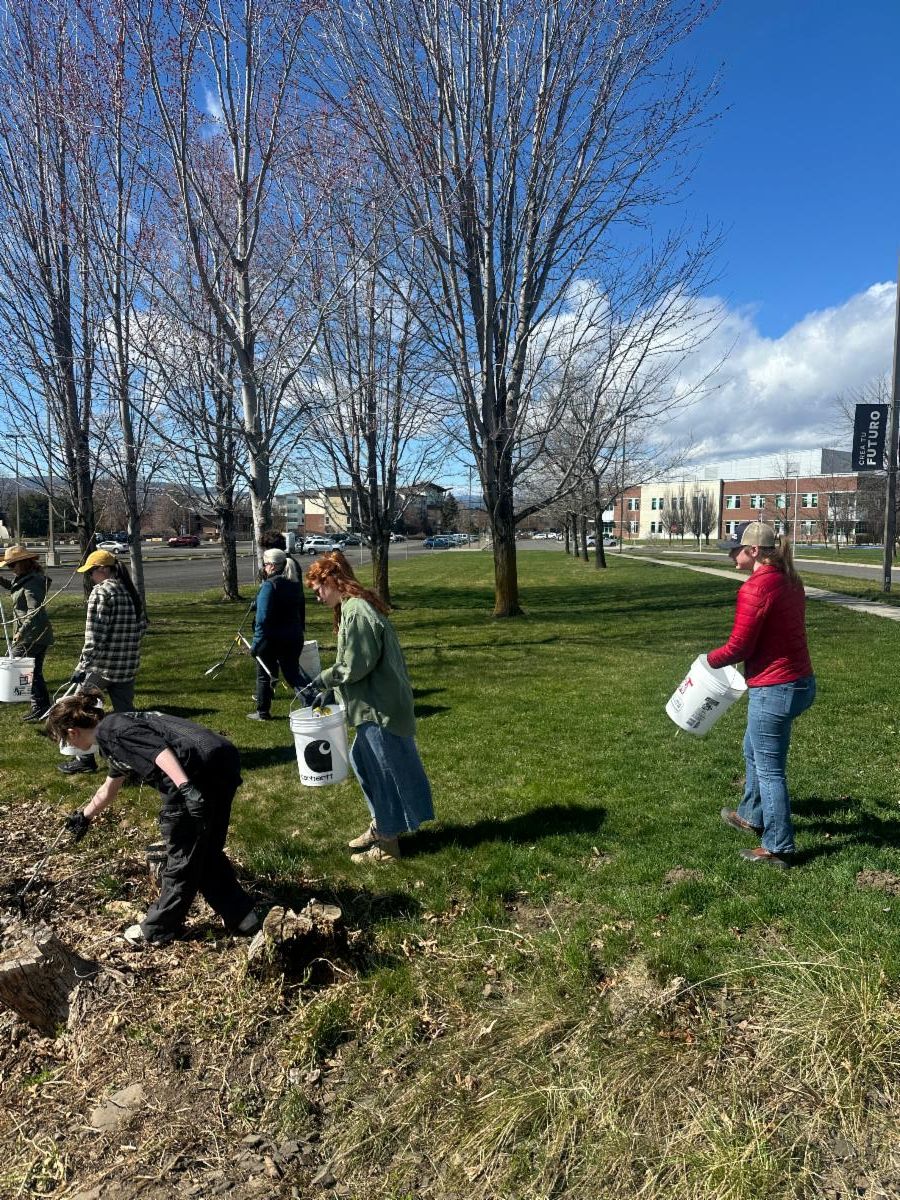
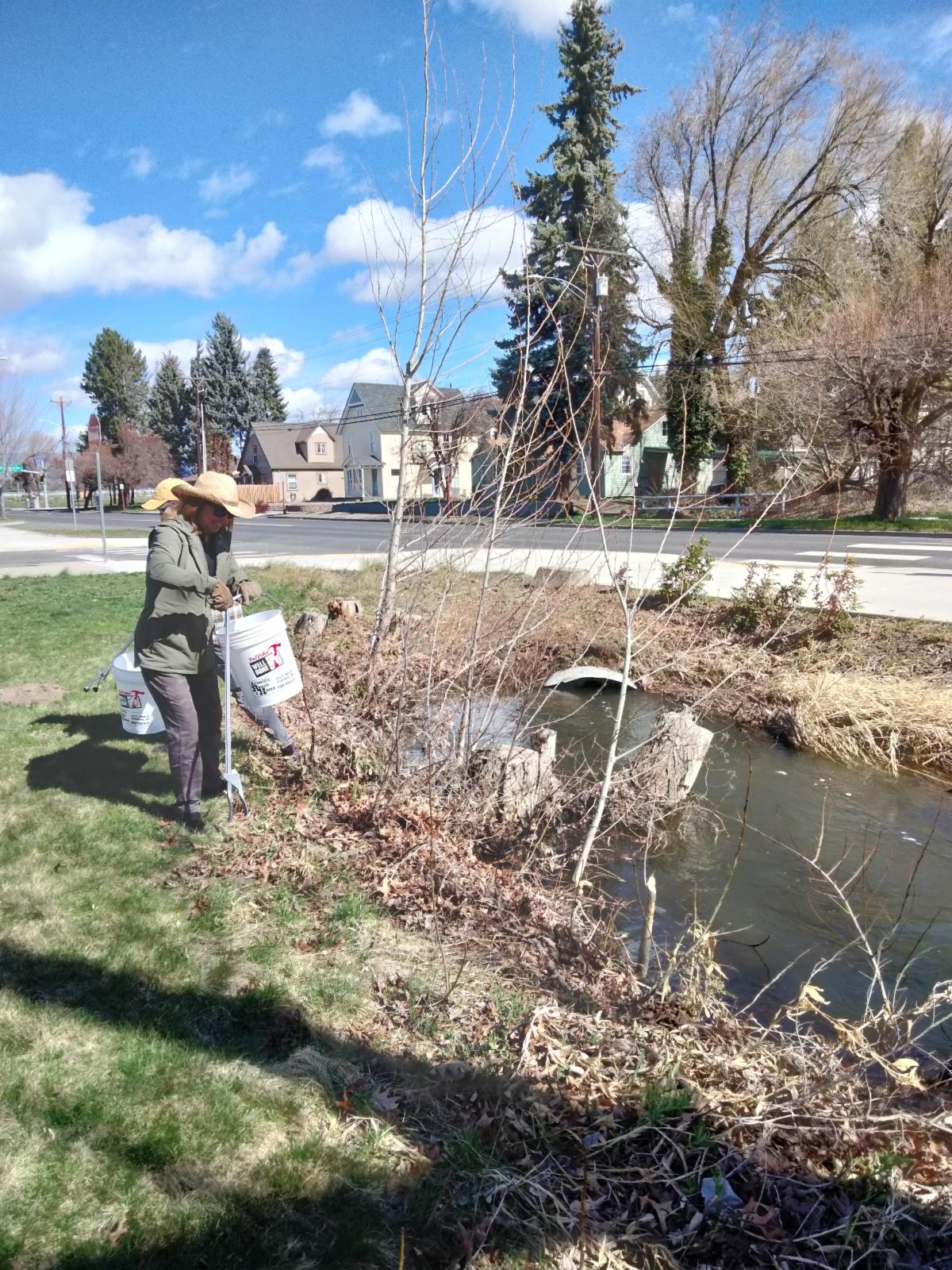
| Keeping Ellensburg's Streams Litter Free — One Stretch at a Time | | |
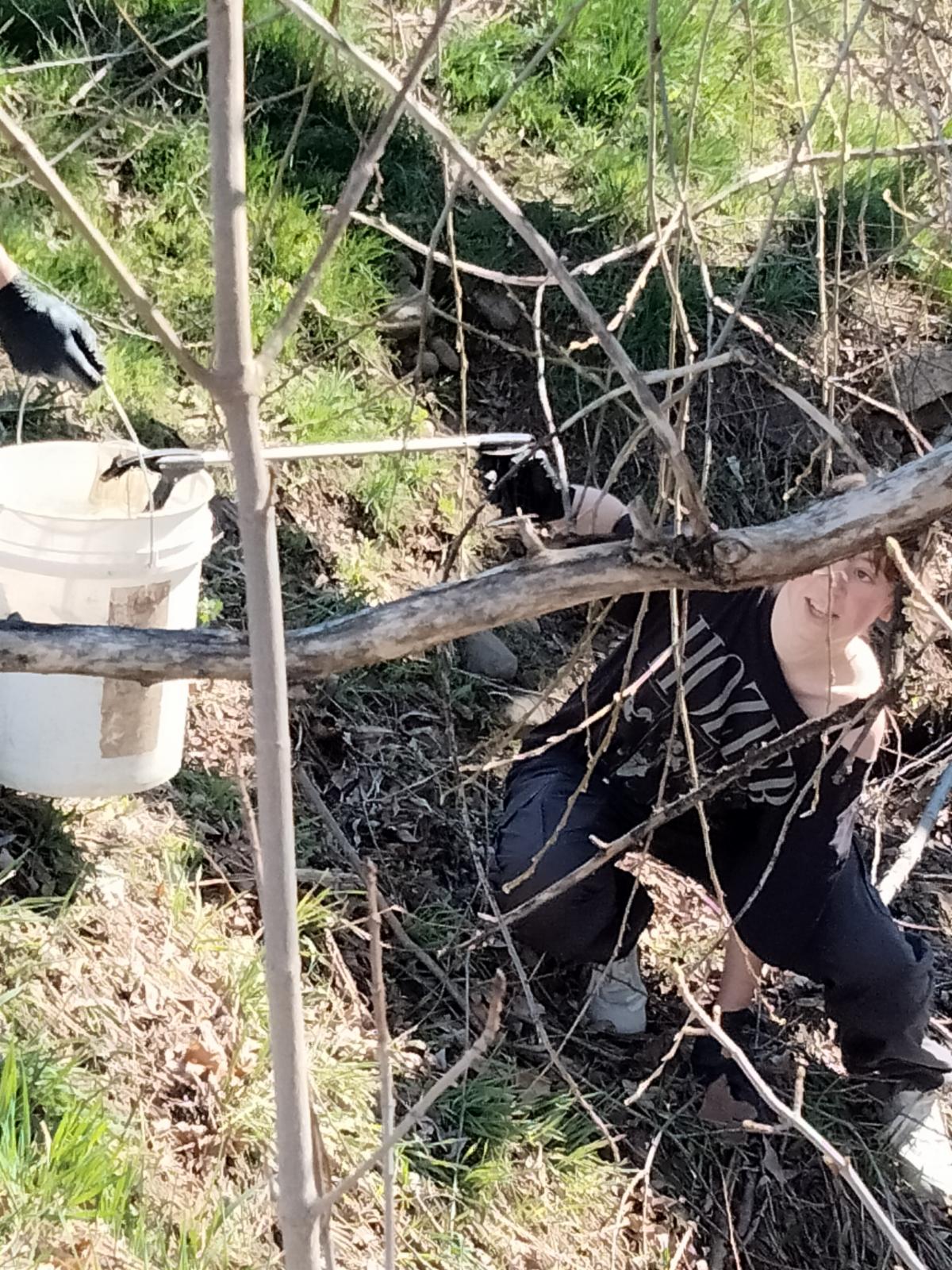
Ellensburg has more than 12 miles of urban stream running through (and in some cases under) its neighborhoods, businesses, and roadways. For the salmon, steelhead, and trout migrating between these waters and the Yakima River, that urban gauntlet comes with real risks — litter that creates physical barriers to migration and introduces toxins that can be deadly to aquatic life.
Maintaining those miles takes more than a small team. It takes a community.
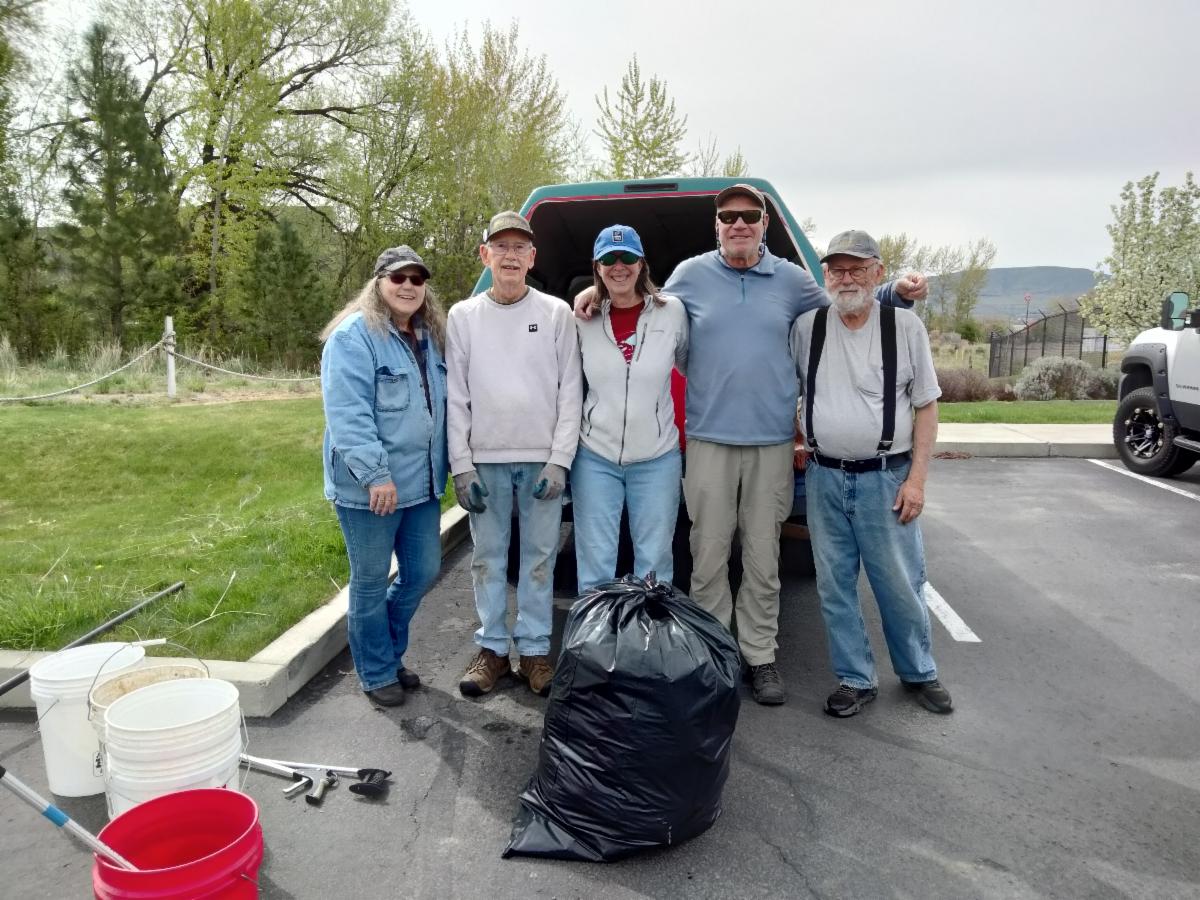
That's the idea behind Mid-Columbia Fisheries' Adopt-A-Stream program. Modeled after the Adopt-A-Highway concept, the program invites local businesses, schools, clubs, churches, and other organizations to sponsor a stretch of stream and commit to two clean-ups per year — typically in the spring and fall.
Funded by grants from the City of Ellensburg since 2017, the program coordinates work with adoptee groups and streamside landowners to plan and carry out each event.
The results speak for themselves. Today, eleven groups have adopted more than 4 miles of urban streams across Ellensburg and Kittitas. Over the past five years alone, nearly 750 volunteers have given more than 1,000 hours — and pulled approximately 2,530 lbs of trash away from our critical waterways.
And we are looking to grow!
If you or your organization wants to get involved, visit midcolumbiafisheries.org/adopt-a-stream or
reach out at adoptastream@midcolumbiafisheries.org
| |
| Project In Focus - Lower Cowiche Creek | | |
Lower Cowiche Creek Is Thriving After Years of Investment
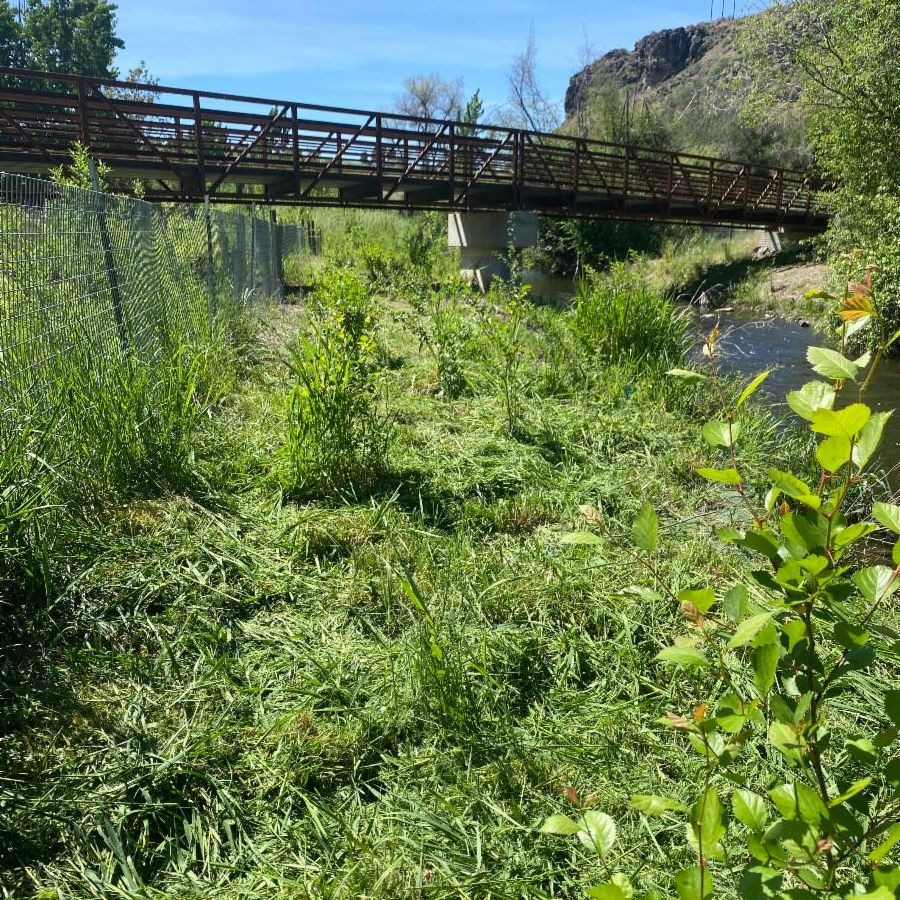
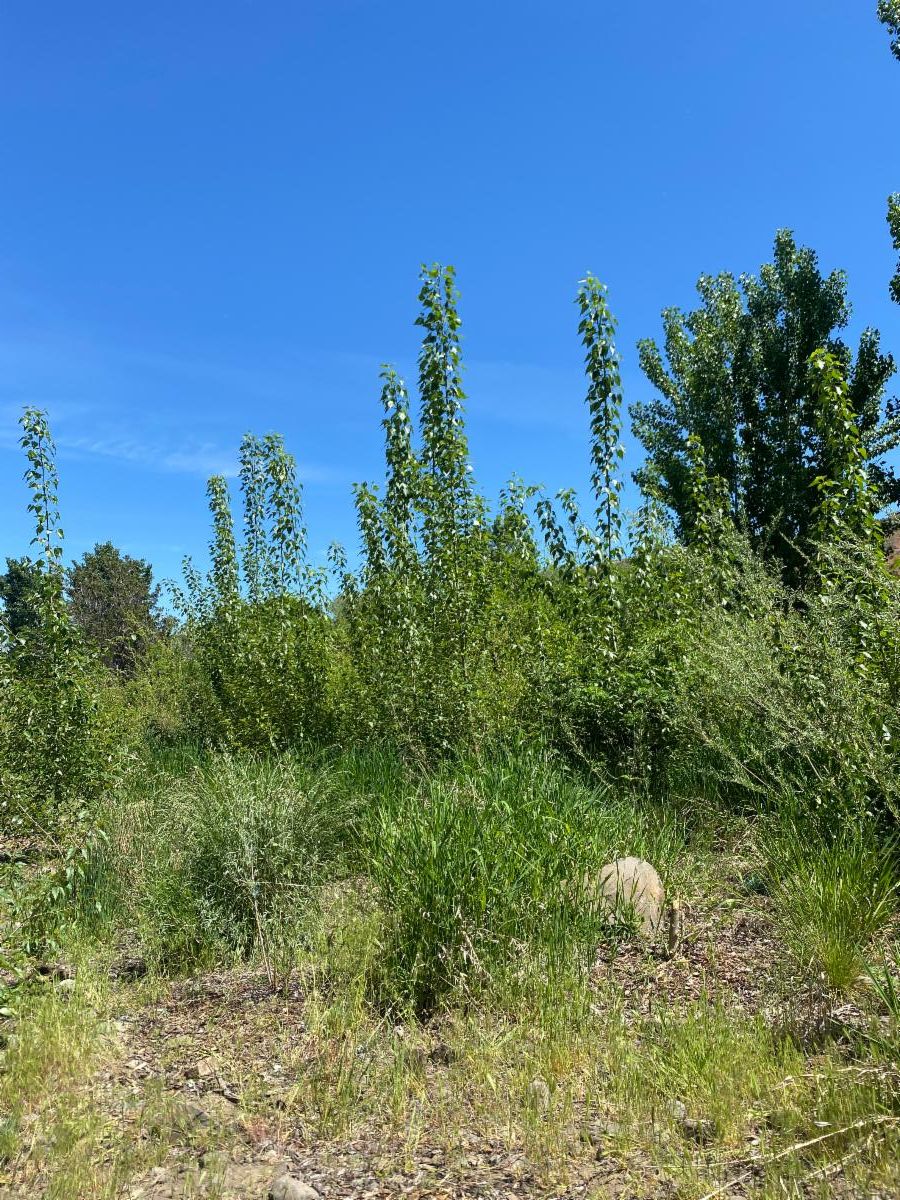
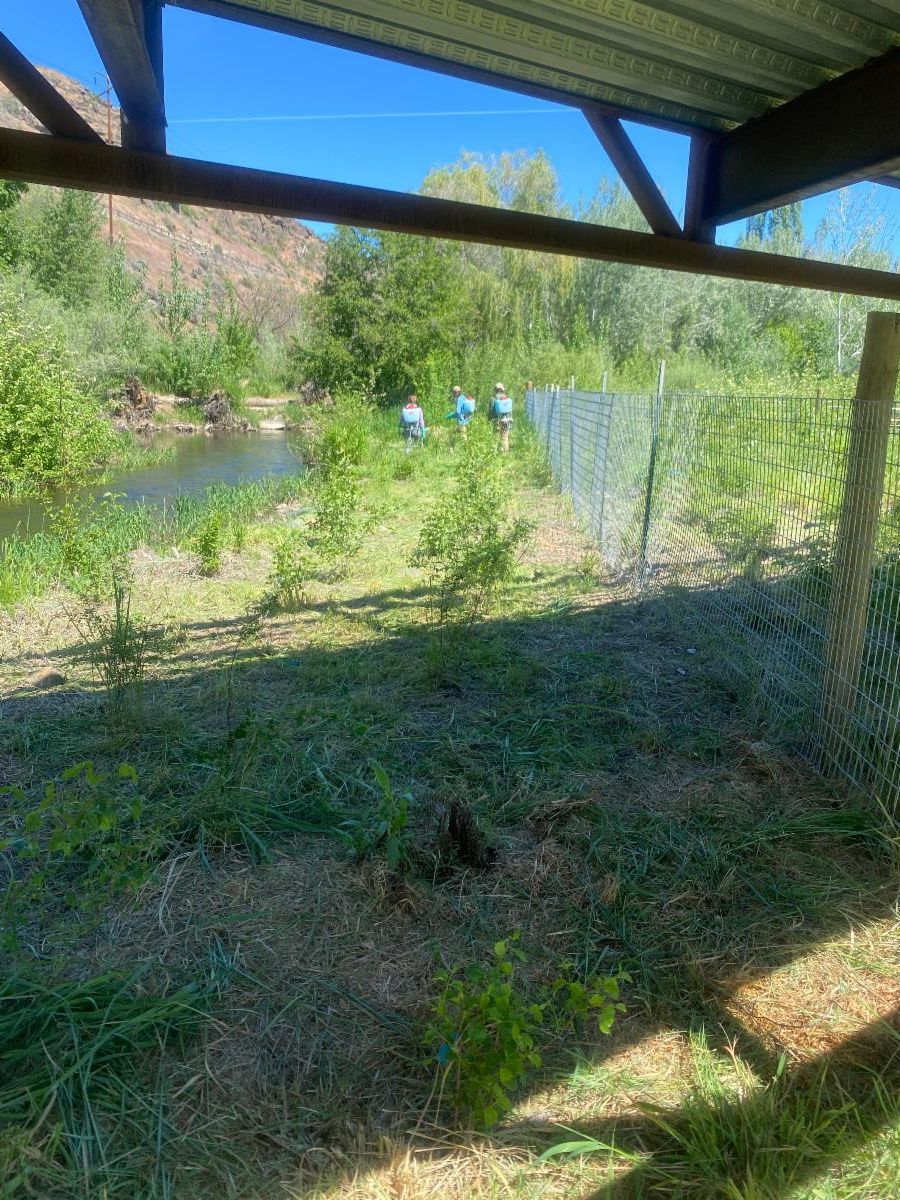
In 2023 and 2024, the first seedlings went into the ground along Lower Cowiche Creek. Today, those plantings have surged over 15 feet tall — canopies starting to shade the stream, dropping temperatures, and alive with insects, birds, and wildlife.
What was once a degraded corridor is now a living one.
The transformation didn't happen by accident. A legacy railroad berm had choked the creek for years — crowding out native vegetation, strangling floodplain function, and pinching flows into a fast, narrow channel with little room for life. The Washington Department of Ecology flagged Cowiche Creek as impaired for temperature and bacteria. Salmon and steelhead found little refuge here.
This project removed over 7,000 cubic yards of berm material and nearly 40 tons of concrete, replacing that footprint with native trees and shrubs to shade the stream and capture sediment.
Why this project is so important: Lower Cowiche Creek is a critical spawning and rearing habitat for ESA-listed Mid-Columbia steelhead and coho salmon — fish that depend on cool water, complex habitat, and a functioning floodplain. That's exactly what this work is rebuilding.
Mid-Columbia Fisheries has been at the center of this effort, made possible by the Washington Department of Ecology, the Recreation and Conservation Office's Salmon Recovery Funding Board, the Washington State Conservation Commission's Riparian Grant Program, and the City of Yakima.
The investment is growing — literally.
| |
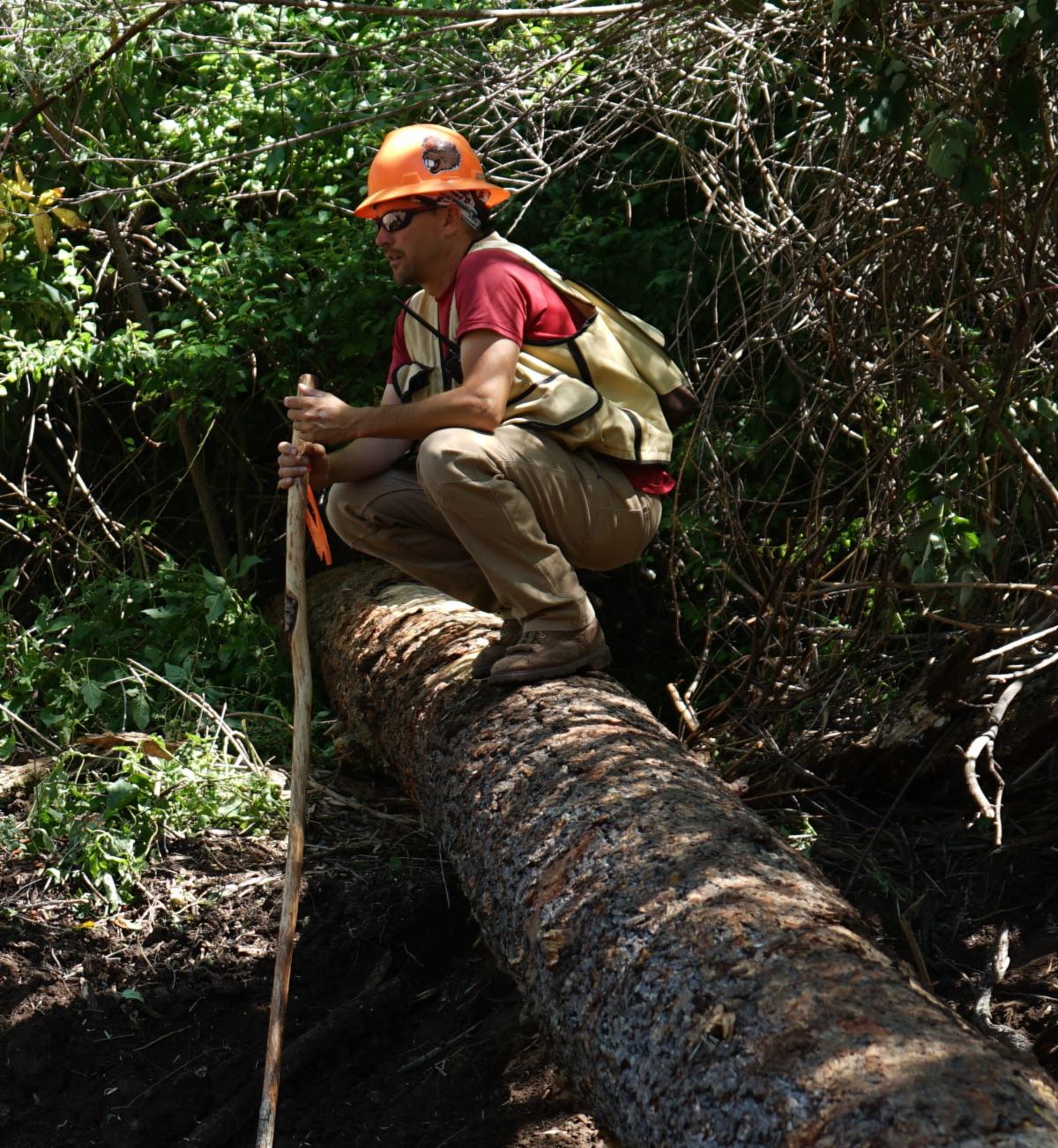
| Cottonwood trees reaching for the sky! | | Crew surveying the plantings. | | Budget Cuts Threaten Progress on Salmon Recovery | | |
The groups restoring salmon habitat across Washington just lost 35% of their base funding. Federal dollars disappeared in 2025. State support was cut but not eliminated in 2026. The complicated work of salmon recovery continues, with your support.
If you've been thinking about giving, volunteering, or speaking up, now is the moment.
→ Make a donation
→ Volunteer with Us!
Thank you for staying the course with us.
| |
| Mid-Columbia Fisheries Enhancement Group is dedicated to protecting and restoring wild salmonid populations, their habitats, and ecosystem functions that support native fish species through restoration, protection, education, and community involvement throughout our region. | |
| | | |