|
Dear Community:
Week in and week out, research continues to shine a glaring light on the deep-rooted racial and ethnic health disparities across the U.S. It is a stark reality, but one we must confront together. In this week's update, we highlight some critical stories illustrating how systemic inequities permeate our daily lives:
-
Biased Medical Technology: Article examines how racial bias embedded in pulse oximeters—which routinely overestimate blood oxygen in darker-skinned patients—triggers downstream harm and systematically delayed follow-up care for Black individuals.
-
Environmental Inequality: Researchers reveal how unequal access to quality urban parks leaves lower-income neighborhoods facing higher temperatures, greater pollution, and severe respiratory risks compared to wealthier areas.
-
Fear as a Determinant of Health: Explores how the fear of immigration enforcement acts as a powerful social determinant of health, forcing immigrant and mixed-status families to avoid public spaces, food pantries, and vital medical care.
These findings are urgent reminders that our work is far from over. We must continue fighting for equity in our clinical tools, environments, and communities. We Must Save Us.
Blessings to all of you for a safe and healthy week ahead.
Renee Mahaffey Harris
President & CEO
| | |
Cincinnati & Hamilton County Public Library brings free meals to Library locations
The Cincinnati & Hamilton County Public Library has partnered with UMC Food Ministry to bring free meals and snacks to select Library locations. Free meals are available Mondays through Fridays after school for kids and teens at select Library locations. Participants must eat their meals at the Library. Free meals and snacks are also available Monday through Friday during the summer.
According to Feeding America, over 42,000 children in Hamilton County live in a food insecure household. That means one in six children are unsure of where their next meal is coming from. Children facing hunger are more likely to struggle with school and exhibit behavioral problems.
Click the button below to see the full schedule of all Library locations offering free meals and snacks.
| |
How a biased medical device is widening the racial health gap
Pulse oximeter devices routinely overestimate blood oxygen levels in darker-skinned patients — a racial bias that can trigger downstream health harms for Black individuals, compounding well beyond any single inaccurate reading. A Black patient with a pulse oximeter reading of 94%, for example, may actually have an oxygen level of 91% or lower — a clinically meaningful difference that could warrant intervention. But the clip-on-finger device gives no indication that anything is wrong for that Black individual, so neither the patient nor the clinician is alerted.
In a study published in the Proceedings of the National Academy of Sciences (PNAS) and coauthored by Marcella Alsan, MD, PhD, researchers investigated how racial bias embedded in pulse oximetry contributes to disparities in follow-up care between Black and white patients. "Our research on pulse oximetry is an example of how bias in technical design can propagate through the system and affect healthcare decisions," said Alsan.
The researchers note the device’s measurement error doesn’t just create a one-time disparity; it gets carried forward in subsequent clinical decisions and Black patients systematically receive lower rates of follow-up care than white patients. The widely used devices give artificially high blood oxygen readings for people with darker skin because the melanin in their skin absorbs light differently than lighter skin, and the devices are typically calibrated using mostly light-skinned people.
|
Erased Twice: Federal Disinvestment Is Deepening AAPI Maternal and Reproductive Health Disparities
May 2026 marks the 35th annual official Asian American and Pacific Islander (AAPI) Heritage Month. There is much to celebrate: for generations, Asian Americans, Native Hawaiians, and Pacific Islanders have been core to U.S. society, currently comprising more than 25 million people — nearly 8% of the U.S. population — and continuing to grow. But there is also much work to be done to ensure AAPI communities have what they need to be healthy and thrive.
Despite encompassing more than 50 diverse ethnic groups, languages, migration histories, and cultures, AAPI communities are often treated as a monolith in health care delivery, health research, and policymaking — obscuring critical differences in health needs and outcomes, and worsening health disparities. This is particularly acute when it comes to maternal and reproductive health. To make matters worse, the long-perpetuated “model minority” myth — the stereotype that Asian Americans are economically advantaged, highly educated, and generally healthy — has further erased the nuanced experiences of many AAPI communities, particularly low-income immigrants, refugees, and Native Hawaiian and Pacific Islander populations. As a result, many health inequities within AAPI communities remain hidden and unaddressed.
|
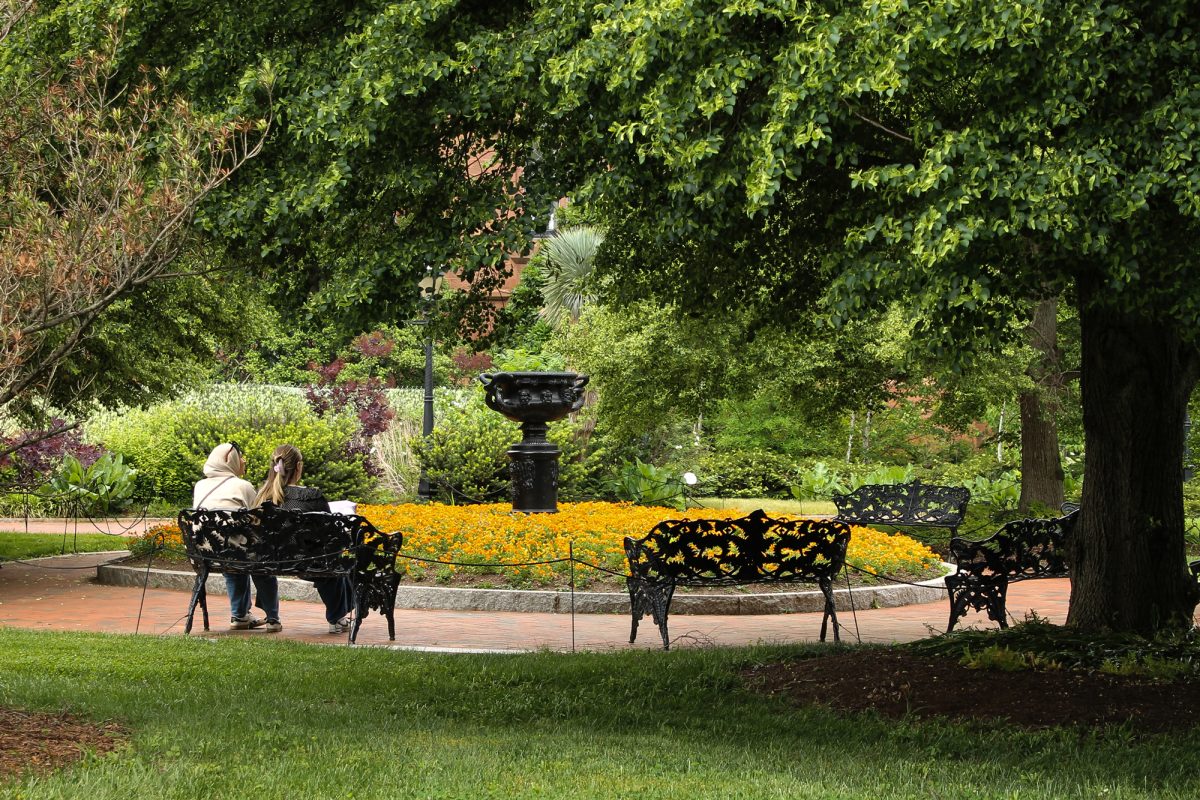
GW researchers find unequal access to urban parks leads to long-term health risks
GW researchers found access to urban parks is unequal within major U.S. cities, leading to higher risks of heat exposure, respiratory illness and other health disparities for residents in a study published late last month. Greta Martin, one of the authors of the study and a postdoctoral associate at the Milken Institute School of Public Health, conducted the study analyzing park conditions across the 24 most populous urban areas in the United States, including D.C., using spatial and environmental data to assess differences in park size, temperature, pollution exposure and air quality. She said the study revealed that environmental inequalities can exist even in communities with access to parks as lower-income areas often only have access to parks with fewer environmental and public health benefits — like higher temperatures and greater pollution exposure — than wealthier neighborhoods.
Martin said the study found parks in higher-income neighborhoods were generally larger, greener and cooler than those in lower-income communities, reflecting broader patterns of environmental inequality within U.S. cities. The study also found park access and environmental quality varied sharply across metropolitan areas, with park space — the share of land dedicated to parks — ranging from less than 1 percent of land area in Indianapolis, Indiana, to 37.5 percent in the Seattle-Tacoma region in Washington.
|
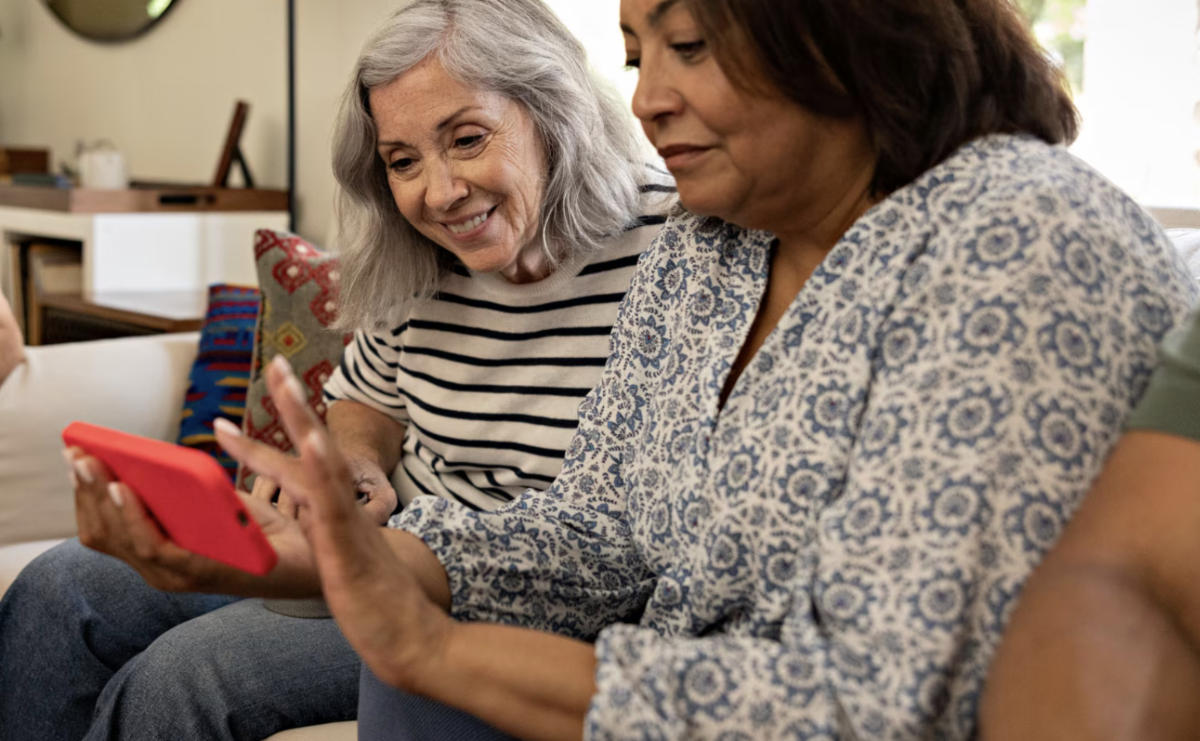
Helping seniors navigate digital-first health care
For millions of older adults, managing their health now means making sense of apps, online portals, digital forms and telehealth visits. These tools can make care simpler, but only when people feel confident using them.
With more health care happening online, we set out to better understand how seniors are navigating digital health care today. Our research focused on Medicare-eligible adults and included surveys, interviews and group conversations with seniors across different ages, incomes, geographies, health conditions and living situations.
What emerged was a clear picture: digital health literacy – an individual’s ability to access, understand and navigate digital tools to manage their health care – is now a key factor in whether people can access care, understand their options and stay engaged in their health.
Digital health literacy is about more than knowing how to use a smartphone. It includes being able to find reliable health information online, navigate patient portals, feel confident sharing personal data and access the internet and devices needed to do all of the above. Our research found that most seniors face challenges in at least one of these areas, and often more than one at the same time. Many seniors reported that these digital barriers have a real impact on how well they manage their care. When digital systems are hard to use, people are more likely to miss appointments, delay medication or struggle to manage their chronic conditions.
|
Fear as a Social Determinant of Health in Immigrant Communities
Fear related to immigration enforcement has reshaped how immigrant communities navigate public life, including decisions about where and how to access basic services. Heightened enforcement activities, including workplace and neighborhood raids, have intensified concerns about being stopped, questioned, or detained by immigration authorities, prompting some families to avoid public spaces and reduce their trips outside the home. Evidence from recent surveys indicates increasing avoidance of daily activities, including travel, work, and medical care, because of enforcement fears, especially in communities where enforcement risk is perceived to be highest.
Food pantries have reported growing demand alongside increasing requests for home delivery, as some families are too fearful to appear in person out of concern about encountering immigration authorities in public spaces. Although structural drivers contribute to food insecurity, immigration enforcement–related fear now functions as a salient social determinant of health, influencing help-seeking, care engagement, and long-term cardiometabolic risk. Notably, these effects are not confined to undocumented individuals; racial and ethnic minoritized individuals, US-born children of immigrants and naturalized immigrants, and mixed-status families report altered behaviors in response to an enforcement-intensified climate, underscoring how fear permeates entire communities.
| | | | |