Desert Trees Are Dazzling Now | | |
Just look at these desert trees—stunning and full of color!
Desert landscapes are bursting with beautiful displays right now.
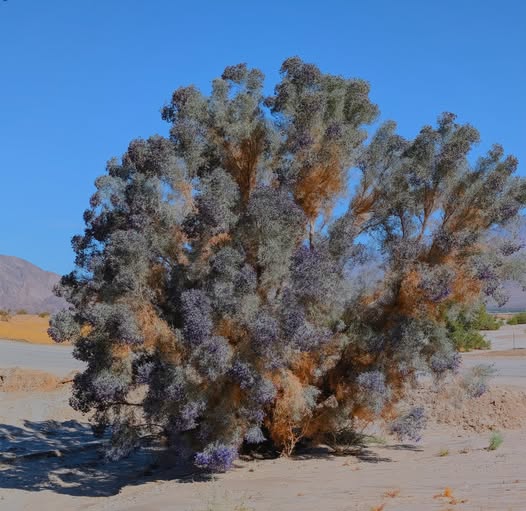
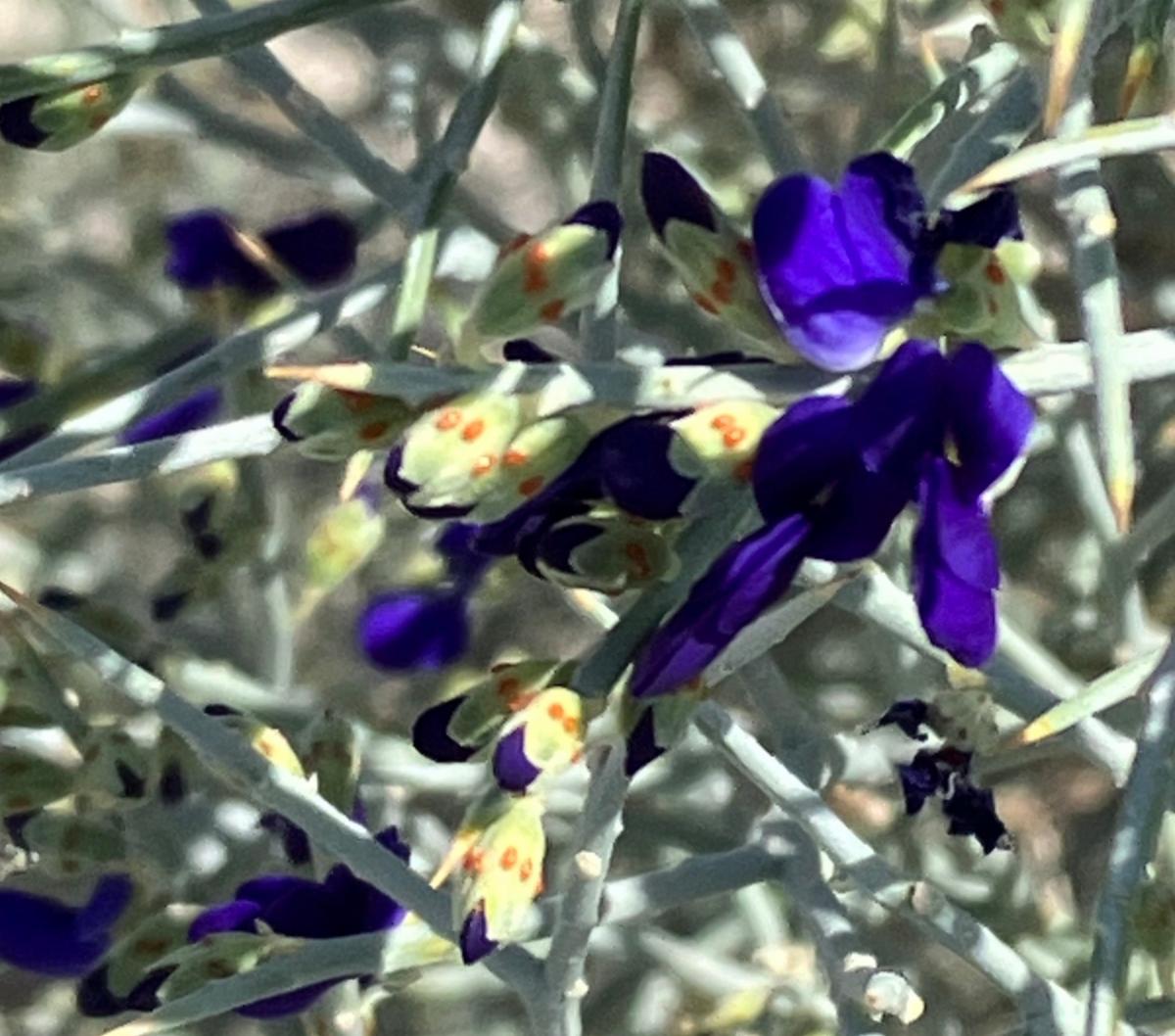
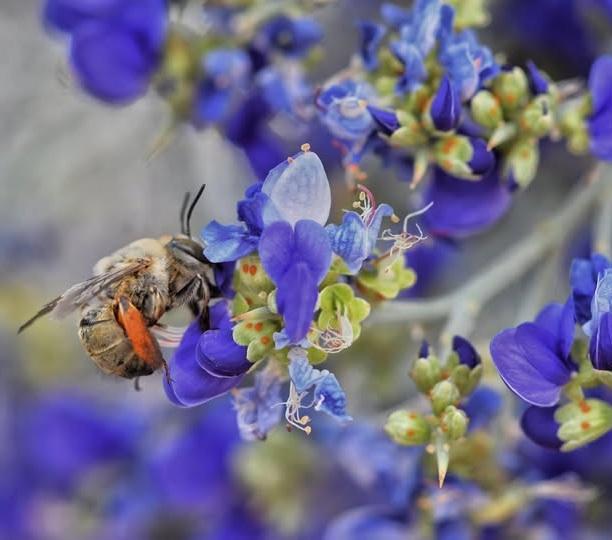
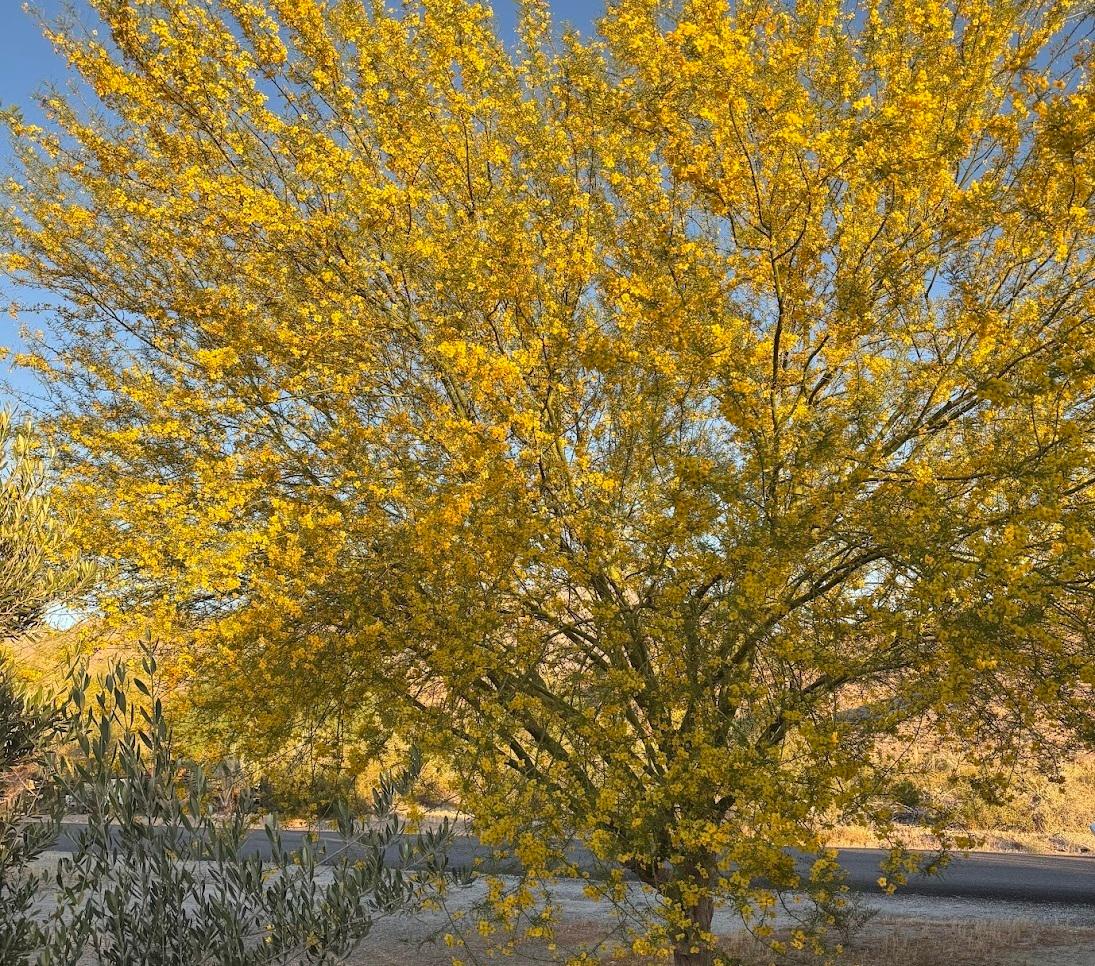
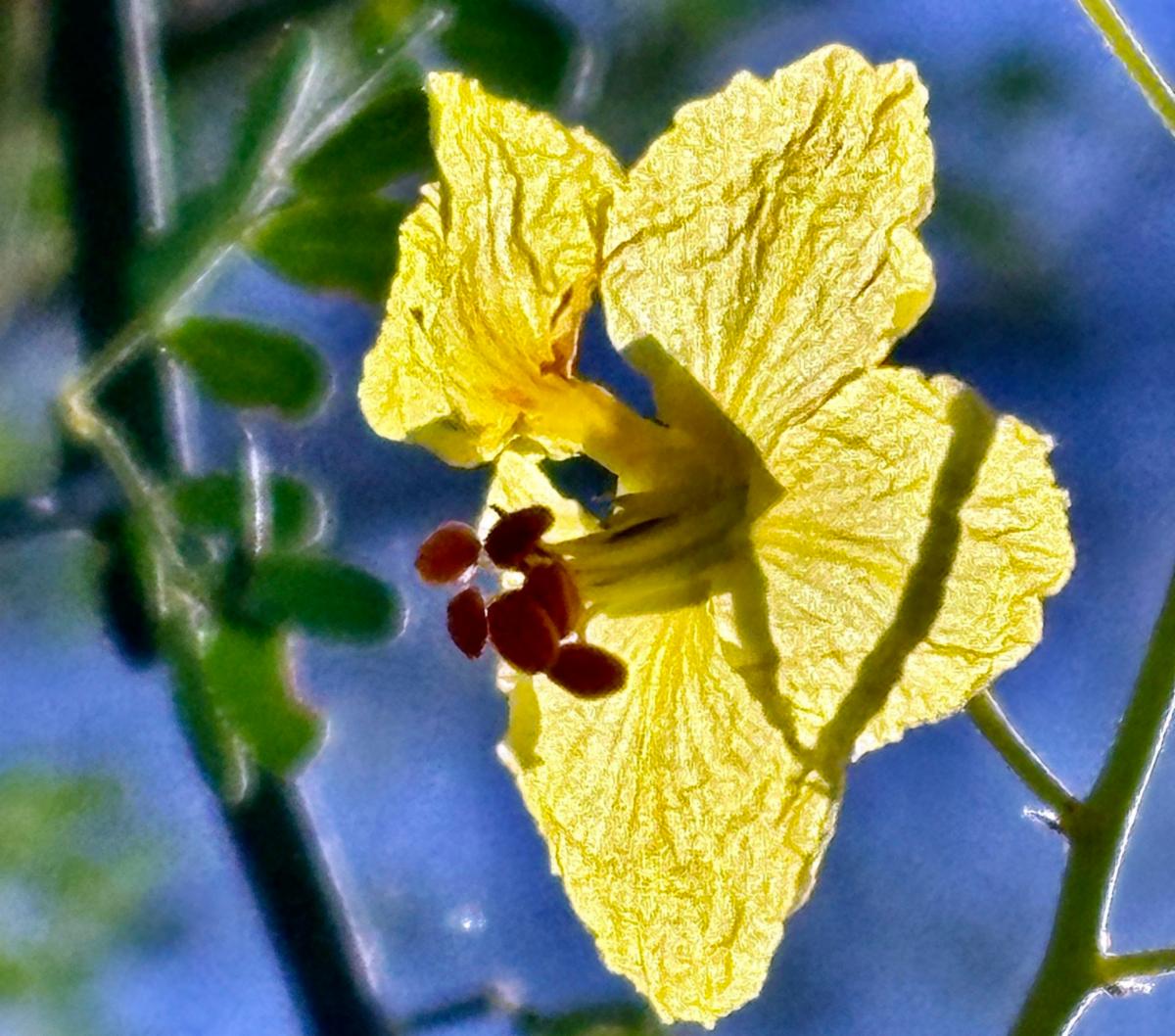
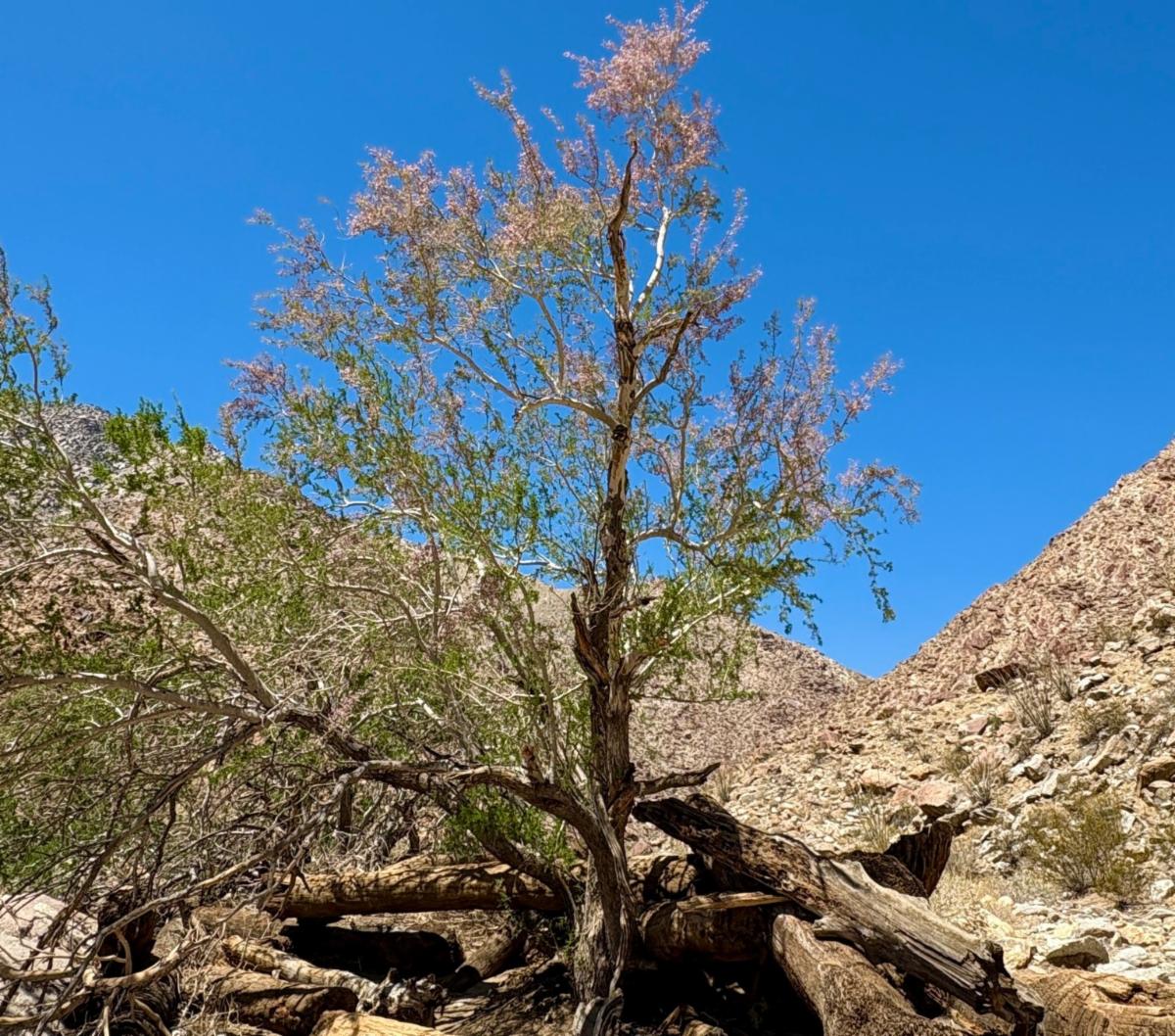
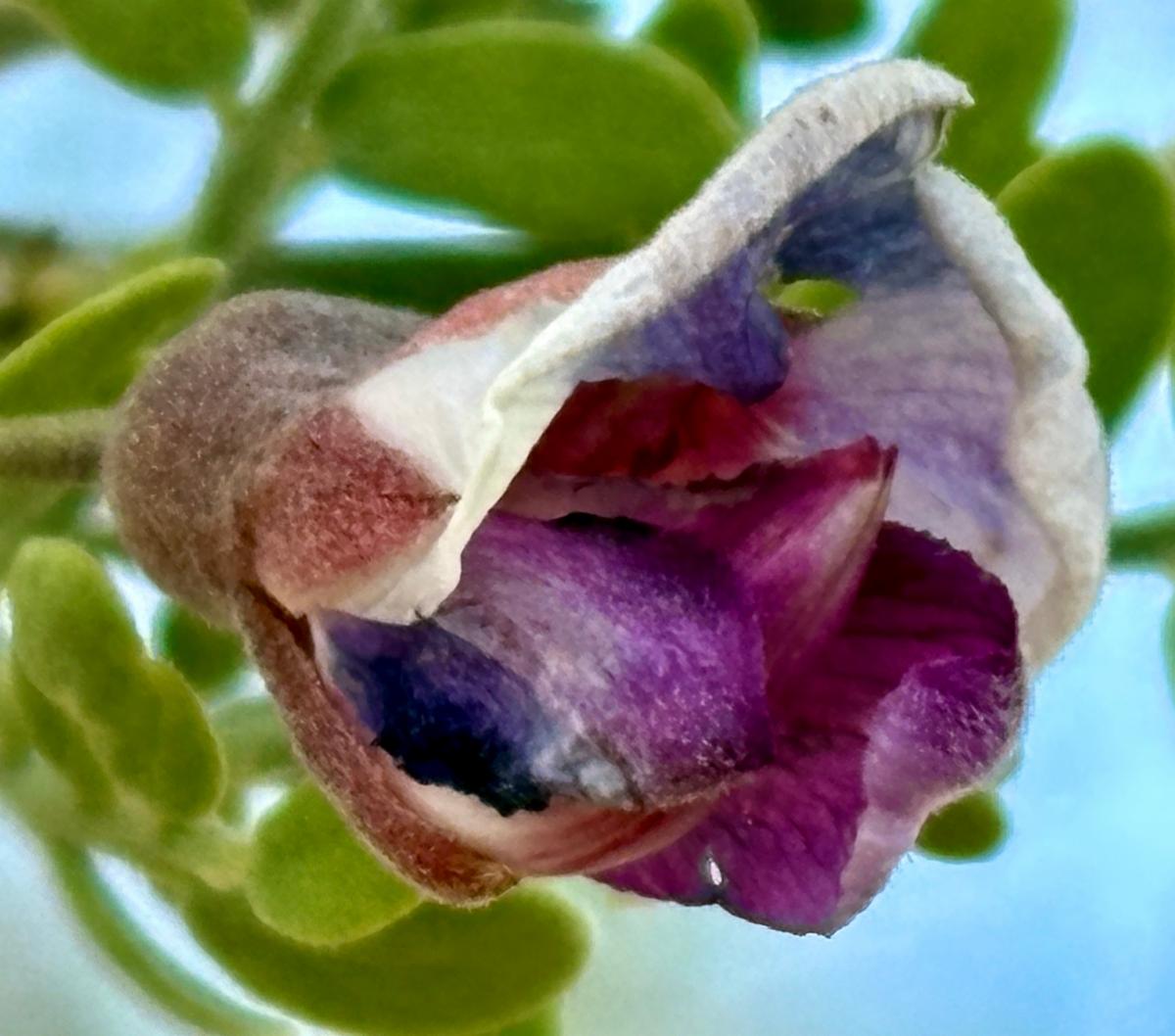
| | In the middle of the desert, this Smoke Tree (Psorodendron spinosus) is resplendent with a full array of brilliant purple flowers. | | Take a closer look at the blooms. Their intense color and fragile detail seem to contrast with their harsh surroundings. In the same genus as indigo bush, the leaves and flowers bear a striking resemblance. However, the indigo bush usually blooms before the smoke tree. The orange spots seen on the sepals are nectar secreting glands. The nectar produced is much appreciated by bees, butterflies, moths, and other pollinators. | Perhaps the champion of blooms is the Palo Verde (Parkinsonia florida), both for numbers of trees in the area and for abundance of blooms. Its name means "green stick" in Spanish and refers to its green bark. This allows it to perform photosynthesis in its branches and twigs. In the heat of the summer, it can drop its leaves and still manufacture nutrients using its bark. This important desert adaptation reduces water consumption. | | |
The yellow flowers attract pollinators, and the seed pods are eaten by rodents and birds. The local indigenous people ate the flowers fresh and used them in cooking. They also boiled the whole immature seed pods and ground the ripe seeds into flour.
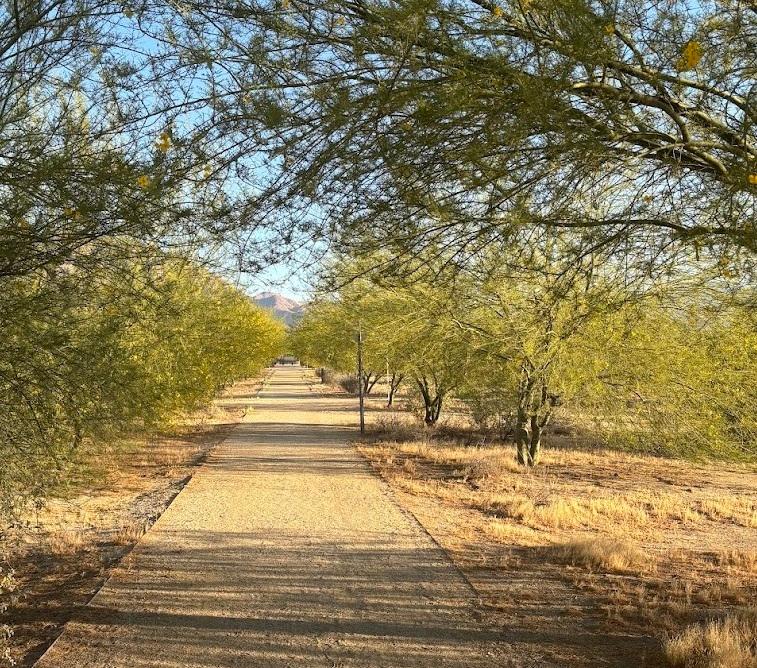
The library and the Borrego Springs County Park next door have a forest of Palo Verde trees, and most of them are beautifully in bloom right now.
| | |
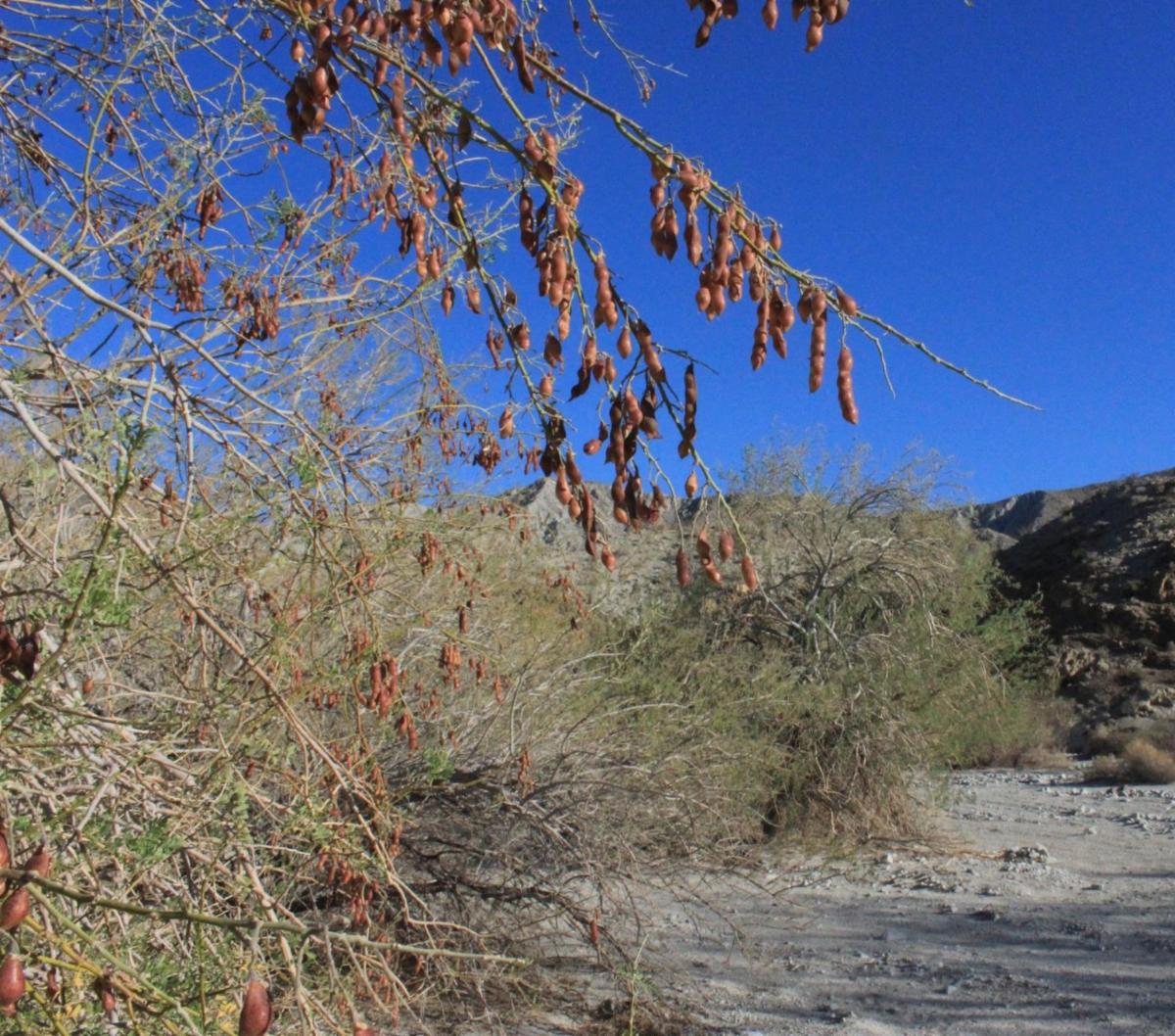
Desert Ironwood (Olneya tesota) is also blooming in the desert. Young trees have shiny, gray bark, but in older trees, the bark becomes brown and shredded. The sap is eaten by both hummingbirds and bees. The dried seed pods in the last photo are prized by rodents and don't last for long.
Its common name is accurate. The density is greater than water; therefore, it sinks when placed in water. It would be a mistake to build a raft from ironwood! In addition, the high density makes it difficult to work with, so the wood is only used for art pieces such as wooden sculptures which are extremely durable.
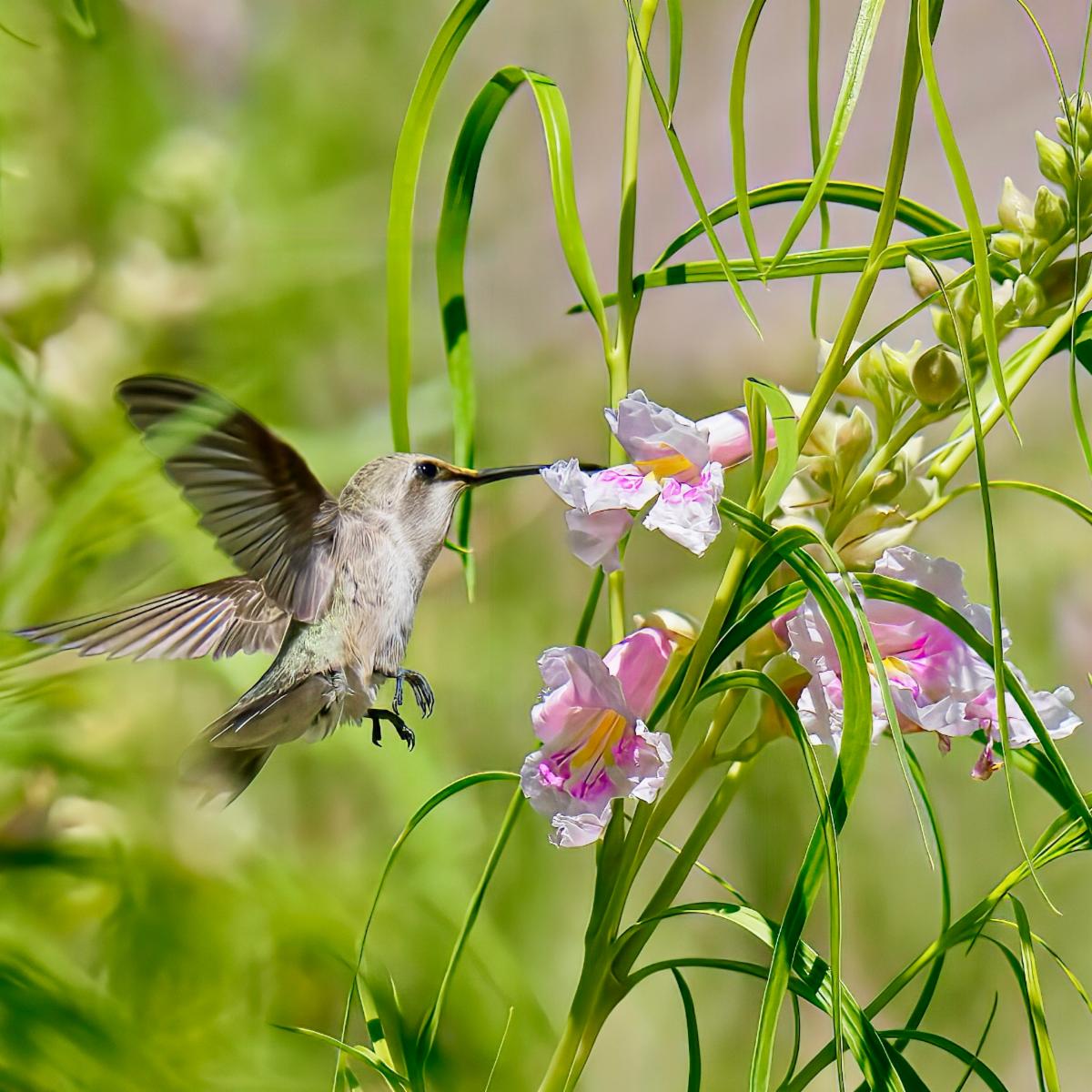
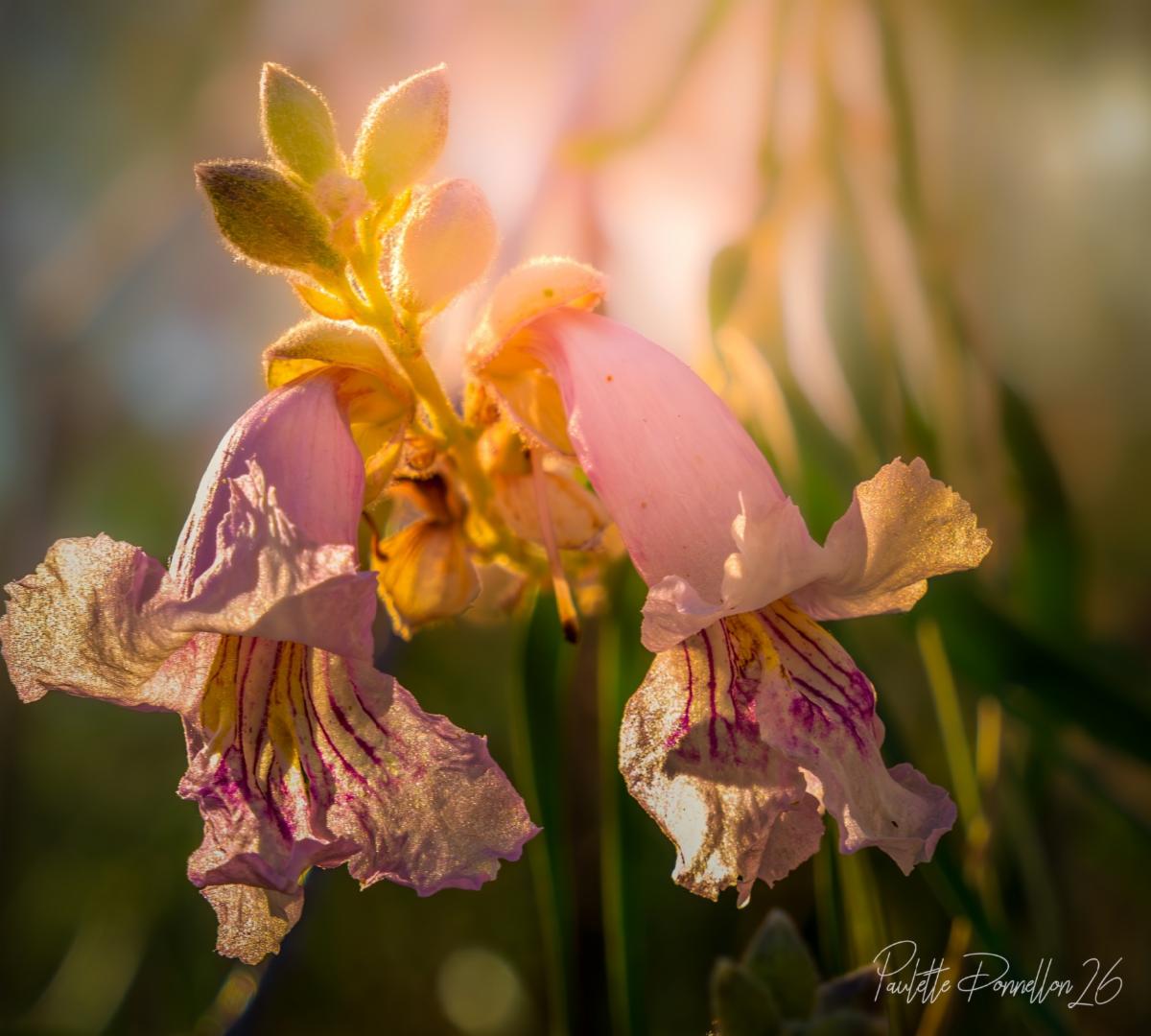
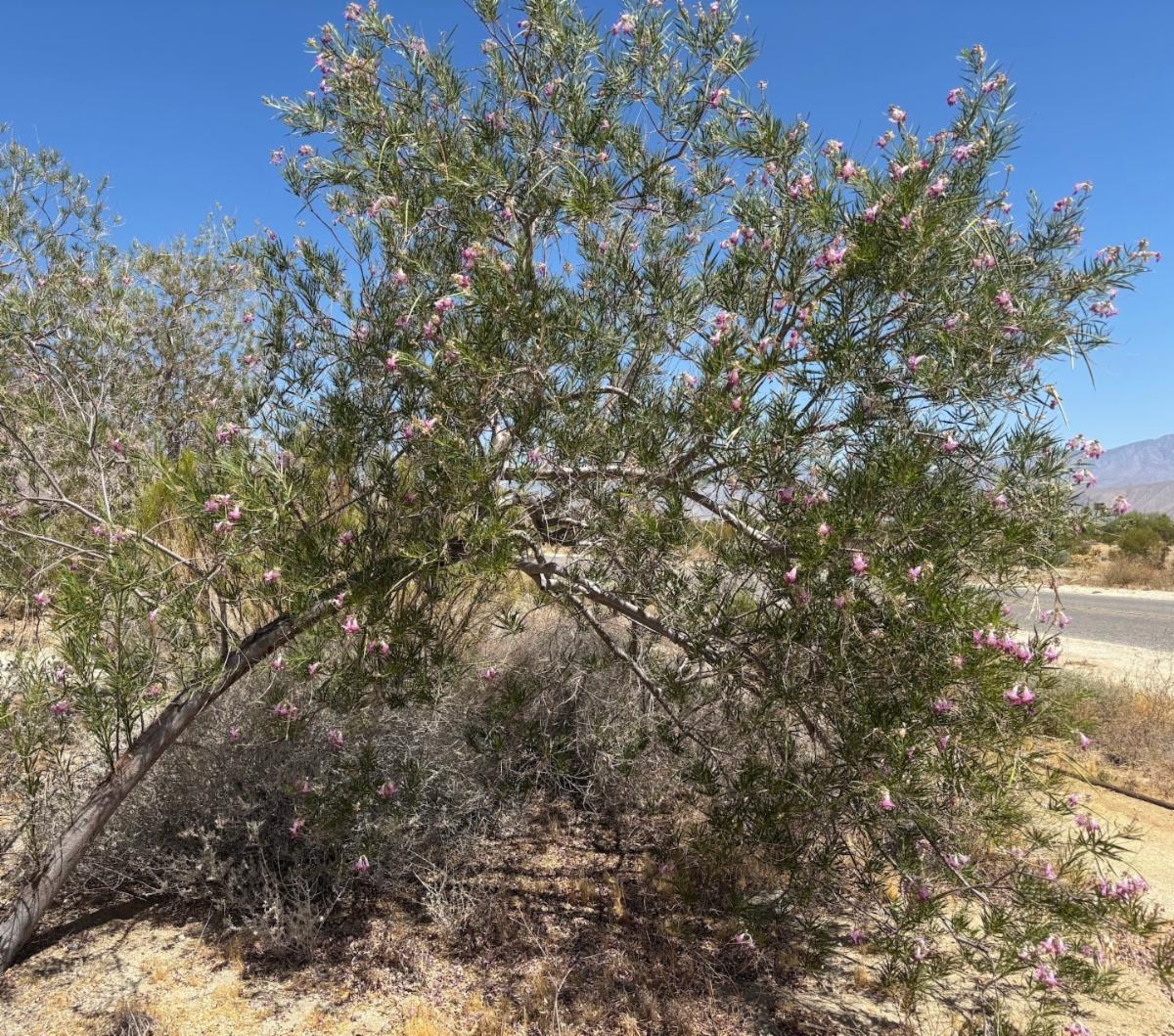
| | Young Costa's Hummingbird Pollinating a Desert Willow by Danny Cain | | Another desert attraction, currently in bloom, is worth seeking out. The Desert Willow (Chilopsis linearis) is a small tree, usually with multiple trunks and beautiful, orchid-like flowers in the spring. Their colors range from pink to lavender and white which are highly attractive to pollinators. While its narrow leaves resemble willows, it is in a different family. Desert willows can be found in the open desert, but they are also popular landscaping trees. Blooming specimens can now be seen at the library and neighboring county park. | | Tiny Desert Survivors: Desert Pupfish | | |
by Jim Rorabaugh
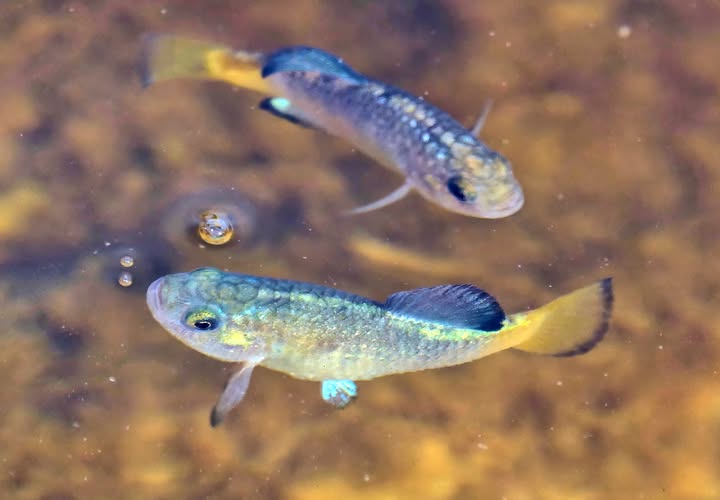
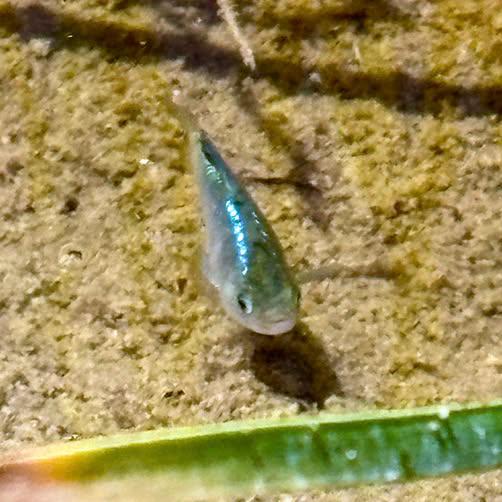
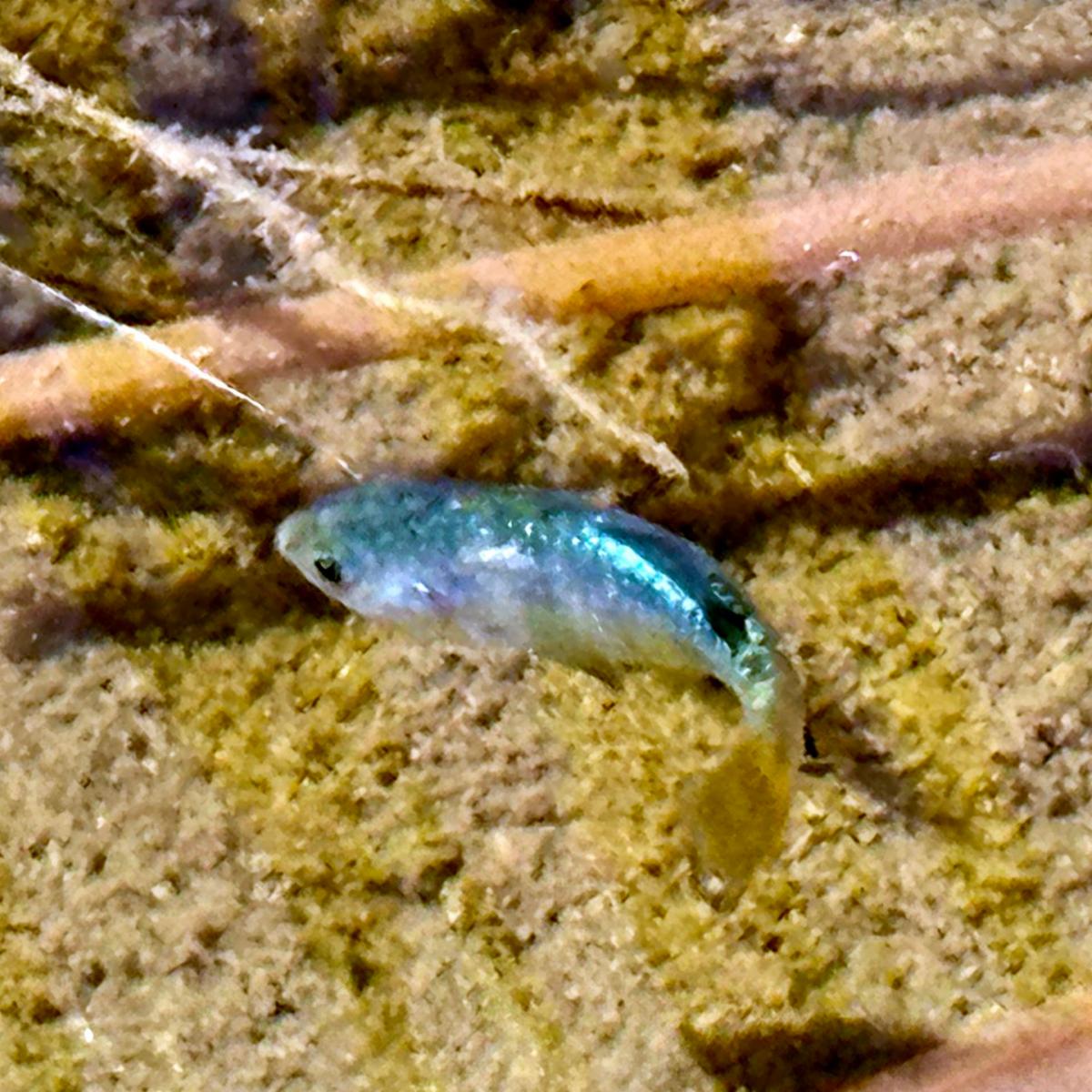
The Desert Pupfish (Cyprinodon macularius) is a bony, 3-inch long fish listed on the endangered species list (California in 1980; federal in 1986). These photos were all taken at the Pupfish Pond near the Borrego Palm Canyon trailhead. The pupfish here are not native, but the pond is considered a refuge.
| | During breeding season, pupfish males turn bright blue with a lemon yellow tail. Females are silvery to tan in color. Pupfish can handle water temperatures up to 108 degrees and salinity up to 68-70 parts per thousand (twice as salty as seawater). They typically live for about a year, sometimes up to 3 years. | | Lizard with a Delightful Name: Chuckwalla | | |
by Mitchell Sterling
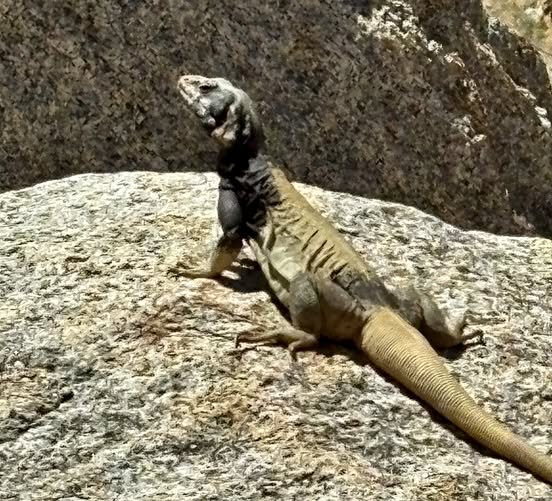
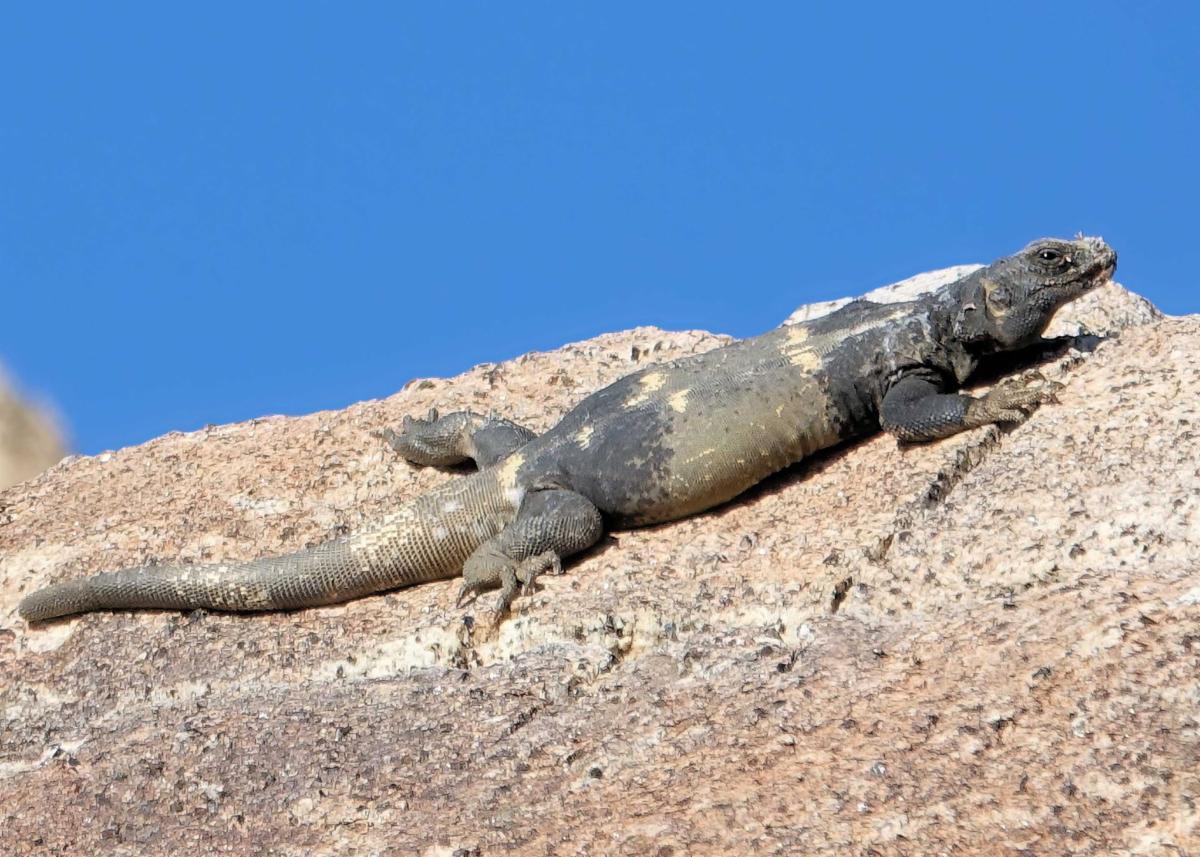
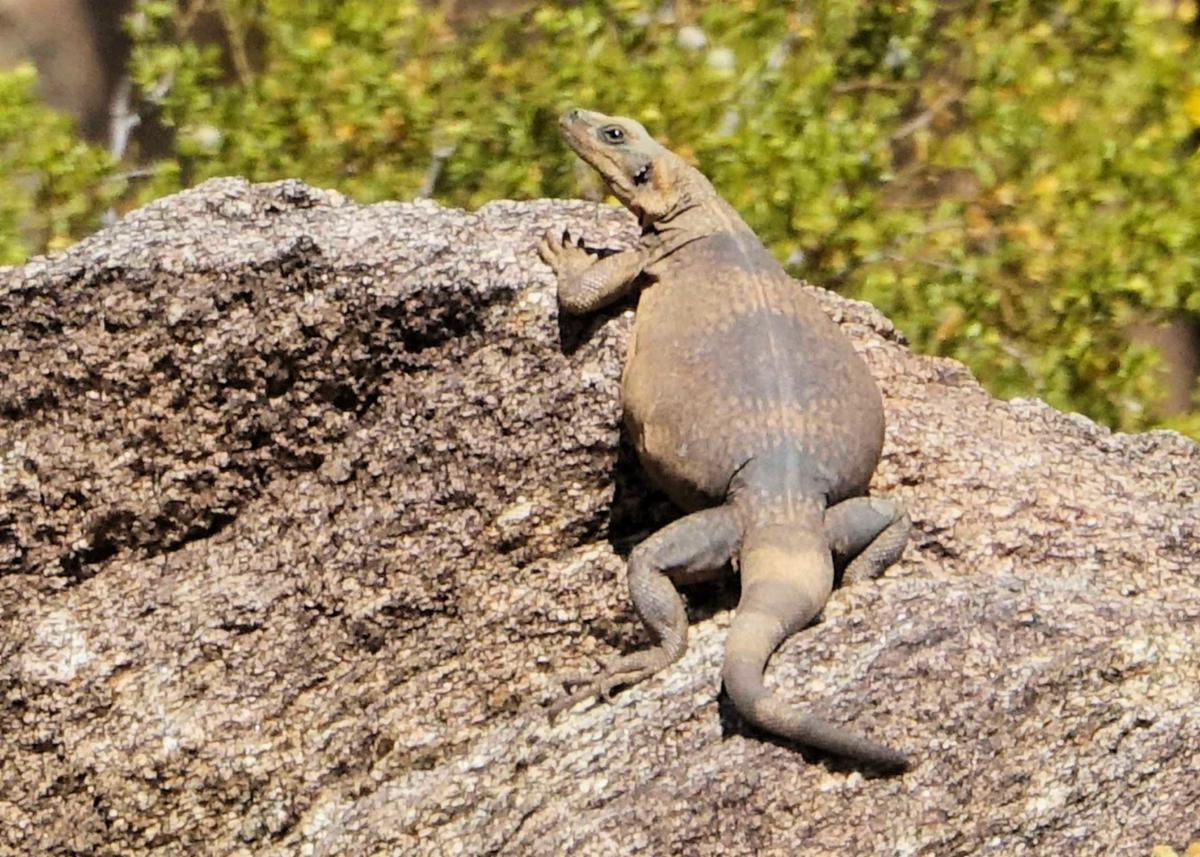
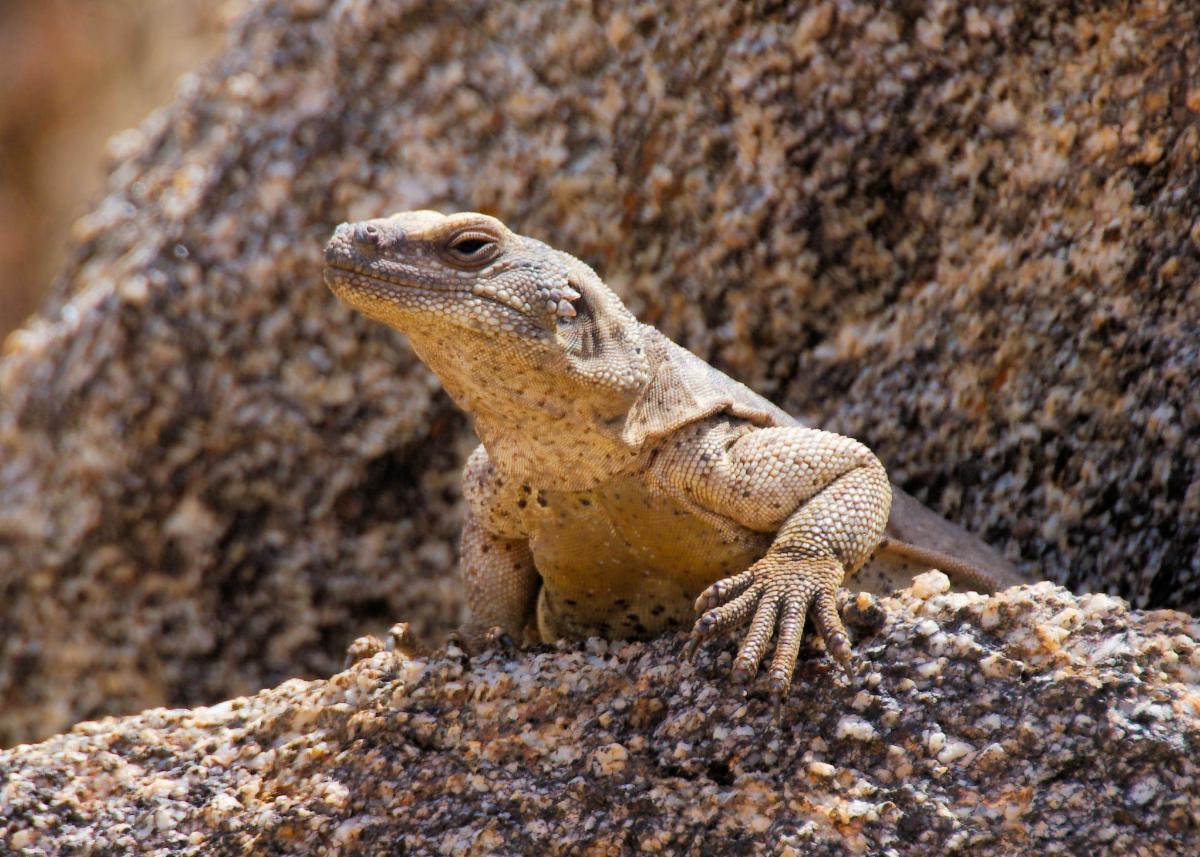
If you're hiking in a rocky area within Anza-Borrego Desert, and you see a fairly large lizard on the rocks, you may be looking at a Common Chuckwalla (Sauromalus ater). These stocky, wide-bodied lizards are typically 16-20 inches long with a thick tapered tail and loose folds of scaly skin, like you see in the photo above.
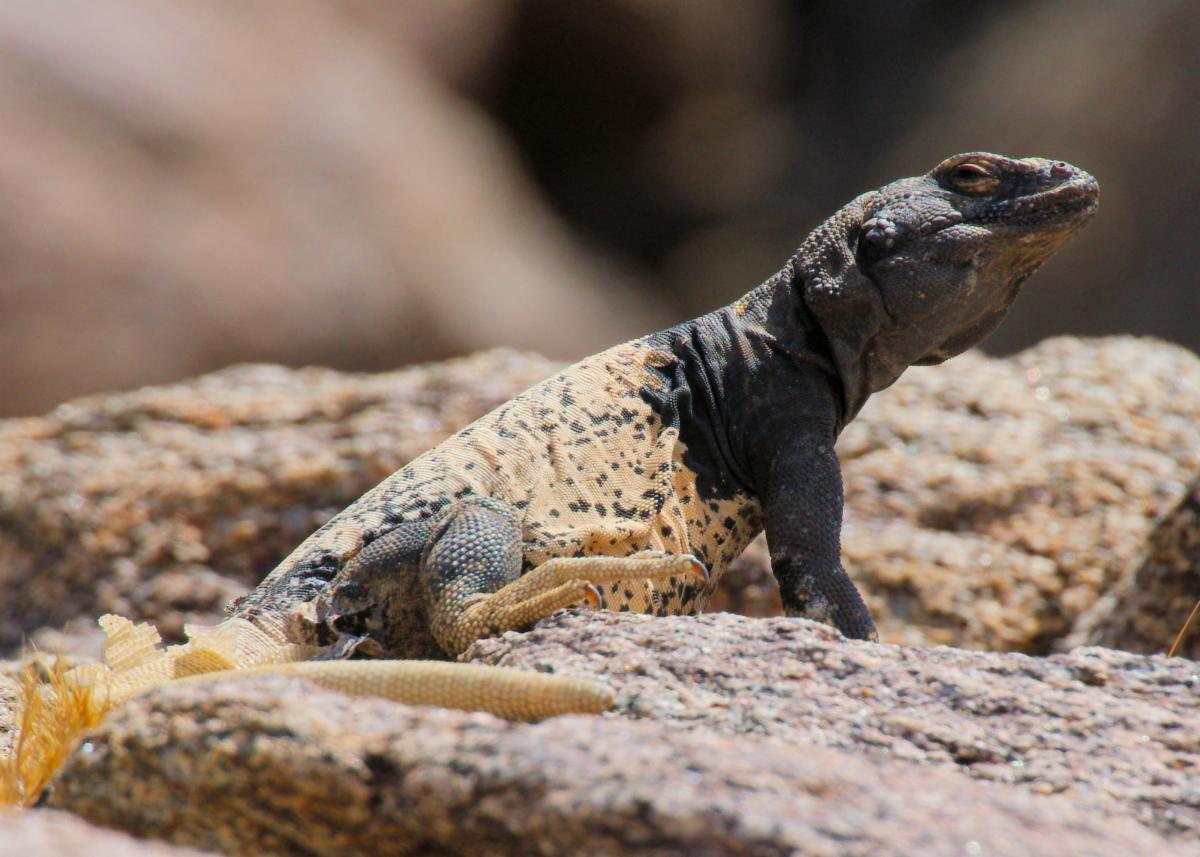
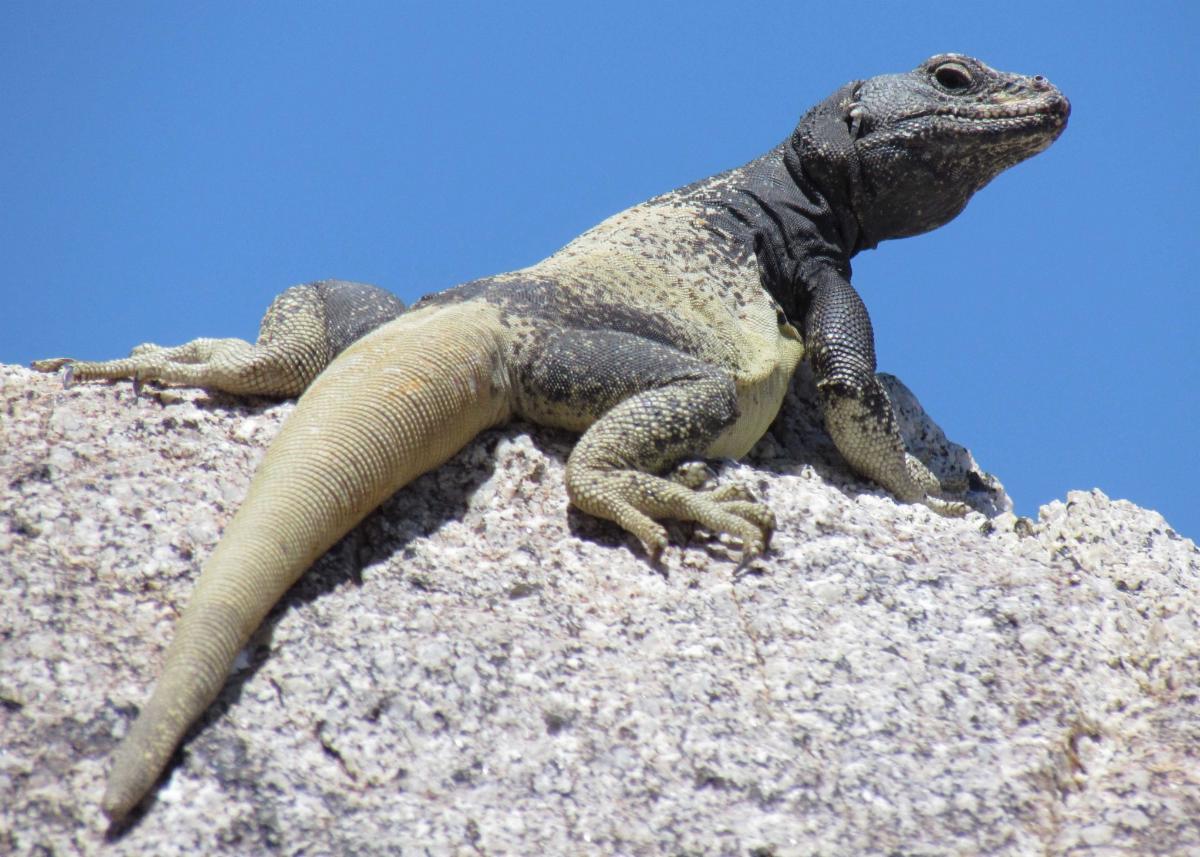
| | Male Chuckwallas by Jim Rorabaugh | | |
How can you tell a male from a female?
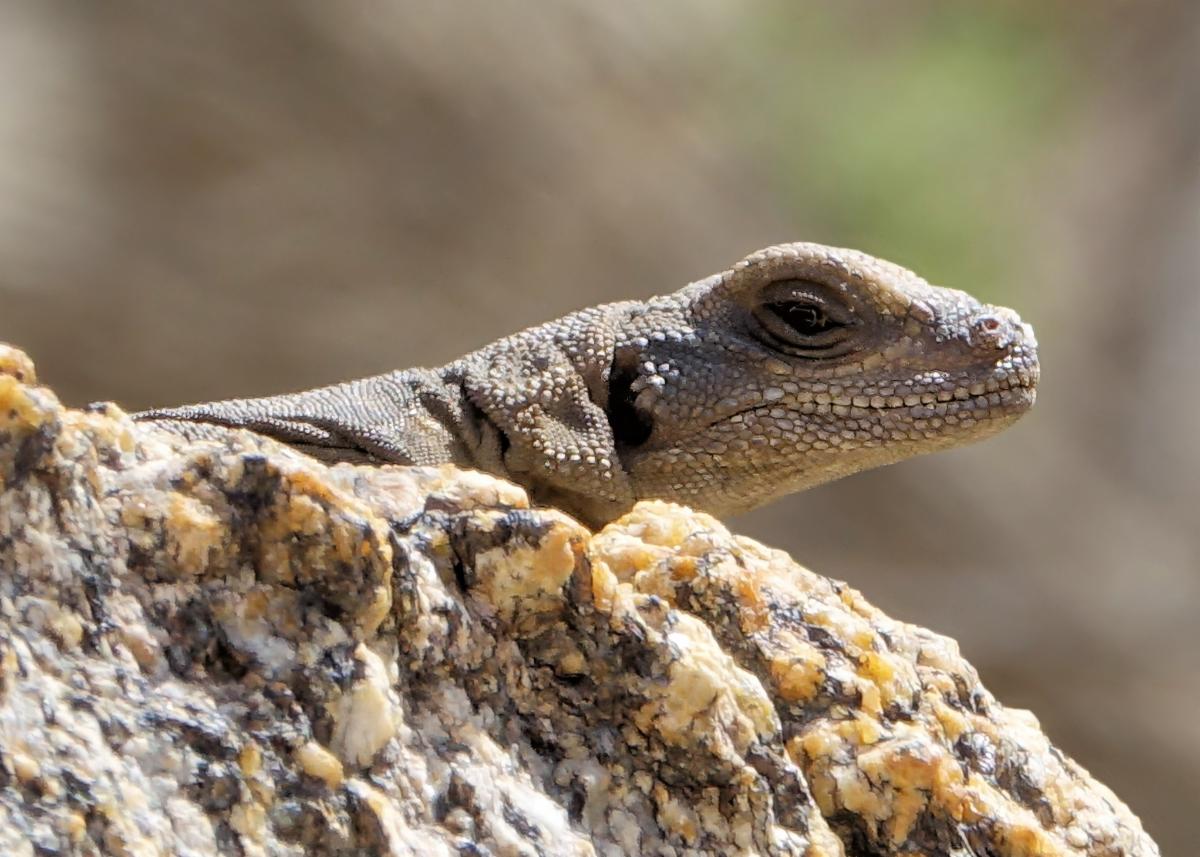
Males have black (or dark) heads, shoulders and limbs. Females are lighter in color, often with bands or scattered dots in contrasting colors (typically grays and yellows).
| | Female Chuckwallas by Jim Rorabaugh | | |
More Chuckwalla fun facts for you...
- Chuckwallas the second largest lizard in the Southwest. Only Gila monsters are larger at 22 inches.
- Chuckwallas are herbivores, dining on moist leaves and flowerheads. They prefer yellow flowers, such as brittlebush or creosote.
- Like many desert dwellers, chuckwallas get their water exclusively from their diet.
- During the summer, chuckwallas lay 5-16 eggs that hatch in late September.
- Chuckwallas can live to 25 years of age.
- When threatened, chuckwallas will deflate themselves, dive into a narrow rock crevice, and inflate their lungs to wedge themselves tight.
- Chuckwallas sneeze salt to prevent dehydration after munching on briny desert plants.
| | Mongolia! Our New International Trip for 2027! | | |
Join the Anza-Borrego Desert Natural History Association for an unforgettable journey through Mongolia—a land of breathtaking landscapes and rich traditions. Experience top highlights, attend the vibrant Naadam festival, and enjoy four domestic flights that minimize long drives across this vast country.
-
Ulaanbaatar – capital city; excellent museums; music and dance performance
-
Lake Khuvsgul – a beautiful lake in the forest, with opportunities to hike, boat, and see reindeer
-
Naadam Festival – with traditional wrestling, archery, costumes, singing, dancing
-
Gobi Desert – sand dunes, camel riding
-
Yolyn Am – canyon hike, with ice even in summer
-
Flaming Cliffs – site of dinosaur fossil discoveries
-
Terelj Nat’l Park – overnight in gers (nomadic tents)
| | See what's happening in Borrego! | | |
Start your desert adventure at ABDNHA's
Borrego Desert Nature Center!
Guidebooks, Maps (including flower maps!), Shirts, Hats, Gifts, Laminated Sculpture Guides, Jewelry, Local Art, Native Crafts, Children's Section, Southwest Fiction,
and ideas for day trips and sightseeing
| | | | |
Come see our SALE table!
Check out our end-of-season SALE table,
with selected items up to 50% off!
| | | |
Let Us Help You Plan Your Desert Adventure!
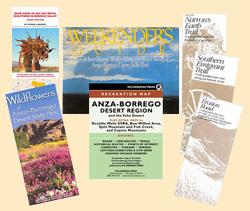
Available at the Nature Center. Click on the item to shop.
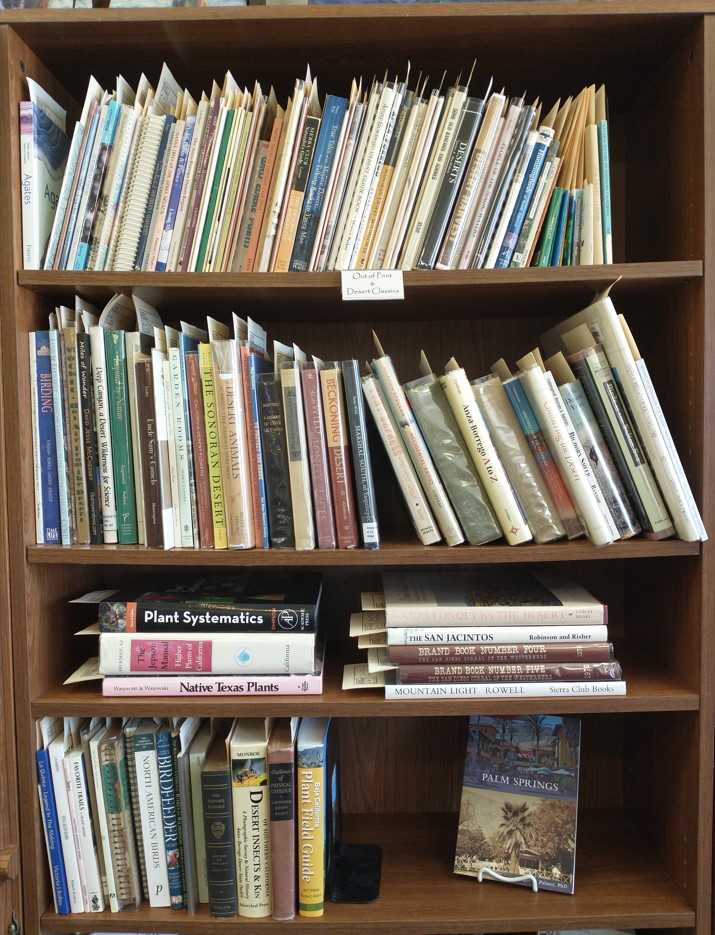
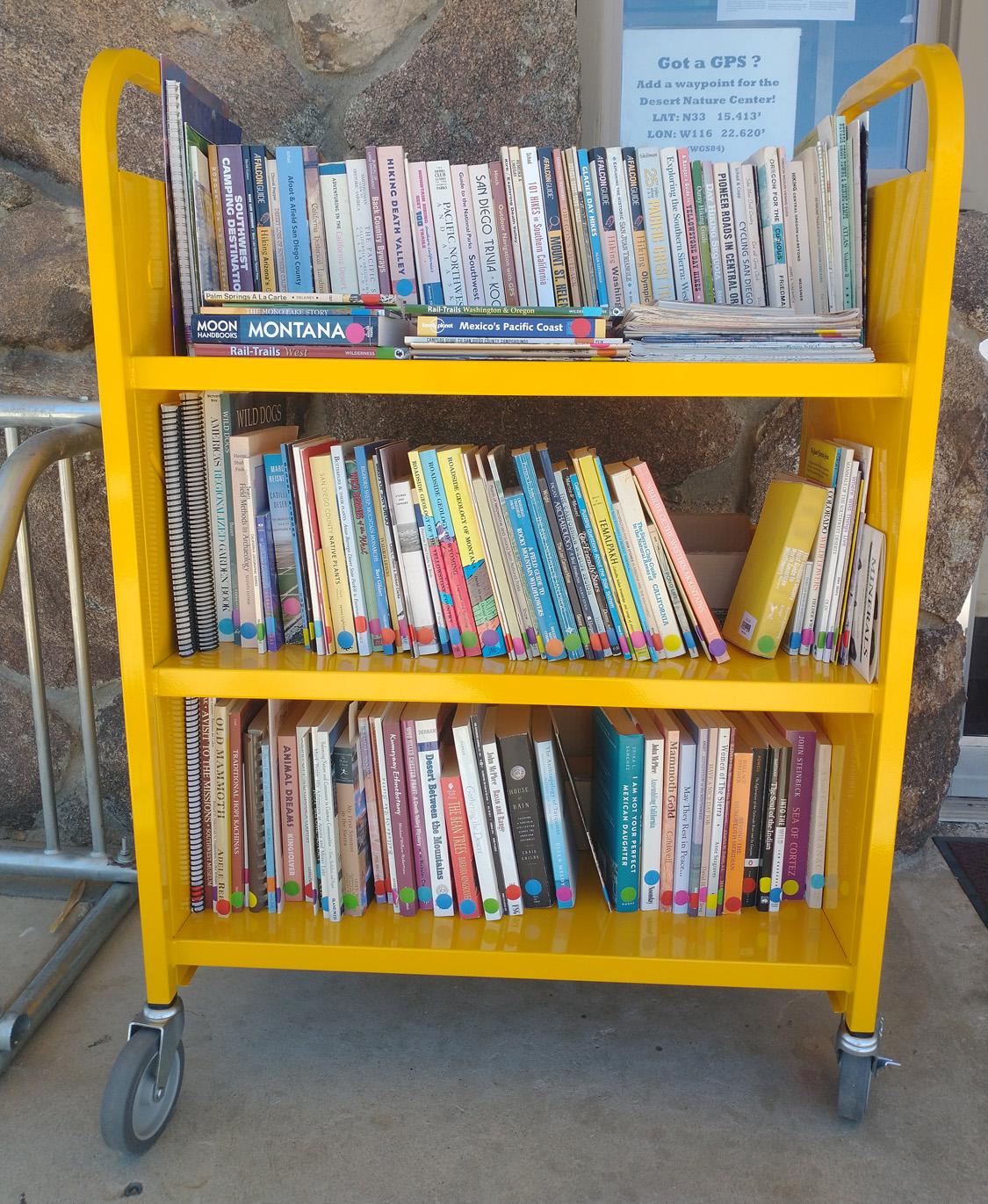
| | Our Desert Classics Shelf | We have many out-of-print and older editions of classic books on the desert, plants, animals, geology, history, literature and more! | |  | Look for our sale book cart outside, with lots of books, on travel, geology, plants, animals, astronomy and literature, all for $10 or less! | | | ABDNHA Members receive 15% off purchases every day! | | |
Borrego Desert Nature Center
652 Palm Canyon Drive, Borrego Springs, CA
760-767-3098
Just west of Carlee's
May Hours: Open Mon-Sat 9-5 & Sun 10-4
June Hours: Open Every Day 10-4
Your purchases support ABDNHA's programs & services throughout the year.
Thank you for your support!
| | Get free shipping on any order of $75 or more! | | |
Join ABDNHA
and Make the Desert a Part of Your Life!
| | Join ABDNHA and support an award-winning non-profit 501(c)3 nature education organization dedicated to interpreting and preserving the Anza-Borrego Desert. | |
As a member, you can enjoy all of the great benefits below:
- Stay informed about the desert and activities
-
The Sand Paper Newsletter - 5 per year
- 15% discount at Nature Center and ABDNHA's Attic Shop!
- Special member appreciation events and volunteer opportunities
- Calendar of activities & reduced price on lectures, hikes, & field trips
- Friendship & camaraderie with other desert lovers, and have a great time
- Support of nature education & desert conservation
Join or give a gift membership anytime throughout the year!
Membership is for 12 months from the month you join.
Join ABDNHA and make the desert a part of your life!
| | Donate Your Vehicle to ABDNHA! | | |
Do you have a car, truck, golf cart, RV, trailer, motorcycle, or boat sitting around that you no longer use? Too many miles? Needs repair? Make space in your garage or driveway!
Donate your vehicle to ABDNHA!
Thank you to our members who have donated their vehicles!
| | Vehicle donations are tax-deductible, and we make it easy with free pickup and by providing you with the necessary tax receipts. | | Join ABDNHA as a Business member! | | |
Promote your business and show your support of ABDNHA!
Display your business on the ABDNHA website,
in the Sand Paper newsletter and the bi-weekly Desert Update emails.
| | |
Anza-Borrego Desert Natural History Association (ABDNHA, pronounced
"AB-NA") is an award-winning, community based, educational non-profit 501c3 organization, founded in 1971.
| | | |
ABDNHA's Mission:
Enhance the understanding, appreciation, enjoyment, and conservation of the
Anza-Borrego Desert and
surrounding area.
| | |
We invite you to join ABDNHA
and make the desert a part of your life!
| | ABDNHA offers information to visitors and programs to enrich the lives of those who live in and visit the community of Borrego Springs. We sponsor approximately 150 hikes, rides, lectures, tours, special events, and educational programs each year, and we lead conservation and citizen-science programs, including the Borrego Dark Sky Coalition and the Borrego Valley Hawk Watch. | | | | |