|
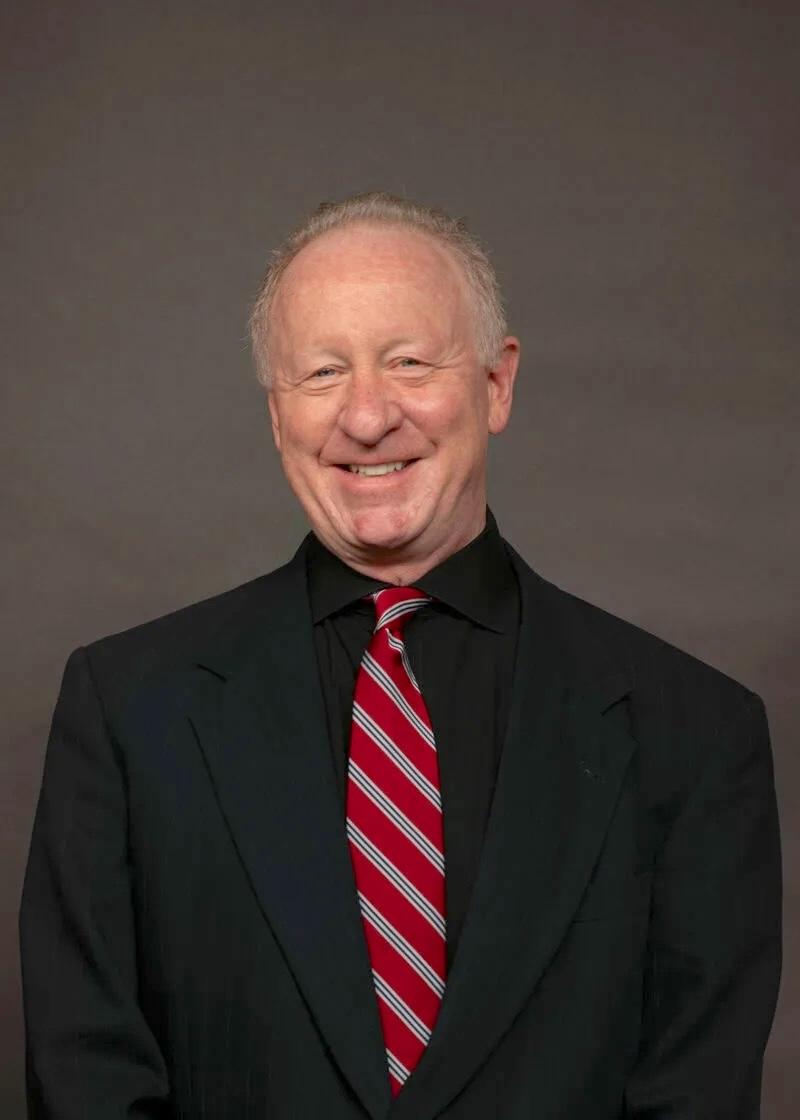
Steven L. Kelley has led Ellenville Regional Hospital as President and CEO since 2003, when he was sent in to turn around a hospital that had just entered its second bankruptcy in four years. Two decades later, the 25-bed Critical Access Hospital in Ulster County has posted 20 consecutive years of profitability, won national awards for quality and patient safety, and grown into the third-largest employer in the Ellenville area.
Now Kelley is bracing for the next big test. The Healthcare Association of New York State estimates federal healthcare cuts will cost the state nearly $13.5 billion annually, and Governor Kathy Hochul's office has warned that up to 1.5 million New Yorkers could lose coverage. For a small rural hospital that has spent 20 years reinventing itself, the question is no longer whether to adapt, but how fast.
A different kind of hospital
Ellenville Regional doesn't try to be everything to everyone. That's a deliberate choice Kelley made when the hospital converted to Critical Access status, a federal designation for small rural hospitals with no more than 25 beds.
"It is much better to have a narrower corridor of care," Kelley said. "Critical access is not about critical care as much as it's about critical access to the healthcare system."
Under that designation, Medicare reimburses the hospital based on a cost report filed each year. "Because of sequester, it's at 99% of cost," Kelley explained. "It used to be 101%." Since Medicare accounts for roughly 44% of the hospital's payer mix, that cost-based reimbursement provides a foundation of stability most hospitals don't have.
But the designation alone doesn't explain Ellenville's turnaround. Kelley said the hospital had to fundamentally rethink what kind of facility it was going to be. When the building was originally constructed, Kelley estimated about 90% of revenue came from inpatient care. Today, that number is closer to 15%.
"We are an outpatient business for the most part," he said. "We had to change the paradigm of what kind of a hospital we are and figure out what we could do safely."
That reconfiguration also meant rethinking the hospital's relationship with bigger systems nearby.
"We don't compete with bigger hospitals at all. We are a customer to them because we send them patients," Kelley said. "Instead of them trying to take from us, we are giving to them. The oldest rule of business is if you don't take care of your customer, somebody else will."
Within that narrower corridor of care, Kelley insists Ellenville does not cut corners on technology. The hospital recently installed one of the largest-bore MRI machines in the world.
"We got ours in December, and it was the fourth one in New York State. Two in Long Island, one in Buffalo, and Ellenville, New York," Kelley said. He added that Ellenville operates what he described as the fastest emergency department in New York State, with average visit times around two hours.
An economic anchor
Beyond healthcare, Ellenville Regional functions as a critical engine in the local economy. The hospital currently employs 277 people, the most in its history, and Kelley said there are no current openings.
"We are the third-largest employer in the community after the Department of Corrections and the school district," he said. "We're the largest private organization in the community."
That matters for more than payroll. When companies evaluate where to locate, Kelley said, they look for two things in particular: schools and healthcare.
"If you don't have one of those two, you're probably not going to have a lot of businesses there, and they're not gonna stay there," he said. "This hospital was almost closed twice, and if that had happened, it would have had a tremendously detrimental effect on the community."
Staffing through the post-pandemic crunch
Healthcare staffing has been one of the most discussed challenges of the post-pandemic era, but Ellenville's experience runs counter to the national trend. The hospital has low turnover, which Kelley attributes to a deliberate cultural focus he traces back to his mentor, Tony Marmo, the former leader of Kingston Hospital.
"This is Marmo stuff. He was all about the culture," Kelley said. "We've kind of built that here."
The hospital has also positioned itself as a teaching facility, modeled on the country's most respected medical institutions.
"If you were to name the finest hospitals in the world, you might come up with names like the Mayo Clinic, Johns Hopkins, Mount Sinai, Mass General, MD Anderson. What do all those hospitals have in common besides being big? They're all teaching hospitals," he said. "Our goal is to be the finest small hospital in America. In order to do that, we decided we really need to be a teaching hospital."
Ellenville now maintains relationships with about 28 colleges and universities, along with BOCES and local schools, providing training experiences for nursing, physical therapy, and radiology students. Kelley said that pipeline does more for recruitment than any traditional hiring strategy.
He also expressed enthusiasm about Marist University's recently announced $100 million science and health initiative.
"It's a fine school, a really good school," Kelley said. "What could be better for the Hudson Valley than to have that?"
Bracing for federal cuts
Kelley spoke candidly about the coming federal Medicaid cuts, which he expects to hit harder in 2026 than in the current fiscal year.
"Fifty percent of New York State hospitals lost money on operations last year," he said. "Another 25% or so did not make a 3% sustainable margin. Most businesses don't think of 3% as much, but in healthcare, we feel you need to make at least 3% just to keep up with inflation."
Kelley pointed out that about 65% of hospital costs are labor, and most of that labor is unionized, which limits how quickly hospitals can cut expenses. He also took aim at for-profit insurance companies, which he said routinely deny pre-authorized claims and create months of float in the system.
"They should really be managing risk and they should be paying the bills," he said. "They hold a lot of our cash for five or six months."
Still, Kelley framed the coming crisis as an opportunity for innovation the industry wouldn't otherwise pursue.
"When you have an industry that is put under enormous financial constriction, that means there is a great opportunity for folks that can innovate and change," he said. "It's sort of like if you haven't been to the gym for a while. At first it hurts a lot, but then you become strong."
The longer game: prevention and AI
Kelley argued that the only sustainable path to lower healthcare costs is needing less healthcare. Ellenville runs a population health program built on four pillars: diet, exercise, risk reduction, and the many social determinants of health.
"The only way we're gonna drive down costs is to not be needed as much," he said. "So much of healthcare is preventable as to having major costs."
He also pointed to artificial intelligence as a tool that could ease one of the biggest hidden costs in medicine: documentation.
"Primary care doctors are spending at least half of the time of their day documenting what they do the other half, and many of them have to work three or four hours in the evening after work to finish their documentation," Kelley said. "Nobody went to medical school to be a documenter."
If AI could handle documentation reliably, he said, providers could see twice as many patients in the same workday, or spend twice as much time with the ones they have.
Asked what a thriving Ellenville Regional Hospital looks like five years out, Kelley returned to the theme that has guided his 23-year tenure.
"We have had to improvise, adapt, and overcome to survive," he said. "I'm wary that change without vision may end up with a lot of bad outcomes. But I'm still very optimistic that change is good."
|