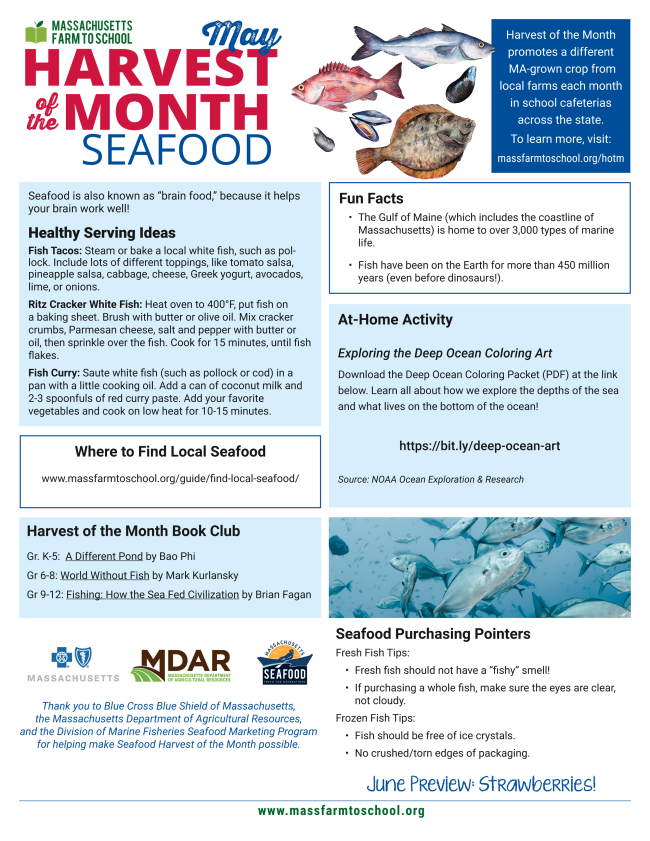
Each month the Cambridge
in Motion team sends a flyer with fun facts and a family newsletter to celebrate the Mass Farm to School partnership. We hope your family enjoys the fun and learning opportunities within!

This month we are learning about seafood! Enjoy the fun resources, recipes, lessons and activities that keep your family exploring and thriving!

Follow us on twitter


Fun Seafood Facts!
_____________________________________________
Fish may live in water, but they breathe oxygen. Fine blood vessels in their gills diffuse oxygen through their membranes.

Except for sharks, most fish do not have eyelids! This may sound as though fish don't sleep, however, they will float, find safe spot in mud, or some will build a nest of sorts for rest while remaining aware of danger.

American lobsters can be found from Newfoundland to North Carolina! About 80% of American lobsters caught are from Massachusetts, Rhode Island & Maine.

Shellfish really do clean the water around them! They are filter-feeders and remove particles from the water by pumping water past their filtering apparatus and capturing nutrients from the plankton they eat. They help filter pollution from land and may be used in water quality restoration projects. 

It is recommended that everyone eats
two servings (or more) of seafood per week! Seafood is a major source of
omega-3 fats (healthy fats) and is also
rich in other nutrients such as vitamin D
and selenium, high in protein, and
low in saturated fat.

May Harvest of
the Month Video!
Watch our Cambridge in Motion monthly video series featuring the Harvest of the Month (foods that are grown locally to
New England)! You'll watch our public
health nutritionist bring to life some
fun facts, make a quick snack, and
give a nutrition or cooking tip!

Joke of the Month

Q: What kind of fish belongs in a circus?

A: A clown fish!
Videos & Family Learning!
(1) Sustainable or Not? Look up any fish through FishWatch and learn if it is a sustainable choice. This site explains why a fish is/isn't sustainable and is a great learning tool!

(2) MA Seafood Availability Chart: Find out which seafood options are in season and super abundant so you can make the freshest choices! Also helpful is this one-page Northeast Guide to sustainable choices by Monterray Bay Aquarium's Seafood Watch!

(3) Sea to School Video: Traces the seafood on a cafeteria tray all the way back to the fisherman who caught it. Great for upper elementary audiences, it addresses many important themes from the history of the fishing industry in New England to the environmental issues behind fishing regulations!
For Teachers!
(1) Exploring Sustainable Seafood (Grades K-2): What are shellfish? How are they different from one another? Students will learn how to identify different shellfish native to Massachusetts.

(2) Seafood Lesson: Life Cycle of a Fish (Grades 3-5): Students will understand how the life cycle of fish differ from that of other farmed animals, how they grow and develop, and think critically about how their life cycles affect how we harvest them!
Eat Fish for Healthy Fats!
You've likely heard that omega-3 fatty acids are good for your health. But DHA (docosahexaenoic acid) in particular goes straight to your head! Brain and nervous system tissues are partly made up of fat, and research suggests these tissues have a special preference for DHA. When we eat enough DHA over our lives, research shows improved memory, improved learning ability, and reduced rates of cognitive decline. To get the most brain benefits of DHA, you need to eat enough DHA-rich foods regularly. It's recommended to eat two 4-ounce servings of fish per week. Oily fish such as wild salmon, albacore tuna, mackerel, herring, and farmed trout are great catches with DHA to offer! When you get cooking, think broiling or grilling for healthier methods and skip the deep frying except on rare occasions. Enjoy more fish that have less of an environmental impact and have less mercury, such as sardines and wild Alaskan salmon.
Food Waste Tip of the Month

Did you know up to 40% of fresh and frozen sea food is
wasted by consumers in the U.S.?

Food Saving Tip: Plan ahead. Be sure to prepare & serve fish soon after purchasing. Consider recipes that you can prepare from frozen without the need to defrost. Move food that needs to be eaten first (i.e., it will go bad first) to the front of the fridge. This way you're more likely to see them and eat them before they go bad.

Delicious Recipes!
This Spicy Mediterranean Tilapia recipe video is for those who love to watch first or follow along!

Tuna and Apples? Together? Yes! Try it on whole grain bread!

Try these Tasty Tuna Cakes for a new twist on canned tuna that
the kids will love!

Try this Honey-Soy Glazed Salmon for a fish dish that will please everyone at the table!

Super easy-peasy Dijon Salmon pairs great with your favorite green veggie and rice!

Shrimp with Cucumber and Mint makes a great salad!

This Simple Baked Cod & Tomatoes recipe will be your favorite weeknight dinner - just add a grain to complete the meal!

Shrimp Creole is packed with flavor and the seasoning can be made ahead of time!
Children's Book Spotlight

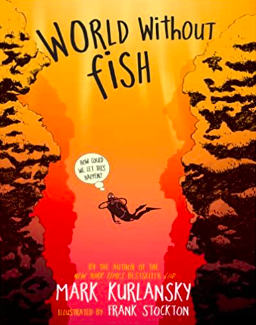
World Without Fish

Written by Mark Kurlansky
Illustrated by Frank Stockton

For grades 6-8
"World Without Fish connects all the dots—biology, economics, evolution, politics, climate, history, culture, food, and nutrition—in a way that kids can really understand. It describes how the fish we most commonly eat, including tuna, salmon, cod, swordfish—even anchovies— could disappear within fifty years, and the domino effect it would have: the oceans teeming with jellyfish and turning pinkish orange from algal blooms, the seabirds disappearing, then reptiles, then mammals. It explains why fish farming is not the answer—and why sustainable fishing is, and how to help return the oceans to their natural ecological balance."
Click Here to download the Harvest of the Month Family Newsletter!
Cambridge Public Health Department

Follow us on Twitter
@CambMotion