Letter from the Executive Director

Dear Randy,


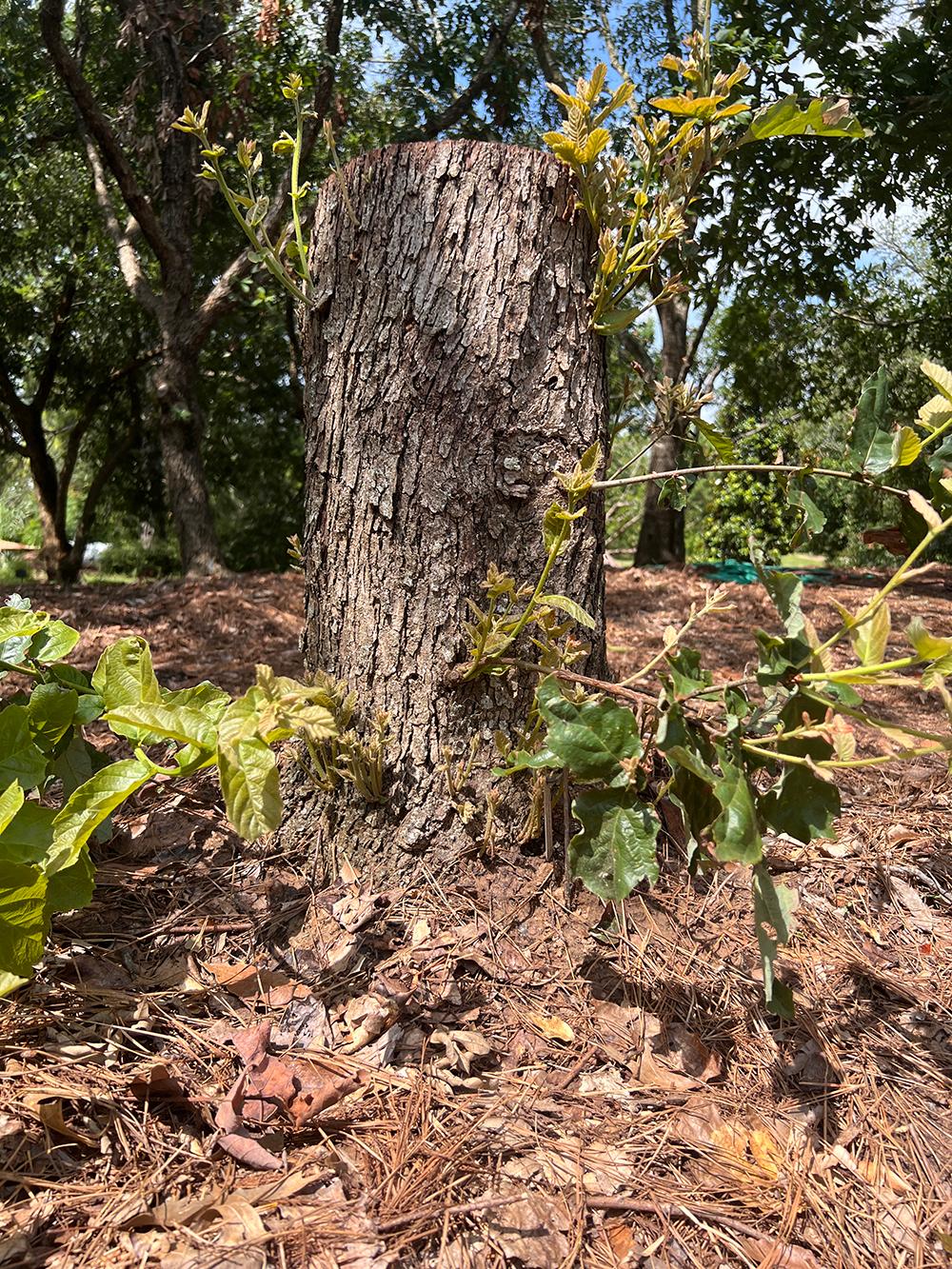
I want to talk about the Garden post-derecho. First let me start by thanking the Garden Conservancy and 61 individuals who responded to our request for financial assistance to aid the cleanup, donating over $15,000 to the cause. This generous support is so gratifying. It’s easy after living with the damage from a severe weather event to feel downtrodden. The response from our community of supporters lifted all of our spirits and also greatly lessened the blow to our budget. With your help we were able to purchase four shade cloths to replace the ones that were ripped by the winds. Your donations also paid for an arborist to work for three full days in the Garden, and for other crews to cut down and haul trees and branches. Thanks to the hard work of Adolfo, Ricardo, Agustin, and Luke, the publicly accessible part of the Garden has been cleaned up. We’ll be planting some replacement trees when the weather cools in the fall. For now, we’re adjusting to the increased amount of light and space in the Garden. Though those of us who spend almost every day here notice the difference, I imagine most visitors to the Garden will not be as shocked by the current state of the Garden as one, including me, might have suspected after looking at the images taken immediately after the storm. The rare Quercus sp. (above) that was collected in Mexico was completely toppled. We raised it back up and then it blew down again. While down for the second time we cut it and then put the stump upright and as you can see, it's producing a number of suckers. For it and a few other trees, it will be wait and see.


As I've mentioned before, it’s helpful to remember that the Garden owes its singularity, in large part, to another extreme weather event - a tornado - in 1983. John and Carl responded to the reality of the Garden's condition after the tornado and started researching native Texas plants that would thrive in the newly sunny garden. This research led them to Lynn Lowrey and an invitation to a trip to Mexico which opened the door to years of collection trips and an entirely new dimension and direction for the Garden, one that ultimately garnered John and the Garden a place in American horticultural history. 


There are a couple of key related takeaways in this example. First, though John gave himself some time to mourn the garden he lost, he eventually determined he had to continue, taking advantage of the clean slate provided by the tornado and creating something that grew from his expanding interests at that time. The previous incarnation of his garden owed more to the gardens he would have been familiar with growing up in South Carolina. His curiosity, positivity, and imagination allowed him to create something wholly new and personal.


Secondly, after the tornado, John saw the garden for what it was, not what he wished it was. The acceptance of the reality made it easier for him to consider options. He wasn’t stuck trying to duplicate something that was no longer viable. 


These key points are instructive today as we enter into another summer that began with the derecho (a storm type I confess I had never even heard of before May) and record heat index temperatures. We have had ample rain but will that pattern continue? Or will this be the third summer in a row we experience drought conditions along with record high temperatures? Like John and Carl, we will benefit by being realists about how to keep the Garden sustainable in the increasingly volatile state of our climate. There’s little need to debate that volatility at this point, the data is clear. I think we also have a visceral understanding of it through our experience. Here’s the way On Being podcast creator and host, Krista Tippet, began an interview in September with Christiana Figueres, the Costa Rican diplomate credited with making the 2015 Paris Climate Agreement possible. 


In the world in which I was born, and maybe you, too, the weather was the stuff of small talk. The seasons of the year were the underlay of planting and harvesting food that nourishes and fuels our bodies, of course. But seasons have also been the very mundane, predictable rhythm of our days and our lives. Now, the loss of seasons as we knew them, the loss of storms as we knew to navigate them, is an experience we are all sharing in all the places we inhabit and love. This is closer to home than every fight we have about climate and the science around it, the meaning of it. We feel this in our bodies, the young among us most keenly. It leads some of us to those fights and some of us to retreat within, overwhelmed.


Indeed, we each respond to this challenge in different ways – some by denying it exists, some by possibly overstating its impact, and perhaps the majority of us by feeling overwhelmed and paralyzed into inaction. I often feel the latter, but I also live in a garden that is an exemplar of action and resiliency, and it is impossible not to be swayed by its existence. In that same Kristi Tippet interview, Figueres talked about scientific research that's proving the power of positive thinking to guide positive outcomes. She emphasized that at a time when we have the technology, money, and resources at hand to significantly address the challenges of climate change, a positive mindset is critical to the success of our efforts to do so.


In a big picture perspective, I suspect it would be wise to view the climate not as a punishing foe, but as a collaborator instructing us (if somewhat sternly) on the appropriate direction of the Garden. I think if we can take inspiration from John and remain open to its cues, with creativity and some fearlessness we can shepherd our Garden to remain a beautiful, inspiring, and sustainable refuge, even if we don’t know exactly what that looks like at the beginning of the summer of 2024.


Warm regards,

Saturday, June 22nd, Last Open Day until September

Today will be the last Open Day until September. We will offer docent-guided tours at 10, 11, and 1 pm.


The Nursery will be open for plant sales from 9 - 3.


Members may walk the Garden at their leisure from 9 - 3. If you are not a member but want to take advantage of enhanced access and audio tours of the Garden, early admittance to sales events, and discounts on plant sales, you can join below.

I want to become a member!


Exceptional Volunteers

We want to highlight two exceptional volunteers who have devoted hours and hours of their time and expertise to helping our mission to preserve, share, and advance the horticultural and artistic legacy of John Fairey. Both have been active at the Garden for years, and both are deserving of our deep respect and appreciation for all they’ve done for the Garden and our mission. We’re fortunate to have committed volunteers of this caliber. Thank you Cintia and Paul for your service.

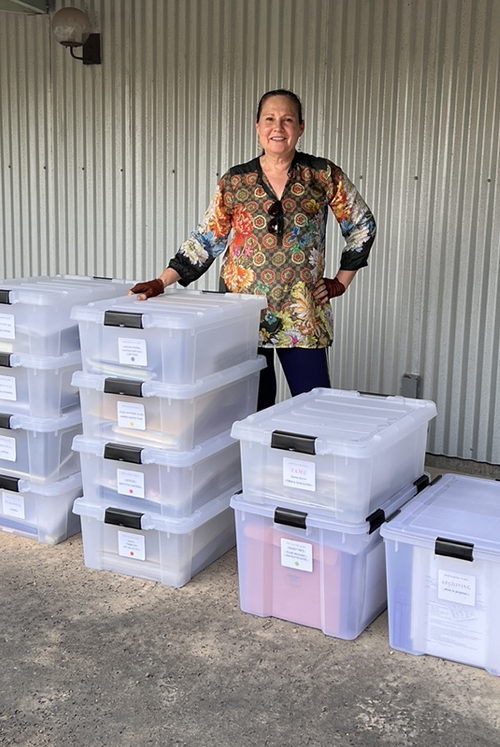
Cintia Castano


Cintia was a close friend of John’s and after John passed away in March of 2020, Cintia offered to collect and organize John’s papers, photographs, slide talks, and other relevant documents. A couple weeks ago she delivered eleven boxes of meticulously organized material from John’s collection. It is such a pleasure to have this material at hand and organized. No doubt there are treasures that lie within those plastic bins.

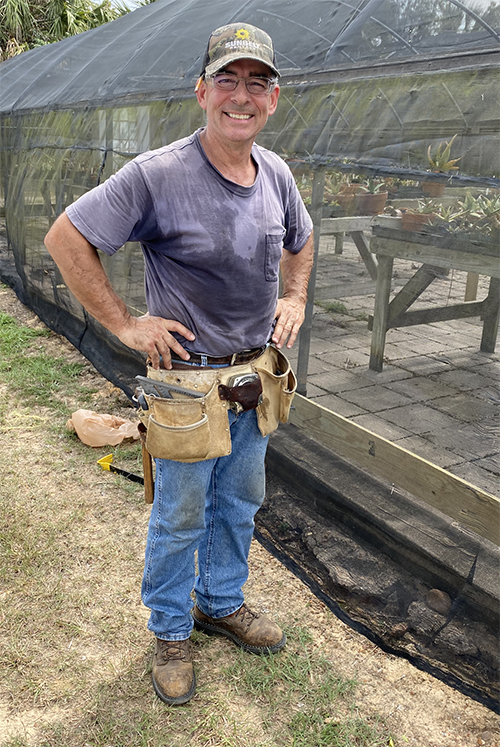
Paul Merritt


Paul has been a volunteer at the Garden for a long while and was featured him in our newsletter a couple years ago. His appearance at the Garden almost every Thursday is such a luxury for us. Paul is always willing to accept whatever random task we ask him to do – whether it’s cutting down Chinaberry trees, taking on building projects, refurbishing greenhouse doors, manning the registration table at Taking Root, installing shade cloth, or any number of projects which he expertly tackles with skill and good humor.


Letter from the Nursery Manager


Howdy everyone!


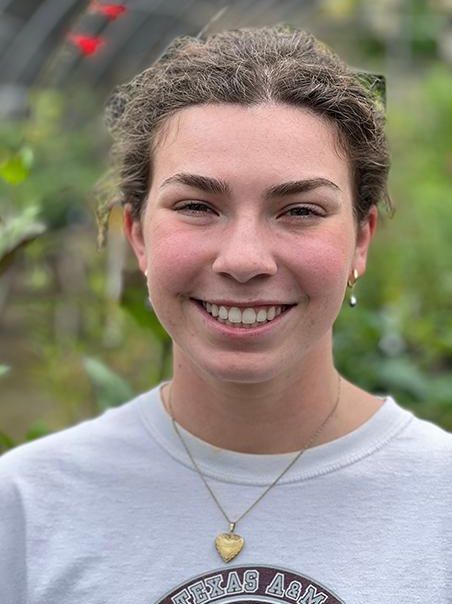
My name is Ashlyn Mashburn and I am the new Nursery Manager and Horticulturist at The John Fairey Garden. I graduated from Texas A&M University in May with a Bachelor’s in Horticulture, and I couldn’t be more excited to have started working full-time! From here on, I plan to contribute to the newsletter about what’s currently happening in our nursery and to get you excited about bringing home some new plants!

As we move from the cooling rains of spring into the not-so-cooling rains of early summer, things in the Nursery are in full swing. The end of spring and beginning of summer are optimal times of year for taking cuttings in our region, so I’ve been taking hundreds of cuttings from different plants around the garden to propagate. Currently on the mist bench are a variety of softwood cuttings taken from trees and shrubs throughout the Garden, which will all be available for purchase, along with a large assortment of trees from small to 30 gallon at our annual Trunk Show in October. More to come later on the benefits of purchasing smaller trees (of which we have plenty), not just for your wallet, but also for the success of the tree's longevity and health. 


Every rose has its thorns, and every derecho has its fallen trees and torn shade cloths. That’s how the saying goes, doesn’t it? Anyway, fallen trees and torn shade cloths are exactly what we’ve been dealing with here since the May storm, but things are finally on the up-and-up. All three of our large greenhouses ended up sustaining large rips in the fabric that could not be repaired, needing to be entirely replaced. Thanks to our donors, we were able to purchase new shade cloths and are currently in the process of installing each of them. It’s hard work out in this hot, humid weather, but the result is absolutely worth it. Stop by soon and take a peek for yourself!


Another exciting development in the Nursery – drumroll please… We are refurbishing what was previously our aloe greenhouse, creating an entirely new retail area to showcase our John Gaston Fairey Signature Plant Collection! We recently created this plant collection in honor of our founder and the many plants that he and Carl Schoenfeld helped to bring back to Texas from Mexico, many of which can be found in our garden. If you’re a fan of drought tolerant, cold hardy, and unique plants, then this collection is going to be the bee’s knees (did I mention all of the pollinator plants in the collection?). The “Signature House” is my new project for the summer, and I am working hard to get the space cleaned out and ready for all of you to enjoy by fall. In addition to showcasing our Signature Plants inside of this new greenhouse, we are also designing a new display garden in front of the greenhouse that will consist entirely of a few of the plants available for sale inside. I hope y’all are as excited as I am!


Stay cool everybody, and remember that even though the garden is closed for tours in the summer, the Nursery is still open, and I would love to see all of your happy gardener faces soon!


Best,

Meet Mylez Jackson

Mylez is our 2024 Prairie View A&M summer intern. Mylez is a 21-year-old rising senior from Chicago, Illinois, currently majoring in Agriculture with a Concentration in Business at PVAMU. With a passion for learning about agriculture, Mylez has spent the past three years immersing himself in his studies and campus life. Myles was born and raised in Chicago but has always had an interest in plants and he enjoys being at the Garden. Mylez has helped organize plants, been engaged in planting and weeding, cleaned the greenhouse, and learned the functions of various tools. Outside of work and academics, he enjoys attending football games, working out, and hanging out with friends. We're pleased to have Mylez with us this summer.

Closeups from the Garden