July 2020
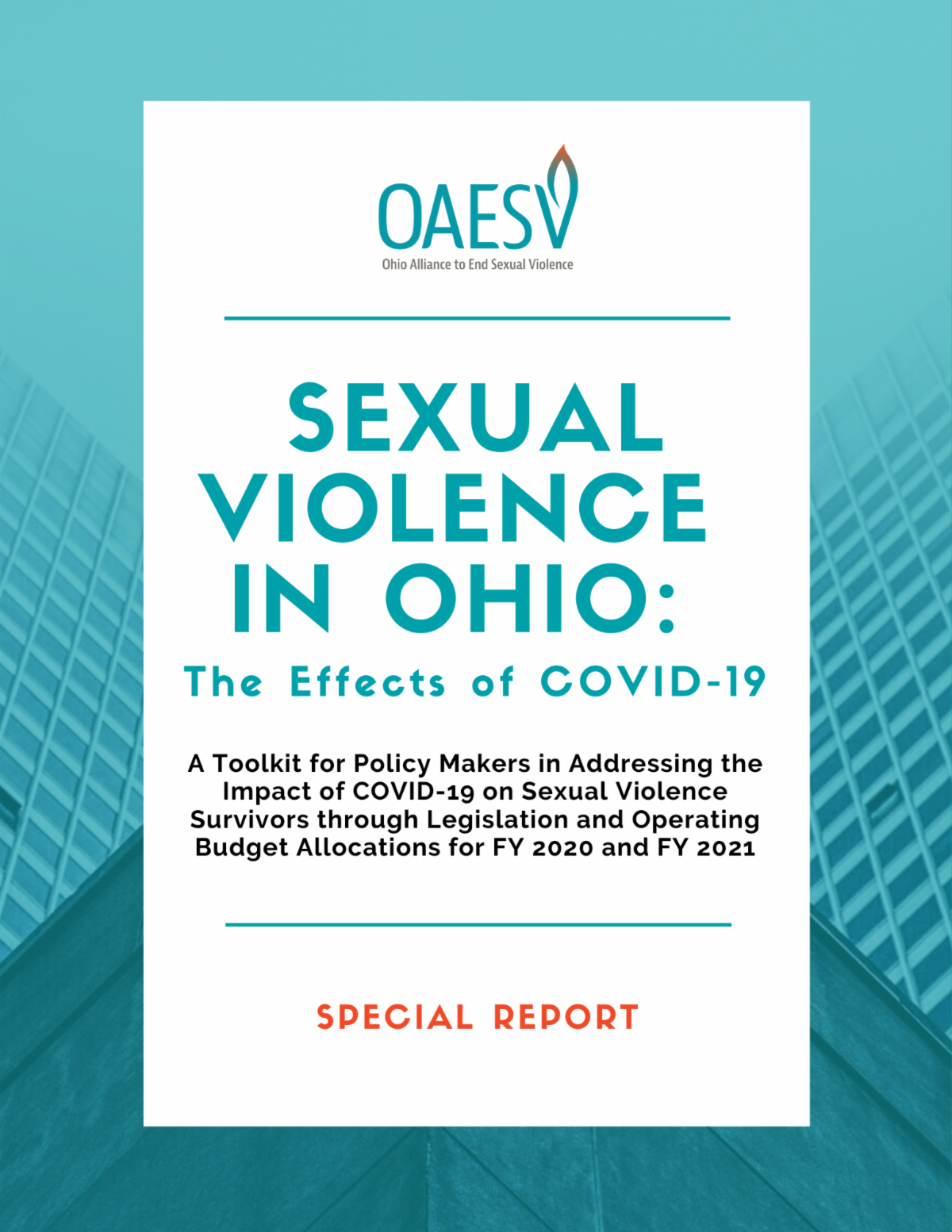
Sexual Violence Impact Increased Significantly During COVID-19.
Survivors & Rape Crisis Centers Need Increased Operating Budget Support in the 134th General Assembly.
Read our Special Report Here .
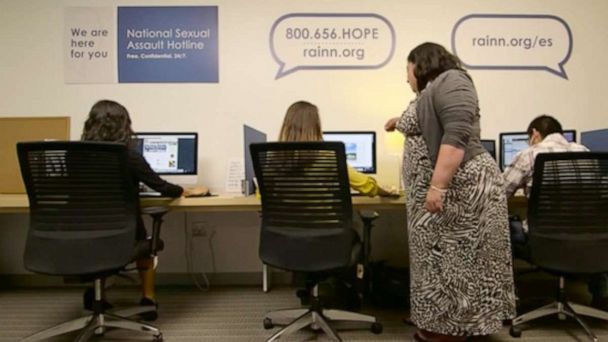
Sexual assaults have not stopped during coronavirus pandemic

A person is sexually assaulted every 73 seconds in the United States, and every nine minutes the victim is a child ... Those incidents do not stop [during a pandemic], and experts fear cases may be getting even worse due to stress and isolation.

Read more
abc7ny.com
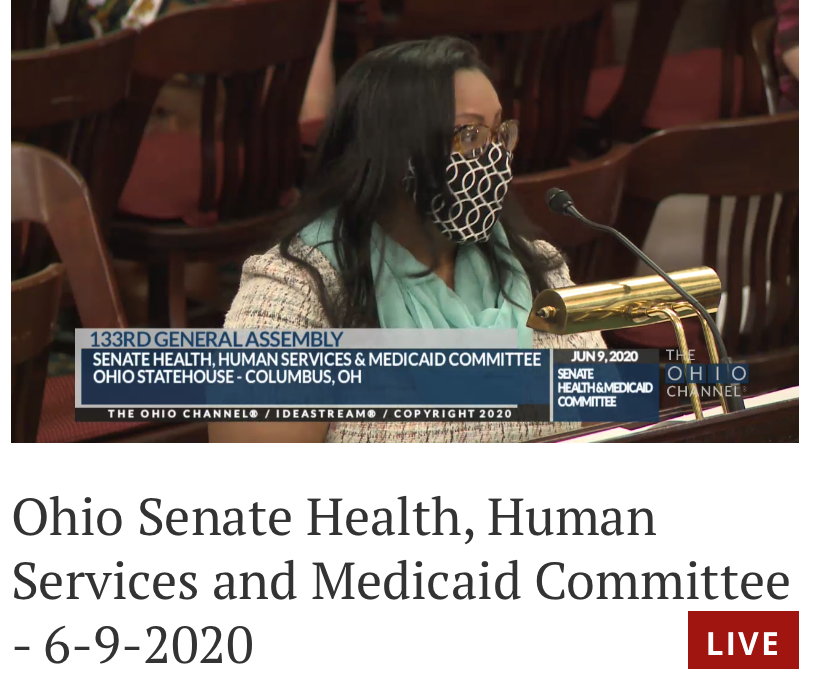
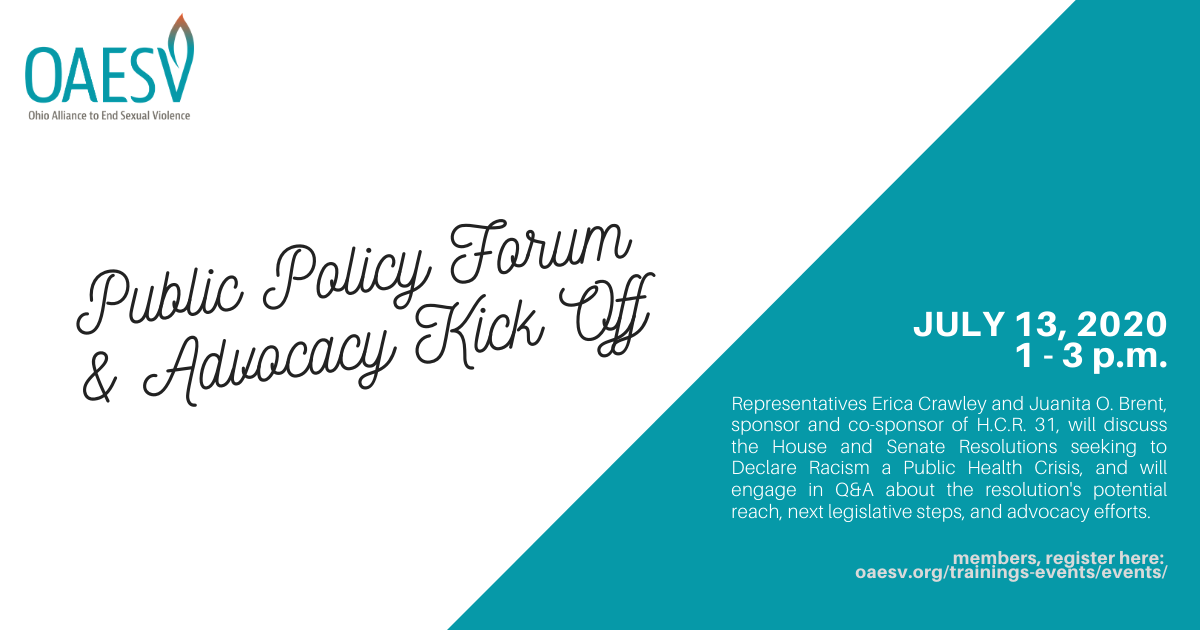
Pass HCR 31 & SCR 14 - Declare Racism a Public Health Crisis
Priority Ohio Legislation
Senate Bill 162 & House Bill 290
Removes Limits on Prosecuting & Proving Certain Sex Offenses

These companion bills seek to eliminate spousal exemptions from Rape, Sexual Battery, Unlawful Sexual Conduct with a Minor, Gross Sexual Imposition, and Importuning, as well as remove the statute of limitations for 2907.02 Rape. Along with executive branch efforts to eliminate the rape kit backlog, this legislation is critical to achieving justice for all survivors.
Sponsors: Senators Antonio & O'Brien, Representatives Boggs & Galonski
Committee: House Criminal Justice, Senate Judiciary
Click Here for OAESV's Fact Sheet
Erin's Law - House Bill 321

Current law does not mandate education addressing the pervasive problems of sexual abuse and sexual violence. HB 321 would require sexual abuse prevention education in grades K-6, add sexual violence prevention education in grades 7-12, and require additional training for school personnel. Ohio is a regional outlier, as Indiana, Michigan, West Virginia, Pennsylvania, and New York have all passed Erin's Law. Erin's Law curriculum first appeared in public schools in 2009, and Ohio's legislation meets our individual state's needs for district expertise in crafting compliant lessons.
Sponsors: Representatives Lipps & Kelly
Committee: Primary & Secondary Education
Click Here for OAESV's Fact Sheet
Advocate Privilege
Senate Bill 196 & House Bill 337

Current law does not protect communications between survivors of sexual violence, human trafficking, stalking, or domestic violence and advocates providing crisis services. Ohio is one of just 14 states without privileged
communications in these circumstances. This bill also clarifies mandatory reporting obligations for child abuse in the provision of crisis services, and creates an exemption
from the felony reporting statute for advocates serving these survivors, as is customary in the Ohio Revised Code for privilege holders.
Sponsors: Senator Eklund, Representatives Galonski & Stein
Committees: Senate Judiciary, House Criminal Justice
Click Here for OAESV's Fact Sheet

COVID19 Emerging Response Resources | Ohio Alliance to...

Since information and guidance continue to change and evolve, OAESV created this COVID-19 (coronavirus) resource page to share information relevant to providing sexual assault advocacy, working with funders, and getting support during this time....

Read more
www.oaesv.org
Upcoming Trainings & Events
For more information and to register, please visit our Training & Events Calendar here .
Annual Conference | Ohio Alliance to End Sexual Violence

OAESV's 2020 Annual Conference took the form of a Two-Part Virtual Series! Part One convened June 16, 17 & 18, featuring Keynote Speakers Aishah Shahidah Simmons and Dr. Shemariah J. Arki. Part Two features 12 workshops on August 10-13.

Read more
www.oaesv.org


Sixth Annual Shine the Light to End Sexual Violence |...

You are invited to OAESV's 6th Annual Shine the Light to End Sexual Violence! This signature fundraising event celebrates the work that OAESV and our partners across Ohio do together toward realizing our shared vision of a Ohio free from sexual...

Read more
www.oaesv.org
‌
OAESV's Legislative Newsletter is funded by a generous grant from the George Gund Foundation, a private Ohio non-profit
organization that has donated $722 million dollars since 1952 to projects that advance human welfare and society.
Help support our work. At OAESV we provide many services, including  training for advocates and preventionists ,  technical assistance for local programs , systems advocacy,  public policy work ,  and  much more .