|
|
IN THIS ISSUE: Minnetonka graduate launches science fair project | STEM from home resources
MN citizen science | 2020 natural resources science fair projects | Volunteer to support STEM in distance learning
MAS board member awarded Fulbright
| MN STEM news and virtual events
|
|
 |
|
Minnesota STEM News
|
|
|
#mathwithmeMN inspires fun community math installations during distance learning
|
Biomedical Engineering: UMN-Twin Cities students quickly design personal protective gowns and get them into production.
Geology: Macalester professor discovers new 66 million-year-old mammalian fossil in the Mahajanga Basin of Madagascar.
Environmental Science: UMN-Duluth medical school researchers test wastewater samples in effort to track COVID-19 in Minnesota.
Fisheries Science: DNR considers measures to safeguard bluegills.
Computer Science: UMN-Twin Cities researcher leads team advocating for virtual reality as social interaction during the coronavirus pandemic.
Archaeology: Twin Cities Public Television documentary reveals new, non-invasive technology archaeologists use to preserve archaeological resources in Minnesota.
Ecology: Minnesota scientists prepare for climate change in forest planting considerations.
Statistics: Macalester professor uses data science to assess diversity in art museum collections.
Robotics: Minnesota's high school robotics teams design gear for COVID-19 first responders.
Mechanical Engineering: UMN-Twin Cities professor leads international team in building purification towers in India.
|
 |
|
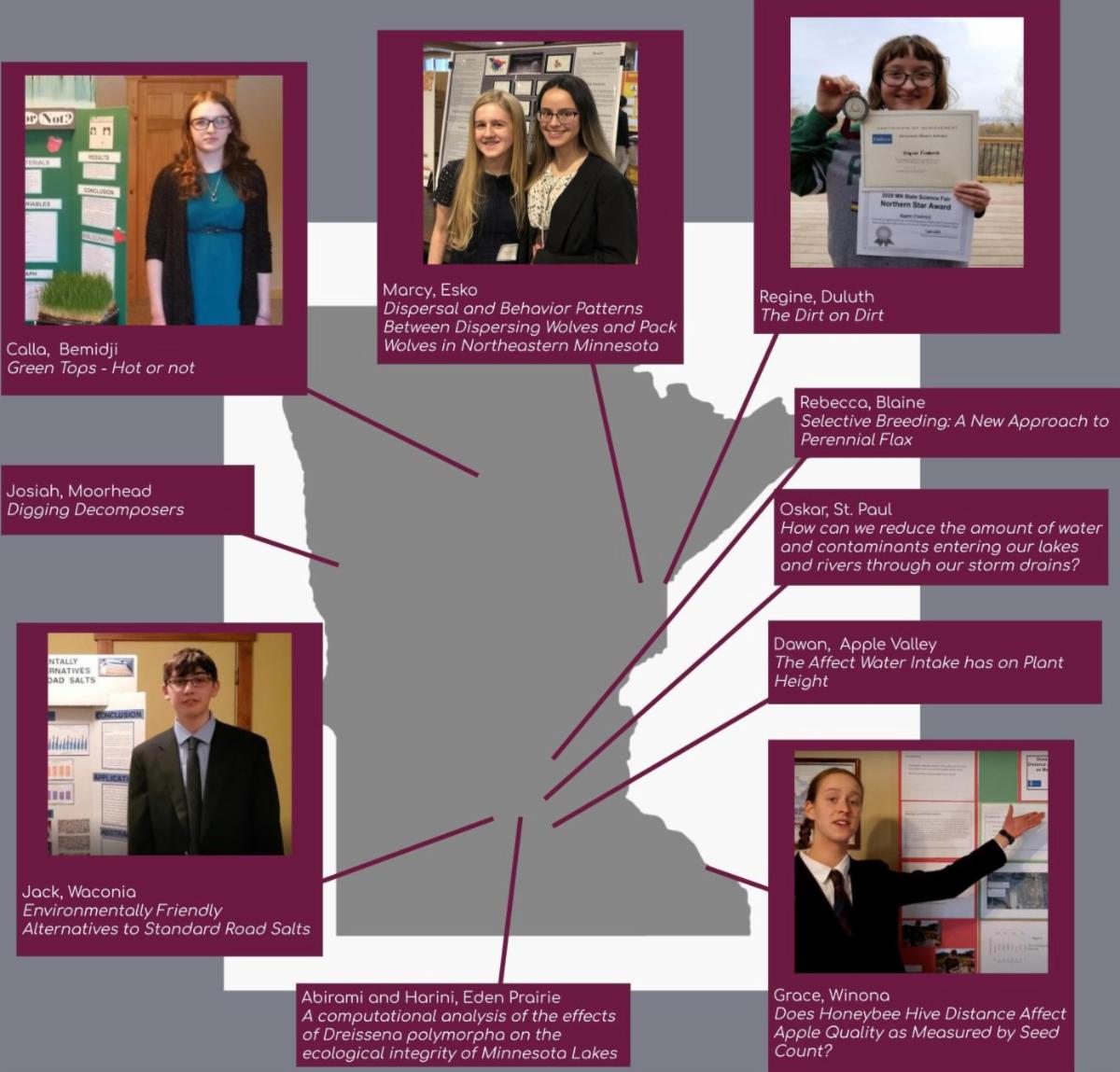
Science Fair Projects Investigate Minnesota's Natural Resources
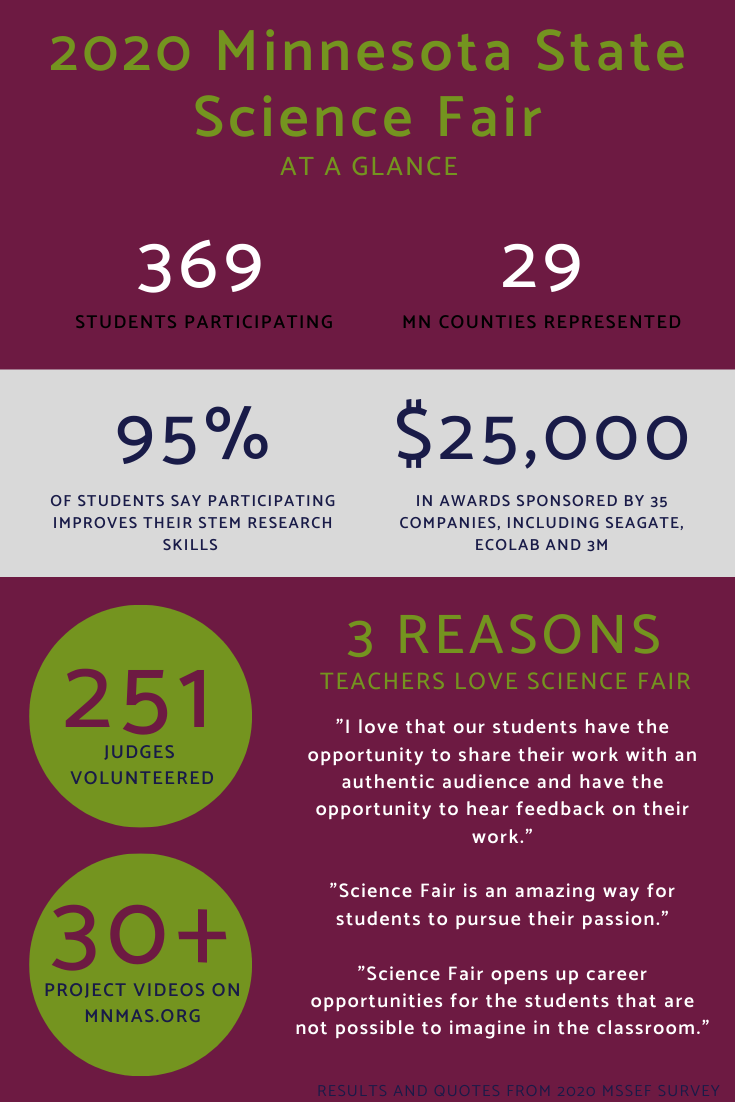
Every year, thousands of students from across Minnesota ask novel questions and conduct important research through their Science Fair projects. Many of these projects relate to exploring and protecting Minnesota's natural resources. Below, we highlight ten projects investigating natural resources in the North Star State that rose through the ranks of their school and regional science fairs and were presented at the 2020 Minnesota State Science and Engineering Fair.
For more information about this year's science fair projects, visit our
awards page.
|
|
Engage with STEM while staying close to home with these ideas from our STEM from Home resources page:
- Bakken Museum: Take audio tours of museum exhibits, participate in design challenges, and more.
- Biology Games from Arizona State University: Learn about biology through games such as The Bee Waggle Dance Game, Busy Bones, Cell Parts Game, Frankenstein's Lab, Lizard Island, and more.
- Color Me Physics: This coloring book introduces physics and some of its most famous characters.
- Engineering Challenge Cards: These challenges encourage inquisitive young minds to get excited about engineering.
- International Wolf Center: Cameras are live-broadcasting the center's ambassador wolves.
- Maplewood Nature Center: Meet native animals from Minnesota and learn to identify the songs of local birds with these brief videos.
- NASA's Langley Research Center: Take a virtual tour of the famed NASA facility in Virginia.
- Omnifest at Home: Experience the Science Museum of Minnesota's films streaming in your own home.
- Three Rivers Park District virtual programming: Live Monday- Friday at home programming, including storytimes, nature classes, science activities, art projects, skill building, ecocrafts, stump the naturalist, cooking classes, and more.
|
|
|
Summer Citizen Science Projects
This summer, consider helping out the Minnesota science community by joining a citizen science project. Head outside to scour an area close to home for invasive species. When the days become hot and humid, treat yourself to a relaxing afternoon of classifying deer gut photos while enjoying an iced beverage.
However you choose to get involved, you will be contributing to scientific knowledge while experiencing something new!
 Citizen Water Monitoring: Volunteers measure the water clarity of lakes and streams, and the Minnesota Pollution Control Agency uses that valuable data to make decisions on watershed protection and restoration.
Lake Level Volunteering: Volunteer observers record lake levels on a regular basis to create permanent, credible, public lake level records.
Pesky Plant Trackers: Search your local environment for pesky plants, such as wild parsnip and Japanese knotweed, to track and report.
Offal Wildlife Watching: Classify photos provided by hunters across Minnesota to better understand what and when species use deer gut piles.
|
|
|
|
Support STEM in Distance Learning
- We Need Your Help
The Minnesota Academy of Science is working through our FORSE mentoring program to engage underrepresented Minnesota students in STEM during distance learning. We are partnering with members of the scientific community in Minnesota to provide "STEM Enrichment Units" to teachers with the goal of exposing students to STEM fields, professionals, activities and practices.
If you or another STEM-focused professional or graduate student is interested in contributing video content to this initiative, please contact FORSE program director Sara Gomez for details. Submissions will be accepted until June 30. |
|
Minnetonka Graduate Launches Minnesota Science Fair Project
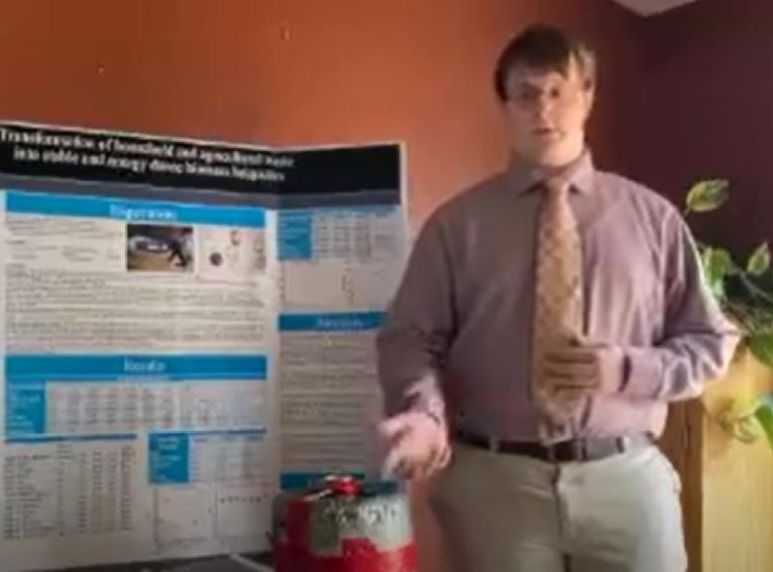
Although the 2018 Minnesota State Science and Engineering Fair (MSSEF) was only two years ago, Parthiv Krishna's experience in the fair has already greatly impacted his STEM pathway. For his project,
Development of Autonomous Unmanned Aerial Systems for Semi-Dense Point Cloud Generation in Disaster Scenarios
, Parthiv developed hardware and software for an autonomous drone that creates full-color 3D maps. He took home a slew of awards for his project, including the
Seagate
Rising Star Award
. He also won a spot to represent Minnesota in the International Science and Engineering Fair (ISEF), where he picked up a
fourth award in the Robotics and Intelligent Machines category
.
Reflecting on his MSSEF experience, Parthiv remembered "it was quite inspirational to talk to the judges and hear their feedback on the project." Following the advice of several Seagate judges, Parthiv pursued a patent on the drone technology he developed for his MSSEF project. Parthiv used his MSSEF and ISEF award money to assist in funding the patent process and to purchase parts for further drone development. After obtaining a patent, Parthiv began the company
Fractal Aerial Systems
, and is in contact with several emergency services departments and defense contractors regarding future collaborations.
Currently a freshman at Stanford, Parthiv applies the knowledge he is gaining at college to further develop Fractal Aerial Systems. He is excited about the future of his drone research, adding "I'm continuing to work on further iterations of the project and hope to bring the technology to the market soon!"
|
MAS Board Vice-President Awarded Fulbright Fellowship

|
|
|
| |
Critical support for Minnesota Academy of Science programs
comes from our 2020 sponsors and event hosts, including:
Minnesota Department of Education,
Seagate Technology,
National Science Teachers Association,
Ecolab, 3M,
General Mills Foundation,
Hardenbergh Foundation,
Broadcom Foundation,
Benilde-St. Margaret's School,
University of St. Thomas, Macalester College,
Crown College,
Medronic,
Verizon Wireless, Diasorin,
Barr Engineering, the American Heart Association, and Great River Energy.
If you have suggestions for events or science news happening in Minnesota, please send information to emilyshepard@mnmas.org or post it to our
Twitter
,
Facebook
, Instagram or
LinkedIn
accounts.
|
|
|
|