From the Editor
Summer is upon us, and for most of us, that means an opportunity to get out onto the battlefields. While we might explore the battlefield on our own or with a buddy, we might also opt for a ranger tour or history hike or sunset program of some type. I urge you to take advantage of the expertise on-site historians can offer. Look for ways to learn something new or challenge something you thought you already knew.
Years ago, my ECW colleague Rob Orrison pointed out to me that visitors to battlefields take advantage of tours and programs and such because, on some level, they want to be entertained. The definition of “entertained” varies from person to person, and it includes the idea of being intellectually stimulated. It makes sense: we want to have a good time. People are not taking time out of their family vacation because they want to stop at a site and feel depressed.
This creates a fine line for any historical site: present accurate history without being a major downer. You want to be thought-provoking without being preachy. You want to be somber without being grim. You want to be inspiring without being unrealistic.
There’s even a question of how “engaging” an interpreter should be. Visitors all love a well-told story and a well-presented program, but can the interpreter overshadow the story? Meanwhile, a factually accurate but boring interpreter can put a visitor to sleep or make them leave. Style becomes part of the message, and that actually rankles some people, but in today’s media-saturated environment, it has become a simple fact. Consider, as an example, the videos you might watch and whose styles you like and dislike. (Even the mere fact that you consume history via video is galling to some folks—but also further evidence that the medium is the message.)
Nothing replaced the experience of being on the ground, but some people simple can’t do it because of any number of limitations. They physically can’t get around anymore. They can’t afford a trip. They don’t have enough time-off saved up. They promised the kids a trip to Disney World. Thank heaven for technologies that still make places accessible to folks who can’t be there.
I invite you to think about all these considerations because they are the things I think about when giving a tour, presenting a talk, making a video, or writing a blog post. How do I strike the balance between story and storyteller?
As people who consume history as our avocation, we need to look beyond the entertainment value even as we allow ourselves to be entertained. What are we learning about the past, about these sites, about human nature, about ourselves?
Otherwise, we fall into the old trap of “Tell me the good old story one more time.” That’s not history; that’s an echo chamber that reduces history to entertainment and nothing more. To me, that’s a disservice to the historians presenting information and it's disrespectful to the people whose stories we’re remembering. They didn’t make life-changing sacrifices just to entertain us.
— Chris Mackowski, Ph.D.
Editor-in-Chief, Emerging Civil War
| | |
Eleventh Annual Emerging Civil War Symposium at Stevenson Ridge
Time is ticking down! T-minus two months and counting! Have you reserved your spot yet? You still have time—but HURRY!
Our 11th Annual Symposium, will take place August 1–3, 2025, at Stevenson Ridge in Spotsylvania Court House, Virginia. The theme will be “The Cities of War,” with keynote speaker Ted Savas and a Sunday tour by John Hennessy. It is for sure going to be a great time. Pack up the family and come enjoy a great event!
For tickets visit our Symposium page.
| |
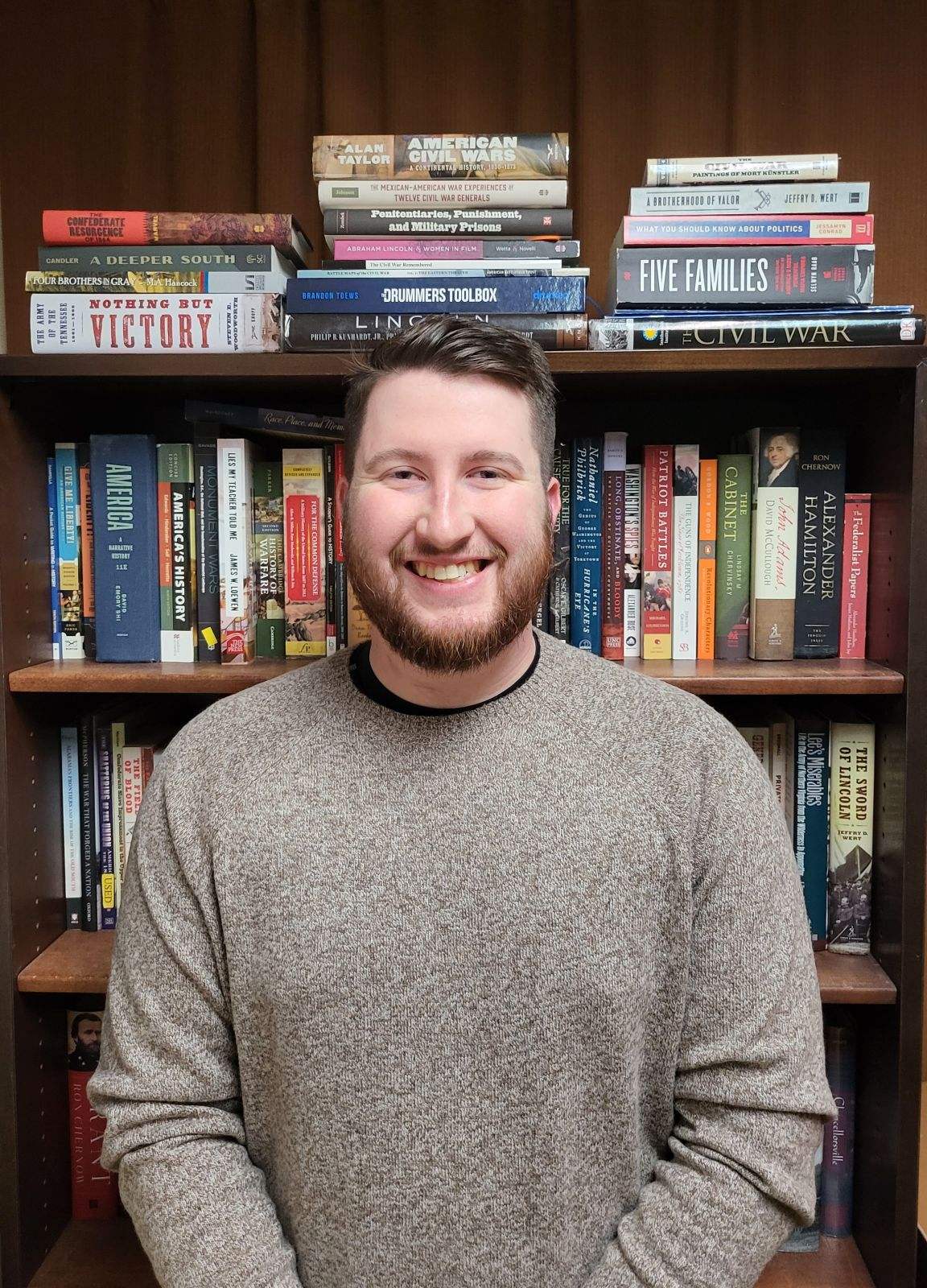
Emerging Civil War Welcomes Samuel Flowers
Emerging Civil War is honored to announce the addition of Samuel Flowers to our ever-growing ranks of talent.
Samuel is an assistant professor of history at Louisburg College. He was born and raised in Wilmington and now resides in Raleigh. He received his B.A. in history from UNC-Charlotte and graduated with his M.A. from the University of North Carolina at Wilmington with a concentration on American History. His thesis examined the importance of the Overland Campaign through interpreting tactical shifts, the common soldier’s experience, and how soldiers remembered their time in combat.
Samuel is interested in multiple topics surrounding the Civil War and Reconstruction Era, including the Eastern Theatre, the Overland Campaign, the conflict in North Carolina, Reconstruction and political violence, Civil War memory, and the popular culture adaptations about the era. He is researching the Third North Carolina Infantry as its war service transitioned, perpetuating Lost Cause ideals and political violence in Wilmington. He is also collaborating with Gene Schmiel to create a revised version of his book, The Civil War in Statuary Hall, which will use the chamber for statues residing in the Capitol as a case study for the nation’s changing landscape of memory and memorialization.
Aside from history, Samuel enjoys playing drums in his free time. During the 2019-2020 NFL season, he played snare drum for the Carolina Panthers Drumline, “Purcussion.” He also enjoys teaching high school students during marching band season in the summer/fall.
| | | |
Eight Questions with Joe Ricci
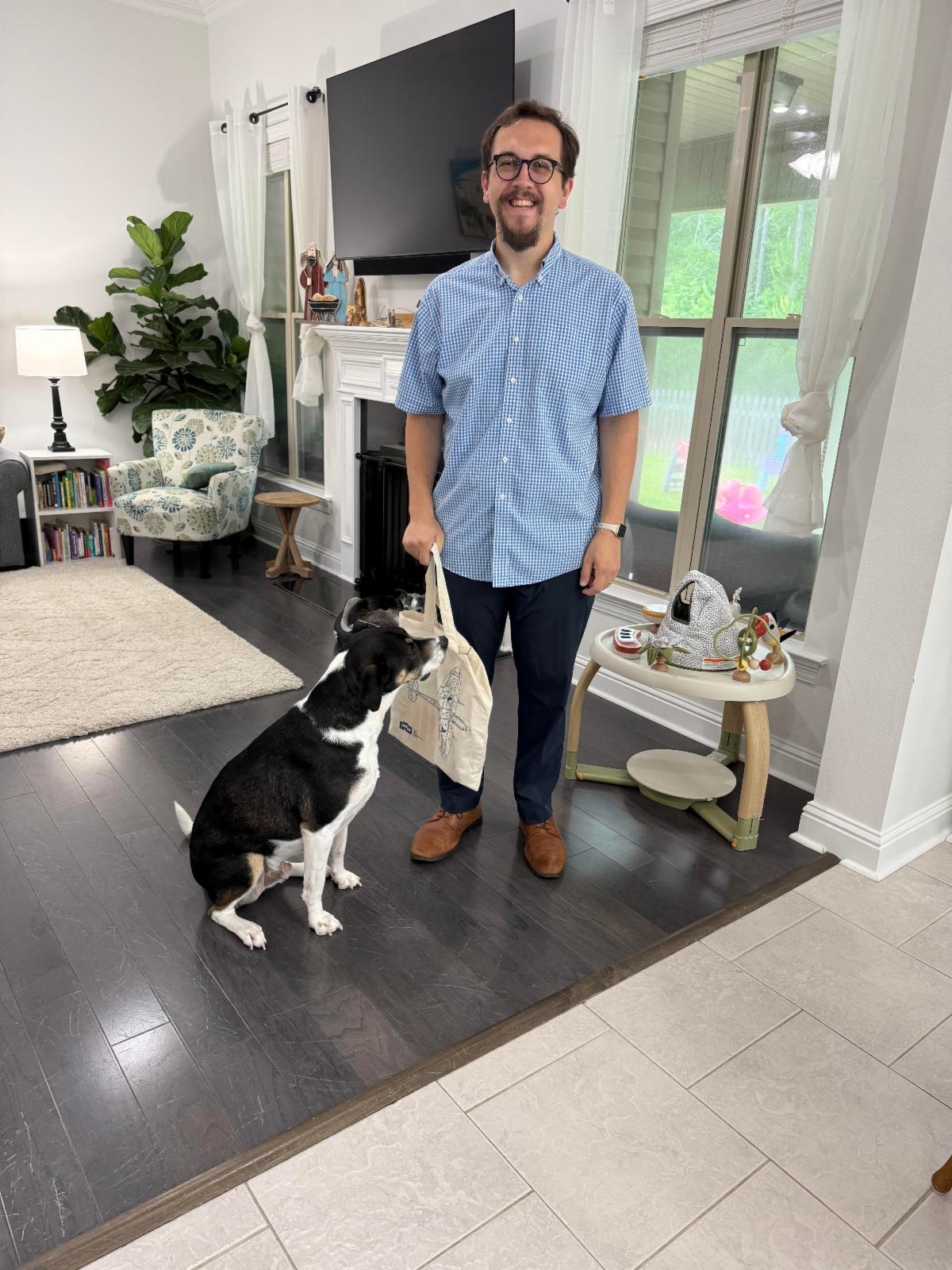
This month we are bringing back an old favorite to the ECW newsletter. We asked ECW author Joe Ricci to answer eight questions so you can get to know him a little better beyond his many articles featured on the ECW blog. You can read his full bio here.
How did you get interested in the Civil War?
I never really had much of a choice. My parents both had/have a serious interest in the era, and I grew up visiting battlefields and museums across the country. I often joke that while other kids brought their Flat Stanley to the beach, I brought mine to Antietam.
What's your favorite topic to study and why?
I am deeply fascinated with the war in the Western Theatre and, in particular, operations in Middle Tennessee throughout the war. Most people will connect me easily to the battlefields of Spring Hill and Franklin and that is the story to which I proudly dedicated three years of life and energy. To me, there are few greater stories than that of what unfolded in the fall of 1864 in Middle Tennessee.
Are you working on any projects at the moment?
While it may be of little interest to a reader of ECW content, but I am drafting a manuscript that details the 1946 Columbia Race Riot and the key individuals involved in a sprawling narrative that stretches from the pre-Civil War era to the Modern Civil Rights Movement. Additionally, I am beginning research on a Civil War topic in my new backyard, the 1863 Battle of Ponchatoula, which took place as a sideshow to the Vicksburg and Port Hudson Campaigns.
Lightning Round
Favorite primary source?
Jacob Cox’s Monograph of the Battle of Franklin.
Favorite Civil War-related monument?
The JD Putnam marker (the Tree Stump) at Shiloh.
Favorite unsung hero of the Civil War era?
US Army Gen. James Harrison Wilson, who I consider one of the finest cavalrymen of the war (and I said that with my whole chest!).
What’s a bucket-list Civil War site you’ve not yet visited?
I’m ashamed to admit I’ve never visited Perryville.
Favorite book by an ECW author?
I am biased because I contributed an appendix chapter, but Sean Chick’s, They Came Only to Die has a special place on my bookshelf.
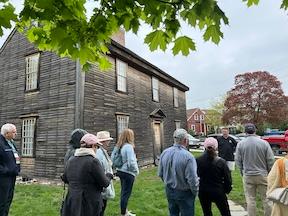
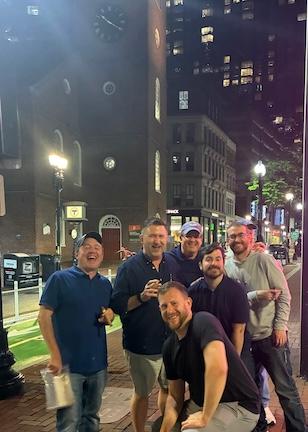
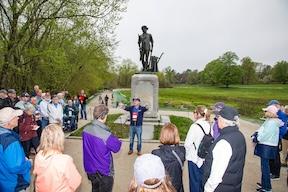
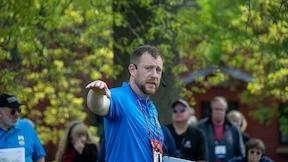
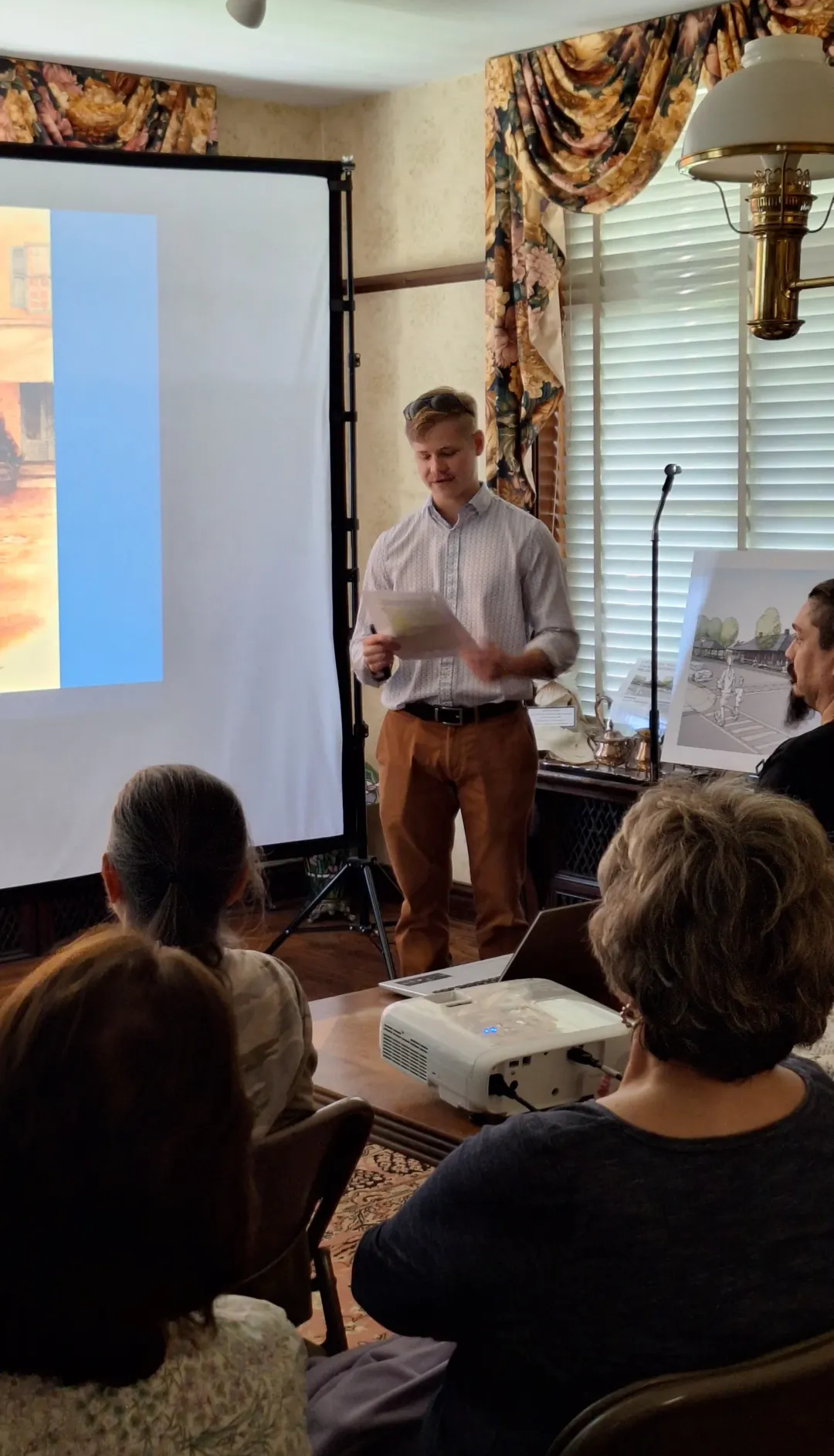
| | | | A bunch of current ECW/ERW contributors and alumni descended on Boston at the beginning of the month to offer programs as part of the American Battlefield Trust’s annual conference. Most of the events centered on Revolutionary War-related themes, tying in to the recent 250th anniversary of the battles of Lexington and Concord, but our folks threw in a few surprises, too. On hand were Sarah Kay Bierle, Daniel T. Davis, Phill Greenwalt, Billy Griffith, Chris Mackowski, Mark Maloy, Rob Orrison, and Kris White. (photos courtesy the American Battlefield Trust) | | |
The Spring semester is finished for Neil Chatelain and he has a few weeks before summer classes begin. On May 6, Neil hosted an info session and meeting of the many guest authors who write for Emerging Civil War. It was great getting to see everyone. Since then, he has been busy finalizing a couple of book manuscripts, working on papers for conferences later this year, and enjoying a little golfing.
| | |
Sean Chick spoke at the Pensacola and Mobile Civil War roundtables about Shiloh.
Doug Crenshaw is getting set to lead a series of tours on the Richmond and North Anna battlefields over the next few weeks.
Bert Dunkerly is helping organize the Cold Harbor anniversary event, for June 7-8, and hopes that lots of ECW fans come out for it. In May he biked the High Bridge Trail State Park, and took in the new visitor center (outstanding exhibits!). He is also glad that the Capitals are out of the playoffs.
Joshua Frye has been busy over the past month conducting research on some Native American Civil War topics. Aside from that, he has been helping care for his niece and has started construction on a new office and podcast studio space. The project will help fuel his history book addiction and Washington Capitals collection.
Jon-Erik Gilot recently spoke on Hunter's Lynchburg Campaign at the Greater Pittsburgh Civil War Roundtable. Earlier this month, he had the tremendous honor of hosting Dr. Edda L. Fields-Black at the Andrew Carnegie Free Library & Music Hall's 2nd Saturday Civil War Series on the very same week she won the Pulitzer Prize in History for her book COMBEE: Harriet Tubman, the Combahee River Raid, and Black Freedom during the Civil War.
Chris Mackowski contributed a chapter to a newly published textbook from Routledge, The New Phase of Global Terrorism, edited by Binneh S. Minteh, James Bacigalupo, Kevin Borgeson, and Robin Maria Valeri. His chapter, “The Blood of Patriots: A Brief Overview of Terrorism in America,” opens the book with an examination of America’s complicated history with political violence, starting with colonial-era protests around Boston’s Liberty Tree. What’s the difference between a crowd of protestors and a mob, the article asks. One person’s “freedom fighter” is another person’s “terrorist”; one person’s “patriot” is another person’s “insurrectionist.” “It was a fascinating project to work on, and I learned a lot writing it,” Chris says.
| |
This month, Evan Portman presented "Civilian Stories at Gettysburg" at the Armstrong County Historical Society's Civil War Days in Kittanning, PA. He also spoke to the Western Pennsylvania Civil War Round Table on "The Old Man and His Warhorse: Robert E. Lee and James Longstreet."
| | |
While traveling for the Memorial Day holiday, Terry Rensel made a stop at the Jefferson County Pennsylvania History Center in Brookville Pennsylvania to do some research into ancestors who were in the 105th and 169th Pennsylvania Volunteer Infantry, as well as paid his respects to an ancestor who was with the 99th Indiana Volunteer Infantry who is buried in the Girard Pennsylvania cemetery.
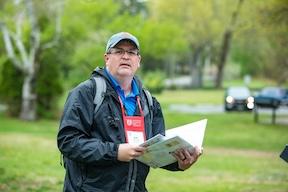
Spring and summer are great times to get back out and on a battlefield. Come visit ECWer and Gettysburg Park Ranger Dan Welch out on the Gettysburg battlefield. He, alongside his fellow NPS Rangers will be giving lots of great programs covering numerous aspects of the battle and Civil War all summer long. So, if you are in town, make sure to stop by and say hello!
| | |
ECW Bookshelf
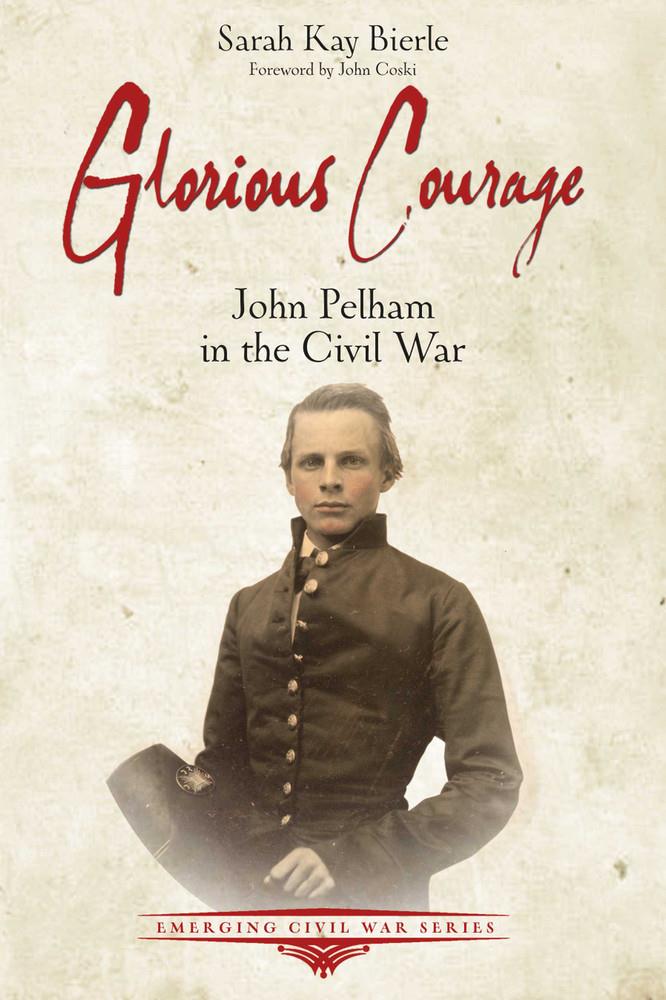
This month, ECW author Sarah Kay Bierle and Savas Beatie released the newest addition to the Emerging Civil War Series, Glorious Charge: John Pelham in the Civil War.
Throughout the writing process of the book, Bierle's core motivation stayed the same: She wanted to know who this artillery officer was without the legends.
“It is glorious to see such courage in one so young!”
So exclaimed Confederate General Robert E. Lee on December 13, 1862, during the battle of Fredericksburg as he watched Major John Pelham fight at least five Union batteries with just one lone gun. The dashing and handsome 24-year-old Alabama officer earned the compliments and admiration of his men, the war-gods of Virginia (Lee, Jackson, and Stuart), and Southern society—all while helping transform the concept of horse artillery on Civil War battlefields across Virginia and Maryland.
After Pelham’s sudden death in 1863, his place in Lost Cause memory soared and admirers firmly elevated him into the upper ranks of the Confederate pantheon. His status as a Lost Cause hero exacted a price—admirers transformed Pelham’s memory into “the beau ideal of Confederate arms,” sometimes altering and clouding the realities of his life. His memory has been trapped there ever since—until now.
In Glorious Courage, historian Sarah Kay Bierle reconsiders Pelham’s extraordinary, if short, life by drawing on primary and other sources and her extensive knowledge of the battlefields. Pelham’s zest for living carried him from Alabama to the military academy at West Point, while his zeal in command of the Stuart Horse Artillery earned him well-deserved plaudits. But like every other man who served the Confederate cause, the remarkable young officer was a human being with flaws. He deserves his place in history as he lived it, not varnished with the perspectives shoved upon him by later generations.
You can purchase your copy from Savas Beatie here!
To read more about the book, check out the ECW blog, here!
* * *
| |
Cecily Zander Wins Wiley-Silver Prize
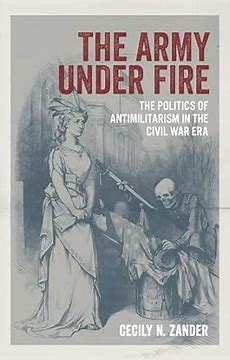
In May, Emerging Civil War author and contributor, Cecily Zander won the Wiley-Siver Prize for her work, The Army Under Fire: The Politics of Antimilitarism in the Civil War Era.
The Center for Civil War Research established the Wiley-Silver Prize in Civil War History in 2011. The Center presents the prize to the best first book, thereby recognizing and encouraging new and emerging scholars in the history of the American Civil War. The prize is named for two distinguished former members of the University's History Department faculty, Bell Irvin Wiley and James W. Silver.
Scholars awarded the prize receive $2000 and an invitation to speak at the University with an additional $500 honorarium. In addition to press releases, the Center also purchases advertising space in the field's two journals, Civil War History and The Journal of the Civil War Era to announce the winning entry.
The prize committee praised Dr. Zander’s book as follows: “Cecily Zander’s The Army Under Fire rehabilitates antimilitarism as a central but underappreciated attribute of nineteenth-century American life. Well-written and persuasively argued, the book enhances our understanding of the causes of the Civil War, the ways in which Union armies fought, and why Reconstruction was, paradoxically, a limited revolution. Above all, Zander offers readers a sobering yet necessary reflection on the constraints of what could be achieved during the Civil War period. While it's common to regret the "lost moments " of fully realizing the goals of Union and emancipation, such an outlook can fail to illuminate the reasons why and how history unfolded as it did. Perhaps, as Zander reminds us, the wartime goals as defined by the loyal citizenry were realized after all.”
You can purchase your copy of the book, here!
* * *
| |
| | |
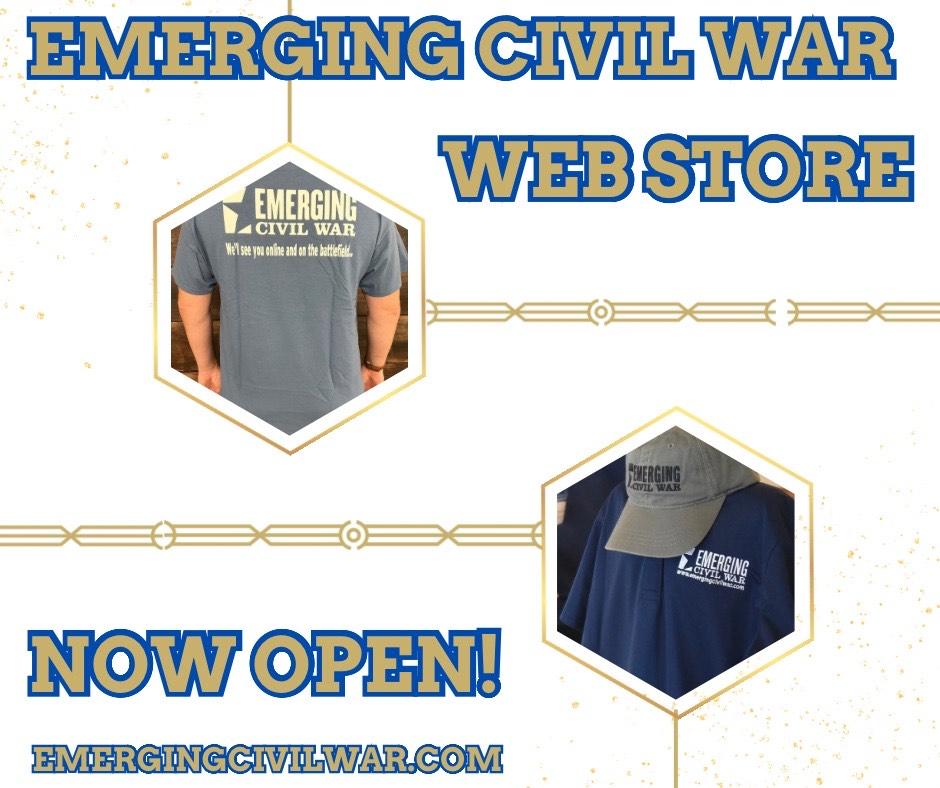
Check out the Emerging Civil War webstore on our website.
You can order goodies for the Civil War enthusiasts in your family: t-shirts, polos, cups, hats, books, and much more!
Visit the website store to order today!
| | | |
ECW Multimedia
On the Emerging Civil War Podcast in May, Chris Mackowski was joined by
-
Dr. Phil Payne, chair of the history department at St. Bonaventure University, who invited Chris to team-teach a course on the Civil War for the Spring 2025 semester. In this episode, they talk about their experience together in the classroom. View this episode now at Emerging Civil War.
-
Derrick Brown, operations manager of Bentonville State Historic Site, who talked about his book about the history of the battlefield, Bentonville Battlefield State Historic Site. View this episode now at Emerging Civil War.
-
Historian Sam Flowers, the newest member of Emerging Civil War, who offered a wide-ranging discussion that included troops from North Carolina, Civil War statues in the U.S. Capitol, the Overland Campaign, the X-Men, and more. View this episode now at Emerging Civil War.
You can find video versions of these podcasts and other exclusive interviews and content on our YouTube page, including a series of interviews with speakers from this year's ECW Symposium.
You can listen for free on Spotify or Apple Podcasts, or at https://emergingcivilwar.com/the-emerging-civil-war-podcast/.
| | |
Shrouded Veterans
by Frank Jasztrembski
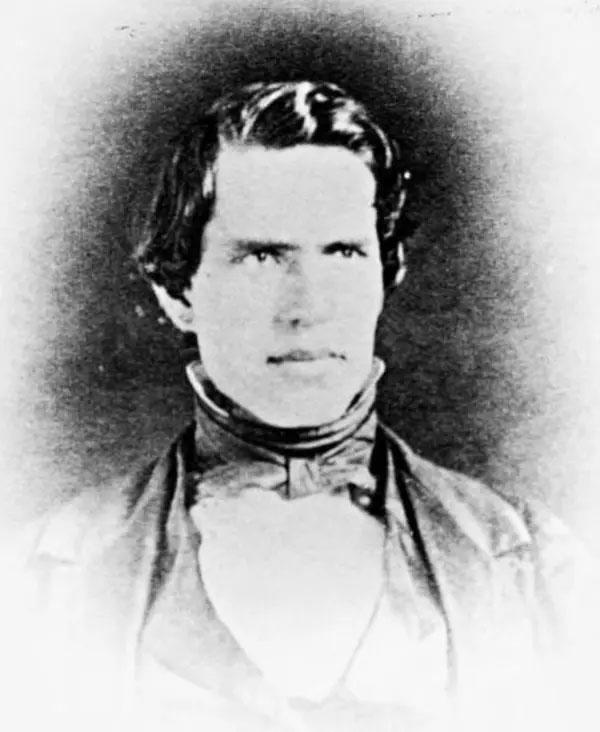
Colonel Hamilton P. Johnson, a Free State convert, died boldly during a skirmish in 1861, riddled by nine bullets. His life traced a dramatic path from slavery advocate to Union martyr.
You can read about Hamp Johnson in our latest Emerging Civil War column, here.
To read more about other Shrouded Veterans, click here.
| |
Emerging Revolutionary War News
By Phill Greenwalt
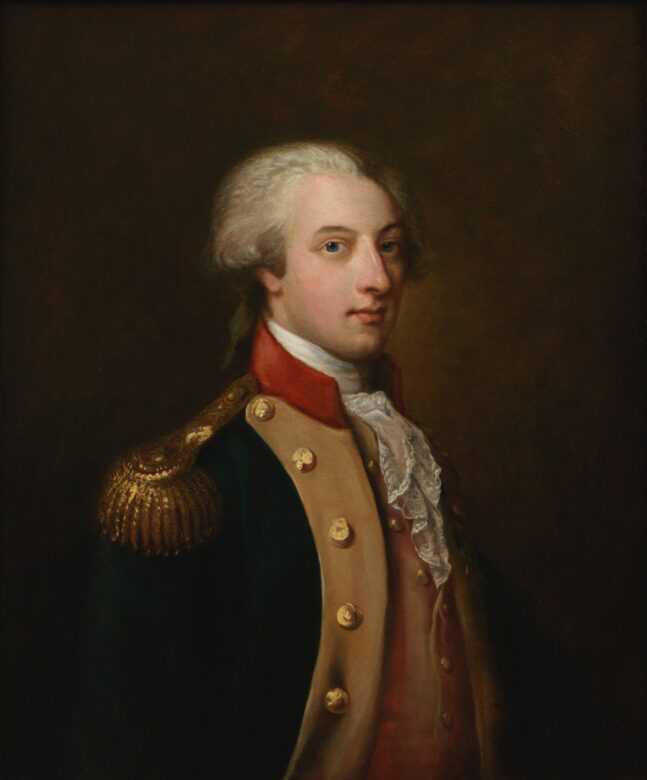
Did you know that May saw the Marquis de Lafayette have his first independent command in America? On May 20, 1778, Lafayette fought the Battle of Barren Hill between the encampment of Valley Forge and Philadelphia. This would also be the last engagement led by British General Sir William Howe before his return to England. Also present at the engagement was Daniel Morgan and a contingent of Oneida and Tuscarora Native Americans, six of whom gave the ultimate sacrifice for the patriot cause and are buried at St. Peter Evangelical Lutheran Church Cemetery. To learn more about the engagement, check out Winter that Won the War, part of the Emerging Revolutionary War Series. To find details of the book, check out the blog, at www.emergingrevolutionarywar.org. (And for other volumes of the series as well!)
If you need plans the last weekend of May, check out a few Emerging Revolutionary War historians, Kate Egner, Rob Orrison, Mark Maloy at Great Bridge Battlefield for their 250th Historians Panel. More details at the link: Upcoming Events.
Otherwise, continue to check out the blog, Facebook, and YouTube for the latest "Rev War Revelry" videos and early America posts. Or if podcasts are your thing, check out the Emerging Revolutionary War podcast. www.emergingrevolutionarywar.org is your link."
| |
|
You Can Help Support Emerging Civil War
Emerging Civil War is a 501(c)3 not-for-profit organization. If you’re interested in supporting “emerging voices” by making a tax-deductible donation, you can do so by visiting our website: www.emergingcivilwar.com; you can mail us a check at the address below (make checks payable to "Emerging Civil War"); or you can make a gift through PayPal.
Thank you!
| | | | |
June
9: Derek Maxfield, Rappahannock CWRT, Fredericksburg, VA, 7:00 pm
12: Dave Powell, “The Atlanta Campaign,” Milwaukee Civil War Round Table, Milwaukee, WI
12: Chris Mackowski, “A Tempest of Iron and Lead: The Battle of Spotsylvania Court House,” Rocky Mountain Civil War Roundtable (Denver)
13: Dave Powell, “The Atlanta Campaign,” Chicago Civil War Round Table – Rosemont or Oakbrook (alternating sites)
16: Jon-Erik Gilot, “The Captain Thomas Espy Post,” Masonic Village, Sewickley, PA
19: Jon-Erik Gilot, “Dangerfield Newby’s Fight for Freedom,” History on Tap, Alstadt’s Ale House, Harpers Ferry, WV
28: Kevin C. Donovan, “The Court Martial of Fitz John Porter: Fair or Fixed?”, American CWRT of the United Kingdom, London, England
July
6: Evan Portman, “Saint Vincent in the Civil War,” Westmoreland County Historical Society, Greensburg, PA
14: Ryan Quint, “Dranesville,” Rappahannock Valley Civil War Round Table
| | | | |